Burn Injuries lecture guest - week 13
 Studied by 0 people
 Call Kai
 Learn
Learn Practice Test
 Spaced Repetition
 Match
Match Flashcards
 Knowt Play
1/19

Earn XP
Description and Tags
These flashcards cover key concepts related to burn injuries, their classification, management, potential complications, and the role of occupational therapy in recovery.
Name | Mastery | Learn | Test | Matching | Spaced |
|---|
No study sessions yet.
20 Terms
What are the four types of burn injuries?
Superficial, superficial partial-thickness, deep partial-thickness, and full-thickness burn injuries.
What is the most common cause of burns?
Fire/flame, which accounts for 43% of burn cases.
What are the common causes of superficial burns?
Typically caused by sunburns or short flash burns.
What are potential complications after a burn injury?
Pruritus, microstomia, heterotopic ossification, and heat intolerance are some complications.
What is the estimated survival rate for burn injuries according to the ABA National Burn Repository?
The burn survival rate is 96.8%.
What is the significance of total body surface area (TBSA) in burn management?
TBSA estimation helps in calculating nutritional and fluid requirements, determining medical treatment level, guiding clinical decisions, and predicting mortality.
What is the main goal of occupational therapy during the emergent phase of burn recovery?
To prevent contractures through positioning and splinting.
What are the common features of deep partial-thickness burns?
They affect the epidermis and deeper layers of dermis and may require grafting; healing takes 21-35 days.
What psychological effects can a burn injury have on patients?
Burn injuries can lead to anxiety, depression, and post-traumatic stress disorder (PTSD).
What is a key intervention for managing scars after burns during the rehabilitation phase?
Scar massage and pressure therapy are essential interventions.
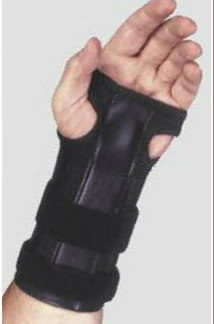
Burn location of dorsal wrist burn , what type of splint would you need?
A cockupsplint ( dorsal wrist splint) - PREVENT wrist Flexion contractures .
position neutral or 10-30 degrees.
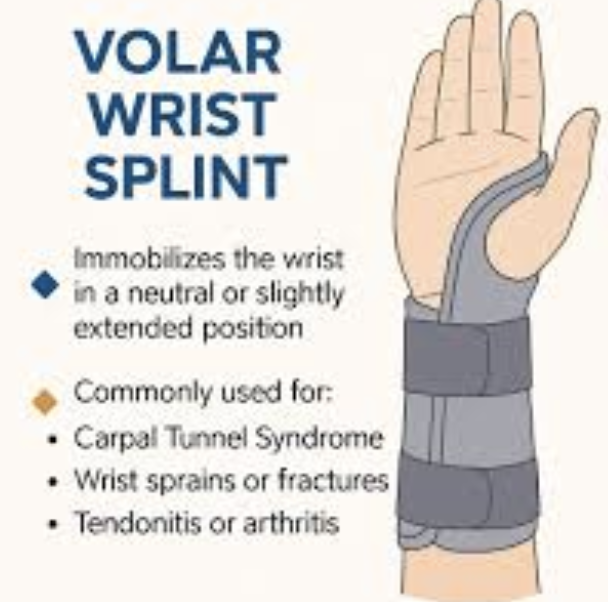
Burn at Volar (palm of the hand) wrist
volar wrist
wrist extension w/ fingers in slight flexion
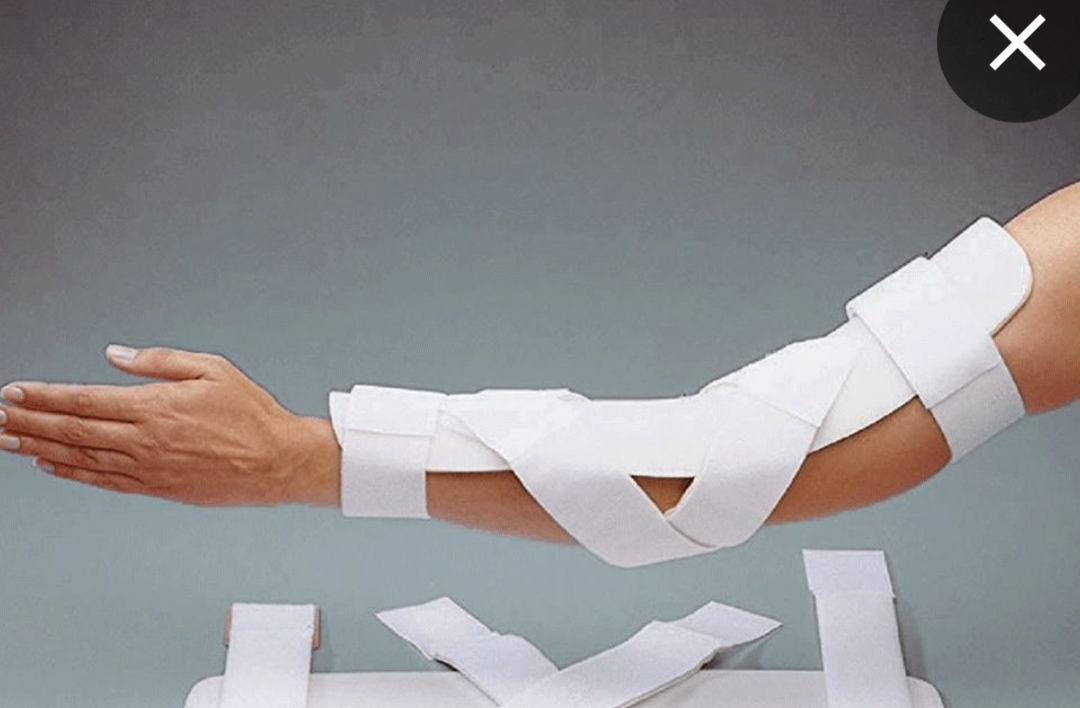
burn at anterior elbow …
requires positioning in extension to prevent contractures, often using a splint for support.
Superficial burn affected layer is….☀ ☀ ☀
Epidermis only : RED, DRY, NO blisters☀ (sunburn)
symptoms : painful , mild swelling, erythema (redness) .
3-7 days (short vacation time)☀ 🏖
Superficial Partial 🤏🏼THICKNESS burn layer is….🤏🏼
Epidermis and PART of Dermis. 🤏🏼
Blisters yes, red, moist , weepy.🩸
Severe pain, blister, swelling
Healing: 2-3 weeks !! ( 2nd shortest) 🤏🏼🤏🏼🤏🏼
DEEEEEEP Partial thickness burn 🍆🍆🍆
EPI(dermis) and DEEPER dermis
WHITE, RED or mottled , blisters, or absent blisters.
3-6 weeks LONG TIME ( maybeeeee require graft)
FULL THICKNESS BURN 🍑🍑🍑
Epidermis, dermis, and subcutaneous tissue….
WHITE, CHARRED, LEATHERY, absolutley NOOOO Bisters babyyyy.
patient cant feel a thanggggg. Nerve damage.
Can possibly have shock ( burn shock- rapid pulse, cool clamy due to damage capilleries.)
FOSHOOOOO need skin grafting, def months of rehab.
Burn phases : Emergent phase (Initial phase)
72 hours after burn
First 24 hrs are most important!!
Key components:
preventing shock and infection
Fascicotmy= Deeper (muscles) relieving pressure w/ muscle compartment.
Escharotomy= cuts through tight ,dead skin cells ( improve blood flow and tissue nutrition, aiding recovery. )
OT role:
fluid management
positioning , preventing contractures, edema
ACUTE phase :
wounds are closed, may required surgery
Key components:
skin grafts ( for full THICKNESS burns)
stretching the skin ( low load - prolonged)
Scar manangement
OT roles:
sensation
coordination
splinting and positioning
early mobilization
wound care
REHABilitation phase
scar maturation 6 months- 2 years ( or lifelong) ]
Key components:
scar management
work on sensation, ROM, coordination
outpatient Rehab
OT:
focus on scar management
ADLS
preventing contractures