Carbohydrates, Lipids, Proteins, and Nucleic Acids
 Call Kai
 Learn
Learn Practice Test
 Spaced Repetition
 Match
Match Flashcards
 Knowt Play
1/28

There's no tags or description
Looks like no tags are added yet.
Name | Mastery | Learn | Test | Matching | Spaced | Call with Kai | Chat |
|---|
No analytics yet
Send a link to your students to track their progress
29 Terms
Monosaccharides
Simple sugar in which C, H, and O occur in the ratio of CH2O
Major nutrients for cells; glucose is most common
Store energy in chemical bonds which is harvested by cellular respiration
Their carbon skeletons are raw material for other organic molecules
Can be incorporated as monomers into disaccharides and polysaccharides

Disaccharides
A double sugar that consists of two monosaccharides joined by a glycosidic linkage

Glycosidic linkage
Covalent bond formed by a condensation reactions between two sugar monomers
Polysaccharides
Macromolecules that are polymers of a few hundred or thousand monosaccharides, are formed by linking monomers in enzyme-mediated dehydration synthesis reactions, have two important biological functions: energy storage and structural support

Starch
Glucose polymer that is a storage polysaccharide in plants
Helical glucose polymer with a 1-4 linkages
Most animals have digestive enzymes to hydrolyze starch

Glycogen
Glucose polymer that is a storage polysaccharide in animals
Stored in the muscle and liver of humans and other vertebrates
Cellulose
Linear unbranched polymer of glucose in B 1-4 linkages
A major structural component of plant cell walls
Differs from starch in its glycosidic linkages
Cellulose and starch have different three-dimensional shapes and properties as a result of differences in glycosidic linkages
Cellulose reinforces plant cell walls. Hydrogen bonds hold together parallel cellulose molecules in bundles of microfibrils
Cellulose cannot be digested by most organisms, including humans

Chitin
A structural polysaccharide that is a polymer of an amino sugar
Forms exoskeletons of arthropods
Found as a building material in the cell walls of fungi
Lipids
Diverse group of organic compounds that are hydrophobic
Fats, Phospholipids, and Steroids
Fats
Constructed by Glycerol and Fatty Acids
Insoluble in water
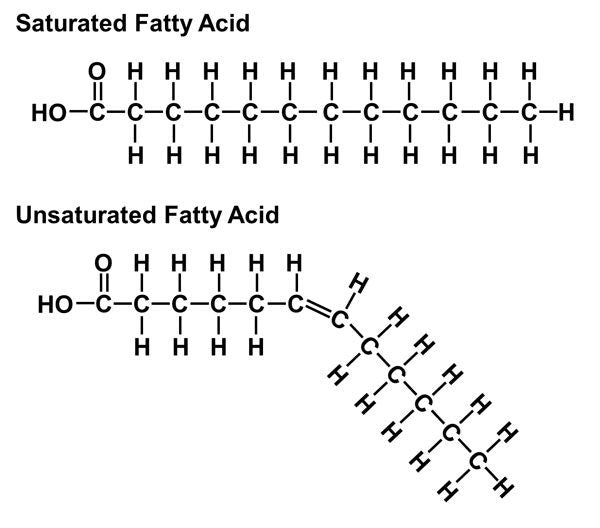
Saturated Fat
No double bonds between carbons in the fatty acid tail
Carbon skeleton is bonded to the maximum number of hydrogens
Carbon skeleton is straight and pack tightly together
Solid at room temp
Animal fats

Unsaturated Fat
One or more double bonds between carbons in the fatty acid tail
Carbon skeleton is not bonded to the maximum number of hydrogens
Carbon skeleton kinks at each C=C prevents tight packing of the fatty acid chains
Liquid at room temp
Plaint oils
Phospholipids
Compounds with molecular building blocks of glycerol, two fatty acids, a phosphate group, and usually an additional small chemical group attached to the phosphate
Shows ambivalent behavior towards water. Hydrocarbon tails are hydrophobic and the polar head is hydrophillic
Cluster in water as their hydrophobic portions turn away from water, the hydrophobic tails turn toward the water-free interior and the hydrophilic phosphate heads arrange facing outward in contact with water
Are major constituents of cell membranes. At the cell surface, phospholipids form a bilayer held together by hydrophobic interactions among the hydrocarbon tails.

Steroids
Lipids which have four fused carbon rings with various functional groups attached. Cholesterol is an important steroid
Is the precursor to many other steroids including vertebrate sex hormones and bile acids
Is a common component of animal cell membranes
Can contribute to atherosclerosis
Polypeptide chains
Polymers of amino acids that are arranged in a specific linear sequence and are linked by peptide bonds
Protein
A macromolecule that consists of one or more polypeptide chains folded and coiled into specific conformations
Structural support
Storage
Transport
Coordination of an organism’s activities
Cellular response to chemical stimuli
Movement
Defense against foreign substances
Catalysis of biochemical reactions
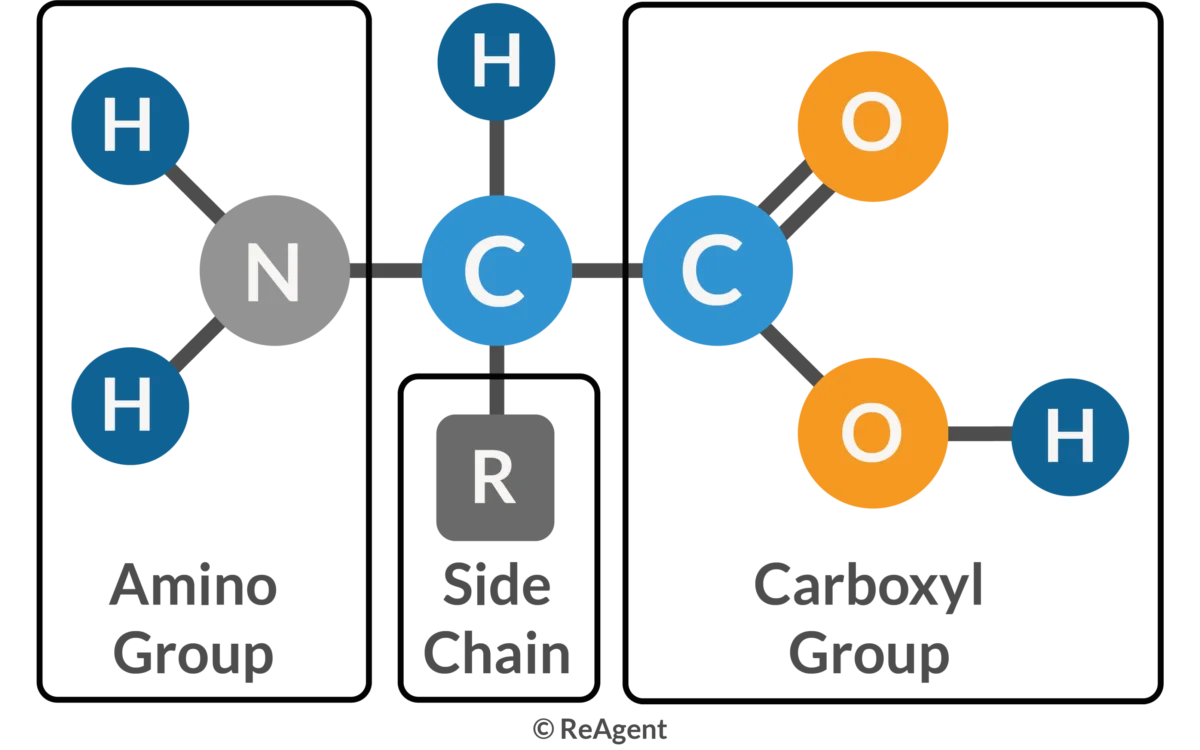
Amino acid
Building block molecule of a protein; most consist of an asymmetric carbon, termed the alpha carbon, which is covalently bonded to a(n):
Hydrogen atom
Carboxyl group
Amino group
Variable group (R) - side chain specific to each amino acid, physical and chemical properties of the side chain determine the uniqueness of each amino acid
Peptide bond
Covalent bond formed by dehydration synthesis that links the carboxyl group of one amino acid to the amino group of another
Has a backbone of the repeating sequence N-C-C-N-C-C

Primary structure
Unique sequence of amino acids in the protein.
stabilized by the peptide bonds between the amino acids
Secondary structure
Regular, repeated coiling and folding of a protein’s polypeptide backbone
Stabilized by hydrogen bonds between peptide linkages in the protein’s backbone
Tertiary structure
The three-dimensional shape of a protein. The irregular contortions of a protein are due to bonding between and among side chains and to interaction between R groups and the aqueous environment. Types of bonds contributing to tertiary structure are weak interactions and covalent linkage
Quarternary structure
Structure that results from the interactions between and among several polypeptide chains
Denaturation
A process that alters a protein’s native conformation and biological activity
Proteins can be denatured by:
Transfer to an organic solvent. Hydrophobic side chains, normally inside the protein’s core, move towards the outside. Hydrophilic side chains turn away from the solvent towards the molecule’s interior.
Chemical agents that disrupt hydrogen bonds, ionic bonds, and disulfide bridges
Excessive heat
Deoxyribonucleic acid (DNA)
Contains coded information that programs all cell activity
Contains directions for its own replication
Is coped and passed from one generation of cells to another
In eukaryotic cells, is found primarily in the nucleus
Makes up genes that contain instructions for protein synthesis. Genes do not directly make proteins, but directs the synthesis of mRNA
Ribonucleic Acid (RNA)
Functions in the actual synthesis of proteins coded for by DNA
Sites of protein synthesis are on ribosomes in the cytoplasm
Messengry RNA carries encoded genetic message from the nucleus to the cytoplasm
The flow of genetic information goes from DNA → RNA → Protein
Nucleic Acid
Polymer of nucleotides linked together by dehydration synthesis.
Nucleotide
Building block molecule of a nucleic acid; made of a five-carbon sugar covalently bonded to a phosphate group and nitrogenous base
Pyrimidine
Nitrogenous base characterized by a six-membered ring made up of carbon and nitrogen atoms
Cytosine
Thymine
Uracil
Purine
Nitrogenous base characterized by a five-membered ring fused to a six-membered ring.
Adenine
Guanine