Lecture 12: Leukocytes
 Call Kai
 Learn
Learn Practice Test
 Spaced Repetition
 Match
Match Flashcards
 Knowt Play
1/68

Earn XP
Description and Tags
Morphology, Kinetics, & Functions
Name | Mastery | Learn | Test | Matching | Spaced | Call with Kai | Chat |
|---|
No analytics yet
Send a link to your students to track their progress
69 Terms
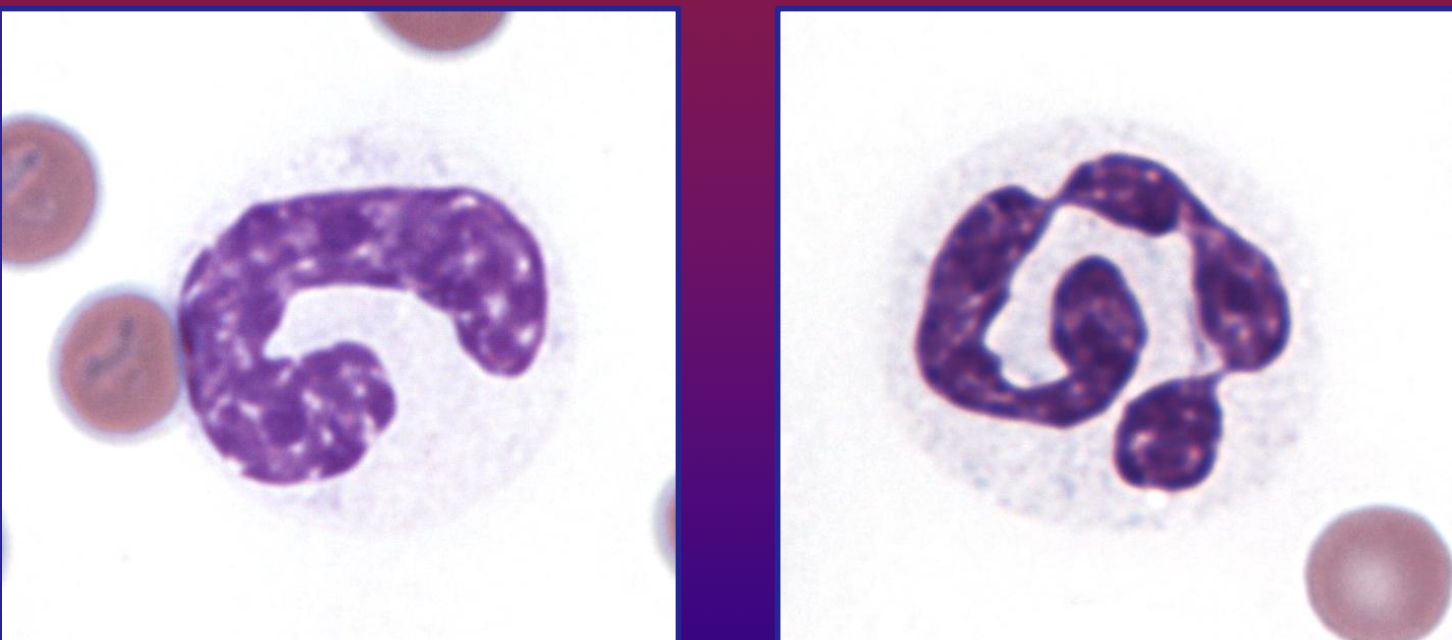
What is the morphology of these two neutrophils?
left: band
right: mature
True or false: neutrophils are granulocytes with lysosomes containing hydrolytic enzymes and anitbacterial agents.
true
When do primary granules appear in granulocytes?
late myeloblast/early promyelocyte stage
When do secondary granules appear in granulocytes?
in myelocytes
What is the granulocyte equivalent of neutrophils in birds and reptiles, but with variably stained red granules?
heterophils
What is commonly mistaken for eosinophils in histopathology, with variably stained red granules?
heterophils
Some lymphocytes recirculate from tissues to ______.
blood
Some monocytes may shuttle back to ________.
bone marrow
What is the half-life of neutrophils in blood?
5-10 hours
How long do neutrophils usually survive in tissues?
a few days
What occurs if neutrophils remain in blood after half-life?
spontaneous apoptosis
What is the half-life in blood of eosinophils and basophils?
E: less than one day
B: 2-3 days
How long do eosinophils and basophils survive in tissues?
E: weeks to months
B: a few days
Where is a marginating pool of monocytes found?
within lung capillaries
How do monocytes survive weeks to months in tissues?
develop into macrophage and dendritic cells
Where are most lymphocytes found?
lymphoid organs
What percentage of total lymphocytes are found in the blood?
2-5%
What type of lymphocyte are most blood lymphocytes?
naive T and B lymphocytes
What is the function of high endothelial venules (HEVs)?
bind lymphocytes and facilitate movement from blood in lymphoid organs
What is the half-life in blood of circulating lymphocytes?
about 30 minutes
How long do lymphocytes take to migrate through a lymph node?
about one day
True or false: memory lymphocytes will return to any tissue.
false: they favor return to a similar type of tissue
True or false: proliferating cell exhibit minimal migration
true
How long do B-lymphocytes survive vs their proliferating clones?
2-3 weeks individual cells, clones for years
What is the main function of neutrophils?
recognize chemoattractants, migrate through the tissues and destroy invading bacteria
Why do neutrophils require various surface adhesion molecules?
adhesion and spreading
haptotaxis (chemotaxis except surface bound movement)
phagocytosis
What are some examples of neutrophil activants?
opsonized particles, immune complexes, bacterial products, GM-CSF, G-CSF, and chemoattractants produced during inflammation
tight binding of Beta-2 integrin to intracellular adhesion molecules (ICAMs)
activated endothelial cells
superoxide generation, degranulation
What is the mechanism of neutrophilic haptotaxis?
receptors for chemoattractants increased following activation → crawl using Beta1-3 integrin molecules binding to appropriate adhesion molecules within extracellular matrix
What are the chemoattractants involved in neutrophilic haptotaxis?
IL8 and other chemokines
C5a, PAF, leukotriene B4
bacterial products recognized by TLRs
Describe the steps of neutrophilic attachment.
random contact (endothelial cell activation) → rolling (selectins) → firm adhesion (leukocyte activation) → diapedesis (integrins) → haptotaxis & chemoattractants
What important neutrophilic enzyme is responsible for hypochlorous acid production?
myeloperoxidase
What are some leukocyte mechanisms of killing?
direct damage from reactive oxygen species (ROS) including the superoxide free radical
enzymes: collagenase, acid and neutral hydrolases, lysozyme
nonenzymatic protein molecules in granules
myeloperoxidase enhanced H2O2 killing
What are the nonenzymatic protein molecules in granules responsible for killing?
cationic proteins and peptides including defensins which are inserted in lipid bilayer
lactoferrin binds iron
What is required by NETosis to bind and kill bacteria, fungi, parasites, and possibly some viruses?
production of superoxide free radicals
True or false: NETosis is an active form of cell death that is different from apoptois or necrosis.
true
What leukocyte has little phagocytic ability, with poor defense against bacteria and viruses?
eosinophils
Where are most tissue eosinophils found?
GI mucosa
What is the function of eosinophils?
respond to type 2 cytokine-induced inflammation:
produces type 1 hypersensitivity allergic reactions
host defense against helminths (roundworms, flukes)
What is used to kill organisms too large to phagocytize, such as helminths?
oxygen metabolites and major basic protein, eosinophil cationic proteins, and eosinophil neurotoxin from granules damage/kill helminths
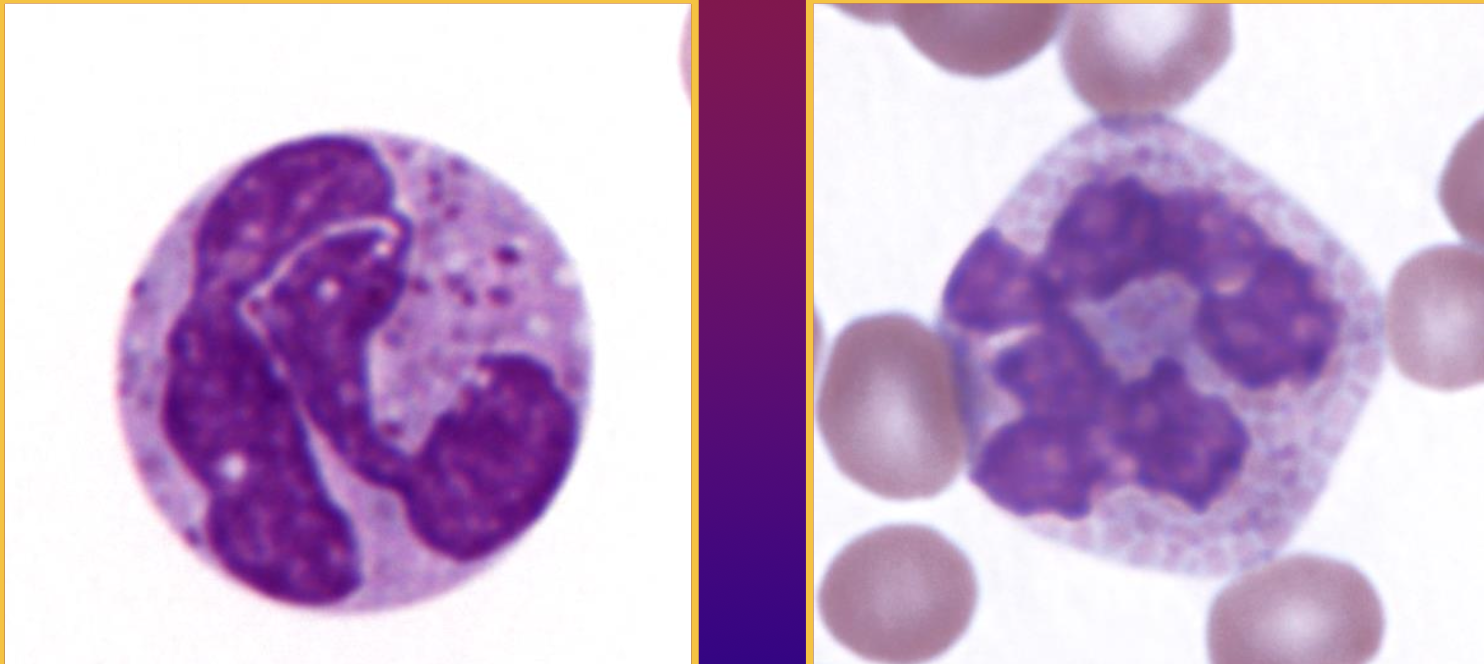
What type of leukocyte is this?
basophil
What is the site of maturation for basophils vs mast cells?
B: marrow
M: tissues
Are mature basophil and mast cells normally found in tissues?
B: no
M: yes
How long do basophils survive vs mast cells?
B: days
M: weeks to months
Why do basophil and mast cell granules have a purple color?
histamine is bound to polyanions such as heparin
When are basophils recruited?
to sites of inflammation after exposure to allergens, helminths, ectoparasites
What is the function of basophil and mast cells?
release histamine and other mediators following antigen-IgE binding
contribute to inflammation: expulsion of parasites and eosinophil recruitment
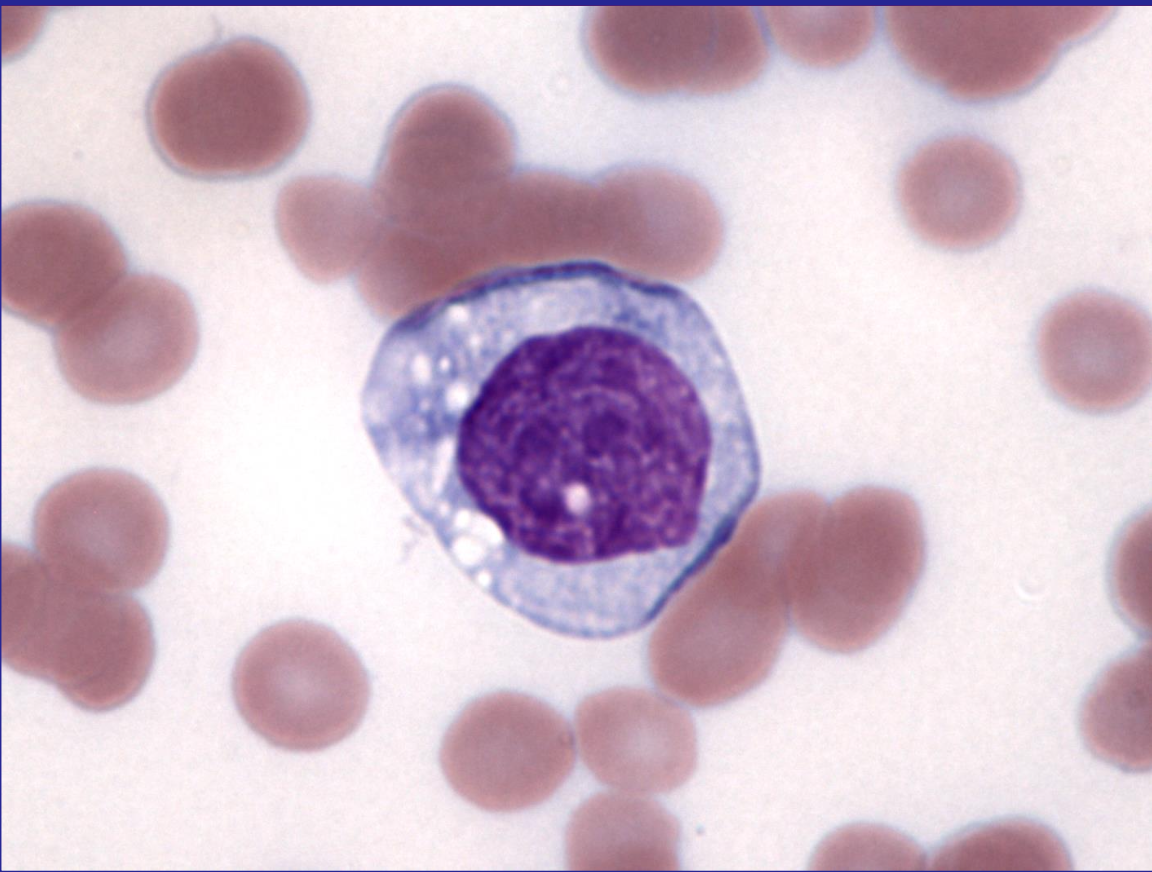
What is this?
monocytes
What is the function of monocytes?
migrate into tissue to become macrophages and dendritic cells
phagocytosis, antigen presentation to T lymphocytes, cytokine production (inflammation, hematopoiesis)
What type of cell is rapidly mobilized from marrow in response to inflammatory conditions?
monocyte
True or false: monocyte chemoattractants are similar to neutrophils.
true
What are monocytes less and more effective against?
less effective against bacteria
more effective against viruses, protozoa, and fungi
What promotes the transformation of monocytes to macrophages?
M-CSF
What are the two types of macrophages?
M1: antimicrobial
M2: wound repair, tissue remodeling
What increases when monocytes transform to macrophages?
increased size, granules, mitochondria, phagocytic capacity
What cell has more staying (synthesize new membranes and lysosomes) than neutrophils?
neutrophils
True or false: macrophages migrate faster than neutrophils
false
What two types of immunity do macrophages link?
innate and adaptive:
TLRs recognize bacterial molecules
Fc and complement receptors for opsonized microorganisms
What antimicrobial properties do macrophages have?
NADPH oxidase, but less myeloperoxidase than neutrophils
Nitric oxide more important free radical for killing
What do macrophage scavenger receptors bind?
aged or damage cells
necrophagocytosis
What role do macophages play in immune modulation?
antigen processing
tumor cell killing after sensitization by T lymphocytes
synthesis of various cytokines
True or false: macrophages play a role in wound healing.
true
What two lymphocytes have granules?
cytotoxic T lymphocytes
NK cells
What is the function of T lymphocytes?
cellular immunity & produce cytokines that effect hematopoiesis
What do CD8+ cytotoxic T cells do?
antigen-dependent cells that destroy target cells (ex. neoplastic cells or virus-infected cells)
What do CD4+ Th lymphocytes do?
provide defense against pathogens and neoplasia by recruiting and activating various immune cells
What are the functions of B lymphocytes?
intact antigens recognized and bound to B cell receptors (BCRs)
immunoglobulin production with participation from T lymphocytes, DCs, and macrophages
following activation → Ig-producing immunoblasts and plasma cells are produced
What immunoglobulin is produced by B lymphocytes initially, and what is produced after continued antigenic stimulation?
IgM → IgG
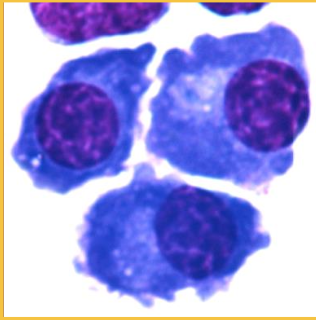
Plasma cells
What is the function of an NK cell?
bind to target tumor cells and virus-infected cells and induce apoptosis similar to cytotoxic T lymphocytes