Important NREMT stuff
 Call Kai
 Learn
Learn Practice Test
 Spaced Repetition
 Match
Match Flashcards
 Knowt Play
1/208

There's no tags or description
Looks like no tags are added yet.
Name | Mastery | Learn | Test | Matching | Spaced | Call with Kai | Chat |
|---|
No analytics yet
Send a link to your students to track their progress
209 Terms
Urticaria
Hives
Cellulitis
Part of skin is red, swollen, painful, warm to the touch, blistered, etc.
it is an infection
Acute coronary syndrome
Nitro & aspirin
Blood supply to the cells of the heart is blocked or disrupted
caused by sudden cardiac ischemia (heart is hypoxic)
Symptoms: dyspnea, pain could radiate to the jaw, neck, arm(s), nausea, syncope, abnormal bp, abnormal pulse
Coronary Artery Disease
Conditions that narrow or block the arteries of the heart Often results from fatty deposit buildup on the inner walls of arteries Buildup narrows the inner vessel diameter, restricting the flow of blood.
Thrombus
Blood clot
Embolism
The lodging of an embolus—a traveling mass of undissolved matter such as a blood clot, fat globule, air bubble, or tumor tissue—inside a blood vessel. It completely or partially blocks blood flow, depriving downstream tissues of oxygen.
Congestive heart failure
A chronic, progressive condition where the heart's muscle is too weak or stiff to pump blood efficiently. This causes blood and fluid to back up, leading to congestion in the lungs, liver, abdomen, and lower extremities
Symptoms: pulmonary edema, pedal edema
Right sided heart failure
Abdonimal distention
Pedal Edema
JVD
Left sided heart failure
Pulmonary Edema
Fluid leaks into alveoli
Aneurysm
the weakened sections of arterial walls begins to dilate
COPD
A progressive lung condition that causes obstructed airflow and breathing difficulties
CPAP
Opens alveoli; good for pulmonary edema, asthma, COPD, etc.
Contraindications are vomiting and hypotension
Emesis
Vommiting
Emphysema
Destroys alveoli
Primary symptom: dyspnea
other symptoms:
“barrel” chest
dry or unproductive cough
cyanosis
mucus
Type of COPD
Treatment: CPAP
Chronic Bronchitis
inflammation and irritation of the bronchial tubes
Primary symptom: A daily, persistent cough with heavy mucus production
Can cause cyanosis same stuff as emphysema
Baseline ETCO2
35-45mmHg
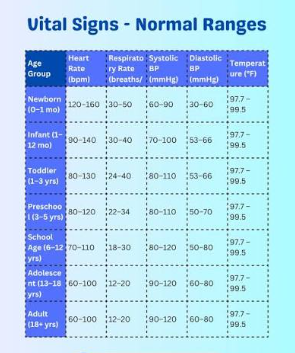
Vitals across all age groups
Paradoxical motion
The chest or abdomen moves inward during inhalation and outward during exhalation (the reverse of normal breathing)
Pneumothorax
occurs when air leaks into the space between your lung and chest wall
symptoms: tachy, hypoxia, etc
Tension pneumothorax
Cause: air continually leaks into the pleural space and cannot escape. This creates immense pressure, compressing the heart and unaffected lung
Symptoms: Absent breath sounds, JVD, hypotension, and tracheal deviation (late stage)
Carbon monoxide poisoning
Cherry red skin
Normal SPO2 levels (carbon monoxide binds to their heme (iron) molecules 200 x more then oxygen roughly, they won’t have enough oxygen, even though their SPO2 reading is in the normal range.)
AMS
Croup
Caused by a viral infection
Affects young children and infants
Primary Symptoms: Begins like a common cold, leading to a "seal bark" cough, noisy breathing, hoarseness, and low-grade fever.
Normally presents as inspiratory stridor that is suggestive of an upper airway occlusion caused by swelling. A patient with croup also experiences wheezes and is more than likely suffering from an infection that has spread to the lower airway. A
Epiglottitis
Inflammation of the epiglottis caused by a bacterial infection
Symptoms are the 4ds: drooling, dysphagia, dysphonia, distress (respiratory)
Pyrexia
fever
Dysphagia
difficulty/discomfort swallowing
Aphasia
neurological disorder caused by brain damage that impairs a person's ability to speak, write, and understand language
AO X 4
person, place, time, event
kussmaul respirations
deep, rapid, and labored breathing pattern that acts as an emergency response to severe metabolic acidosis
Diabetic Ketoacidosis
life-threatening complication of diabetes where a severe lack of insulin forces the body to burn fat for energy. This produces toxic acids called ketones, which build up in the blood.
Symptoms: Kussmaul respirations, hyperglycemia, fruity breath, AMS, persistent vomiting
Battle’s sign
bruising over the mastoid bone (directly behind the ear). It is a critical, delayed indicator of a basilar skull fracture—a severe break at the base of the skull—and warns of potential underlying brain trauma
Cushing’s triad
Cushing's triad is a classic medical sign indicating severely increased intracranial pressure (ICP) and imminent brain herniation
widened pulse pressure
bradycardia
generally cheyne stokes respirations but could present with any respiratory difficulties
Chyene-stokes respirations
abnormal pattern of breathing characterized by a repeating cycle of progressively deeper, and sometimes faster, breathing that gradually slows down, followed by a temporary stop in breathing
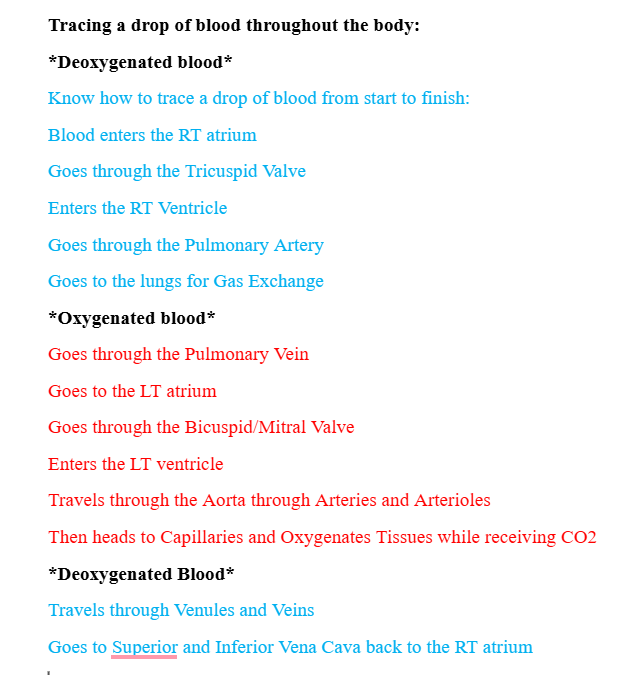
Circulatory anatomy
What is considered the upper airway?
The Nasal cavity, Oral cavity, Nasopharynx, Oropharynx, Laryngopharynx, Epiglottis, and the Larynx.
What is considered the lower airway?
The Trachea, Bronchi, Bronchioles, and the Alveoli.
Only in this side: Gallbladder (looks like teardrop)
Shares pancreas with the left upper quadrant
Right kidney is split and shared with RLQ
Colon is in all 4Qs
Spleen & stomach are unique to this quadrant
Pancreas is shared with the RUQ
Colon is in all 4Qs
Shares left kidney with the LLQ
Colon is in all 4Qs
Small intestines is shared with LLQ
Major artery and vein to the right leg
Right Ureter connected to the Right Kidney and bladder
Appendix is unique to this RLQ
Bladder is in the RLQ and LLQ split by the midline.
Colon is in all 4qs
Small intestines is shared with the RLQ
Major artery and vein to the left leg
Ureter connected to the Left Kidney and bladder
Bladder is in the RLQ and LLQ split by the midline.
Closer/further to the trunk (core) of the body or the origin of a limb.
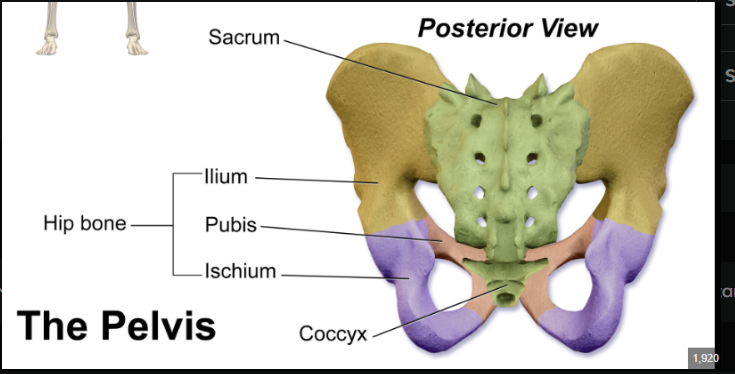
Respiratory system
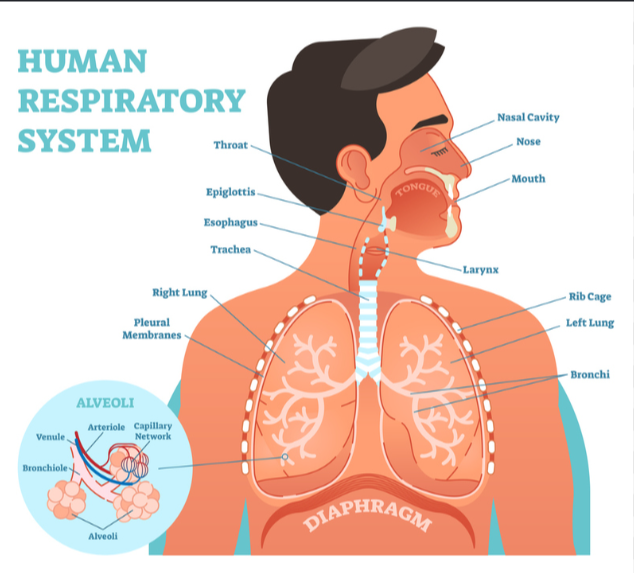
Sacrum & coccyx are fused togethe
Contra: systolic<90, ed meds, ICP
Vasodilator
Side effects: hypotension, and all the stuff associated w/ it, tachy
.15 child
.5mg adult
Side effects: tachy, palpitations, hypertension
Bronchospasm: sudden tightening of muscles in the airway walls (bronchi), causing severe breathing difficulty, wheezing, coughing, and chest tightness(asthma, COPD)
Side effects: Tachy, shaking, dizziness, headaches
Sudden opioid withdraw and all side effects that come along w it
in/im
BS below 70mg/dL w/ altered mental
Poisoning
400-800mg
Right time
Right medication
Right dose
Right route of administration
325-650mg
25-50mg
1mg IM
Used for nausea and vomiting
4mg ODT (sublingual dissolved) or oral
Bronchospasm (often used w/ albuterol)
0.5mg via nebulized inhalation
Insecticides
Ingestion of acids, alkalis, or petroleum products
Active emesis
Inability to swallow
Activated charcoal can not reverse this damage and swallowing it may cause further damage.
Examples of caustic materials are oven cleaners, drain cleaners, toilet bowl cleaners, and lye.
Patients who have consumed gasoline may also not take activated charcoal because they are likely coughing violently and possibly aspirating gasoline.