Hawaii Drivers Permit Test
 Studied by 0 people
 Call with Kai
 Learn
Learn Practice Test
 Spaced Repetition
 Match
Match Flashcards
 Knowt Play
1/176

There's no tags or description
Looks like no tags are added yet.
Name | Mastery | Learn | Test | Matching | Spaced | Call with Kai |
|---|
No study sessions yet.
177 Terms
When you take a road test for a driver's license:
1. You must provide the vehicle.
2. The vehicle must be in safe operating condition free of safety defects.
3. You must be accompanied to the testing station by a licensed driver.
4. All of the above.
4. All of the above.
When you change your address you must notify the County Examiner of drivers:
1. In writing, within 30 days.
2. In writing, within 10 days.
3. In person, within 10 days.
4. By telephone, within 30 days.
1. In writing, within 30 days.
When you change your name you must notify the County Examiner of drivers in person with proof of the change within:
1. 60 days.
2. 20 days.
3. 10 days.
4. 30 days.
4. 30 days.
When driving a vehicle upon any public street or highway you must:
1. Show your driver's license upon demand.
2. Carry your license with you.
3. Have a valid driver's license.
4. All of the above.
4. All of the above.
When your driver's license expires you may:
1. Drive during the grace period of 90 days.
2. Drive as long as you are accompanied by a licensed driver.
3. You may not drive but you may renew your driver's license within a year after the expiration following normal license renewal steps.
4. Drive to and from work only.
3. You may not drive but you may renew your driver's license within a year after the expiration following normal license renewal steps.
All head lamps on your vehicle must work properly and be correctly adjusted:
1. When driving in city traffic.
2. At all times.
3. When driving on freeways.
4. When approaching other vehicles.
2. At all times.
Which of the following equipment may you have installed on your private vehicle?
1. A red light showing the front, or a blue light visible outside of the vehicle.
2. A bell, exhaust whistle or siren.
3. A muffler cut-out or by pass if used only on country roads.
4. None of the above.
4. None of the above.
A copy of the vehicle inspection certificate:
1. Should be kept in the vehicle.
2. Filed with your State income tax return.
3. Be kept in a safe place in the home
4. Will be sent to you by the County Department of Finance.
1. Should be kept in the vehicle.
The mechanical condition of the vehicle is the responsibility of:
1. The legal owner of the vehicle.
2. The garage mechanic.
3. The vehicle driver and registered owner of the vehicle.
4. The insurance company.
3. The vehicle driver and registered owner of the vehicle.
A leaky exhaust system in your vehicle is dangerous because it can cause:
1. A loss of hearing.
2. Pollution.
3. Carbon monoxide poisoning.
4. Poor engine performance.
3. Carbon monoxide poisoning.
The agencies responsible for Vehicle Registration and Licensing are:
1. The County Police Departments.
2. The County Departments of Public Works.
3. The State Department of Transportation.
4. The different county agencies.
4. The different county agencies.
When you as a registered owner of a vehicle change your address from that shown on the registration certificate you:
1. Must notify the County Department of Finance when renewing the license.
2. Must notify the County Department of Finance within 30 days after the change.
3. Must make the change only when selling or trading the car.
4. Do not have to do anything.
2. Must notify the County Department of Finance within 30 days after the change.
The most important thing in any driving situation is:
1. The vehicle.
2. The environment (the high way and traffic).
3. The driver (you).
4. The time of day.
3. The driver (you).
The boss chews you out just before quitting time. You don't say much, but you think he is unfair and you are angry! When you get to your car you should:
1. Play the radio loud so you won't think about it.
2. Drive fast on the Interstate so you can let off steam.
3. Take a few minutes to cool off before you drive home.
4. Stop in at your favorite bar and have a few drinks before driving home.
3. Take a few minutes to cool off before you drive home.
As a driver, you may be challenged by other drivers to demonstrate your driving capabilities and your vehicle's capabilities on the highway. You should:
1. Resist the desire to exhibit and compete.
2. Decline all challenges to prove you or your vehicle's capabilities.
3. Take on only those challenges which you know you can safely win.
4. Both 1 and 2 above.
4. Both 1 and 2 above.
To insure that your physical condition does not cause you to drive in an unsafe manner you should:
1. Keep physically fit and have regular physical examinations.
2. Know the effect of any medicine on your driving ability.
3. Drive within your physical limitations.
4. All of the above.
4. All of the above.
A police officer directing traffic directs you to go through a red light, what should you do?
1. Stop, and then go.
2. Wait for the green light.
3. Go on as directed.
4. Make a right turn.
3. Go on as directed.
Which of the following influences your driving actions most?
1. Your height.
2. Your age.
3. Your attitude towards driving.
4. Your reaction time.
3. Your attitude towards driving.
Traffic signs and pavement markings must be:
1. Always obeyed.
2. Used as a guide only.
3. Followed only when there is other traffic.
4. Followed only when a police officer is present.
1. Always obeyed.
You are driving on a narrow road and you meet an oncoming vehicle. You must:
1. Pull completely off the road and stop.
2. Allow the on-coming vehicle at least one-half of the main travelled portion of the road.
3. Make the other vehicle pull over as you were there first.
4. Turn on your headlights to make sure the other vehicle sees you.
2. Allow the on-coming vehicle at least one-half of the main travelled portion of the road.
You are passing a car when you see the sign on the picture. You should:
1. Speed up and finish passing as soon as you can.
2. Pass on the right.
3. Drop back and pass after the intersection if it's safe.
4. Stay beside the car until passing the intersection.
3. Drop back and pass after the intersection if it's safe.
You are following the slow moving vehicle in the picture on a two lane road. You may:
1. Not pass the vehicle.
2. Pass on the left if no traffic is coming.
3. Pass on the right using the paved shoulder.
4. None of the above.
4. None of the above.
You are driving on a street marked for one-way traffic. You may pass the vehicle in the picture:
1. On the left only.
2. On the right only.
3. On either the right or the left.
4. You must always use the lane furthest to the left to pass.
3. On either the right or the left.
When turning or changing lanes you must:
1. Always signal your intentions even when there is no traffic visible.
2. Signal only if there is traffic.
3. Signal only when driving at night.
4. Signal only when driving in traffic at night.
1. Always signal your intentions even when there is no traffic visible.
You are coming to a railroad crossing and the crossing signals are flashing. You should:
1. Stop and look for a train.
2. Slow down and look for a train.
3. Look for a train, then speed up.
4. Do what the approaching vehicle does.
1. Stop and look for a train.
You must not drive your vehicle at a speed greater than:
1. The posted maximum speed limit.
2. A speed that is greater than is reasonable and prudent.
3. A speed that is safe for existing conditions.
4. All of the above.
4. All of the above.
When you leave your vehicle unattended, you must:
1. Stop the engine.
2. Lock the ignition and remove the ignition key.
3. Set the parking brake.
4. All of the above.
4. All of the above.
You are driving on the roadway and hear a siren behind you. You should:
1. Stop.
2. Pull over to the right and stop.
3. Speed up to get out of the way.
4. Slow down.
4. Slow down.
You are driving on the roadway and there is an emergency vehicle with siren and flashing lights directly behind you. You are in heavy traffic and cannot get out of the way. You should:
1. Stop.
2. Blow your horn.
3. Force your way into traffic in the adjoining lane.
4. Keep moving slowly until you can get out of the way.
4. Keep moving slowly until you can get out of the way.
You may pass another vehicle:
1. On a curve or a hill because the chance is small that another vehicle is coming.
2. On the shoulder of the highway.
3. When there is a solid yellow line in your lane if it's clear ahead.
4. None of the above.
4. None of the above.
You may pass a school bus from the front or rear on an undivided roadway:
1. Never.
2. When the red lamps on the school bus are flashing.
3. When the red lamps on the school bus are not flashing.
4. At anytime, if you go slow.
3. When the red lamps on the school bus are not flashing.
An intersection has no traffic signs or signals. You arrive at the same time as another vehicle. You should:
1. Speed up and get through the intersection.
2. Slow down and yield to the vehicle on the right.
3. Drive into the intersection and make the other vehicle stop.
4. Honk your horn and drive through the intersection.
2. Slow down and yield to the vehicle on the right.
You are coming to this intersection (a yield sign is shown). You should:
1. Stop.
2. Slow down, stop if necessary and let all other crossing vehicles go first.
3. Speed up to clear the intersection.
4. Keep going as the sign is for the other vehicle.
2. Slow down, stop if necessary and let all other crossing vehicles go first.
You are coming to this intersection (a stop sign is shown). You should:
1. Slow down and look for other vehicles.
2. Come to a complete stop and let all crossing traffic go.
3. Stop only if there are other vehicles coming.
4. Stop only if you are going to make a left turn.
2. Come to a complete stop and let all crossing traffic go.
You are coming to an intersection and have a green light. Pedestrians are crossing against the red. You should:
1. Honk your horn.
2. Speed up and pass in front of the pedestrians.
3. Stop to let the pedestrians cross safely.
4. Drive close and frighten the pedestrians so they'll think twice before crossing against a red light.
3. Stop to let the pedestrians cross safely.
When you drive into the street from any driveway you:
1. Must drive slowly so approaching vehicles and pedestrians can get out of your way.
2. Must honk the horn so approaching vehicles and pedestrians can allow you room.
3. Must stop and proceed only when there are no pedestrians or vehicles approaching.
4. Can disregard pedestrians if there is no sidewalk.
3. Must stop and proceed only when there are no pedestrians or vehicles approaching.
You and another vehicle are approaching an intersection that has no traffic signs or signals. Which vehicle has the right of way?
1. The vehicle on the left.
2. The vehicle on the right.
3. The vehicle with the greatest speed.
4. The vehicle that enters the intersection first.
2. The vehicle on the right.
When turning left at an intersection or into any driveway you:
1. Should leave room on the right for other vehicles to pass.
2. Must yield to vehicles approaching closely from the opposite direction.
3. Must not cross any solid yellow line.
4. Must not block vehicles approaching from the rear.
2. Must yield to vehicles approaching closely from the opposite direction.
You are stopped behind other vehicles waiting at a stop sign. When the intersection is clear:
1. You may proceed through the intersection without stopping again.
2. You must stop again at the stop sign or stop line.
3. You may go through the intersection slowly without stopping if there is no other traffic.
4. You may follow the vehicle ahead without stopping again.
2. You must stop again at the stop sign or stop line.
You are driving on a divided multi-lane highway when you see or hear the signal of an approaching emergency vehicle. You should:
1. Disregard the signal if there are other lanes available for the emergency vehicle.
2. Stop as quickly as you can.
3. Slow down, move your vehicle to provide a clear path for the emergency vehicle and stop.
4. Increase your speed to provide a clear path for the emergency vehicle.
3. Slow down, move your vehicle to provide a clear path for the emergency vehicle and stop.
A vehicle using emergency signals is approaching from the opposite direction on a two-lane street or highway. You should:
1. Stop as quickly as you can.
2. Slow down, move as far to the right as possible and stop.
3. Disregard the emergency vehicle as it is going the other way.
4. None of the above.
2. Slow down, move as far to the right as possible and stop.
On a two-lane street your vehicle is being followed by a fire engine that is not using emergency signals. You should:
1. Continue to drive in a normal manner.
2. Stop as quickly as you can.
3. Speed up to get out of the way.
4. Slow down, move as far to the right as possible and stop.
1. Continue to drive in a normal manner.
Certain highway signs and markings require that you must obey the indicated instruction. Such signs are known as:
1. Regulatory signs.
2. Warning signs.
3. Information signs.
4. Guide signs.
1. Regulatory signs.
Certain highway signs and markings contain information about hazardous conditions. Such signs are known as:
1. Regulatory signs.
2. Warning signs.
3. Information signs.
4. Guide signs.
2. Warning signs.
You are turning onto a two-lane road divided by a broken yellow line. You know immediately that:
1. You are on a two-way road.
2. You are on a one-way road.
3. That the road is under repair.
4. That you must stay to the left of the broken yellow lines.
1. You are on a two-way road.
You are driving on a highway divided by two solid yellow lines. You know that:
1. You may cross these lines only to make a left turn into or from an alley, private road or a driveway.
2. You may cross these lines to pass other vehicles only if there is no on-coming traffic.
3. You may never cross these lines.
4. You may cross these lines only to make a U-turn.
1. You may cross these lines only to make a left turn into or from an alley, private road or a driveway.
You are driving and have started to pass the other car. You should:
1. Speed up and pass as soon as possible.
2. Slam on your brakes.
3. Slow down and move into the right lane behind the other car.
4. Stay in the left lane until passing the intersection.
3. Slow down and move into the right lane behind the other car.
You are driving on a four-lane divided highway. You should know that:
1. White lane lines separate lanes of traffic moving in the same direction.
2. White lane lines separate lanes of traffic moving in the opposite direction.
3. Yellow lane lines separate lanes of traffic moving in the same direction.
4. None of the above.
1. White lane lines separate lanes of traffic moving in the same direction.
You are driving on a four-lane divided highway. The traffic lanes are indicated by a solid white line. You should know that:
1. The solid white line may not be crossed.
2. The solid white line may be crossed at anytime.
3. The solid white line may be crossed only in unusual circumstances and then only with great care.
4. The solid white line separates traffic moving in opposite directions.
3. The solid white line may be crossed only in unusual circumstances and then only with great care.
You are driving on a four-lane highway. You should know that a double solid white line:
1. May not be crossed.
2. May be crossed only with great care.
3. Is used to separate traffic moving in the opposite direction.
4. Are never used on highways.
1. May not be crossed.
51. Edgelines are solid ______ or ______ lines along the edges of the roadway to be used as a safety guide to mark the limits of the travelled roadway.
1. Yellow; white.
2. Red; white.
3. Orange; white.
4. Green; white.
1. Yellow; white.
Stop lines are solid white lines painted across the traffic lanes at ______ and ______ indicating the exact place at which to stop.
1. Curves; hills.
2. Churches; schools.
3. Intersections; pedestrian crosswalks.
4. Freeway on ramps; fire stations.
3. Intersections; pedestrian crosswalks.
Crosswalk lines are two solid white lines painted across the traffic lanes. As a driver you should know that:
1. Motor vehicles have the right of way over pedestrians in these crosswalks.
2. When pedestrians are in these crosswalks, they have the right of way over motor vehicles.
3. No one has the right of way in a crosswalk.
4. Pedestrians are responsible to keep out of the way of all traffic.
2. When pedestrians are in these crosswalks, they have the right of way over motor vehicles.
You are driving on a multi-lane roadway. The center lane is formed by a combination of yellow solid and dashed lines as shown in the picture. You as a driver should know:
1. That this marked lane is used for passing only.
2. That this marked lane is used only for left turns by traffic travelling in either direction.
3. That this marked lane is a pedestrian safety zone.
4. That this marked lane is used for truck and bus traffic only.
2. That this marked lane is used only for left turns by traffic travelling in either direction.
Obstruction markings are solid white or yellow lines painted in the traffic lanes to guide you around obstructions in the road. As a driver you should know:
1. You may pass to either side of white obstruction markings.
2. You may pass to either side of yellow obstruction markings.
3. Both 1 and 2 above.
4. None of the above.
1. You may pass to either side of white obstruction markings.
The painted markings in the picture mean that:
1. Vehicles from both lanes can go straight or turn right.
2. Vehicles in the left lane must go straight, and vehicles in the right lane can go straight or turn right.
3. The signs are just advisory.
4. Vehicles in the left lane may go straight or turn left and vehicles in the right lane must turn right.
4. Vehicles in the left lane may go straight or turn left and vehicles in the right lane must turn right.
A red traffic signal light means that you must:
1. Stop at the stop line.
2. When there is no stop line, stop before entering any crosswalk.
3. Where there is no stop line or crosswalk, stop before entering the intersection.
4. All of the above.
4. All of the above.
A stopped vehicle facing a circular red traffic light may if not prohibited by a traffic sign:
1. Turn right after yielding to other traffic and pedestrians.
2. It is illegal to turn right on red.
3. Turn right at anytime.
4. Turn right only after blowing the horn.
1. Turn right after yielding to other traffic and pedestrians.
A stopped vehicle facing a circular red traffic light may turn left if not prohibited by a traffic sign:
1. When there is no other traffic or pedestrians.
2. Never.
3. Only right turns on red are permitted in Hawaii.
4. After yielding to pedestrians and traffic, when turning from a one-way street into another one-way street.
4. After yielding to pedestrians and traffic, when turning from a one-way street into another one-way street.
A steady circular yellow light on a traffic signal means:
1. You should speed up to beat the red light.
2. That a red light is going to be shown immediately thereafter.
3. You should avoid entering the intersection if possible.
4. Both 2 and 3 above.
4. Both 2 and 3 above.
A circular green traffic light means:
1. That you always have the right of way.
2. That you may go straight ahead or turn, except where signs prohibit turns.
3. Traffic and pedestrians already in the intersection must get out of your way.
4. Both 2 and 3 above.
2. That you may go straight ahead or turn, except where signs prohibit turns.
Lighted arrows are sometimes used to control turns from a specific lane. A red arrow:
1. Is never used as a traffic signal.
2. Means the same as a circular red light for the indicated lane of traffic.
3. Means that you may go in the direction indicated by the arrow.
4. Means that the traffic the arrow is pointing toward must stop.
2. Means the same as a circular red light for the indicated lane of traffic.
Lighted arrows are sometimes used to control turns from a specific traffic lane. A yellow arrow:
1. Is never used as a traffic signal.
2. Means the same as a circular yellow light for the indicated lane of traffic.
3. Means that you may go in the direction indicated by the arrow.
4. Is warning the traffic a green arrow is about to be shown.
2. Means the same as a circular yellow light for the indicated lane of traffic.
Lighted arrows are sometimes used to control turns from a specific traffic lane. A green arrow:
1. Is used only on one-way streets.
2. Means the same as a circular green light, but you must go only in the direction the arrow indicates.
3. Means that you may go only if the green arrow is accompanied by a green light.
4. Points the way to the airport.
2. Means the same as a circular green light, but you must go only in the direction the arrow indicates.
A red flashing signal means the same as a:
1. Red light.
2. Stop sign.
3. Yield sign.
4. Caution sign.
2. Stop sign.
You are approaching a flashing red signal at this intersection. You should:
1. Come to a complete stop. Check the traffic and go when it is safe.
2. Slow down and yield the right of way.
3. Stop only if turning left.
4. Be prepared to stop.
1. Come to a complete stop. Check the traffic and go when it is safe.
The yellow flashing signal in the picture means:
1. That the road way ends.
2. That you must stop.
3. That you may proceed only with caution.
4. That you must stop for cross traffic.
3. That you may proceed only with caution.
A lighted red "X" over a traffic lane means:
1. That you may use that lane.
2. That you may not use that lane.
3. That the lane is for traffic coming toward you.
4. Both 2 and 3 above.
4. Both 2 and 3 above.
A lighted green arrow over the traffic lane means:
1. That you may use that lane.
2. That you may not use that lane.
3. That the lane is for traffic coming toward you.
4. Both 2 and 3 above.
1. That you may use that lane.
A yellow "X" over the traffic lane means:
1. That you must move out of that lane of traffic because it is going to be used for on-coming traffic.
2. That you may use that lane.
3. That the lane is for left turns only.
4. That you may use the lane but with caution.
1. That you must move out of that lane of traffic because it is going to be used for on-coming traffic.
Pedestrian signals consist of the lighted words "WALK" and "DON'T WALK" and the symbols of a walking person and an upraised palm. A steady "DON'T WALK" or upraised palm signal means:
1. Pedestrians must not enter the roadway toward the signal.
2. Pedestrians already in the intersection facing the signal may continue to the nearest sidewalk, traffic island or safety zone.
3. Pedestrians already in the intersection facing the signal must run to the nearest sidewalk.
4. Both 1 and 2 above.
4. Both 1 and 2 above.
This is a "reduced speed ahead" sign. You as a driver should know:
1. That you should maintain your vehicle's speed till you
get to the slower speed zone.
2. That you should begin to reduce your vehicle's speed.
3. That it's dangerous to slow down because traffic starts to back up.
4. That the sign is only there for poke-along drivers.
2. That you should begin to reduce your vehicle's speed.
While driving you come upon a sign which says, "reduced speed 35 MPH". You as a driver should know:
1. That the new 35MPH speed zone begin sat this sign.
2. That the new 35 MPH speed zone begins at the next "speed limit" sign.
3. That you have plenty of time to slow down before the speed zone.
4. That the sign is put there to harass "good" drivers.
2. That the new 35 MPH speed zone begins at the next "speed limit" sign.
This is a "do not pass" sign. You as a driver should know:
1. That you must not pass another vehicle where these signs are posted.
2. That you may pass a slow moving vehicle here if you
can pass quickly.
3. That it's all right to pass here if you "know the road ahead."
4. That it's all right to pass here at night when the headlights of oncoming traffic can be seen.
1. That you must not pass another vehicle where these signs are posted.
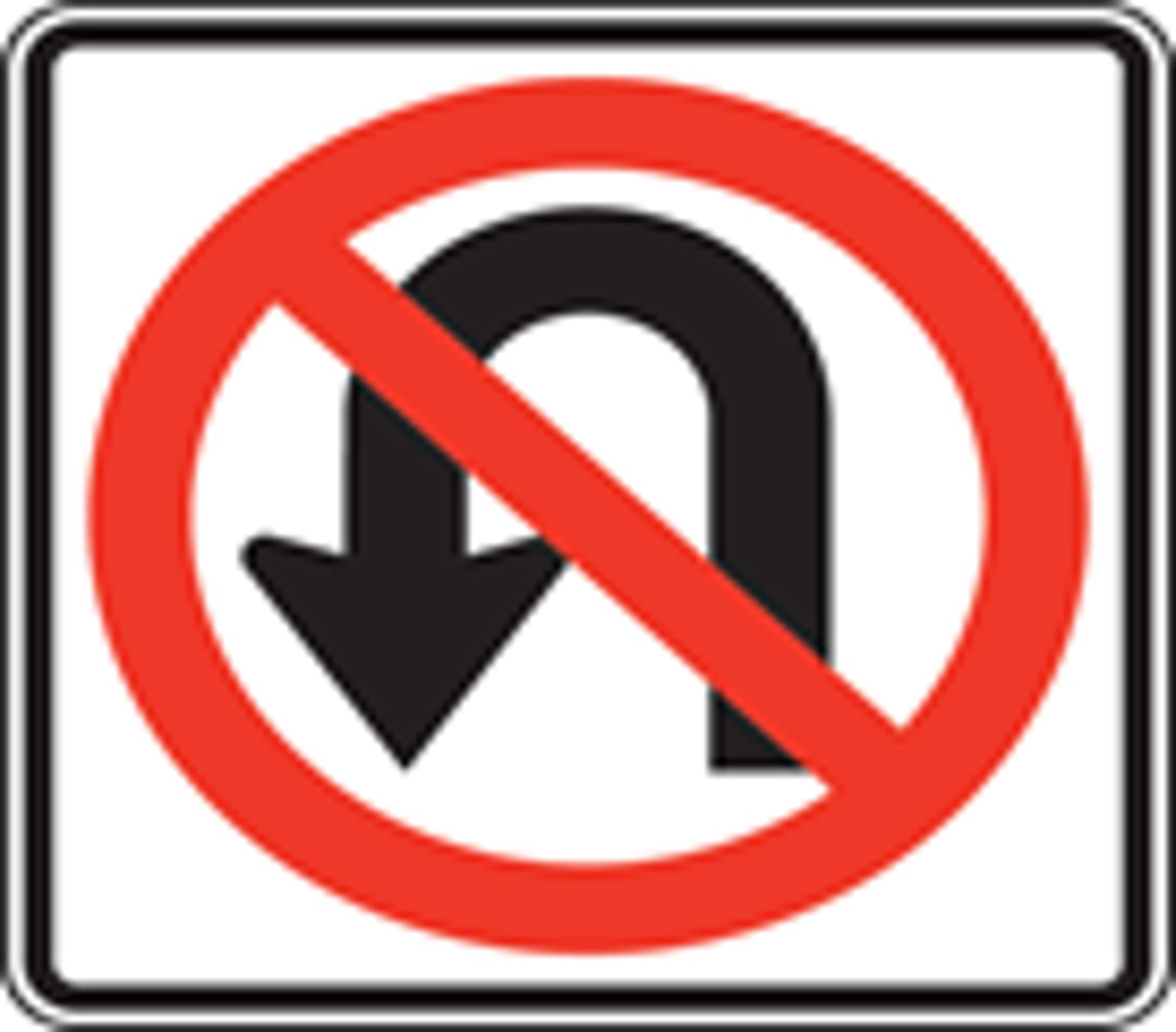
This sign means:
1. No U turn.
2. U turn permitted.
3. Winding road.
4. Sharp left turn.
1. No U turn.
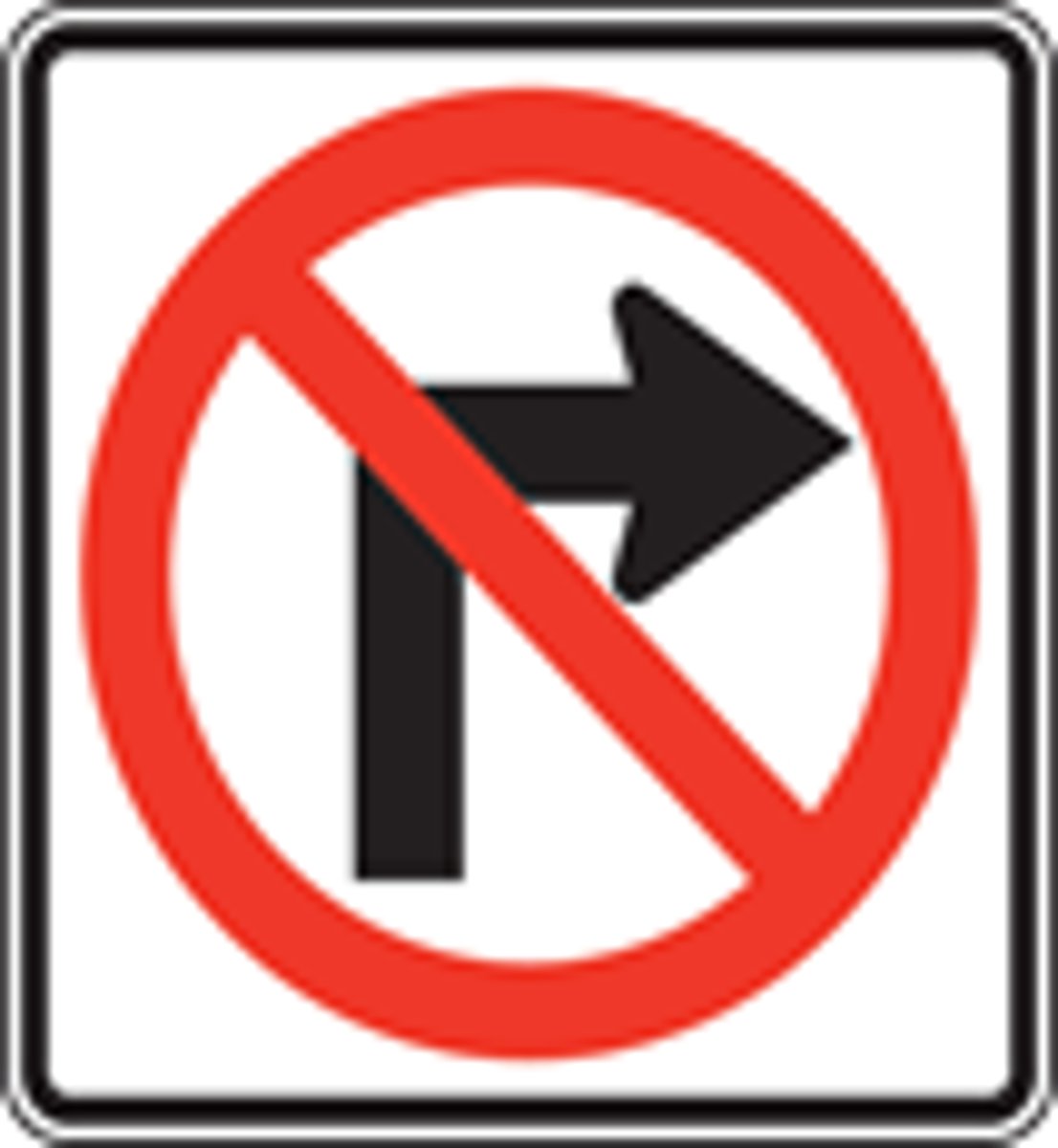
This sign means:
1. No right turn.
2. Right turn permitted.
3. Stop before turning right.
4. Sharp curve ahead.
1. No right turn
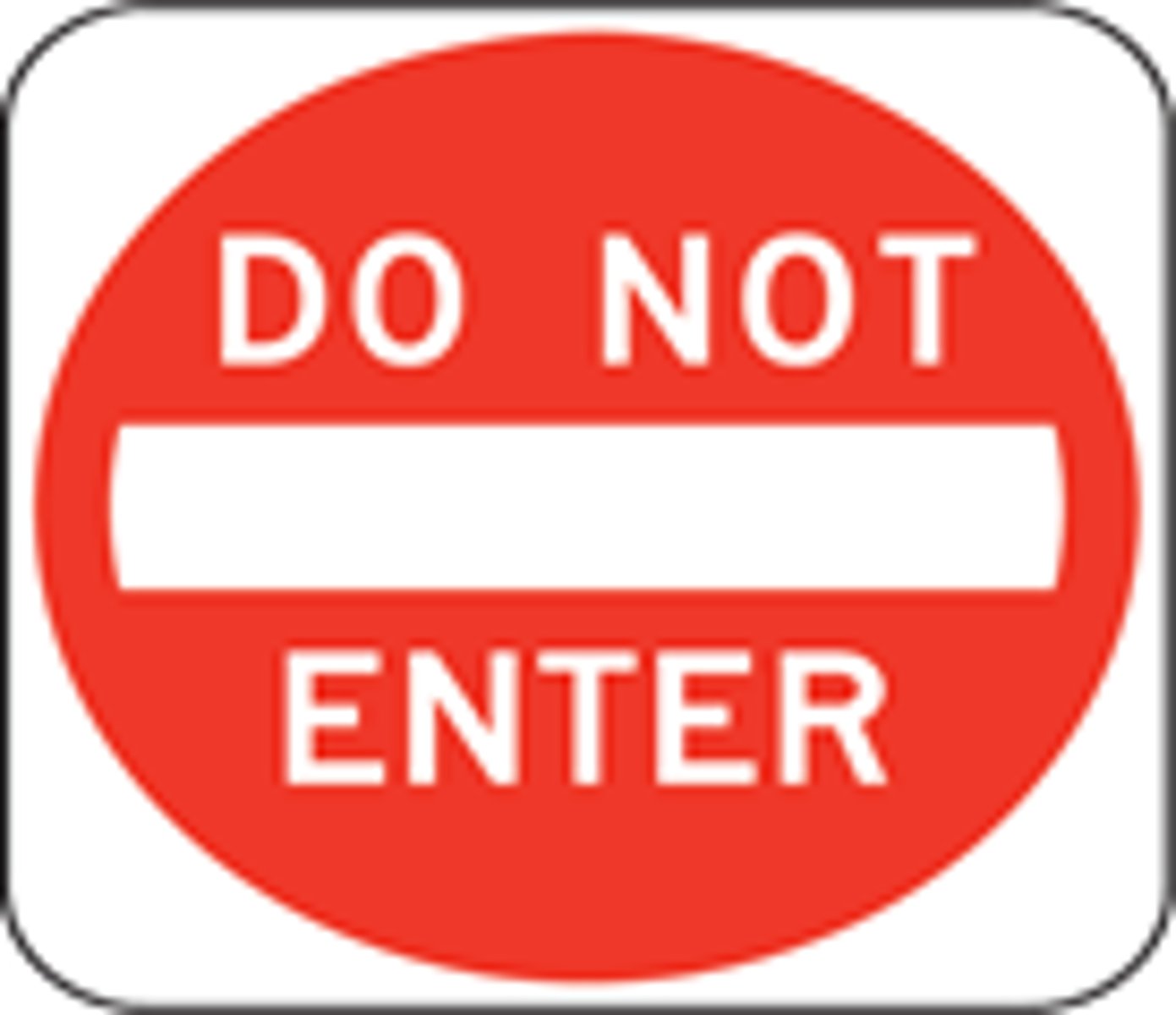
This sign means:
1. Stop.
2. Do not enter.
3. Railroad crossing.
4. Yield.
2. Do not enter
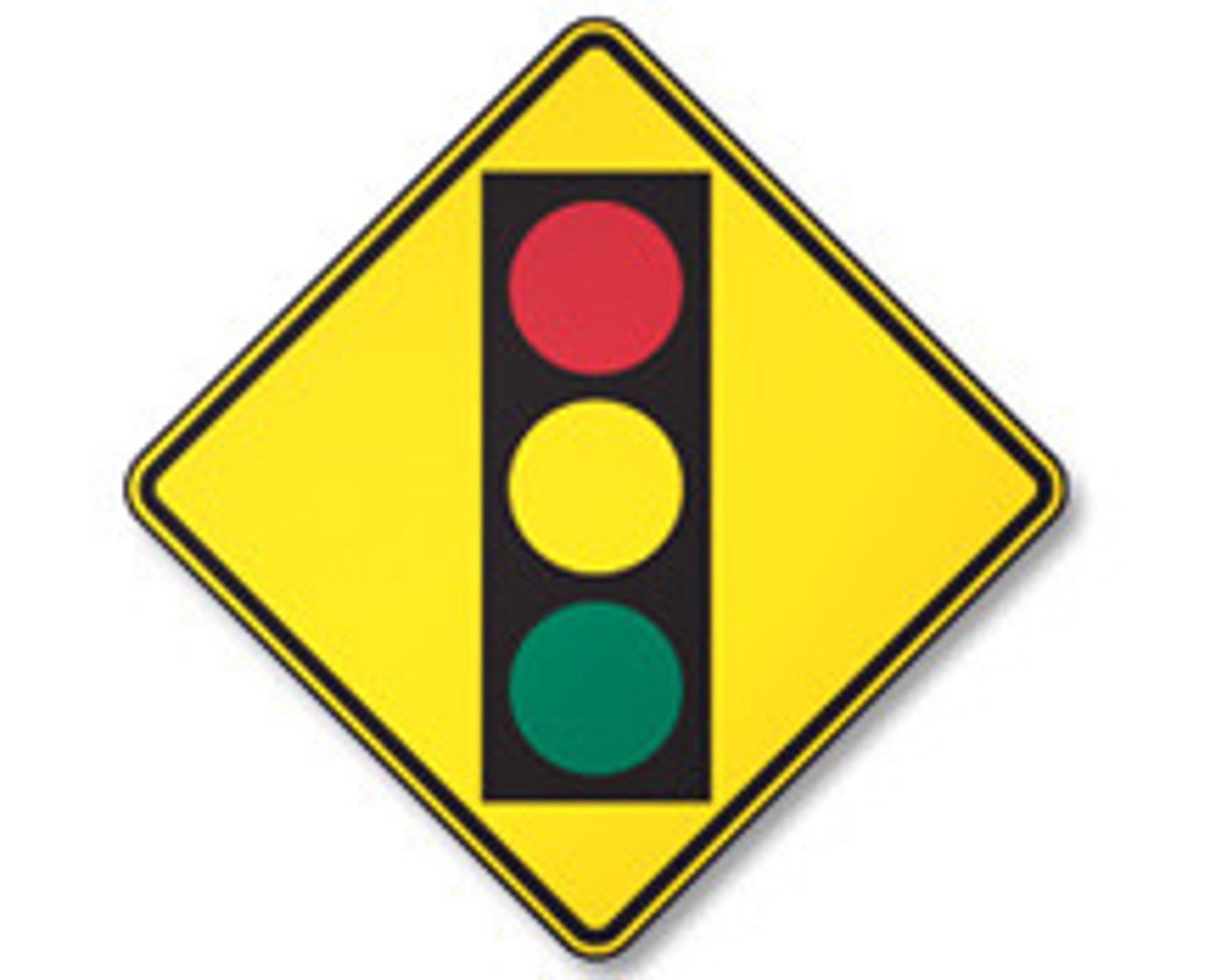
This sign means:
1. Lane signal.
2. Lane closed for traffic.
3. Railroad crossing ahead.
4. Traffic signal ahead.
4. Traffic signal ahead.
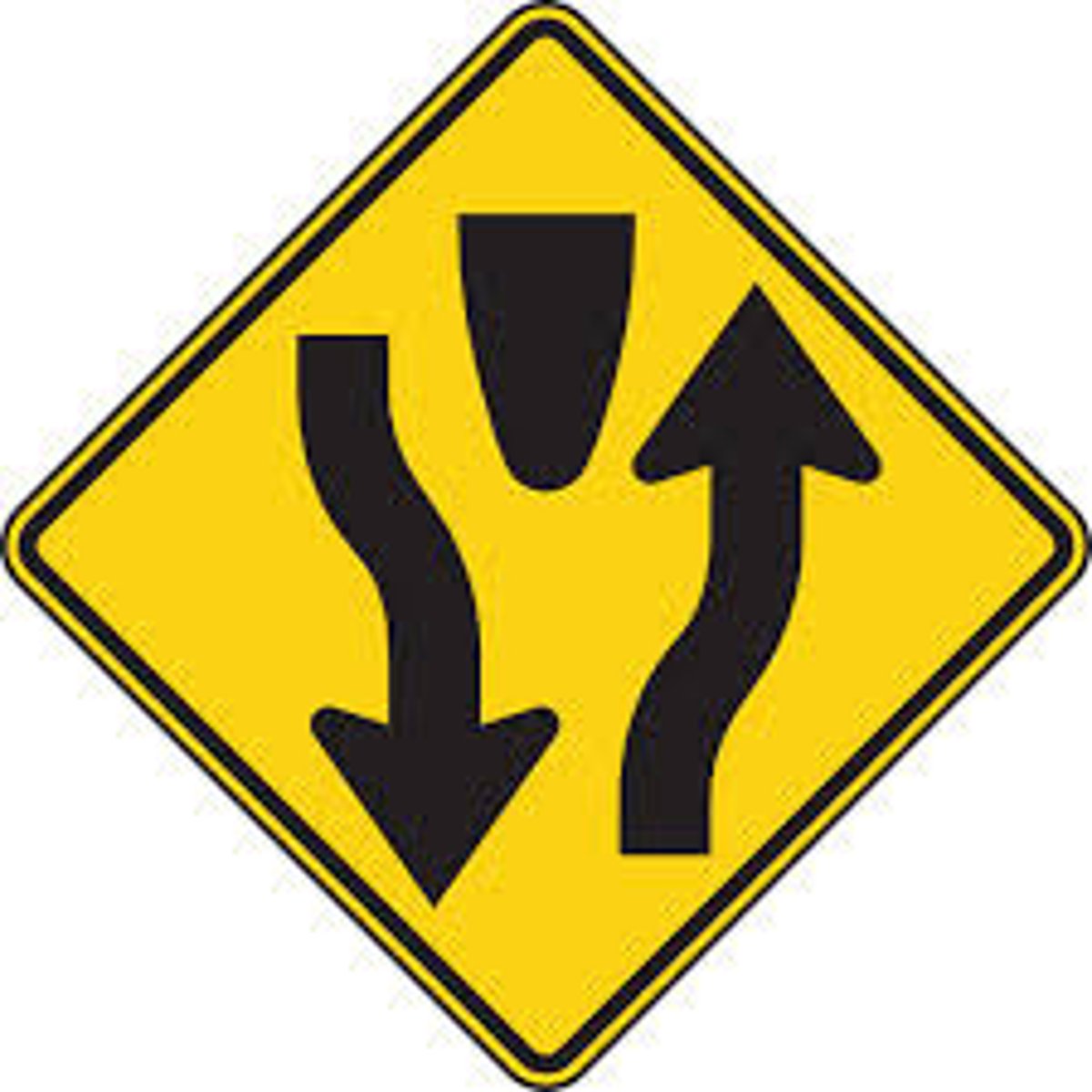
This sign means:
1. One-way traffic.
2. Divided highway ahead.
3. Two-way traffic.
4. Keep left.
2. Divided highway ahead.
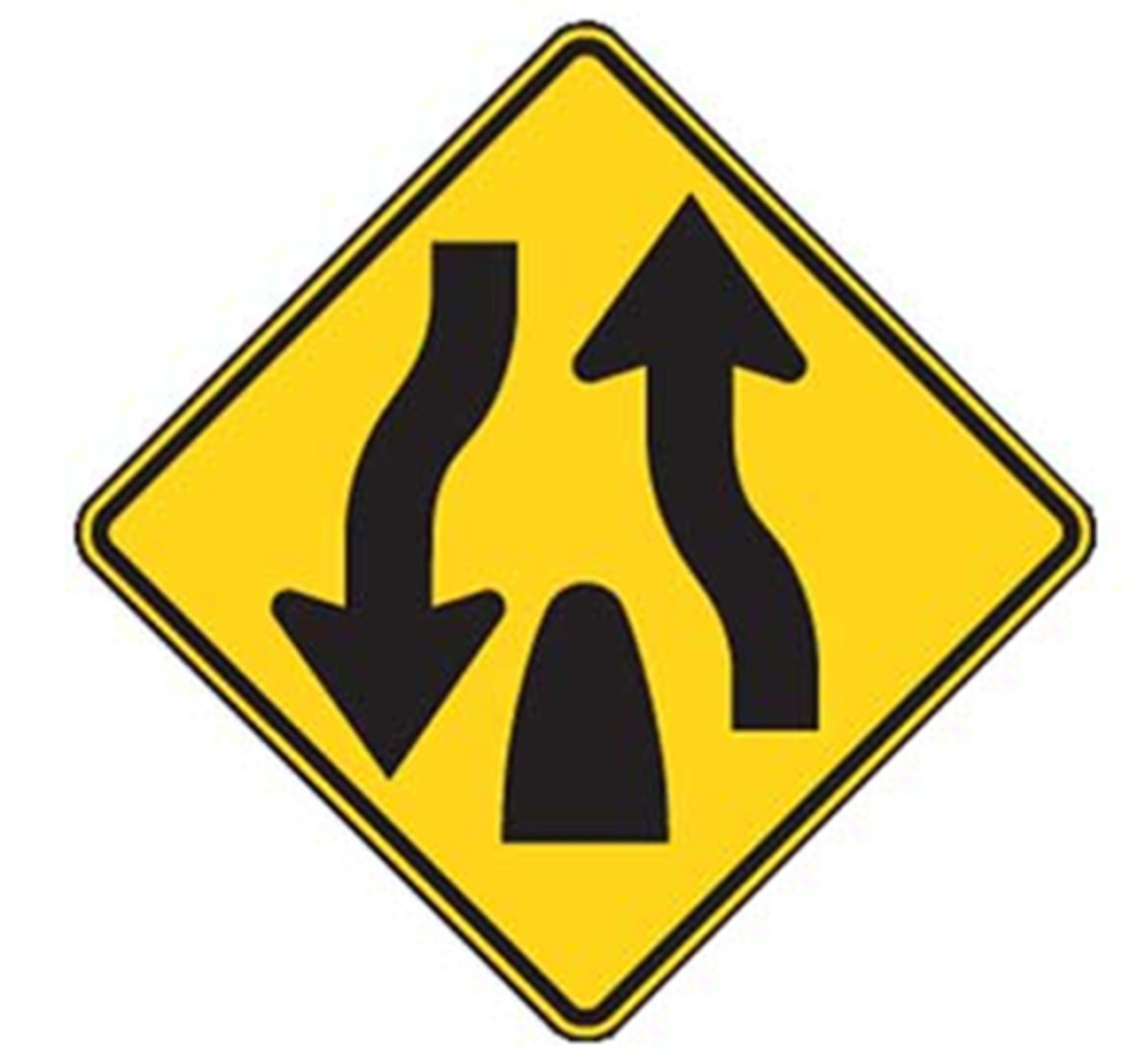
This sign means:
1. One-way traffic.
2. Divided highway ends.
3. Two-way traffic.
4. Keep right.
2. Divided highway ends.
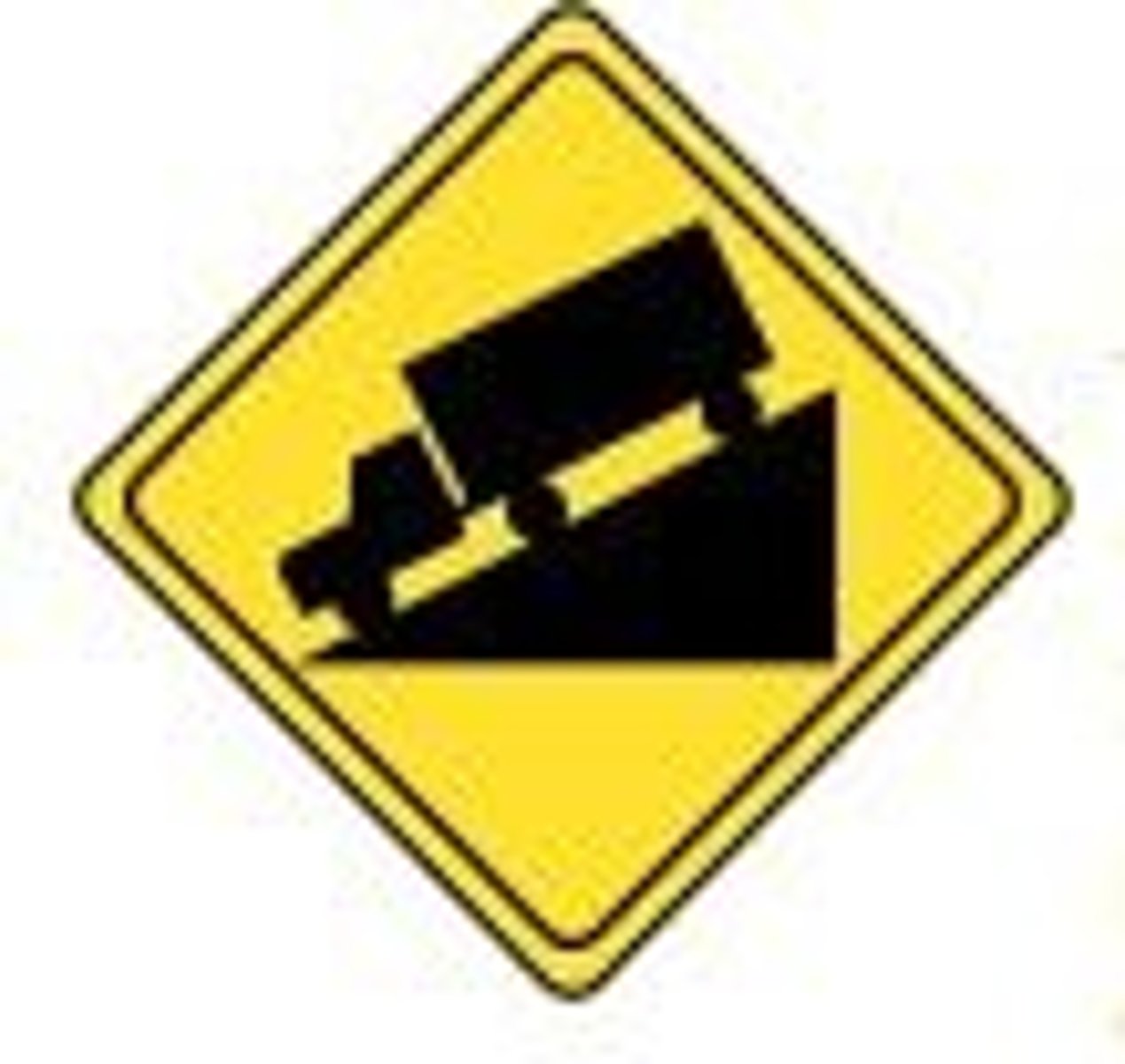
This sign means:
1. Trucks only.
2. Trucks entering highway.
3. Hill.
4. Trucks have the right of way.
3. Hill.
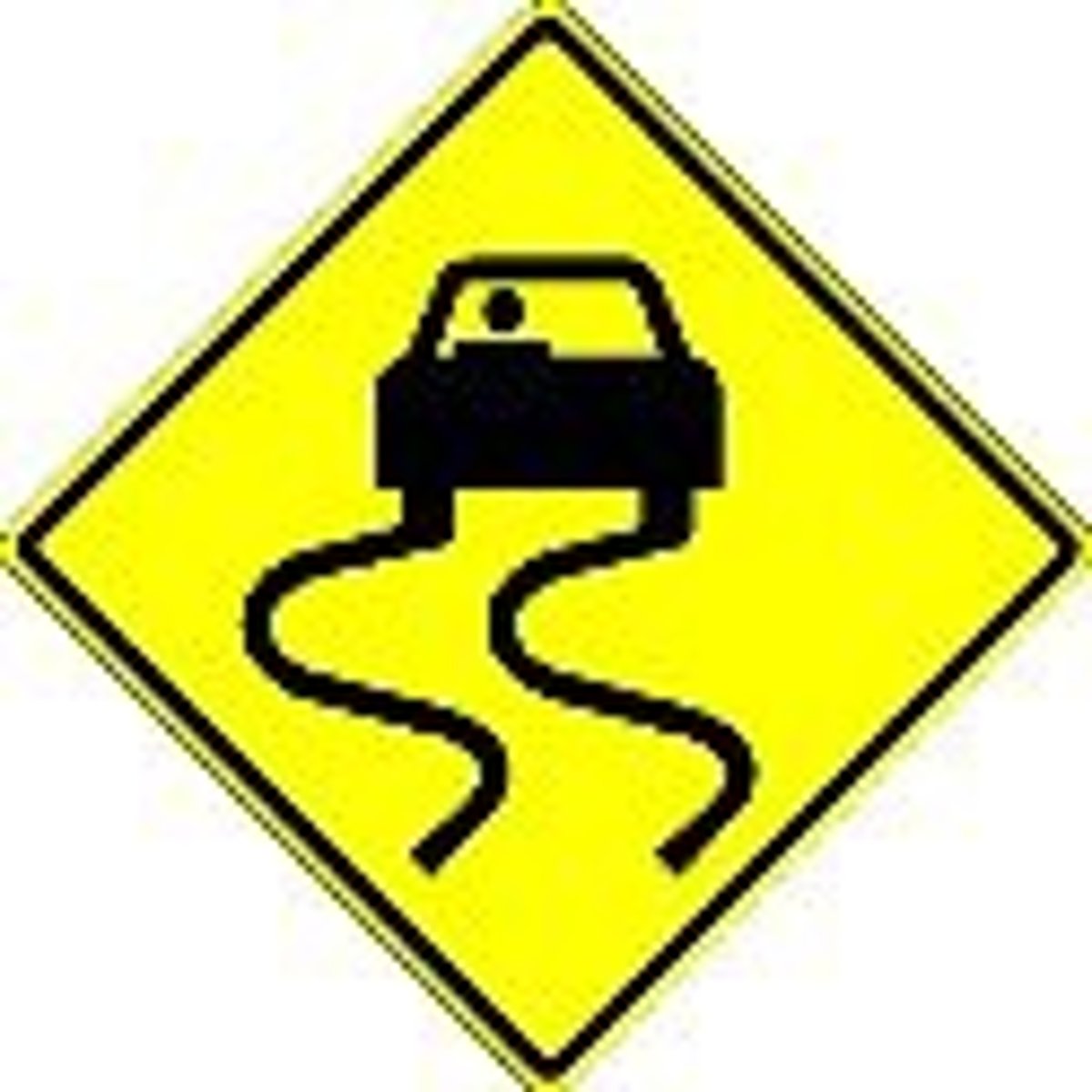
This sign means:
1. Slippery when wet.
2. Watch for drunk drivers.
3. Dangerous curve.
4. Bump in road ahead.
1. Slippery when wet.
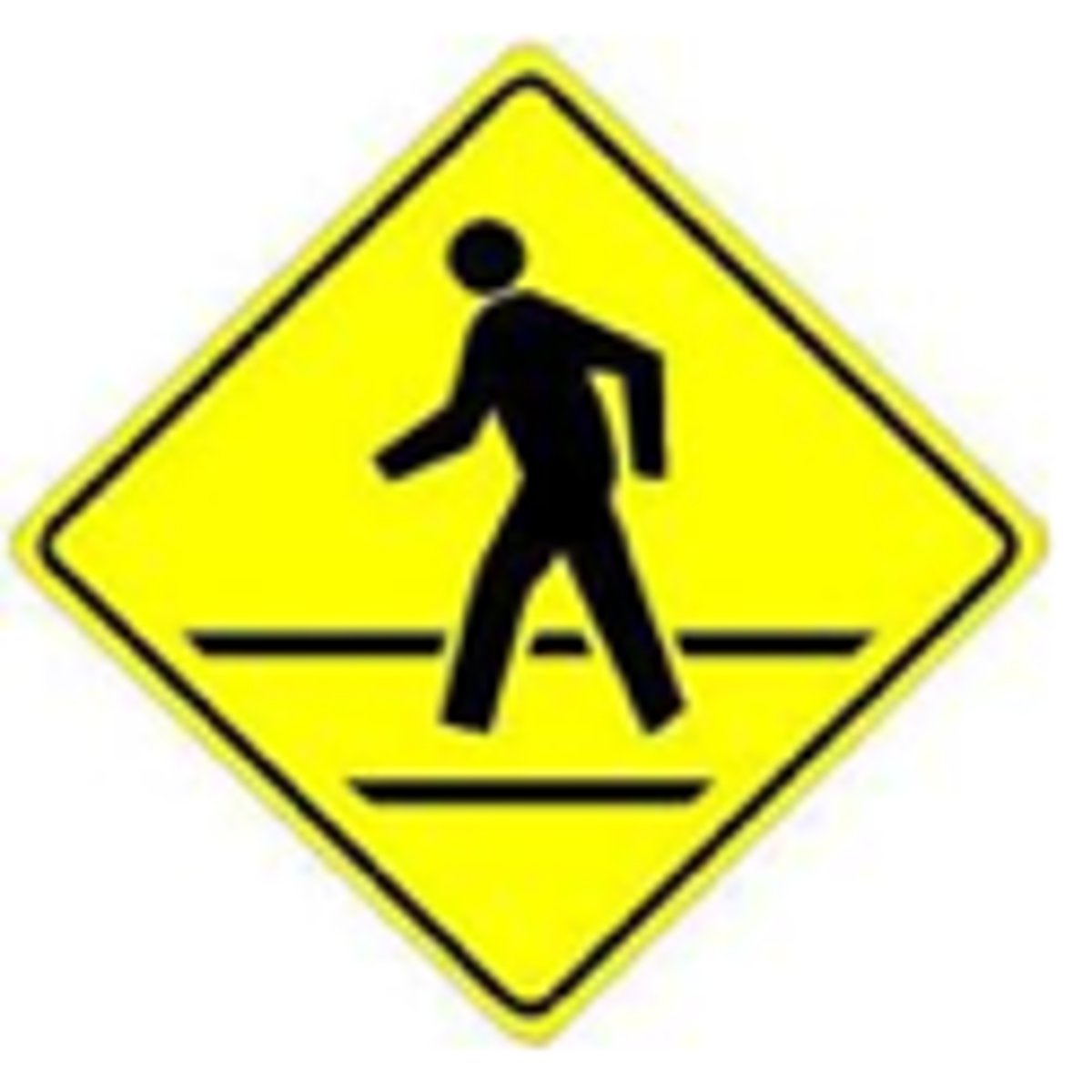
This sign means:
1. School.
2. School crossing.
3. Pedestrian crossing.
4. Workmen in road.
3. Pedestrian crossing.
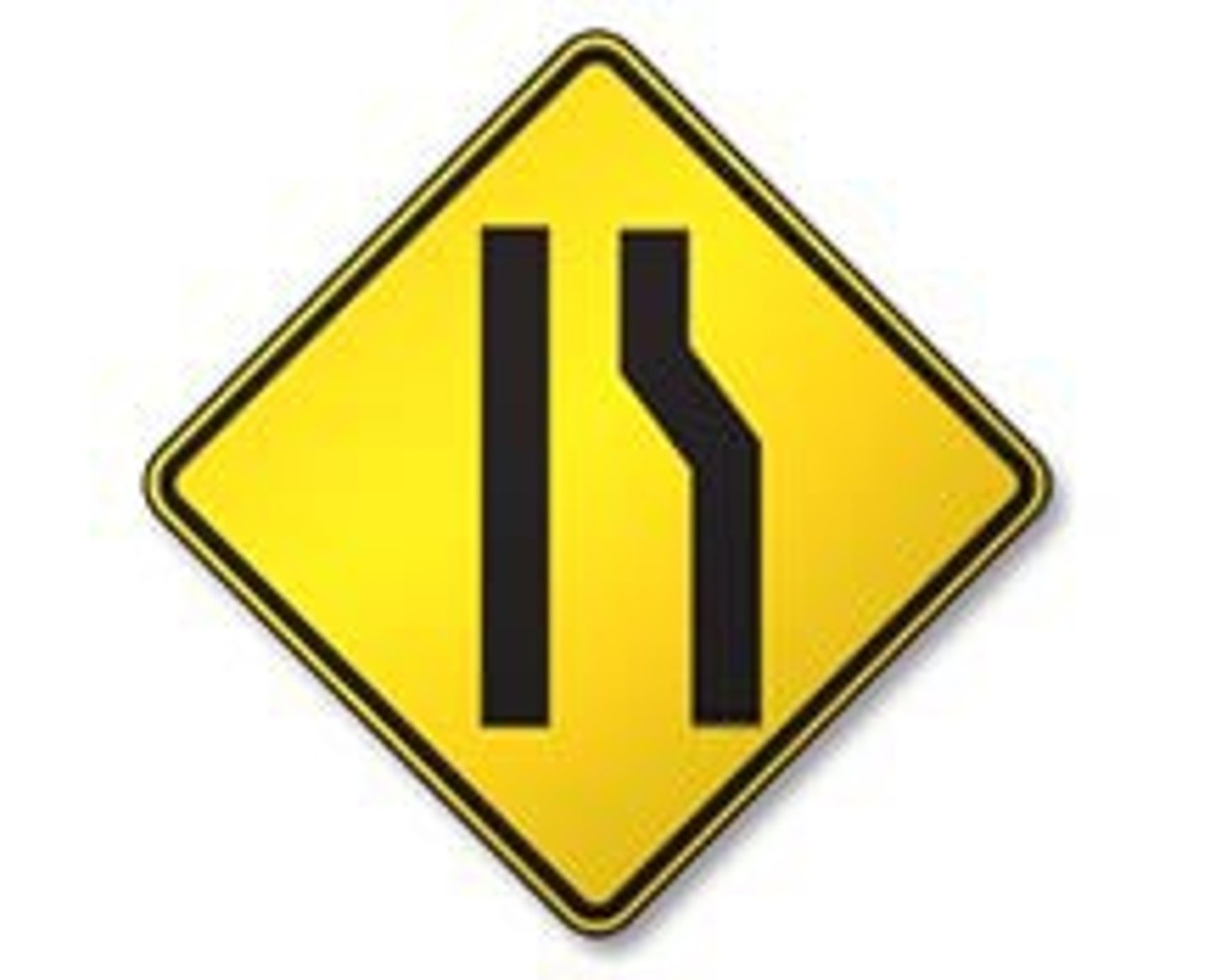
This sign means:
1. Narrow bridge.
2. Lane ends or roadway narrows.
3. Industrial area.
4. Freeway on ramp.
2. Lane ends or roadway narrows.
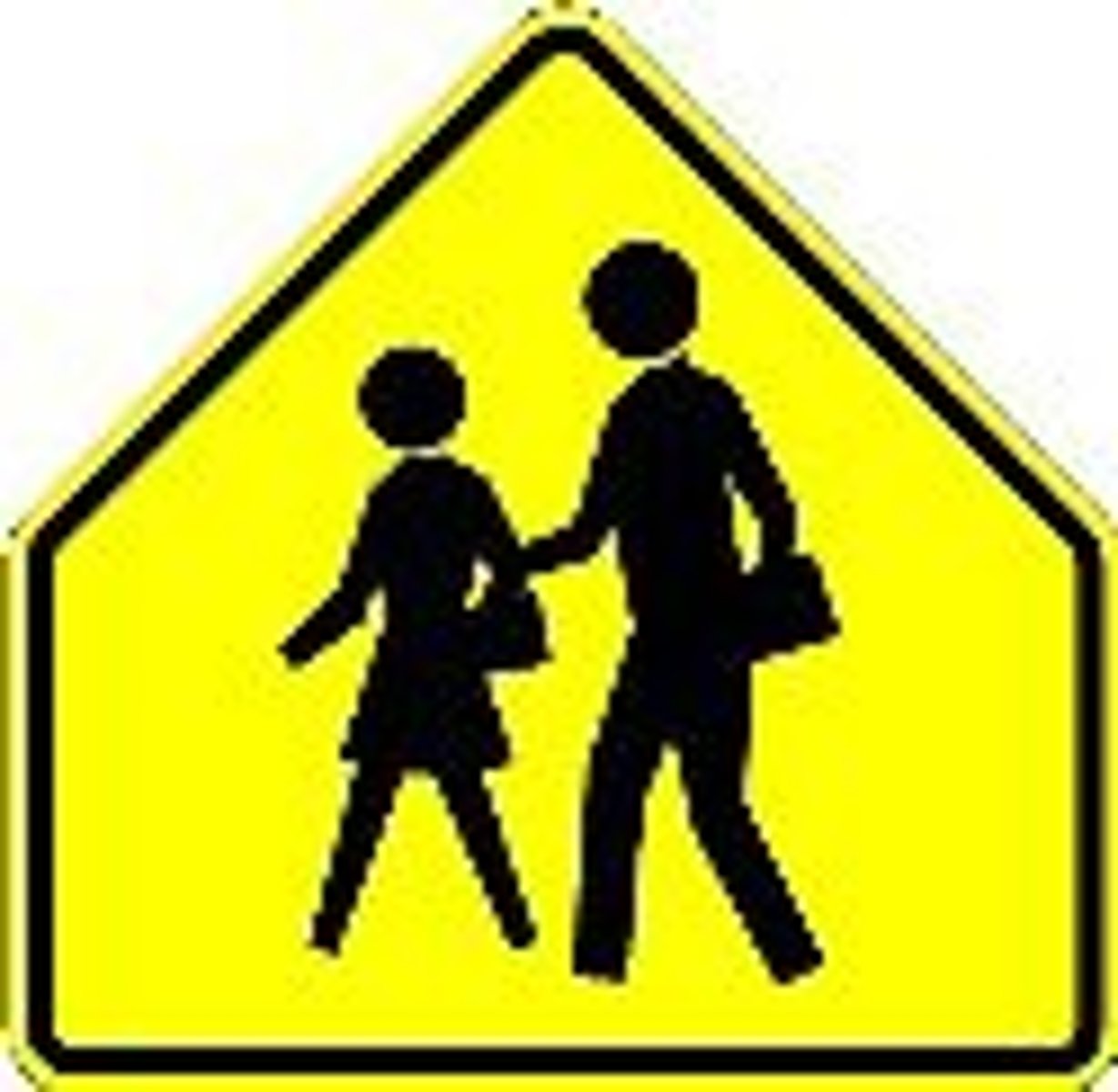
This sign means:
1. Library.
2. School crossing.
3. Pedestrian crossing.
4. Children in road.
2. School crossing.
This sign means:
1. School zone.
2. Library crossing.
3. Pedestrian crossing.
4. Children in road.
1. School zone.

Persons driving under the influence of intoxicating liquor are:
1. Every driver's problem whether they drink or not.
2. Only a problem to those who drink.
3. Not a problem in Hawaii.
4. A police enforcement problem only.
1. Every driver's problem whether they drink or not.
A few drinks after work before driving home:
1. Is good because you miss the rush traffic.
2. Is good because they help to release the day's tension and make you a safer driver.
3. Should be avoided because they may make you a dangerous driver.
4. Never hurt anyone.
3. Should be avoided because they may make you a dangerous driver.
Alcoholic beverages will affect you:
1. More rapidly just after eating.
2. More rapidly on an empty stomach.
3. The same way at all times.
4. Only if you have more than two drinks.
2. More rapidly on an empty stomach.
After the alcohol has entered your blood you can lessen its effect by:
1. Taking a cold shower.
2. Drinking black coffee.
3. Both 1 and 2 above.
4. There is nothing you can do to lessen the effect.
4. There is nothing you can do to lessen the effect.
A police officer stops you, charges you with driving under the influence of alcohol, and tells you, you must take a test to determine the amount of alcohol in your blood. You as the driver:
1. Don't have to take the test if you can prove you weren't drinking.
2. Must take the test or risk losing your driver's license.
3. Don't have to take the test if you have not violated any traffic rule.
4. Don't have to do anything.
2. Must take the test or risk losing your driver's license.
You have been charged with driving under the influence of alcohol, and have refused to take the required test for blood alcohol. You may lose your driver's license for twelve months:
1. Only if you are convicted of driving while under the influence of alcohol.
2. Only if you are convicted of a traffic violation.
3. Because you have refused to take the test.
4. You won't lose your license.
3. Because you have refused to take the test.
You may drink alcoholic beverages in a vehicle on a public highway:
1. As long as you don't drive.
2. Only if you ride in the back seat.
3. Only if you ride in the back of a pick-up truck.
4. It is against the law to drink alcoholic beverages on a public highway.
4. It is against the law to drink alcoholic beverages on a public highway.
Drugs may interfere with a person's ability to drive safely:
1. Only if the drugs are prescribed by a doctor.
2. Only when taken while drinking.
3. Only when driving at night.
4. And it is important to ask your doctor about any effects that the prescribed drugs may have on your driving ability.
4. And it is important to ask your doctor about any effects that the prescribed drugs may have on your driving ability.
The consumption of alcohol while taking drugs can:
1. Have a less pronounced effect than either taken separately and is always safe.
2. Have a more pronounced effect than either taken separately.
3. Help cure your illness.
4. Improve your driving ability.
2. Have a more pronounced effect than either taken separately.
The effect that alcohol has on your reflexes and judgment:
1. Is less if you were only drinking beer.
2. Is less if you were only drinking wine.
3. Is greater if you were drinking whiskey or hard liquor.
4. Depends on the amount of alcohol in your blood stream.
4. Depends on the amount of alcohol in your blood stream.
When you are driving a vehicle the act of turning your head and looking before changing lanes, driving away from a curb or exiting your vehicle into traffic is:
1. A bad driving habit.
2. A good driving habit.
3. Unnecessary.
4. Not necessary if you use the rear-view mirror.
2. A good driving habit.
When you are driving, failing to turn your head to check for traffic before changing lanes, driving away from a curb or exiting your vehicle in traffic is:
1. All right if you first check the rear-view mirror.
2. A bad driving habit.
3. Many times the cause of a traffic accident.
4. Both 2 and 3 above.
4. Both 2 and 3 above.
When you are driving, signaling your intentions before turning, changing lanes or driving away from a curb:
1. Is necessary only if other traffic is present.
2. Is a good driving habit and is required by law.
3. Is necessary only during the maneuver, not before.
4. Is not necessary, if the maneuver is done slowly.
2. Is a good driving habit and is required by law.
You are driving on a four-lane divided highway, two vehicles are driving side by side ahead of you, and you are in a hurry. You should:
1. Drive closely behind the vehicle in the left lane and flash your headlights.
2. Drive closely behind the vehicle in the right lane.
3. Drive in either lane with at least a two-second time interval behind the vehicle ahead.
4. Drive closely behind the vehicles ahead changing lanes frequently.
3. Drive in either lane with at least a two-second time interval behind the vehicle ahead.