Female reproductive system
 Call Kai
 Learn
Learn Practice Test
 Spaced Repetition
 Match
Match Flashcards
 Knowt Play
1/46

There's no tags or description
Looks like no tags are added yet.
Name | Mastery | Learn | Test | Matching | Spaced | Call with Kai | Chat |
|---|
No analytics yet
Send a link to your students to track their progress
47 Terms
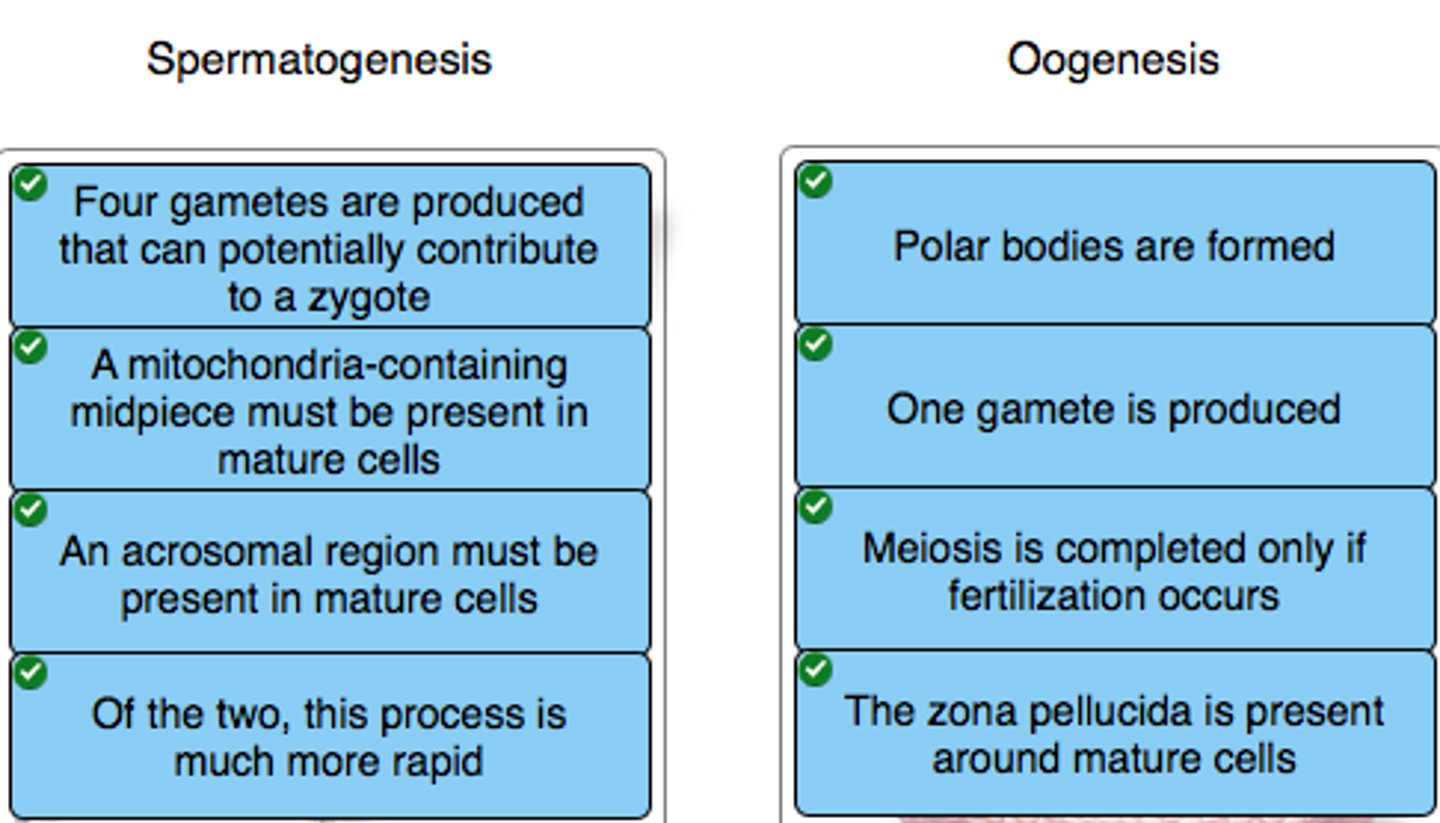
Drag and drop each item to the correct mode of gamete formation.
Put the stages of follicle development into the correct order, beginning with the earliest structure that develops.
1. Primordial follicle
2. Primary follicle
3. Secondary follicle
4. Mature follicle
5. Corpus Iuteum
6. Corpus albicans
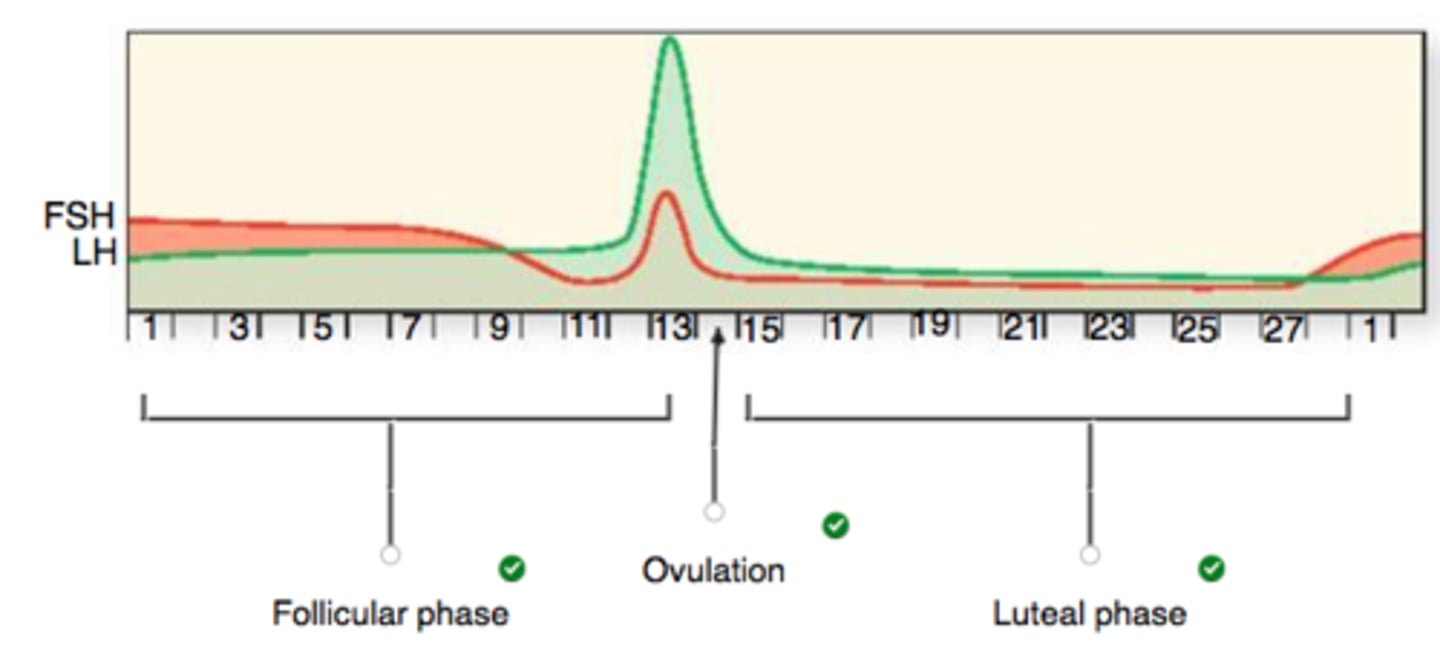
Label the stages of the ovarian cycle in the figure, based on the levels of FSH and LH, and days of the month.
Ovulation involves the release of the _____________ from a vesicular follicle.
secondary oocyte
Match the region of the uterine tube with its description.
Region just medial to infundibulum
Ampulla
Extends medially from ampulla
Isthums
Continuous with uterine wall
Uterine part
Funnel-shaped lateral margin
Infundibulum
Check all that are normal functions of the uterine tubes.
Transport the oocyte to the uterus
Site for fertilization
Match the region of the uterus with its description.
Majority of uterus
Body
Narrow inferior portion
Cervix
Curved superior region
Fundus
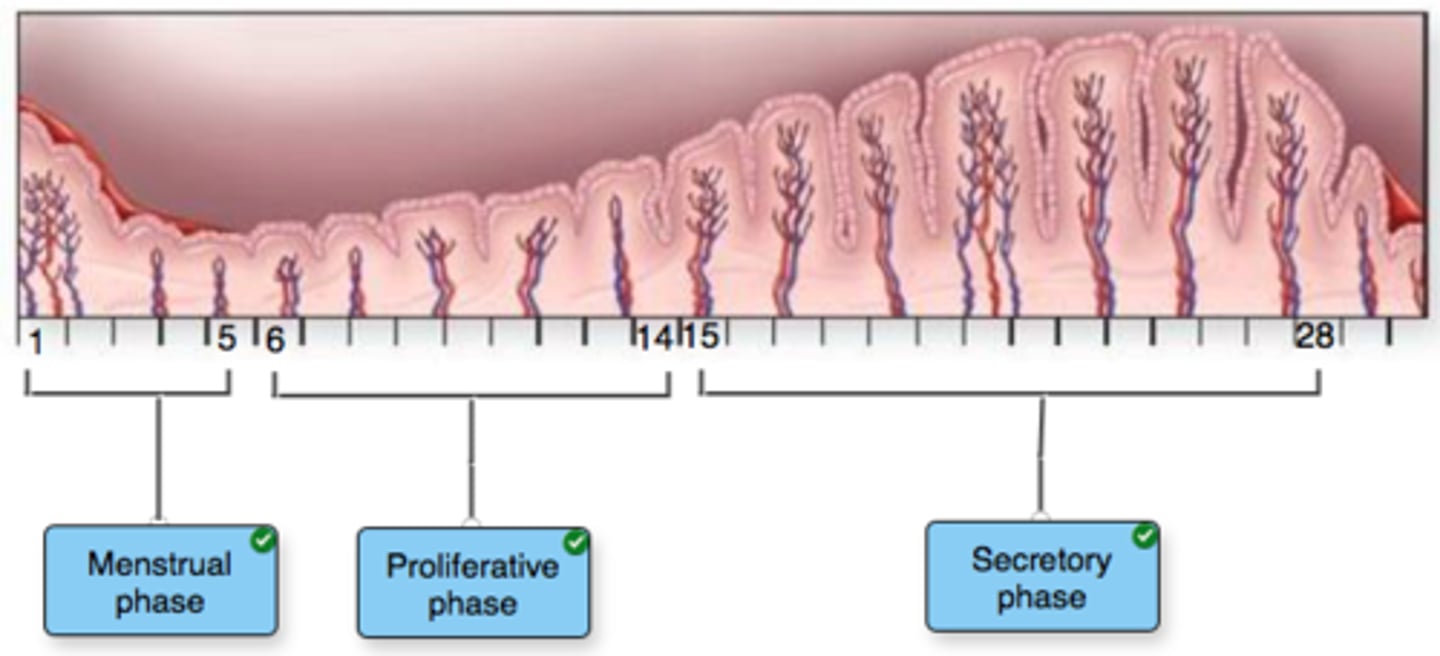
Label the stages of the uterine cycle in the figure.
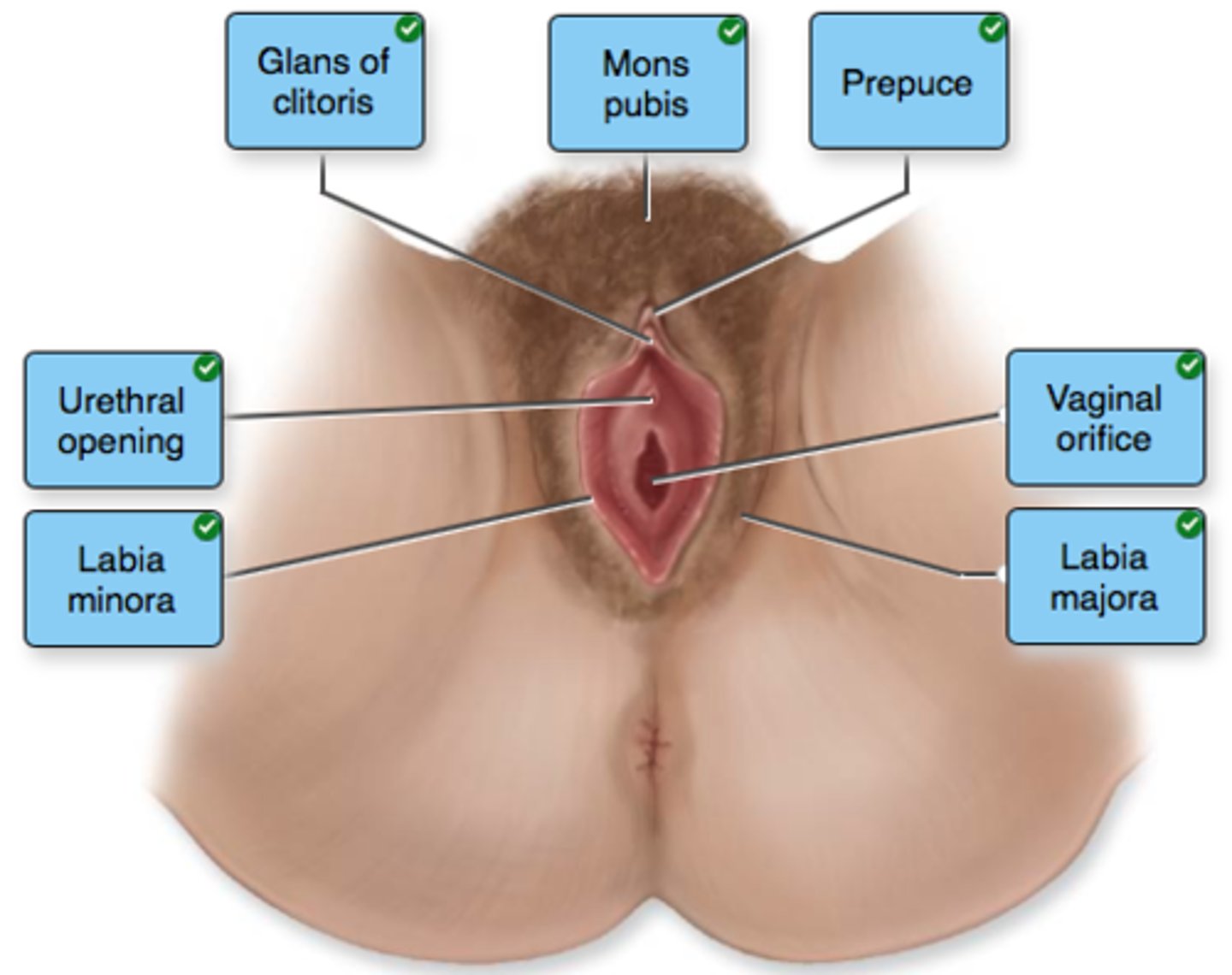
Label the female external genitalia in the figure.
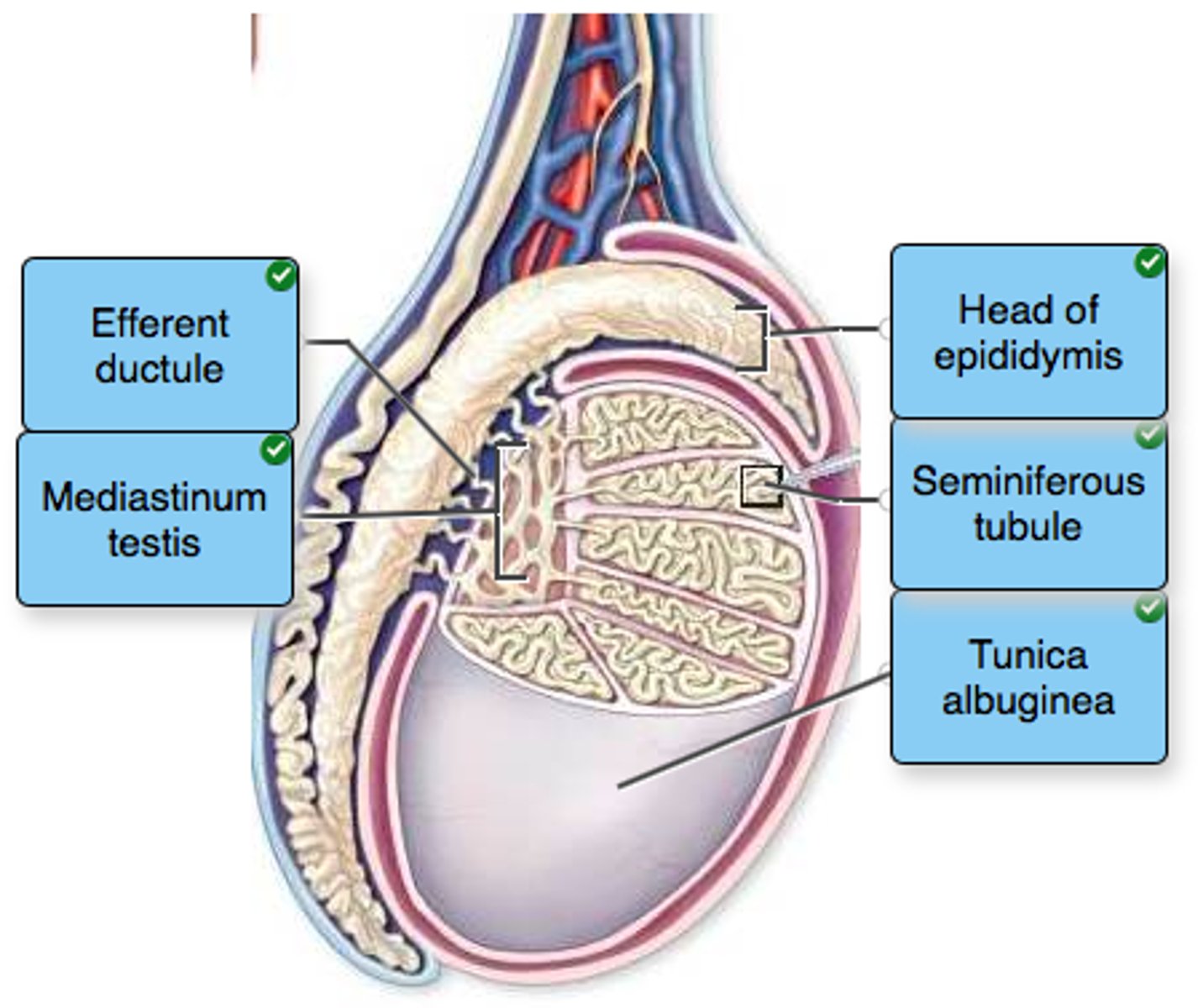
Label the anatomy of a testis in the figure.
Put sperm development in order, beginning with the germ (stem) cell from which all sperm develop.
1. Spermatogonia
2. Primary spermatocyte
3. Secondary spermatocyte
4. Spermatid
5. Spermatozoa
Label the ducts of the male reproductive system in the figure.
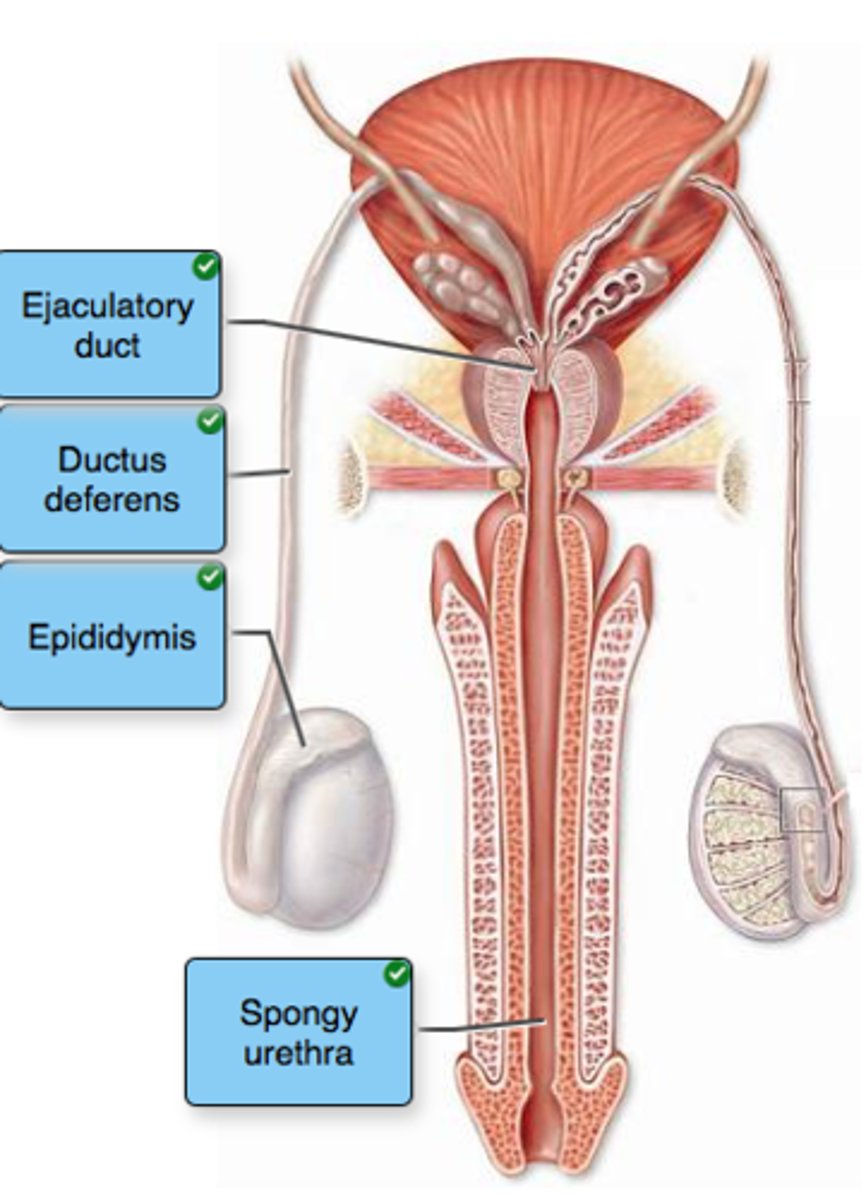
Match the duct of the male reproductive system with its function.
Combines fluids from seminal vesicles and prostate
Ejaculatory duct
Passage from epididymis to inside of body
Ductus deferens
Stores sperm
Epididymis
Transports seme to outside body
Urethra
Match the male accessory gland with its secretions.
Citric acid, seminalplasmin, PSA
Prostate glands
Mucin for lubrication
Bulbourethral glands
Fructose, prostaglandins, bicarbonate
Seminal vesicles
Gonadotropin releasing hormone is released by the
hypothalamus
Which hormone prevents degeneration of the corpus luteum?
Human chorionic gonadotropin
Decreasing levels of ____________ lead to sloughing, or shedding, of the endometrial lining.
progesterone
When does a mature oocyte complete meiosis I?
Just prior to ovulation
If fertilization does not occur, the corpus luteum becomes a
corpus albicans
The internal organs of the female reproductive system include the
ovaries, uterine tubes, uterus, and vagina
Each ovary is attached to the uterus by the __________ ligament and is held in place by the ______________ ligament.
ovarian; suspensory
The uterus serves as the site of implantation for the embryo, supports the developing embryo, and contracts during birth to expel the fetus.
True
Which region of the uterine tube is the normal site of fertilization?
The ampulla
Which of the following is found in the cortex of the ovary?
The ovarian follicles
Which cells produce testosterone?
Interstitial cells
How many sperm are produced in the testes each day?
60 million
Which duct(s) of the male reproductive system pass(es) through the prostate gland?
Ejaculatory ducts
Which part of the penis has the external urethral orifice?
Glans
Which of the following is an accessory reproductive gland in the male?
Prostate
Click and drag the following stages into the proper sequence to represent the development of the follicle in the ovary.
Primary follicle
Secondary follicle
Mature follicle
Ovulation
Corpus luteum
Drag each of the terms or statements in the proper category to identify whether the given label refers to an item or process that occurs prior to or after ovulation. Assume that the ovulation occurs on day 14 and unless specifically stated, assume fertilization was unsuccessful.
BEFORE OVULATION
Proliferative phase of uterine cycle
Rapidly rising LH
Rapidly rising FSH
Estrogen low
AFTER OVULATION
Menses
Rapidly declining gonadotropins
Secretory phase of uterine cycle
Progesterone peak
Drag each of the terms or statements in the proper category to identify whether the given label refers to an item or process that occurs prior to or after ovulation. Assume that the ovulation occurs on day 14 and unless specifically stated, assume fertilization was unsuccessful.
BEFORE OVULATION
Primordial follicles
First meiotic division
First polar body formation
Mature follicle
AFTER OVULATION
Corpus albicans
Second meiotic division completion
Second polar body formation
Second meiotic division begins
Place the following labels in order through which an unfertilized oocyte will pass beginning with the site of production.
1. Ovary
2. Infundibulum
3. Ampulla
4. Isthmus
5. Fundus
6. Body
7. Cervical canal
8. Vagina
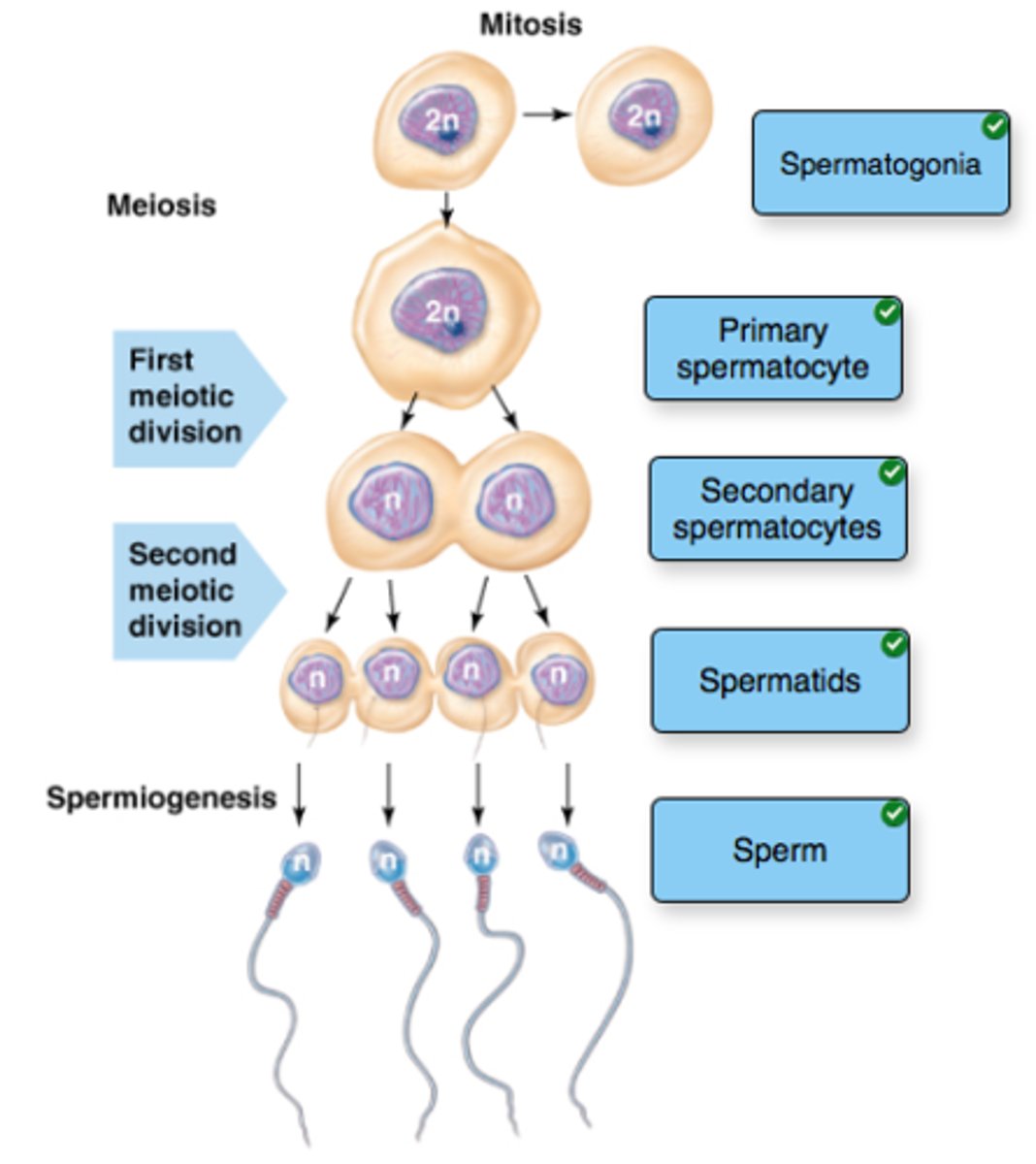
Drag and drop the label next to the corresponding stage of spermatogenesis.
Match the phases of the ovarian cycle with their descriptions.
Primary follicles develop into secondary follicles; one follicle matures and becomes a Graafian follicle. FOLLICULAR PHASE
A secondary oocyte is released from the ovary and enters teh uterine tube. OVULATION
The empty follicle becomes a corpus luteum, which secretes estradiol and progesterone. LUTEAL PHASE
Match the phase associated with the changes in the endometrium during the female monthly cycle with its description.
Occurs while the ovary is in its follicular phase; estradiol stimulates growth of the stratum functionale of the endometrium
PROLIFERATIVE PHASE
Occurs while the ovary is in its luteal phase; the endometrium becomes thick and more vascularized
SECRETORY PHASE
Sloughing off of the stratum functionale of the endometrium occurs
MENSTRUAL PHASE
Type "LH" and "FSH" in the correct locations in the sentence.
The growth of follicles and the secretion of estradiol are dependent on FSH, while the surge in LH at the end of the follicular phase is responsible for ovulation.
When a primary follicle enlarges, and there are several layers of granulosa cells, it is called a
secondary follicle
Which of the following has an antrum?
Mature follicle
Which of the following is involved in ovulation?
Mature follicle
At full maturity, an oocyte is located in the corona radiata.
False
Fill in the missing item in each sentence, and then put the sentences in order starting with the earliest event in spermatogenesis. Not all terms will be used.
Germ cells in the testes produce 2n cells called SPERMATOGONIA
Meiosis begins with primary SPERMATOCYTES
Meiosis I ends with the production of SECONDARY spermatocytes, the first haploid cells in the process.
Meiosis II results in the production of 4 haploid SPERMATIDS
Maturation of the sperm occurs in the SEMINIFEROUS tubules.
Fill in the missing item in each sentence, and then put the sentences in order showing the movement of sperm out of the body. Not all terms will be used.
Sperm mature in the seminiferous TUBULES.
Sperm become motile in the EPIDIDYMIS.
Once motile, sperm enter the VAS DEFERENS.
Before sperm move out of the body, the seminal VESICLES add nutrients to the sperm and the prostate secretes a protective fluid.
Before moving into the combined urinary and reproductive passage out of the body, sperm move into the EJACULATORY duct.
The sperm move out of the body through the URETHRA.
Complete the following statements in order to describe the location and stages of spermatogenesis in the male reproductive system. Not all terms will be used.
Each of the male testes is composed of lobules, compartments which contain one to three seminiferous tubules each.
Within these structures, cells undergo spermatogenesis, the production of sperm.
During this process, spermatagonia divide to produce primary (2n) spermatocytes.
After these spermatocytes move away from the outer wall and increase in size, they undergo meiosis to produce secondary spermatocytes with 23 chromosomes (n).
Secondary spermatocytes undergo a second division to produce four spermatids also with 23 chromosomes each.
Place the correct word(s) in each sentence to assess your understanding of the influence that hormones produced by the anterior pituitary have on the ovarian cycle. Not all terms will be used.
The monthly ovarian cycle can be divided into follicular and luteal phases.
During the follicular stage, FSH from the anterior pituitary stimulates the development of an ovarian follicle, which produces estrogen and a small amount of progesterone.
High levels of estrogen in the blood exert negative feedback control over the anterior pituitary to stop the release of FSH and to halt the follicular phase of the ovarian cycle.
A spike in estrogen levels also causes a sudden secretion of a large amount of GnRH from the hypothalamus, leading to a surge of LH, which causes ovulation at about the 14th day of a 28-day cycle.
During the luteal phase, LH promotes the development of the corpus luteum, which secretes estrogen and progesterone.
The increasing amount of progesterone in the blood inhibits secretion of LH by the anterior pituitary, and the luteal phase comes to an end.
As the levels of progesterone and estrogen in the body are reduced, menstruation begins.
Indicate the correct pathway sperm travel through ducts of the male reproductive tract.
1. Testis
2. Epididymis
3. Ductus (vas) deferens
4. Ejaculatory duct
5. Prostatic urethra
6. Spongy urethra
Match the names of male reproductive fluid components with their appropriate definitions.
Viscous, yellowish alkaline fluid:
Seminal fluid
Seminal fluid + sperm:
Semen
Male gamete:
Sperm