2.4 growth and reproduction in plants
 Studied by 0 people
 Call Kai
 Learn
Learn Practice Test
 Spaced Repetition
 Match
Match Flashcards
 Knowt Play
1/53

There's no tags or description
Looks like no tags are added yet.
Name | Mastery | Learn | Test | Matching | Spaced |
|---|
No study sessions yet.
54 Terms
growth is a process where one or more of ____ occur
increased cell size by accumulating resources
cell proliferation aka more cells are produced by mitotic cell division (this is only applicable to multicellular organisms)
determinate growth
Determinate growth is a biological pattern where an organism (plant or animal) grows to a genetically fixed size and then stops
indeterminate growth
plant growth occurs in what kind of tissue?
meristematic tissue
meristematic plant cells
totipotent (can give rise to any type of cell) and undifferentiated
meristematic plant cells are similar to stem cells in animal tissue
apical meristems
lateral meristems
apical meristems: causes lengthening of plant (primary growth)
occurs at tips of shoots and roots
lateral meristems: widening of plant (secondary growth)
occurs at cambium
phytohormones
these are plant hormones
they are specifically signalling chemicals that control growth, development and response to stimuli in plants
name 5 phytohormones
auxins
ctyokinin
abscisic acid
cibberellin
ethylene
what are auxins
auxins are a group of hormones that have a wide range of functions in plants such as
root and shoot growth/flowering (but levels can activate or inhibit growth)
fruit and leaf development
wound response
name a naturall occuring auxin
indole-3-acetic acid (IAA)
how do auxins work
auxins control the growth of plants by promoting cell division and causing some parts of the plants to elongate by making those cells get longer
stems and roots respond differently to high concentrations of auxins
how do roots respond to auxins
auxin in the roots inhibits cell growth, which causes the cells to be shorter
if the lower layer of cells is shorter the root will turn down and away from the light
how does the stem respond to auxins
auxins in the stem stimulates cell growth so lower cell layer is longer and turns towards the light
what is a plant topism
plant topisms are mechanisms by which plants adapt to environmental changes
basically a tropism is a growth in response to an external stimulus
some common stimuli that can influence plant growth include light, gravity, water and touch’
phototropism, gravitropism, hydrotropism, thigmotropism
positive vs negative tropism
positive tropism: when a plant moves towards a stimulus
negative tropism is when a plant moves away from a stimulus
positive phototropism
basically this combines the concepts of positive tropism (grows towards a stimulus) and the fact that this stimulus is light
its the directional growth response towards lateral light in plant shoots
if light isnt distributed laterally, will the plant still display positive phototropism?
no, if the light is directly above it, the plant will just grow upward because auxin is distributed evenly
only if the light is at an angle, will the auxin move to the darker side in order to make the cells in that area grow faster
describe how auxin works in response to light
when sun is overhead, auxins get evenly distributed because theres no dark side. but if there is a more shaded side, auxins will move there and it will cause those cells to elongate.

what is a coleoptile
how are they related to the function of auxins
a protective sheath around the emerging shoot or root
they contain specialized receptor cells that detect a stimulus and cause auxins to move
an example of this specialized receptor cells are phototropins which are receptor protiens involved in phototropism
The cells in the area with the higher auxin concentration elongate more than the cells with lower auxin concentration.
elongation pushes the growth to the other side
are auxins only found in the coleoptile
no, covering the tip of the shoot prevents light detection by phototropins, which prevents phototropism
explain how auxins are transported between cells
first auxins must enter into the cell by diffusing across the phospholipid bilayer at the top of the coleoptile via auxin influx faciliated diffusion channels (travels along concentration gradient but must travel through a carrier protien, hence facilitated)
now that the auxins are in a cell, they need to move out into another cell. this is done through auxin efflux pumps also known as PIN protiens. these protiens move the auxins from one cell to the next
Now whats interesting is that the position of these efflux pumps controls where the auxins go and the concentration gradients made.
normally auxin efflux pumps are found in the basal part of the cells, but they can relocated based on stimuli, for example they can move into the side of the membrane if light is on the other side
by moving, efflux carriers can set up concentration gradients in different areas of the apical meristem
how do auxins affect gene expression?
auxin enters the cell and binds to an auxin receptor
the auxin-receptor complex activates specific genes, in particular the proton pump gene which is the DNA that encodes for building proton pumps
DNA is transcribed into RNA and its used to synthesize proton pumps
these proton pumps are inserted into the cell membrane to do their job and pump protons into the apoplast
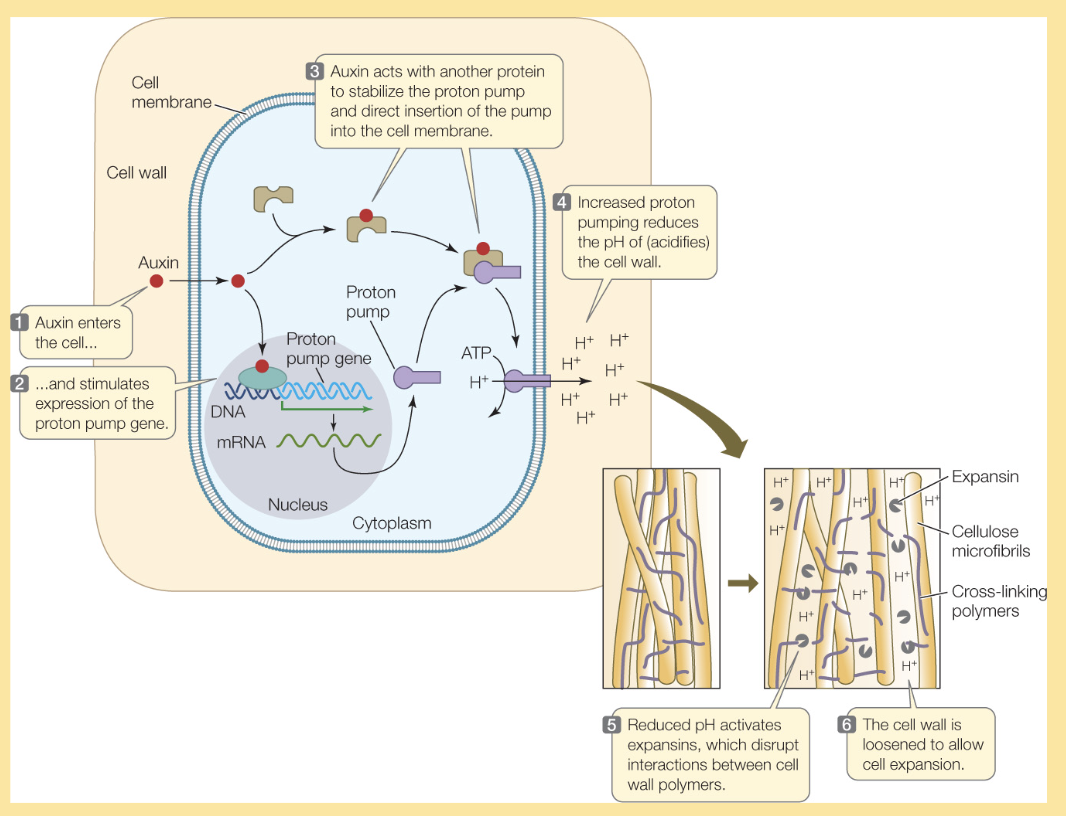
whats the purpose of pumping protons into the apoplast?
pumping protons into the apoplast decreases the pH which activates enzymes called expansins. expansins loosen the cellulose in the cell wall by disrupting hydrogen bonds and this allows water to flow into the vacuole, expanding and elongating the cell.
explain the interaction between auxins and cytokinins
root tips produce ctyokinins which travel to the shoots
shoot tips produce auxins which are transported to the roots
purpose of auxins: drives root growth, root hairs
purpose of cytokinins: drives branching, leaves and flowers/seeds
their interaction forms a positive feedback loop, the interaction between these phytohormones help ensure that the root and shoot growth is integrated
plant life cycle
btw, ethylene = ethene
angiosperms will produce fruit as part of their sexual reproduction
fruits are the mature ovaries of plants
the purpose of fruits is to help disperse seeds to allow future germination of new plants
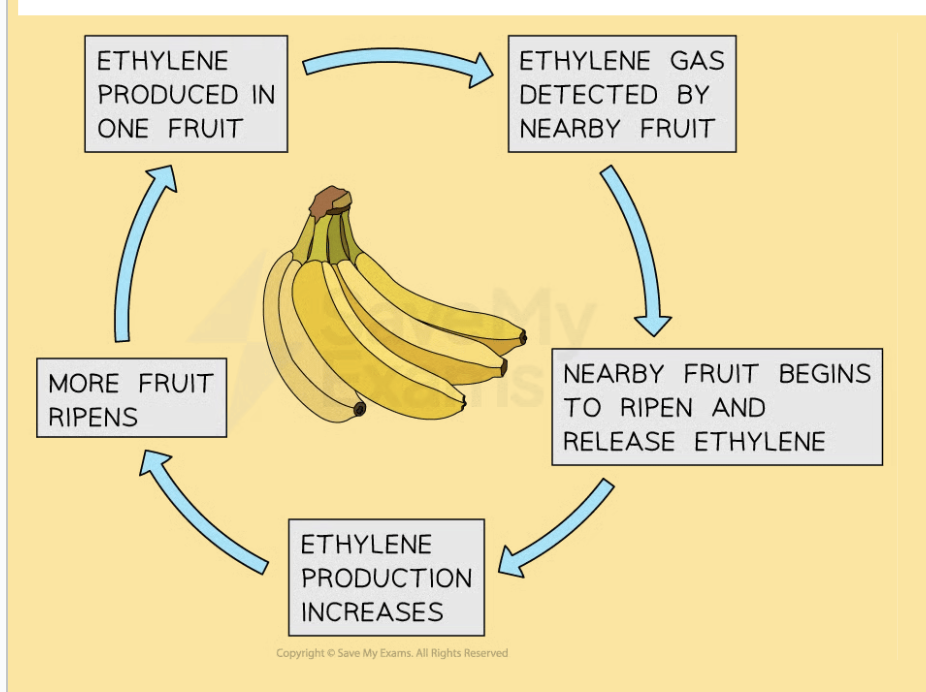
fruits respond to ethylene via a positive feedback loop that stimulates ripening
what is an angiosperm
a flowering plant that produces seeds enclosed in fruit
structure and anotomy of fruit
outside peel/skin = exocarp
meat part of the fruit = mesocarp
lining around the seed = endocarp
seed
positive feedback of ethylene on ripening
micropropagation
cloning a plant from cells taken from an adult plant
cloning plants are easier than cloning animals because plants can undo specialisation in their cells, a process called dedifferentiation
in micropropagation its best to use the ____ because the cells are ____
in micropropagation use the shoot apex because cells are totipotent
name 3 benefits of micropropagation
When a new variety of plant is created, micropropagation allows rapid increase in numbers of plants, known as 'bulking up' a new variety.
Production of virus-free individuals of existing varieties. Viruses travel via vascular bundle but meristem tissue doesn’t have vascular tissue.
Production of orchids and other rare species. Orchids are delicate and difficult to breed sexually, as well as difficult to grow from their tiny seeds.
what is pollination
pollination is the transfer of pollen from an anther to a stigma
self pollination: anther and stigma of same plant
cross polination: anther and stigma come from different plants
is flowering affected only by abiotic factors
no, flowering is influenced by abiotic factors and biotic factors
abiotic factors: temperature, sunlight, humidity
biotic factors: pollination, seed dispersal
all these factors introduce selective pressure which influences the genetics of a population
asexual reproduction
when plants reproduce asexually they produce genetically identitcal offspring
sexual reproduction
sexual reproduction leads to offspring with new genetic variations
seuxal reproduction requires the delivery of sperm to the egg for fertilisation
moving the gametes requires different methods like via water, air or animals
ex. sexual reproduction in bryophytes like mosses and ferns, motile sperm swim through the water droplets or are carried in the wind to reach the egs
explain the technique of micropropagation
method used to mass produce clones of a parent plant. uses tissues from meristematic issues or somatic cells from parent plants to clone them because their cells can undo specialization in a process called dedifferentiation
what part of the plant should you use for micropropagation
use the shoot apex because cells are totipotent
angiosperm pollination is an example of what kind of relationship
mutualism where both organisms benefit from the relationship
benefits of micropropagation (3)
bulk up quanitity of a new variety, so we make a lot of a type of plant
plants are grown in sterile environment, so plants are virus free since viruses cant travel via vascular bundles since meristem tissue doesnt have it
make rare and difficult to grow plants
what is pollination
the transfer of pollen from an anther to a stigma, can be from the same plant or other plants
same plant is self pollination
different plant is cross pollination
what follows successful pollination
fertilization inside the ovule when sperm and egg fuse to make a diploid embryo
this ovule becomes a seed containing the embryonic plant and it has a supply of food for the plant embryo during germination so it dont die
what is fruit
fruit is the ovary that contains the ovule
fruits are any structure containing ___
seeds
veggies dont have seeds and often dont develop from the ovule
A plant seed is a ______ that has the potential to grow into a new plant.
It contains an _____ as well as_____ the embryo.
A plant seed is a multicellular ripened ovule that has the potential to grow into a new plant.
It contains an embryonic plant as well as structures to protect and nourish the embryo.
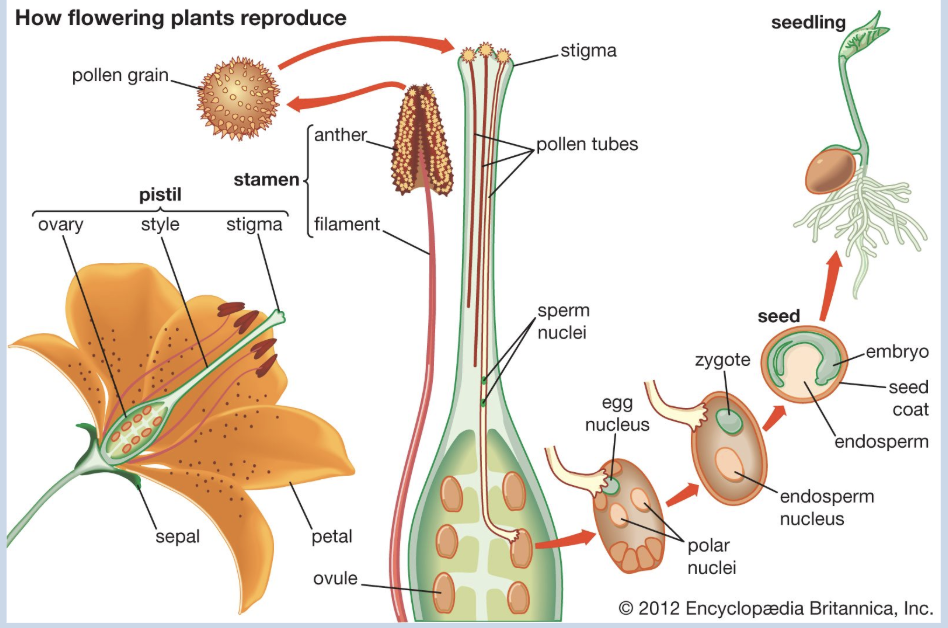
what do monocot seeds do? main difference from dicots?
monocot seeds like corn do not store food *unlike dicots
the singular cotyledon has a role in producing hormons and protecting the embryo
monocot means single seed leaf
the foot reserves are in a tissue called endosperm
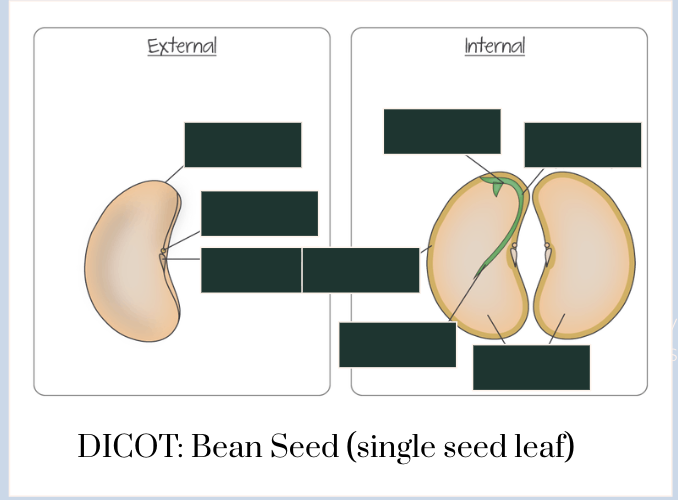
what are the components of an embryonic dicot plant
Radicle – an embryonic root
Plumule – an embryonic shoot
Hypocotyl – a shoot above the root and below the cotyledons
Cotyledons – modified leaves that store food for the embryo
Testa – a seed coat that protects the embryo and food stores
Hilum – a scar where the seed was attached to the ovary
Micropyle – a small pore above the hilum where the pollen tube entered to allow fertilisation.
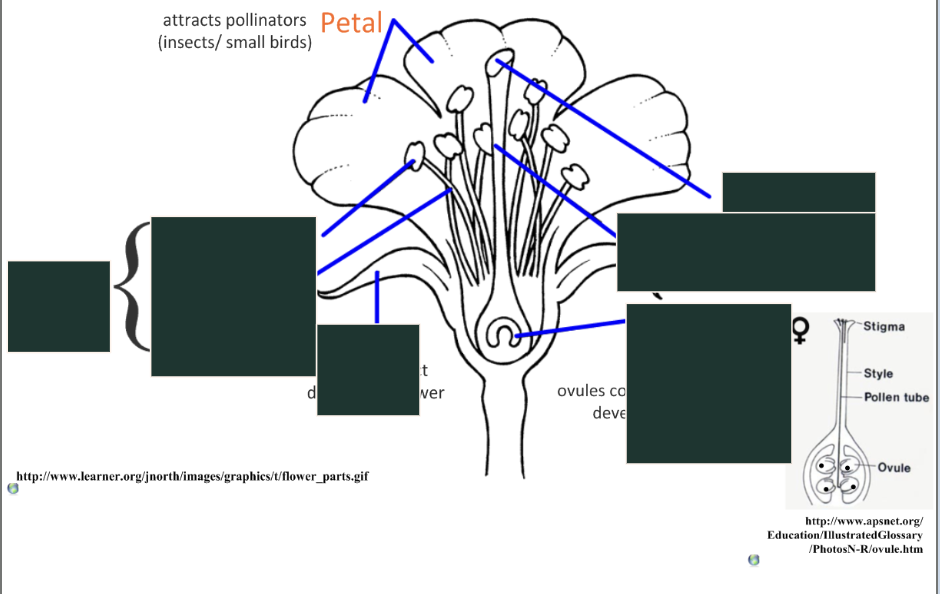
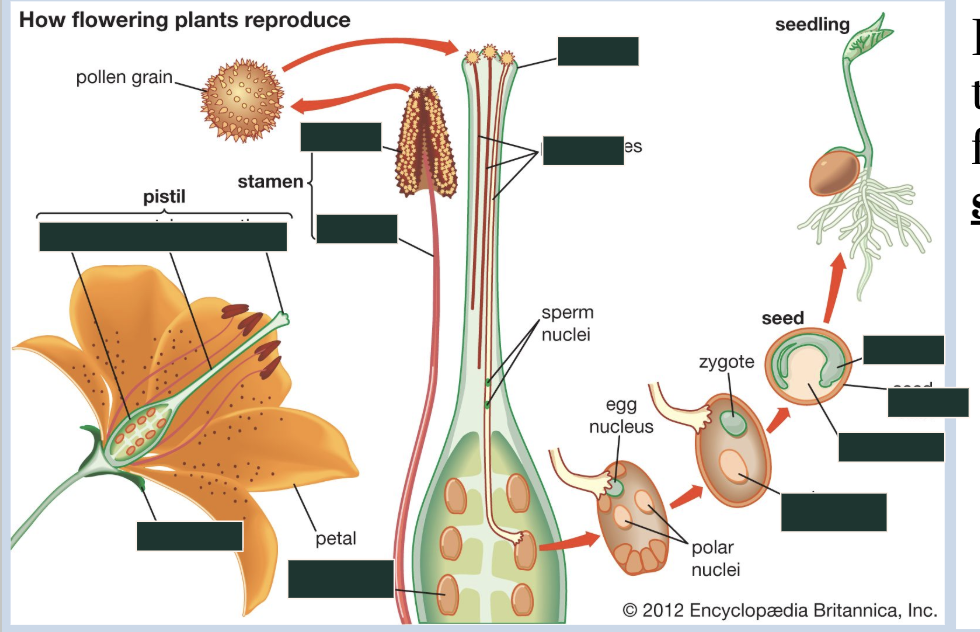
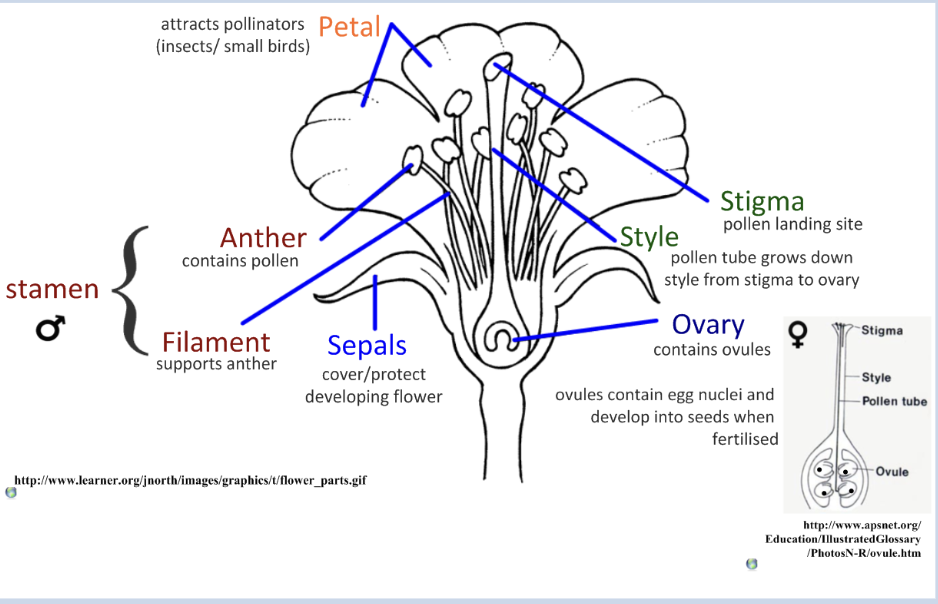
anotated diagram of the reproductive structures of an angiosperm
angiosperms are flowering plants that use sperm bearing pollen, flowers and seeds to produce offspring and disperse them to new areas
male part of the flow is called the stamen that contains the sperm/pollen
the flower has a female part called the pistil that recieves the sperm in the ovary
how does a plant know when to flower
angiosperms use enviornmental signals to produce flowers
gene expression is affected by these conditions
what are the factors affecting flowering
internal: plant characteristics like age and health
external: temperature, photoperiod
what is floral initiation
Floral initiation is the first visible step in the transition from vegetative to reproductive growth in plants.
this is caused by the growth and differentiation of apical cells. so cells in the shoot apex change how they divide and differentiate bc of changes in gene expression
1.3: The SAM switches from producing leaves and stem tissue to forming the structures of a flower.
1.4: The new floral meristem produces floral organs: sepals, petals, stamens, and carpels.
1.5: The switch is triggered by specific environmental signals such as changes in day length (photoperiodism).
1.6: The process is irreversible and commits the meristem to flower production.
what plant needs fire to germinate
lodgepole pine
pinus contorta
what plant is poisonous to horses but must be digested by cows to germinate
kleingrass
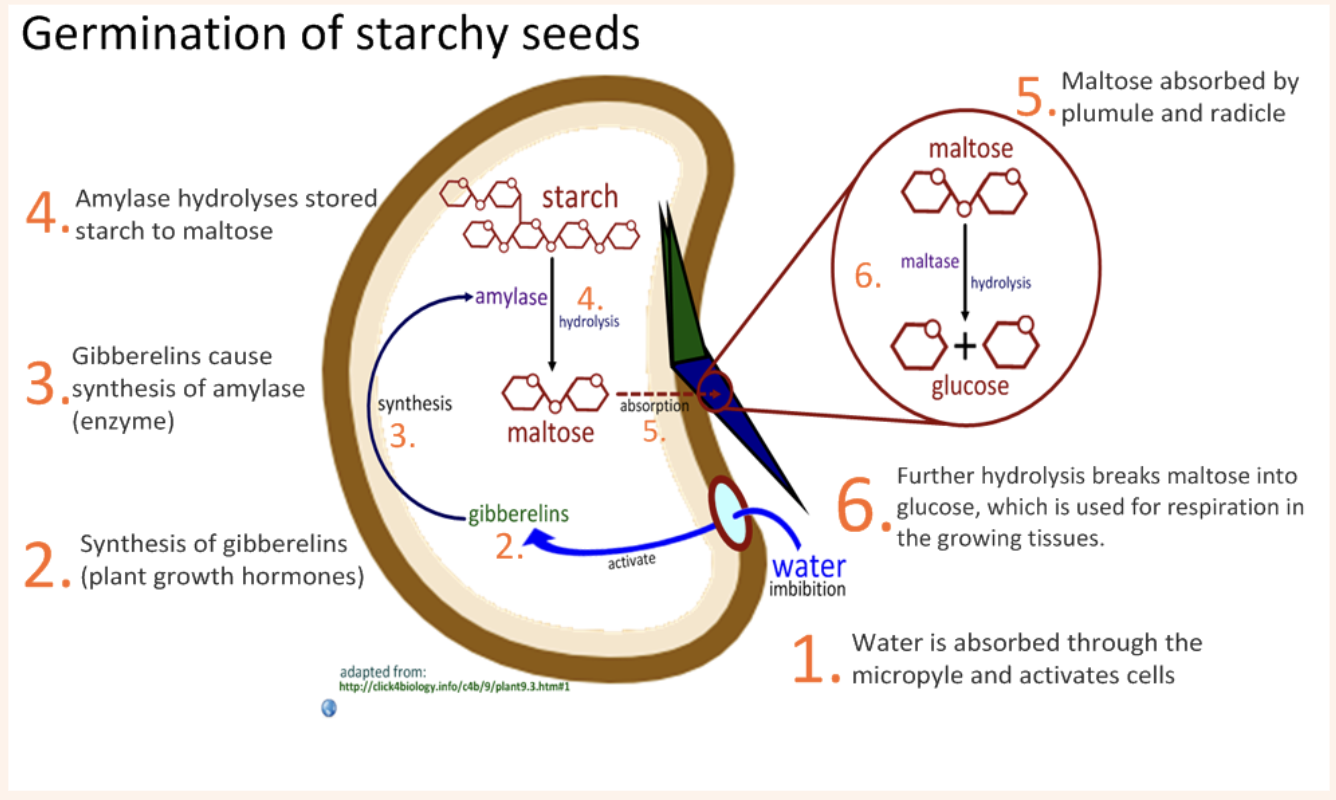
steps of germination in starchy seeds