Agri 2 Module 1
 Call Kai
 Learn
Learn Practice Test
 Spaced Repetition
 Match
Match Flashcards
 Knowt Play
1/49

There's no tags or description
Looks like no tags are added yet.
Name | Mastery | Learn | Test | Matching | Spaced | Call with Kai | Chat |
|---|
No analytics yet
Send a link to your students to track their progress
50 Terms
Agricultural Product Processing
involves transforming raw agricultural products into more consumable or usable forms such as food, feed, fiber, fuel
Agricultural Product Processing
These processes not only extend the shelf life and enhance the value of products but also improve their marketability and accessibility
Agricultural Product Processing
crucial in minimizing postharvest losses and adding value to the product.
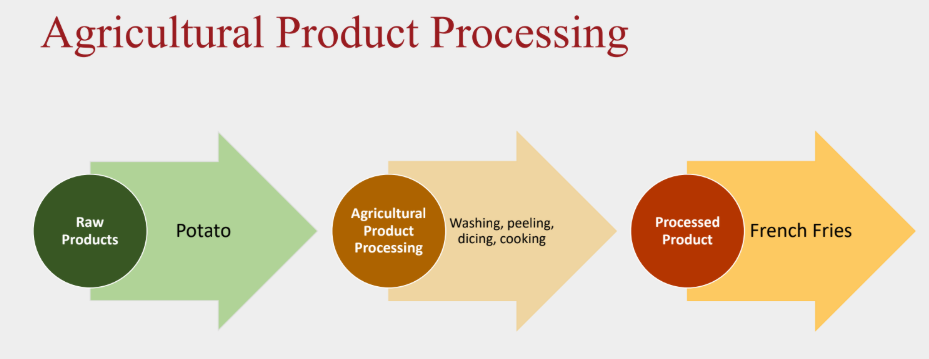
Raw Products - Agricultural Product Processing - Processed Products
Agricultural Product Processing Steps (3)
Food Systems
are the sum of actors and interactions along the food value chain, from input supply and production of crops, livestock, fish, and other agricultural commodities to transportation, processing, retailing, wholesaling, and preparation of foods to consumption and disposal
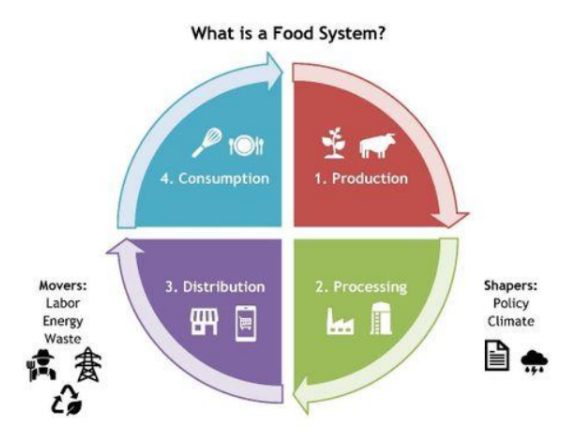
Production
Processing
Distribution
Consumption
Name all parts of the food system
Postharvest Systems
are open systems that deliver sorted, segregated, packaged, and market-appropriate products to consumers in selected, sometimes very distant locations
Processing, Distribution, Consumption + Waste Management & Utilization
Which part of the Food system encompasses Postharvest systems?
Economy
Food Safety and Security
Public Health
Environmental Sustainability
Energy Sector
APP has a significant impact to the ff:
In the Philippines, substantial post-harvest losses of 10% to 50% was recorded from the initial harvesting, grading, packaging and transportation from field to storage and distribution to the consumers.
Percentage of Post-harvest losses in the Philippines
1. Inherent nature of produce.
2. Tropical setting of the country.
3. Lack of post-harvest infrastructure and facilities.
4. Improper handling.
5. Multi-layered distribution system.
Major contributors to huge losses according to Mopera
Agricultural Product Degradation
refers to the loss of quality, nutritional value, or safety of agricultural products from the time of harvest until consumption.
1. Biological Factors
2. Chemical Factors
3. Physical Factors
4. Environmental Factors
5. Handling and Storage Practices
Main causes for Agricultural Product Degradation
Microbial Activity
Enzymatic Activity: overripen/lose crispiness
Pests and Insects
Biological Factors
Oxidation
Browning Reactions
Moisture Loss or Gain
Chemical Factors
Temperature
Mechanical Damage: bruising, cutting, or crushing
Light Exposure
Physical Factors
Humidity
Oxygen Levels
Contaminants and Pollutants
Environmental Factors
Improper Handling
Inadequate Storage
Handling and Storage Practices
Agricultural processing
involves a series of activities aimed at enhancing the quality, safety, and longevity of agricultural products.
Common Processing Activities
processes ensure that products are suitable for consumption, storage, and transportation.
1. Cleaning
2. Sorting
3. Grading
4. Treating
5. Thermal Processing (3)
6. Drying (3)
7. Grinding (2)
8. Milling (2)
9. Freezing
10. Chemical Preservation (2)
11. Dressing (3)
12. Packing (2)
13. Storage
14. Transportation
Common Processing Activities
1. Cleaning
involves removing impurities such as dirt, stones, and plant debris from the grains and seeds.
1. Cleaning
is crucial to prevent contamination and ensure the quality of the final product.
2. Sorting
After cleaning, the produce are sorted based on size, shape, and other characteristics.
2. Sorting
This process helps in separating damaged or substandard items from the good ones.
3. Grading
involves classifying grains and seeds into different categories based on quality parameters such as size, weight, and color.
4. Treating
include processes such as disinfection or the application of preservatives to protect against pests and diseases during storage and transport.
5. Thermal Processing
involves applying heat to food products to destroy microorganisms and inactivate enzymes that can cause spoilage and foodborne illnesses.
Pasteurization: set specific temp
Sterilization: apply higher temp
Blanching: immerse food in boiling water
Thermal Processing Techniques
6. Drying
process of removing water from food products, which inhibits the growth of microorganisms and enzymes that cause spoilage.
1. Sun Drying
2. Air Drying
3. Freeze Drying
Drying Techniques
7. Grinding
involves breaking down grains, seeds, or other agricultural products into smaller particles.
7. Grinding
This process is essential for producing flours, powders, or other processed forms of the raw materials.
1. Mechanical Grinding: using mills or grinders
2. Wet Grinding: incorporating water or other liquids
Grinding Techniques
8. Milling
a specific form of grinding that involves the reduction of grains to produce flour or meal.
1. Hammer Mills: high speed rotating hammers
2. Roller Mills: rotating cylindrical rollers
Milling Techniques
9. Freezing
A method of preserving food by lowering its temperature to inhibit microbial growth and enzymatic activity.
0°F or -18°C
Food that is correctly managed and stored in the freezer at ___ will remain safe.
10. Chemical Preservation
are substances added to food products to prevent spoilage and extend shelf life by inhibiting microbial growth or chemical changes.
Class I Traditional Preservatives
Class II Chemical Preservatives
Chemical preservatives are usually classified into 2 classes:
Wood smoke, sugar, honey, salt, spices, alcohol, vinegar, and vegetable oil
Examples of Class I Traditional Preservatives:
Nitrites, propionates, parabens, benzoates, acetates, sorbates, and sulfur dioxide.
Examples of Class II Chemical Preservatives:
11. Dressing
Involves preparing and handling fresh produce or meat to make it ready for cooking or consumption.
Trimming: removing unwanted parts of the food item
Portioning: cutting the food into specific sizes
Adding Seasonings
Steps/examples of Dressing:
12. Packing
involves placing processed agricultural products into suitable containers for storage and distribution.
Material Choice: selecting appropriate packing materials
Labeling
Considerations in packing:
13. Storage
Involves keeping the product in controlled environments to prolong shelf life and maintain quality.
Refrigeration for perishable items
Dry storage for grains
Storage techniques/examples?
14. Transportation
Ensures that products are moved from processing facilities to markets or consumers while maintaining their quality.
Appropriate packaging and handling
Effective transportation requires appropriate _____ and ______ to prevent damage or spoilage.