Using JCC for cyl axis & cyl power (9).
 Call Kai
 Learn
Learn Practice Test
 Spaced Repetition
 Match
Match Flashcards
 Knowt Play
1/28

There's no tags or description
Looks like no tags are added yet.
Name | Mastery | Learn | Test | Matching | Spaced | Call with Kai |
|---|
No analytics yet
Send a link to your students to track their progress
29 Terms
what are the 2 starting points for JCC routine
ret as starting point
BMS determined subjectively or no ret result at all or no cyl found during ret or removal of cyl found during ret does not make letters less clear
ret as starting point
ive cylinder was found during ret and when we chck, px says its worse when we remove the cyl found from ret
so leaving in the cyl form ret
here JCC is used to modify a cylinder found using ret
BMS dtermined or no ret/no cyl found/ removal of cyl found doesnt make letters less clear
so we are starting JCC with no cyl in place
here JCC used to establish if a cylinder is needed and if so, what the power and axis should be
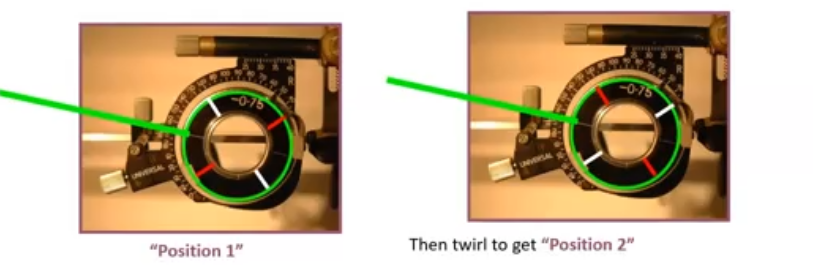
JCC used for both cyl power and axis determination
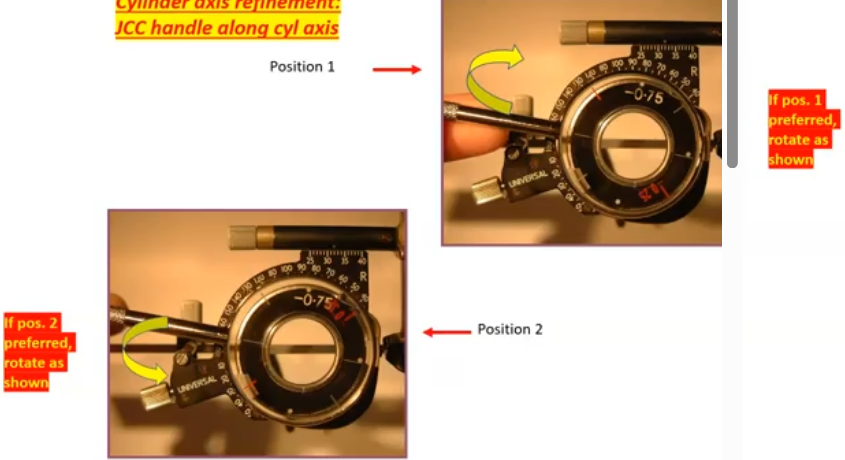
to check for cyl axis, hold handle of the JCC along the axis in the trial frame
eg in position 1 axis is 170
look at the red markings
position 1: 170 in trial frame. if prefers this, white markings need rotating clockwise for a preferred position
position 2: if px prefers this, rotating anitclockwise
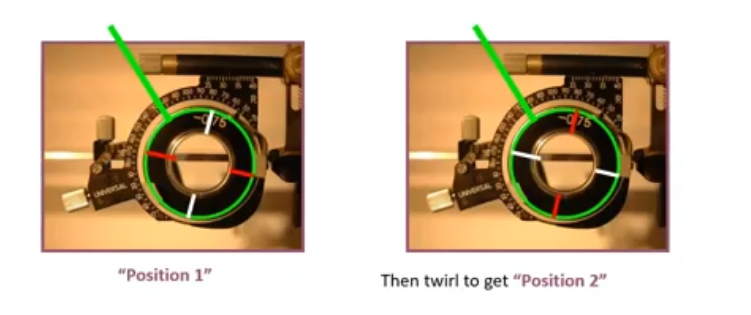
JCC for determinng the cyl power
to check cyl power, hold axis markings for the JCC along the axis of the cyl in the trial frame
red markings are along axis of cylinder
when twirled, white markings are along the axis of the cylinder
if px prefers position 1 that means they wants more minus cylinder
if px prefers position 2 means they want less cylinder
JCC routine: eg1: ret result R: -3.00 /-0.75 × 170 , VA with ret result is 6/7.5 (VAR 95)
one way to check on ret result is to measure VA with ret result and then re measure VA when ret cyl has been removed
eg, when we take out the ret cyl, VA drops to 88
so we put the -0.75 × 170 back in
offer a +0.50DS then -0.50DS as per BMS/BVS
now CLC is on the retinal so its time for JCC; hence switch on the rings
1st, check the cylinder axis
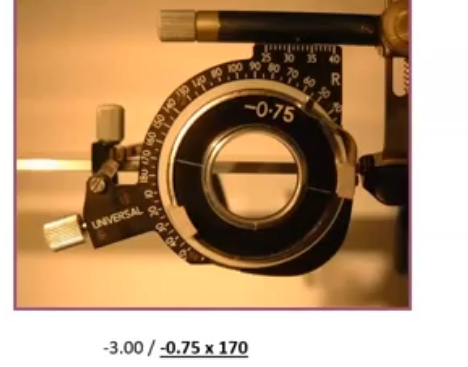
eg1 same: refining the cylinder axis
direct the px attention to the rings
if the rings are too small, the discrimination wont be possible for the px
if rings are too big then they wont notice the difference
Place JCC in front of the px eye. Align the handle with the axis markings of the trial frame cylinder and ask the question if its better 1, or 2 ( when flipping the JCC)
px responds , note position of the JCC which gives rounder and clearer rings
rotate trial cylinder towards towards minus axis of JCC when in rounder or clearer position
when would we choose a +- 0.25 crossed cyl
if VA improves slightly
if VA with ret is poorer than 85 use the higher powered JCC +-0.50 crossed cyl or higher
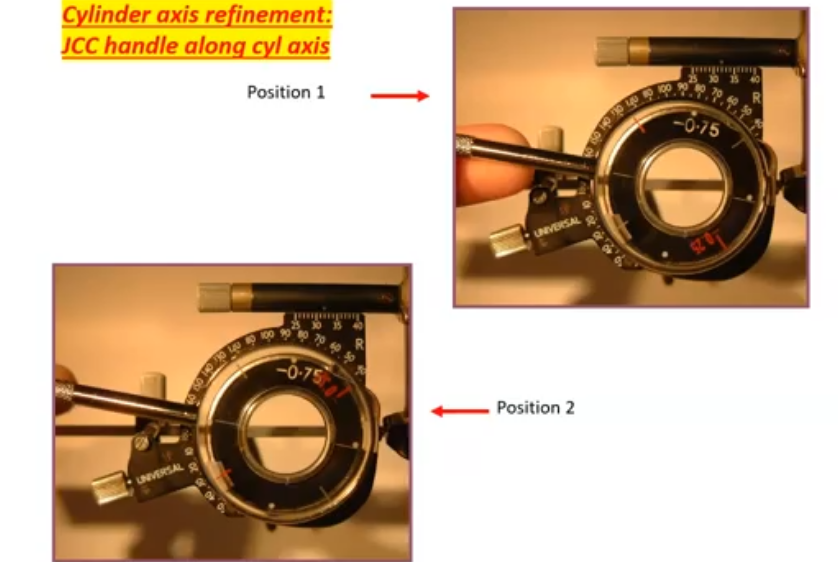
cyl axis refinement with JCC: eg1 same
handle held along the axis of cylinder eg 170
if position 1 was preffered, rotate the handle clockwise towards the red markings
is position 2 was preffered then rotate anticlockwise
in eg. px say circles are rounder and sharper with the JCC in position1: so rotate towards 125 ( as the red markings are 45 away from 170)
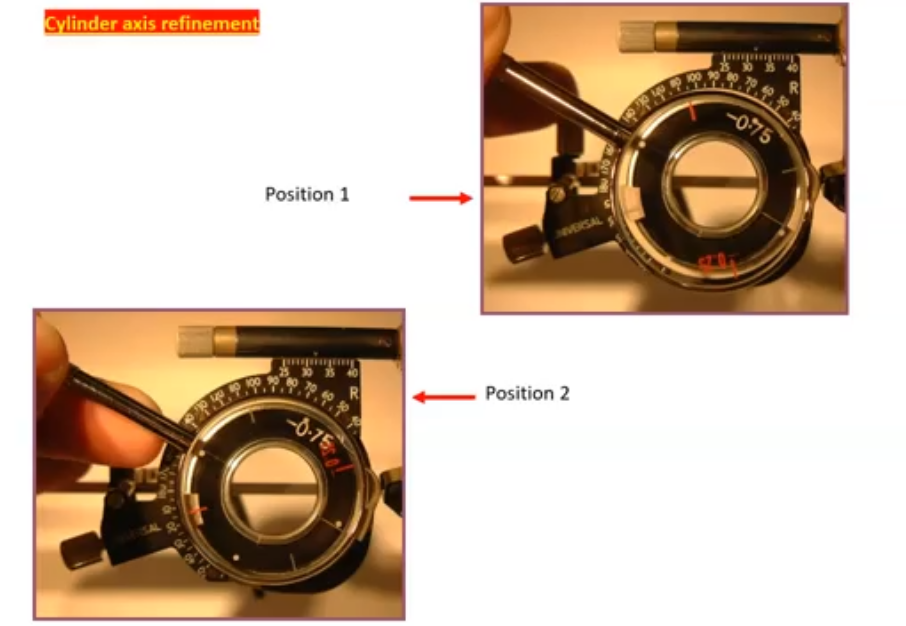
eg1 continued
as position 1 was preffered, trial frame cylinder axis is rotated towards minus axis of JCC when in prefered position
rotated around 20 degrees to now at around 150
so handle of JCC moves to 150, red markings at 105
ask again, which is better, 1 or 2
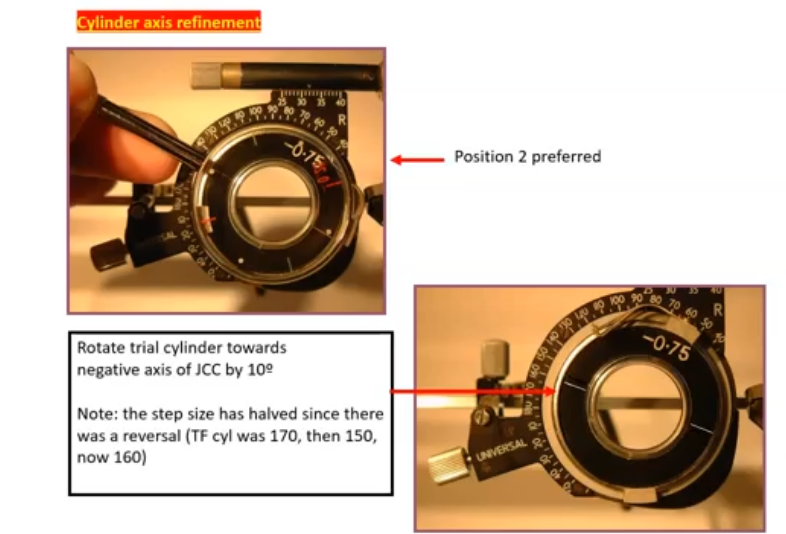
px says circles better in position 2
means that needs to move axis anticlockwise xloser to original axis
move to 160; rotated cylinder towards neg axis by 10 degrees
eg 1 continued
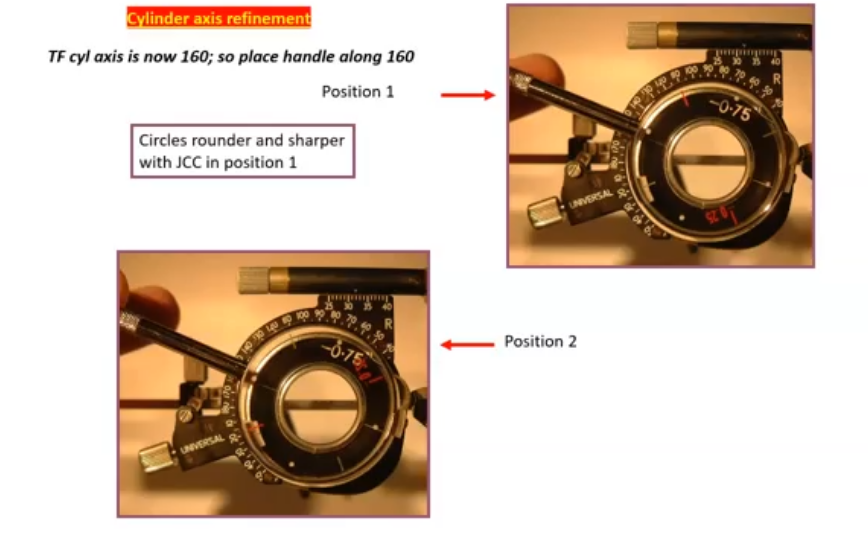
so now axis moved to 160
have handle at 160 and ask again if position 1 or position 2 when flipped is better
position 1 was preffered
so rotate the cyl axis towards the negative axis of JCC by 5 degrees
now 155
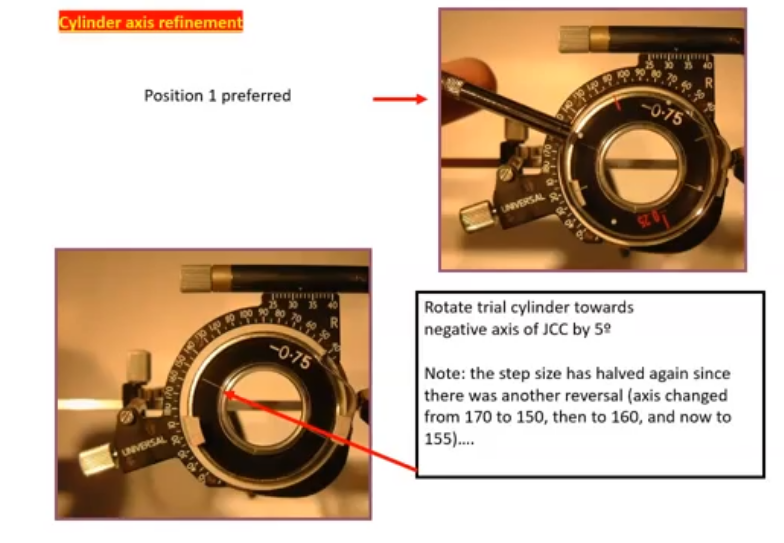
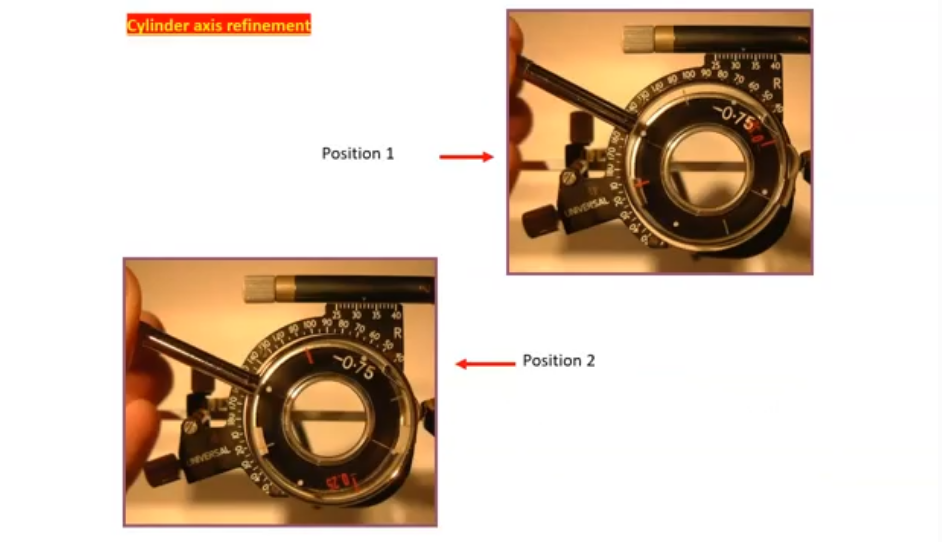
eg 1 continue
trial frame cylinder now at 155
ask same question
px has no preference for position 1 or 2 cylinder axis end point for now
so refined: -0.75 × 155
had 2 reversals so we can accept that the correct -ve cyl axis for this eye is 155
if power of the cyl changes, then need to go back and check if axis needs refining or not
axis determination steps
rotate trial framw cyl towards negative axis of JCC in the rounder and clearer position
for the next presentation of JCC, if the cylinder needs to be rotated in the same direction, rotate it by the same amount
if rotation in the opposite direction is needed, this is reversal
when theres reversal, rotate cyl by hald the previous amount
rotation of trial fame cyl is braketed; this means starting with larger rotation angles and reducing the angle of rotation when the direction of rotation changes
continue until positions 1 and 2 are the same to the px
by how much do we initially rotate the cyl axis
depends on cyl power
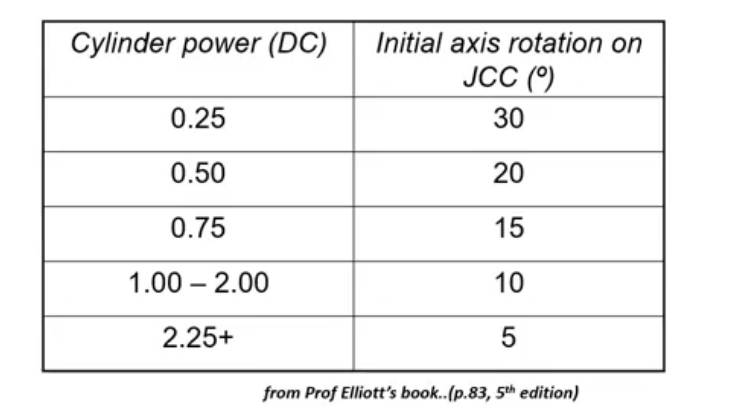
rules on changing the axis of the TF cyl
move the cyl axis un a systemic fashion and half the change when u change direction
for every axis change, you must consider cyl power and previous responses
make note of px responses during JCC axis determination eg ret cyl was -0.25 with axis at 180 then → 30 degrees → 60 degrees _45 degrees → 50 degrees with px saying at 50 its the same
must have observed at least 1 axis reversal before you know axis is end point
eg if px says 90 →80→ 70→.. px responds same, must change axis to 60 to check for reversal
if cyl axis comes back to 70 when px says same then we know its the right axis
EG1: same refindnig the CYL POWER
now need to align the JCC axis markings with axis markings of the trial cylinder
flip JCC and note which position the JCC gives clearer and rounder rings
how do we know whether to + or - cyl power
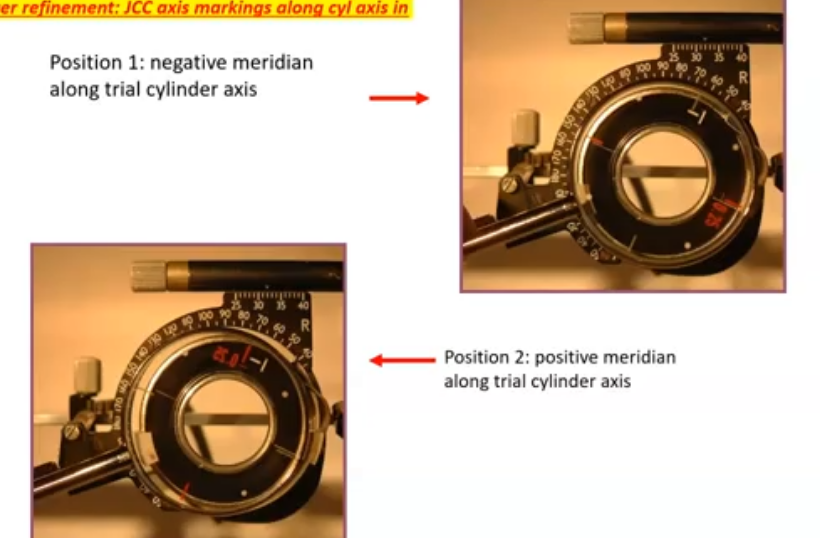
if the patient prefers negative meridian along the trial frame axis- increase the -ve cyl power
if the patient prefers positive meridian along the trial frame cylinder- decrease the -ve cyl power
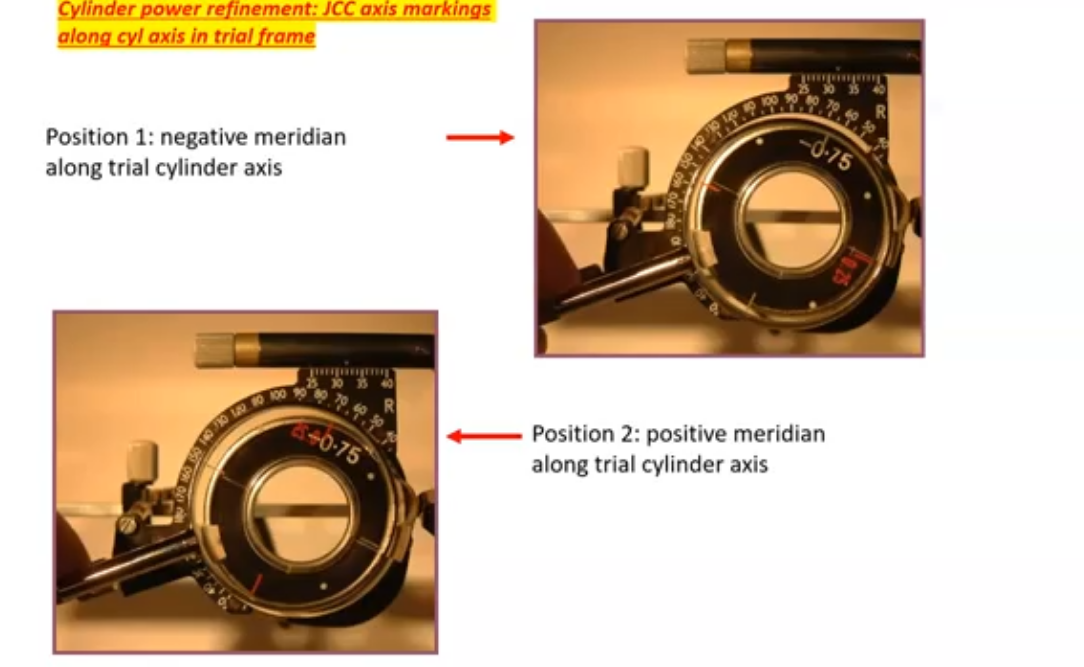
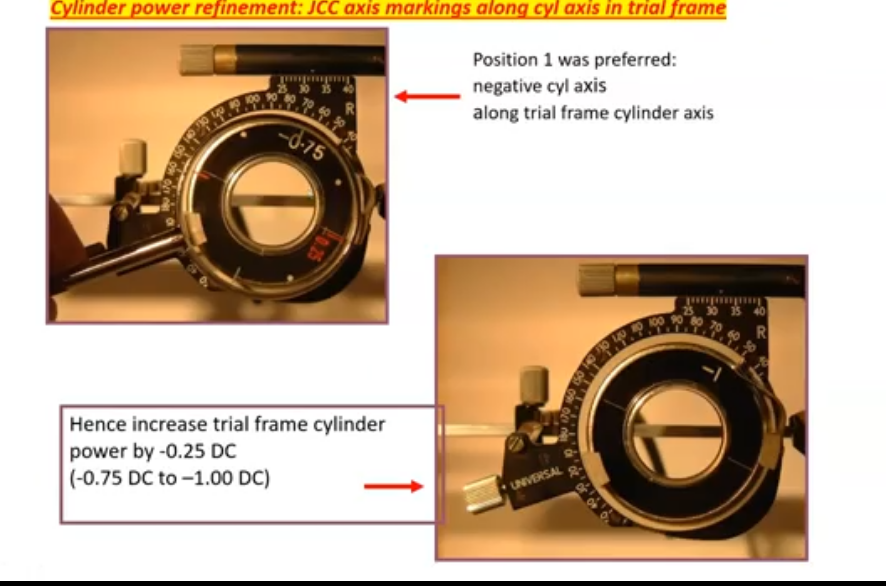
eg 1 continue: JCC markings along the cyl axis in trial frame
red markings correspond to the axis of the minus cyinder
knowing if they want more minus or less minus cylinder
px prefers position 1: which is the negative meridian along axis of trial cylinder axis
so increase trial frame cylinder by -0.25DC= -1.00 DC
keep it at the same axis (155)
eg 1 continued : cyl power refinement
now with the -1.00 in place, place JCC axis markings along the axis markings of trial frame cylinder
ask if better in 1 or 2 when flipped
px says no preference for poition 1 or 2
cylinder power end point - dont need a reversal when establishing a cyl power
= -1.00 × 155
rechecking the cyl axis after cyl power has been determined
as the cylinder power has been changed, go back and re check the cylinder axis
with small changes in power, expected that there isnt a change in cyl axis and if it does, its usall by a very small amount , if changed by ± 0.25 no need to check
larger change ( ± 0.50 or more may change the axis so need to check the axis again with the JCC
final axis check
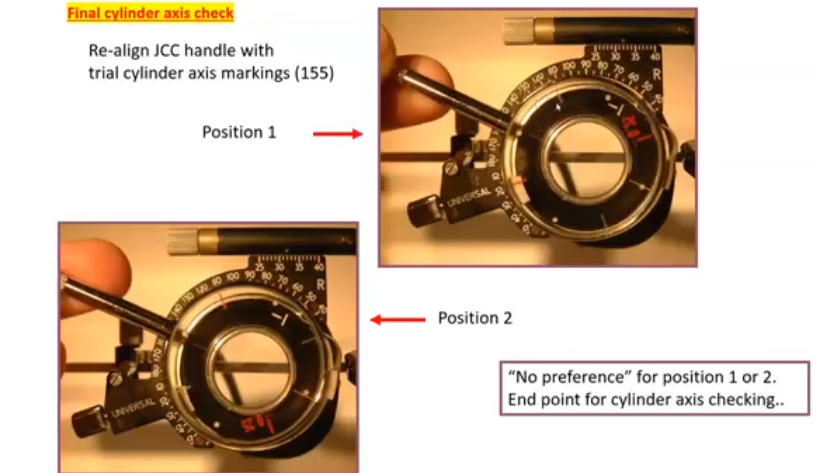
re align the JCC hadle with the trial frame cylinder axis markings (155)
px says no preference so end point for cylinder axis
JCC routine: cyl power and axis endpoint
R: -3.00/-1.00 × 155
check the VA with this sph/cyl combination
final check on the sphere: offer +0.25 then -0.25
stop when +0.25 makes VA worse and -0.25 doesnt improve VA
finally try +1.00DS test
expect around 4 line reduction since a +1.00DS lens added to a corrected eye will generate -1.00DS myopia
3-5 line reduction is okay : this confirms that you have not over minused or under plussed
worried if VA reduction is 2 lines or less with the +1.00DS
record result if +1.00DS result as expected.. sph/cy axis and VA
if px can stil read with +1.00, take out try +2.00, and if sill +3.00 etc to see how many dioptres out you are from real correction
eg2; no cylinder was found during ret
or cyl from ret made acuity worse
or no ret result exists
BMS: +2.00DS giving VA of 6/7.5 ( VAR 95)
starting with the BMS sphere in the trial frame
can estimate that the eye has around 1.00 astig since the VA with BS reduced by around 2 lines
use +-0.25 crossed cylinder
px observes smallerr ring targets
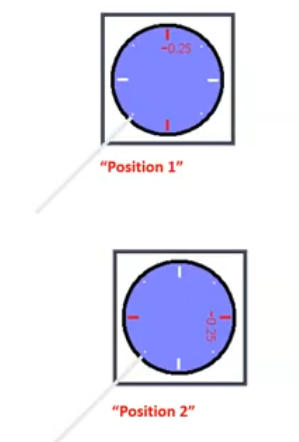
flips jcc with axis at 90 /180 then at 45 and 135
working out axis
if position 1 was preffered, with the red markings at 90, the px -ve cyl axis is nearer to 90 than 180
if position 2 was preffered, then the px -ve cyl axis is nearer to 180 than to 90
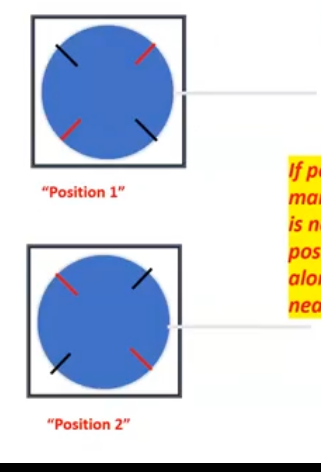
if px prefers position 1 with the red markings along 45 then the px -ve cyl axis is nearer to 45 than 135
if position 2 is preffered then the px -ve cyl axis is nearer to 135 than to 45
eg 2 : continued
if the rings are clearer with minus axis of JCC at 180 and 45:
insert -0.25DC with axis 20 or 25 which is halfway between 180 and 45
if rings are clearer with minus axis of JCC at 45 and 90 : insert -0.25DC with axis at 65/70 which is halfway between 45 and 90
if rings are much clearer with the minus cyl axis of JCC at 180 compared to 90 and a little clearer when minus cyl axis of JCC is at 135 compared to 45: insert a -0.25DC x 170
choice of JCC lens power
if the visual acuity /12 or better, use the lower powered JCC
if worse, use the higher powered JCC
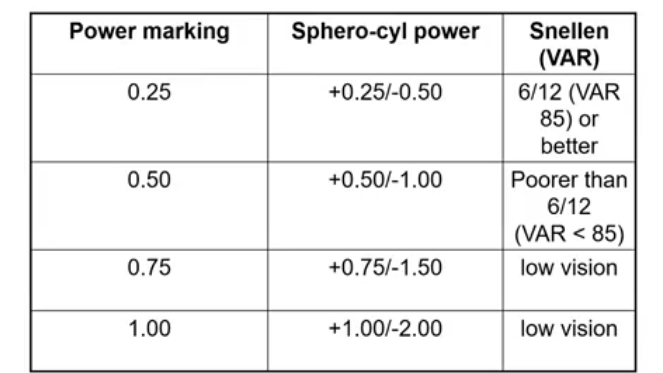
if we start JCC with only a sphere in place, what initial power of cyl lne shsould we choose
start by introducing a -0.25DC or -0.50 DC
but if the VA with BMS reduces by 4 lines, might expect there to be around -2.00DC of astigmatism, so introducing -1.00 initially
so usually initial cyl power will be -0.25 and increase in -0.25 increments
but if the VA is poor with the BMS we may consider using higher cyl power steps