Unit 4 AOS 1 Psych- Sleep
 Call Kai
 Learn
Learn Practice Test
 Spaced Repetition
 Match
Match Flashcards
 Knowt Play
1/70

There's no tags or description
Looks like no tags are added yet.
Name | Mastery | Learn | Test | Matching | Spaced | Call with Kai | Chat |
|---|
No analytics yet
Send a link to your students to track their progress
71 Terms
Consciousness
The level of awareness an individual has of their thoughts, feelings, perceptions, and existence.
Psychological construct
An agreed upon description and understanding of psychological phenomena that cannot be overtly measured or observed.
William James and his Stream of consciousness (1893)
Part of our first theorised beliefs around awareness of human consciousness.
Everyone's experience of consciousness is different, and our experience can rely on subjective reports.
This is why it is referred to as a psychological construct which is something we believe exists but is difficult to measure.
Consciousness continuum
A visual representation of the different states of consciousness that progress from lower levels of awareness to higher levels of awareness.
Our level of consciousness can be placed on a continuum, ranging from being highly focused and alert through to having no thoughts, feelings, or sensations at all.
Consciousness can be divided into two types - normal waking consciousness (NWC) and altered states of consciousness (ASC).
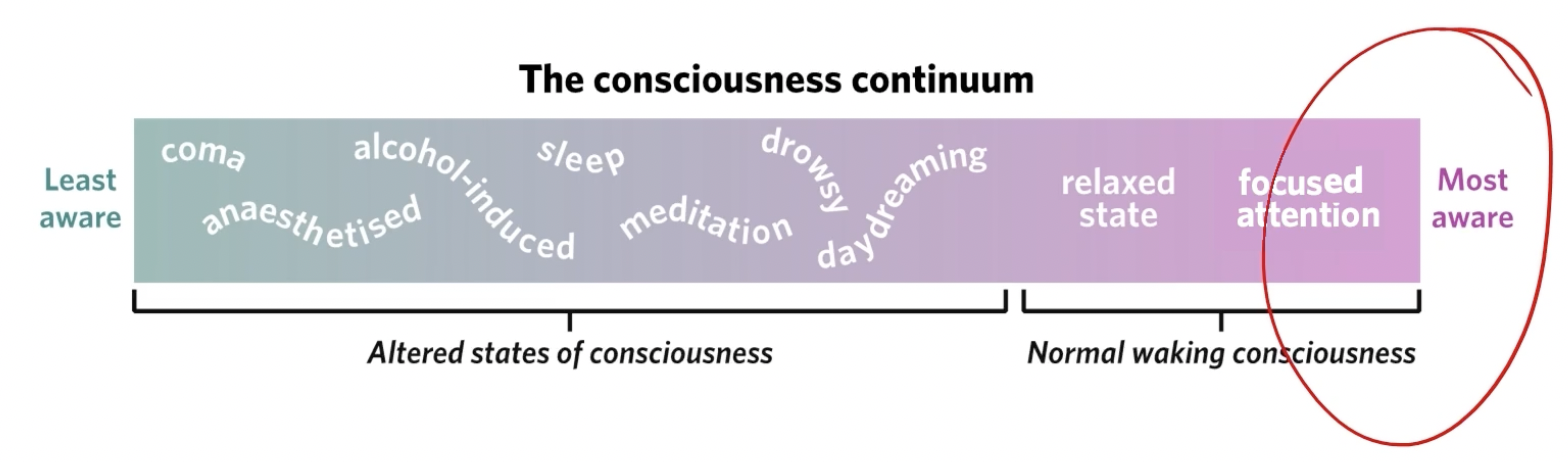
Normal waking consciousness
A state of consciousness in which an individual is awake and aware.
Normal waking consciousness involves having awareness of your thoughts, feelings, and behaviours, including internal and external events.
Eg. Emotional control, sensation and perception, self control
Altered states of consciousness
Any state of consciousness that is distinctly different from normal waking consciousness in terms of quality of experience and level of awareness.
Altered states of consciousness are any state that is characteristically different from normal waking consciousness in terms of awareness, feelings, and behaviours.
Altered states of consciousness can occur naturally (i.e. daydreaming) or with intervention (i.e. through medication).
Eg. Inability to control emotions, have self control (saying things that you are not aware of) and feel sensation (having anaesthetic to relieve pain)
Hypnogram
A graph that represents the time period of each stage of sleep, and the transitions between these.
Sleep
A regular and naturally occurring altered state of consciousness that involves a loss of awareness and disengagement with internal and external stimuli.
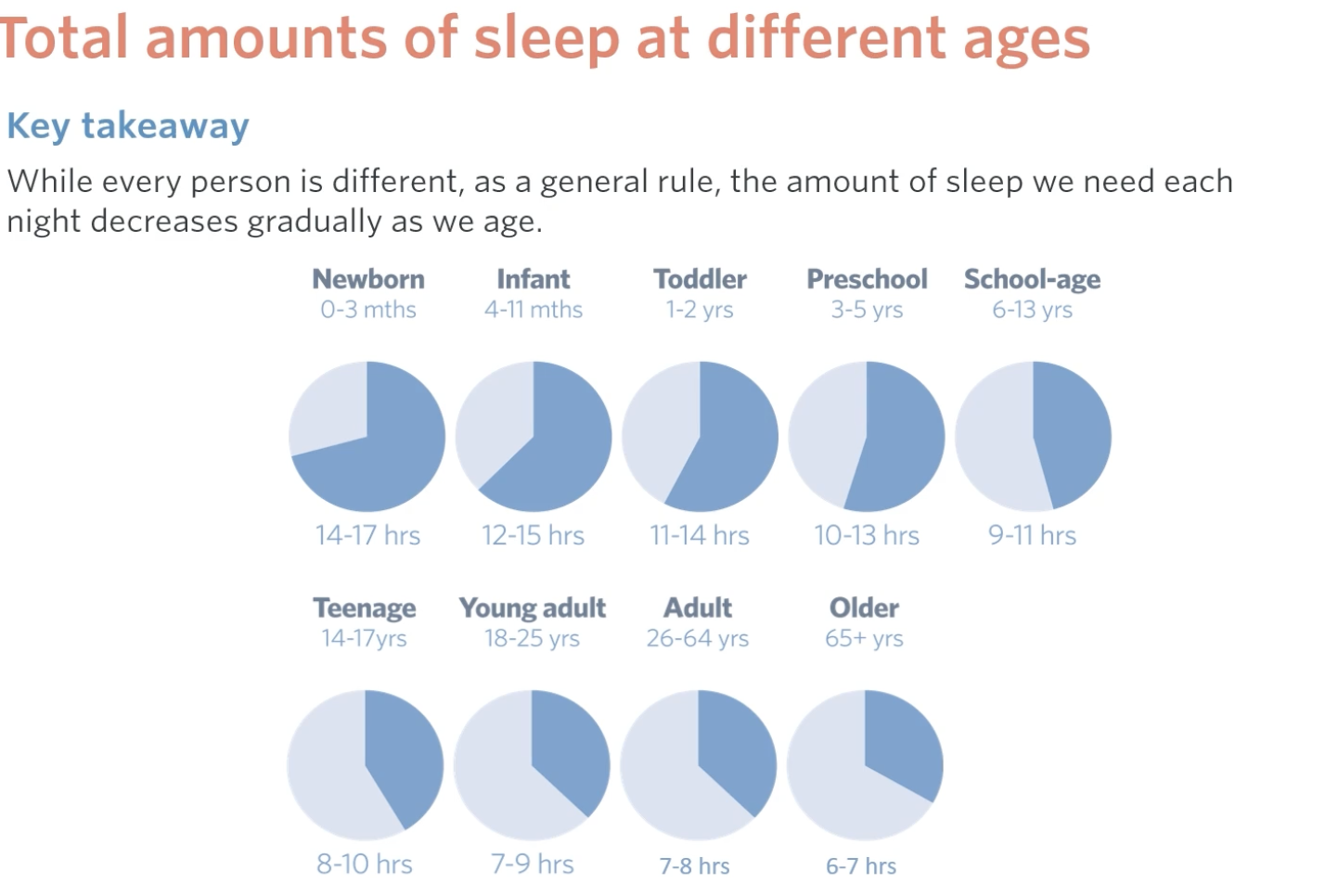
On average, adults sleep 7-8 hours per night.
The full duration of sleep is known as a sleep episode.
Within each sleep episode, we cycle through two different types of sleep, with each sleep cycle lasting around 90 minutes.
These types of sleep are rapid eye movement (REM) sleep and non-rapid eye movement (NREM) sleep, and each has its own features and functions.
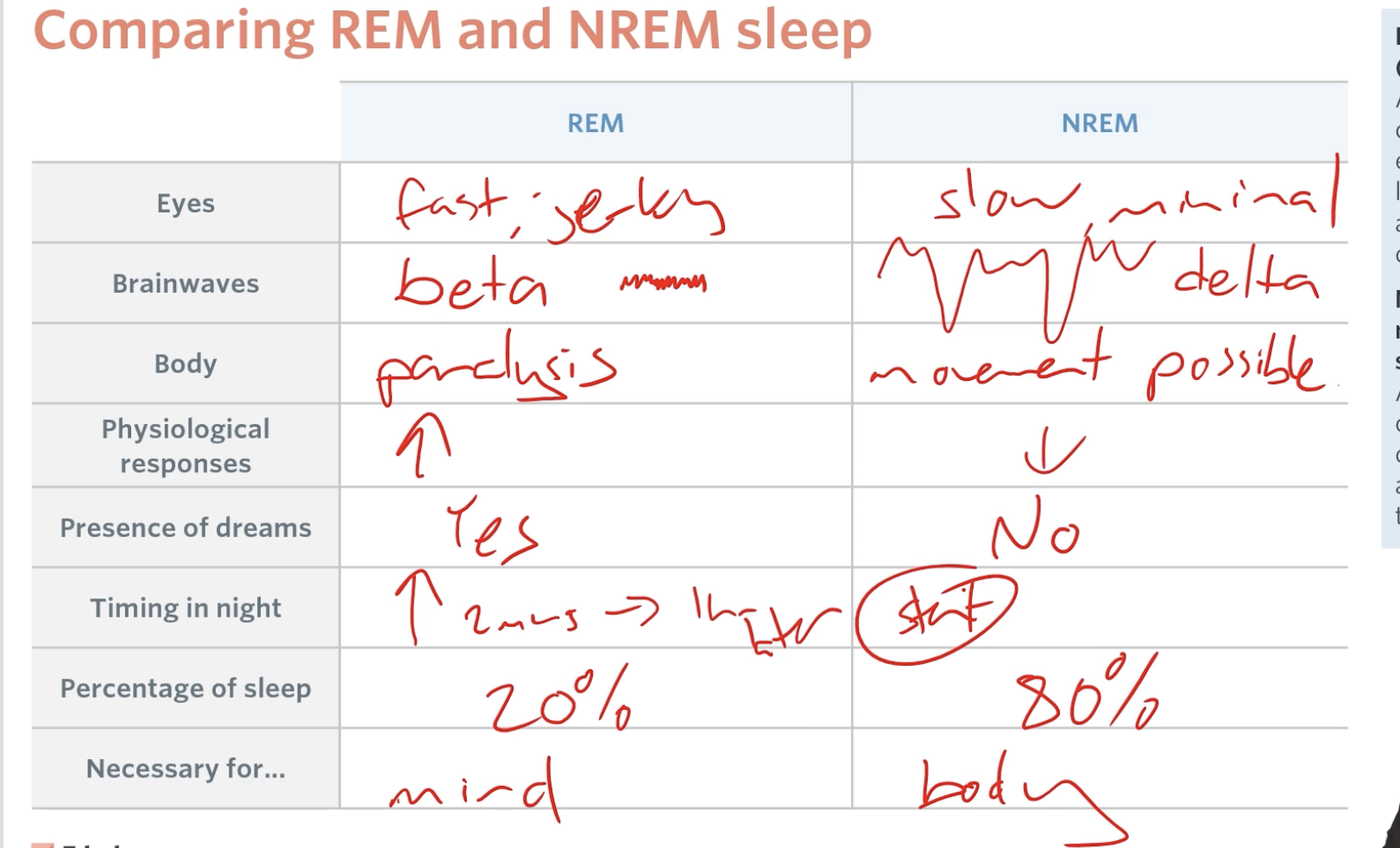
NREM periods tend to decrease as the night progresses, while REM periods increase.
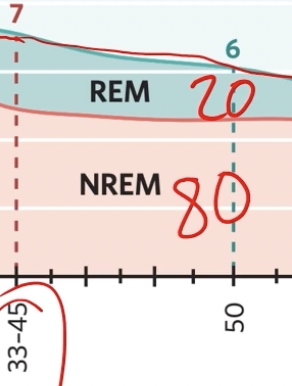
Adults spend about 80% of their sleep time in NREM, and 20% in REM.
Sleep cycle
An approximately 90-minute period during a sleep episode, in which an individual progresses through stages of REM and NREM sleep, before repeating.
Rapid eye movement (REM) sleep
A type of sleep characterised by rapid eye movement, high levels of brain activity, and low levels of physical activity.
Non-rapid eye movement (NREM) sleep
A type of sleep characterised by a lack of rapid eye movement, and subdivided into three different stages.
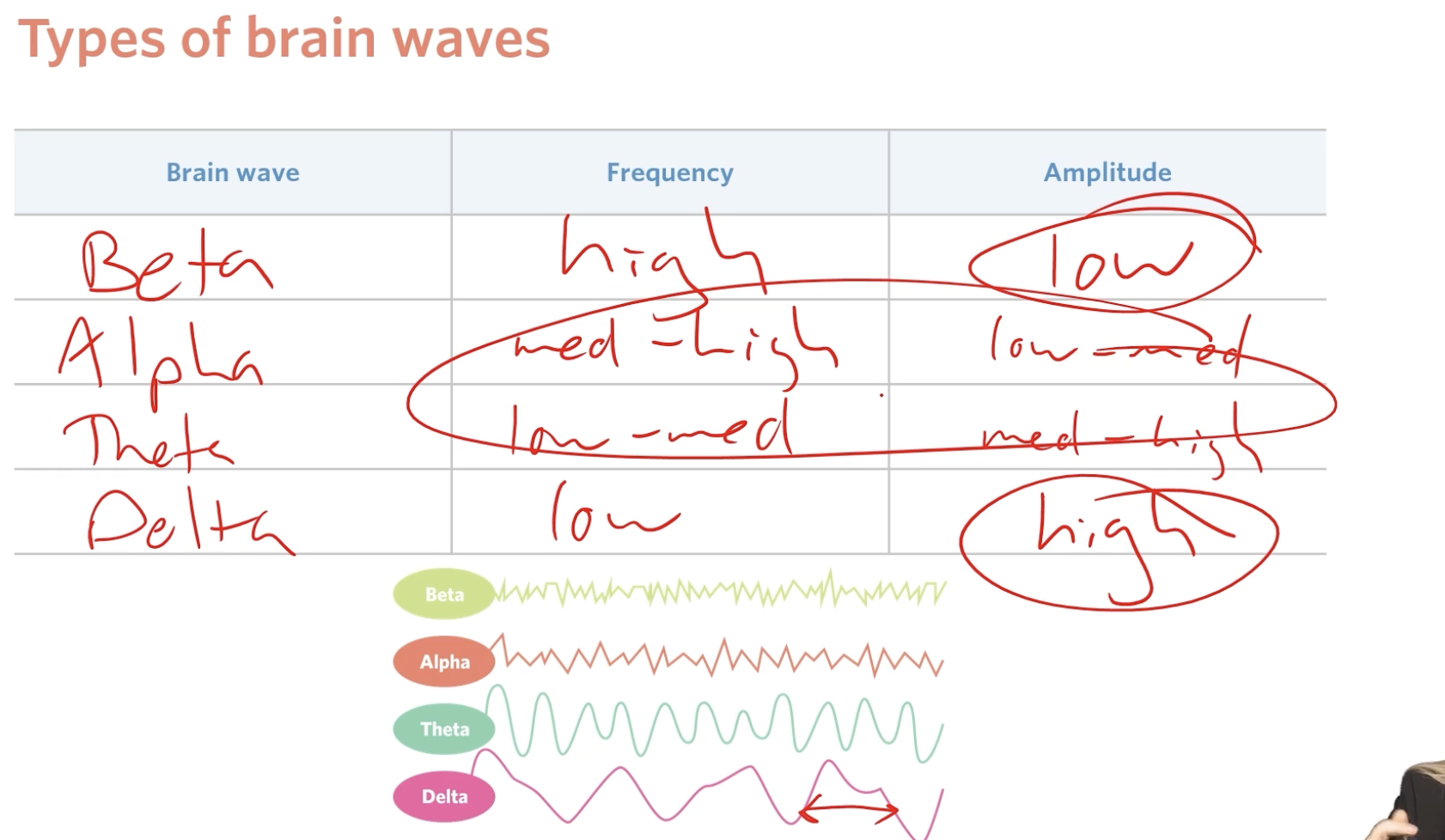
Amplitude
How high and intense
Frequency
How often and close they are occuring
Physiological indicators
Heart rate
Body temperature
Galvanic skin response
Eye movement
Muscle movement
Brainwaves
Physiological indicators are largely considered objective data.
Psychological indicators
Content limitations
Perceptual and cognitive distortions
Emotional awareness
Self control
Time orientation
Psychological indicators are much more subjective in their data.
Electroencephalograph
A device that detects, amplifies, and records the electrical activity of the brain.
An EEG detects the electrical impulses emitted by neurons and presents them as brain wave patterns.
Different types of brain wave correlate to different states of consciousness, so we can use an EEG to determine which state of consciousness a person might be in.
Electromyograph
A device that detects, amplifies, and records the electrical activity of the body's muscles.
Electro-oculograph
A device that detects, amplifies, and records the electrical activity of the muscles responsible for eye movement.
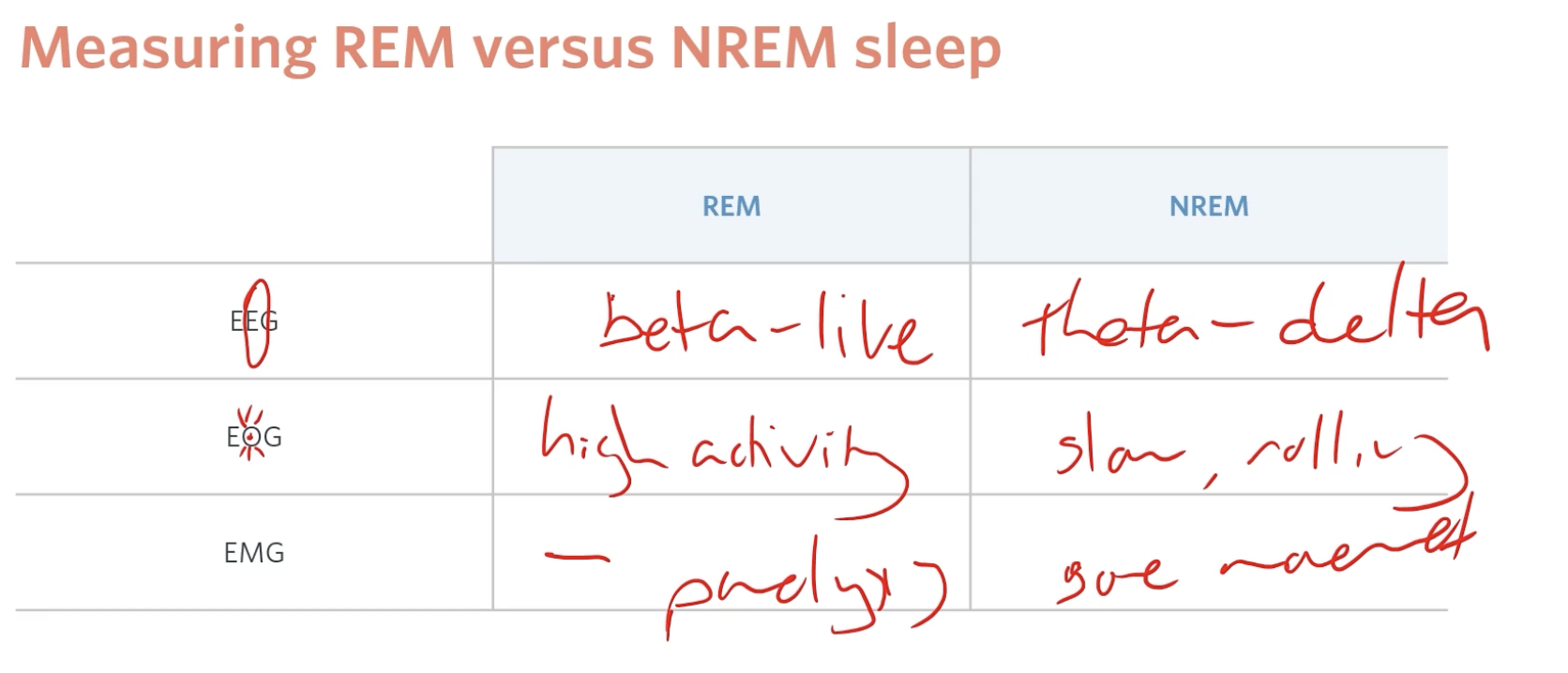
Objective (physiological) sleep data can be gathered using:
An electroencephalograph (EEG), which detects, amplifies, and records electrical activity in the brain.
An electromyograph (EMG), which detects, amplifies, and records the electrical activity of the body's muscles.
An electro-oculograph (EOG), which detects, amplifies and records electrical activity of the muscles surrounding the eyes.
Sleep diary
A record containing self-reported descriptions from an individual about their sleeping periods, including an estimated time spent sleeping and judgments they might have about the quality and nature of their sleep.
Video monitoring
The use of camera and audio technologies to record an individual as they sleep.
Biological rhythms
Repeated biological processes that are regulated by internal mechanisms.
There are two types of biological rhythms that are related to our sleep-wake patterns: circadian and ultradian rhythms.
Circadian rhythms
Biological and behavioural changes that occur as part of a cycle that lasts around 24 hours.
Circadian rhythms are physical, mental, and behavioural patterns that are repeated in a roughly 24-hour cycle.
They largely relate to the presence of light and dark.
Ultradian rhythms
Biological and behavioural changes that occur in a cycle that lasts less than 24 hours.
Ultradian rhythms are physical, mental,
and behavioural patterns that are repeated within cycles that last less than 24 hours.
A sleep cycle (i.e. a 90-minute period in which an individual progresses through REM and NREM sleep) is a type of ultradian rhythm.
Other examples of ultradian rhythms include digestion, heart rate, appetite, and arousal.
Sleep-wake cycle
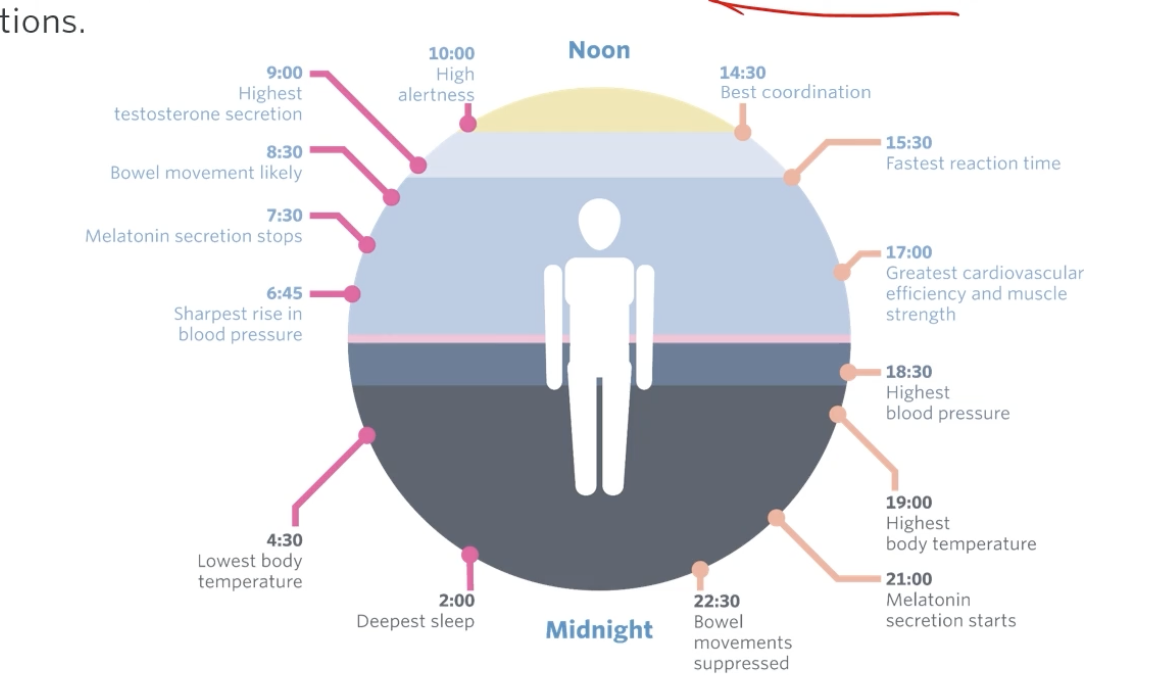
A 24-hour cycle that is made up of time spent sleeping and time spent awake and alert.
One type of circadian rhythm, in which we spend time awake and time asleep across a 24-hour period.
It is determined by an internal body clock located in the hypothalamus.
This clock also regulates our level of body temperature, and hormone secretions.
Melatonin
A hormone released by the pineal gland, typically at night-time, to induce sleep as part of the sleep-wake cycle.
It is a hormone that is secreted during low levels of light.
It helps to sync internal events to external cues.
Eg. when light levels decrease at night, melatonin is secreted to make us feel sleepy.
Therefore, melatonin regulates our circadian rhythm and syncs our sleep-wake cycle to night and day.
Suprachiasmatic nucleus
A structure in the hypothalamus that regulates an individual's sleep-wake patterns.
Pineal gland
A gland in the brain responsible for the production and release of melatonin.
How melatonin is released
Light is detected by the eye.
This stimulates the suprachiasmatic nucleus (SCN) in the hypothalamus.
The SCN signals the pineal gland to release melatonin.
The restoration theory
One theory that explains why we have the need to sleep.
The theory is underpinned by the belief that sleep is needed for the body to replenish its resources.
REM sleep is thought to replenish the mind/brain.
NREM sleep is thought to replenish the body.
Sleep is also the time when growth hormone is released, aiding in physical development.
Composition of sleep at different ages
When newborns sleep, around 50% of each episode is REM, and the other 50% is NREM.
As children become adults, their split moves towards 20% REM and 80% NREM, then remains fairly consistent throughout adulthood.
One of the stages of the lifespan most under threat of experiencing inadequate amounts of sleep is adolescence. There are many factors that play into this, including:
Poor sleep habits
Hormonal changes
Exposure to blue light
Busy schedules
If an individual continues to get poor quality or insufficient amounts of sleep, they may build up a sleep debt. As a sleep debt builds, body and brain functioning begin to deteriorate.


Sleep deprivation
Inadequate quantity and/or quality of sleep.
Partial sleep deprivation
When an individual sleeps for some duration within a 24-hour period, but the sleep duration is too short, or the quality is poor.
Partial sleep deprivation is having some sleep in a 24-hour period, but not getting enough to meet your needs in either quantity or quality.
Full sleep deprivation
When an individual has no sleep within a 24-hour period.
Full sleep deprivation is going without sleep for a 24-hour period, for one night or several nights in a row.
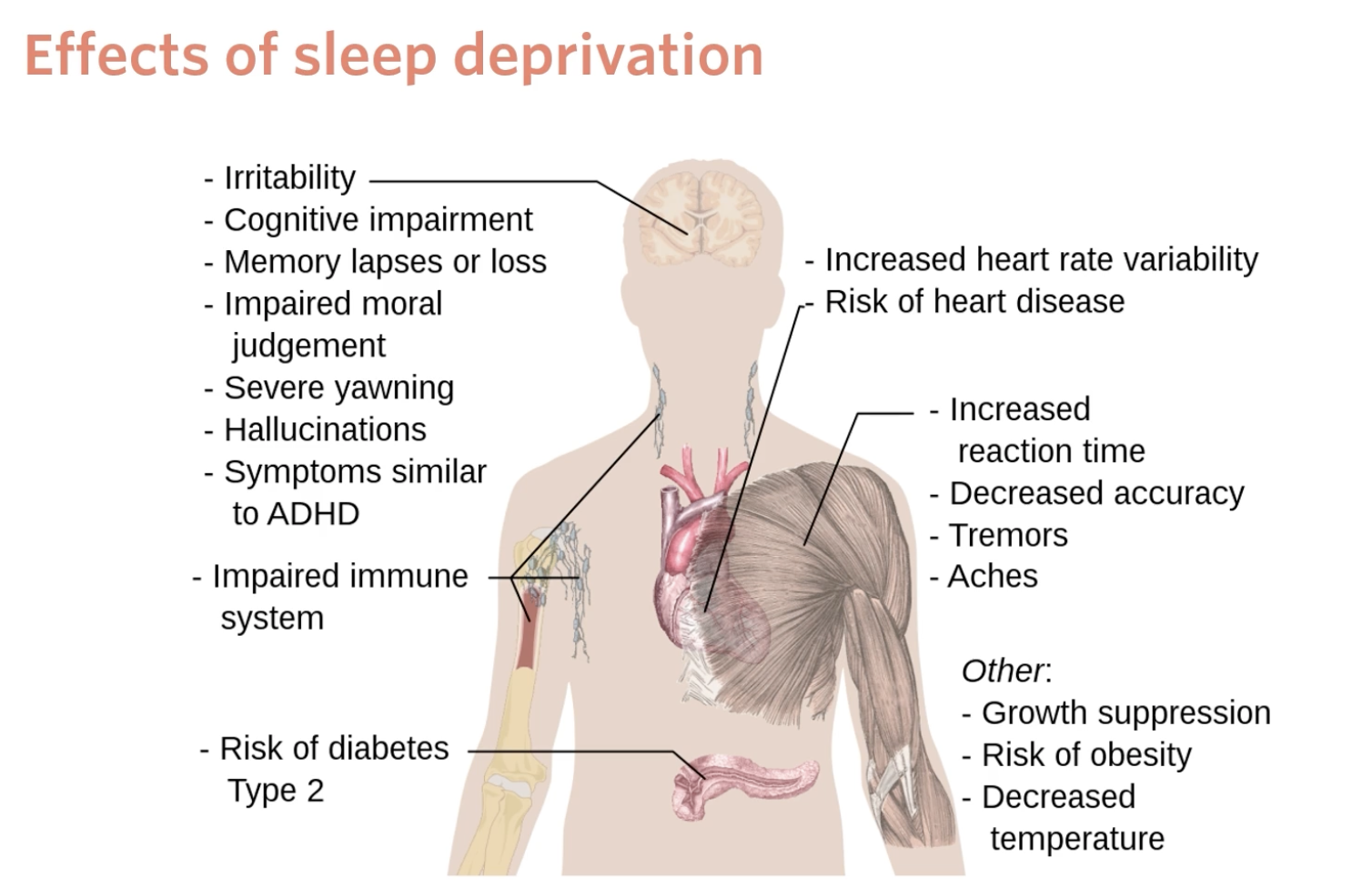
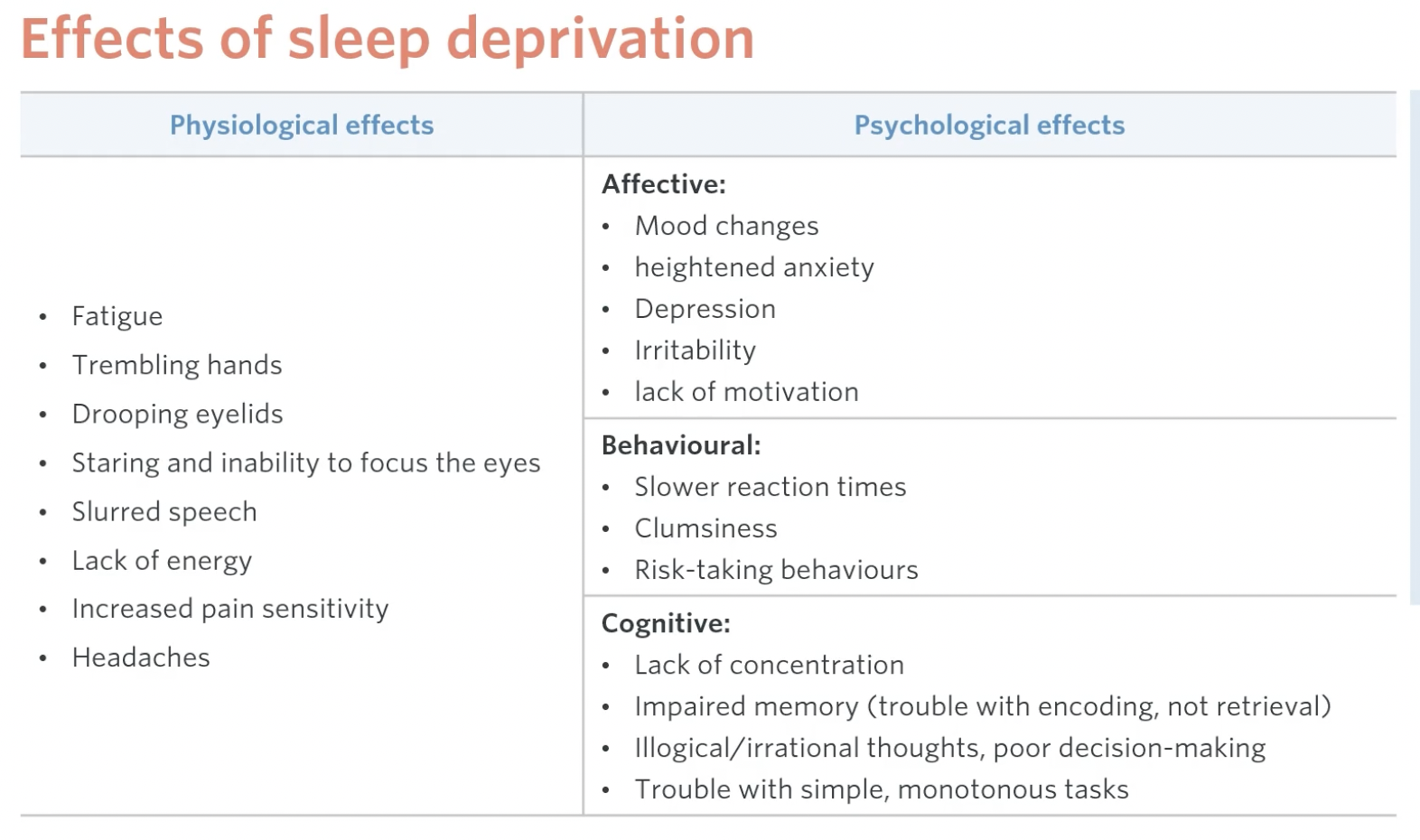
Affective effects
The changes in emotions and emotional responses that arise from sleep deprivation.
Behavioural effects
The changes in actions and the ability to control them that arise from sleep deprivation.
Cognitive effects
The changes in mental processes that arise from sleep deprivation.
The effects of full sleep deprivation
It can have detrimental effects on the body both physically and psychologically and is theorised to potentially lead to death.
A few days without sleep can lead to sleep deprivation psychosis, resulting in depersonalisation (loss of personal identity) and difficulty coping.
After experiencing sleep deprivation for several days, individuals may also experience hallucinations (seeing or hearing something that doesn't exist).
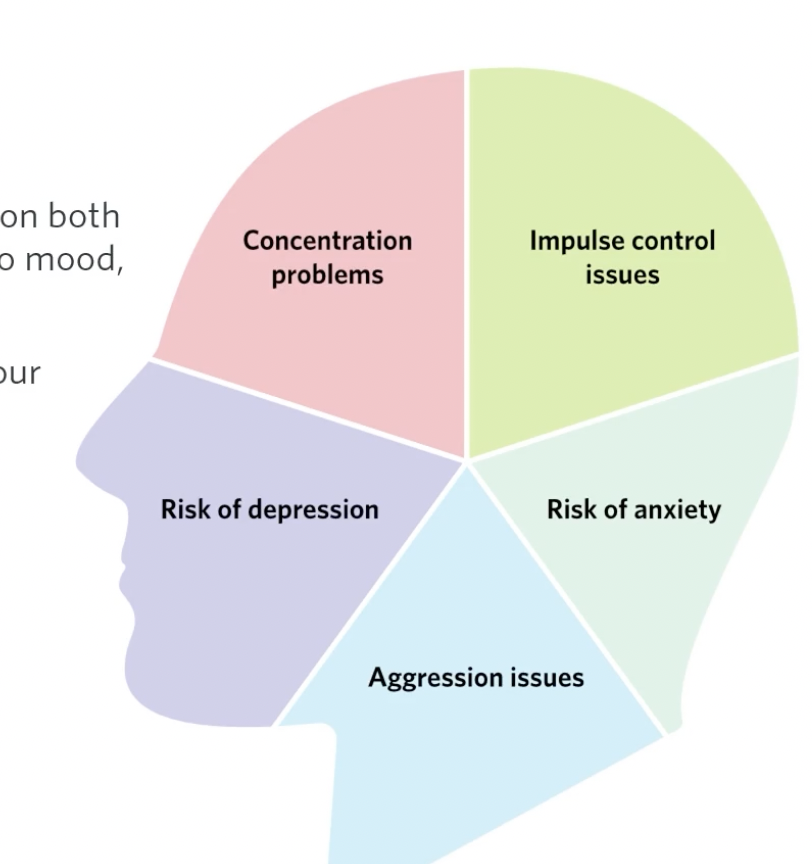
There is a lot of evidence to suggest that chronic sleep deprivation can have a number of long-term effects, including depression, anxiety, hypertension, obesity, diabetes, and more.
Microsleeps
Short bursts of sleep (3-15 seconds) where the individual appears to be awake and may be unaware that they have slept at all.
EEG patterns resemble those experienced in NREM Stage 1 or 2 sleep.
How much sleep do we need after sleep deprivation?
More for the first night, following which our symptoms typically disappear and our sleep duration should return to normal.
We're also likely to fall asleep more quickly after a period of sleep deprivation.
What if we miss out on REM sleep specifically?
Something called REM rebound might occur which is when our bodies need to catch up on REM sleep in particular, so our typical proportion of REM to NREM may shift.
Dream intensity during REM rebound also tends to increase.
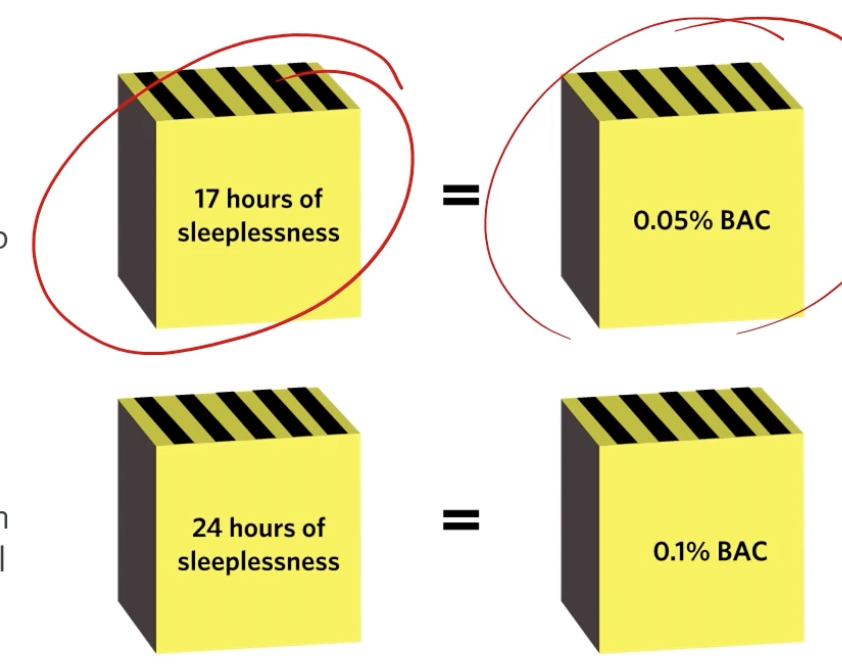
Comparison to BAC
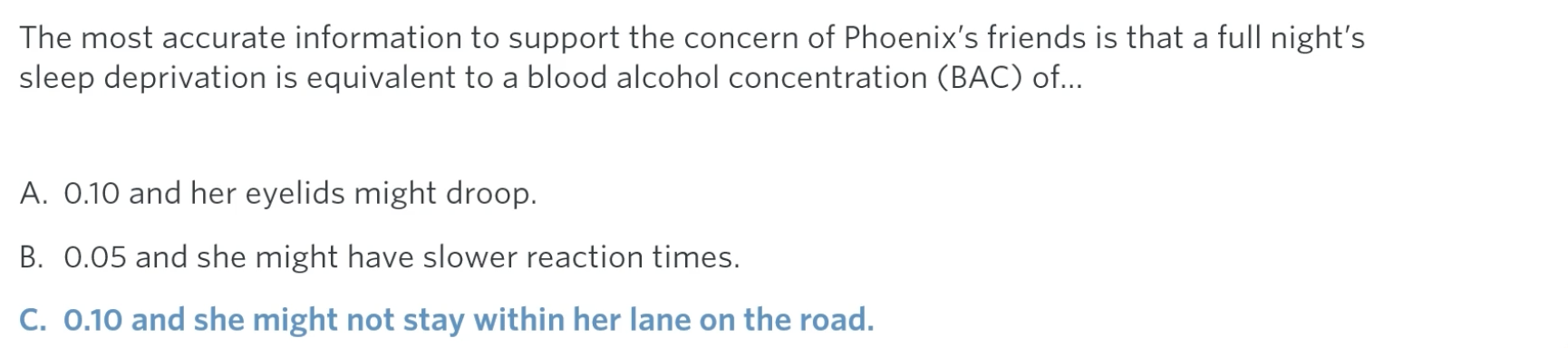
The effects increase with the length of sleep deprivation, in the same way that they do with an increase in blood alcohol concentration (BAC).
Affective(emotional) effects of both sleep deprivation and BAC include altering someone's usual emotional state (e.g. making them more restless and irritable).
Cognitive effects of both sleep deprivation and BAC include decreased concentration, and impaired reasoning and complex thought.
Circadian rhythm sleep disorders
Disturbances to typical sleeping and waking patterns that interfere with the regulation of the circadian rhythm of sleep, leading to a change in the sleep-wake cycle.
Delayed sleep phase syndrome
A type of circadian rhythm sleep disorder in which sleep and waking occur later than usual.
Also known as delayed sleep-wake phase disorder, delayed sleep phase syndrome (DSPS) relates to our internal circadian rhythm being delayed two hours or more from a conventional sleep pattern, despite external cues (i.e. night falling).
This will cause sufferers to go to sleep later, wake up later, and so the cycle begins.
Causes of DSPS
Lifestyle factors
Poor sleep habits
Shift work
Jetlag
Adolescence
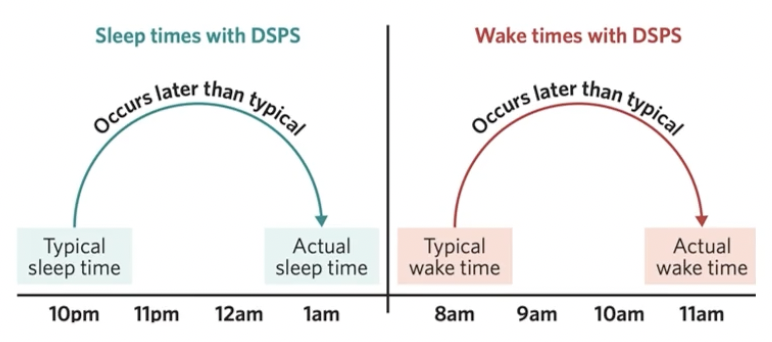
Why is DSPS more common in adolescence?
During adolescence, the release of melatonin is delayed for up to 2 hours.
Melatonin release is controlled by circadian rhythms, which are impacted by both internal and external cues, including light levels.
It is thought that lifestyle factors like homework demands, after school activities, and exposure to blue light can also impact sleep times.
A lack of sleep is then exacerbated by early school start times.
Advanced sleep phase disorder
A type of circadian rhythm disorder in which sleep and waking occur earlier than usual.
Relates to our internal circadian rhythm signalling sleepiness earlier than a conventional sleep pattern.
This will cause sufferers to go to sleep earlier, wake up earlier, and so the cycle begins.
Causes of ASPD
Lifestyle factors
Genetics
Shift work
Jetlag
Old age
Shift work
Can be undertaken at varying times, and can change regularly which can require the natural sleep-wake cycle to adjust frequently.
Some impacts of shift work can include the development of circadian phase sleep disorders.
Whenever possible, shift work should be scheduled to move forward in time from previous shifts, working with our natural lengthened circadian rhythm.
Bright light therapy
A method used to adjust a person's circadian rhythm through exposure to a high-intensity light source.
Can stimulate the release of melatonin artificially.
To reset our natural body clock, exposure to bright light therapy for 15 minutes - 2 hours in the morning can help to stimulate wakefulness for those with DSPS, or in the evening for those with ASPD.
Shift workers, or those who are jetlagged, may also like to use bright light therapy to stimulate wakefulness at times their body would like to be asleep.
Zeitgebers
External cues from the environment that influence the circadian rhythm.
Zeitgebers are external or environmental cues that help to synchronise our internal body clock with the natural environment.
Our strongest zeitgebers are light, temperature, and eating and drinking patterns.
Exercise and socialisation can be zeitgebers as well.
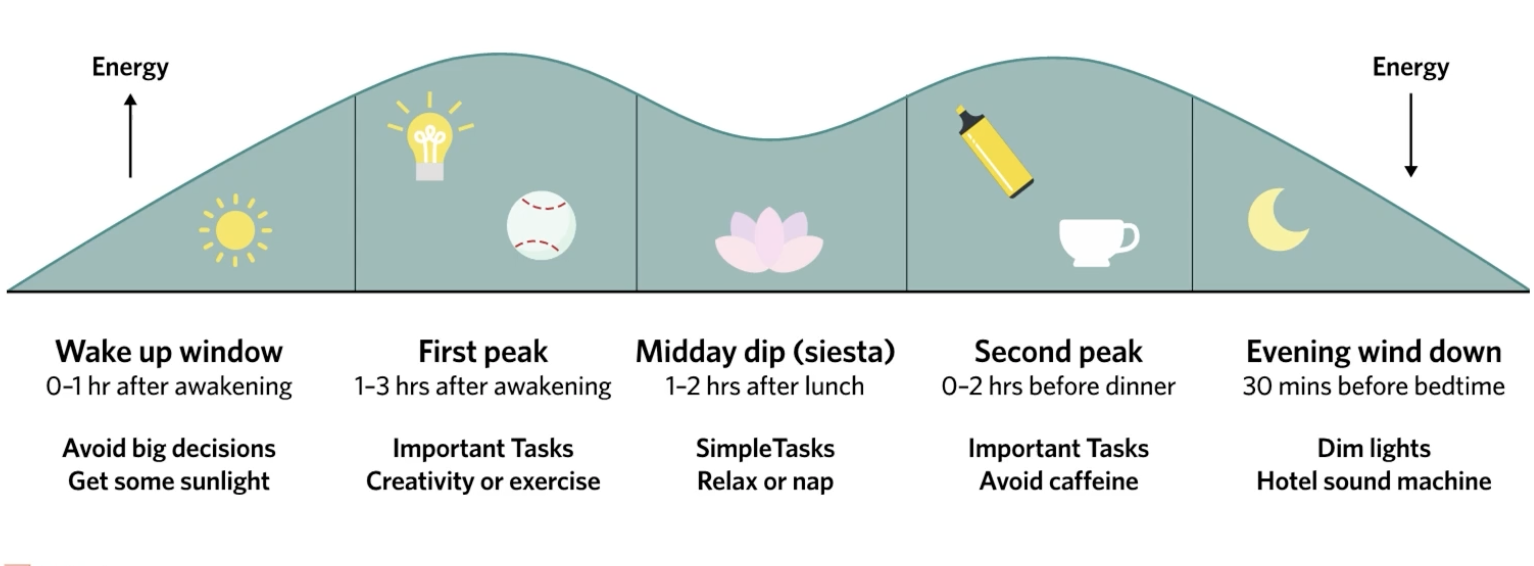
Daylight
The typical light an individual is exposed to during the day, and is mostly natural blue light.
Light acts as a zeitgeber by signalling to the SCN to cease melatonin production, promoting wakefulness.
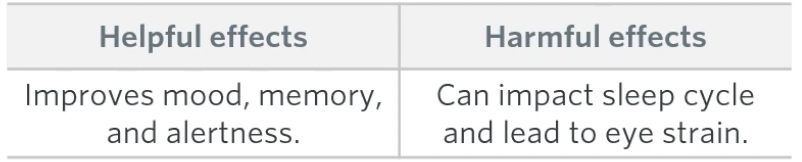
Blue light
A type of light that can be emitted both naturally and artificially.
Blue light is on the spectrum of light and is made up of short high energy waves.
Temperature
The degree of external heat in the environment that can influence the quality and quantity of sleep.
Sleep hygiene
The practices and habits that promote an individual's sleep patterns.
What good sleep hygiene looks like
Light cues: reduce levels of light 2 hours before bed, do not look at artificial light from screens before bed, sleep in a dark room.
Food and drink: do not eat too late and avoid caffeinated or sugary foods near the end of the day.
Rituals: develop a ritual that signals bed-time for you, whether that be a bath, skin routine, or reading a book.
Patterns: try to go to bed and wake up at the same or similar time to help your circadian rhythm.
Comfort: create a comfortable space both physically and mentally where you leave your day behind you.
Mental wellbeing
An individual's psychological state, involving their ability to think, process information, and regulate emotions.
Involves how we feel and how we function
We can see the impacts of sleep deprivation on both of these areas when we look at the impacts to mood, cognitive impairment, and much more.