Television Production NOCTI Exam

0.0(0)
studied byStudied by 0 people
call kaiCall Kai
learnLearn
examPractice Test
spaced repetitionSpaced Repetition
heart puzzleMatch
flashcardsFlashcards
GameKnowt Play
Card Sorting

1/111

encourage image

There's no tags or description

Looks like no tags are added yet.

Last updated 7:09 AM on 11/20/24
Name
Mastery
Learn
Test
Matching
Spaced
Call with Kai

No analytics yet

Send a link to your students to track their progress

112 Terms

1
New cards

Production Assistant

an entry-level position. For many it is their first industry job.

2
New cards

Talent

the name for anything performing or appearing in front of the camera

3
New cards

Floor Manager

personnel in charge of making sure everybody is in place and all equipment is ready during a LIVE show. They will also cue talent

4
New cards

Sound Engineers

operate the audio console during the show. Also called mixer

5
New cards

Switcher

(also called vision mixer) device used to select between several different video sources and in some cases compositing video sources together to create special effects

6
New cards

Bus

a row of buttons with each button representing a video source. Pressing a button will select a video to play live

7
New cards

Executive Producer

provides the financial backing for a production

8
New cards

Camera Control Unit

CCU, regulates all the elements of the camera signal. (such as focus, white balance, and color balance)

9
New cards

Broadcasting

depends on cooperate (advertising) or public funding (donations and grants)

10
New cards

Subscription TV

depends on monthly fees from the audience to fund programming

11
New cards

Arbitron

survey organization that keeps track of who's watching what and at what time

12
New cards

Ratings

info of who, what, and when are watching

13
New cards

Shares

a tally of how many people are watching a given program

14
New cards

Demographics

measure of what type of people are watching (race, age, gender, etc.)

15
New cards

Primetime

(between 8-11pm) is the time mot people are at home and watching

16
New cards

Commercials

generate income for the broadcaster to pay for the cost of producing or acquiring the program

17
New cards

Focus Groups

screen a show and meet to discuss likes and dislikes

18
New cards

Concept

the initial idea for a show

19
New cards

Treatment

a brief narrative description of what a program will be

20
New cards

Storyboard

a comic book styled sequence of drawings that will help the crew understand the director's vision

21
New cards

Outline

the scene by scene development of the events in your teleplay

22
New cards

Federal Communications Commission (FCC)

an organization to license Radio and Television stations. They determine the standards and practices

23
New cards

American Society of Composer and Performers (ASCAP) and Broadcast Music Inc. (BMI)

two organizations (full name and letters) that license music rights to show producers

24
New cards

Release Form

all persons appearing in a film must sign this which gives the film maker the right to use the face and likeness of the performer in the finished film

25
New cards

Copyrighted Material

intellectual property belonging to the copyright holder. Permission must be obtained before using their work

26
New cards

Synchronization Rights

permission by the music copyright holder for you to use that music under a scene in your film

27
New cards

Lower Third

graphic used to identify an on-camera speaker (his name appearing under him)

28
New cards

Crawl

a title moving along the bottom of the screen left to right (Cali term)

29
New cards

Roll

stack of titles that run up the screen (Cali term)

30
New cards

Spotlight

creates sharp directional beam of light onto a controlled specific area of the subject

31
New cards

Floodlight

creates even washes of light over whole set

32
New cards

Fill light

reduces shadows

33
New cards

Contrast Ratio

the difference between the brightest and darkest area of the frame

34
New cards

Three Point Lighting

accomplished with the use of three lights; key, fill, and rim (also called back or hair light)

35
New cards

Barn Doors

mechanical flaps on the sides of lighting instruments that open and close on hinges to control shape of the light and where it falls

36
New cards

Fresnel Lights

light fixtures with lenses in front of the bulb. These lenses have concentric rings etched into the glass and they smooth out the edge of the pool of light they create, softening it
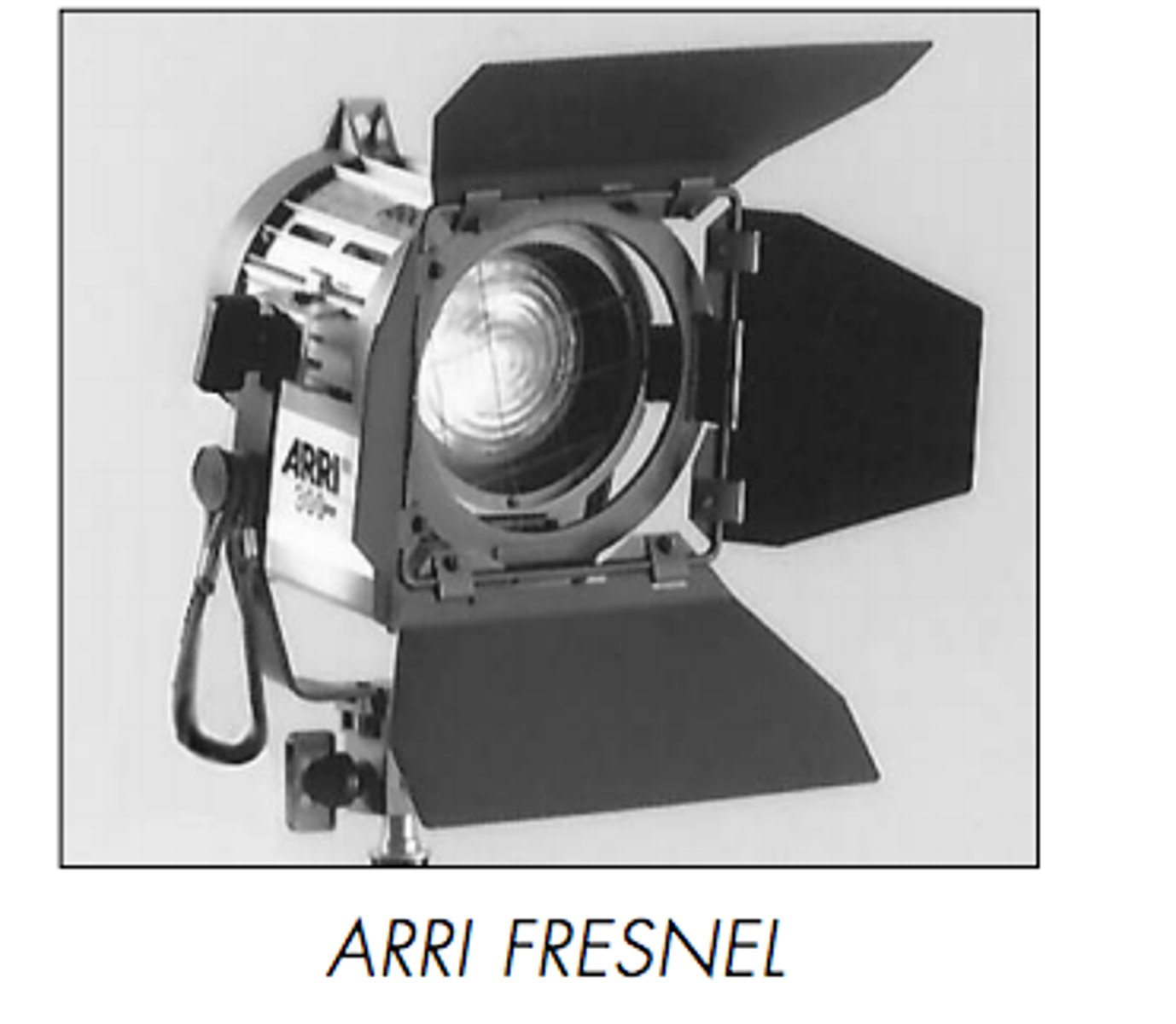
<p>light fixtures with lenses in front of the bulb. These lenses have concentric rings etched into the glass and they smooth out the edge of the pool of light they create, softening it</p>
37
New cards

Gels

plastic sheets of specific colors placed over lighting instruments that tint the light a specific hue or color

38
New cards

LED Lamp

light emitting diode

39
New cards

Tones

frequency or pitch, used by audio engineers to adjust playback equipment so accompanying media is at a comfortable volume for the audience

40
New cards

Lavier Microphones

small mics that are hidden in necktie clips in upper shirt button holes

41
New cards

Background Music

supports narrative or and enhances the mood of the scene

42
New cards

Transponder

both a transmitter and a receiver (like walkies)

43
New cards

Dollying

moving the camera and the tripod forward or away from an object on Z

44
New cards

Trucking

moving the camera and the tripod from side to side on X parallel to the picture plane

45
New cards

Panning

to swivel (pivot) or rotate the camera on X horizontally

46
New cards

Tilting

moving the camera lens up and down on Y without moving the tripod

47
New cards

Pedestaling

moving the camera up and down on Y, lowering and raising the base

48
New cards

Headroom

blank space left between the top of the object or subject and the upper edge of the frame

49
New cards

Leadroom

term for the space left in front of a person moving on X toward the edge of the frame

50
New cards

OTS

abbreviation of "over the shoulder"

51
New cards

CU

abbreviation of "close up"

52
New cards

ECU

abbreviation of "extreme close up"

53
New cards

ELS

abbreviation of "extreme long shot"

54
New cards

MS

abbreviation of "medium shot"

55
New cards

Cutaway or Insert

avoid jump-cuts

56
New cards

RCA Cable

yellow, red, and white cables that carries both audio and video signals
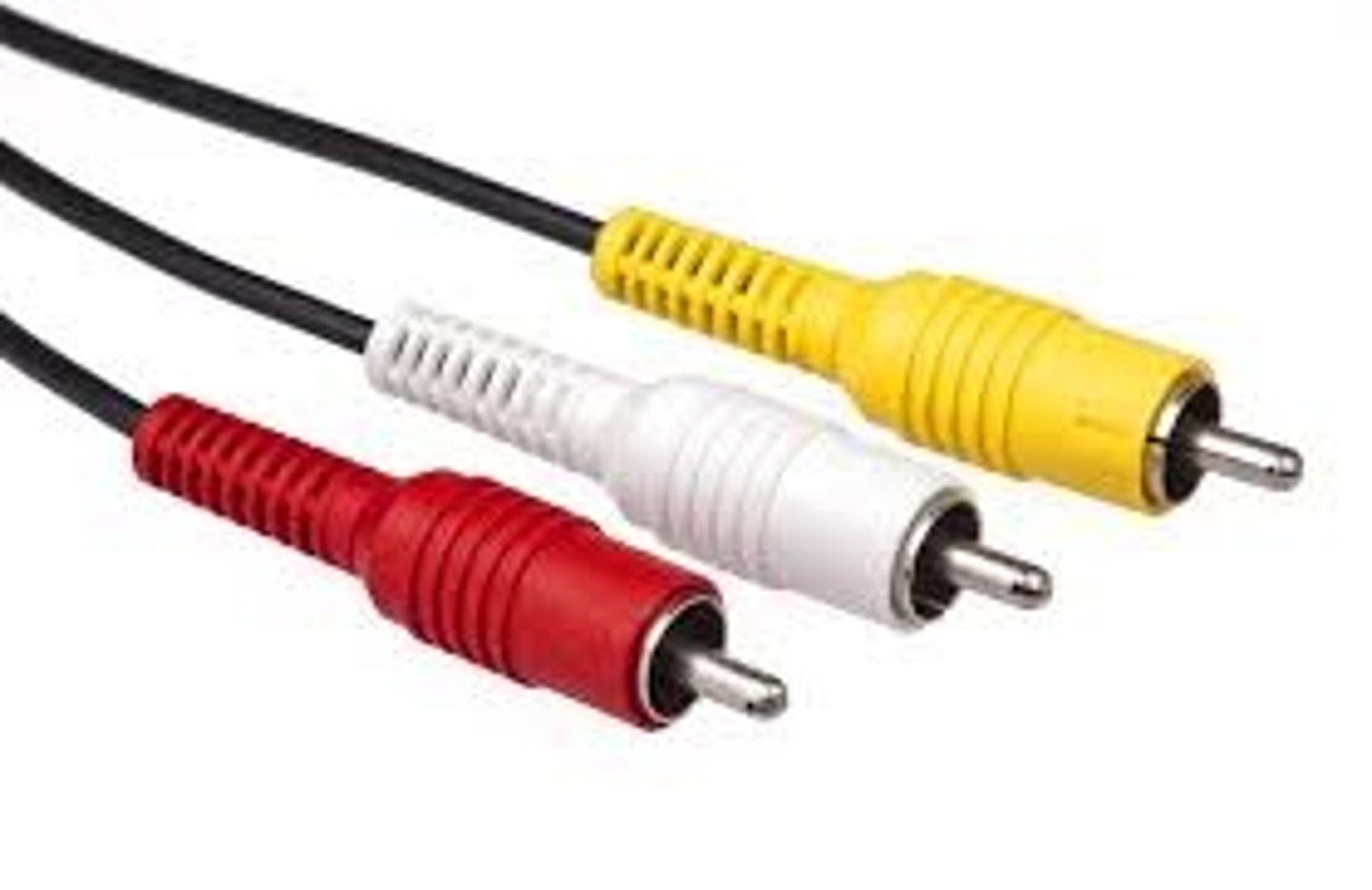
<p>yellow, red, and white cables that carries both audio and video signals</p>
57
New cards

XLR Cable

rubberized cable that carries audio signal

<p>rubberized cable that carries audio signal</p>
58
New cards

14" Phone Jack

used to carry audio signal (used for headphones)

<p>used to carry audio signal (used for headphones)</p>
59
New cards

BNC Cable

used to carry video signal only

<p>used to carry video signal only</p>
60
New cards

Streaming video

viewed over the internet

61
New cards

Keyframe

point of which something changes (speed, direction, scale, color, exposure)

62
New cards

ALPHA Channels

determines transparency. Looks just like RGB color channels except it's value doesn't represent color value, but rather transparency

63
New cards

RGB Color Space

any additive color space based on the RGB color model defined by three chromaticities of the red, green, and blue additive primaries

64
New cards

Chrominance

measure of color

65
New cards

Luminance

measure of light

66
New cards

Interactive Video

gives viewer control over how and what is seen when viewing a program

67
New cards

Teleprompter

a monitor with lines written on it for the talent to read from

68
New cards

3 Camera Set Up

three cameras feeding live streams to the switcher where the newsreader (anchor) is looking at whichever camera LIVE while speaking to the audience

69
New cards

W=(VA)

the formula for watts (watts, amps, and voltage)

70
New cards

Character Generator

a machine containing graphic design elements that allows texts and graphics to be superimposed "live" over the talent during 3 camera shoot by CG Operator

71
New cards

Slates

clappers or sticks used at beginning of each shot to identify the take

72
New cards

Electronic News Gathering (ENG)

sports/news item captured live in the field

73
New cards

Shot Logs

list of camera takes written down on the location during the shoot

74
New cards

Raw Footage

unedited takes on the camera roll or SD card

75
New cards

Striking

refers to dissembling an set after wrapping

76
New cards

Floor Plan

used by the director to block camera shots

77
New cards

Set Dressing

items on a set such as pictures, lamps, etc, that are not props because they aren't handled or referred to by performers

78
New cards

Production Schedule

list of start times for the major events in the production (shoot dates, locations, wrap dates, editorial dates, etc)

79
New cards

Zebra Stripes

diagonal parallel lines in the viewfinder or monitor to indicate that that portion of the frame has reached maximum exposure

80
New cards

Auditions

help determine skills/capabilities of a performer

81
New cards

Proper Z Blocking

arranging people and props along the z-axis in close proximity and toward/away from the camera.

82
New cards

Moire Effect

occurs on costumes or set elements that have high contract stripes and delicate patterns

83
New cards

Body, Lens, and Viewfinder

the three major parts to studio cameras

84
New cards

Aperture

hole in the iris of a lens

85
New cards

F-stop

calibrated ring on the lens indicating the aperture setting

86
New cards

Charged Couple Device (CCD)

most common light-sensitive imaging surface on a video camera. Splits the white light into its red, green, and blue components

87
New cards

Spreader

(aka as spider) used to stabilize tripod legs by applying to the bottom. Prevents from moving too far apart under a heavy camera load

88
New cards

GYB Arm

camera support or rig that allows the operator to pedestal, pan and tilt the camera during the move (aka crane)

89
New cards

Quick Release Plate

tripod mechanism that facilitates quick and accurate mounting and dismounting of the camera to the tripod head

90
New cards

Deep Depth of Field

all objects in the scene on Z are rendered in sharp focus

91
New cards

Shallow Depth of Field

only thin band on Z is rendered in sharp focus

92
New cards

White Balance

set to ensure colors are recorded correctly before shooting

93
New cards

Time-Base Corrector

synchronizes a tape source to house sync to ensure that all cameras and recorders are taking frames at the same time

94
New cards

Shot Gun Microphone

unidirectional mic that hears very little to its left and right , little behind it, and everything in front of it

95
New cards

Cardiod Microphone

records in a heart shaped pick up pattern

96
New cards

Feedback

happens when an audio loop occurs between the speaker and the microphone attached to it

97
New cards

AVU Meter

used to monitor audio recording levels and quality

98
New cards

Crossfading

in AUDIO, fading one sound down while simultaneously fading another sound to replace it

99
New cards

Crossdissolving

in PICTURE, fading one image while replacing it withe another imahge

100
New cards

Capturing

transferring digital video from tape or SD card to a hard drive

Explore top notes

Imperialism Rise in Nationalism • During the French and Industrial Revolution, nationalism continued to inspire nations to increase their political and economic power. • Nationalism became the ideal force in the political, economic, and cultural life in the world, becoming the first universal ideology-organizing all people into a nation state. Nationalism Defined • The strong belief that the interest of a particular nation-state is of primary importance. o Nation-State – a state where the vast majority shares the same culture and is conscious of it. It is an ideal in which cultural boundaries match up with political ones. • As an ideology, it is based on the idea that the individual’s loyalty and devotion to the nation-state surpass other individual/group interests. • Exalting one nation’s belief above all others and placing primary emphasis on promotion of its culture and interests, excluding the interests of others. Changing the World through a Nationalistic Vision • The French Revolution significantly changed the political world and how countries govern. • The Industrial Revolution significantly changed the economic world. • The Age of Imperialism (1870-1914) dramatically changed the political, economic, and social world. What is Imperialism? • Imperialism- The policy of extending the rule of authority of an empire or nation over foreign countries, or of acquiring and holding colonies and dependencies. Power and influence are done through diplomacy or military force. Reasons for Imperialism • There are 5 main motives for empires to seek to expand their rule over other countries or territories: 1. Exploratory • Imperial nations wanted to explore territory unknown to them. • The main purpose for this exploration of new lands was for resource acquisition, medical or scientific research. o Charles Darwin • Other reasons: o Cartography (map making) o Adventure 2. Ethnocentric • Europeans acted on the concept of ethnocentrism o Ethnocentrism- the belief that one race or nation is superior to others. • Ethnocentrism developed out of Charles Darwin’s “survival of the fittest” theory. Philosophers used the theory to explain why there were superior races and inferior races. o This became known as Social Darwinism. • Most imperial nations believed that their cultural values or beliefs were superior to other nations or groups. • Believed imperial conquest would bring successful culture to inferior people. 3. Religious • Imperial expansion promoted a religious movement of people setting out to convert new members of conquered territories. • With the belief that Christianity was superior, missionaries believed it was their duty to spread Christianity to the world. • Christian missionaries established churches, and in doing so, they spread Western culture values as well. • Typically, missionaries spread the imperial nation's language through education and religious interactions. 4. Political • Patriotism and Nationalism helped spur our imperial growth, thus creating competition against other supremacies. • It was a matter of national pride, respect, and security. • Furthermore, European rivalry spurred nations for imperial conquest. Since land equaled power, the more land a country could acquire the more prestige they could wield across the globe. • Empires wanted strategic territory to ensure access for their navies and armies around the world. • The empire believed they must expand, thus they needed to be defended. 5. Economic • With the Industrial Revolution taking place during the same time, governments and private companies contributed to find ways to maximize profits. • Imperialized countries provided European factories and markets with natural resources (old and new) to manufacture products. • Trading posts were strategically placed around imperialized countries to maximize and increase profits. o Such places as the Suez Canal in Egypt which was controlled by the British provided strategic choke hold over many European powers. o Imperial powers competed over the best potential locations for resources, markets, and trade. History of Imperialism • Ancient Imperialism 600 BCE-500 CE o Roman Empire, Ancient China, Greek Empire, Persian Empire, Babylonian Empire. • Middle Age Imperialism (Age of Colonialism-1400-1800s) o Great Britain, Spain, Portugal, France, Netherlands (Dutch), Russia. • Age of Imperialism 1870-1914 o Great Britain, Spain, Portugal, France, Germany, Belgium, Italy, Japan, United States, Ottoman Empire, Russia. • Current Imperialism...? o U.S. Military intervention (i.e. Middle East) o Russia’s Invasion of Ukraine. Imperialism Colonialism • Refers to political or economic control, either legally or illegally. • Refers to where one nation assumes control over the other. • Creating an empire, expanding into neighboring regions and expanding the dominance far outside its borders. • Where a country conquers and rules over other regions for exploiting resources from the conquered country for the conqueror's benefit. • Foreign government controls/governs a territory without significant settlement. • Foreign government controls/governs the territory from within the land being colonized. • Little to no new settlement established on fresh territory. • Movement to settle to fresh territory. Age of Colonialism WHEN? • Started around the late 1400s and ended around the late 1700s/early 1800s. WHY? • Primary Reason: European countries, wished to find a direct trade route to Asia (China & India) and the East Indies. o Quicker and relatively more effective than land routes over Asia. • Secondary Reason: Empire expansion (land power) WHO? • Countries involved: Great Britain, France, Spain, the Dutch & Portugal. • Individuals’ knowns as Mercantilists believed that maintaining imperialized territory and colonizing the region could serve as a source of wealth, while personal motives by rulers, explorers, and missionaries could therefore promote their own agenda. o This agenda being “Glory, God and Gold”. Mercantilism • Mercantilism was a popular and main economic system for many European nations during the 16th to 18th centuries. • The main goal was to increase a nation’s wealth by promoting government rule of a nation’s economy for the purpose of enhancing state power at the expense of rival national power. • It was the economic counterpart of political absolutism. Why did mercantilists want colonies? • Mercantilists believed that a country must have an excess of exports over imports. • By colonizing territory, it provided the nation with indispensable wealth of precious raw materials. • Therefore, the claimed territory served as a market and supplier of raw materials for the mother country. Which, in time, provided an excess of exports for the nation and thus created wealth. o Development of Trading Companies to support this economic system. Hudson Bay Company – (1670). Controlled primarily North America. o Dutch East Indie Trading Company (1682) o East Indian Trading Company (1600) o Royal African Trade Company (1672) WHERE? • European nations begun to colonize the America, India and the East Indies to create a direct trade route. • Great Britain was the leading power in India, Australia and North America, South Africa. • Spain colonized central and South America. • French held Louisiana, coastal land of Africa and French Guinea. • The Dutch built an empire in the East Indies. • The Portuguese was able to take control of present-day Brazil and the southern tip of South America and Japan. Age of Colonialism • As countries started to imperialize these regions, eventually the concept of colonization took hold: • This is what makes the Age of Colonialism extremely different! End of Colonialism • By 1800, colonialism became less popular • Why? o Revolutions (Spain, France & American) o The Napoleonic Wars o Struggle for nationalism and democracy. o Exhausted all money and energy to supervise their colonies. Waiting to wake again • Imperialism would stay quiet for close to 50 years before Great Britain and France’s economies revitalized. • The outbreak of the Industrial Revolution only encouraged and revitalized European nations to begin their conquest for new territory and resources. Age of Imperialism THE SCRAMBLE FOR AFRICA 1870-1914 Conditions Prior to Imperialism of Africa  European interest in exploiting Africa was minimal.  Their economic interests & profit in Africa primarily came through coastal trade that took place during the 1500-1700s.  The slave trade became the main source of European profit.  Furthermore, disease, political instability, lack of transportation and unpredictable climate all discouraged Europeans from seeking territory. Slave Trade & the Trans-Atlantic Slave Voyages  Forced labor was not uncommon during the 13-17th Centuries. Africans and Europeans had been trading goods and people across the Mediteranea for centuries.  This all changed from 1526 to 1867, as a new system of slavery was introduced that became highly “commercialized, racialized and inherited”  By 1690, the America and West Indies saw approximately 30,000 African people shipped from Africa. A century later, that number grew to 85,000 people per year.  By 1867, approximately 12.5 million people (about twice the population of Arizona) left Africa in a slave ship. What Changed? 1. End of the Slave Trade- Left a need for trade between Europe and Africa. 2. Innovation in technology- The steam engine and iron hulled boats allowed Europe 3. Discovery of new raw materials- Explorers located vast raw materials and resources and this only spurred imperialism with Europe in the wake of the Industrial Revolution. 4. Politics- Unification of Germany and Italy left little room to expand in Europe. Germany and Italy both needed raw materials to “catch up” with Britain and France so they looked to Africa. The Scramble for Africa  The scramble started in 1870.  Although some coastal land had previously been acquired before 1870, the need for territory quickly accelerated as European countries looked t get deeper into Africa.  Within 20 years, nearly all continents were placed under imperialistic rule. Who was Involved?  Great Britain  France  Germany  Italy  Portugal  Belgium  Spain (kind) Violent Affairs  Violence broke out multiple times when European nations looked to claim the same territory.  Germ Chancellor. Otto van Bismarck. Attempted to avert the possibility of violence against the European powers.  In 1884, Bismarck organized a conference in Berlin for the European nations. The Berlin Conference (1884-85)  The conference looked to set ground rules for future annexation of African territory by European Nations.  Annexation is the forcible acquisition and assertion of legal title over one state’s territory by another state, usually following military occupation of the territory.  From a distant perspective, it looked like it would reduce tensions among European nations and avert war.  At the heart of the meeting, these European countries negotiated their claims to African territory, made it official and then mapped their regions.  Furthermore, the leaders agreed to allow free trade among imperialized territory and some homework for negotiating future European claims in Africa was established. Further Path  After the conference, european powers continued to expand their claims in Africa so that by 1900. 90% of the African territory had been claimed. A Turn towards Colonization?  Upon the imperialization of African territory, European nations and little interest in African land unless it produced economic wealth.  Therefore, European governments put little effort and expertise into these imperialized regions.  In most cases, this emat a form of indirect rule. Thus, governing the natin without sufficient settlement and government from within the mother country. Some Exceptions  There were some exemptions through in Africa as colonization was a necessary for some regions i n Africa.  Some regions where diamonds and gold were present. Government looked to protectorate the regions and establish rule and settlement in the regions.  Protectorates: A state controlled and protected by another state for defense against aggression and other law violations. Would  Some examples include South Africa, Botswana, Zimbabwe and Congo. Conclusion  Although it may appear that the Berlin Conference averted war amid the African Scramble, imperialism eventually brought the world into worldwide conflict.  With the continued desire to create an empire by European nations. World War 1 would break out which can be linked to this quest at imperialism.
Updated 490d ago
note Note
Imperialism Rise in Nationalism • During the French and Industrial Revolution, nationalism continued to inspire nations to increase their political and economic power. • Nationalism became the ideal force in the political, economic, and cultural life in the world, becoming the first universal ideology-organizing all people into a nation state. Nationalism Defined • The strong belief that the interest of a particular nation-state is of primary importance. o Nation-State – a state where the vast majority shares the same culture and is conscious of it. It is an ideal in which cultural boundaries match up with political ones. • As an ideology, it is based on the idea that the individual’s loyalty and devotion to the nation-state surpass other individual/group interests. • Exalting one nation’s belief above all others and placing primary emphasis on promotion of its culture and interests, excluding the interests of others. Changing the World through a Nationalistic Vision • The French Revolution significantly changed the political world and how countries govern. • The Industrial Revolution significantly changed the economic world. • The Age of Imperialism (1870-1914) dramatically changed the political, economic, and social world. What is Imperialism? • Imperialism- The policy of extending the rule of authority of an empire or nation over foreign countries, or of acquiring and holding colonies and dependencies. Power and influence are done through diplomacy or military force. Reasons for Imperialism • There are 5 main motives for empires to seek to expand their rule over other countries or territories: 1. Exploratory • Imperial nations wanted to explore territory unknown to them. • The main purpose for this exploration of new lands was for resource acquisition, medical or scientific research. o Charles Darwin • Other reasons: o Cartography (map making) o Adventure 2. Ethnocentric • Europeans acted on the concept of ethnocentrism o Ethnocentrism- the belief that one race or nation is superior to others. • Ethnocentrism developed out of Charles Darwin’s “survival of the fittest” theory. Philosophers used the theory to explain why there were superior races and inferior races. o This became known as Social Darwinism. • Most imperial nations believed that their cultural values or beliefs were superior to other nations or groups. • Believed imperial conquest would bring successful culture to inferior people. 3. Religious • Imperial expansion promoted a religious movement of people setting out to convert new members of conquered territories. • With the belief that Christianity was superior, missionaries believed it was their duty to spread Christianity to the world. • Christian missionaries established churches, and in doing so, they spread Western culture values as well. • Typically, missionaries spread the imperial nation's language through education and religious interactions. 4. Political • Patriotism and Nationalism helped spur our imperial growth, thus creating competition against other supremacies. • It was a matter of national pride, respect, and security. • Furthermore, European rivalry spurred nations for imperial conquest. Since land equaled power, the more land a country could acquire the more prestige they could wield across the globe. • Empires wanted strategic territory to ensure access for their navies and armies around the world. • The empire believed they must expand, thus they needed to be defended. 5. Economic • With the Industrial Revolution taking place during the same time, governments and private companies contributed to find ways to maximize profits. • Imperialized countries provided European factories and markets with natural resources (old and new) to manufacture products. • Trading posts were strategically placed around imperialized countries to maximize and increase profits. o Such places as the Suez Canal in Egypt which was controlled by the British provided strategic choke hold over many European powers. o Imperial powers competed over the best potential locations for resources, markets, and trade. History of Imperialism • Ancient Imperialism 600 BCE-500 CE o Roman Empire, Ancient China, Greek Empire, Persian Empire, Babylonian Empire. • Middle Age Imperialism (Age of Colonialism-1400-1800s) o Great Britain, Spain, Portugal, France, Netherlands (Dutch), Russia. • Age of Imperialism 1870-1914 o Great Britain, Spain, Portugal, France, Germany, Belgium, Italy, Japan, United States, Ottoman Empire, Russia. • Current Imperialism...? o U.S. Military intervention (i.e. Middle East) o Russia’s Invasion of Ukraine. Imperialism Colonialism • Refers to political or economic control, either legally or illegally. • Refers to where one nation assumes control over the other. • Creating an empire, expanding into neighboring regions and expanding the dominance far outside its borders. • Where a country conquers and rules over other regions for exploiting resources from the conquered country for the conqueror's benefit. • Foreign government controls/governs a territory without significant settlement. • Foreign government controls/governs the territory from within the land being colonized. • Little to no new settlement established on fresh territory. • Movement to settle to fresh territory. Age of Colonialism WHEN? • Started around the late 1400s and ended around the late 1700s/early 1800s. WHY? • Primary Reason: European countries, wished to find a direct trade route to Asia (China & India) and the East Indies. o Quicker and relatively more effective than land routes over Asia. • Secondary Reason: Empire expansion (land power) WHO? • Countries involved: Great Britain, France, Spain, the Dutch & Portugal. • Individuals’ knowns as Mercantilists believed that maintaining imperialized territory and colonizing the region could serve as a source of wealth, while personal motives by rulers, explorers, and missionaries could therefore promote their own agenda. o This agenda being “Glory, God and Gold”. Mercantilism • Mercantilism was a popular and main economic system for many European nations during the 16th to 18th centuries. • The main goal was to increase a nation’s wealth by promoting government rule of a nation’s economy for the purpose of enhancing state power at the expense of rival national power. • It was the economic counterpart of political absolutism. Why did mercantilists want colonies? • Mercantilists believed that a country must have an excess of exports over imports. • By colonizing territory, it provided the nation with indispensable wealth of precious raw materials. • Therefore, the claimed territory served as a market and supplier of raw materials for the mother country. Which, in time, provided an excess of exports for the nation and thus created wealth. o Development of Trading Companies to support this economic system. Hudson Bay Company – (1670). Controlled primarily North America. o Dutch East Indie Trading Company (1682) o East Indian Trading Company (1600) o Royal African Trade Company (1672) WHERE? • European nations begun to colonize the America, India and the East Indies to create a direct trade route. • Great Britain was the leading power in India, Australia and North America, South Africa. • Spain colonized central and South America. • French held Louisiana, coastal land of Africa and French Guinea. • The Dutch built an empire in the East Indies. • The Portuguese was able to take control of present-day Brazil and the southern tip of South America and Japan. Age of Colonialism • As countries started to imperialize these regions, eventually the concept of colonization took hold: • This is what makes the Age of Colonialism extremely different! End of Colonialism • By 1800, colonialism became less popular • Why? o Revolutions (Spain, France & American) o The Napoleonic Wars o Struggle for nationalism and democracy. o Exhausted all money and energy to supervise their colonies. Waiting to wake again • Imperialism would stay quiet for close to 50 years before Great Britain and France’s economies revitalized. • The outbreak of the Industrial Revolution only encouraged and revitalized European nations to begin their conquest for new territory and resources. Age of Imperialism THE SCRAMBLE FOR AFRICA 1870-1914 Conditions Prior to Imperialism of Africa  European interest in exploiting Africa was minimal.  Their economic interests & profit in Africa primarily came through coastal trade that took place during the 1500-1700s.  The slave trade became the main source of European profit.  Furthermore, disease, political instability, lack of transportation and unpredictable climate all discouraged Europeans from seeking territory. Slave Trade & the Trans-Atlantic Slave Voyages  Forced labor was not uncommon during the 13-17th Centuries. Africans and Europeans had been trading goods and people across the Mediteranea for centuries.  This all changed from 1526 to 1867, as a new system of slavery was introduced that became highly “commercialized, racialized and inherited”  By 1690, the America and West Indies saw approximately 30,000 African people shipped from Africa. A century later, that number grew to 85,000 people per year.  By 1867, approximately 12.5 million people (about twice the population of Arizona) left Africa in a slave ship. What Changed? 1. End of the Slave Trade- Left a need for trade between Europe and Africa. 2. Innovation in technology- The steam engine and iron hulled boats allowed Europe 3. Discovery of new raw materials- Explorers located vast raw materials and resources and this only spurred imperialism with Europe in the wake of the Industrial Revolution. 4. Politics- Unification of Germany and Italy left little room to expand in Europe. Germany and Italy both needed raw materials to “catch up” with Britain and France so they looked to Africa. The Scramble for Africa  The scramble started in 1870.  Although some coastal land had previously been acquired before 1870, the need for territory quickly accelerated as European countries looked t get deeper into Africa.  Within 20 years, nearly all continents were placed under imperialistic rule. Who was Involved?  Great Britain  France  Germany  Italy  Portugal  Belgium  Spain (kind) Violent Affairs  Violence broke out multiple times when European nations looked to claim the same territory.  Germ Chancellor. Otto van Bismarck. Attempted to avert the possibility of violence against the European powers.  In 1884, Bismarck organized a conference in Berlin for the European nations. The Berlin Conference (1884-85)  The conference looked to set ground rules for future annexation of African territory by European Nations.  Annexation is the forcible acquisition and assertion of legal title over one state’s territory by another state, usually following military occupation of the territory.  From a distant perspective, it looked like it would reduce tensions among European nations and avert war.  At the heart of the meeting, these European countries negotiated their claims to African territory, made it official and then mapped their regions.  Furthermore, the leaders agreed to allow free trade among imperialized territory and some homework for negotiating future European claims in Africa was established. Further Path  After the conference, european powers continued to expand their claims in Africa so that by 1900. 90% of the African territory had been claimed. A Turn towards Colonization?  Upon the imperialization of African territory, European nations and little interest in African land unless it produced economic wealth.  Therefore, European governments put little effort and expertise into these imperialized regions.  In most cases, this emat a form of indirect rule. Thus, governing the natin without sufficient settlement and government from within the mother country. Some Exceptions  There were some exemptions through in Africa as colonization was a necessary for some regions i n Africa.  Some regions where diamonds and gold were present. Government looked to protectorate the regions and establish rule and settlement in the regions.  Protectorates: A state controlled and protected by another state for defense against aggression and other law violations. Would  Some examples include South Africa, Botswana, Zimbabwe and Congo. Conclusion  Although it may appear that the Berlin Conference averted war amid the African Scramble, imperialism eventually brought the world into worldwide conflict.  With the continued desire to create an empire by European nations. World War 1 would break out which can be linked to this quest at imperialism.
Updated 490d ago
note Note

Explore top flashcards

Unit 5: Genetics
Updated 375d ago
flashcards Flashcards (29)
La familia
Updated 784d ago
flashcards Flashcards (38)
CMS III Final: EM
Updated 255d ago
flashcards Flashcards (212)
2b: Cell structure
Updated 1171d ago
flashcards Flashcards (30)
deelsteppen
Updated 1065d ago
flashcards Flashcards (87)
PSYC 14
Updated 148d ago
flashcards Flashcards (64)
Unit 5: Genetics
Updated 375d ago
flashcards Flashcards (29)
La familia
Updated 784d ago
flashcards Flashcards (38)
CMS III Final: EM
Updated 255d ago
flashcards Flashcards (212)
2b: Cell structure
Updated 1171d ago
flashcards Flashcards (30)
deelsteppen
Updated 1065d ago
flashcards Flashcards (87)
PSYC 14
Updated 148d ago
flashcards Flashcards (64)