Integument, Support, and Movement
 Call Kai
 Learn
Learn Practice Test
 Spaced Repetition
 Match
Match Flashcards
 Knowt Play
1/37

There's no tags or description
Looks like no tags are added yet.
Name | Mastery | Learn | Test | Matching | Spaced | Call with Kai | Chat |
|---|
No analytics yet
Send a link to your students to track their progress
38 Terms
Hair
derived from stratus corneum, begins development in stratum basale
Hair Structural Layers
medulla
cortex
cuticle
Medulla
core of the hair
Cortex
surrounds medulla, contains natural pigment/moisture
Cuticle
outer layer, protective scale/transparent
Hair Growth Patterns
angora
definitive
Angora
long & flowing
continuous growth
may/may not be shed
Definitive
determinate growth
shed & replaced
Functional Hair Types
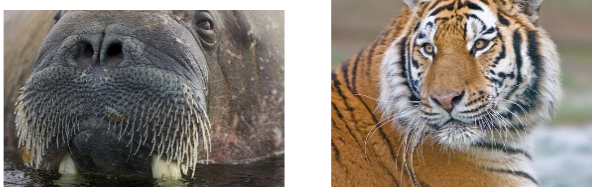
vibrissae
pelage
Vibrissae
long, stiff hairs that function as tactile receptors
definitive growth
Pelage
guard hairs & underfur
spines
bristles
awns
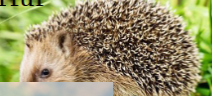
Spines
definitive growth
stuff, enlarged guard hairs
Bristles
angora growth
communication

Awns
definitive
wool
velli
Wool
long
soft
warm
curly

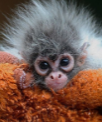
Velli
down or fuzz (neonates)
Hair Color
distribution & density of melanin (2 types)
Pheomelanin
red/yellow
Eumelanin
black/brown
Absent of Melanin
gray/white
Agouti
banded pattern
Albinism
absence of pigment
Melanism
high levels of melanin
What factors select for hair color?
environmental pressures
UV protection
polar animals (lighter hair)
countershading
crypsis (camouflage)
disruptive coloration
Post juvenile Molting
baby fur » adult
starts after weaning
Annual Molting
one big molt
helps replace damaged hair due to activity
Seasonal Molting
replaces more than once per year
Integumentary Glands
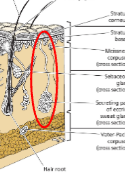
sebaceous
eccrine
apocrine
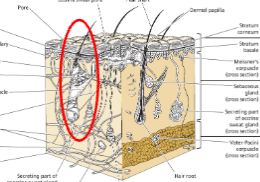
Sebaceous Glands
associated w/ hair follicle
secrete sebum (keeps shaft moist/waterproof)
glands attached to muscle which squeeze out sebum when muscle contracts
Eccrine Glands
produce sweat
common on soles & palms
Apocrine Glands
produce viscous fluid
begin functioning at puberty
located near hair follicles
armpits & anogenital region

Scent Glands
modified sebaceous/apocrine
act as pheromones
Mammary Glands
develop along “milk lines”
adipose tissue forms the breast
functional only in females (except for bats)
Claws, Nails, and Hooves
devlop from stratum corneum
indeterminate growth
2 parts
unguis
subunguis
climbing, digging, fighting
*label which is which, and where unguis is, etc.

Unguis
dorsal
heavily keratinized
Subunguis
ventral
softer
continuous w/ pad
True Horns
core bony
outer keratinized
NOT shed
unbranched
common in Bovidae
occur in both sexes
grow continuously
aged by growth rings

Antlers
entirely bone
branched
grows covered in velvet
common in Cervidae
occurs in males only
