Week Three Lecture 6: Normal Human Microbiota: A dlicate Balence Of Power
 Call Kai
 Learn
Learn Practice Test
 Spaced Repetition
 Match
Match Flashcards
 Knowt Play
1/32

There's no tags or description
Looks like no tags are added yet.
Name | Mastery | Learn | Test | Matching | Spaced | Call with Kai | Chat |
|---|
No analytics yet
Send a link to your students to track their progress
33 Terms
Colonization
is the ability of a microorganism to affix itself to a host surface or an environmental habitat, where it can then replicate
Certain microbes colonize certain body environments
Where they colonize depends on their ability to survive in different environmental conditions
the human microbiome or microbiota (areas)
All the bacteria, archaea, fungi, and protozoa that inhabit our bodies
Microbes and their human hosts “talk” to each other through chemical signals, including hormones
These chemical signals alter the gene expression and physiology of microbes
How and When Do We Become Colonized By Microbes?
Either in the womb or at the time of birth
The placenta may not be sterile but this is debated
Exposure to microbes in your environment leads to the formation
of a microbiome
Exposure to microbes continues to happen throughout our lives, which alters our microbiomes constantly
Our microbiomes can become “dysregulated” and cause disease!
Our microbiome is critically important to our health
Sometimes called a “virtual organ system”
Directly influences which microbes can cause infection at certain body sites
The presence of some microbes in our microbiome prevent other microbes from colonizing
“Good Bacteria vs Bad Bacteria”
Human Microbiota: Location and Shifting Composition: Certain body regions are typically sterile
Cerebral spinal fluid
Blood
Some organs
Other body regions have diverse and robust microbiomes
Areas of our body that have high exposure to the outside environment typically have
heavily populated microbiomes
Some of the organisms in our microbiomes are also potential pathogens
antagonism
Some microbes purposely prevent the ability of pathogens to infect body systems
Microbiome can be changed by
Changes in diet
Changes in stress levels
Antimicrobial treatments
Exposure to animals and other humans
Skin Microbiome
The average human adult has over 2 square meters of skin (epidermis) populated by 1012 microorganisms.
Areas may be dry, moist, salty, or acidic.
This makes it difficult for some organisms to colonize the skin
Many are Gram-positive because they are more resistant to drying and salt
Skin has an acidic pH due to organic acid secretions by sweat glands that inhibit some microbial growth
The skin harbors persistently colonizing (normal) and transient colonizing microbiota
The eye microbiome
Eyes produce antimicrobial factors like lysozyme, but are colonized by many types of bacteria.
mostly transient microbiome
Nasopharynx
the area from the nose to oral cavity
Oropharynx
the area between the soft palate and the upper edge of the epiglottis
The Oral microbiome
Within hours of birth, a human infant’s mouth is colonized with non pathogenic Neisseria species, Streptococcus, Actinomyces, Lactobacillus, and some yeasts.
These organisms come from the surrounding environment such as the mother’s skin and garments.
It's been theorized that babies delivered vaginally have vastly different initial microbiomes compared to babies delivered by C-section
teeth microbiome
As teeth emerge, anaerobes such as Prevotella and Fusobacterium colonize.
Streptococcus mutans and Streptococcus salivarius form a glycocalyx that firmly adheres them to the oral surfaces and each other.
These organisms secrete acid that demineralize and dissolve tooth enamel
Most of the oral microbiota are
harmless
Dental procedures may permit bacteria to enter blood vessels and be transported to the heart, where they grow vegetations that cause symptoms of subacute bacterial endocarditis.
Caused by bacteremia – presence of bacteria in the bloodstream
the respiratory tract microbiome
Many organisms that enter the nasopharynx are trapped in the nose cilia and don’t make it to the trachea
Microorganisms that make it into the trachea are trapped by mucus produced by the ciliated lining of the airway.
The ciliated mucous lining of the trachea, bronchi, and bronchioles makes up the mucociliary escalator, which sweeps foreign particles up and out of the lungs.
The lung microbiome can contribute to the development of lung mucosal immunity, or add to the severity of chronic airway diseases
The Stomach microbiome
Stomach contents are acidic, which is lethal to bacteria.
The mucous lining of the stomach is less acidic and supports the growth of Helicobacter pylori.
In most of the population Helicobacter pylori is harmless.
Thought to colonize over half of the world’s population in the stomach
H. pylori may incite inflammation of the stomach epithelium, causing gastritis or gastric ulcers.
the intestine microbiome
Normal human intestine has 1011–1013 bacteria per gram of feces.
Populated by anaerobes and facultative anaerobes (1000 to 1 ratio)
Different areas of the intestines are ideal for different microbial species because each section have unique environmental factors
Jejunum: slightly alkaline from secretions of the pancreas and gallbladder (bile)
Ileum and cecum: slightly acidic, less bile
Colon slightly acidic
The intestine is anaerobic because the organisms in this environment utilize all of the available oxygen quickly
Gastrointestinal tract microbiota is
very diverse
Most resident organisms present in the intestines are harmless if they stay where they belong
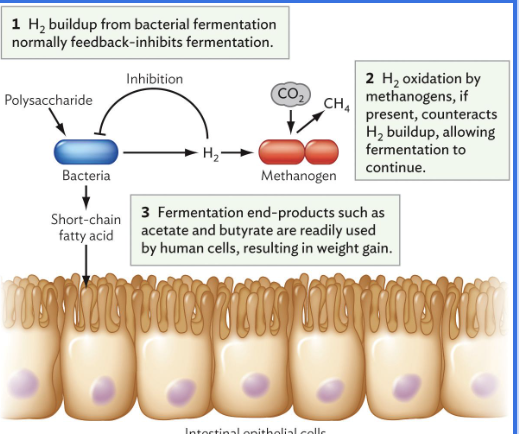
Functions of the gut microbiota
Ferment unused energy substrates
Train the immune system
Prevent growth of pathogenic bacteria
Regulate the development of the gut
Produce vitamins for the host
Produce hormones to direct the host to store fats
is there link to gut microbiome and obesity
there has been some studies yes
Genitourinary Tract microbiome
considered to be sterile
Kidneys
Ureters
Bladder is not sterile
Has its own microbiota
Can be introduced to foreign organisms by catheters
vaginal tract is heavily colonized
Very acidic environment
Increase of pH can lead to infection, Male genital tract also has a unique microbiome
Benefits of a Microbiome
Members of our microbiota are often beneficial (mutualistic) and help in the following ways.
Digesting food
Synthesizing compounds (such as vitamins)
Interfering with colonization by pathogens by
competing for attachment sites
competing for food sources
synthesizing antimicrobial compounds
raining and enhancing function of the immune system by producing
Immunomodulins that modify the secretion of cytokines
Immunomodulins are bacterial proteins made by organisms growing on mucosal surfaces to influence the immune response of the host
Benefits of a Microbiome?
double-sided
Enterotoxins produced by some Gram-negative pathogens damage the small intestine of the host and cause diarrhea.
Enterotoxins
may also protect against colorectal cancer by activating membrane calcium channels in intestinal epithelial cells. Increasing calcium transport turns on an antiproliferative pathway that slows cell division.
Risks of a Microbiome
Microbiota may escape from their niche and cause infection and disease.
Opportunistic pathogens among the microbiota cause disease in
immunocompromised hosts.
Opportunistic pathogens rarely cause disease in healthy hosts
Compounded by acquired antibiotic resistance
The older we are, the more likely it is that some organisms in our microbiome have developed antibiotic resistance
Microbiome Dysbiosis
occurs when the balance of members of the gut microbiome is altered.
Dysbiosis is now thought to be the cause of some human diseases
C. difficile can grow unabated when dysbiosis happens, going from a harmless microbiota member to a serious infection risk!
Infections, antibiotics, new foods, and emotional stress can all produce dysbiosis.
Probiotics
are thought to restore balance to the microbial community and return the host to good health.
New treatment available called fecal microbiota transplant (FMT)
slide 32