BUSINESS 3.10 - Managing strategic change
 Call Kai
 Learn
Learn Practice Test
 Spaced Repetition
 Match
Match Flashcards
 Knowt Play
1/27

There's no tags or description
Looks like no tags are added yet.
Name | Mastery | Learn | Test | Matching | Spaced | Call with Kai |
|---|
No analytics yet
Send a link to your students to track their progress
28 Terms
What is internal change?
change occurring within a business
What are examples of internal change?
staff, business culture, change in leadership, poor performance, growth
What is external change?
changes in the external environment
What are examples of externa factors
PESTLE
What is incremental change?
introducing small changes in order to reach a particular goal
What is disruptive change?
an irreversible shift that transforms an industry or market arising from PESTLE factors
Why is change important to business?
competitive advantage, changing customer needs, advancing technology, improved working conditions/ job satisfaction
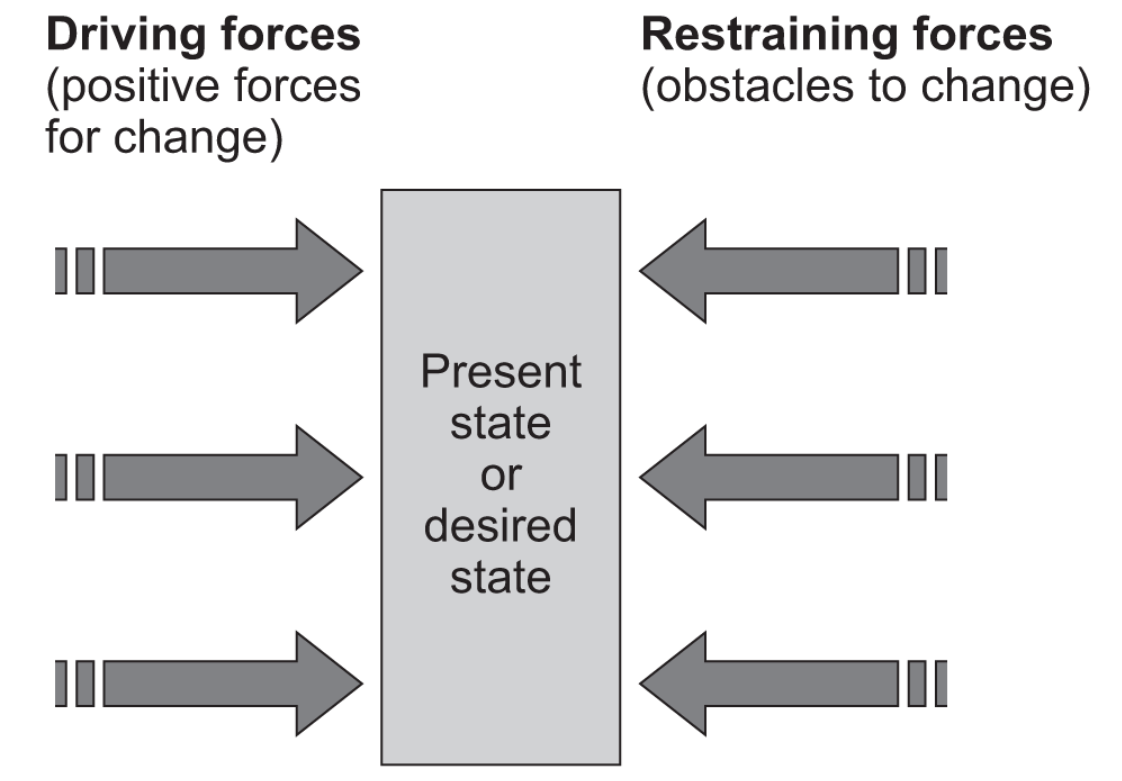
How can managers manage change?
Lewin’s force field analysis
What is restructuring?
changing organisational structure of a business
What are reasons for restructuring?
improved efficiency, takeovers
How can organisations be more flexible?
restructuring, delayering, flexible contracts, organic/mechanistic structures, knowledge and information management
What are examples of restructuring
dismissing employees, eliminating departments, closing factory locations, outsourcing
What are the benefits of restructuring?
reduced operational costs, cheaper outsourcing, improves communication
What are disadvantages of restructuring?
Can lose highly skilled workers, remaining staff may have to be retrained (increased labour costs), job insecurity for rest of staff
What is delayering?
removing one or more layers of hierarchy in an organisation
What are advantages of delayering?
Can re-design jobs so that there is greater delegation, more authority is given lower down in the organisation, improves communication, reduced costs
What are disadvantages of delayering?
not all organisations are suited to a flatter organisation, workers might not want more authority, motivation issues with rest of staff, period of disruption, reduce communication.
What are flexible working contracts?
giving employees a choice over the times they can work
What are advantages of flexible working?
greater freedom, improve morale and reduce lateness, reduced overtime costs
What are disadvantages of flexible working?
increased overhead costs (electricity, heating) as you will be open for longer, employee times may not align with organisation
What are organic (open) structures?
highly flexible forms of organisation, having no layers
What are mechanistic structures?
an inflexible, more traditional form of structure
What is knowledge management?
the practice of organising, storing and sharing information so that everyone in an organisation can benefit from its use
What is information management?
how businesses manage the information created by themselves
What are Kotter and Schlesinger ‘s 4 reasons for resistance to change
self interest, preference for current situation, disagreement on the need for change, misunderstanding
What are Kotter and Schlesinger’s six ways of overcoming resistance to change?
education, participation, facilitation (provide support), negotiation, manipulation, coercion (threat)
What is culture?
A set of shared values that influence how businesses achieve goals / operate
What are elements of culture?
stories, rituals, language, beliefs, artifacts, norms, ethics

