AIS Chapter `16
 Call Kai
 Learn
Learn Practice Test
 Spaced Repetition
 Match
Match Flashcards
 Knowt Play
1/17

There's no tags or description
Looks like no tags are added yet.
Name | Mastery | Learn | Test | Matching | Spaced | Call with Kai |
|---|
No analytics yet
Send a link to your students to track their progress
18 Terms
Balanced Scorecard
•Used extensively in business and industry, government, and nonprofit organizations worldwide.
•Aligns business activities to the vision and strategy of the organization.
•Improves internal and external communications.
•Monitors organization performance against strategic goals.
Four Perspectives of Balanced Scorecard
Financial Perspective
Customer Perspective
Business Process
Learning & Growth
Learning and Growth Perspective
Describes the firm’s objectives for improvements in tangible and intangible infrastructure
Human Capital - investment in people
Information Capital – investment in information
Organization Capital – investment in creating a unique corporate identity and culture
Process Perspective
Operations management processes, such as supply, production, distribution, and risk management.
Customer management processes, such as those involved with the selection, acquisition, and retention of customers, and growth of the firm’s market.
Innovation processes, such as identifying opportunities, research and development, product design and development, and product launch.
Regulatory and social processes, such as financial reporting, accounting, and those that manage environmental, safety and health, employment, and community issues
Customer Perspective
Value proposition differentiates from the competition
Product attributes, Service attributes, Brand image
Financial Perspective
Confirms the success of the firm’s investments and its ability to deliver value to customers
Overall objective is shareholder value
Strategy Maps
A one-page representation of the firm’s strategic priorities.
Shows the cause-and-effect linkages among strategic priorities.
Allows organizations to assess and prioritize gaps between current and desired performance levels
KPIs
Key Performance Indicators
CSFs
Critical Success Factors
The Balanced Scorecard Management Process
Formulate
Translate
Link to operations
Monitor
Adapt
VAL IT
structured framework for IT investment and management
Intended to help managers create business value from IT investments
aligns with and complements the COBIT control framework
4 Major Questions of VAL IT
Are we doing the right things?\
Are we doing them the right way?
Are we getting them done well?
Are we getting the benefits?
Domain of Governance
Val IT distinguishes between:
projects, activities to deliver a defined capability
programs, structured groups of inter-dependent projects
portfolios, groups of programs, projects, services, and other IT resources
Implementing VAL IT
Recognize problems with prior I T investments.
Define characteristics of the ideal future state.
Assess the organizations’ readiness to undertake IT business value management.
Take action. Build awareness of value management principles. Redefine processes, roles, and responsibilities. Identify and create an inventory of IT investments both planned and ongoing. Review the business cases for individual investments. Evaluate and prioritize investments to form new programs and an overall portfolio.
Business Model Canvas
Business models describe how a business operates – or plans to operate
Integrates business strategy, organization, and the application of technology.
Influenced by external forces
Business Model Integration
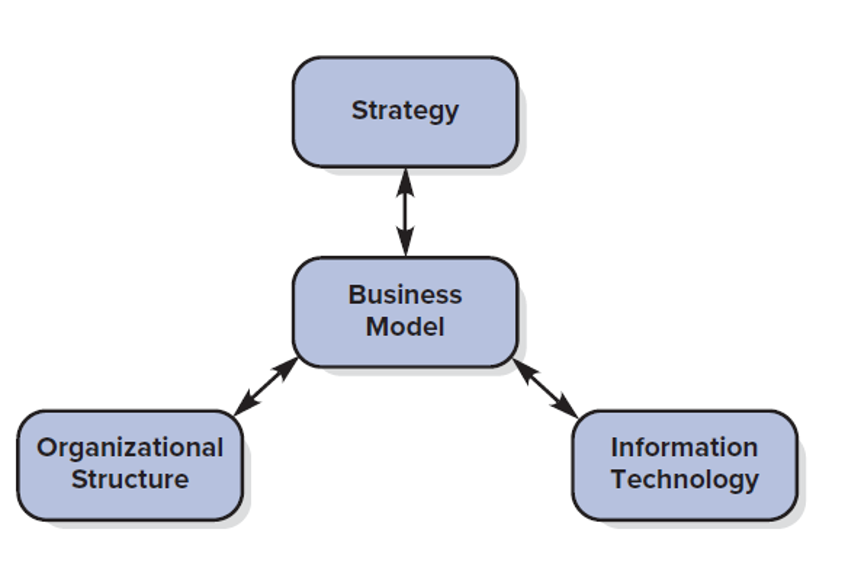
Elements of Business Model Canvas
Customer Segments · Value Proposition
Channels · Customer Relationships
Revenue Streams · Key Resources
Key Activities · Key Partners
Cost Structure