principles of tissue organisation- epithelia and mesenchyme
 Call Kai
 Learn
Learn Practice Test
 Spaced Repetition
 Match
Match Flashcards
 Knowt Play
1/8

There's no tags or description
Looks like no tags are added yet.
Name | Mastery | Learn | Test | Matching | Spaced | Call with Kai | Chat |
|---|
No analytics yet
Send a link to your students to track their progress
9 Terms
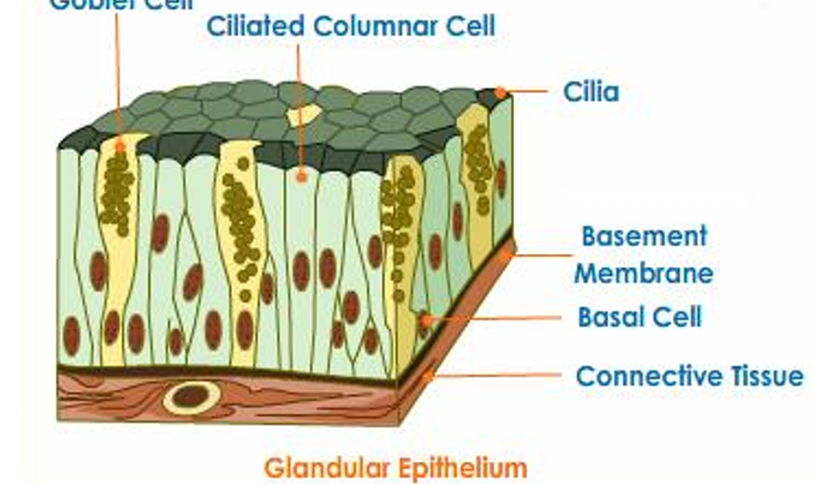
features of the epithelia
they are bound to their adjacent epithlial cells by juctions that provide epithelial cells by junctions that provide the epithelial cells with mechanical strength and rendering it impermeable
this sheet rests on a basal lamina (basement membrane)
cells are polarised such that the apical side faces the lumen
rest of cell is described as basolateral
basal side of the cell lies on the basal lamina and the lateral edges touch adjacent cells
initially they are not differenitated to a particular function but during development specific epithelial cells differentiate
features of mesenchyme
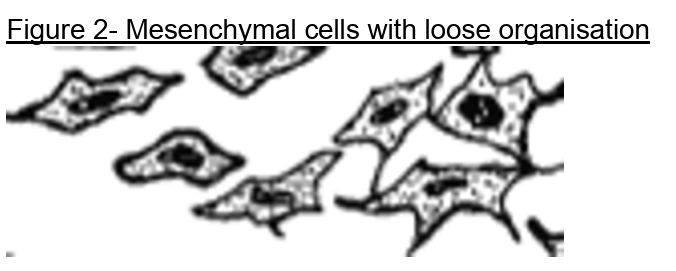
have a changeable shape and are highly migratory
they have no polarity and travel all over the matrix with all sides able to contact the matrix
they can be loosely attached to each other but often have no attachments
they dont sit on basal lamina
examples of EMT and MET
in gastrulation when epiblast cells change from being epithelial and become mesenchymal so they can migrate away
once they encounnter the hypoblast cell layer they turn from mesenchymal to epithelial to form the endoderm
what does the neural tube develop from
the ectoderm at the midline moving ventrally towards the endoderm so that for a while it is v shape
it then forms a tube by the top edges separaing away from the ectoderm
how are epithelial cells connected
through tight junctions, adherens junctions, desmosomes and gap junctions
are in stereotypes positions within the cell and are recognisable by the distance between adjacent cell membranes and their interactions with the cytoskeletons
adherens junction
what do they mediate
what do they consist of
initiate cell to cell contacts
mediate the maturation and maintenance of the contact
consist of transmembrane protein E-cadherin, and intracellular components p120 catenin, b catenin and a catenin
tight junctions
what do they regulate
what do they consist of
regulate the paracellular pathway for the movement of ions and solutes in between cells
consist of transmembrane proteins occludin and claudin and cytoplasmic scaffolding proteins ZO1,2,3
desmosomes
resist mechanical stress because they adopt a strongly adhesive state where they are hyper adhesive
failure can result in diseases of the skin and heart
can change between low and high affinity- switching is signalled by protein kinase c
can also act as signalling centres
regulate the availability of signalling molecules
cell prolifration, differentiaion and morphogenesis
gap junctions
what do they allow
what are they encoded
allow the exchange of ions, second messengers and small metabolites between adjacent cells
in chordate animals gap junction channels are endocded by a famil of genes called connexins