1. Facial esthetics and Soft Tissue Considerations
 Call Kai
 Learn
Learn Practice Test
 Spaced Repetition
 Match
Match Flashcards
 Knowt Play
1/55

There's no tags or description
Looks like no tags are added yet.
Name | Mastery | Learn | Test | Matching | Spaced | Call with Kai | Chat |
|---|
No analytics yet
Send a link to your students to track their progress
56 Terms
KEY POINT: how does soft tissue consideration play a role in ortho tx (and therefore treatment plans)?
with ortho tx occlusion may be fixed but it might not address esthetics; pt may still grow into midface issues and retromandible
for tx and plans: take extraoral photos, timing matters, type of treatment matters
KEY POINT: what are components of evaluation for esthetics (and how does that affect treatment plans)?
photos: lip incontinence, etc
3D: AP, transverse, vertical dimension
underlying skeletal class
lip incontinence
smile: arch and corridor
consonant smile
gingival margin
facial esthetics originated from what culture?
Greek: “Aisthesis” for perception or sensation
facial esthetics formalized in 18th century as philosophical disciple
but we know it is subjective and cultural
what aspect focused on the beauty inspired by Greek art and considered the profiles portrayed in their classical art as ideal standard for orthodontic profession?
angle
what were facial esthetics originally based on compared to what they are centered around now?
went from occlusion centered to broader, patient centered
which approach: facial esthetics emphasizes subjective beauty and cultural diversity
modern patient-centered approach
which approach: face-driven orthodontics
current orthodontic treatment integrates facial harmony, function, growth, and patient satisfaction over strict cephalometric norms for better outcomes
why do we look at soft tissue components?
esthetics and physiological impact: social esteem, social interactions
comprehensive esthetic eval: extraoral photos, multiple angles and calculations, not just correction of malocclusion
growth and facial esthetics
parent expectations
what is nasolabial angle?
the internal angle formed between the the columella and the upper lip when viewed from the side profile
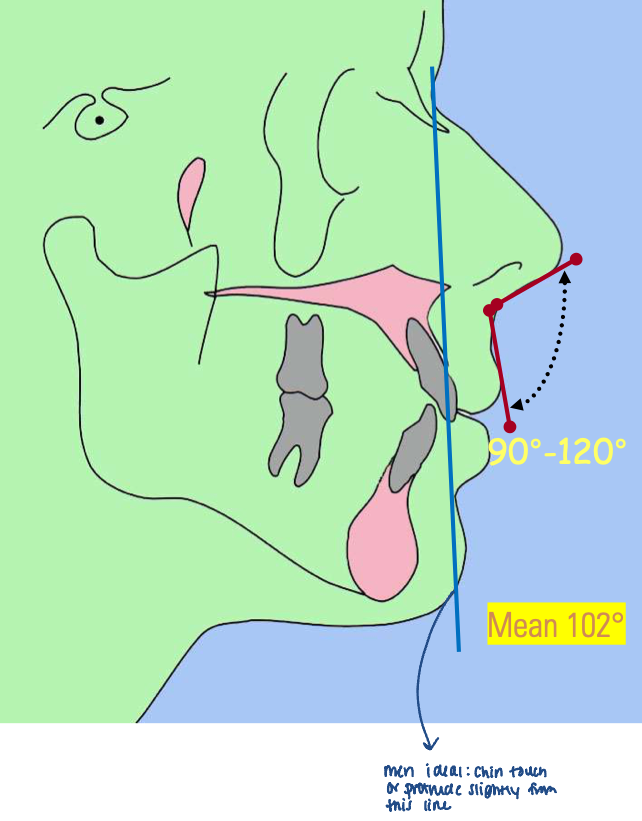
mean and range for nasolabial angle
90-120 with mean of 102
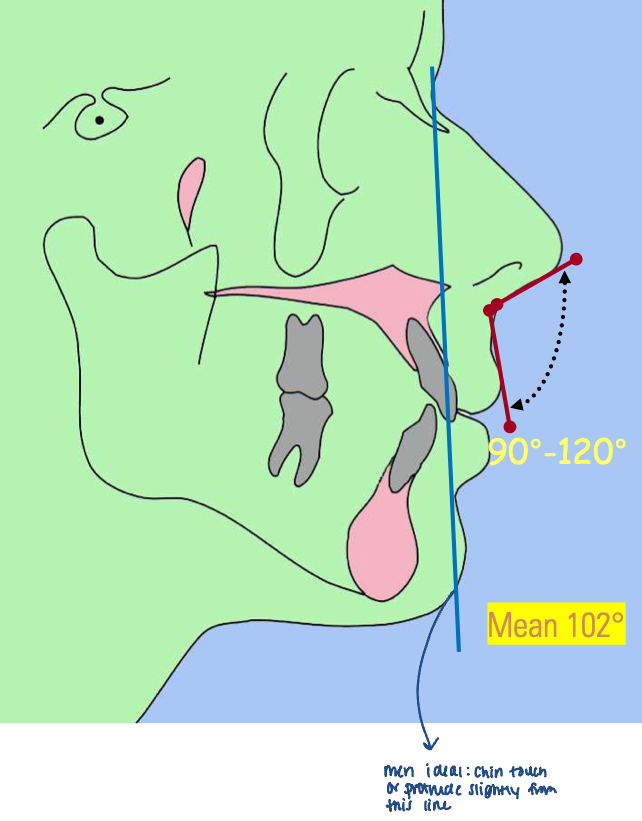
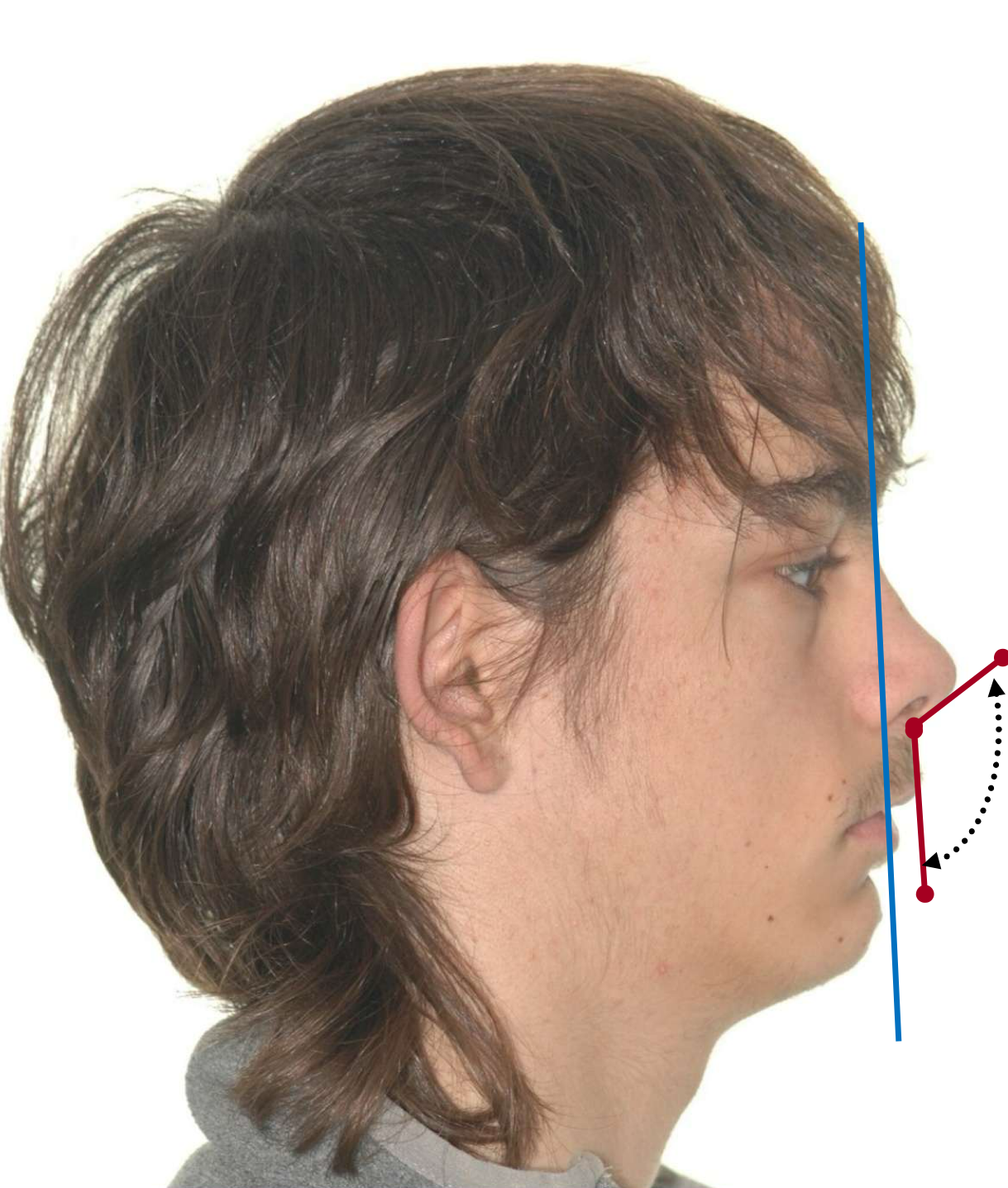
for men a strong projection is
ideal, for men their chin touches or protrudes slightly from facial line which is the line from nasion to pogonion
this pt technically has good occlusion but not their ideal esthetics. an orthognathic approach could be taken once the pt is done growing either by mandibular advancement, or ideally maxillary-mandibular advancement together with augmented genioplasty which is a surgical procedure to enhance a weak or recessed chin, improving facial balance and jawline definition
proper lip posture
interlabial gap 0-3 mm when lips are relaxed
requires lips to be gently sealed without tension, teeth slightly apart, and the tongue resting on the roof of the mouth. This resting position encourages nasal breathing, balances facial muscle forces, and prevents orthodontic relapse or unwanted shifting of the teeth
what is lip incompetence?
an orthodontic and myofunctional condition where the lips cannot comfortably rest together. People with this condition must actively strain their facial and chin muscles to close their mouth, frequently resulting in an open-mouth resting posture and mouth breathing
what is mentalis strain?
mentalis muscle overworks to force the lips closed at rest. It is commonly caused by an underdeveloped or recessed jaw, weak lip muscles, or mouth breathing, and results in a dimpled or "peach-pit" appearance on the chin
excessive contraction to get lips together
lip incompetence and mentalis strain is commonly seen in what type of protrusion?
bimaxillary dentoalveolar protrusion
what is mental labial fold/angle?
an angular parameter formed by tangent of lower lip and soft tissue of chin
aka mentolabial angle or labiomental angle, is the soft tissue angle formed by the intersection of the lower lip and the chin
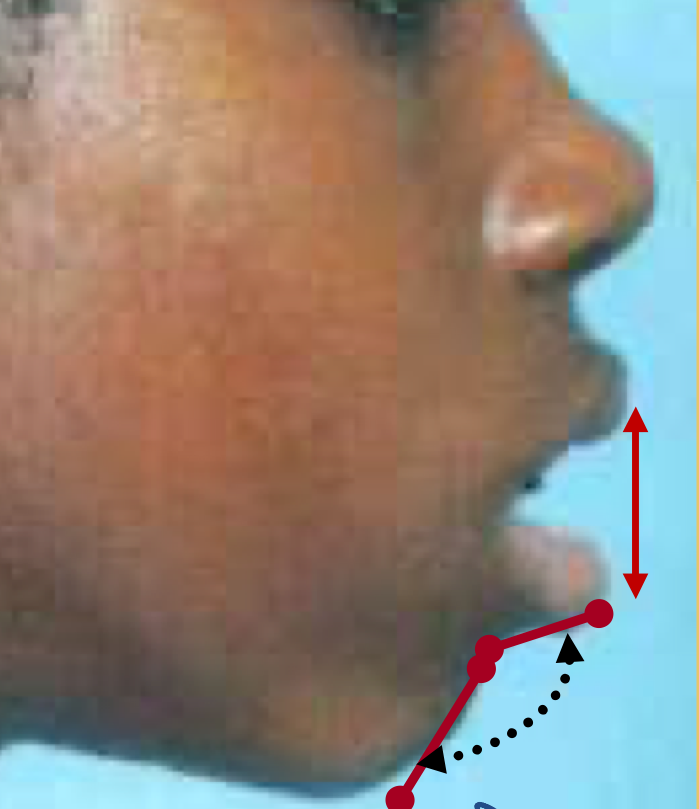
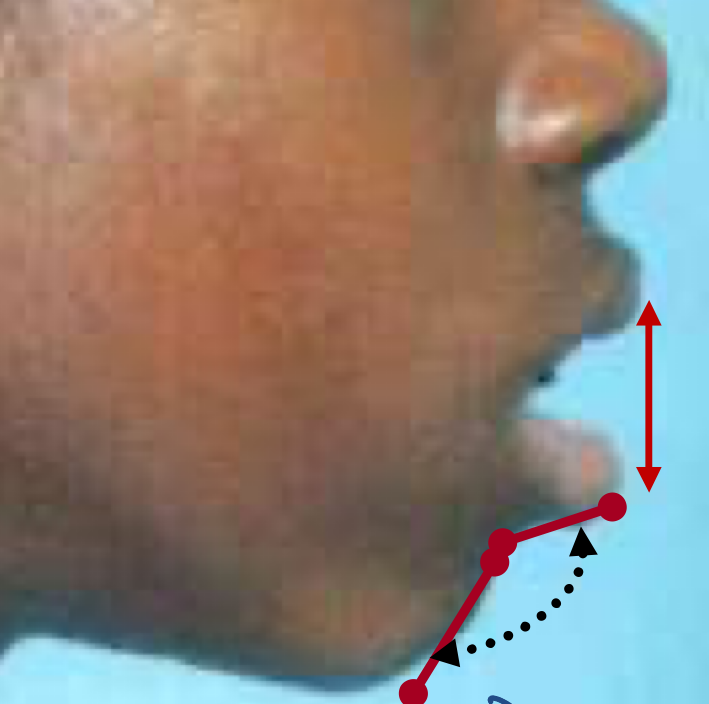
very obtuse or flat angle means the chin is weak and there is mandibular clockwise rotation
convex profile
absence of that mentolabial fold
convex profile indicates which skeletal class?
class II or bimaxillary protrusion (which can also be I or II)
concave profile indicates which skeletal class?
class III
a deep sublabial fold is indicative of (deep/open) bite
deep
when can patients have orthognathic surgery?
after growth is complete; it is radical and invasive
clinical application guides diagnosis and influences decisions regarding the treatment modality either growth modification, camouflage, or orthognathic surgery
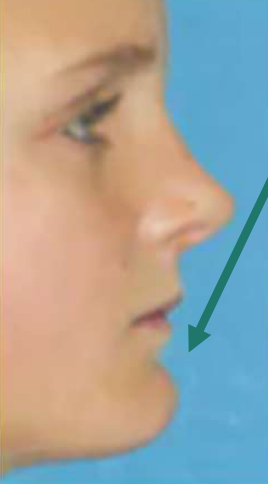
(deep/shallow) mentolabial fold
deep
relationship of mentolabial fold and deep bite
worsen the appearance of the mentolabial fold, making it appear deeper and more pronounced
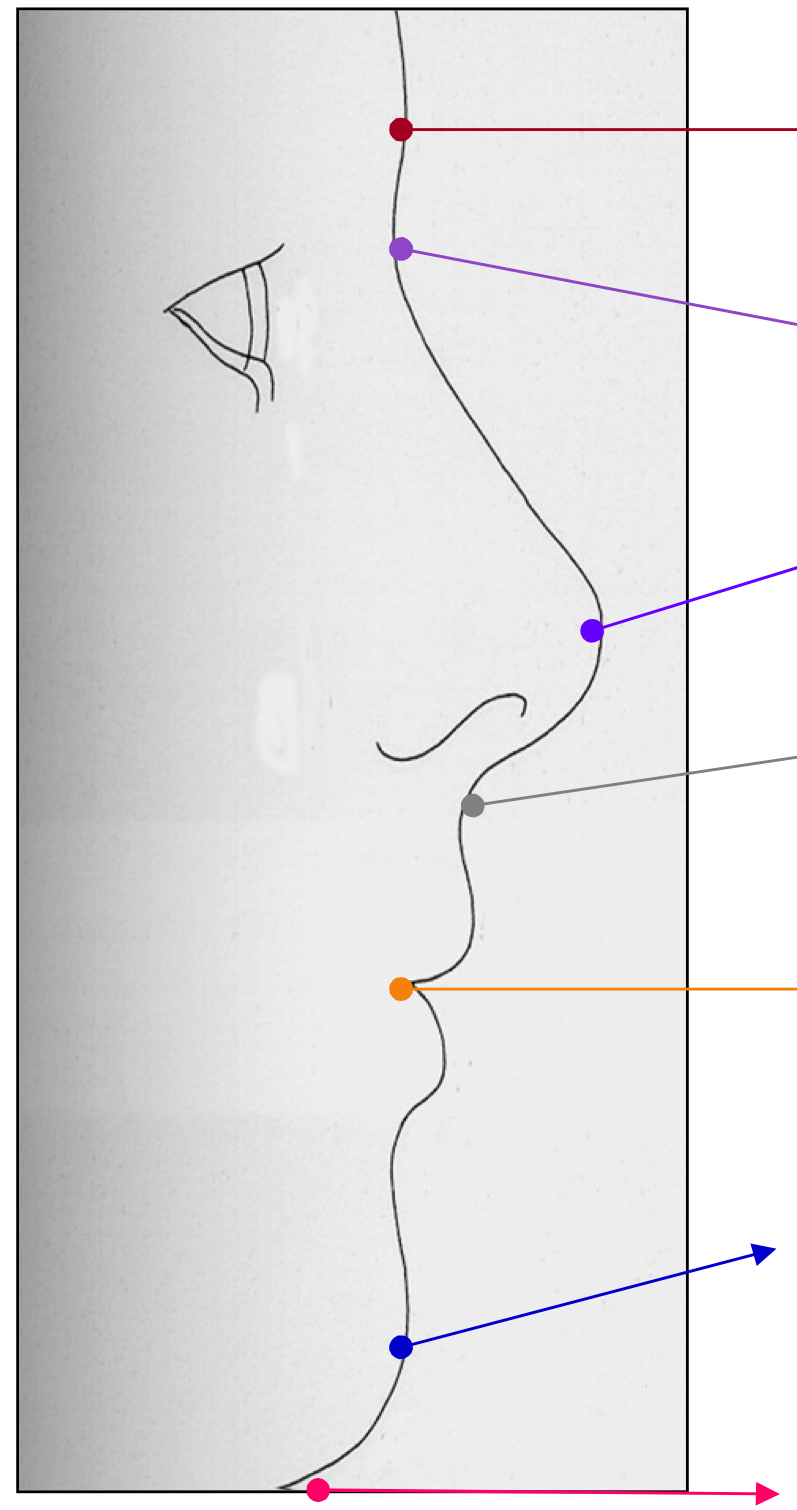
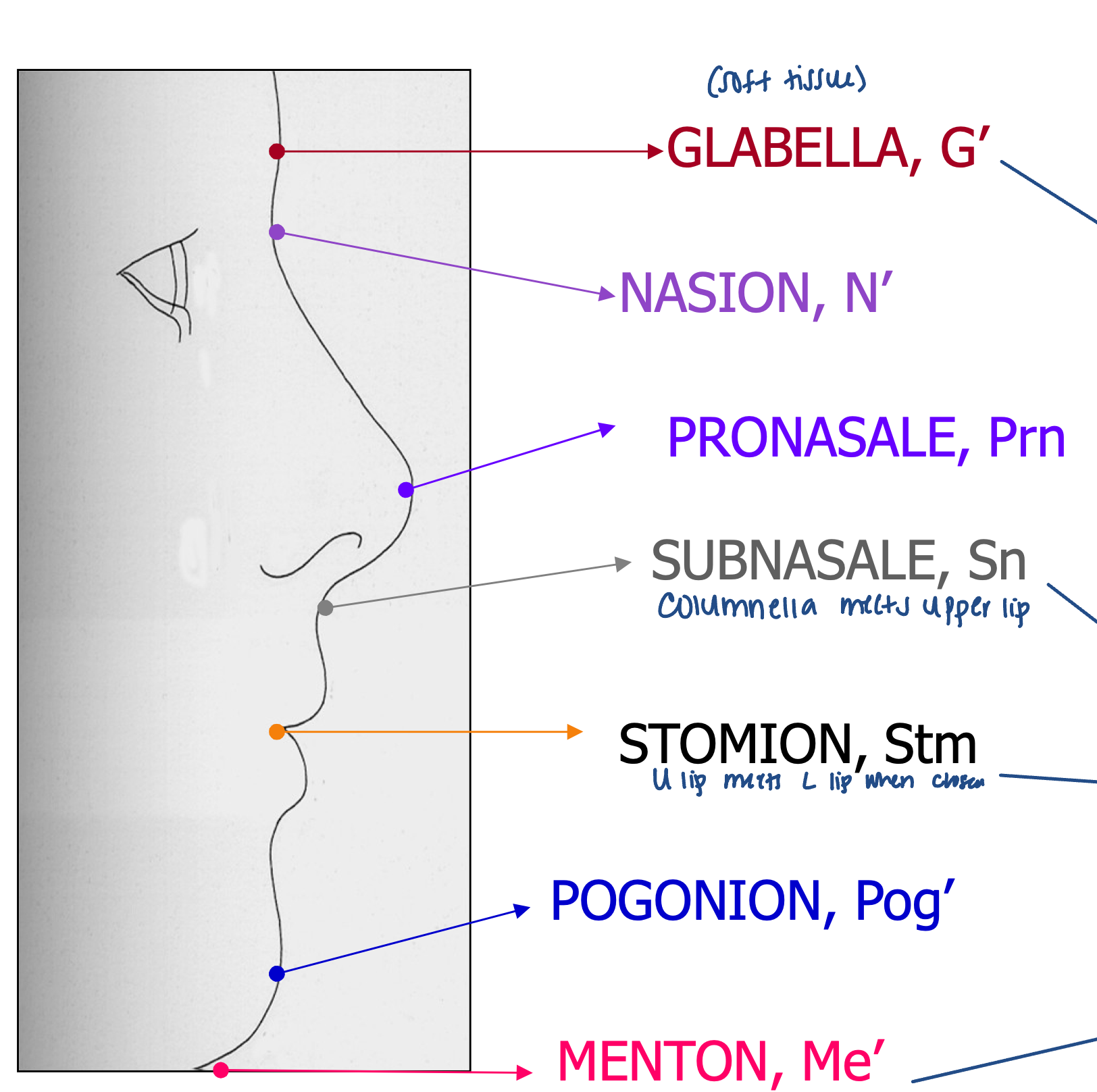
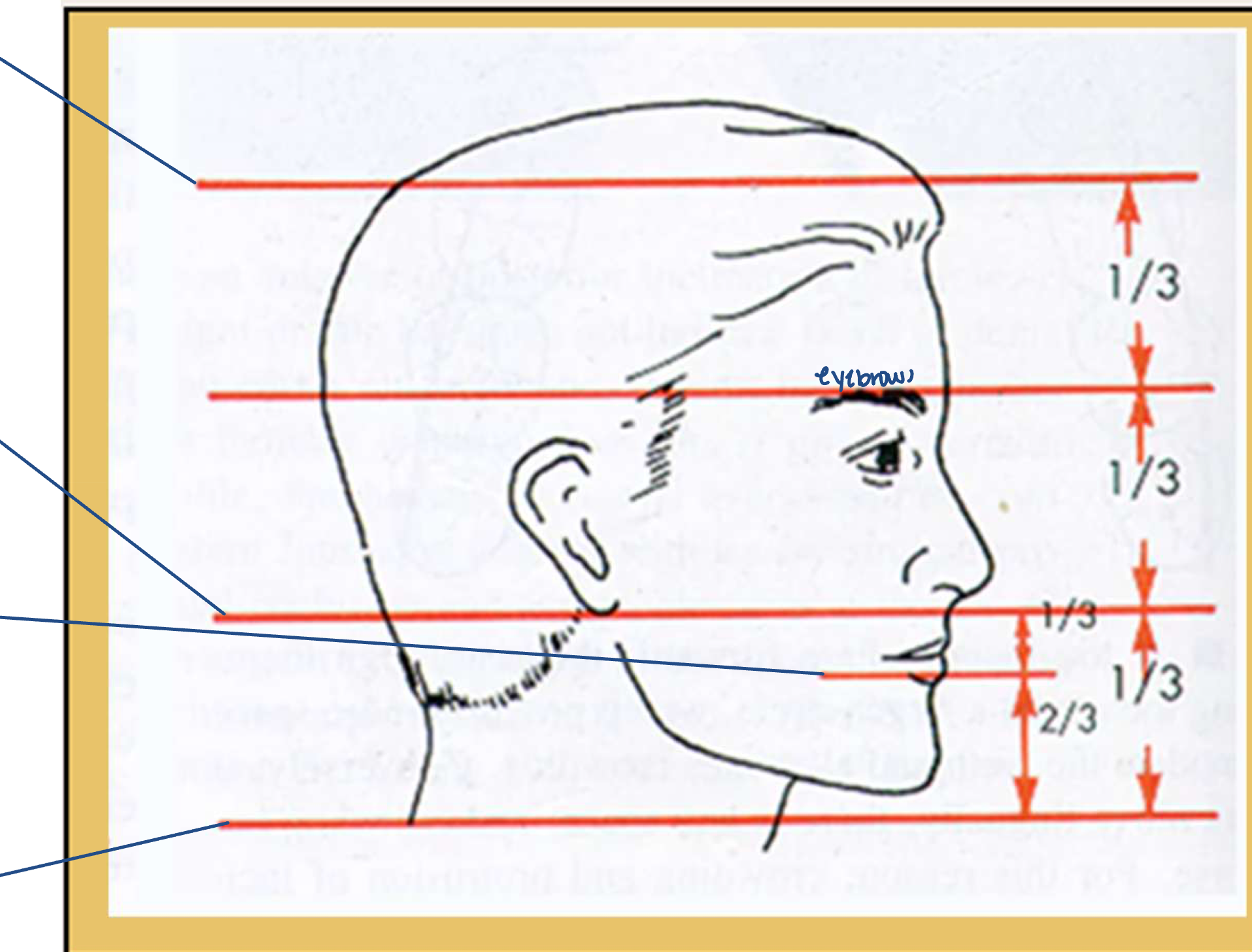
what landmarks are at the four dark blue lines?
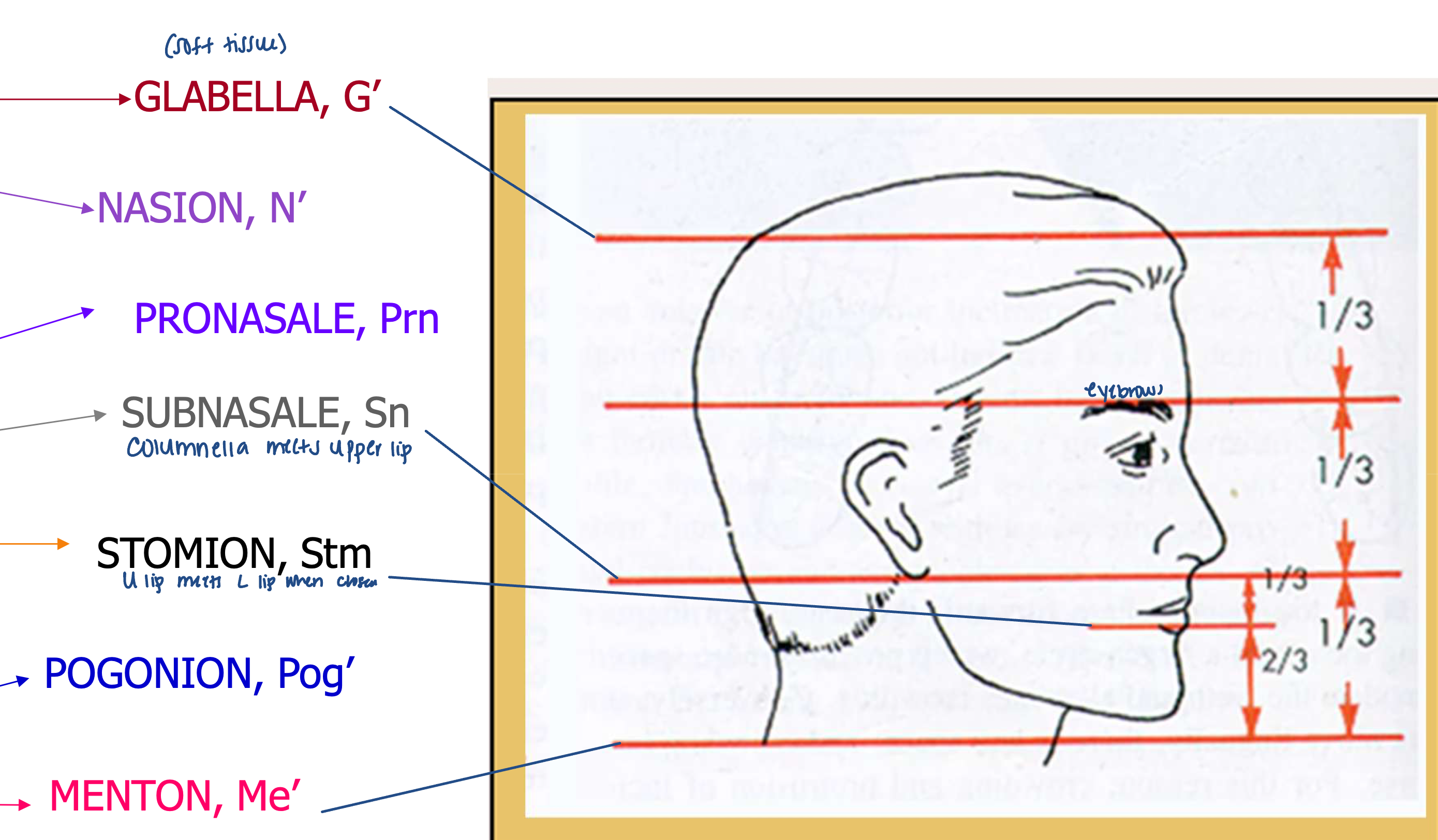
proportion: The face (from hairline to chin) is divided vertically into three equal thirds for balanced proportion assessment
vertical facial thirds
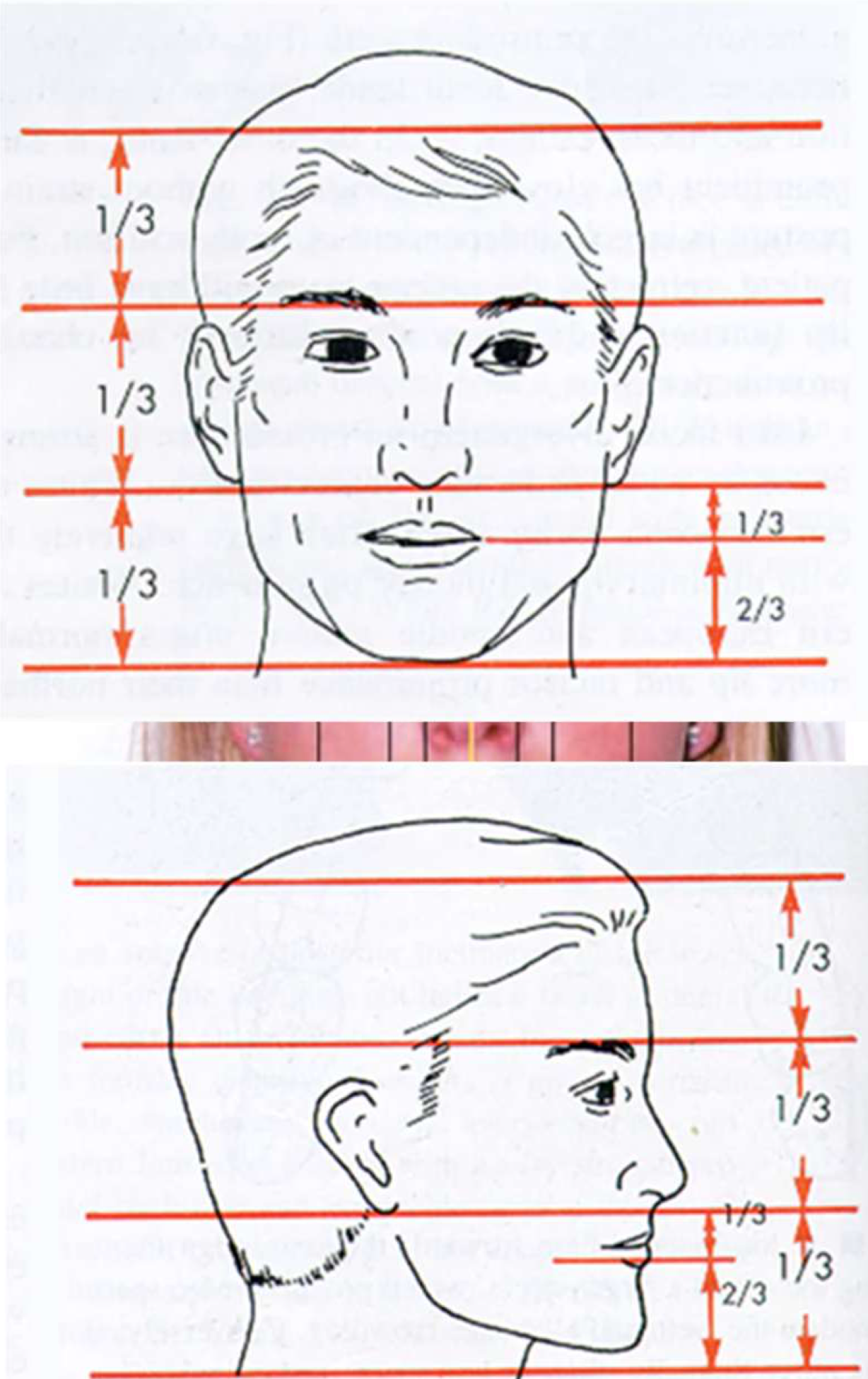
proportion: Facial width is usually greatest at the zygomatic arches, influencing esthetic appearance and facial harmony
transverse facial width
proportion: Ideal facial symmetry aligns what 4 key landmarks?
glabella, nasal tip, upper lip midpoint, and chin along the midsagittal plane
proportion: Alignment of facial features, such as mouth edges with iris edges, guides esthetic judgment of harmony and balance
key facial feature alignment
what four things are considered in occlusion?
OJ (overjet)
OB (overbite)
canines
molars
what is S-line?
aka steiner line, a line from soft tissue chin to the midpoint of the S-curve line
Esthetic line formed by the incisal edges of upper front teeth and canines.
Should align with the inner contour of the lower lip when smiling.
Creates a natural, symmetrical “S” curve for an attractive smile.
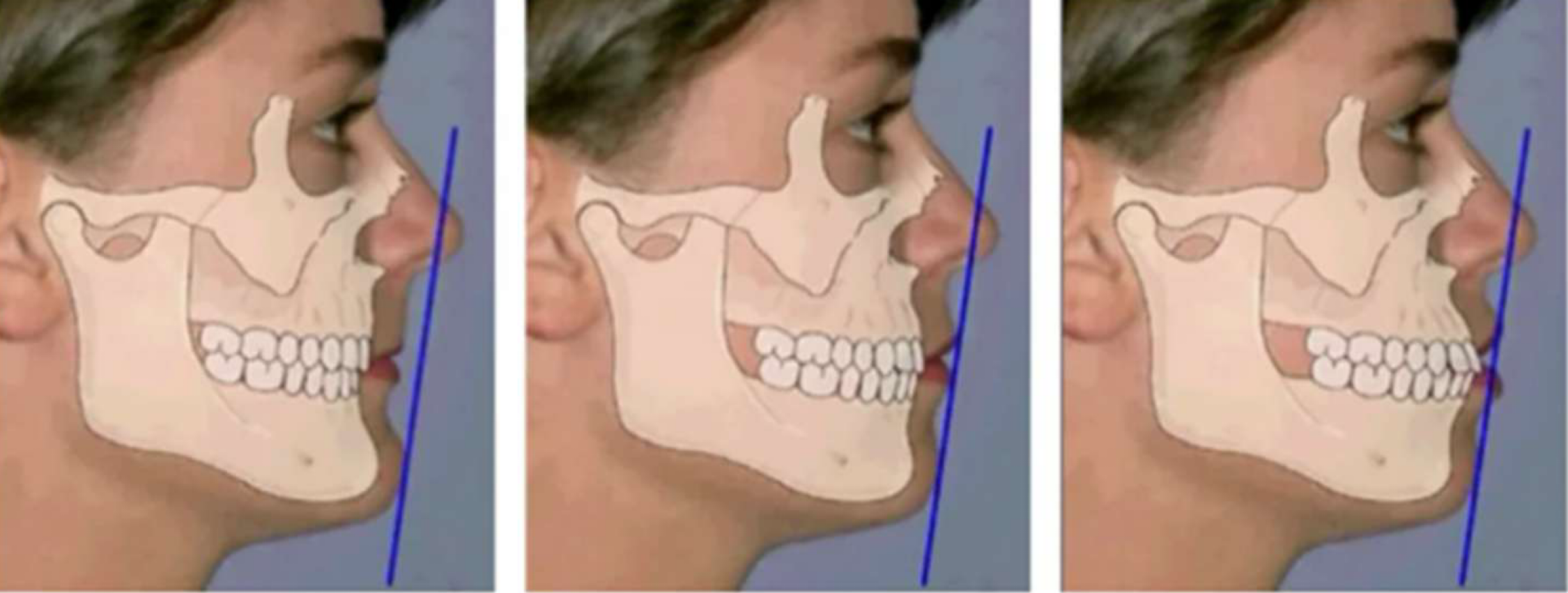
which is normal, protrusive, and retrusive S-line
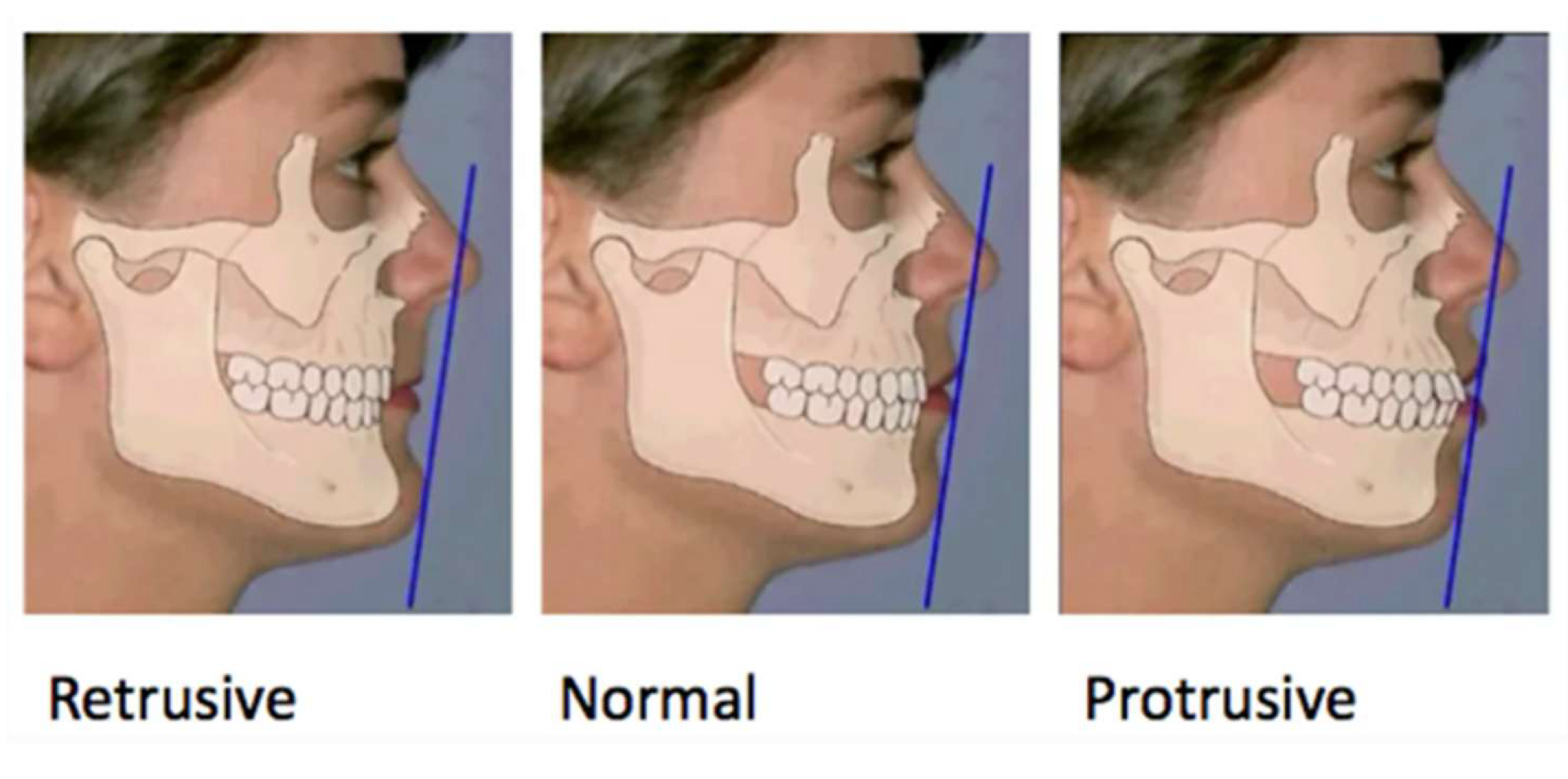
which is false of S-line?
lip support is foundational
underlying position of dentoalveolar complex
non-functional
it is functional, not non-functional
relationship of S-line and lip support
Lip support provides the foundation for the S-line
Structural support provided by teeth, bone, and muscles to maintain lip fullness and position.
Affects lip drape over teeth at rest and during smiling
A well-supported lip allows the S-line to form naturally and harmoniously.
Poor lip support (e.g., from retrusive/protrusive teeth) distorts the S-line, leading to an unbalanced smile.
what is E-line?
line from nasal tip → soft tissue chin
imaginary line drawn from the tip of the nose to the most projected point of the chin, used as a reference to evaluate the facial profile esthetics, where the lips should ideally touch or lie slightly behind this line for a balanced and harmonious appearance.
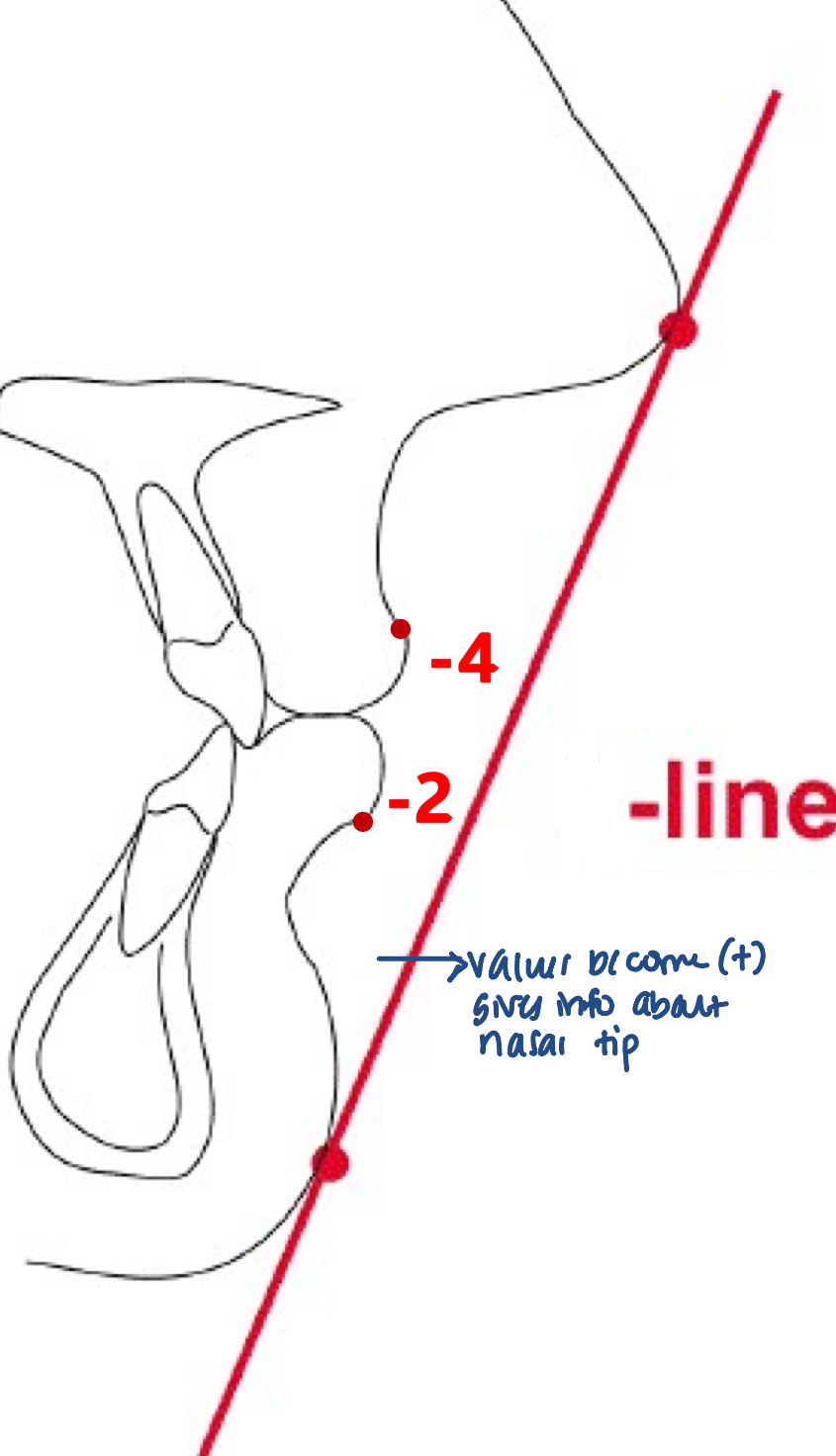
which line is this?
E-line
E-line is dependent on position of what?
nasal tip
E-line range for women vs men?
Female: lower lip 0 mm or 2mm behind, upper lip behind 2-4mm
Male: slightly less protrusive
for a female teenager ideally we would want to see what % of incisors and how much gingival tissue?
100% incisors and 2-3mm of gingival tissue for youthful smile
smile arch: curvature of incisors and canine incisal edges, gently touch curvature of (upper/lower) lip when smiling
lower
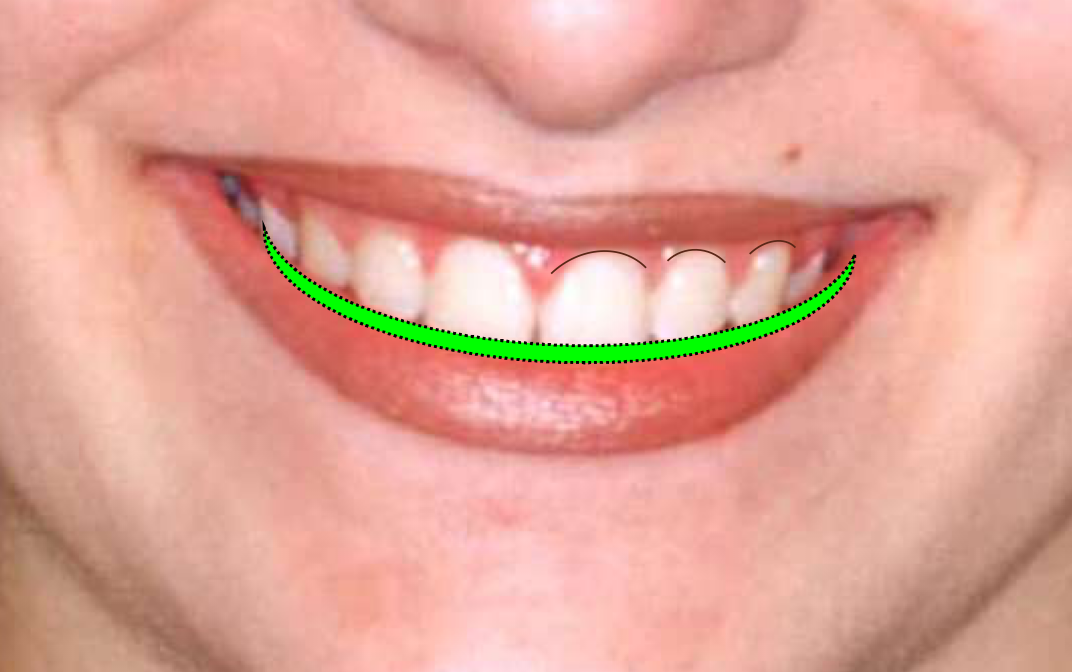
in general upon smiling, ideal exposure is (?-?)% of crown height and up to (?)mm of gingival tissues?
75-100%
2mm
(women tend to show more gingival tissues than men)
From an esthetic point of view, the best treatment strategy in the majority of deep overbite cases is to actively intrude the (upper/lower) incisors.
lower
Intruding the lower incisors in deep overbite cases improves facial esthetics by reducing excessive overbite, enhancing lip support and chin projection, minimizing the mentolabial fold, maintaining posterior occlusion, and ensuring long-term stability of the occlusion and profile.
particularly true when the mandibular anterior teeth are above the functional occlusal plane at the start of treatment
what are some aging effects on smile?
Lip lengthening, Nasal tip ptosis, tooth wear, and decreased both upper incisal and gingival display
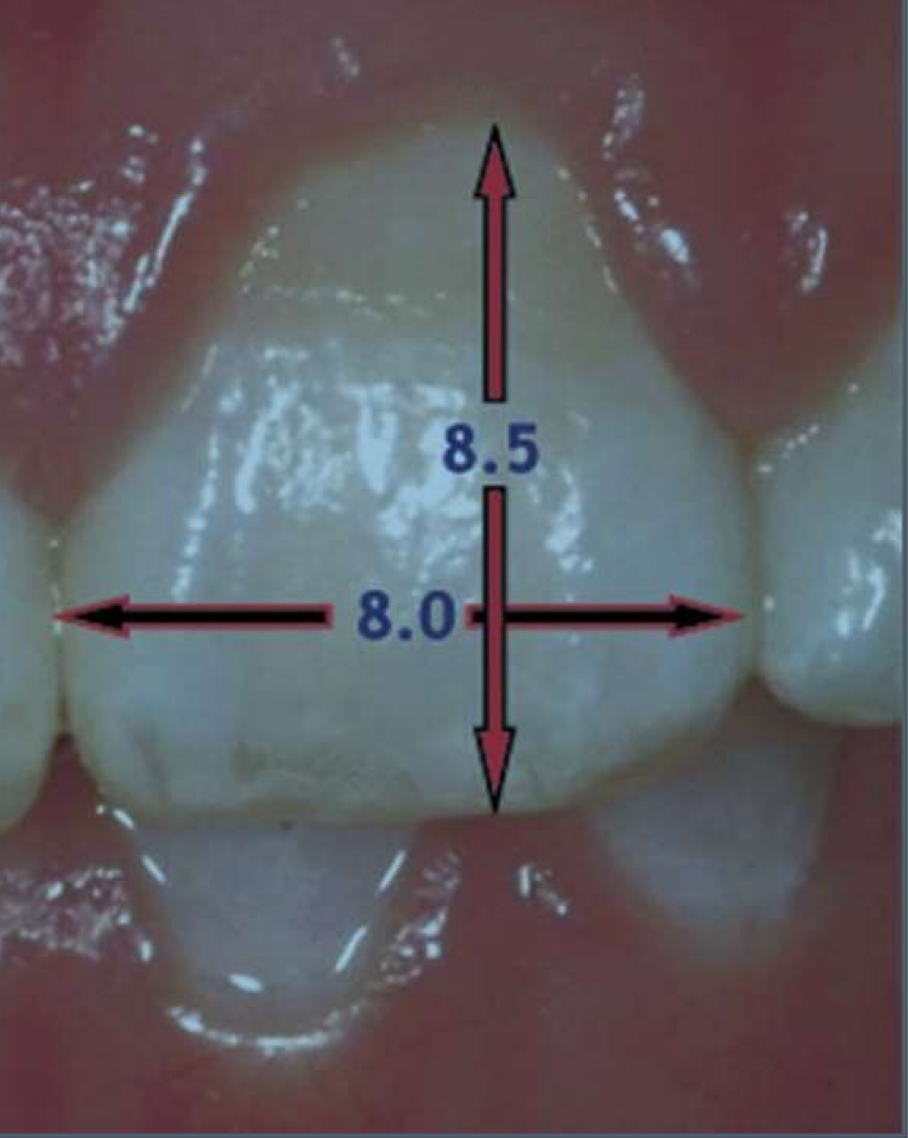
is this upper left central incisor too short or too wide?
too short (normal range 10-11mm)
what is the normal range for height and width of central incisor (for esthetics)?
width about 80% of height
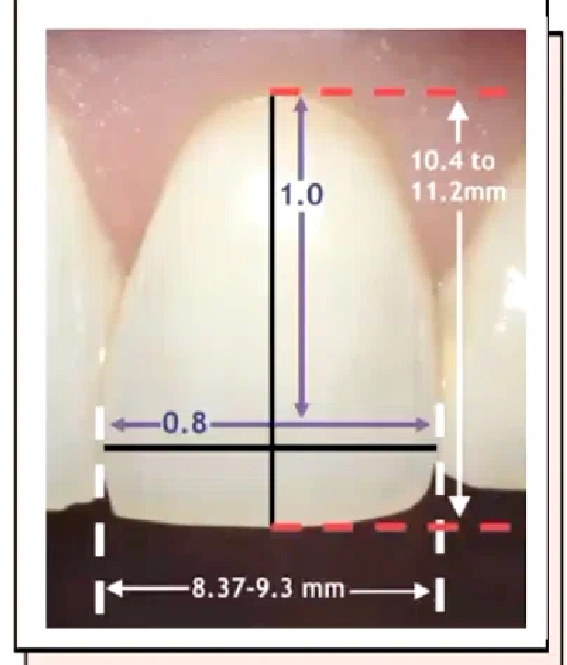
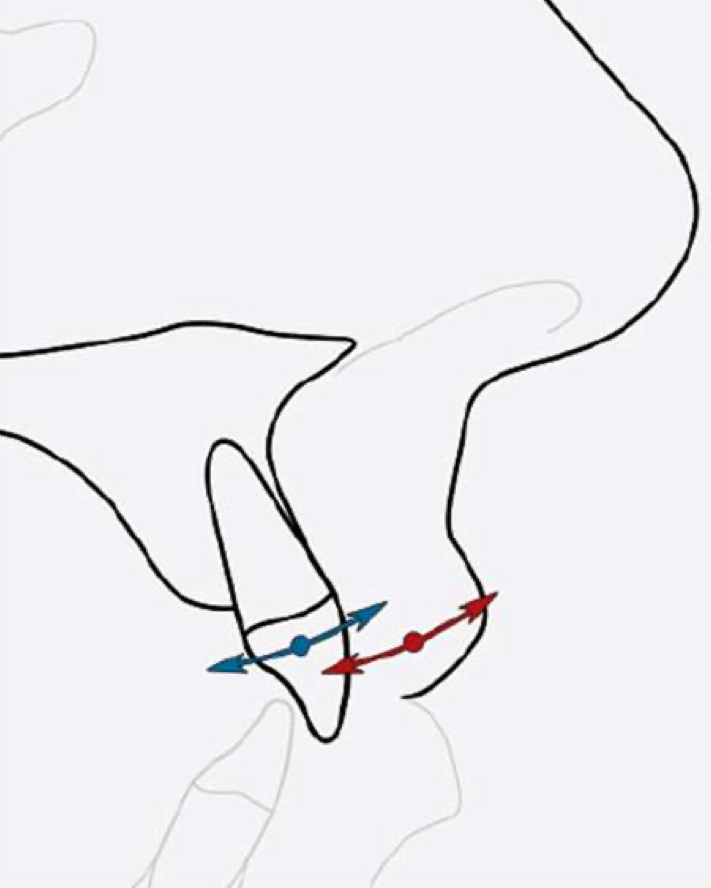
what relationship is being shown here?
inclination of upper incisor and upper lip position
components of esthetic smile (3)
Consonant Smile Arc
Marginal vertical positions
Shape and position of the gingival margins
harmonious and balanced curvature of the incisal edges of the upper front teeth that parallels the curvature of the lower lip when smiling
this esthetic relationship ensures a natural, youthful, and attractive smile by creating a symmetrical and proportional appearance between the teeth and lips
consonant smile arc
Facial width is usually greatest at what anatomical feature, influencing esthetic appearance and facial harmony.
zygomatic arches
What increases the risk of sleep-disordered breathing (SDB)?
increased BMI
What type of buccal corridor is described as more esthetic and fuller?
A broad smile with minimal buccal corridors
Lateral incisors should be positioned slightly gingival to the central incisors and canines
true!
Gingival smile line improves with age
false, diminishes
As patients age, a/n (increased/decreased) maxillary incisor display is typically observed
decreased (due to lip lengthening and tooth wear)
Aging is commonly associated with (diminishing/lengthening) of the upper lip
lengthening
Which nasal change commonly occurs with aging and can affect facial esthetics?
nasal tip ptosis, drooping or downward rotation of the nasal tip