Anatomy & Physiology of Hearing Study Notes
 View linked note
 Call Kai
 Learn
Learn Practice Test
 Spaced Repetition
 Match
Match Flashcards
 Knowt Play
1/42

There's no tags or description
Looks like no tags are added yet.
Name | Mastery | Learn | Test | Matching | Spaced | Call with Kai | Chat |
|---|
No analytics yet
Send a link to your students to track their progress
43 Terms
Journey of sound: Outer Ear
The outer ear (pinna and EAM) gathers sound waves and directs it to the eardrum
Journey of sound: Middle Ear
The TM vibrates with the sound wave and ossicles make the sound vibrations stronger (“impedance matching”). These bones transmit the vibrations to the oval window that leads to the fluid-filled inner ear.
Journey of sound: Inner Ear
Sound vibrations reach the cochlea which creates waves in the cochlear fluid. Tiny hair cells in the cochlea bend which triggers the release of neurotransmitters, which activates the auditory nerve fibers.
Journey of sound: Auditory nerve and brainstem
Signals travel from the inner ear to the auditory nerve. The signals then reach the brainstem, where the sound is initially analyzed.
• sound localization and pitch recognition
Journey of sound: Primary auditory cortex
Signals continue from the brainstem to the primary auditory cortex in the brain. Sound is processed as speech, music, or environmental noise
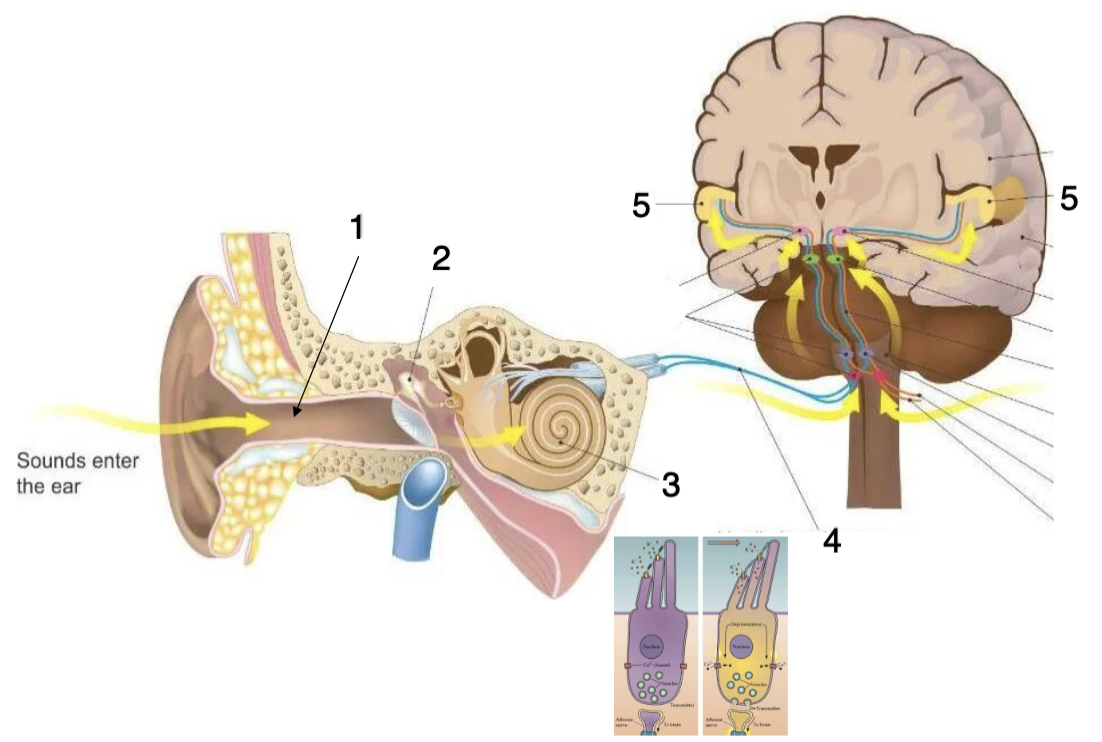
1
Outer ear
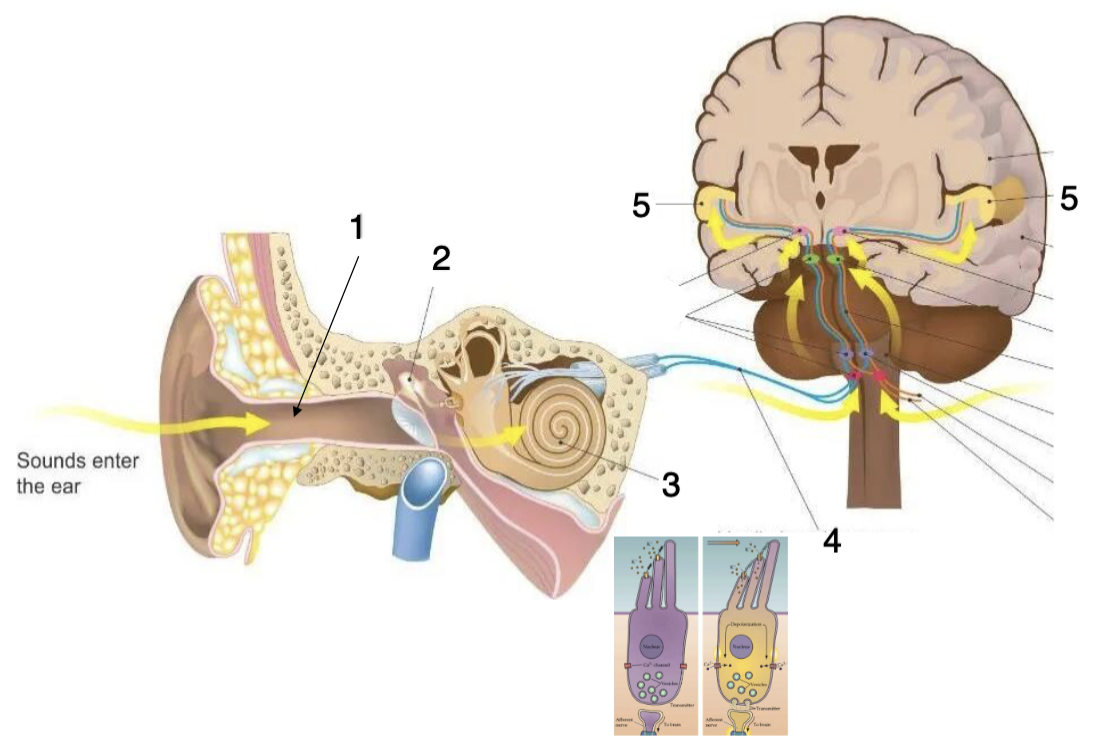
2
Middle Ear
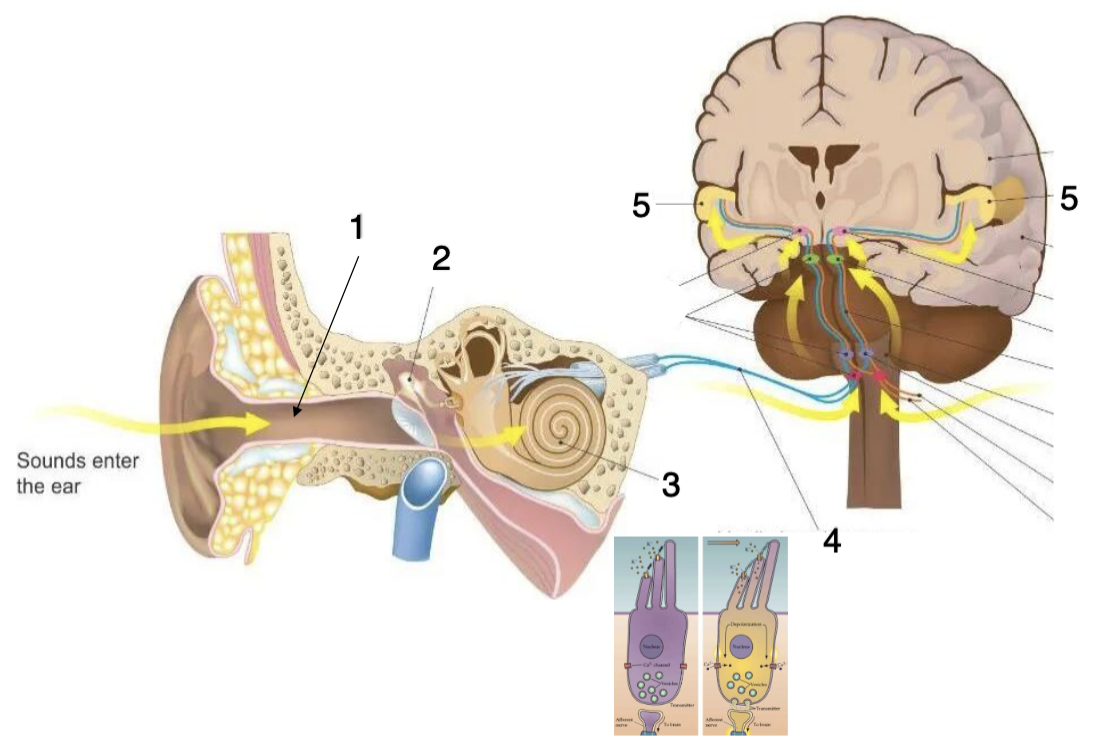
3
Inner ear
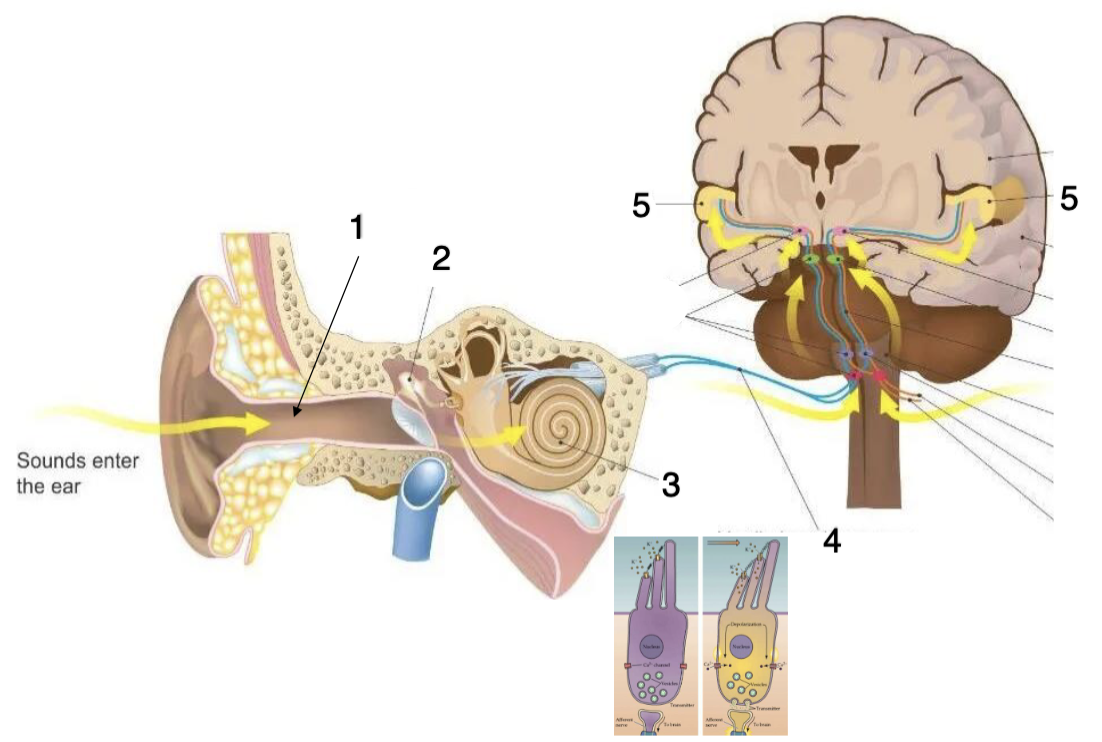
4
Auditory nerve & brainstem
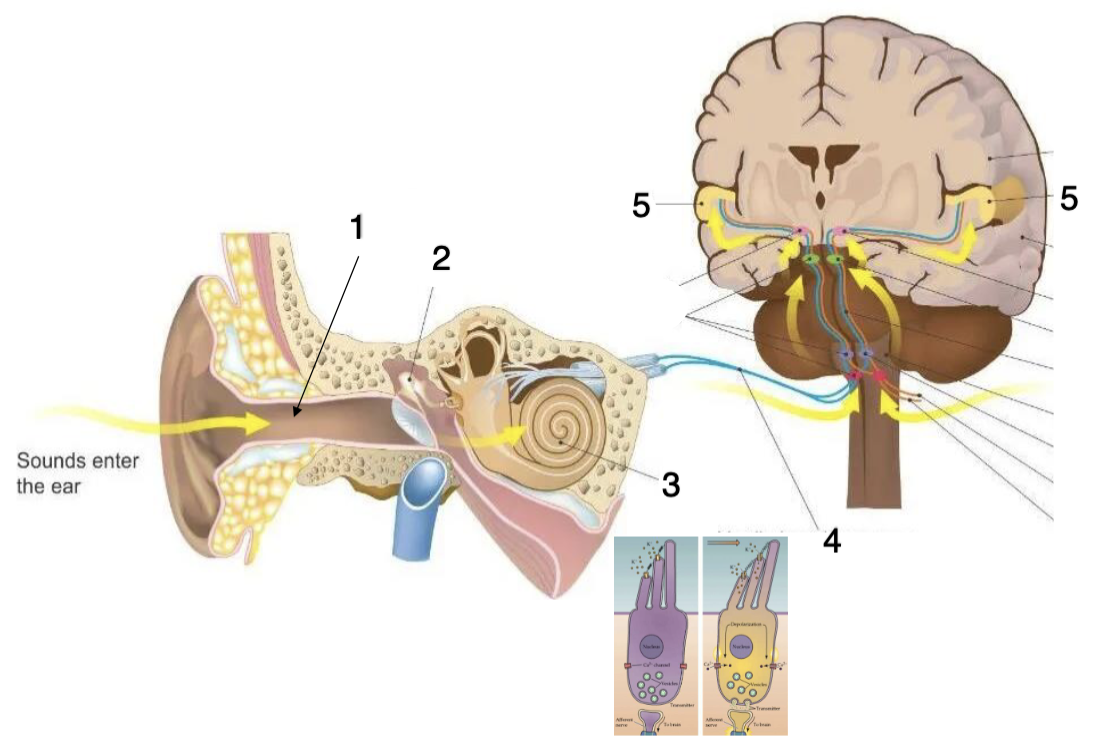
5
Primary auditory cortex
Pinna function
Channels sound waves into the ear canal.
The outer ear includes
ear canal, pinna
The middle ear includes
malleus, incus, stapes
The inner ear includes
semicircular canals, cochlea
both the ___ and ___ muscles serve as a protective mechanism
tensor tympani, stapedius
The tensor tympani and stapedius work together to…
manage sound vibrations entering the inner ear.
The downward curve in the external auditory meatus helps protect the deeper parts of the ear from potential harm.
True
External Auditory Meatus (EAM) function
Channels sound waves towards the eardrum (tympanic membrane) and the hair and cerumen (earwax) trap particles.
The pinna and EAM are lined with
Epithelial tissue
Which part of the EAM courses down
Osseous meatus (temporal bone)
Tympanic membrane function
Vibrates with sound waves and transfers sound vibrations to the ossicles in the middle ear.
The outer and inner layer of the TM are lined with ___ and the intermediate layer is lined with ___.
epithelial tissue, connective tissue
The malleus, incus, and stapes are
Three small bones; middle ear ossicles
Malleus (largest) function
Transmits sound vibrations from the TM to the incus.
Incus (middle bridge) function
Transmits sound vibrations along the chain.
Stapes (smallest) function
Final point of sound transmission in the middle ear.
Tensor Tympani
Dampens loud sounds by pulling the malleus inward, tightening the tympanic membrane.
more active in response to self-generated sounds
Stapedius
Pulls the stapes away from the oval window, thereby stiffening the ossicular chain and reducing movement of the stapes to protect the inner ear from loud sounds
Acoustic reflex
Protective response of the stapedius that helps minimize damage to the inner ear from sudden loud noises.
Cochlea
The inner ear’s hearing organ, where sound vibrations are converted into electrical signals for the brain.
Organ of Corti
Inside the cochlea and lined with sensory hair cells (Stereocilia)
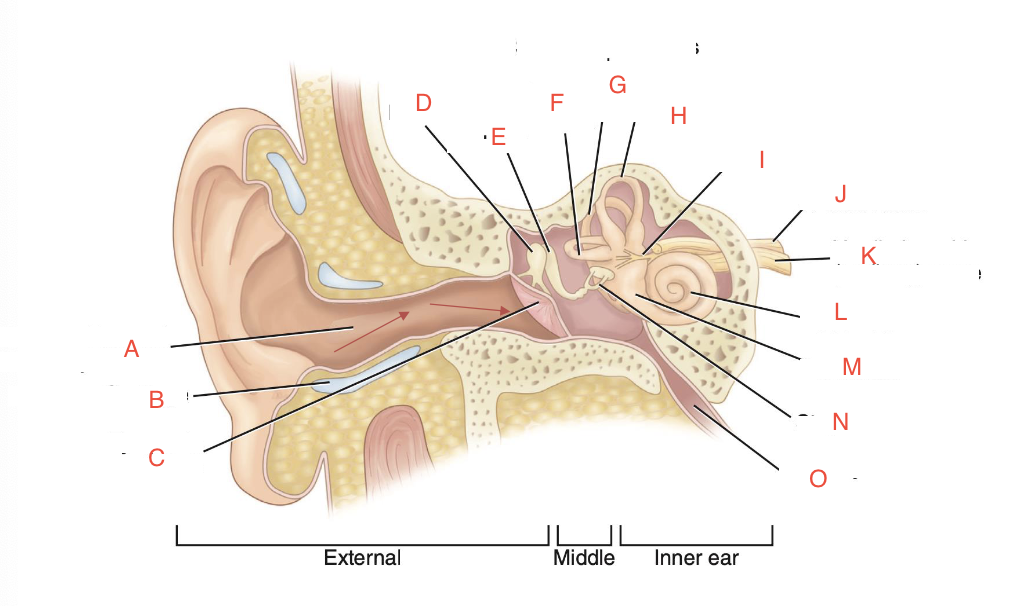
A
EAM
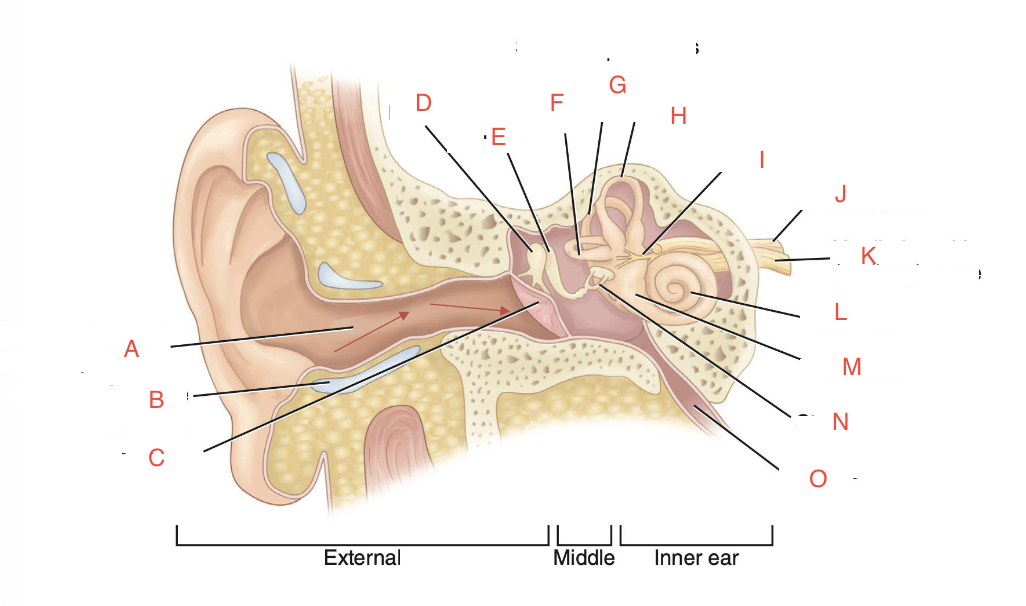
C
Tympanic membrane
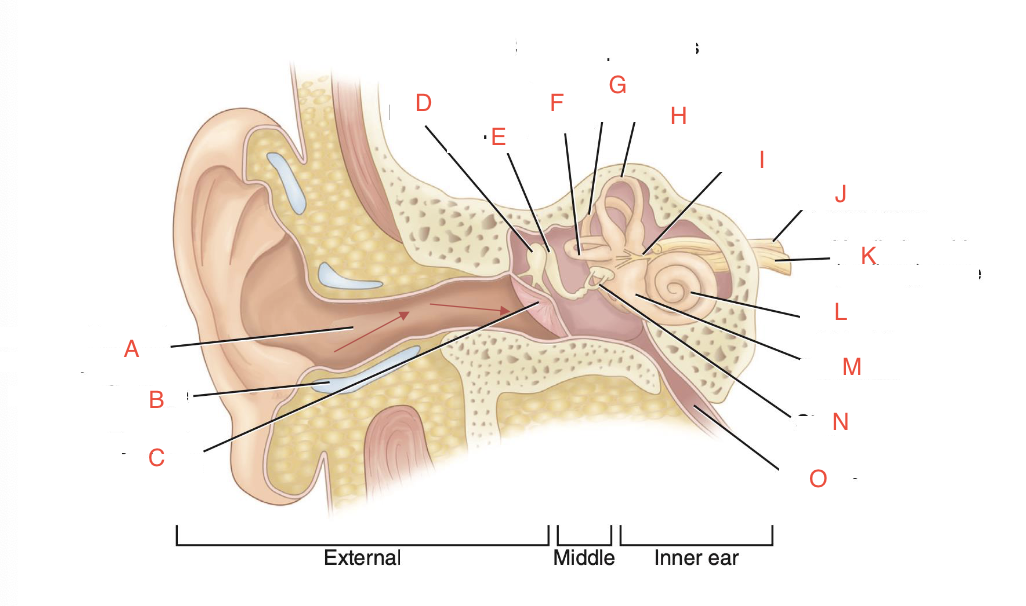
D
Malleus
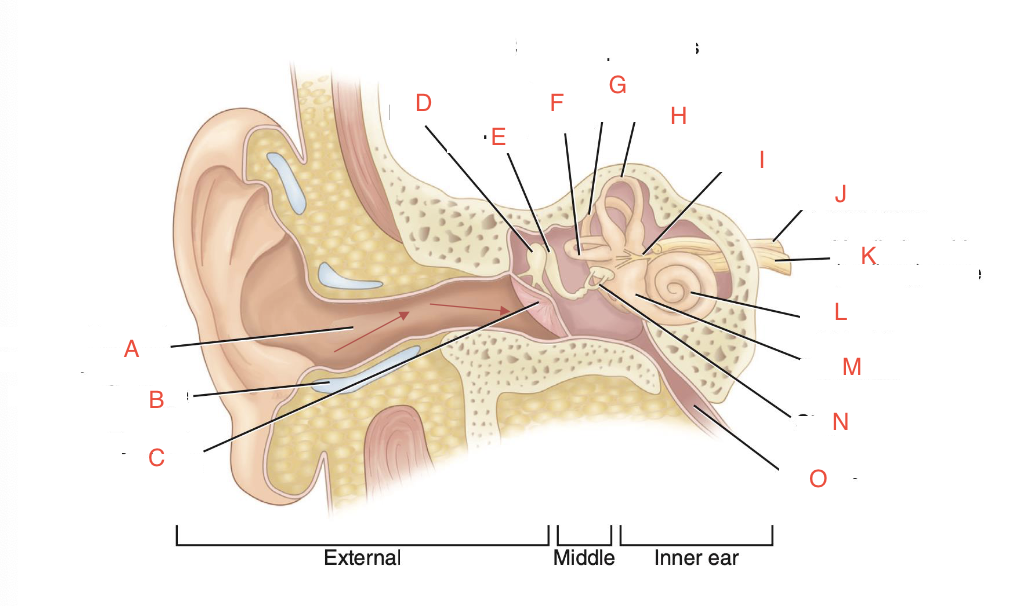
E
Incus
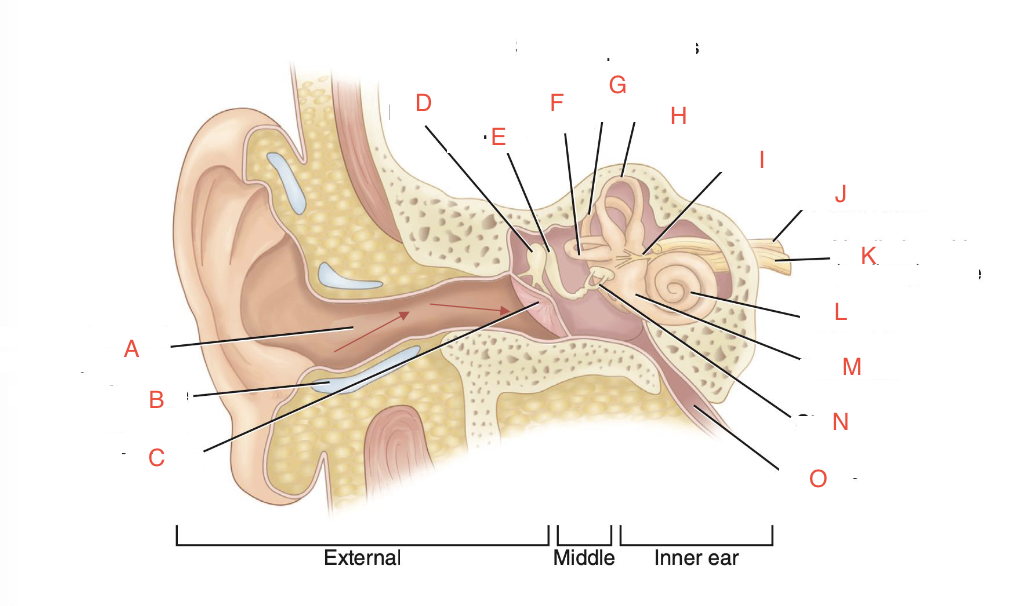
F, G, H
Lateral, posterior, superior semicircular canals
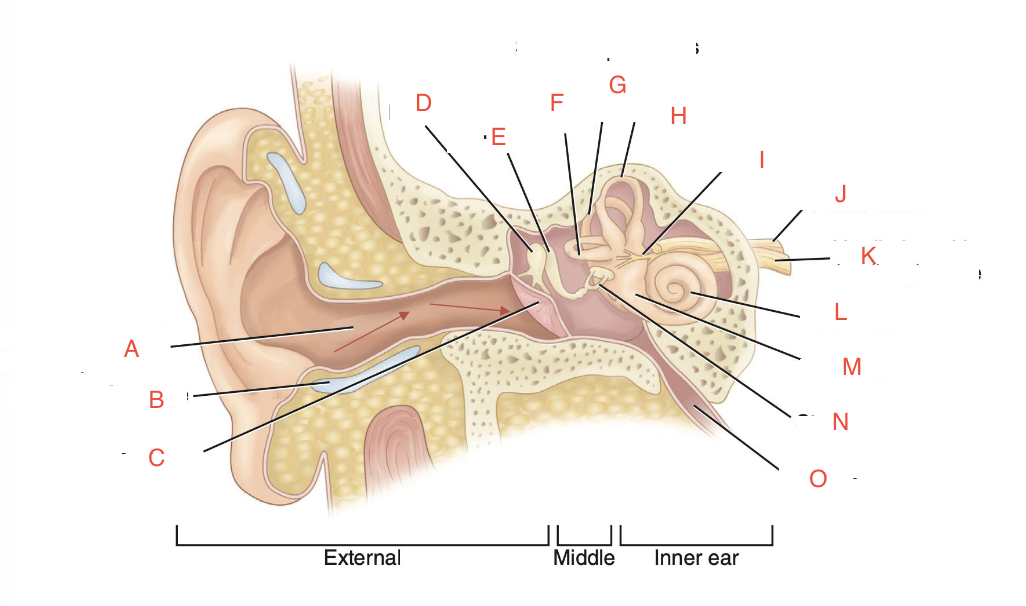
I
Vestibular nerve
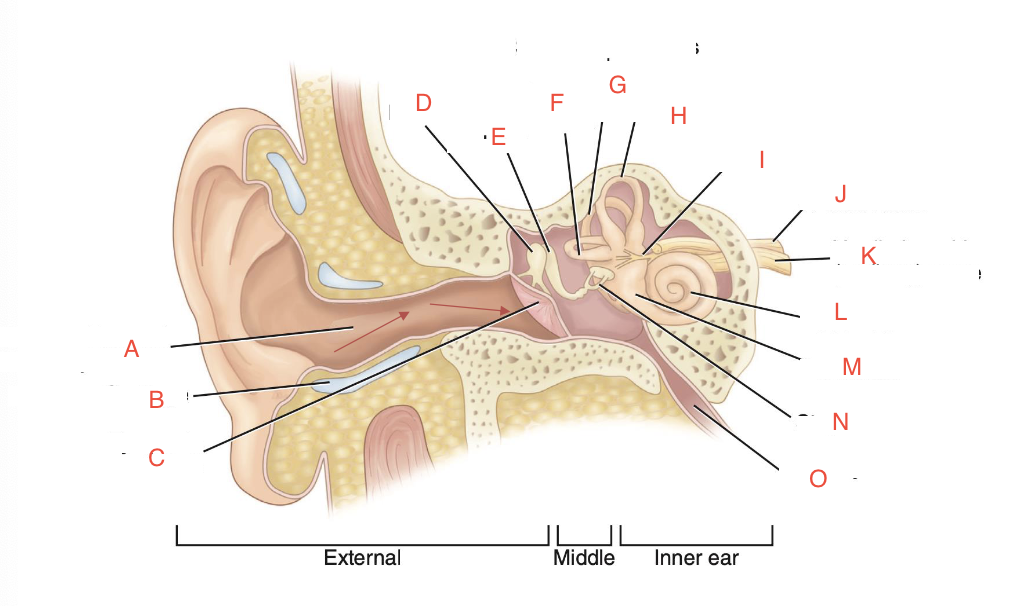
J
Facial nerve
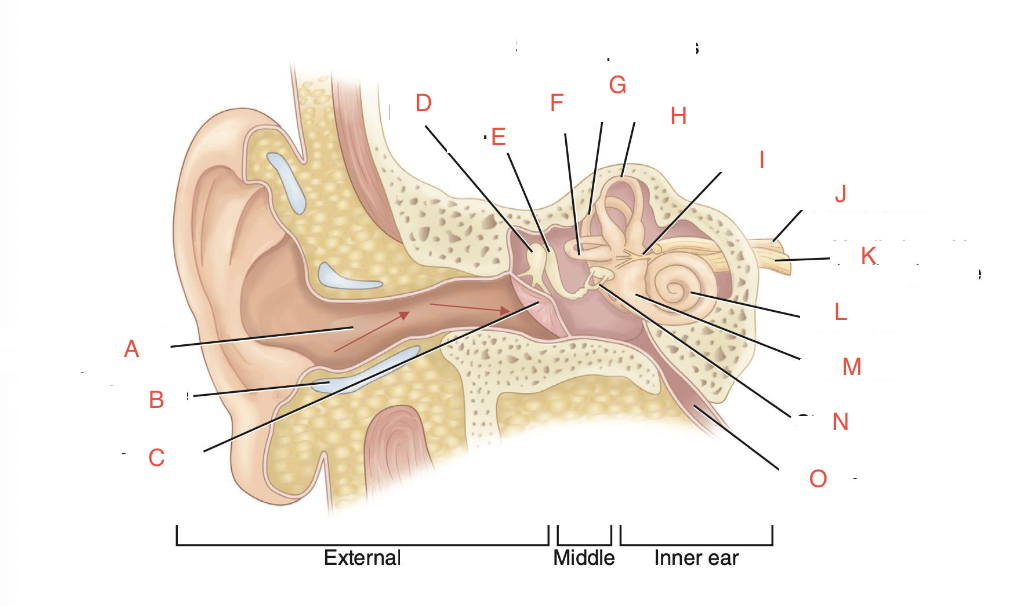
K
Vestibulochoclear (auditory) nerve
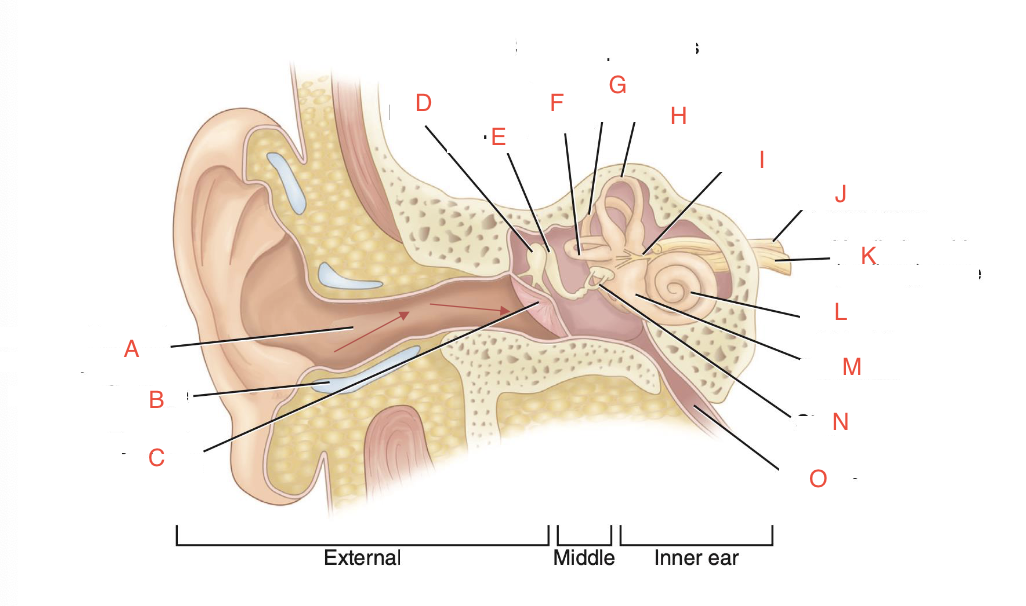
L
Cochlea
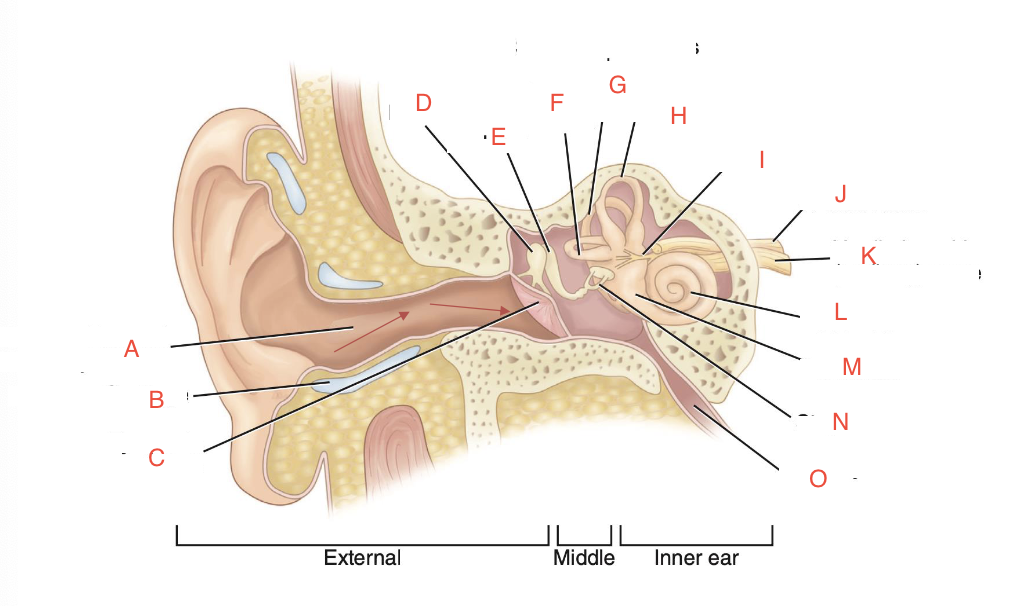
M
Vestibule
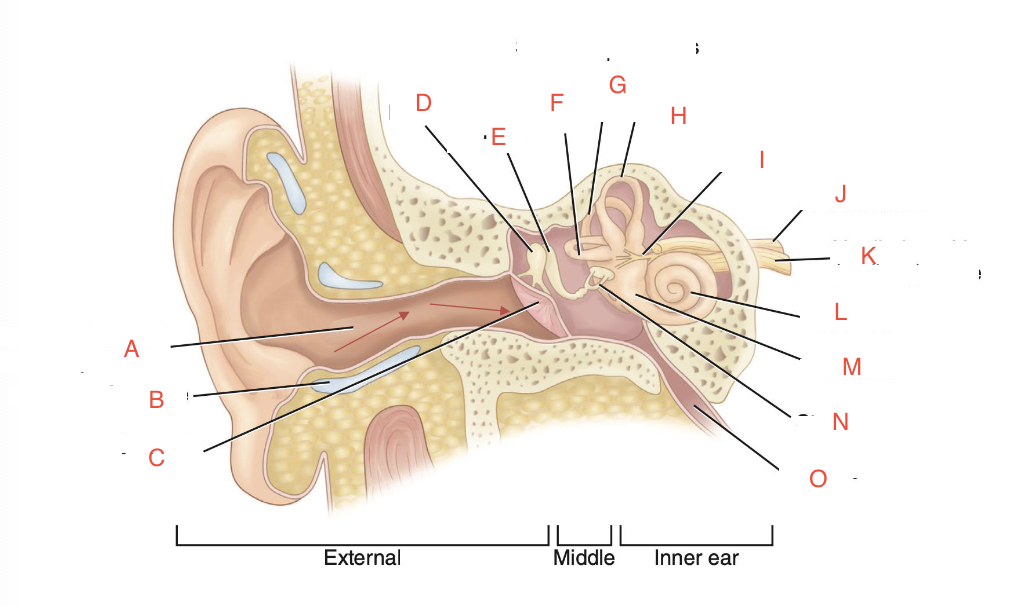
N
Stapes
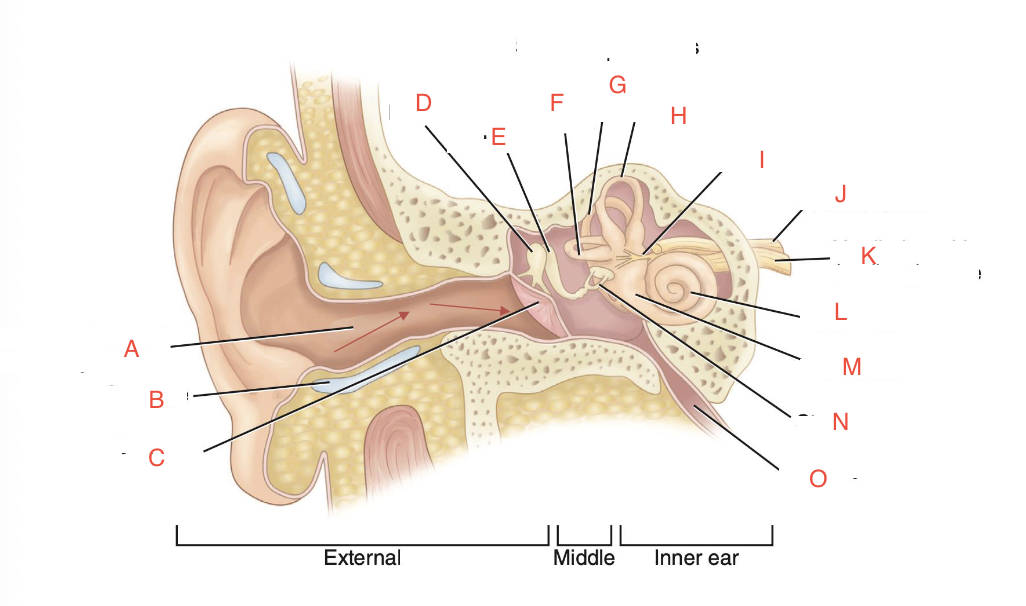
O
Auditory tube