ANSC 1000 - Lab Midterm notes
 Call Kai
 Learn
Learn Practice Test
 Spaced Repetition
 Match
Match Flashcards
 Knowt Play
1/149

Earn XP
Description and Tags
Greene ANSC 1000 class
Name | Mastery | Learn | Test | Matching | Spaced | Call with Kai | Chat |
|---|
No analytics yet
Send a link to your students to track their progress
150 Terms
Cattle
Purpose of the Beef Industry
Produce beef for human consumption
Provide high-quality protein and essential nutrients.
Utilize forage and land that may not be suitable for crops
Produce valuable by-products
Support the agricultural economy
Primary product of cattle
Beef: meat
Dairy: milk
Body type
Meat: thick, muscular, wider-bodied
Dairy: More angular and lean
Muscling
Beed: Heavy muscling, especially over loin and hindquarters
Dairy: Less muscling
Udder
Beef: Functional but not selected for high-quality milk production
Dairy: Large, well-developed udder; selected for milk production
Management
Beef: often pasture-based during cow-calf production
Dairy: More intensive daily mangement
Calf management
Beef: Typically remain with and nurse the cow until weaning
Dairy: Calves are commonly separated from the dam early and raised separetly
Major selection traits
Beef: Growth, feed efficiency, carcass traits, reproduction
Dairy: Milk yield, milk components, udder traits, reproduction
Common breeds
Beef: Angus, Hereford, Charolais, Simmental, Brahman
Dairy: Holstein, Jersey, Brown Swiss, Ayrshire
Cow
A mature female bovine that has had at least one calf
Heifer
A young female bovine that has not had a calf
Bull
An intact male bovine
Steer
A male bovine that has been castrated
Calf
A young bovine, generally less than one year old
British breeds
Moderate size, early maturity, strong maternal traits, carcass quality
Examples of British breeds
Angus and Hereford
Continental breeds
Larger framed, rapid growth, heavier muscling
Examples of Continental breeds
Simmental and Charolais
Bos indicus breeds
Heat tolerant, insect/parasite adaptability, adapted to hot climates
Examples of Bos indicus breeds
Brahman
Composite breeds
Developed by combining breeds to capture desirable traits from each
Examples of Composite breeds
Brangus and Beefmaster
Examples
Bos taurus: Angus, Hereford, Simmental, Charolais
Bos indicus: Brahman
Origin
Bos taurus: Primarily European breeds
Bos indicus: Tropical/subtropical ancestry
Appearance
Bos taurus: No prominent hump, tighter skin, smaller ears
Bos indicus: Shoulder hump, loose skin, large/drooping ears
Heat tolerance
Bos taurus: Lower
Bos indicus: Higher
Parasite/Insect resistance
Bos taurus: Lower
Bos indicus: Higher
Temperament
Bos taurus: Generally more docile
Bos indicus: Can be more reactive/alert
Best adapted to
Bos taurus: Cooler/temperate climates
Bos indicus: Hot, humid climates
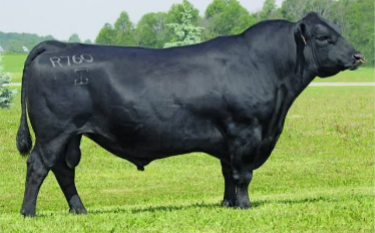
Angus classification
British breed — Bos taurus
Angus color
Most commonly black, but can be red
T or F: Angus are naturally polled
True
Angus identification
Moderate frame, smooth-bodied
Angus are known for:
Excellent marbling & carcass quality, strong maternal characteristics, good fertility, early maturity
Angus
Hereford classification
British breed — Bos taurus
Hereford identification
Red body, white face, belly, legs, and switch
T or F: Hereford are naturally polled
False, can be either polled or horned
Hereford are known for:
Hardy and adaptable, good disposition, strong forage utilization, maternal ability, fertility and longevity
Hereford

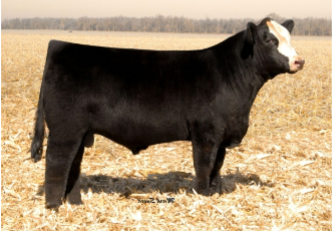
Simmental classification
Continental breed — Bos taurus
Simmental identificaition
Solid black or red
T or F: Simmentals are naturally polled
True
Simmental are known for:
Rapid growth, larger mature size, heavy muscling, good milk production, strong maternal performance
Simmental
Charolais classification
Continental breed — Bos taurus
Charolais color
White to cream
Charolais identification
Large framed and heavy muscling
T or F: Charolais can be horned or polled
True
Charolais are known for:
Excellent growth rate, heavy muscling, large, mature size, strong performance in crossbreeding
Charolais

Limousin classification
Continental — Bos taurus
Limousin color(s)
Goldish-red/reddish brown, can also be black, lighter around the eyes and muzzle
Limousin identification
Heavy muscling, especially through the hindquarters, moderate to large frame
Limousin are known for:
Excellent muscling, lean carcasses, good growth and feed efficiency
Limousin

Brahman classification
Bos indicus
Brahman color(s)
Gray or red
Brahman identification
Large hump over shoulders, long drooping ears, loose skin, large dewlap
Brahman are known for:
Excellent heat tolerance, adaptability to hot humid climates, insect and parasite tolerance, longevity, ability to perform under challenging environment conditions
Brahman

Brangus are developed from:
Brahman x Angus (3/8 B + 5/8 A)
Brangus color(s)
Black or red
T or F: Brangus are usually horned
False
Brangus Brahman influence
Looser skin, larger ears, slight hump
T or F: Brangus generally appear more Brahman-like than Angus like
False
EPD
A prediction of how an animal’s offspring are expected to perform compared to offspring within the same breed.
EPDs are used for:
Breeding decisions
Genetic potential comparison
To select certain traits
Herd improvement
CED
Calving Ease Direct; likelihood of unassisted birth, higher desire
BW
Birth Weight; expected calf birth weight, lower desire
WW
Weaning Weight; growth to weaning, higher desire
YW
Yearling Weight; growth to one year, higher desire
Milk
Maternal Milk; maternal contribution to calf weaning weight, moderate to high desire
Marb
Marbling; genetic potential for marbling, higher desire
REA
Ribeye area; genetic potential for ribeye area, higher desire
Puberty
Heifer becomes reproductively capable
Estrous cycle
Approximately 21 days
Estrus (heat)
Period when the female will accept the male
Gestation
Approximately 283 days (~9 months)
Calving
Giving birth
Postpartum
Period after calving before normal reproductive cycling resumes
Breeding methods
Natural service and artificial insemination (AI)
Natural service
Bull breeds cows/heifers naturally
Common in commercial beef operations
Requires maintaining bulls
One bull can breed multiple females
Artificial insemination (AI)
Semen is collected from a sire and placed into the reproductive tract of the female
Access to better genetics
Allows producers to select for certain traits
Requires proper estrus detection and/or synchronization
What makes a ruminant different?
Herbivorous, specialized stomach to process cellulose, usually have 4 chamber stomachs
What is the role of rumen microorganisms?
To break down cellulose in the plant-based diet of the animal
Beef cattle diet: Forages
Primary feed source
Pasture
Hay
Silage
Beef cattle diet: Concentrates
Higher-energy feeds
Corn and other grains
Common in finishing diets
Promote faster weight gain
Beef cattle diet: Protein sources
Needed for growth, reproduction & milk production
Forages can supply
Supplemental protein may need to be added when needed
Soybean meal, cottonseed meal, distillers grains
Beef cattle diet: minerals & vitamins
Support growth, reproduction & health
Calcium, phosphorus & salt
Often provided through supplements
Beef cattle diet: water
Most important mineral
Should always be available
Requirements increase with heat, lactation, and feed intake
Production stage: maintenance
Maintain the animal, needs to support normal functions & body conditions
Production stage: growth
Grow the animals, needs to support bone & muscle development
Production stage: pregnancy
Grow the fetus, needs to support cow maintenance + fetal development
Production stage: lactation
Produce milk, needs to support milk production + maintaining the cow
Production stage: finishing
Reach market weight, needs to support rapid growth + muscle & fat deposition
Beef cattle production system
Cow-calf → Stocker → Feedlot → Harvest

Cow-Calf: breeding
Cows and heifers are bred to produce a calf
Cow-Calf: gestation
About 283 days