exam 1 - cell culture
 Call Kai
 Learn
Learn Practice Test
 Spaced Repetition
 Match
Match Flashcards
 Knowt Play
1/54

There's no tags or description
Looks like no tags are added yet.
Name | Mastery | Learn | Test | Matching | Spaced | Call with Kai | Chat |
|---|
No analytics yet
Send a link to your students to track their progress
55 Terms
alternative names for biosafety cabinets
tissue culture hoods
laminar flow hoods
chemo hoods (pharmacy)
categorization of BSCs
class I, class II, class III (some have subtypes A, B, C)
laminar air flow
continuous
uniform in velocity and direction
flow pattern is parallel to solid surface
horizontal laminar flow hood
does not provide protection to personalle or environment; minimal risk
BSL 1
microbes are not known to cause disease
BSL 2
microbes are moderately pathogenic and can cause disease
BSL 3
microbes can be transmitted through air and inhaled
can cause serious and sometimes life-threatening diseases
BSL 4
microbes are highly contagious and extremely life-threatening
no treatments
BSC classifications
Class I - Class 4
Class I BSC Classification
BSL 1, 2, 3
personnel and environmental protection only
low to moderate risk biological agents
Class II BSC Classification
BSL 1, 2, 3
subclassifications A1, A2, B1, B2
sample, personnel, and environmental protection
low to moderate risk biological agents
Class III BSC Classification
BSL 4
sample, personnel, and environmental protection
high risk biological agents
acronym for HEPA filters
high efficiency particulate air filters
HEPA filters
can remove >99.9% of airborne particles =,>,< than 0.3 microns
pleated mats of randomly arranged fibers
affected by fiber diameter, thickness, and face velocity
catches air particles
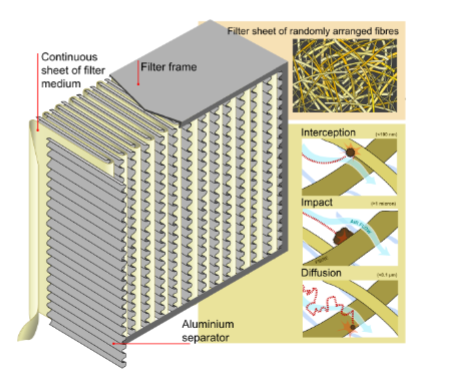
how do HEPA filters catch air particles?
by interception, impaction, and diffusion
interception
particles w/ less mass stay w. air stream and impinge upon fiber as they go around it
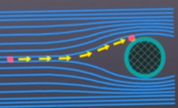
impaction
particle inertia causes it to leave flow stream lines and impact on fiber

diffusion
Brownian motion/diffusion due to molecular bombardment

two types of CO2 incubators
water-jacketed
direct heat
inverted microscope
light source above the stage
objectives below stage
phase-contrast
what kind of water should you fill a water bath with?
distilled water
CHO
Chinese Hamster Ovary
immortalized cell line
anchorage-dependent (adherent)
RPMI
Roswell Park Memorial Institute
EDTA
ethylene diamine tetraacetic acid (e.g Ca, Mg, Fe, Cu)
EGTA
ethylene glycol tetraacetic acid
binds Ca w/ higher affinity than Mg
HT1080 cells
fibrous connective tissue
cancer cell line
anchorage-dependent (adherent)
attributes of cells
fibroblastic
epithelial
attributes of cells: fibroblastic
pointed, elongated, bipolar
attached cells
grow in sheets, loose contact
attributes of cells: epithelial
polygonal, more regular dimensions
attached cells
grow in sheets, close contact
what is the wide variety of complex media supplemented with fetal bovine serum (FBS)?
salts
carbohydrates
amino acids
vitamins
hormones
growth factors
water
what are usually added to medium + FBS?
antibiotics
buffers
sodium bicarbonate and HEPES
phenol red
pH indicator
yellow (acidic) → orange (neutral) → violet red (basic)
what does feeding cells do?
replenishes nutrients, eliminates waste/metabolites, maintains proper pH by replacing spent medium w/ fresh medium
DMEM
Dulbecco’s Modified Eagle’s Medium
components of DMEM
inorganic salts
amino acids
vitamins
other
add L-Glutamine
reasons to passage or subculture cells
increase cell numbers
seeding cultureware w/ adequate # of cells for experiments
preservation of cells or cryopreservation
cloning
characterization of cells
establishing a cell strain, cell selection
how do cells attach in vivo?
via extracellular matrix by specific cell surface receptors
calcium and glycoproteins on cell surface
how do cells attach in vitro?
adhere to plastic (polystyrene)
animal cell membranes have net (-) charge
treated cell cultureware has net (-) charge → excellent for attachment
how does ECM fibronectin and cells attach?
via integrins
how to release attached cells
use divalent cation chelators like EDTA and EGTA
use of protease - trypsin
use chelator and protease together - trypsin-EDTA
ways to inactivate trypsin
adding serum
adding trypsin inhibitor
adding Ca and Mg
diluting the enzyme
placing cell suspension on ice
how to prepare detached cells for counting
inactivate trypsin
centrifuge at 200xG to pellet cells
resuspend cells in nutrient medium
ways to count cells
hemocytometer and automated/electronic cell counters
hemocytometer
use vital dyes or stains like Trypan Blue dye exclusion
dead cells are stained blue
ways to get a cell count
hemocytometer
electronic counters
DNA assays
protein assays
glucose utilization
O2 utilization
expression of a product
what is needed for cell counts w/ a hemocytometer?
hemocytometer, hand tally, trypan blue
steps of cell counting
place cover slip
pipet 10 ul of cells suspended in trypan blue
equation for % viability
(# of viable cells/total # of cells) *100
equation for calculating number of cells/mL
# of cells/mL = total # of cells in 10 squares * dilution factor * 1,000
equation for calculating total # of cells in cell suspension
total # of cells = # of cells/mL you want to seed* total number of mL in cell