Database Systems Terms
 Call Kai
 Learn
Learn Practice Test
 Spaced Repetition
 Match
Match Flashcards
 Knowt Play
1/18

There's no tags or description
Looks like no tags are added yet.
Name | Mastery | Learn | Test | Matching | Spaced | Call with Kai | Chat |
|---|
No analytics yet
Send a link to your students to track their progress
19 Terms
DB schema
The description of a database.
Includes descriptions of the database structure and the constraints
Schema diagram
A diagrammatic display of (some aspects of) a database schema

Relation
A collection of a set of data consisting of tuples and attributes.
Another word for table
Tuple
Each row of a table
Attribute
Each column of a table
Degree
The number of attributes (columns) in a table
Cardinality
The number of tuples (rows) in a table
Mini world
Some part of the real world about which data is stores in a database.
Example: student grades and transcripts at a university
Entity
A thing, person, place, unit, object, or any item about which the data should be captured and stored in the form of tables.
Simple attribute
An attribute where each entity has a single atomic value

Composite attribute
An attribute that may be composed of several components
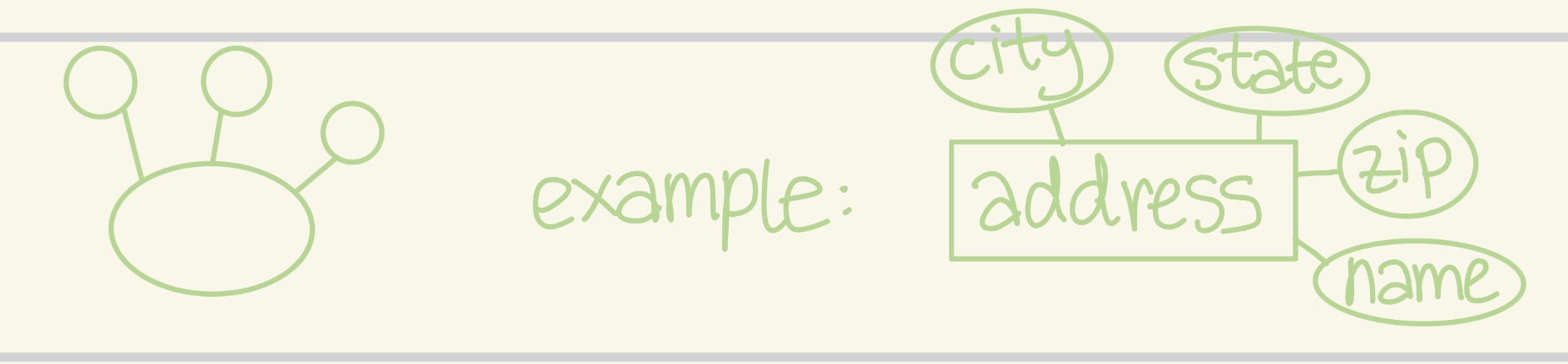
Multi-valued attribute
An attribute where an entity may have multiple values
Key attributes
An attribute of an entity type for which each entity must have a unique value
Candidate key
A single column or a group of multiple columns that uniquely identify each table record.
In other words, it is a key that can be a primary key.
There are no duplicates, it is unique to each record, and there are no null values
Primary key
Used to uniquely identify each table record.
Must be unique or must have a unique value, and cannot have a null value.
Foreign key
A single column or a group of multiple columns corresponding to the value of the primary key in another table
Alternate key
A secondary key after determining a primary key
Super key
A single column or a group of multiple columns that can uniquely identify each table record.
Similar to a candidate key, but it must meet uniqueness
Unique key
The same as a primary key, but can accept up to one null value