Multicultural health exam 1
 Call Kai
 Learn
Learn Practice Test
 Spaced Repetition
 Match
Match Flashcards
 Knowt Play
1/45

There's no tags or description
Looks like no tags are added yet.
Name | Mastery | Learn | Test | Matching | Spaced | Call with Kai | Chat |
|---|
No analytics yet
Send a link to your students to track their progress
46 Terms
multicultural health
providing medical and wellness services in a sensitive, knowledgeable and nonjudgemental way
culture
everything that makes us who we are
race
physical characteristics, genetic makeup (social construct), created to make a hierarchy
ethnicity
social characteristics shared by a group, believe certain practices (not necessarily what we are born into)
cultural ethnocentricity
belief that ones culture is superior to all
acculturation
how familiar you become with new culture and how you adapt
intersectionality
compounding advantage or disadvantage, model that shows why a black women wasn’t hired

cultural adaptations
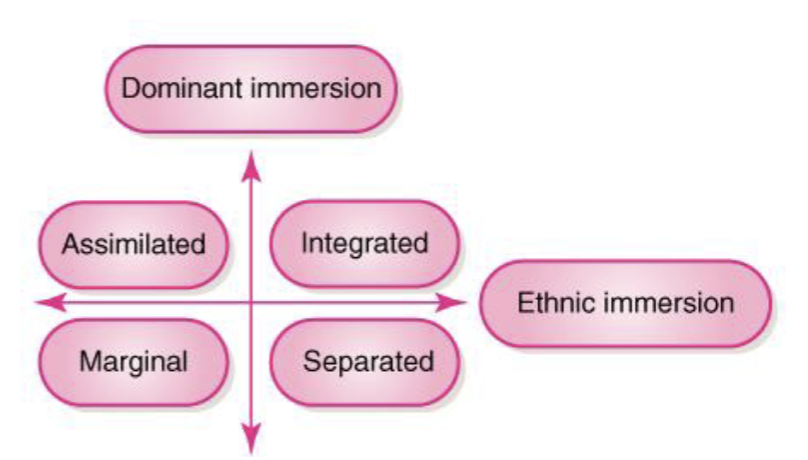
health equity
everyone having a fair and just opportunity to be as healthy as possible
health disparities
measurable. preventable differences in health outcomes, disease burden, and healthcare access that adversely affects socially and economically disadvantaged population groups
Federal poverty line
income measure set each year by the U.S. to decide who qualifies for public assistance programs
42% of U.S. household struggle to make ends meet
15% alice in arkansas
ALICE
Asset limited income constrained employed, representing working individuals and families who earn more than the official Federal Poverty Level but still cannot afford basic household necessities.
29% of households nationwide in 2022 are alice
28% alice in arkansas
social capital
the connections, networks, and relationships among people, and the value they provide. source of power and influence that helps people “get by” or “get ahead”. its not what you know but who you know
three types of social capital
bonding: close ties, often within social groups
bridging: crosses divides between social groups
linking: connections to positions of power and authority
cultural relativism
belief that all cultures are equal
cultural imposition
when one cultural group usually the majority group, forces their cultural views on another culture
race
a social construct used to group people who gets what and who deserves what
racism
a form of prejudice that generally includes negative emotional reactions to members of the group
beliefs
thinking one race is better or more deserving
behaviors
treating others unequally because of race
structures
laws, policies, and systems that uphold racial inequity
colorblindness
“I don’t see color, I just see people”, this erases a persons identity, makes the dominant culture feel comfortable and able to deny cultural differences. It means I can’t see differences, disparities, inequalities, history of violence and current trauma.
gender
a group of people in a society who share particular qualities or ways of behaving which that society associates with being male, female, or another identity
sex
the physical state of being either male, female, or intersex
sexism
actions based on teh belief that the members of one sex are less intelligent, able, skillful etc. that make the members of the other sex, especially that women are less able than men
patriarchal ideology
barbie movie, men have more power, dominance, and privilege than women. Social system where men hold primary power and predominate roles of political authority.
hostile sexism
an overt, antagonistic prejudice that devalues women and punishes those who challenge traditional gender roles or male power
benevolent sexism
an attitude toward women that appears polite, kind, or complimentary on the surface, but actually relies on traditional stereotypes that view women as weak, incompetent, or dependent on men
ethics
the study of moral principals that help define what is right, wrong, good, or bad in human conduct
respect
showing care, value, and polite regard for people, rules, and property
veracity
truthfulness, accuracy, or conformity to fact
fidelity
faithfulness, loyalty, or exact adherence to a fact, standard, or original
beneficence
how good is good enough?
non-maleficence
no practitioner will ever set out to harm a patient
autonomy
a legally blind patient refuses to wear glasses and continues driving a car
justice
how do I decide the fairness of the allocation of time and resources
cultural competence
the process of becoming aware of our culture and how we communicate that awareness to the rest of the world
implicit bias
occurs automatically and unintentionally that nevertheless affects judgement, decisions unconsciously
5 key characteristics of implicit bias
1- Inherent biases are pervasive.Everyone possesses them, even people with avowed commitments to impartiality such as judges.
2- Implicit and explicit biases are related but distinct mental constructs. They are not mutually exclusive and may even reinforce each
other.
3- The implicit associations we hold do not necessarily align with our stated beliefs or even reflect stances we would explicitly
endorse.
4- We generally tend to hold implicit biases that favor our ingroup, though research has shown that we can still hold implicit biases against our ingroup.
5- Implicit biases are malleable. Our brains are incredibly complex, and the implicit associations that we have formed can be gradually unlearned through a variety of de-biasing techniques.
stereotyping
Over simplified conception, opinion, or belief about some aspect of an individual or group
generalization
Rules that groups adopt about other groups, is a point, must see if the individual fits the pattern; types of hypothesis of what we expect to encounter when we interact with a certain culture
target populations
groups that are historically “targeted” as less than because of their race, gender, sexual orientation, role, class, ability or other type of difference
people of color, poor/working class, women, lesbian, gay, transgender, bisexual, people w/ disability, non-christian, people over 40
non-target populations
groups most likely to receive unearned privileges and benefits because of group membership
white people, middle class, men, heterosexual people, people w/o disability, christian, young people, etc.
oppression
the unjust or cruel exercise of power, authority, or force over individuals or groups, often sustained through systemic and institutional structures
4 levels of oppression
personal- feelings, beliefs, values
interpersonal- actions, behaviors, language
institutional- rules, policies, procedures
cultural- collective ideas about what is normal, true, right, beautiful
privilege
a special right, advantage, or immunity granted to or enjoyed by a particular person or group