AV Blocks (DM)
 Call Kai
 Learn
Learn Practice Test
 Spaced Repetition
 Match
Match Flashcards
 Knowt Play
1/34

There's no tags or description
Looks like no tags are added yet.
Name | Mastery | Learn | Test | Matching | Spaced | Call with Kai |
|---|
No analytics yet
Send a link to your students to track their progress
35 Terms
Heart Blocks Rhythms
The sinoatrial (SA) node generates impulses, but they are blocked or delayed in an area of the hearts electrical conduction system
most usual form of heart block
First-Degree AV Block
What is happening in First-Degree Block
excessive conduction delay in the AV node
Impulse conduction between the atria and the bundle of His is delayed at the level of the AV node
What heart block is not technically a dysryhtmia
First Degree Heart Block
Causes of First Degree AV Block
Young Athletes
Medications (BBs, CCBs, digoxin)
What is the hallmark of First Degree Block
Prolonged PR > 0.20 sec (5sb)
Characteristics of First Degree AV Block
Rate of underlying rhythm
Regular rhythm
P waves before QRS, upright, and uniform
PR > 0.20 sec
QRS are uniform and narrows (< 0.12 sec)
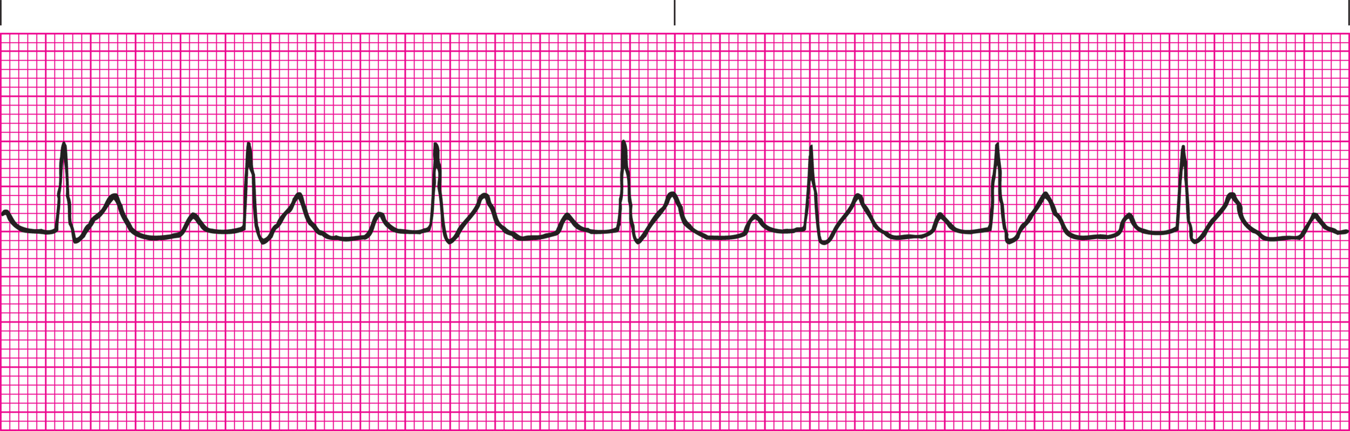
First Degree AV Block
Second-Degree Heart Block (Type I)
The progressive delay of the electrical impulse at the AV node produces an increase in the length of the PR interval
PR interval continues to increase in length until the impulse is not conducted or the QRS complex is "dropped"
What rhythm is referred to as Wenckebach
Second Degree AV Block Type 1
Cause of Second Degree AV Block Type 1
Abnormal AV Condition
AV ischemia
Digitalis therapy
Increased vagal tone
Characterisitics of Second Degree AV Block Type 1
Atrial rate is normal | Ventricular is slower
Atrial is regualr | Ventricular is irregular
P waves before each QRS and upright and uniform (if conducted)
PR progresses longer until QRS is not conducted
QRS are uniform and narrow (< 0.12 sec)
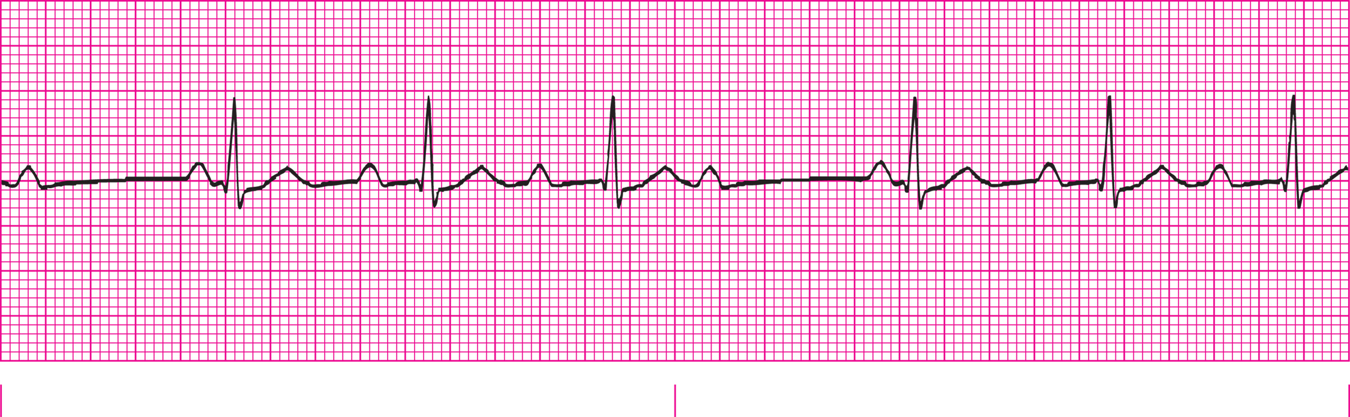
Second Degree AV Block Type 1
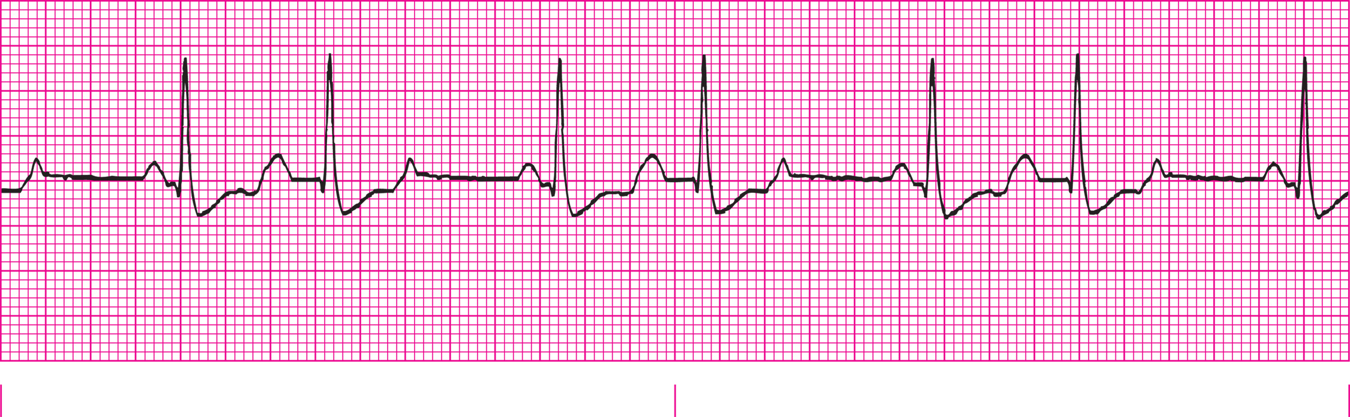
Second Degree AV Block Type 1
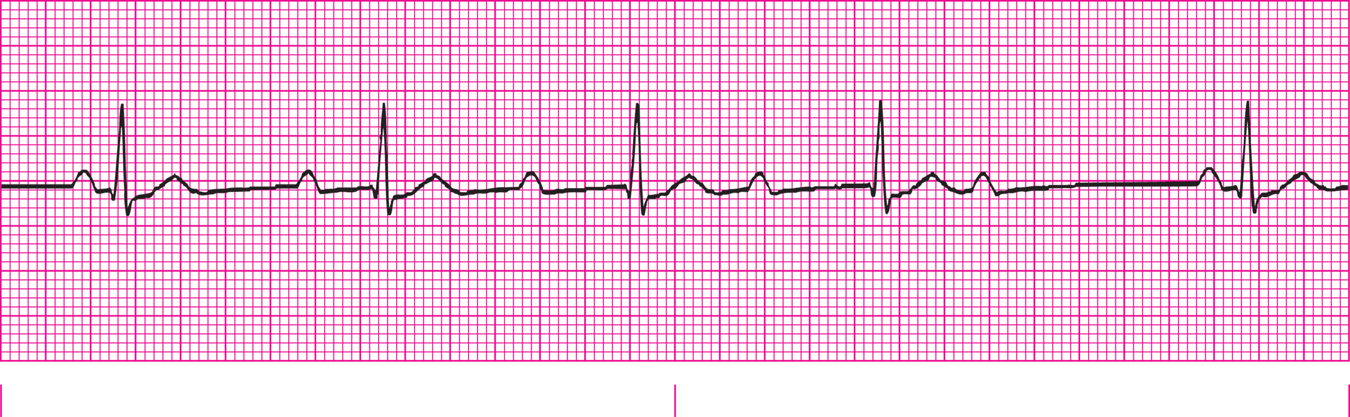
Second Degree AV Block Type 1
Second-Degree AV Block (Mobitz Type II)
intermittent interruption of conduction near or below the AV junction
SA node is generating electrical impulses at a regular rate
Some P waves are not followed by a QRS complex
What does a Second Degree AV BLock Mobitz 2 indicate
Increase risk for complete heart block
What is the ratio often seen with Second Degree AV Block Mobitz 2
2:1
3:1
4:1
Causes of Second Degree Block Mobitz 2
AMI
Septal Wall Necrosis
Acute Myocarditis
Advanced Artery Disease
Characteristics of Second Degree AV Block Mobitz Type 2
Atrial rate is normal | Ventricular can be bradycardic
Atrial rhythm is normal | Ventricular is irregular
P waves before each QRS but not all P waves are followed by QRS, all are upright and uniform
PR is constant
QRS is uniform and narrow (< 0.12) when present
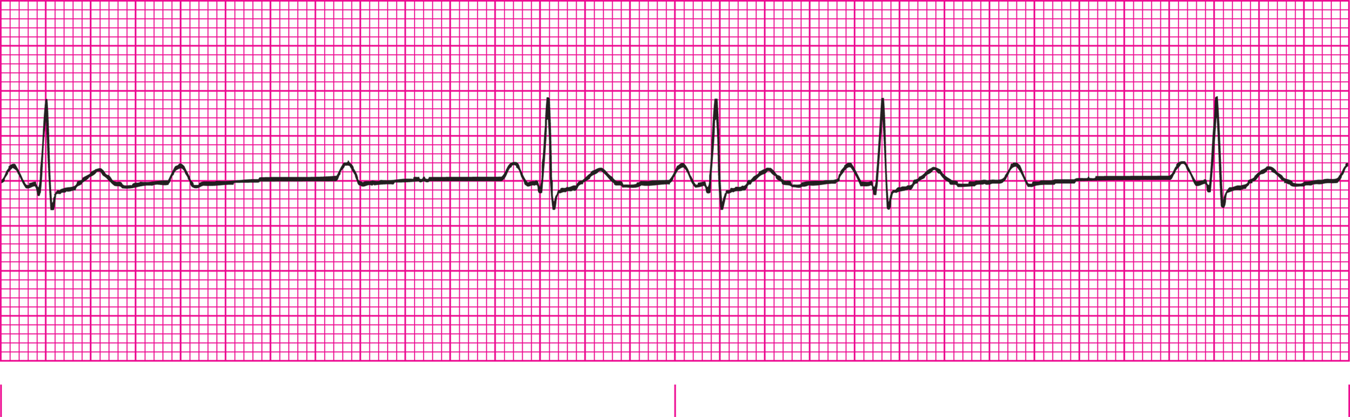
Second Degree AV Block Mobitz Type 2
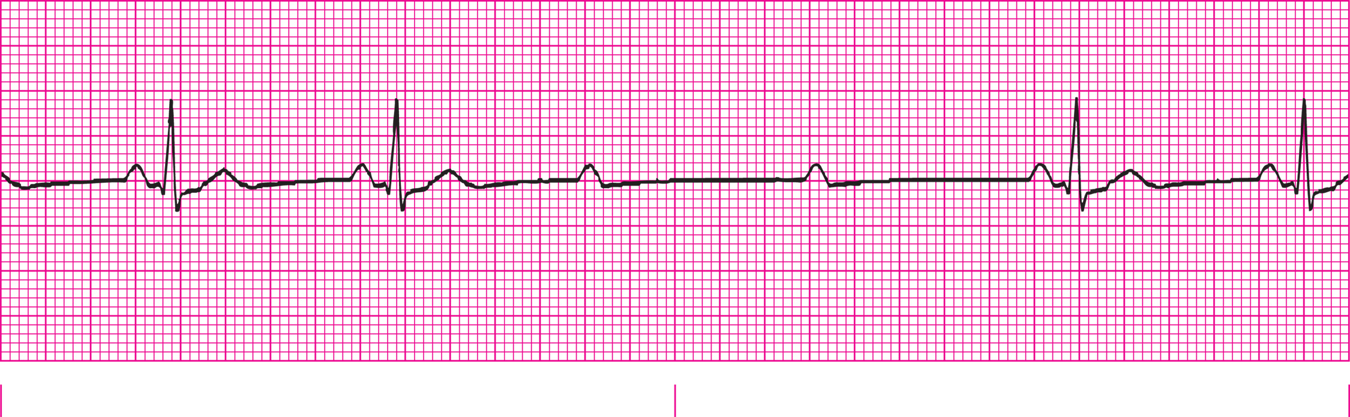
Second Degree AV Block Mobitz Type 2
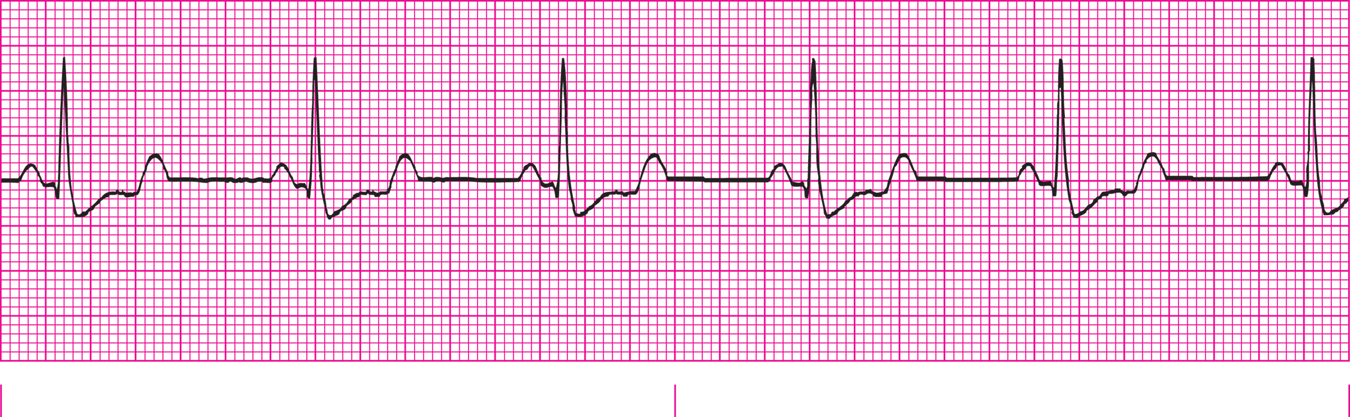
Second Degree AV Block Mobitz Type 2
What isthe most serious heart block
Complete / Third Degree
Third Degree Heart Block often progress to
Asystole
Third-Degree AV Block (Complete)
Atria and ventricles are completely blocked and separated from each other electrically and beat independently of each other
SA node fires at 60 to 100 BPM
Ventricles paced by an escape pacemaker either at junctional tissues (narrow QRS complex) or ventricles (wide QRS complex)
What rhythm is also called AV dissociation
Third-Degree AV Block
Charaterisitcs of Third Degree AV Block
Atrial Rate = 60-100 bpm | Ventricular rate depends on pacemaker
Atrial and ventricular rhythm is regualr
P waves are upright and uniform but have no relationship with QRS
PR interval has no consistency
QRS are uniform but can be narrow or wide depending on site
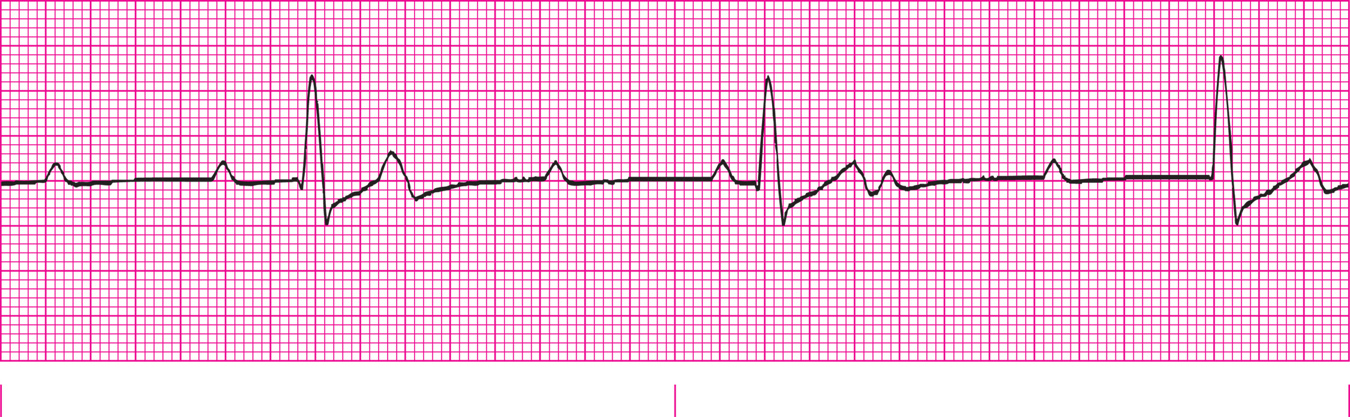
Third-Degree (Complete) Heart Block
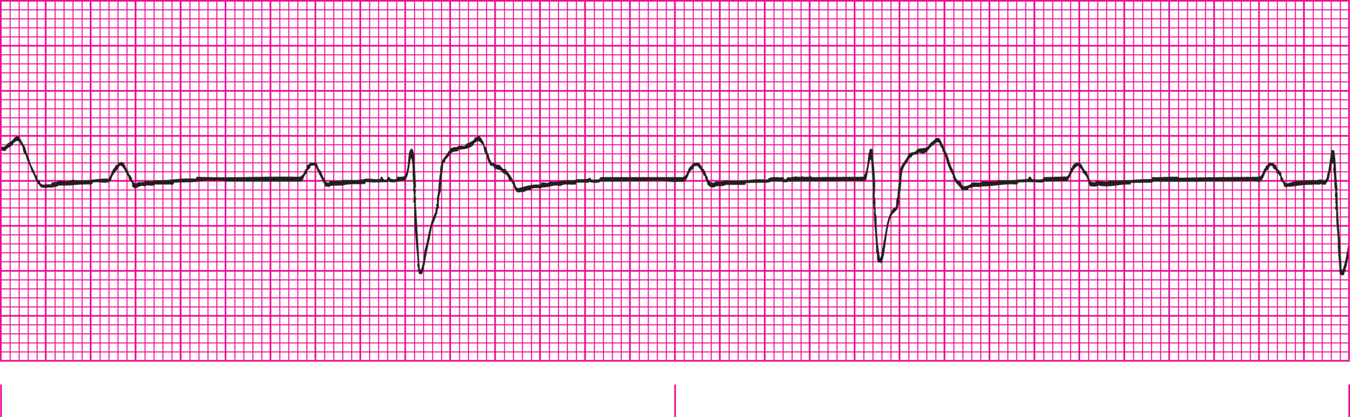
Third-Degree (Complete) Heart Block
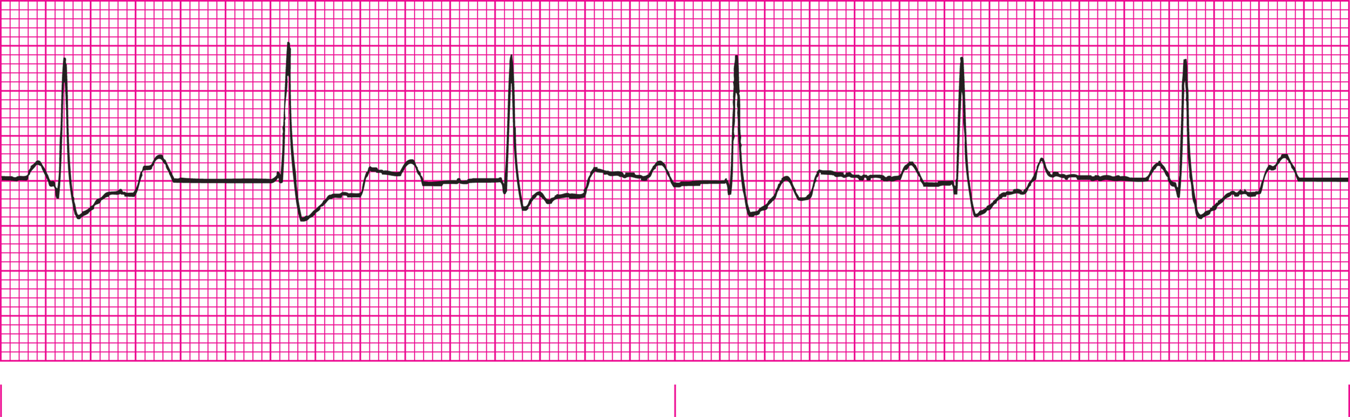
Third-Degree (Complete)
Heart Block
When does First Degree Blocks need to be carefully watched
AMI
If a patient has a third degree AV block with narrow QRS and asymptomatic, where si the site of origin
AV junction
Treatment for Complete Heart Blcok
Atropine
Pacing
After transcutanous pacing, what is done for third degree block
Transvenous pacemaker