QUIZLET DMI 50b Final Version!!!!!
 Call Kai
 Learn
Learn Practice Test
 Spaced Repetition
 Match
Match Flashcards
 Knowt Play
1/280

There's no tags or description
Looks like no tags are added yet.
Name | Mastery | Learn | Test | Matching | Spaced | Call with Kai | Chat |
|---|
No analytics yet
Send a link to your students to track their progress
281 Terms
What is the difference between a conductor and an insulator?
A conductor allows free flow of electrons, while an insulator prohibits it.
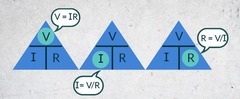
What is Ohm's Law?
V = IR, where V is voltage, I is current, and R is resistance.
What is the SI unit of electric resistance?
Ohm (Ω).
What is the difference between direct current (DC) and alternating current (AC)?
DC flows in one direction only, while AC changes direction with changing polarity.
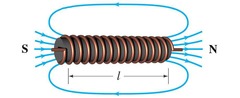
What is a solenoid?
A coil of wire with electric current that produces a magnetic field.
Electromagnetic induction
the process where a changing magnetic field induces a voltage in a conductor
What is the role of a transformer?
To change the intensity of alternating voltage and current.
What is the difference between a step-up transformer and a step-down transformer?
A step-up transformer increases voltage, while a step-down transformer decreases voltage.
What is the purpose of the filament circuit in an x-ray machine?
To adjust the current to mA ratings and produce thermionic emission from the filament wire.
What is the significance of the line compensator in x-ray imaging systems?
It maintains the accurate voltage required for consistent production of high-quality images.
What is the relationship between voltage and the number of turns in a transformer?
The change in voltage is directly proportional to the ratio of the number of turns of the secondary coil (Ns) to the primary coil (Np).
What is the role of the timer circuit in an x-ray machine?
It controls the amount of time that the tube is energized and terminates the exposure.
How do you convert milliseconds to seconds?
Divide the number of milliseconds by 1000 (e.g., 1000 ms = 1 sec).
What is the formula for calculating electric current in terms of voltage and resistance?
I = V/R.
What is the purpose of a rectifier in an x-ray machine?
To convert alternating current (AC) to direct current (DC).
What is the definition of electric potential?
Also known as electromotive force, measured in volts (V).
What is the unit of magnetic force strength?
Tesla (T).
What happens to the magnetic field lines when current is applied to a loop of wire?
Magnetic field lines form circles around each section of the wire and overlap inside the center, strengthening the magnetic field.
What does the term 'circuit' refer to in electricity?
A closed path for electron flow.
What is the function of the main circuit in an x-ray machine?
It modifies incoming current to produce x-rays.
What is the significance of the mAs timer in x-ray imaging?
It provides the highest mA for the shortest exposure time and terminates the exposure.
What initiates exposure in an X-ray system?
The exposure switch.
What is the function of the timer in an X-ray system?
It terminates exposure after a set time
What is the purpose of AEC timers?
They monitor time and mA, terminating exposure when the desired mAs is reached.
Step-Up Transformer
a device that increases the voltage from the primary coil to the secondary coil
What is the role of rectification in X-ray systems?
It converts AC to DC current, allowing electrons to flow from cathode to anode.
What are the two types of rectifiers mentioned?
Diode electron tubes and vacuum tubes (obsolete).
What is the function of the high-voltage generator in an X-ray system?
It increases output voltage from the autotransformer to the kVp necessary for X-ray production.
What is the difference between half-wave and full-wave rectification?
Half-wave produces photons only during the positive cycle, while full-wave eliminates dead time.
What is voltage ripple in X-ray generators?
It refers to the fluctuation in voltage output, affecting the quality of X-rays produced.
What is thermionic emission?
The process of boiling off outer-shell electrons from the filament due to heat.
What is the purpose of the focusing cup in the cathode?
To confine the electron cloud to a small area on the target.
What materials are commonly used for filaments in X-ray tubes?
Thoriated tungsten.
What happens when electrons collide with the anode?
They are decelerated, resulting in the production of X-rays.
What is off-focus radiation?
X-rays produced outside the intended focal spot, which can reduce image quality.
What is the role of filtration in X-ray systems?
To control off-focus radiation and improve image quality.
What is the purpose of the anode in the X-ray tube?
To conduct electricity, dissipate heat, and support the target.
What is the impact of the generator type on X-ray production?
It affects the quality and quantity of photons produced.
How does x-ray tube current (mAs) affect heat production?
Production of heat increases directly with increasing x-ray tube current (mAs selection).
At what kVp does characteristic interaction occur with Tungsten or Rhenium?
No characteristic interaction occurs below 69 kVp.
How is x-ray frequency related to wavelength and energy?
X-ray frequency is inversely proportional to wavelength and directly proportional to energy; higher frequency corresponds to shorter wavelength and higher energy.
What is the effect of added filtration on x-ray emission?
Adding filtration reduces x-ray beam intensity while increasing the average energy of the beam.
How is x-ray quality identified numerically?
X-ray quality is identified numerically by the half-value layer (HVL), which is affected by kVp and filtration.
What is primary radiation?
Primary radiation consists of photons that leave the x-ray tube through the window port before interacting with the patient's body.
What is attenuation in the context of x-ray radiation?
Attenuation refers to any decrease in intensity of primary radiation as it travels through the patient.
What is the significance of lead shielding in x-ray production?
Lead shielding is used to minimize leakage radiation to less than 1 mGy (100 mR) per hour at a distance of 1 meter.
What is radiopacity?
The degree of x-ray absorption in a tissue.
What is radiolucency?
The degree of x-ray transmission in a tissue.
How does photon energy affect the probability of photoelectric interaction?
It is inversely proportional to photon energy.
What is distortion in radiography?
Any misrepresentation of anatomical structures, classified as size or shape distortion.
What is size distortion in radiology?
Magnification that can be controlled by Source to Image Distance (SID) and Object to Image Distance (OID).
What causes elongation in radiographic images?
Improper alignment of the central ray (CR) and image receptor.
What is foreshortening in radiography?
When an object appears shorter than its actual size due to improper alignment.
Penumbra
is the fuzzy, partially shaded edge of a shadow, caused because X-rays come from a small but finite-sized focal spot (not a single point)
What is the function of the Ionization Chamber in AEC?
It measures the quantity of radiation that reaches the image receptor and terminates exposure when the desired intensity is reached.
What is the purpose of a back-up timer in AEC?
To prevent overexposure if the AEC fails, usually set to 1.5 times the expected exposure time.
What is the purpose of beam restriction devices?
To restrict the area exposed to the size of the image receptor, reducing scatter radiation.
What is the function of stationary grids in radiography?
To absorb scatter radiation before it interacts with the image receptor.
What materials are used in grid construction?
Radiopaque lead strips alternating with radiolucent materials like aluminum or plastic fibers.
What is grid efficiency?
The ability of a grid to clean up scatter and improve contrast.
What is the grid ratio?
Calculated by the height of the lead strips divided by the distance between them.
When should a radiographic grid be used?
For any anatomical part measuring 10cm or greater, or any technique using 70 kVp or more.
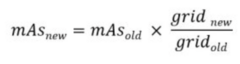
What is the grid conversion factor used for?
To change grids while maintaining a similar density on a subsequent radiographic image.
What is the Moiré effect?
An artifact caused by grid lines appearing in the image.
What are the two basic types of moving grid mechanisms?
Reciprocating grids and oscillating grids.
What is the function of compensating filters?
To even radiographic density with parts that have uneven tissue density or thickness.
What is the role of the image intensifier tube in fluoroscopy?
It converts the image-forming x-ray beam into a high-intensity visible-light image.
What materials are used in the input and output phosphors of the image intensifier?
Input phosphor: cesium iodide (CsI); Output phosphor: zinc cadmium sulfide.
In digital fluoroscopy, what is the purpose of operating the tube in a pulsating mode?
To avoid overload and decrease patient dose.
What happens to the latent image in CR plates after 8 hours?
The information is lost as the latent image fades.
What is photostimulable luminescence (PSL)?
The process where trapped electrons in a metastable state emit light when stimulated.
What mechanical feature of a CR reader prevents banding artifacts?
Slow scan at constant speed.
What optical feature is critical for ensuring high spatial resolution in a CR reader?
A small laser beam diameter (less than 100 μm).
What is the purpose of filtering emitted light in a CR reader?
To remove long wave photons and suppress noise, improving the signal-to-noise ratio.
What is the role of the photomultiplier tube (PMT) in digital imaging?
To amplify the light signal emitted from the imaging plate.
What is the purpose of flooding the phosphor with intense white light in CR?
To remove any residual latent image and prevent ghosting.
What is the effect of increased laser beam intensity on the PSL signal?
It increases the intensity of the emitted signal.
What are mechanical defects that can affect digital imaging?
Slow scan driver and fast scan driver.
What is the role of the scintillator in digital radiography?
It captures X-ray photons and converts them into light.
What technology does Computed Radiography (CR) use?
Photostimulable phosphor (PSP) technology.
What is the function of a Charged-Coupled Device (CCD) in digital imaging?
It detects and responds to low levels of visible light, allowing for decreased patient dose.
What is the process of indirect digital radiography?
X-rays are first converted to light and then to an electronic signal.
What is the role of Amorphous Selenium in direct digital radiography?
It converts X-rays directly into an electronic signal.
How does the size of pixels affect spatial resolution in digital imaging?
As pixel size reduces, spatial resolution increases, but patient dose also increases.
What is the capture efficiency of Cesium Iodide Charged-Coupled Devices?
High X-ray capture efficiency and good spatial resolution (5 lp/mm).
What is the difference between direct and indirect digital radiography?
Direct DR converts X-rays directly to an electronic signal, while indirect DR first converts X-rays to light.
What are the components of a digital imaging system?
X-ray tube, detector arrays, scintillator, and CCD.
What is the impact of pixel size on patient dose in digital imaging?
Smaller pixels can lead to increased patient dose due to higher sensitivity.
What is the function of the TFT in digital radiography?
It acts as a switch to read the charge created by X-ray interaction with the detector.
What is the advantage of using CsI in digital radiography?
It has high photoelectric capture, resulting in lower radiation doses.
What does the term 'scintillator' refer to in digital imaging?
A material that emits light when it absorbs X-rays.
Electrostatics
The study of stationary electrons or how electric charges behave
Electrification
The process of adding or removing electrons from an object
Electrified
Object with too many or too few electrons
What is the symbol for electric ground?

Electric ground
An object that can always accept electric charges
What are the 4 electrostatic laws?
1. The electric field points outward from a positive charge & inward to a negative charge
2. Unlike charges attract: like charges repel
3. Electrostatic force is strong when objects are close but rapidly decrease when separated
4. Electric charges are distributed evenly throughout an object except areas of high curvature where they are concentrated
Electric potential
Electric charges have POTENTIAL ENERGY
A battery has stored ELECTRIC CHARGES which means it has stored POTENTIAL ENERGY
Electrodynamics
Study of electrons in motion
Conductor
Material that allows electrons to flow