Chronic Obstructive Pulmonary Disease (COPD)
 Call Kai
 Learn
Learn Practice Test
 Spaced Repetition
 Match
Match Flashcards
 Knowt Play
1/13

There's no tags or description
Looks like no tags are added yet.
Name | Mastery | Learn | Test | Matching | Spaced | Call with Kai | Chat |
|---|
No analytics yet
Send a link to your students to track their progress
14 Terms
Define COPD and common causes
Respiratory condition that causes obstructed airflow from the lungs
Most comonly caused by tobacco smoke
Chronic inflammation in lungs can result in emphysema and/or bronchitis
Emphysema - destruction of small passages in the lungs, called alveoli
Bronchitis - inflammation and narrowing of the bronchial tubes and results in mucus production
Individuals with what deficiency have a higher risk of developing COPD?
Alpha-1 antitrypsin (AAT) deficiency (genetic)
AAT protects lungs from damage caused by inflammation
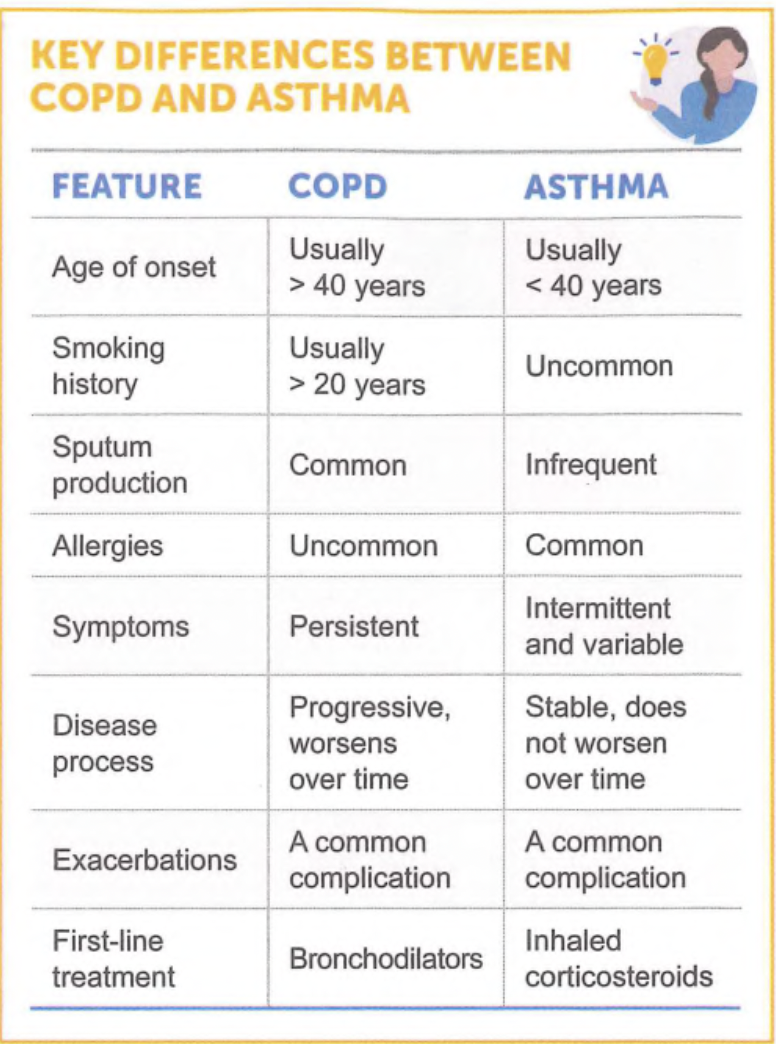
What are the key differences between COPD and asthma?
What test is used to assess lung function and diagnosis of COPD? What measurement confirms diagnosis?
Spirometry - measures the total amount of air a person can breathe out (forced vital capacity, or FVC)
Post-bronchodilator FEV1 / FVC < 0.70 confirms diagnosis of COPD
Define COPD exacerbation. Why are we trying to decrease hospitalization for an exacerbation?
Increase in respiratory symptoms that worsen over < 14 days
Risk of exacerbations increases as airflow limitation worsens
Hospitalization for an exacerbation is associated with an increased risk of death
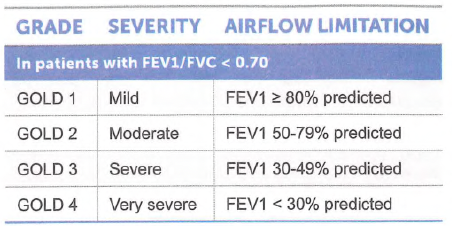
Describe the assessment factors that drive treatment for COPD.
1) Degree of airflow limitation
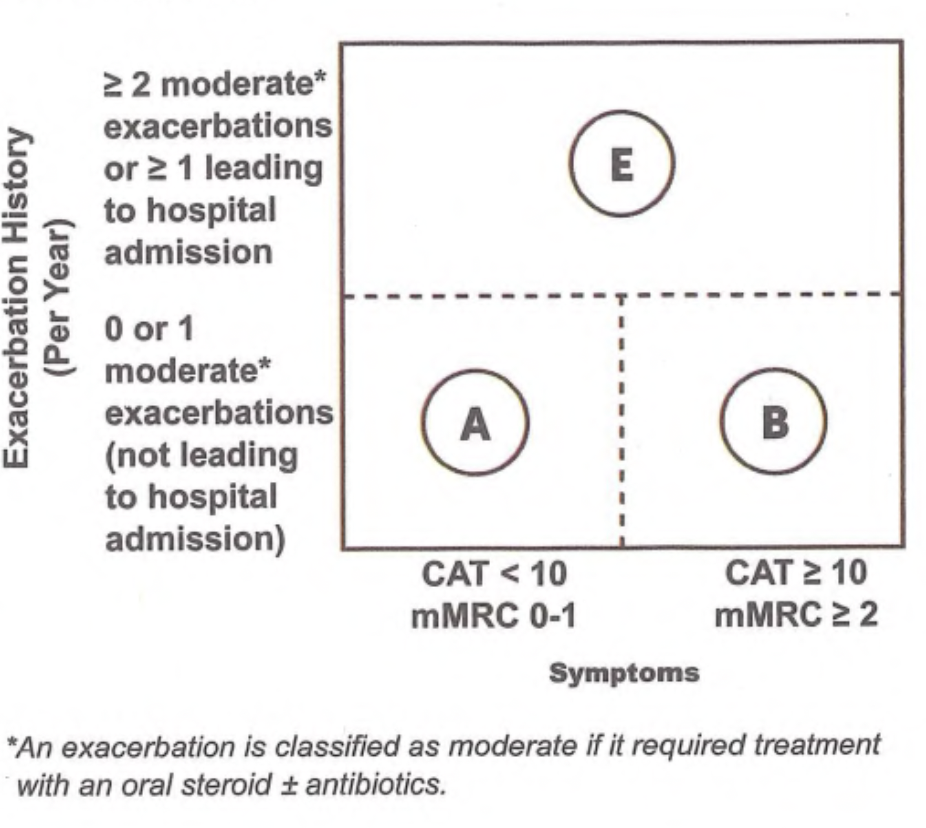
2) Symptom assessment
3) Risk of exacerbations
4) Comorbidities
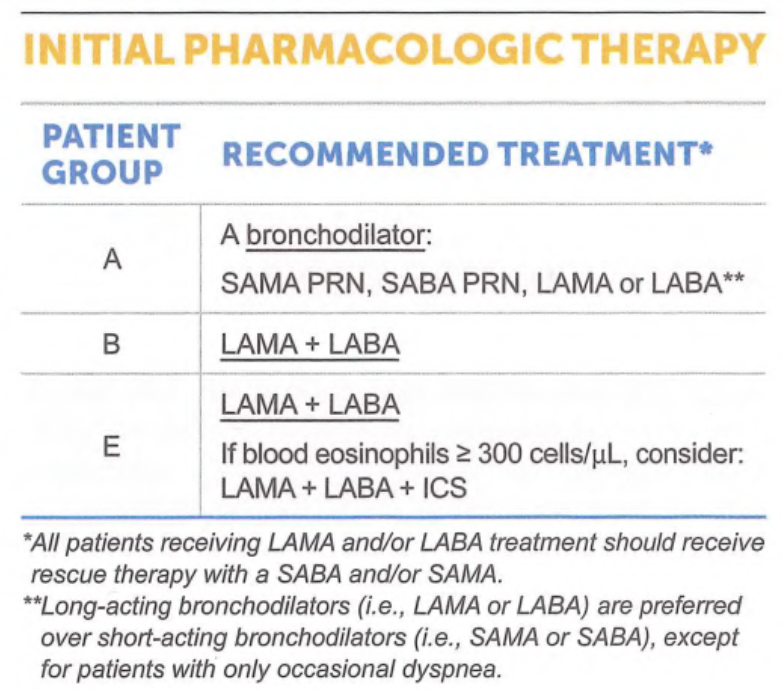
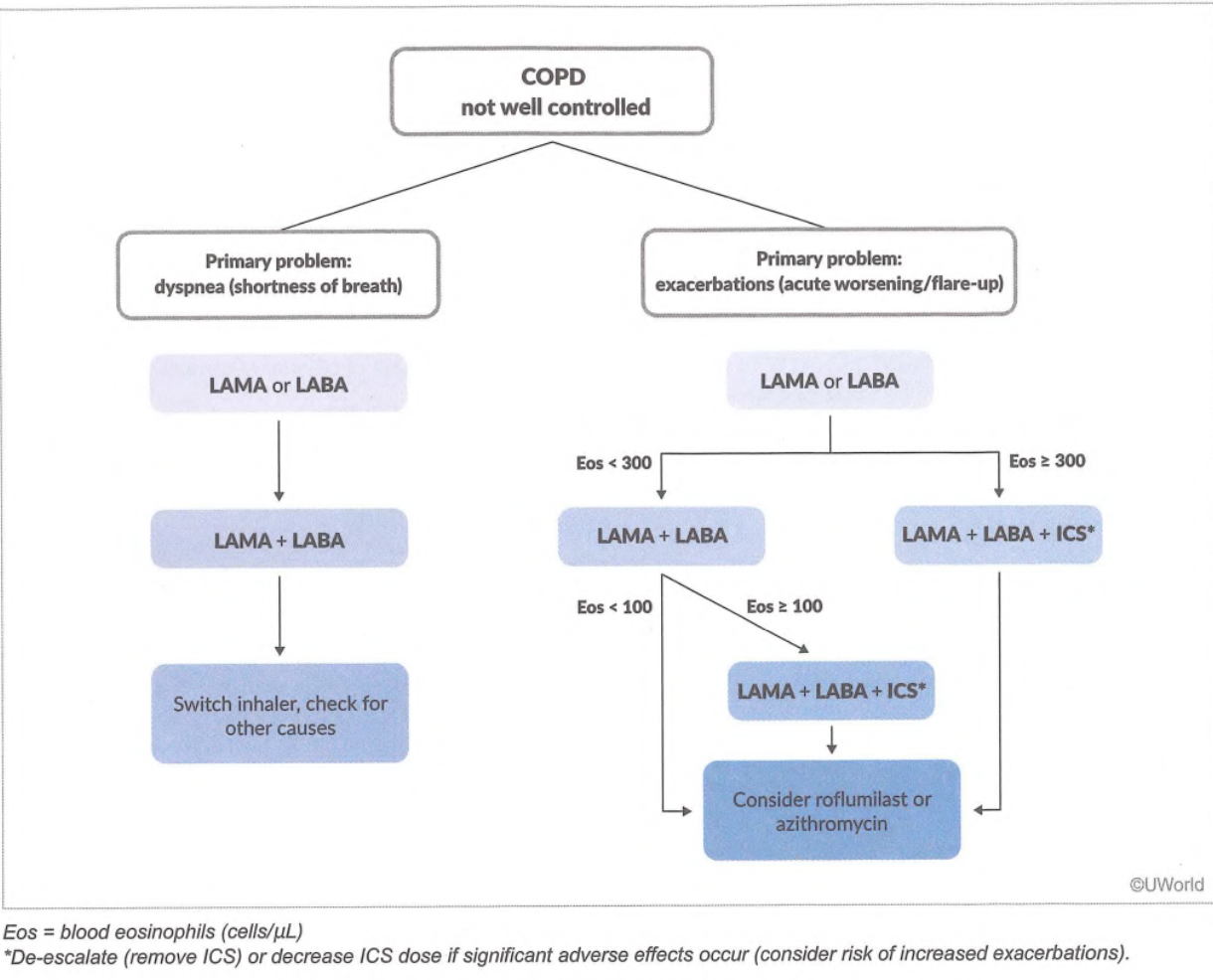
What are the first line treatment for all COPD patients?
Bronchodilators
SABA or SAMA - prn for intermittent symptoms
LABA or LAMA
When is using an ICS indicated for COPD patients?
When is it not recommended and why?
Recommended in select patients with a hx of exacerbation and an eosinophil count (a marker of inflammation) ≥ 300 cells/uL
Not recommended if eosinophil count < 100 cells/uL - no demonstrated benefit
Dupilumab - SC monoclonal antibody that can be used in patients with eosinophilic COPD not well controlled on triple therapy (LABA + LAMA + ICS)
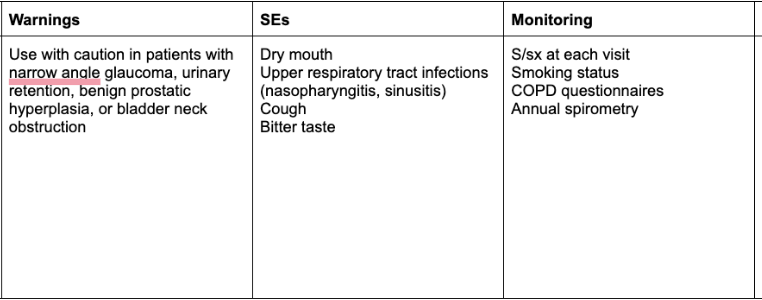
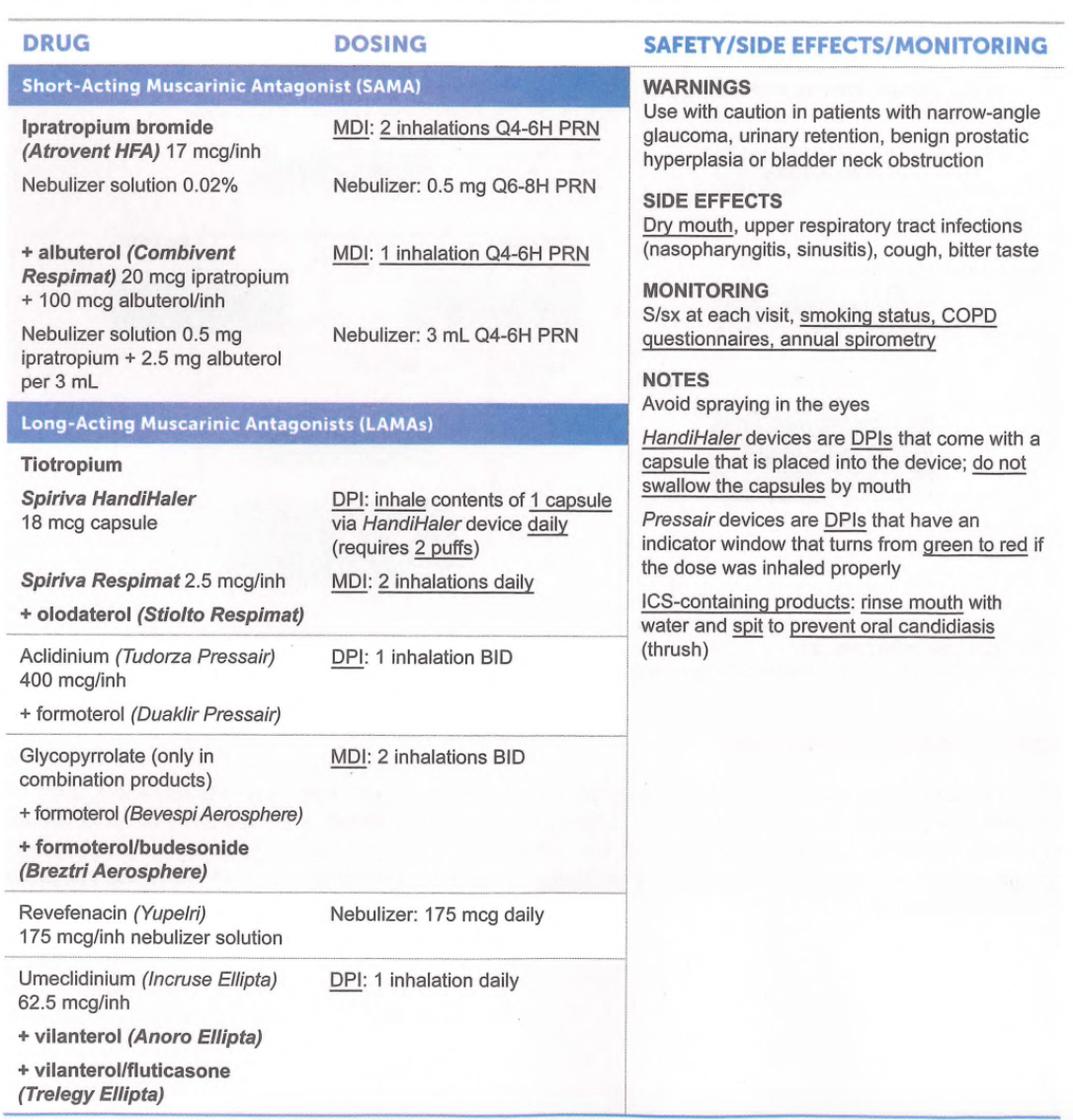
MOA of muscarinic antagonist (anticholinergics)
Cause bronchodilation by blocking the constricting action of acetylcholine at M3 muscarinic receptors in bronchial smooth muscle
MOA of beta-2 agonists
Bind to beta 2 receptors in the lung, causing relaxation of bronchial smooth and bronchodilation
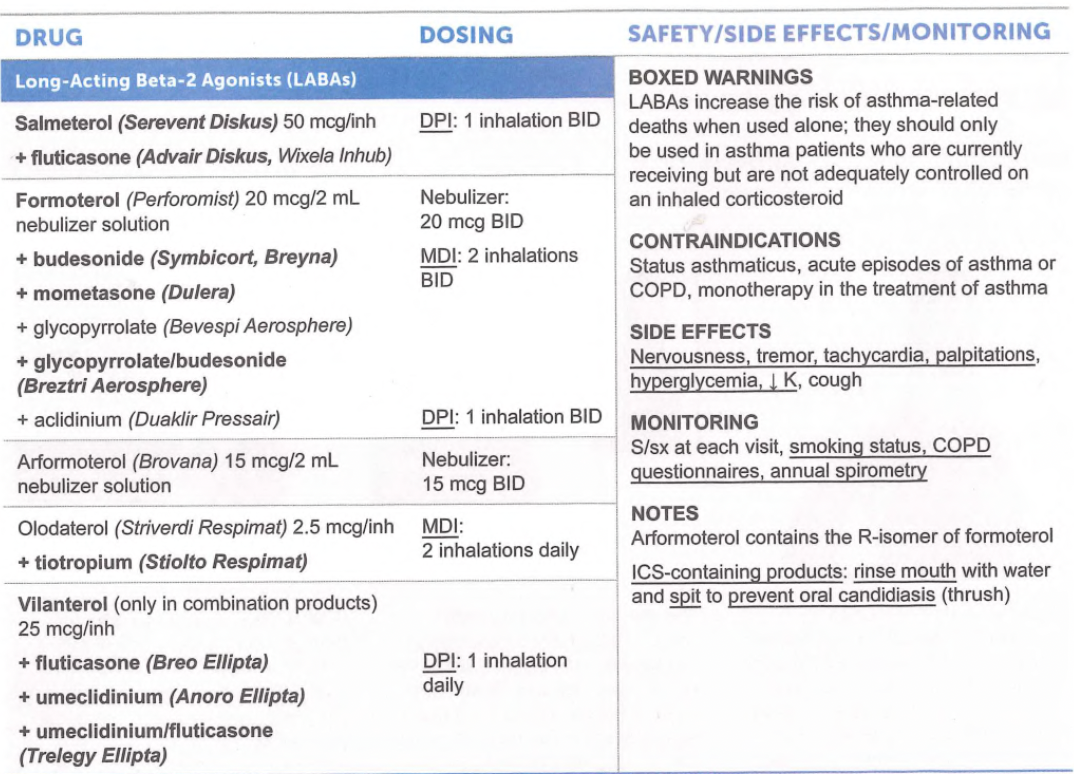
Why can’t LABAs be used monotherapy for asthma?
Increase risk of death in asthma patients
Should only use if currently receiving but are not adequately controlled on an inhaled corticosteroid
Can be used monotherapy ONLY for COPD
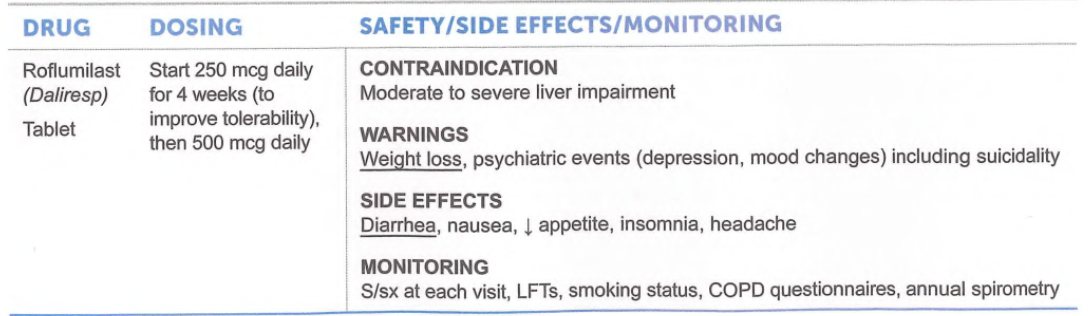
How does roflumilast work and when is it indicated?
Roflumilast - PDE-4 inhibitor that ↑ cAMP levels, leading to reduction in lung inflammation
Should use for very severe COPD - use in combo with at least one long-acting bronchodilator
Roflumilast DDIs
Substrate of CYP450 3A4 and 1A2
Inducers (carbamazepine, phenobarbital, phenytoin, rifampin)
Inhibitors (erythromycin, ketoconazole, fluvoxamine, cimetidine)