Tropical storms
 Call Kai
 Learn
Learn Practice Test
 Spaced Repetition
 Match
Match Flashcards
 Knowt Play
1/7

There's no tags or description
Looks like no tags are added yet.
Name | Mastery | Learn | Test | Matching | Spaced | Call with Kai | Chat |
|---|
No analytics yet
Send a link to your students to track their progress
8 Terms
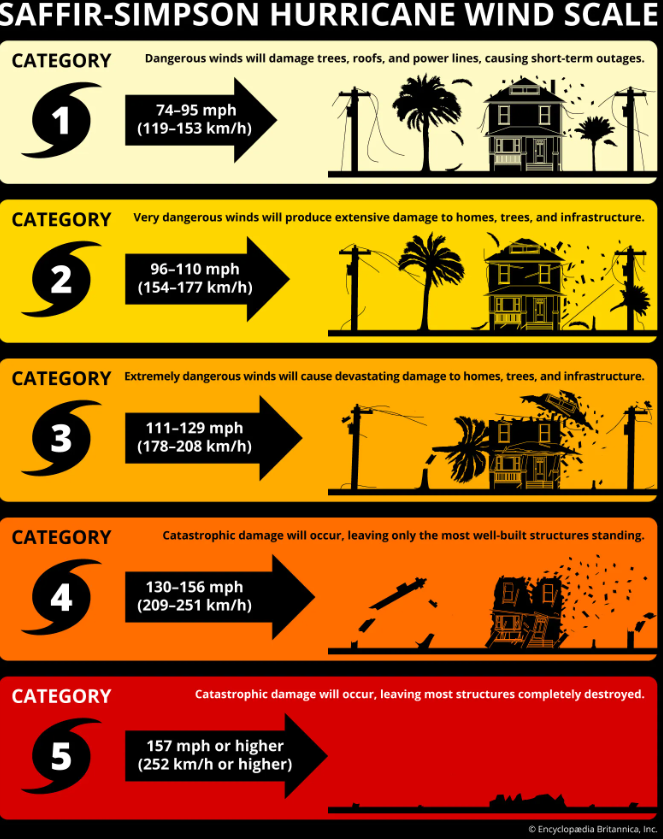
How are tropical storms measured
Saffir Simpson scale
What conditions are needed for a tropical storm to form
At least 27°C sea temp provides heat source and moisture
Warm deep ocean water at least 70m ensures continuous evaporation and energy source
Coriolis effect must be 5°–20° latitude
Low wind sheer
High humidity
How do tropical storms form
Warm ocean air heats air above it so it rises and creates a low-pressure area
Surrounding air replaces rising air and spirals due to Coriolis effect
Rising air condenses forming eyewall of storm and produce heavy rainfall
Condensation releases latent heat which powers rising air strengthening storm
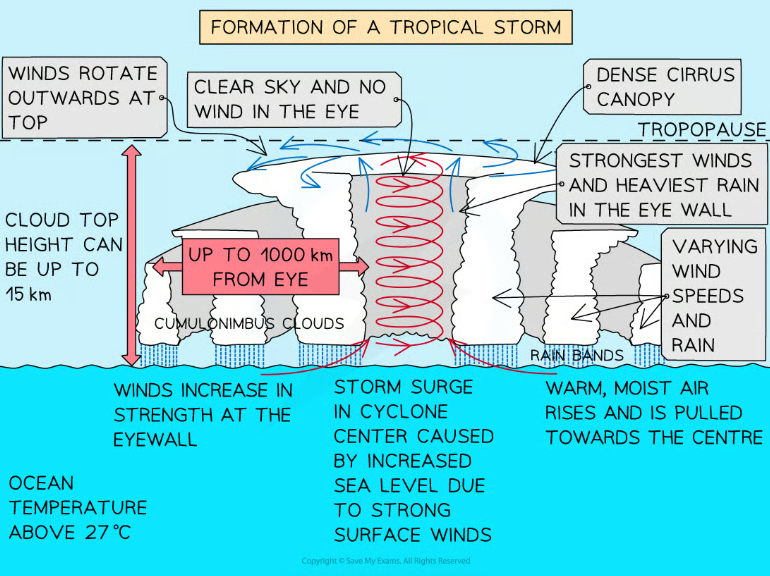
What is the structure of a tropical storm
The eye: Calm clear centre, descending air
Eyewall: Strongest winds and heaviest rain, most intense convection
Rainbands: Bands of thunderstorms spiralling outwards
What hazards do tropical storms cause
Storm surge: Strong winds push seawater towards coast, low pressure causes sea levels to rise, causing coastal flooding
Heavy rainfall: From intense convection and condensation, leads to river flooding and landslides
Strong winds: Up to 74mph wreaking havoc
What is the distribution of the formation of tropical storms
Atlantic Ocean, Pacific Ocean, Indian Ocean
Between the tropics at 5°–30° from equator
Form in the East travel Westward and deflect North and South
Mostly form near the end of Summer
What is the ITCZ
Intertropical convergence zone where trade winds from Northern and Southern hemisphere meet and warm air is forced to rise, leading to cloud formation and heavy rainfall essential for tropical storm formation
How can climate change influence tropical storms
Increase frequency and intensity rising global temperatures warm ocean surfaces, providing more energy for storm development and warmer oceans increase evaporation, leading to more moisture in the atmosphere and therefore stronger winds and heavier rainfall