Unit 1 Earth Science Review
 Call Kai
 Learn
Learn Practice Test
 Spaced Repetition
 Match
Match Flashcards
1/26

Earn XP
Description and Tags
Lab Safety, Measuring, Density, graphing, and SI
Name | Mastery | Learn | Test | Matching | Spaced | Call with Kai | Chat |
|---|

27 Terms
Lab Safety Rules
use of personal protective equipment, handling of chemicals, and emergency protocols.

Which planet has a mass that is almost identical to Earth?
Mars

Which are the two most foreign languages studied?
Spanish and French

Which two outer planets have about the same density?
Uranus and Neptune
What is a qualitative observation?
Descriptive details based on your senses -color, texture, and appearance.
What is a quantitative observation?
Observation that involves measurements or numerical data, such as height, weight, and temperature.
What is an independent variable?
The variable that is changed affects the dependent variable.
What is an dependent variable?
The variable that is measured or observed in an experiment.
What is a hypothesis?
A testable prediction or explanation based on prior knowledge that can be verified through experimentation.
What is evidence?
Information or data (graphs) that support or refute a hypothesis or theory.
A student wants to determine how temperature affects the rate of weathering. What is the independent variable?
The temperature in the experiment.
What is needed to support a claim?
Evidence, data, or observations that substantiate the claim.
What is scientific reasoning?
Process of using logic and evidence to solveproblems and draw conclusions.
How can objects weigh the same but have different sizes?
They have differences in density.
What is density?
mass of an object per unit volume D=m/v
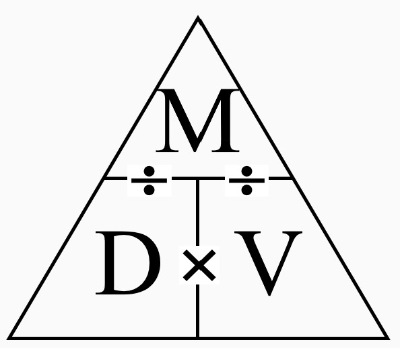
How can objects be different size and shapes but have the same density?
They can be made of the same materialand have the same mass-to-volume ratio.
Why do objects float?
Their density is less than the density of the fluid they are in.
Why does warm air rise?
Warm air rises because it is less dense than cooler air, creating an upward force.
If a mineral has a density of 2 g/ml and a mass of 10 g, what is its volume?
mass/density = 5 mL
A block of wood has a volume of 10 cm3 and a density of 3 g, what is its mass?
mass = density x volume = 30 g
What is mass?
Mass is a measure of the amount of matter in an object - the same no matter the location
What is weight?
Weight is the force exerted by gravity on an object. Varies with location.
If you were on the moon would your mass change?
No, mass remains constant regardless of location.
Why does ice float?
Ice floats because it is less dense than liquid water, allowing it to remain on the surface.
What is the density of water?
The density of water is about 1.0 g/cm3
In a mineral was cut in half, what would happen to its density?
The density of a mineral would remain the same
What happens to an object's density if you only change its mass?
Mass increases, density increases; mass decreases, density decreases