Week 11 diagenesis and metamorphism
 Call Kai
 Learn
Learn Practice Test
 Spaced Repetition
 Match
Match Flashcards
 Knowt Play
1/25

There's no tags or description
Looks like no tags are added yet.
Name | Mastery | Learn | Test | Matching | Spaced | Call with Kai | Chat |
|---|
No analytics yet
Send a link to your students to track their progress
26 Terms
What is protolith
Rock before metamorphism occured
Define metamorphism
changes in the mineralogy and texture occurring in the solid state (no melting)
→ addition of thermal + mechanical energy causing change in equilibrium state
What are the principal changes that occur in metamorphism
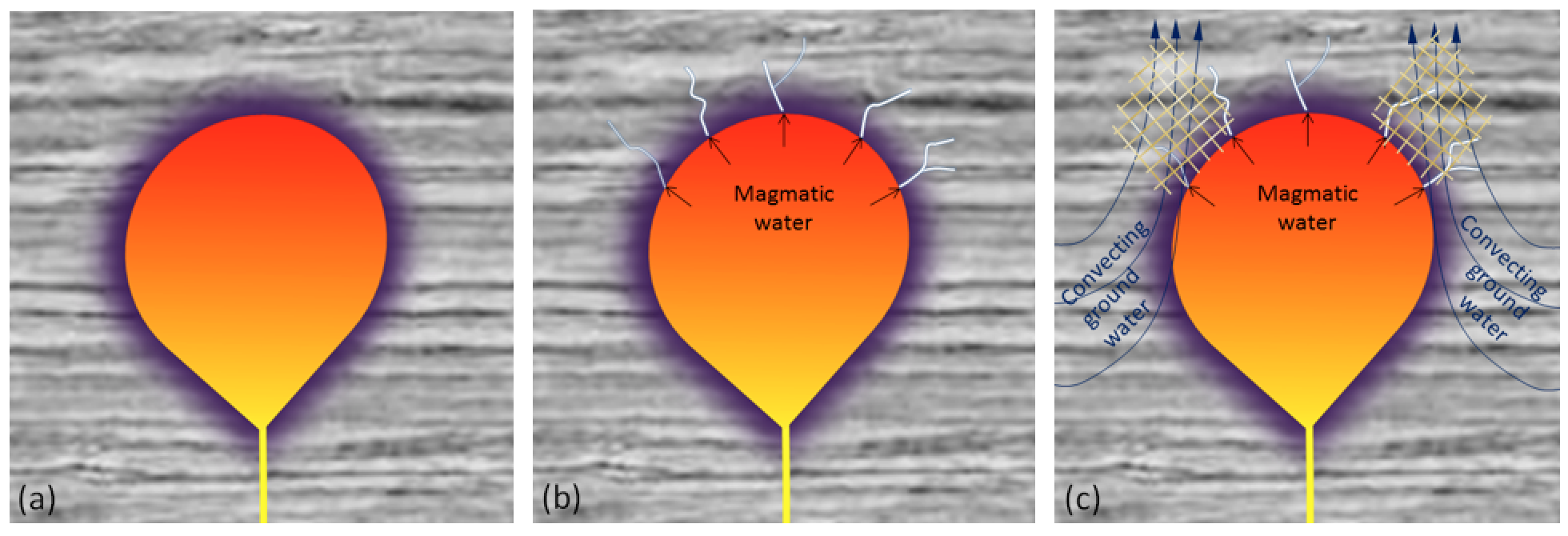
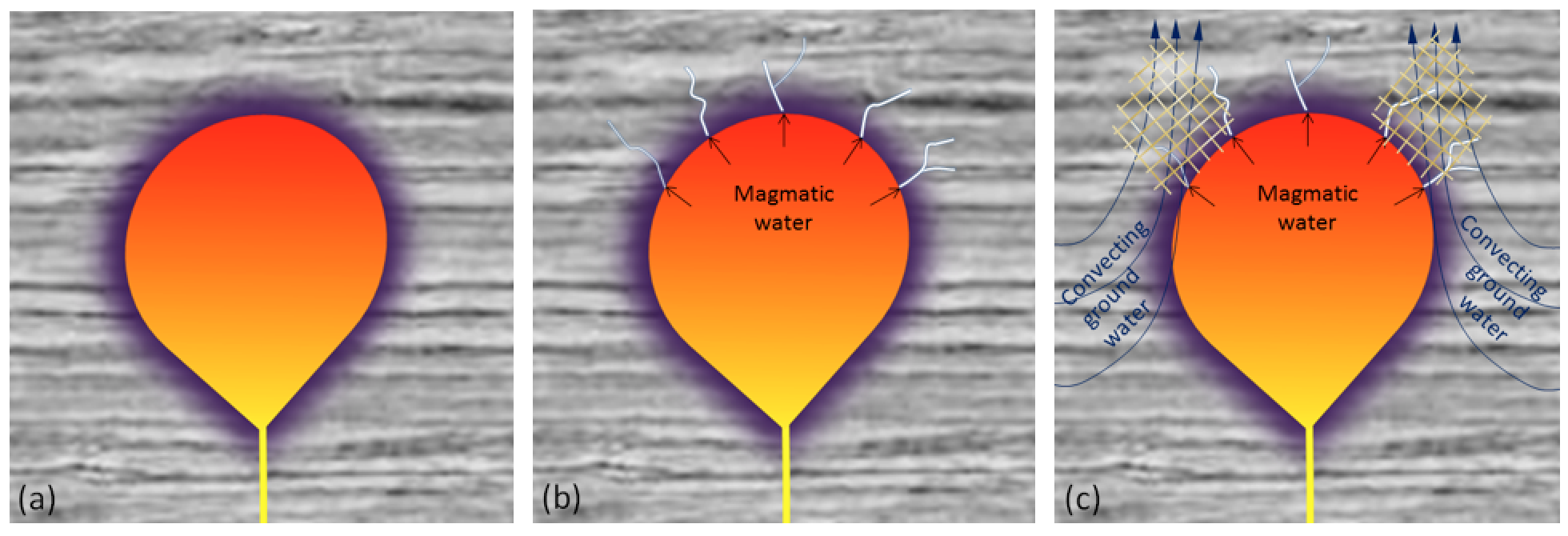
Metamorphism doesn’t change bulk comp of rock, is closed system
→ unless volatiles are lost and added
→ Metasomatism, addition or removal of elements through pumping pore waters
What are the two main processes that occur during metamorphism
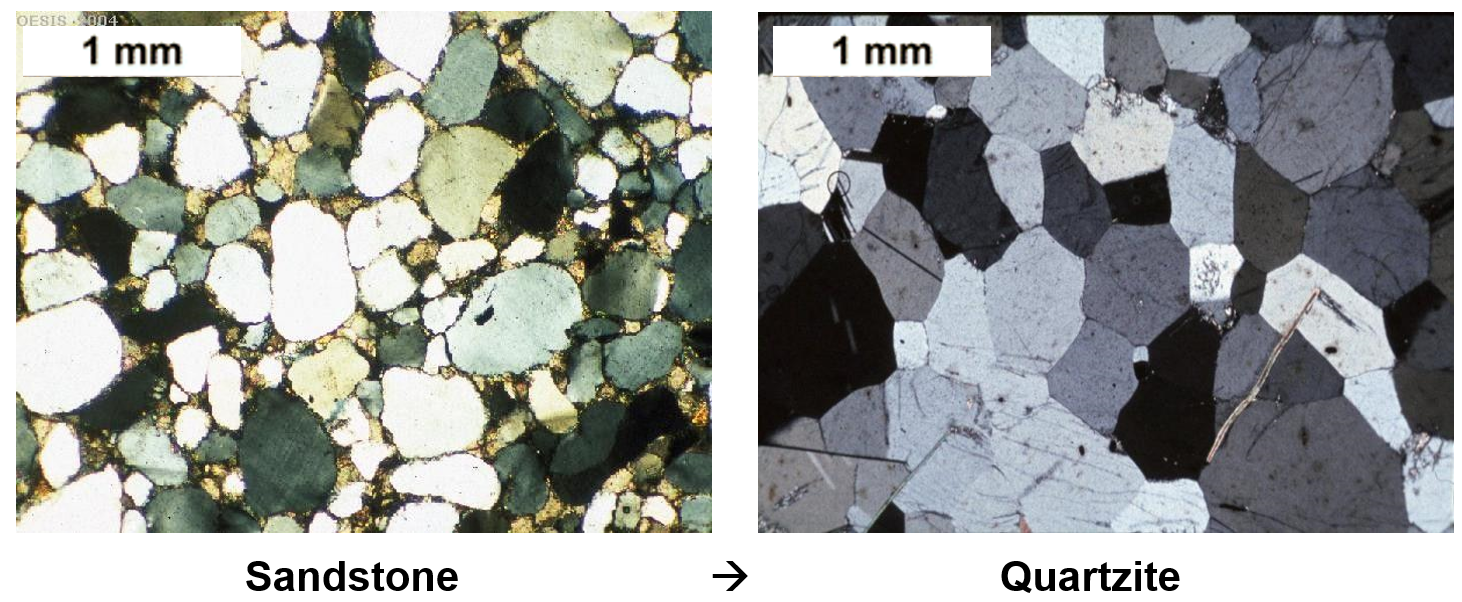
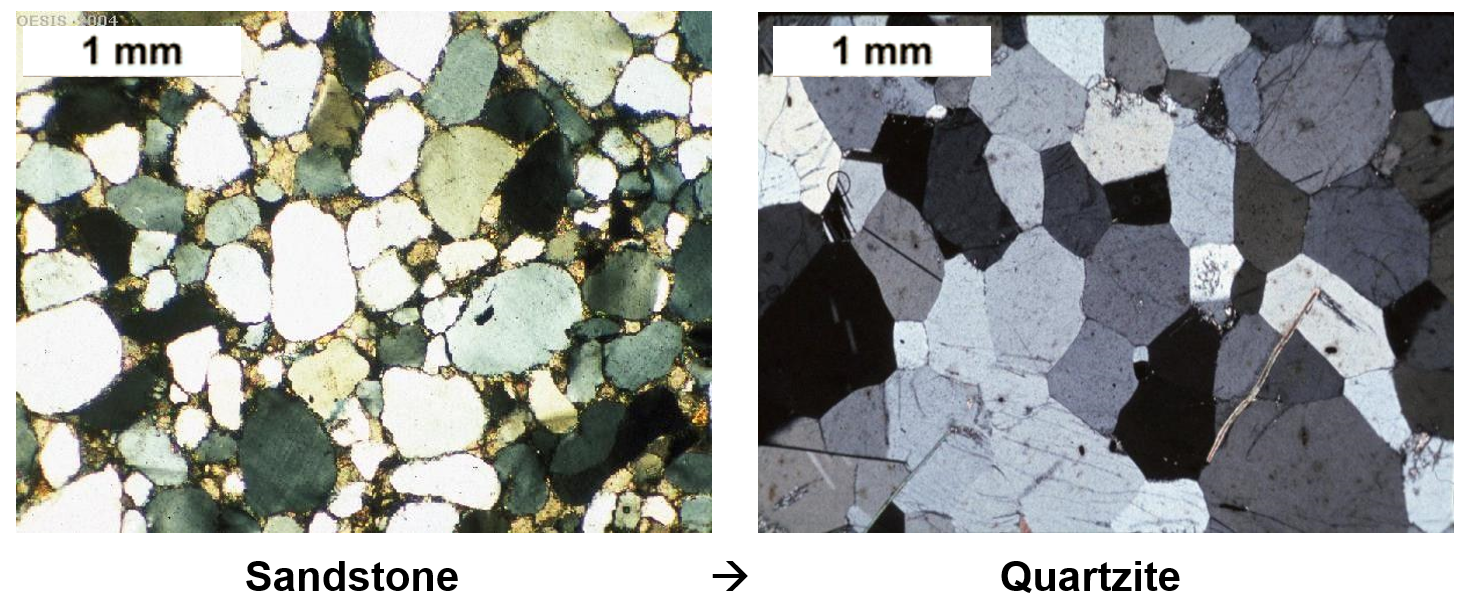
Recrystallisation- existing minerals adopt new textures
→ may have preferred orientation
Neomineralisation- formation of new minerals at the expense of existing (no bulk comp change, only new formula)
→ involves chem reaction between mineral + fluid
→ (x+y)→(z+a)
2 reasons for importance of metamorphism
most abundant rock type
→ important economical mineral deposits
do not undergo retrograde metamorphism (revert back to OG state)
→ study interior earth processes
Explain the 2 ways metamorphism can occur with heat
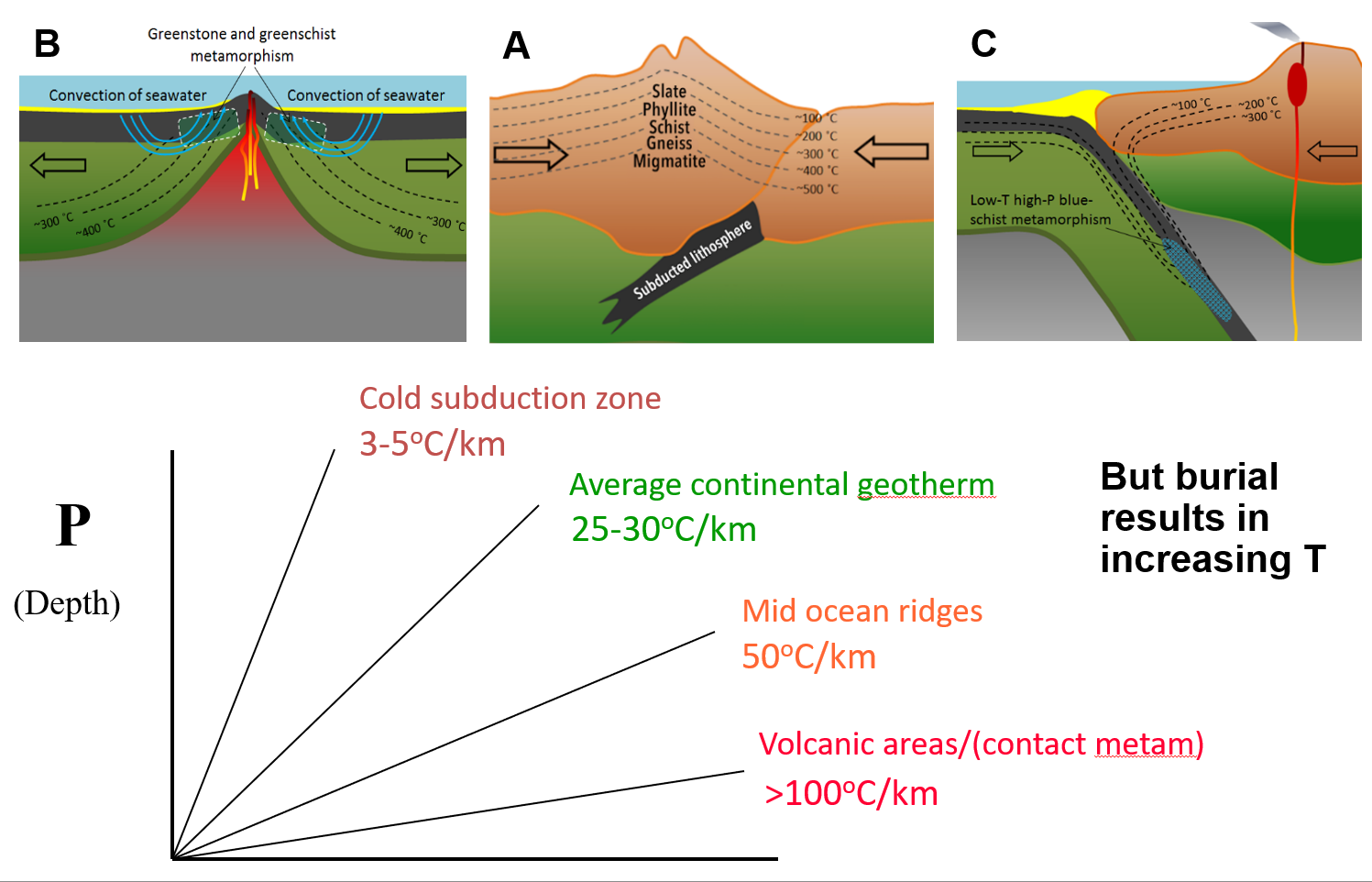
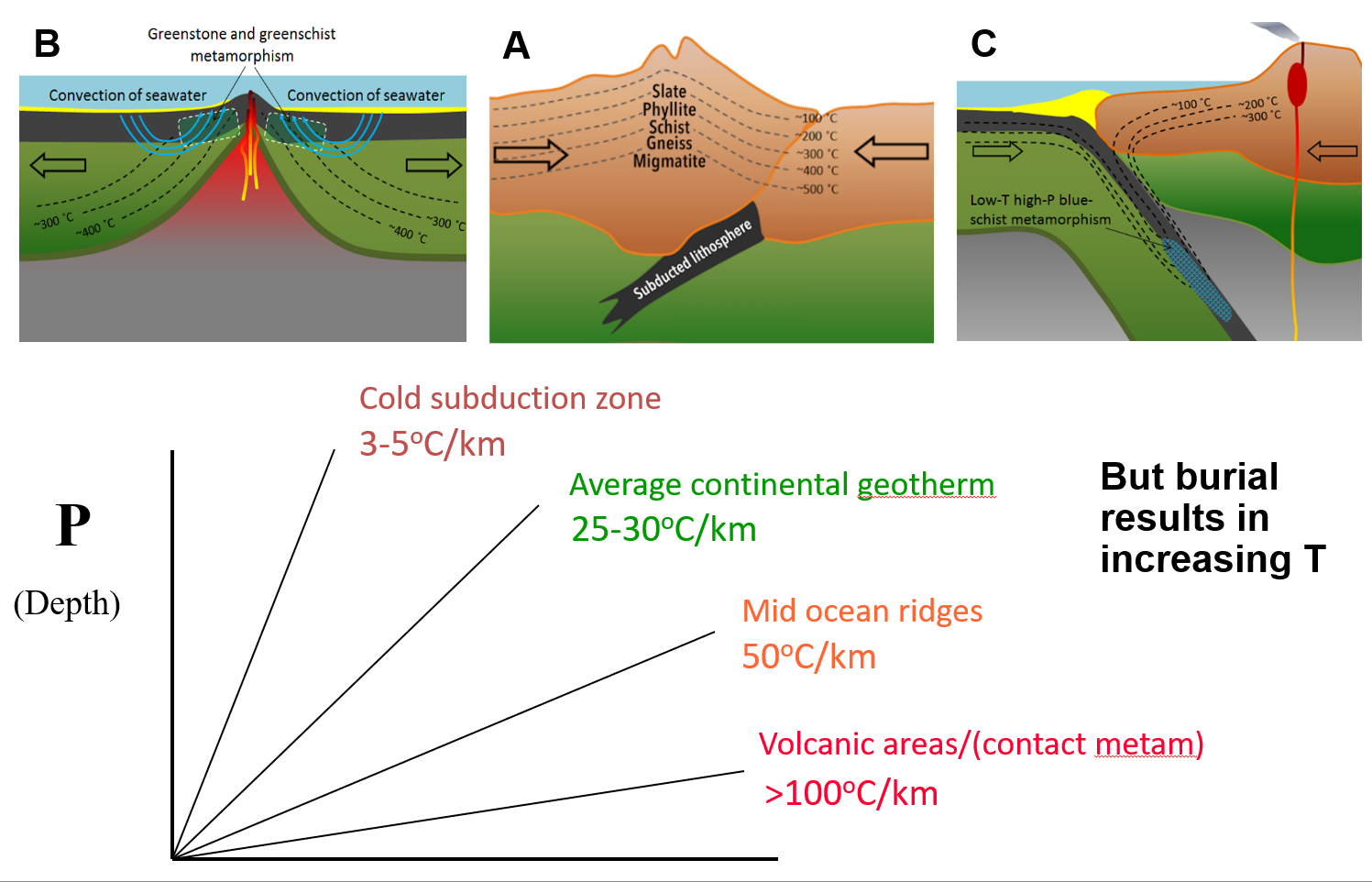
original heat- geothermal gradient increases 25-30c per km
→ depends on tectonic setting
→ cold subduction (3-5c/km) vs mid ocean ridge (50c/km)
Local heat- igneous intrusions w intense local heat source
→ distributes geothermal gradient
→ very localised, distance away further= heated less
Explain the 2 ways metamorphism can occur with stress
Load pressure- result from weight of overlying rock
→ uniform in all directions (P=pgh)
→ negligible with tectonic setting compared to temp
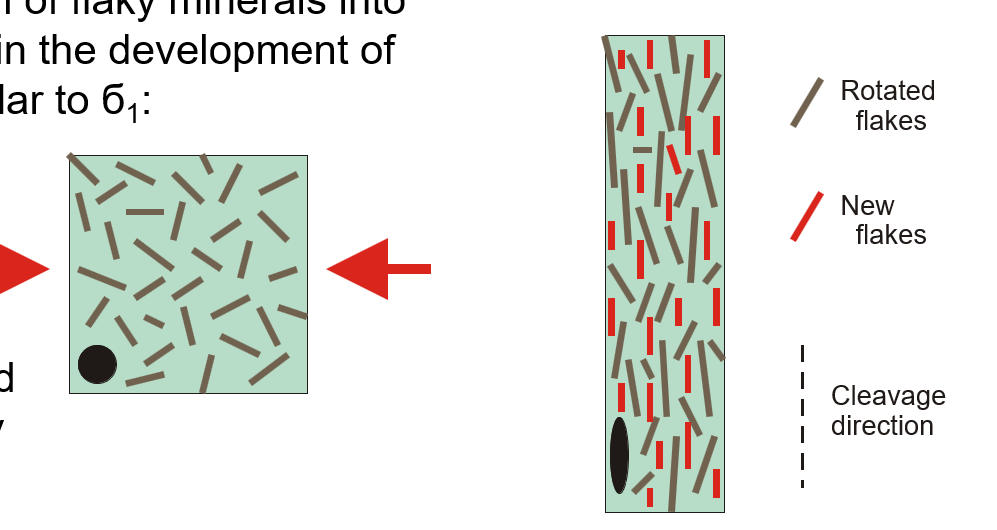
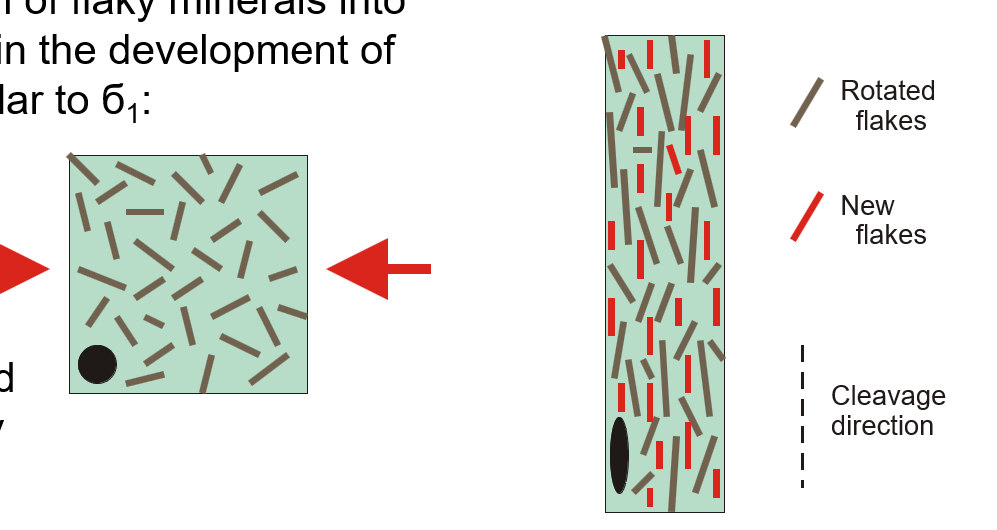
Deviatoric stress- max/min principal stress (sigma)
→ changes texture e.g compression causes rock elongation
→ cleavage (minerals with preferred orientation)
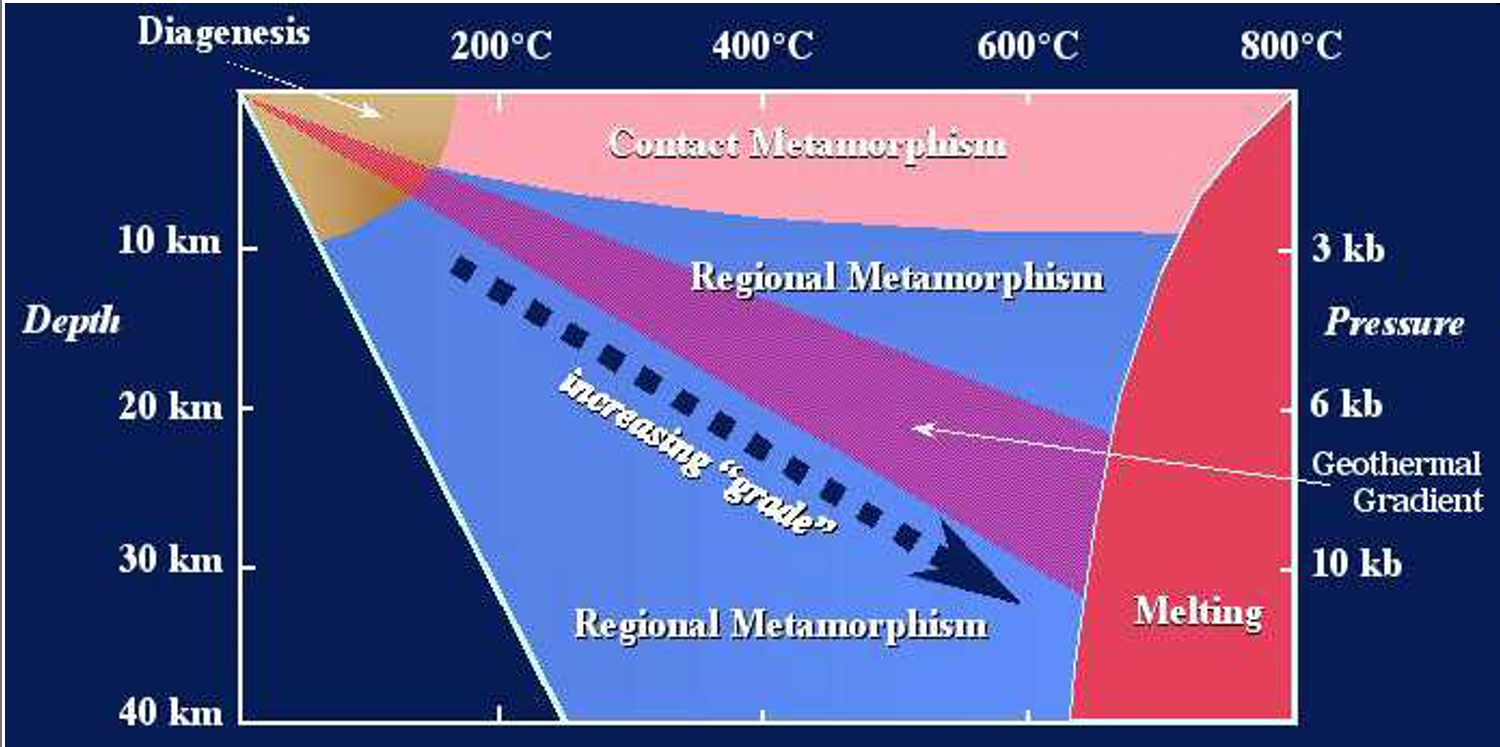
what are mineral facies
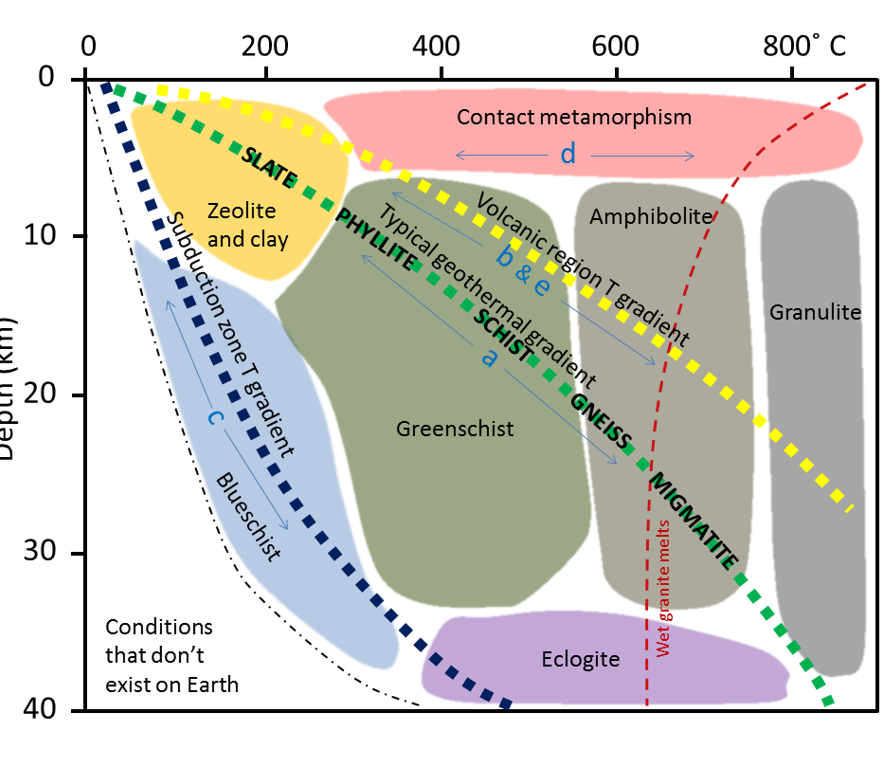
mineral assemblages forming under distinct pressure + temp fields
→ found through T ( as P increases linearly w depth)
→ regional, contact and dynamic
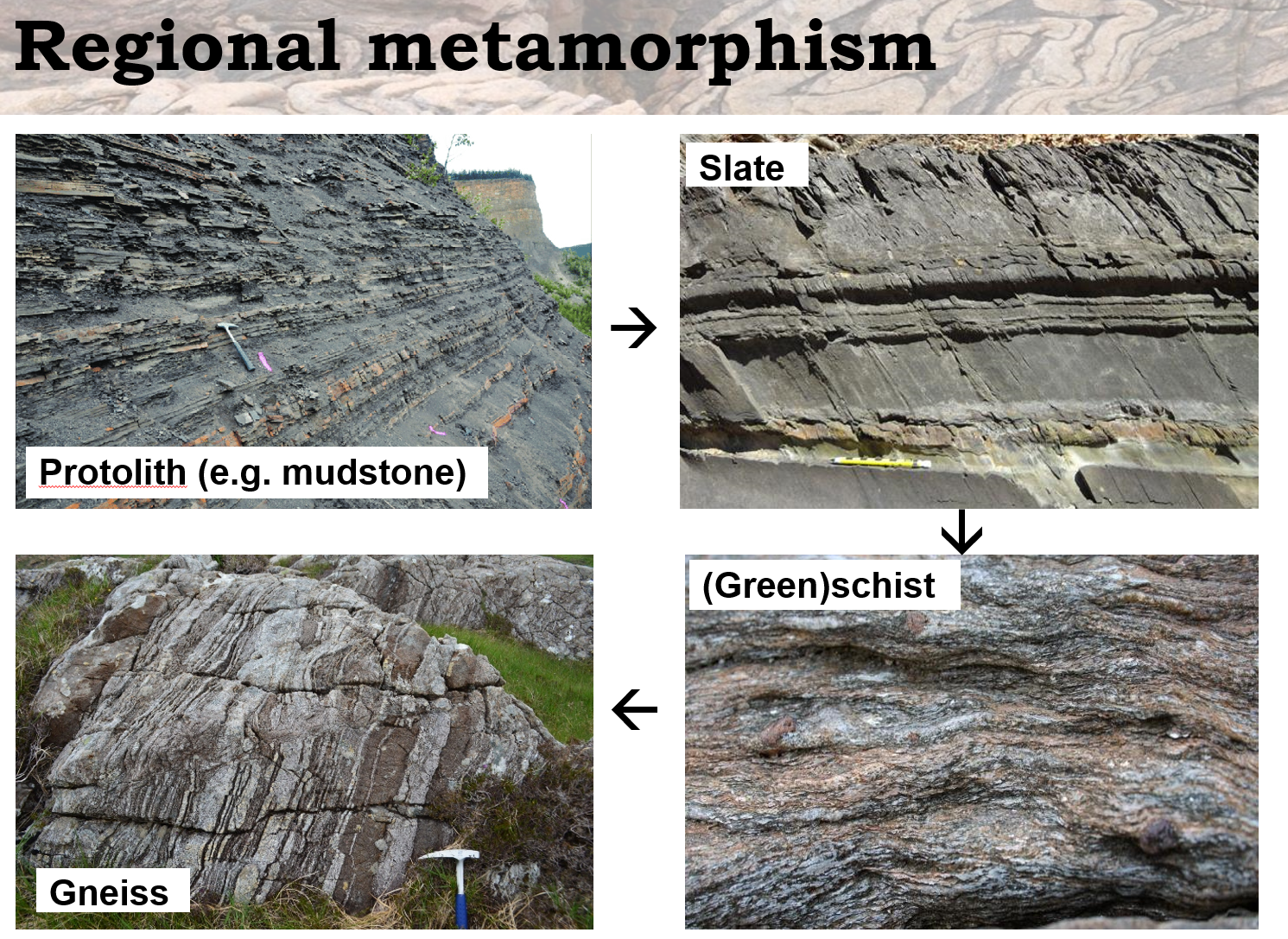
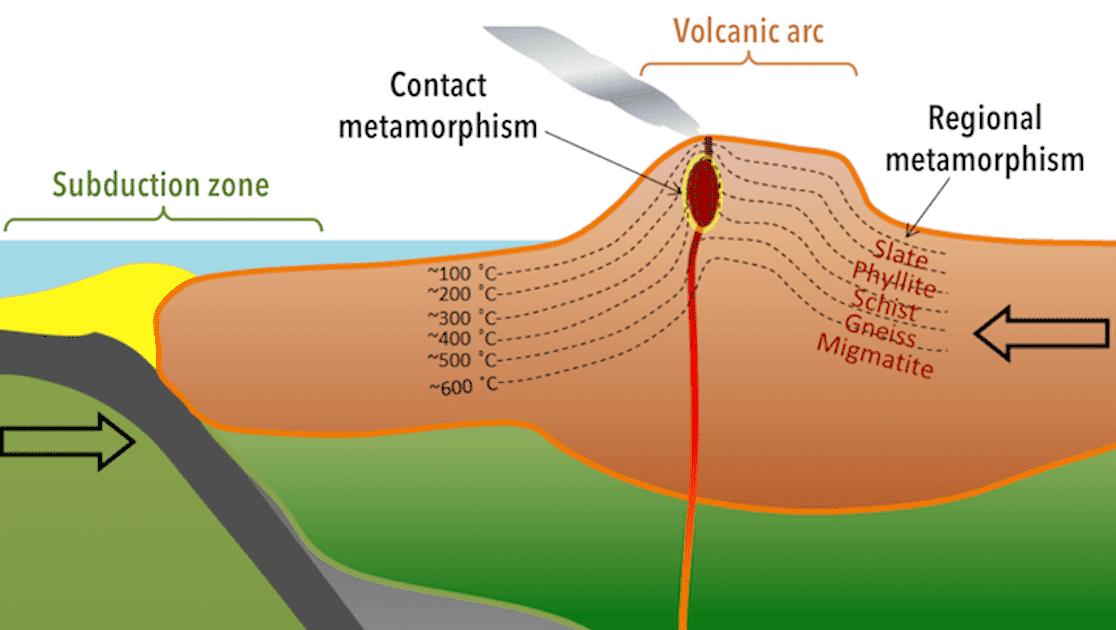
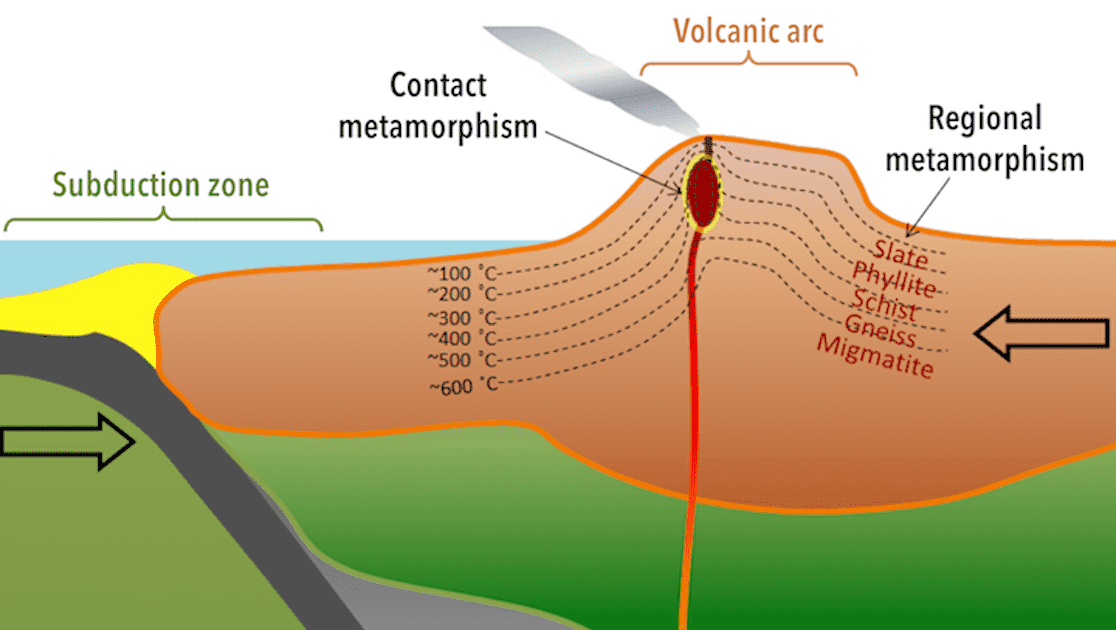
Explain regional metamorphism
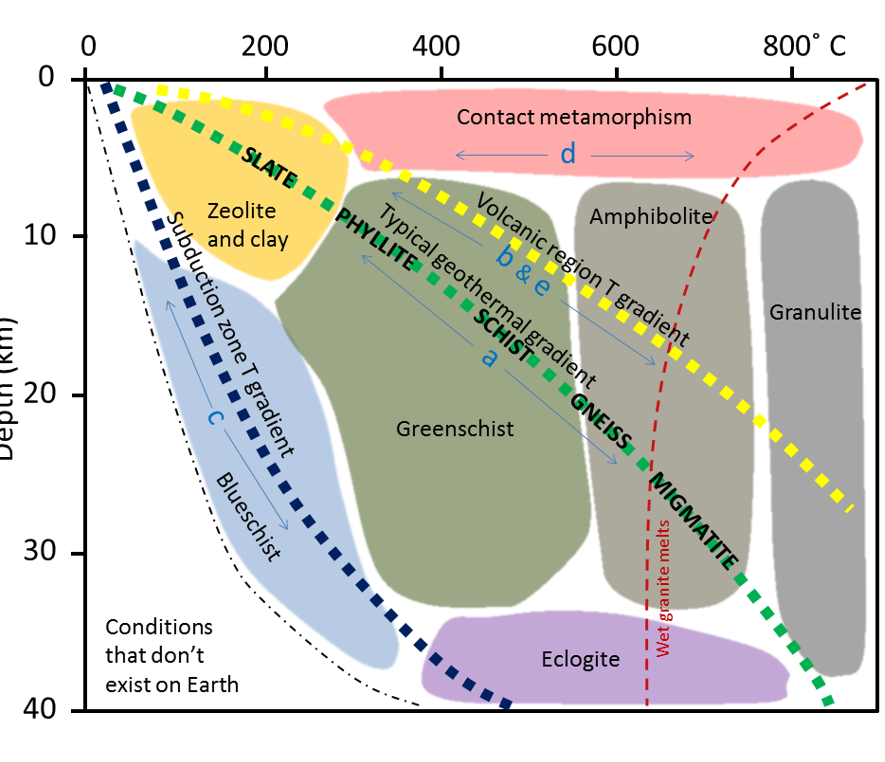
increase in both T and P
→ subduction or continent/continent ocean collisions
→ increasing grain size with T and P
→ deviatoric stress, so cleavage also increase with T and P
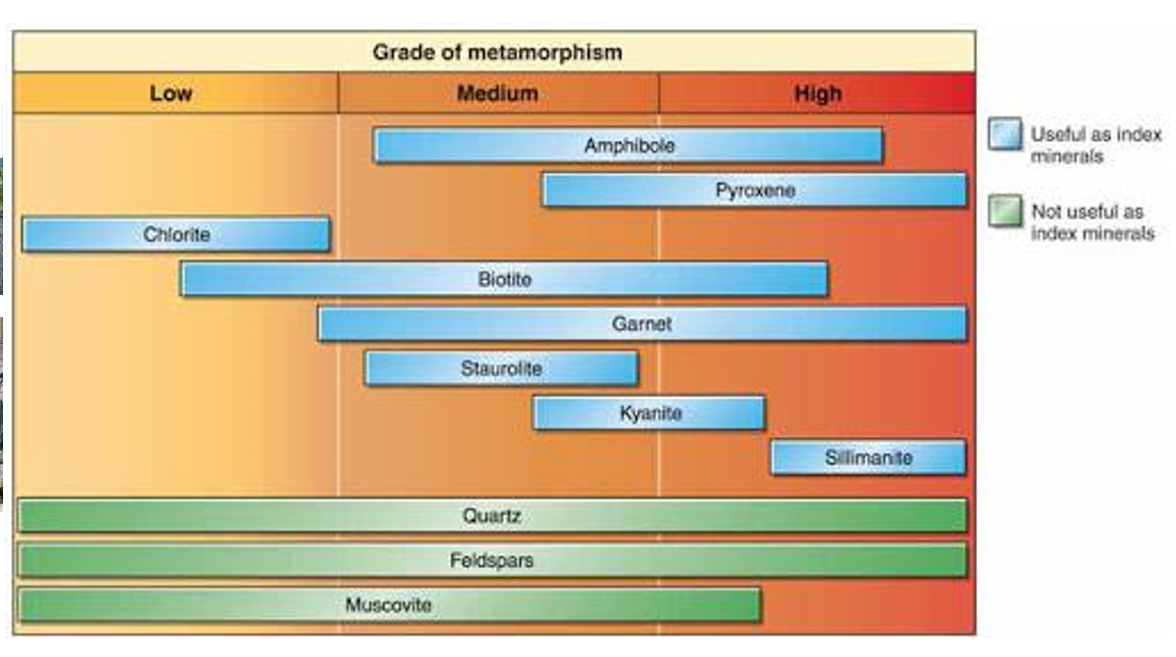
How can grade of metamorphism be determined through index materials
Rocks w index materials good (e.g mudstone + basalt)
→ e.g if staurolite and garnet then probably medium grade
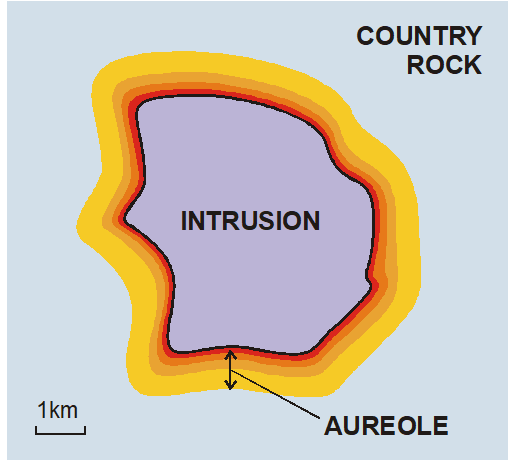
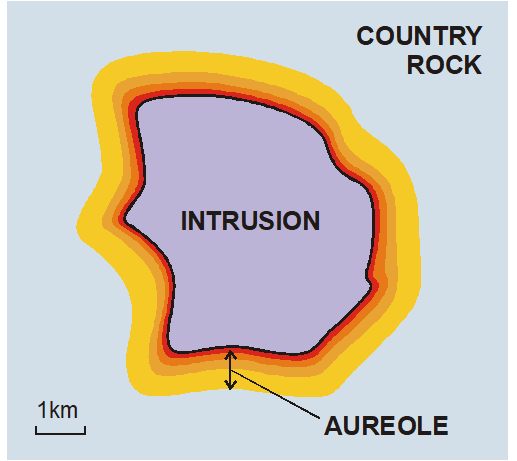
Explain contact metamorphism
increase in high T but no P change
→ through contact w intrusion, e.g cont/ocean crust extensional setting, hot spot, where igneous rocks made
→ distinct mineral assemblage (comp) + grain size w T
→ no stress so no foliation (layers)
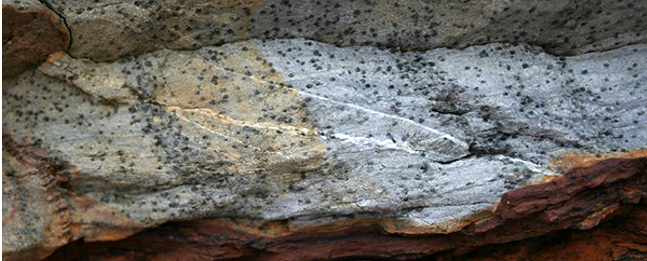
What are products of contact metamorphism called
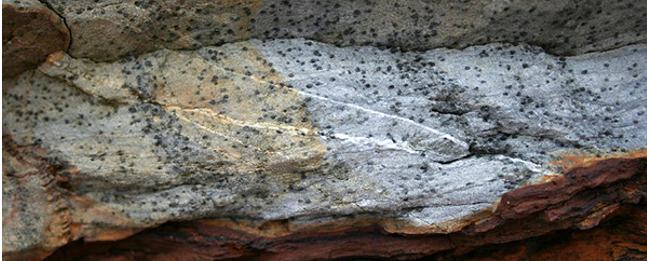
Hornfels
→non foliated (layers) with ‘spots’ (porphyroblasts)
→ distinct increase in crystal growth size
→intruded igneous rocks nearby
Explain dynamic metamorphism
Increase in stress pressure w little T, deviatoric stress
At faults w intermediate stress focussed, grain size reduced
→ cataclastic rocks (brittle, crackling, no recrystallization)
→ mylonites (ductile, dynamic recrystallization)
Meteor impacts
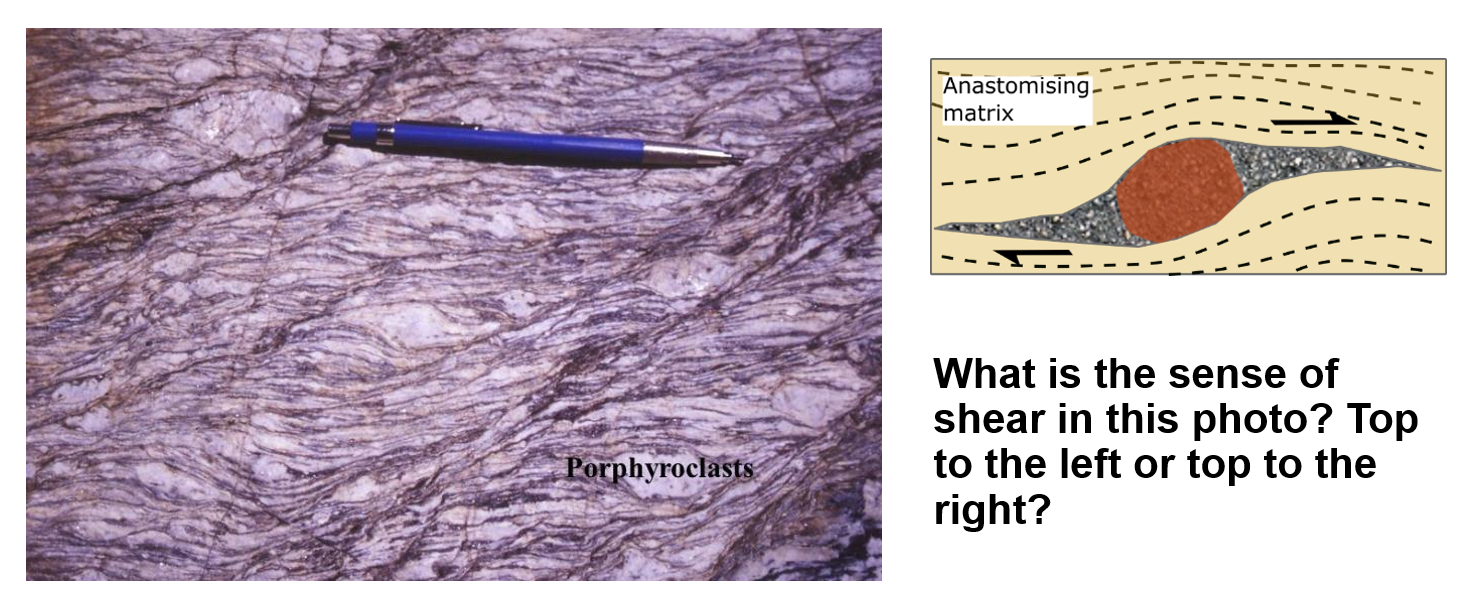
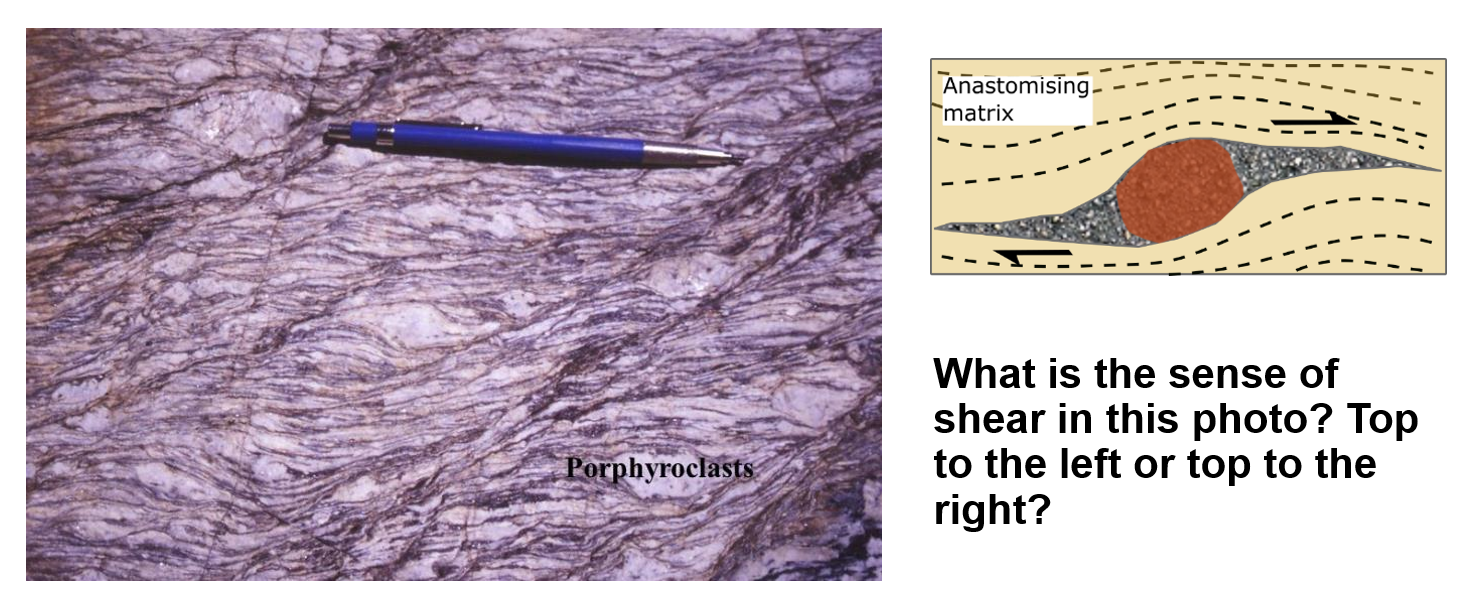
Identifying shear from mylonites
mylonite orientated parallel to shear
→ ‘eye’ at center, rock at fault
→ so shear left above and shear right below
Give two reasons why minerals do not retrograde
Rocks lose energy as it cools
→ no activation energy
Prograde (OG) involves volatile release
→ volatiles no longer available after metamorphism
Define diagenesis
processes leading to lithification (loose sediments→ rock)
→ do not convert to new minerals like meta
→ burial of rocks can lead to change in bulk comp
→ sedimentary features still exist unlike meta
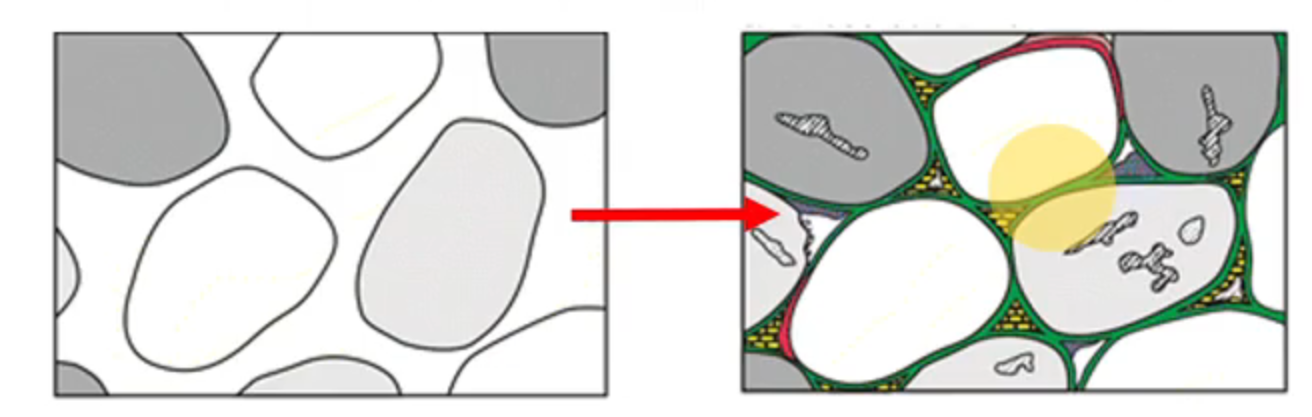
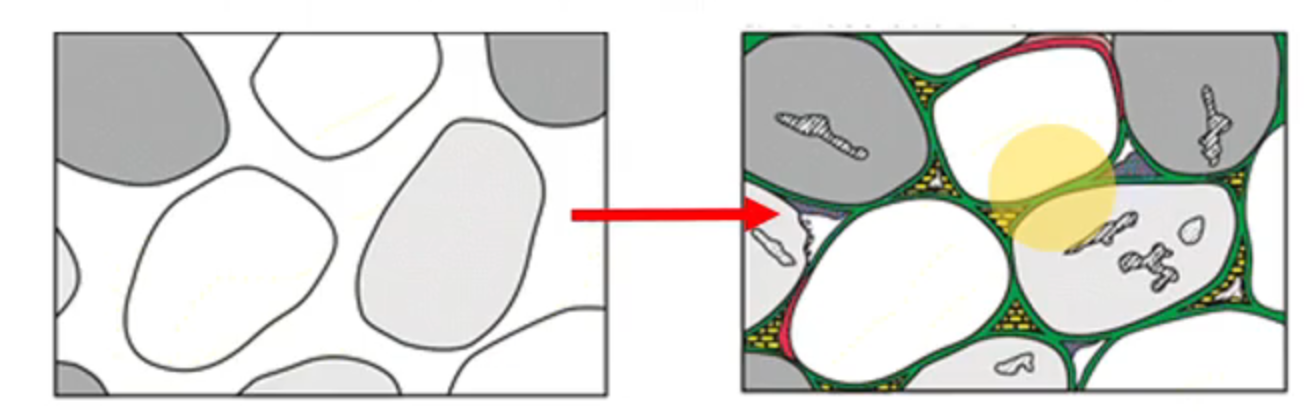
How does diagenesis occur
Mineral growth in porous space between grains, ‘cement’ grains together
→ spaces can be reservoirs for oil, gas, etc
Explain mechanical compaction
Overburden causes grain rotation to reduce volume
→ pore space reduced, rock volume same, expulsion of water
→ long axis perpendicular to compaction direction (shales)
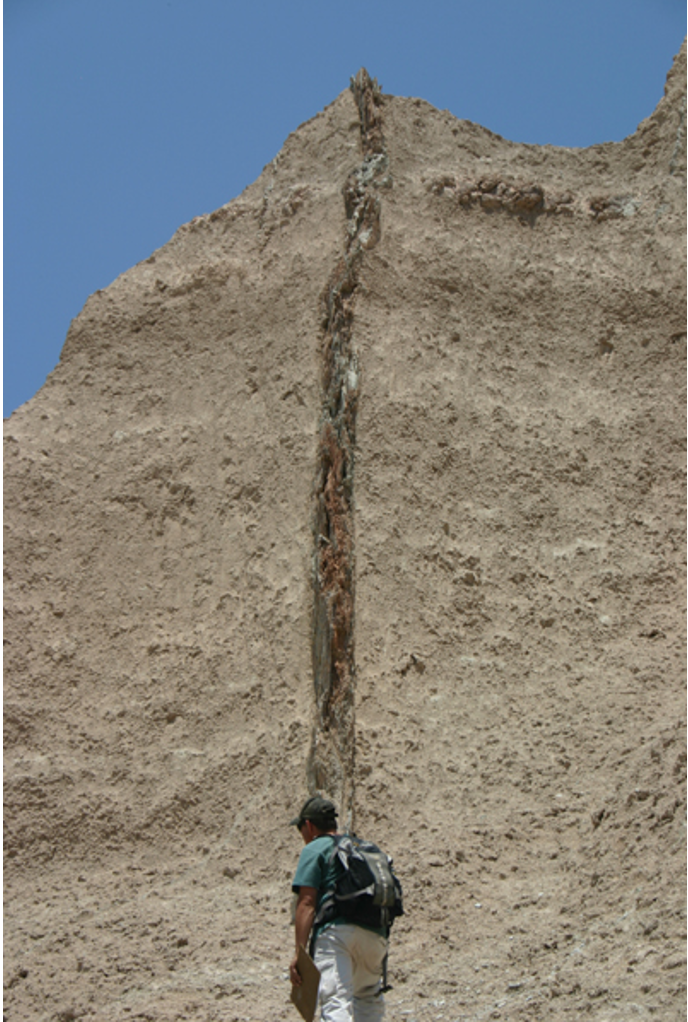
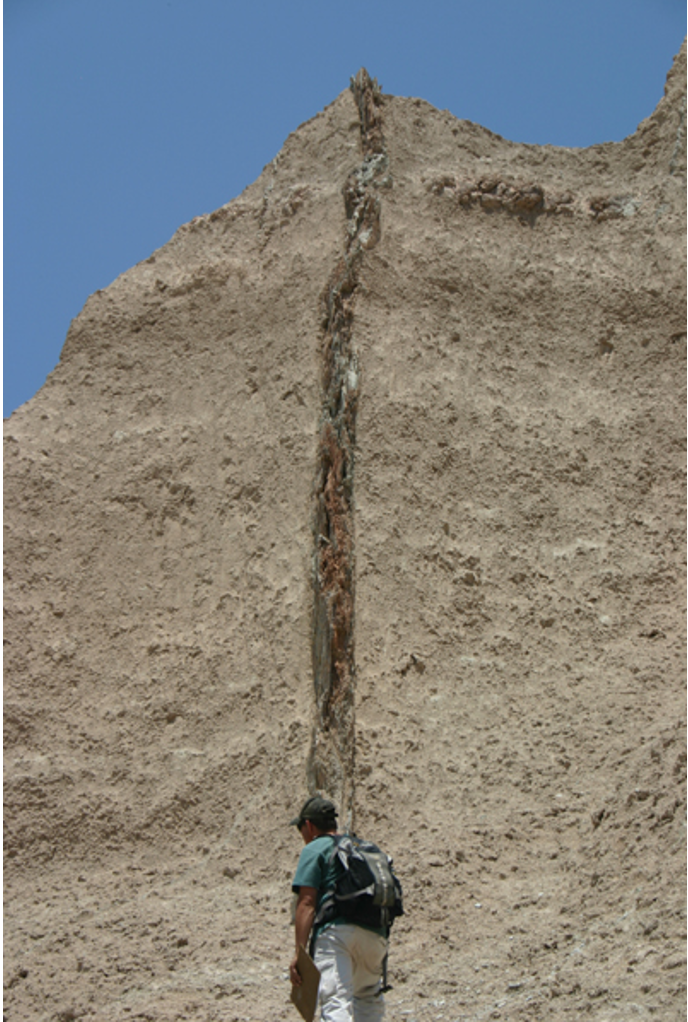
Sandstone dykes
→ sand grains brought up w water, injected through overlying sediment
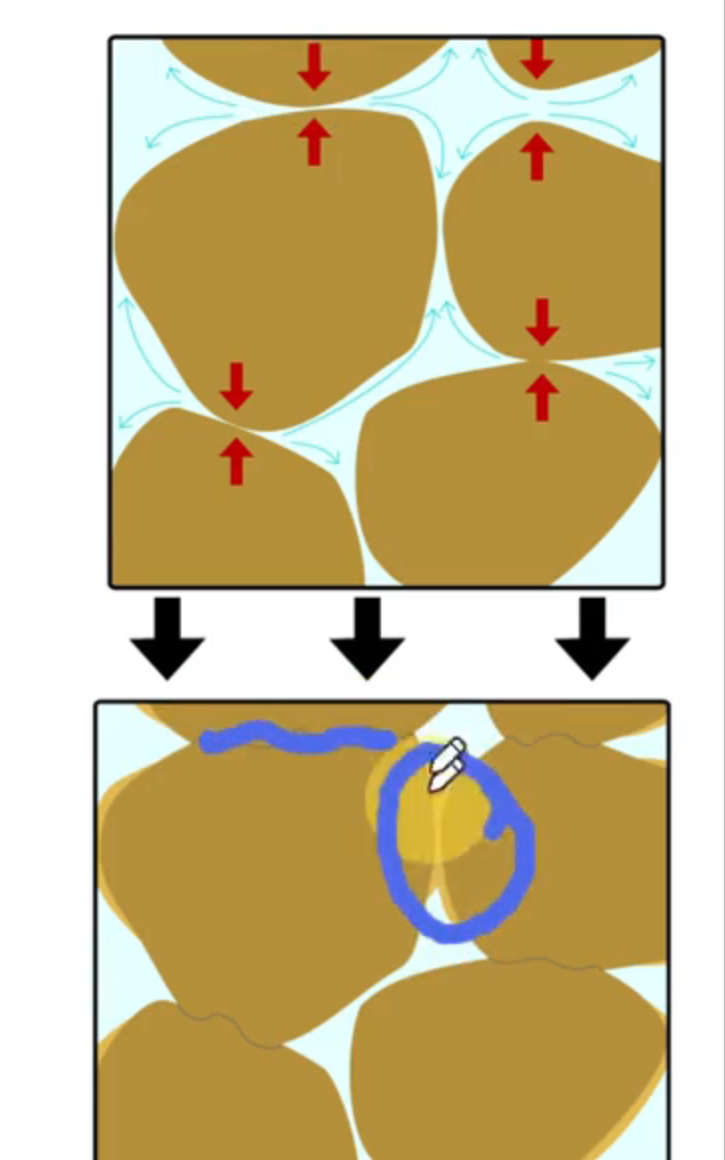
Explain compaction through pressure solution
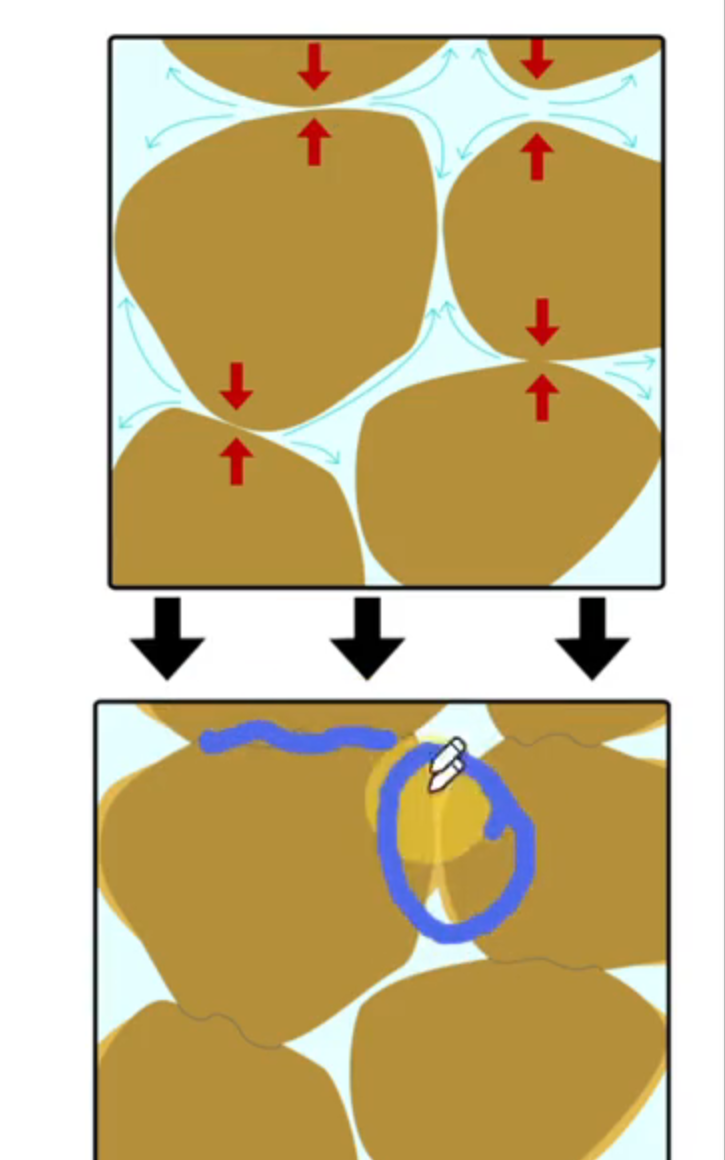
Material at grain contacts perpendicular to compaction dissolve, becomes elongated
→ material re-precipitates as cement at grain contacts parallel to stress
→ less porous
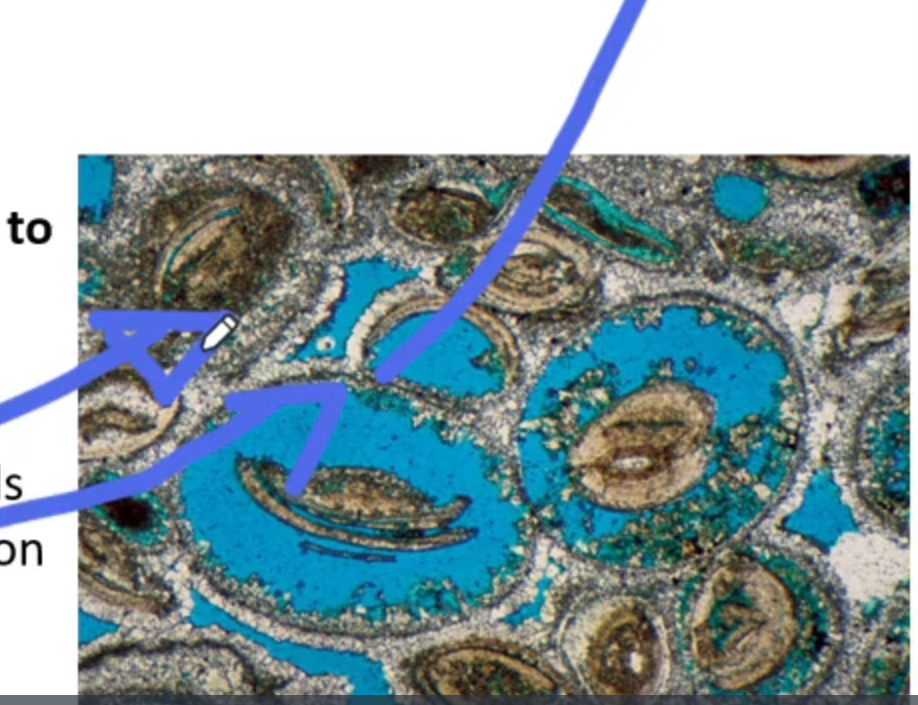
Explain dissolution
Changes in T and P/pore water (water inside pore of rock) composition (porosity change)
→ dissolves minerals in solution (e.g co2 and carbonic acid)
Dissolution without re-precipitation
→ prolonged pumping of pore water w no dissolved mineral
→ stops water saturating and cement forming from precipitating
→ common in carbonates
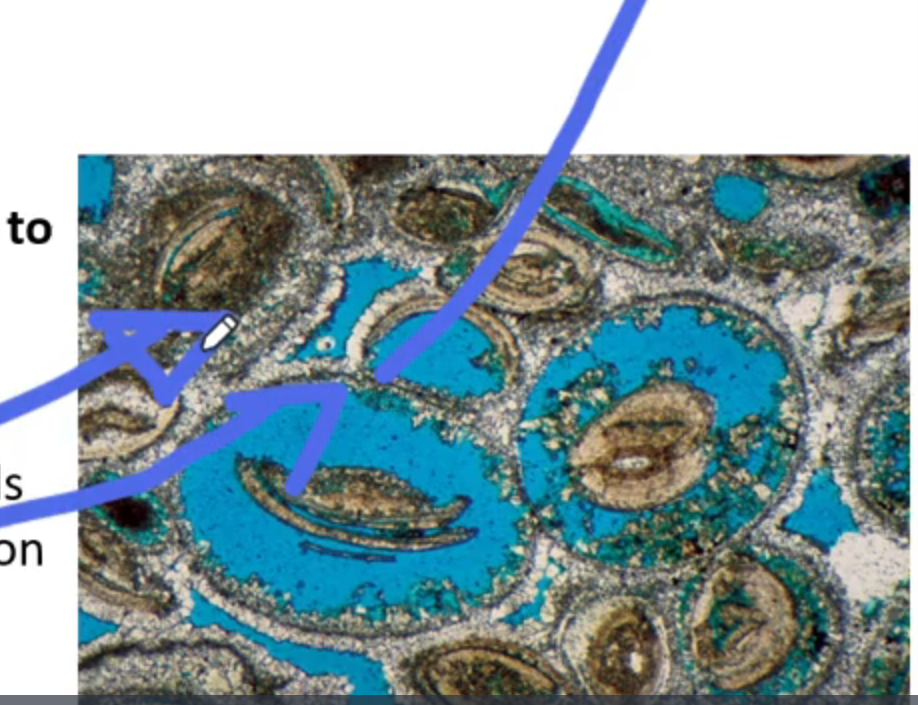
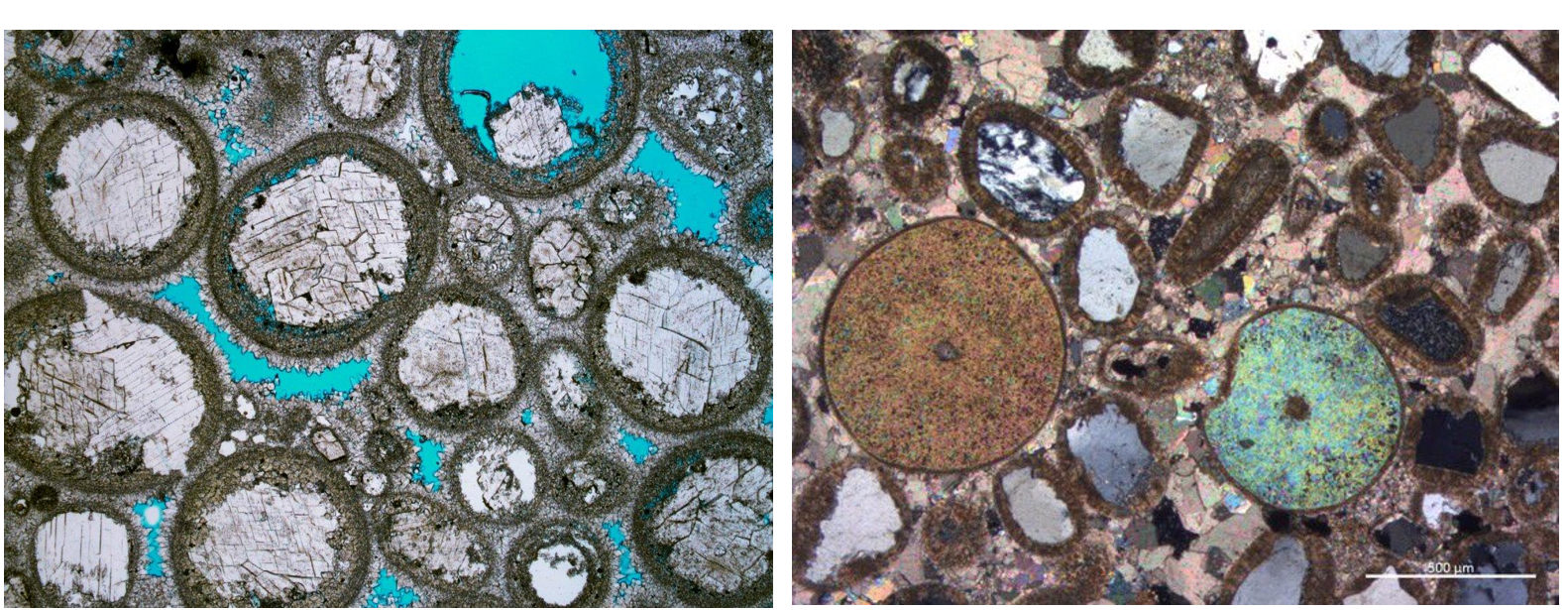
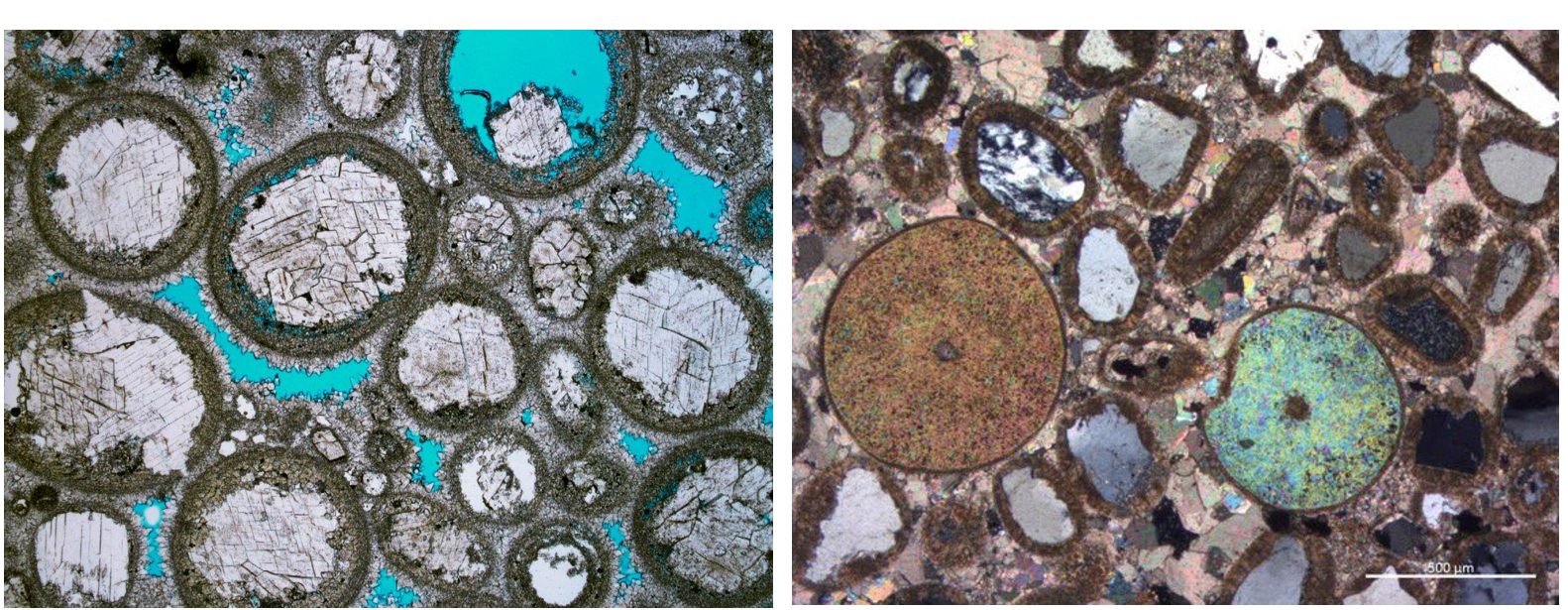
Explain cementation
Chemical precipitates (new crystals) form in sediment pores and binds grains together
→ e.g quartz, clay, carbonates
→ from dissolution, reprecipitation and saturated waters
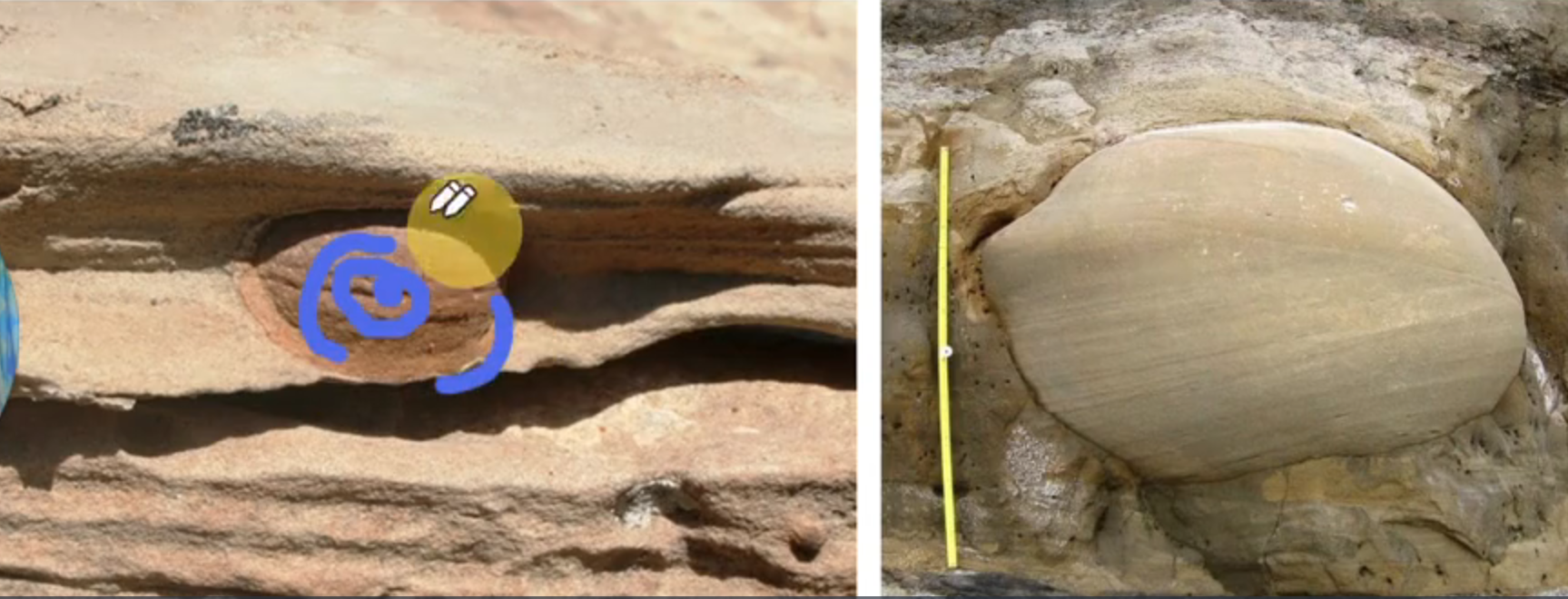
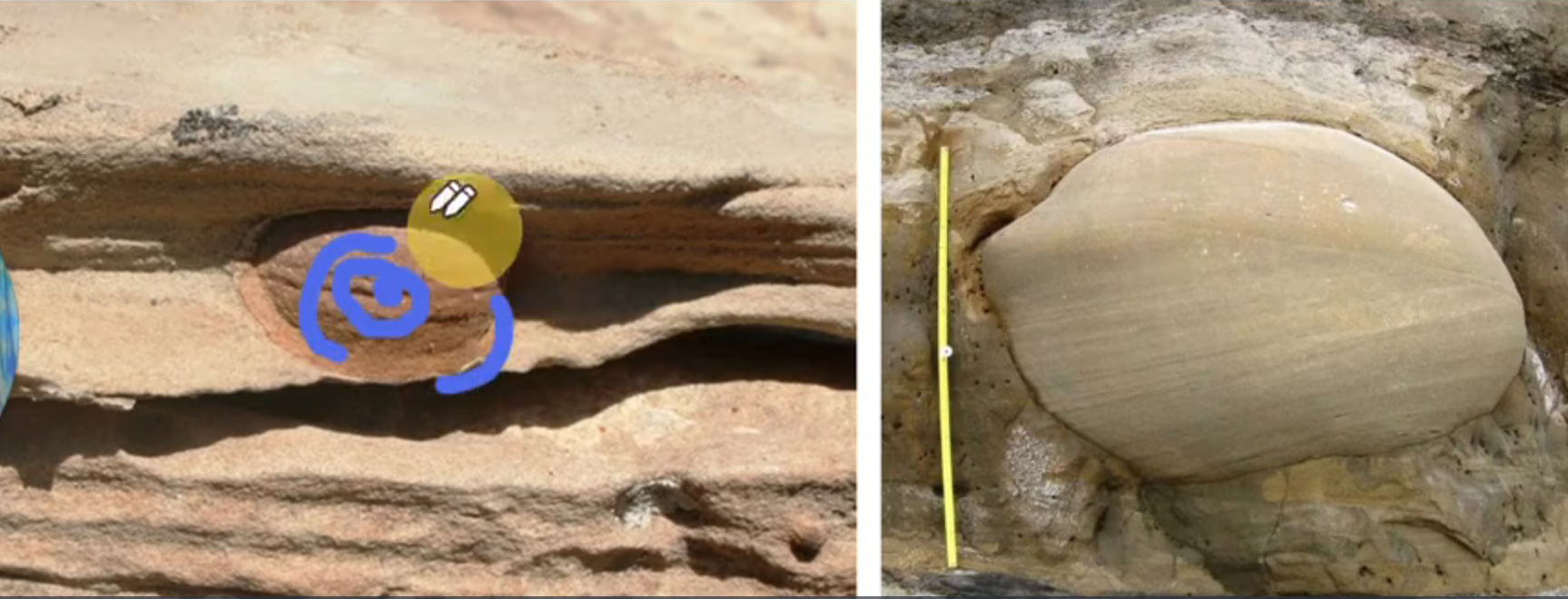
Explain what concretions are
Spherical mass of sediments more cemented/different mineral phase than surrounding
→ cement grows from nucleus then outwards
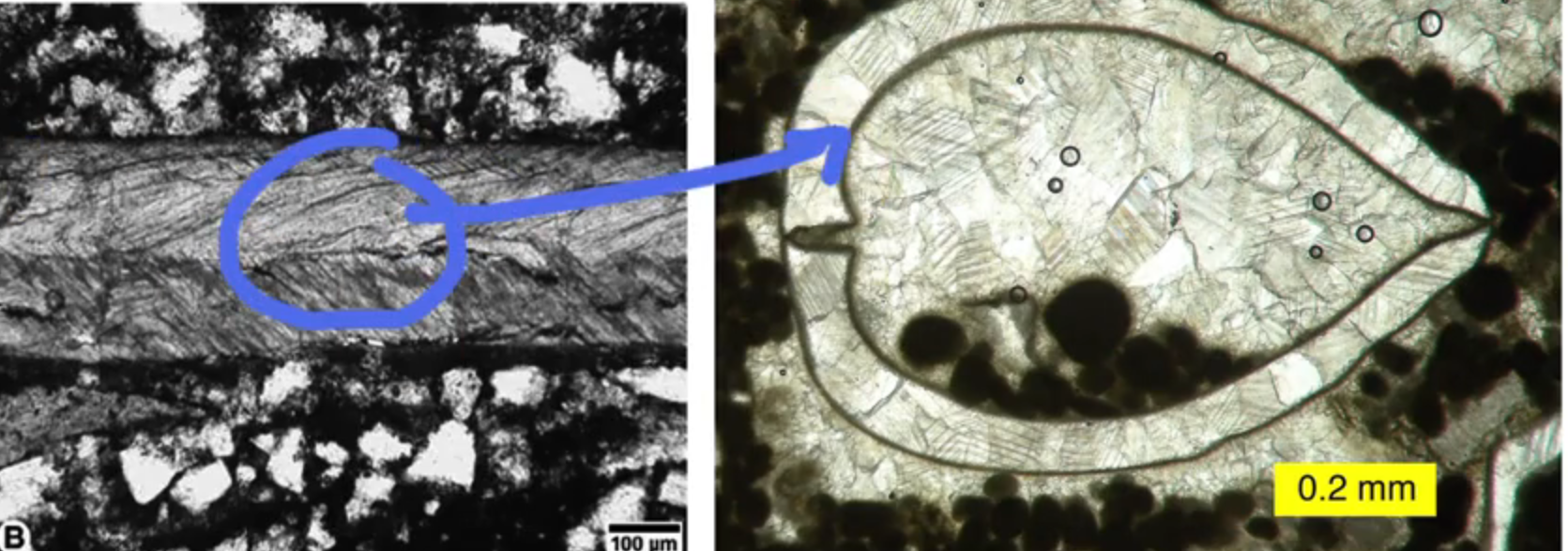
Explain recrystallization
crystal orientation of grain is changed, but mineral composition stays same
→ result of solution + reprecipitation of mineral phase present
→ no pore change
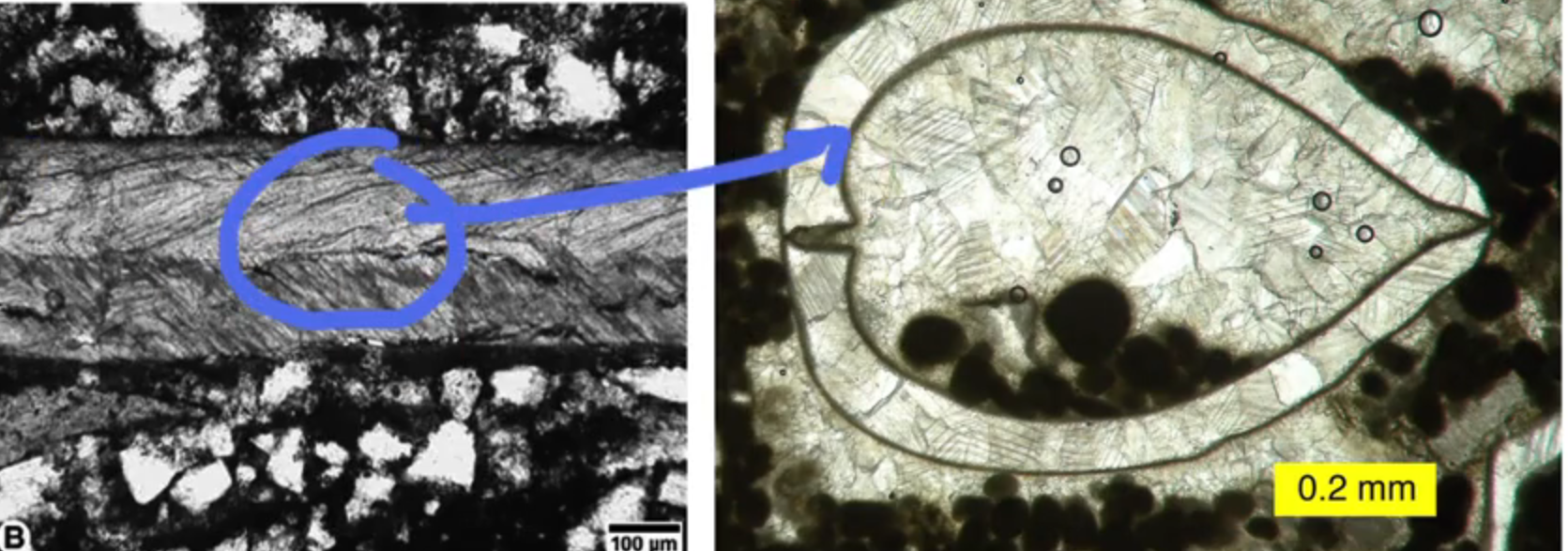
Explain mineral replacement
Newly formed mineral replaces pre existing one
→ same composition but polymorph (same chemical, diff internal structure), or entirely new mineral phase
→ change in volume can affect porosity
what diagenetic process increases porosity?
dissolution (remove minerals from rock from porous water)