hsp3u exam review
 Call Kai
 Learn
Learn Practice Test
 Spaced Repetition
 Match
Match Flashcards
 Knowt Play
1/137

Earn XP
Description and Tags
Name | Mastery | Learn | Test | Matching | Spaced | Call with Kai | Chat |
|---|
No analytics yet
Send a link to your students to track their progress
138 Terms
social science
Is the study of people as individuals and as members of groups such as families, tribes, and communities
what do social scientists do
they seek to understand people and cultures and to gain insight into human behaviour
Must gather data through case studies, experiments, surveys, interviews and observation. They then analyze their data and draw conclusions.
psychology
The study of the mind and behaviour
what do psychologists do
study why we act the way we do
try to explain, describe, predict and control behaviour and mental process
work with people to help them understand themselves and make their lives happier
social psychology
the study of how thoughts, feelings. actions, and behaviours are influenced by others
sociology
The study of humans in groups/society and their social interactions
what do sociologists do
examine how the group we belong to shape and influence who we are
try to answer questions about how different societies function and why certain social behaviours exist
anthropology
The study of humanity, both in the past and in the present
what do anthropologists do
study the similarities and differences between cultures
examine the origins of humans and human culture
examine how we live, think, communicate, produce, and interact with their social and physical environment
qualitative data
Deals with descriptions
Data can be observed but not measured
quantitative data
Deals with numbers
Data which can be measured
society
a groups of people who share a culture and territory
ethnocentrism
when a person judges other people's culture from their own culture's point of view. It can look at things like language, customs, religion and behaviour.
research methods
case study
experiment
sample survey
interviews
unstructured observations
structured observations
participant observations
case study
a research focusing on a problem affecting a population, place, and organization
pros of a case study
reveals the unexpected
able to analyze in depth
helps to develop new research
cons of a case study
difficult to replicate the results
can be time consuming
experiment
a method of data collection designed to test hypothesis under controlled conditions
pros of an experiment
results can be duplicated
researchers are given much control
cons of a experiment
time consuming
may be ethical or practical problems
sample survey
a survey conducted to determine attitudes of individuals in a population toward a particular subject
pros of a sample survey
easy to do
cheap to do
gathering results can be quick
cons of a sample survey
not everyone does it when asked
no guarantee people will answer truthfully
interviews
a session where one person asks questions, and the other answers
pros of an interview
gives data directly from the person
avoids the problem of a low response rate
cons of an interview
can be time consuming
bias can occur
unstructured observations
an observation that takes place with no plan
structured observations
the observer has a list of behaviours that are looking for
participant observations
the observer is immersed in the daily lives of the participants
pros of observations
easy to do
research is done in natural surroundings
cons of observations
not everything is observed
time consuming
the social science inquiry method
identify a problem or a question
develop a hypothesis
gather data
analyze the data
draw conclusions
independent variable
a factor that researchers intentionally manipulate or vary to observe its impact on other variables
dependent variable
the measured outcome that changes based on the manipulation of the independent variable
control group
does not get the independent variable
Ex: Do people living in colder climates have more medical conditions?
independent variable: colder climates
dependent variable: medical conditions
control group: people living in hotter climates
4 lobes of the brain
parietal lobe
frontal lobe
occipital lobe
temporal lobe
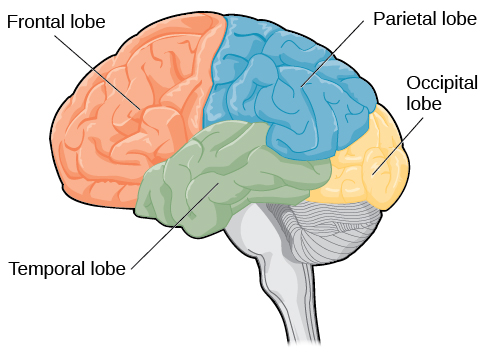
what does a neuroscientist do
they specialize in the study of the human brain
parietal lobe
process sensory information from the body (ex: pain, touch, pressure)
where is the parietal lobe located
it is located at behind the frontal lobe
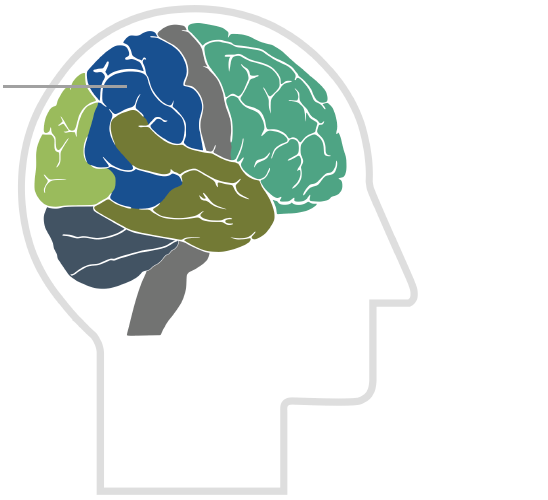
occipital lobe
processes bright visual cues/visual information
where is the occipital lobe located
it is located at the back of the head
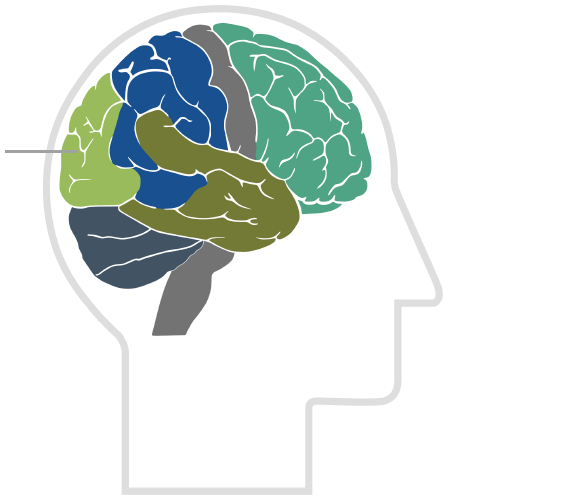
frontal lobe
involved in reasoning, motor control, emotion, and language
damage to the frontal lobe may cause
mood changes
where is the frontal lobe located
it is located at the front of the head
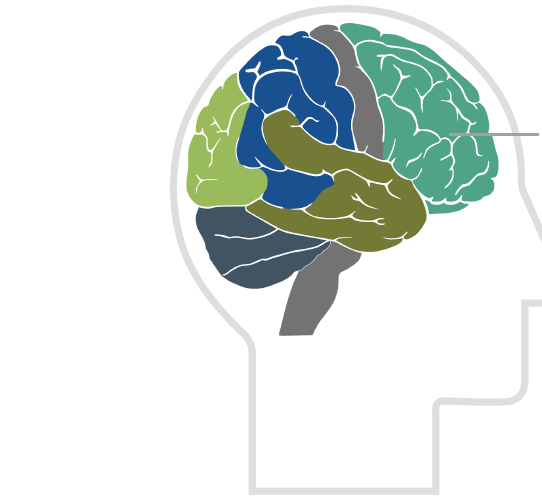
temporal lobe
helps to sort out auditory information (ex: language, understand the meaning of lyrics)
where is the temporal lobe located
it is located at the side of the head
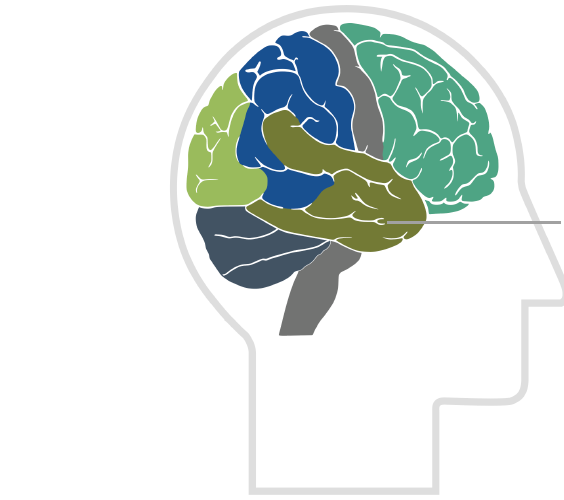
the left hemisphere of the temporal lobe is
more for verbal memory
the right hemisphere of the temporal lobe is
for visual memory
the left hemisphere of the brain is
responsible for verbal and logical tasks (ex. speaking, reading, math)
the right hemisphere of the brain is
largely responsible for non-verbal tasks (Ex. attention, emotions)
teenage hood gives humans the ability to
solve abstract problems
risky behaviour helps teens to
problem solve and develop strategies and persistence
Sigmund Freud
father of psychology & clinical therapy
mind → id, ego, superego
psychosexual theory of development proposes 5 stages of human development
Psychoanalysis
A process designed to uncover patients' unconscious thoughts by encouraging them to discuss their background, feelings and experiences with a trained psychologist
conscious mind
contains memories we recall
unconscious mind
memories we cannot recall
Id
the pleasure part of our mind; always wanting pleasure
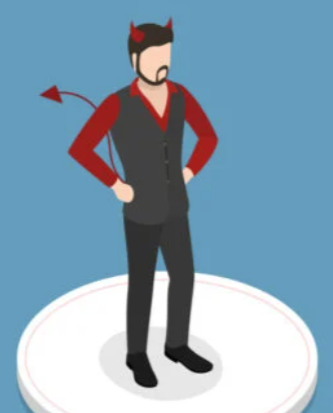
Ego
a mix between the ego and the id. It acts as a mediator between the id and super ego
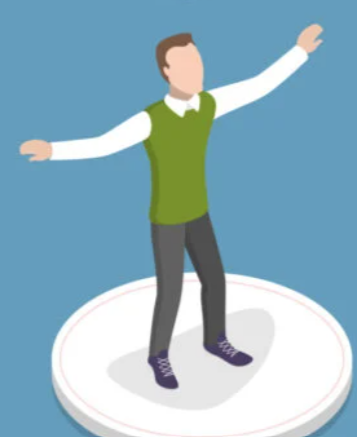
Superego
element of the mind that encourages thoughtful actions to obtain good results

psychosexual theory of development
proposes that there are 5 stages of human development
psychosexual theory stages
oral (ages 0-1)
anal (ages 1-3)
phallic (ages 3-6)
latent (ages 6-11)
genital (ages 11-18)
oral stage (ages 0-1)
main interaction is through the mouth
anal stage (ages 1-3)
toilet training
controlling bladder & bowel movements is focused
phallic stage (ages 3-6)
genitals
boys → oedipus complex
girls → electra complex
attraction to opposite sex parent
conflict w/ same sex parent
oedipus complex
feelings of rivalry with the parent of the same sex and sexual desire for the parent of the other sex
occurring during the phallic stage
electra complex
a girl’s unconscious sexual desire for her father and feelings of jealousy and resentment toward her mother
occurring during the phallic stage
latent stage (ages 6-11)
id → suppressed
superego develops
child grows and develops social skills & values
genital stage (ages 11-18)
puberty
developing person
libido active again
classical conditioning
A type of learning where a once neutral stimulus comes to produce a particular response after pairings with a conditioned stimulus
defense mechanisms
coping techniques that reduce anxiety that arises from unacceptable or potentially harmful impulses by distorting reality.
types of defense mechanisms
displacement
regression
rationalization
reaction formation
denial
repression
displacement
channeling a feeling or thought from its actual source to something or someone else
regression
returning to more primitive levels of behaviour
rationalization
justifying one’s failures with socially acceptable reasons instead of the real reasons
reaction formation
acting the opposite of how you truly feel
denial
not accepting reality because it is too painful
repression
blocking a threatening memory from consciousness
neutral stimulus
there’s no response to it
unconditioned stimulus
a stimulus that has a reflexive result
unconditioned response
a natural reaction given to a stimuli
conditioned stimulus
a stimulus that gives a response after being paired with the conditioned stimulus
conditioned response
response because of the conditioned stimulus
Ivan Pavlov (1849-1936)
classical conditioning with dogs
dog + food+ salivating + bell experiment
John B. Watson (1878-1958)
little albert experiment
related to Palvov’s classical conditioning
what the difference between Pavlov’s experiment and Watson’s experiment
Pavlov worked with the conditioning of reflexes with the dogs
Watson worked on it and extended the results to involve the conditioning of human emotions
Jean Piaget (1896-1980)
5 stages of ‘medical milestones’ for kids
child development
sensorimotor stage (ages 0-2)
coordination of senses with motor response
sensory curiosity about the world
language used for demands and cataloguing
object permanence developed
preoperational (ages 2-7)
symbolic thinking
use of proper grammar to express full concepts
imagination and intuition are strong, but complex abstract thought still difficult
conservation developed
concrete operational (ages 7-11)
concepts attached to concrete situations
time, space, and quantity are understood and can be applied, but not as independent concepts
formal operations (ages 11+)
theoretical, hypothetical, and counterfactual thinking
abstract logic and reasoning
strategy and planning become possible
concepts learned in one context can be applied to another
Harry Harlow (1905-1981)
monkeys/surrogate monkey mother experiment
sad monkey being separated from the mom
1st monkey mom had milk, but was made from wire & wood
2nd monkey mom had a soft build & warmth, comfort
monkey baby went on to food mom when needed, then immediately went to cling onto the comfort mom
demonstrated how much maternal touch is vital to a baby/child
Wolfgang Kohler (1887-1967)
chimpanzees
insight learning
trial and error learning
insight learning
the sudden realization of a solution to a problem
Albert Bandura (1925-2021)
Bobo Doll Study
showed children a video of an adult acting violent towards a Bobo doll, then placed them in a room with one
kids who saw the video acted violent to the doll, imitating the adults
monkey see, monkey do
proposes people learn largely through observation, imitation, & modelling
B.F Skinner (1904-1990)
mouse in boxes
green light, mouse pulls lever → rewarded with food
red light, mouse pulls lever → electrocuted
positive reinforcement
operant conditioning
operant conditioning
rewards are introduced to increase a behaviour and punishment is introduced to decrease a behaviour
symbolic interactionism
using special signs and gestures to create shared meanings
what are the agents of socialization?
family
peer group
school
work
religion
culture
media
what does family teach
basic bodily functions
gender roles
dealing with conflict
values
dealing with emotions
attitudes
normal rules of behaviour
family heritage
manners
life priorities and lessons