Unit 6 Sex Hormones and Drug Therapy pt.1
 Call Kai
 Learn
Learn Practice Test
 Spaced Repetition
 Match
Match Flashcards
 Knowt Play
1/29

There's no tags or description
Looks like no tags are added yet.
Name | Mastery | Learn | Test | Matching | Spaced | Call with Kai | Chat |
|---|
No analytics yet
Send a link to your students to track their progress
30 Terms
Big Idea: What are Sex Hormones?
Sex hormones are special chemical messengers made by your body.
They:
Start being produced a lot during puberty
Help your body grow into an adult body
Cause secondary sex characteristics (physical changes that happen during puberty)
What is puberty?
Puberty is the stage when a child's body begins changing into an adult body.
During puberty:
Hormone levels increase
The reproductive system matures
New physical changes appear
Examples:
Voice gets deeper in male
Breasts develop in females, Body hair grows
What are Secondary Sex Characteristics?
These are changes that happen during puberty but are not directly part of the reproductive organs .
Females
Breasts develop/ Hips widen
Body shape changes
male
Voice deepens/ Facial hair grows
More muscle develops
These changes happen because of sex hormones .
Where do Sex Hormones Come From?
They are made by the gonads .
What are gonads?
Gonads are the organs that produce:
Sex hormones
Reproductive cells (sperm or eggs)
Females
Ovaries
Produces eggs (ova)
Produces hormones such as estrogen and progesterone
male
Testes
Produce sperm
Produces testosterone
Who Tells the Gonads to Make Hormones?
The anterior pituitary gland does.
Pituitary gland
A small gland in the brain often called the body's "master gland."
It releases two important hormones:
LH (Luteinizing Hormone)
FSH (Follicle-Stimulating Hormone)
Think of LH and FSH as messages from the brain telling the ovaries or tests what to do.
What Does FSH Do?
In Females
FSH:
Helps eggs (ova) develop in the ovaries
In Males
FSH:
Helps produce sperm
Easy memory:
FSH = Forms sex cells
Females → eggs
Males → sperm
What Does LH Do?
In Females
LH:
Helps trigger ovulation (release of an egg)
Helps ovaries make sex hormones
In Males
LH:
Stimulates tests to make testosterone
Easy memory:
LH = Leads hormone production
Sex Hormones
Putting It All Together
Think of it like a chain reaction:
🧠 Anterior Pituitary Gland
↓ releases
📨 FSH and LH
↓ travel to
🥚 Ovaries (female) or 🧬 Testes (male)
↓ produces
⚡ Sex Hormones
↓ cause
🌱 Puberty Changes & Secondary Sex Characteristics
Super Short Summary
Sex hormones are chemicals that increase during puberty.
They cause secondary sex characteristics like deeper voices, breast development, body hair, and muscle growth.
They are produced by the gonads .
Females → ovaries
Males → testes
The anterior pituitary gland controls them.
It releases:
FSH → develops eggs and sperm
LH → stimulates production of sex hormones
Easy memory trick:
FSH = Fertility cells (eggs and sperm)
LH = Hormone maker
Ovaries = eggs + female hormones
Testes = sperm + testosterone
FEMALE SEX HORMONES
The main female sex hormones are:
Estrogen (most important for many body changes)
Progesterone (helps with pregnancy and the menstrual cycle)
These hormones are mainly made in the ovaries .
1. Important Role in Reproduction (Female Sex Organs)
Reproduction means having the ability to make a baby.
Female sex hormones help:
Ovaries work properly
Mature eggs
Menstrual cycles occur
Pregnancy can happen
Uterus stays healthy
Easy way to remember:
Female hormones help the reproductive system do its job.
2. Secondary Sex Characteristics
These are the body changes that happen during puberty.
Voice
Female voices become slightly higher and softer than male voices.
Skin Texture = Skin becomes softer and smoother.
Breast Development
Distribution of Body Fat
More fat is stored in:
Hips/ Thighs/ Buttocks/ Breasts
This creates the typical female body shape.
Body Hair = Underarms/ Public region
Easy way to remember:
Female hormones create the physical changes that make a girl's body look more like an adult woman's body.
FEMALE SEX HORMONES
3-5
3. Insulin Sensitivity
First, what is insulin?
Insulin is a hormone that helps sugar (glucose) move from the blood into the body's cells for energy.
Female hormones help the body respond to insulin properly.
This means:
Blood sugar is controlled better
Cells can use sugar more easily for energy
Estrogen helps insulin work better.
4. Bone Formation — Prevention of Osteoporosis
Bones are constantly being rebuilt.
Estrogen helps:
Build strong bones
Keep calcium in bones
Slow bone loss
What is osteoporosis?
A disease where bones become:
Thin/ Weak/ Easy to break
When estrogen levels drop (for example after menopause), the risk of osteoporosis increases.
Easy way to remember:
Estrogen protects bones and keeps them strong.
Think: Estrogen = bodyguard for bones 🦴
5. Cardiac Benefits — Increases HDL Cardiac means:
Related to the heart .
HDL means: High-Density Lipoprotein
HDL is often called: ⭐ "Good cholesterol"
HDL helps remove extra cholesterol from the blood.
More HDL usually means:
Healthier blood vessels
Lower risk of heart disease
Estrogen helps increase HDL levels.
Easy way to remember:
Estrogen helps protect the heart by increasing good cholesterol (HDL).
Think: HDL = garbage truck 🚛
It picks up extra cholesterol and carries it away.
FEMALE SEX HORMONES
10-Second Exam Memory Trick
Function of Female Hormones | What It Does |
|---|---|
Reproduction | Helps ovaries, eggs, menstrual cycle, and pregnancy |
Secondary Sex Characteristics | Breast growth, softer skin, body shape changes, body hair |
Insulin Sensitivity | Helps insulin control blood sugar |
Bone Formation | Keeps bones strong and prevents osteoporosis |
Cardiac Benefits | Raises HDL ("good cholesterol") and helps protect the heart |
10-Second Exam Memory Trick
Female hormones help with:
BBHRS
B ones 🦴
B reasts/body changes 👩
H eart ❤ (HDL increases)
R eproduction 👶
S ugar control 🍬 (insulin sensitivity)
Menstrual Cycle
1. Period → 2. Egg grows → 3. Ovulation → 4. Prepare for pregnancy
Days 1-5 = MENSTRUATION (Period) What's happening?
The uterine lining is shed.
Blood and tissue leave the body through the vagina.
This is the menstrual period (menses).
Easy memory: Days 1-5 = Period happens.
🩸 Uterine lining comes out.
Days 6-12 = EGG GROWS What hormone is released?
FSH (Follicle-Stimulating Hormone)
What does FSH do?
Causes a follicle in the ovary to mature.
The maturing follicle produces estrogen.
What happens to estrogen?
Estrogen levels rise.
Estrogen helps rebuild the uterine lining.
What happens to the uterus?
The uterine lining starts growing thicker again.
Easy memory:
FSH grows the follicle.
Follicle makes estrogen.
Estrogen rebuilds the lining.
🌱 Egg growing
🏠 Uterus rebuilding
Days 13-14 = OVULATION What hormone surges?
LH (Luteinizing Hormone)
This is called the LH surge .
What's happening?
The mature follicle ruptures (breaks open).
The egg is released.
This is called: 🥚 Ovulation
Estrogen level?
Estrogen is at its highest level.
Body temperature?
Slight increase in body temperature.
Easy memory:
LH = Launches the egg.
🚀 LH emerges
🥚 Egg released
Menstrual Cycle
day 15-30
Days 15-17 = EGG TRAVELS What's happening?
The egg moves into the fallopian tube.
If sperm is present:
Sperm meets egg.
Fertilization occurs.
If sperm is not present:
Egg dies and breaks down.
Later it will be flushed out during the next period.
Easy memory:
Egg travels looking for sperm.
🥚 + 🧬 = Baby may begin
OR
🥚 dies if no sperm
Days 18-23 = CORPUS LUTEUM STAGE What happens to the ruptured follicle?
The broken follicle changes into the:
⭐ Corpus Luteum (CL)
What does LH do?
LH continues supporting the corpus luteum.
What does the corpus luteum produce?
Estrogen
Progesterone
What does progesterone do?
Maintains the uterine lining.
Get the uterus ready for pregnancy.
Important fact:
The corpus luteum temporarily acts like a hormone factory until the placenta develops if pregnancy occurs.
Easy memory:
Broken follicle → Corpus Luteum
Corpus Luteum → Makes progesterone
🏠Preparing uterus for baby
Days 24-28 = PREGNANT OR NOT?
There are TWO possibilities:
A. If Pregnancy Occurs What's happening?
Estrogen increases.
Progesterone increases.
Uterine lining stays thick.
Pregnancy continues.
🤰 Hormones stay HIGH.
B. If Pregnancy Does NOT Occur What's happening?
Corpus luteum breaks down.
Estrogen drops./ Progesterone drops.
Uterine lining can no longer be maintained.
Then: 🩸 Period starts again.
The cycle returns to Day 1.
No baby →
No corpus luteum →
Hormones drop →
Period starts
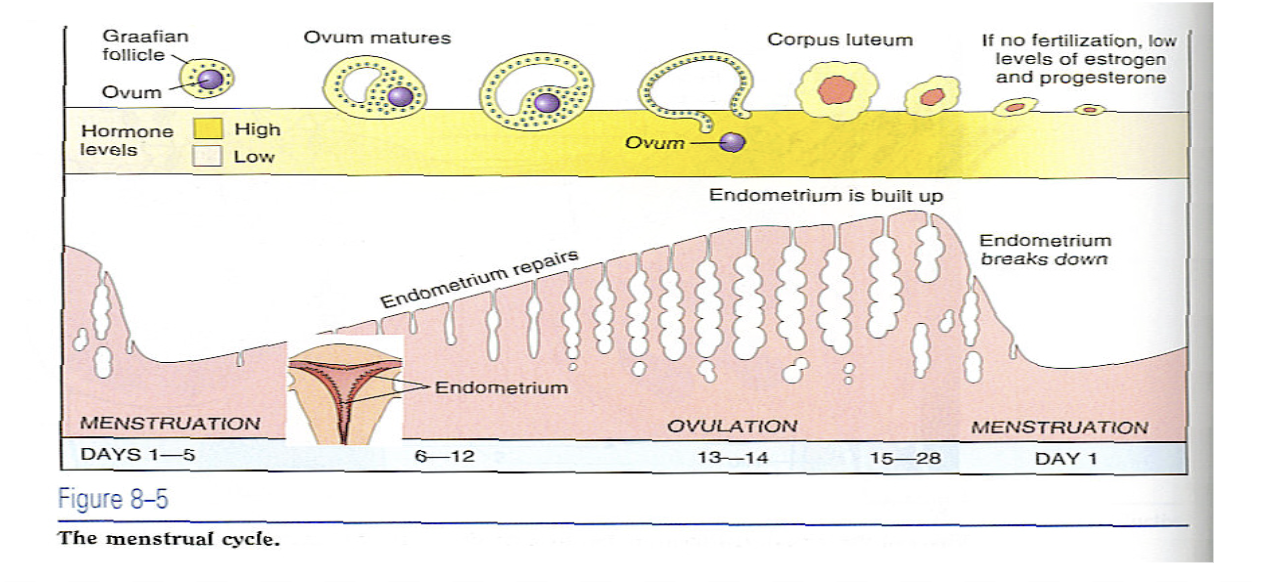
SUPER EASY 6-STEP MEMORY CHAIN
menstrual cycle easy
Day 1-5
🩸 Period
↓
Day 6-12
🌱 FSH grows follicle
Estrogen rises
Lining rebuilds
↓
Day 13-14
🚀 LH surge
Ovulation occurs
↓
Day 15-17
🥚 Egg travels
May meet sperm
↓
Day 18-23
⭐ Corpus luteum forms
Makes progesterone
↓
Day 24-28
🤰 Pregnant → hormones stay high
OR
🩸 Not pregnant → hormones drop → period starts
FAST EXAM MEMORIZATION
Days 1-5: Period 🩸
Days 6-12: FSH → Follicle → Estrogen 🌱
Days 13-14: LH → Ovulation 🥚
Days 15-17: Egg travels → Fertilization? 🧬
Days 18-23: Corpus luteum → Progesterone ⭐
Days 24-28: Pregnant = hormones ↑ 🤰
Not pregnant = hormones ↓ → Period 🩸
One-Line Trick
"Period → Follicle → Ovulation → Egg Travels → Corpus Luteum → Pregnant or Period Again."
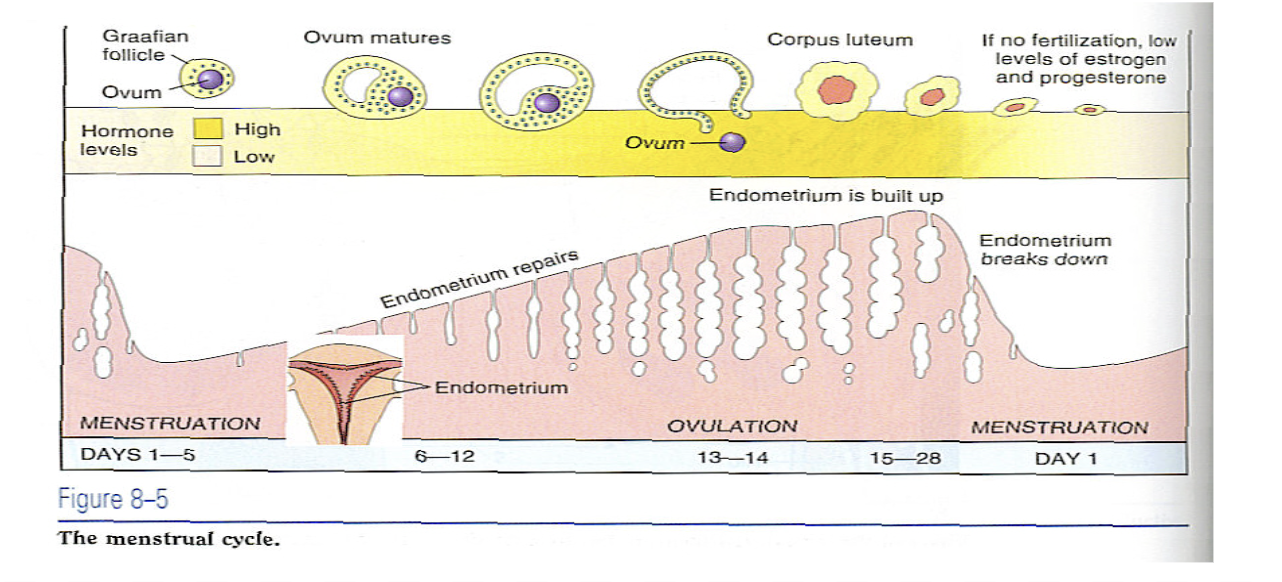
Menstrual Cycle
corpus luteum
Step 1
🥚 The egg is inside a follicle in the ovary.
Step 2
🚀 Ovulation happens.
The follicle breaks open and releases the egg.
Step 3
⭐ The empty, broken follicle doesn't disappear.
Instead, it changes into the corpus luteum .
What does the corpus luteum do?
Its main job is to make progesterone (and some estrogen).
Progesterone's job:
Keeps the uterine lining thick
Gets the uterus ready for a possible baby
Helps prevent the lining from breaking down
Think:
🏠 Uterus = house for a baby
⭐ Corpus luteum = maintenance worker
💊 Progesterone = supplies that keep the house ready
If pregnancy occurs:
The corpus luteum keeps making progesterone until the placenta can take over.
🤰 Pregnancy → Corpus luteum stays and helps.
If pregnancy does NOT happen:
The Corpus Christi dies.
❌ Corpus luteum gone → progesterone drops → uterine lining breaks down → period starts.
Super short memory trick:
Follicle → releases egg → becomes corpus luteum → makes progesterone → keeps uterus ready for baby.
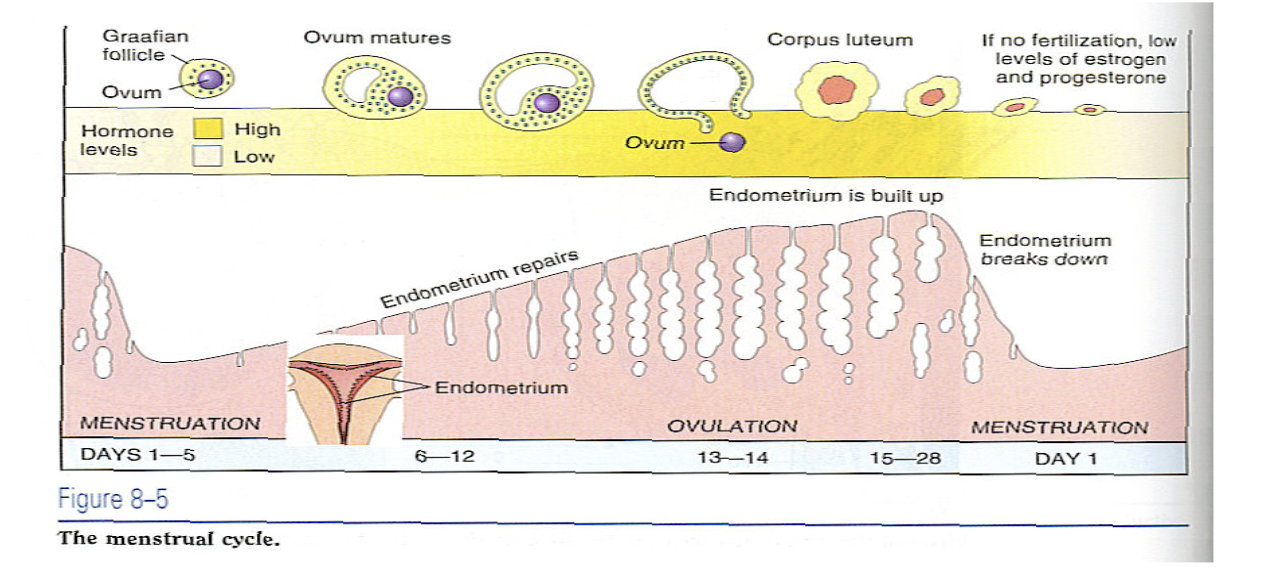
Menstrual Cycle
This is actually saying two very important things :
Days 1–5 If pregnant:
🤰 No period happens.
Why?
Because the body wants to keep the uterine lining so the baby can grow.
If NOT pregnant:
🩸 The uterine lining breaks down and leaves the body.
This is your period (menstruation) .
Then a new cycle starts .
Based on a 28-Day Cycle
Many diagrams show a 28-day cycle , but not everyone has a 28-day cycle.
Some people may have:
25-day cycles
30-day cycles
32-day cycles
That's normal.
The Important Ovulation Rule
Many people think:
❌ "Ovulation always happens on Day 14."
That's not always true.
The real rule is:
✅ Ovulation happens about 14 days before the next period starts.
Example
28-day cycle
Ovulation ≈ Day 14
Period starts ≈ Day 28
30-day cycle
Ovulation ≈ Day 16
Period starts ≈ Day 30
32-day cycle
Ovulation ≈ Day 18
Period starts ≈ Day 32
Super Easy Memory Trick
🩸 No pregnancy → Period starts
🤰 Pregnancy → No period
🥚 Ovulation usually happens 14 days before the next period , not always on Day 14.
Follicle-Stimulating Hormone (FSH)
Think of FSH as the "growth hormone" for reproductive cells.
In Females 👩
FSH does two main things:
Stimulates follicle growth
Helps an egg-containing follicle in the ovary grow and mature.
Allows estrogen secretion
As the follicle grows, it produces and releases estrogen .
Easy memory:
FSH → Follicle grows → Estrogen rises
🌱 Follicle → 💗 Estrogen
In Males 👨
FSH helps the testes:
Maintain sperm production (spermatogenesis)
This means it helps the body continuously make sperm.
FSH → Forms sperm
🧬 Sperm production continues
Super Quick Study Version
Female:
FSH = Grows follicle + increases estrogen
Male:
FSH = Makes sperm/Maintains sperm production (spermatogenesis)
Memory Trick:
FSH = Forms Sex cells
Female → egg follicle grows
Male → sperm produced
Luteinizing Hormone (LH)
Think of LH as the hormone that triggers important reproductive events .
In Females 👩
1. Induces Ovulation
LH surges (rapidly increases).
This causes the ovary to release the egg.
🥚 LH = releases the egg
2. Stimulates Corpus Luteum Formation
After the egg is released, the empty follicle becomes the corpus luteum .
⭐ LH helps create the corpus luteum
3. Progesterone Secretion
The corpus luteum makes progesterone .
Progesterone keeps the uterine lining ready for a possible pregnancy.
🏠 Progesterone keeps the uterus ready for a baby
In Males 👨 Stimulates Testosterone Production
LH tells the tests to make testosterone .
Testosterone helps:
Sperm development
Male puberty changes
🧬 LH → Testosterone → Sperm development
Super Quick Study Version
Female:
LH = Ovulation → Corpus Luteum → Progesterone
Male:
LH = Testosterone production
Memory Trick
LH = Launch Hormone
🚀 Launches the eggs in females
💪 Launches testosterone production in males
Estrogen
1-4
Think of estrogen as the hormone that helps prepare the body for pregnancy and causes female puberty changes.
1. Starts Development of the Uterine Lining
The uterine lining (endometrium) is the inner lining of the uterus.
Estrogen:
Makes the lining grow thicker.
Prepares the uterus in case a fertilized egg needs a place to attach.
🏠 Estrogen builds the baby's room.
2. Causes Fallopian Tubes to Contract
The fallopian tubes are the tubes that carry the egg from the ovary to the uterus.
Estrogen helps the tubes squeeze and move.
This helps:
Move the egg along
Help the egg meet sperm
🚶 Estrogen helps move the egg.
3. Helps Stimulate Mammary Glands
Mammary glands are the milk-producing glands in the breasts.
Estrogen helps:
Breasts develop
Prepare the body for future milk production
Easy memory:
🍼 Estrogen helps prepare the breasts for making milk.
4. Secondary Sex Characteristics
Estrogen causes many female puberty changes:
Breast development
Softer skin/ Wider hips/ Female body shape
Growth of body hair in certain areas
Easy memory:
👩 Estrogen creates female puberty changes.
Estrogen
easy super easy
Super Fast Study Version Estrogen:
🏠 Builds uterine lining
🚶 Moves eggs through fallopian tubes
🍼 Helps breasts prepare for milk production
👩 Causes female puberty changes (secondary sex characteristics)
One-Line Memory Trick:
"Estrogen builds, moves, prepares, and develops."
Builds uterine lining
Moves the egg
Prepare breasts for milk
Develops female body characteristics
Progesterone
fast summary
Think of progesterone as the hormone that finishes and maintains the uterus for a possible baby.
1. Completes Development of the Uterine Lining
Earlier in the cycle, estrogen starts building the uterine lining.
Then progesterone finishes the job and makes the lining ready for a fertilized egg.
Easy memory:
🏠 Estrogen builds the house.
🏠✨ Progesterone finishes and furnishes the house.
2. Maintains the Uterine Lining During Pregnancy
If pregnancy occurs:
Progesterone keeps the uterine lining thick and healthy.
This helps support the growing baby.
Without enough progesterone, the lining could break down.
🤰 Progesterone keeps the baby's home safe.
Super Fast Study Version
Progesterone = Finish + Maintain
Finishes the uterine lining
Maintains the uterine lining during pregnancy
One-Line Memory Trick
"Estrogen builds it, progesterone keeps it." 🏠🤰
Uses of Sex Hormones
Sex hormones aren't just made by the body—they can also be used as medications .
1. Hormone Replacement Therapy (HRT)
Used when the body is not making enough hormones (often after menopause).
It provides hormones such as:
Estrogen
Progesterone
Why?
To help with symptoms caused by low hormone levels.
🔄 Replacing missing hormones.
2. Contraception (Birth Control)
Used to prevent pregnancy.
Some birth control contains:
Estrogen + Progestin (synthetic progesterone)
Others contain:
Progestin only
Why?
These hormones help prevent ovulation and pregnancy.
🚫🤰 Hormones used to prevent pregnancy.
3. Infertility Treatment
Used when someone is having trouble becoming pregnant.
Hormone medications can:
Help eggs mature
Trigger ovulation
Easy memory:
🥚 Hormones help pregnancy happen.
4. Cancer Therapy
Some cancers grow because of hormones.
Doctors may give hormonal antagonists (medicines that block hormones).
Why?
To slow or stop the growth of certain cancers.
🛑 Block hormones to help fight cancer
Uses of Sex Hormones
Super Fast Study Version
Use | What It Means |
|---|---|
Hormone Replacement Therapy | Replaces missing hormones |
Contraception | Prevents pregnancy |
Infertility Treatment | Helps pregnancy occur |
Cancer Therapy | Blocks hormones that help some cancers grow |
Memory Trick
Replace → Prevent → Help → Block
🔄 Replace hormones (HRT)
🚫 Prevent pregnancy (birth control)
🥚 Help pregnancy (infertility treatment)
🛑 Block hormones (cancer therapy)
Menopausal Symptoms
Menopause = when estrogen levels decrease because the ovaries stop producing as much estrogen.
Low estrogen causes changes throughout the body.
Common Symptoms:
🔥 Hot flashes
Sudden feeling of heat and sweating.
😴 Tiredness + Insomnia
Feeling very tired.
Trouble sleeping.
😟 Mood Changes
Low estrogen can cause:
Anxiety
Irritability/moodiness
Depression/ Nervousness
🧠 Brain Changes
Decreased concentration
Trouble focusing
🧴 Skin Changes
Dry skin
Less skin moisture
🌸 Vaginal/Urinary Changes
Low estrogen can cause:
Vaginal dryness
Thinning of vaginal tissue
Bleeding
Dysuria ( painful urination )
Urinary incontinence ( loss of bladder control )
🦴 Bone Problems
Estrogen helps protect bones.
Lower estrogen → weaker weight-bearing bones → higher risk of osteoporosis.
❤ Heart Changes
Increased risk of CAD (coronary artery disease) because estrogen normally helps protect the heart.
Super Quick Memory Trick:
Low estrogen affects:
🔥 Heat → hot flashes
😴 Sleep → insomnia/tired
😟 Mood → anxiety/depression
🧠 Brain → concentration ↓
🧴 Skin → dry
🌸 Vaginal/urinary → dryness + bladder issues
🦴 Bones → weaker
❤ Heart → CAD risk ↑
Think: Menopause = less estrogen = changes everywhere.
Positive Effects of Estrogen
Think of estrogen as helping replace what is lost during menopause.
When estrogen levels drop, many symptoms happen. Adding estrogen can help with some of them.
🦴 1. Protects Against Osteoporosis
Estrogen helps keep bones strong.
It slows bone loss.
Easy memory:
Estrogen = protects bones
❤ 2. May Protect Against CAD (Heart Disease)
Estrogen can increase HDL ("good cholesterol").
HDL helps remove extra cholesterol from the blood.
This may help protect the heart.
Easy memory:
Estrogen ↑ HDL = heart protection
🌸 3. Decreases Vaginal Atrophy/Dryness
Estrogen helps keep vaginal tissues healthy and moist.
It can reduce dryness and thinning.
Easy memory:
Estrogen keeps tissues healthy
🔥 4. Minimizes Hot Flashes
Estrogen can reduce sudden feelings of heat and sweating.
Easy memory:
Estrogen cools hot flashes
😌 5. Helps Menopausal Symptoms
Estrogen can improve many physical symptoms of menopause.
⚠ Important: It does not always help most psychological symptoms like:
Depression/ Anxiety/ Mood changes
Super Fast Study Version:
Estrogen helps:
🦴 Bones → prevents osteoporosis
❤ Heart → ↑ HDL, possible CAD protection
🌸 Vaginal health → decreases dryness/atrophy
🔥 Hot flashes → decreases symptoms
Remember: Estrogen helps mostly physical symptoms , but may not fix most psychological symptoms .
Estrogen Side Effects
Think of estrogen side effects as problems that can happen when taking extra estrogen.
1-8
🩸 1. Thromboembolism (Blood Clots)
Estrogen can increase the risk of blood clots.
A clot can block blood flow and cause serious problems.
Memory:
🩸 Estrogen = thicker blood → clot risk
🧠 2. Stroke
A blood clot can travel to the brain and block blood flow.
❤ 3. MI (Myocardial Infarction = Heart Attack)
Estrogen may increase heart attack risk in some people, especially those with heart disease history.
⚠ May be contraindicated if someone has had a previous heart attack or cardiovascular event.
Meaning:
→ They may not be able to take estrogen because the risk is too high.
🤢 4. Nausea + Headache
Common side effects:
Upset stomach
Headache
🌸 5. Breast Tenderness
Estrogen can cause breast soreness or sensitivity.
⚖ 6. Weight Gain
Some people may experience weight changes while taking estrogen.
🫀 7. Liver/Gallbladder Disease
Estrogen can affect how the liver and gallbladder work.
🎗 8. Cancer Risk
Estrogen can increase the risk of certain cancers, especially with long-term use.
Super Fast Memory Trick:
Estrogen side effects = "Clot, Heart, Head, Hormone"
🩸 Clot → thromboembolism
❤ Heart → stroke/MI risk
🤢 Head → nausea/headache
🌸 Hormone effects → breast tenderness, weight gain, cancer risk
Main thing to remember:
Estrogen can help menopause symptoms, but it can increase risks involving blood clots and cardiovascular problems.
Bisphosphonates
Think of bisphosphonates as bone-strengthening drugs. 🦴
They are mainly used to treat osteoporosis (weak, fragile bones).
MOA (How it works)
Bisphosphonates bind to calcium and increase bone density.
MOA: bind to calcium and increase bone density
Meaning:
They help calcium stay in the bones.
This makes bones stronger and less likely to break .
Easy memory:
🦴 Bisphosphonates = Build stronger bones
Uses Osteoporosis
Helps prevent bone loss.
Makes bones stronger.
Patient Teaching / Side Effects
🥛 1. Need Calcium + Vitamin D
Calcium and Vitamin D help build strong bones.
The drug works best when the body has enough of both.
Memory:
Bisphosphonate + Calcium + Vitamin D = Strong bones
💧 2. Take with 8 oz of Water
Helps the medication absorb properly.
Reduces irritation to the throat/esophagus.
🧍 3. Stay Upright for 30 Minutes
Do not lie down right after taking it.
Prevents the drug from irritating the esophagus.
Memory:
💊 Take → 💧 Water → 🧍 Stand up
Side Effects
🤢 GI Upset
Stomach discomfort/ Heartburn/ Nausea
💪 Musculoskeletal Pain
Bone, muscle, or joint pain
🤕 Headache 🦷 Jaw Pain (Osteonecrosis)
Long-term use can rarely cause jaw bone problems.
Monitor for jaw pain or unusual dental problems.
Super Fast Study Version
Bisphosphonates
Bisphosphonates = Bone builders
🦴 MOA: Hold calcium → ↑ bone density
🦴 Use: Osteoporosis
🥛 Need: Calcium + Vitamin D
💧 Take: 8 oz water
🧍 Stay: Upright 30 minutes
⚠ Side effects: GI upset, muscle pain, headache, jaw pain
Memory Trick:
"Calcium + Water + Stand = Strong Bones" 🦴
REPRODUCTIVE SYSTEM DRUG THERAPY
Bisphosphonates
drug
alendronate Fosamax®
Fertility Drugs
Think of fertility drugs as medicines that help the body release an egg to improve chances of pregnancy. 🥚
MOA (How it works)
Binds to estrogen receptors
The drug blocks estrogen signals.
The body thinks estrogen is low.
Pituitary releases more FSH and LH
FSH helps eggs mature.
LH helps trigger ovulation.
Stimulates ovulation
Causes the ovary to release an egg.
Fertility drug → FSH + LH ↑ → Egg released 🥚
Patient Teaching / Side Effects 👶 Multiple Births
These drugs can cause more than one egg to be released .
More eggs = higher chance of twins or multiple births.
👨 Male Use
Some drugs in this class can increase testosterone levels in males .
Super Fast Study Version
Fertility drugs = Help release eggs
🧬 Bind estrogen receptors
⬆ FSH + LH release
🥚 Ovulation happens
⚠ Side effect:
Multiple eggs → multiple births
👨Can also increase testosterone in males.
REPRODUCTIVE SYSTEM DRUG THERAPY
Fertility
drug
clomiphene citrate Clomid®
Male Hormones (Androgens)
Think of androgens as the main male sex hormones (especially testosterone ).
They help the body develop male traits and make sperm.
What Do Androgens Do? 👨
1. Male Sex Characteristics
Androgens cause male puberty changes like:
Deeper voice
Facial/body hair growth
Increased muscle development
Memory:
Androgens = male body changes
🧬 2. Sperm Production
Androgens help the testes produce sperm.
They support normal fertility.
Memory:
Androgens = help make sperm
Uses of Androgens
1. Hypogonadism
Meaning: The body does not make enough sex hormones.
Androgens are given to:
Replace low testosterone
Restore normal hormone levels
Memory:
Low hormones → give hormones
2. Impotence (Erectile Dysfunction)
Meaning: Trouble getting or maintaining an erection.
Androgens may be used if low testosterone is the cause.
3. Oligospermia
Meaning: Low sperm count.
Androgens may help improve sperm production in some cases.
Memory:
"Olipo = low" → low sperm
4. Cryptorchidism
Meaning: Tests do not descend into the scrotum after birth.
Androgen therapy may help with testicular development/descent.
Memory:
"Crypt = hidden" → hidden testis
Super Fast Study Version
Androgens = Testosterone
👨 Male characteristics
🧬 Sperm production
Used for:
Hypogonadism → low sex hormones
Impotence → erection problems (if low testosterone)
Oligospermia → low sperm count
Cryptorchidism → undescended tests
Memory Trick:
Androgens = "A MAN makes traits + sperm" 👨
A = Androgens
M = Male characteristics
S = Sperm production
REPRODUCTIVE SYSTEM DRUG THERAPY
Androgens drug
testosterone Testim®, Androgel®
Erectile Dysfunction (ED) Medications
Think of ED medications as drugs that help increase blood flow to the penis to allow an erection.
MOA (How it works)
1. Smooth muscle relaxation
The muscles in blood vessels relax.
2. Vasodilation
Blood vessels widen.
3. Increased blood flow
More blood flows into the penis → helps produce an erection.
Relax → Open vessels → More blood flow → Erection
Other Uses
Some ED medications may also be used for:
Psych/mental health-related sexual problems (when appropriate)
Patient Teaching / Side Effects ⚠ Interaction with Nitrates
Do NOT combine with nitrates.
Why?
ED meds widen blood vessels.
Nitrates also widen blood vessels.
Together → blood pressure can drop too much .
This causes:
⬇⬇ Severe hypotension (dangerously low blood pressure)
Super Fast Study Version
ED meds = Increase blood flow
🧘 Relax smooth muscle
⬇
🩸 Vasodilation
⬇
🚀 More blood flow to penis
⚠ Never mix with nitrates → severe low BP
Memory Trick:
"ED meds open vessels. Nitrates open vessels too = BP drops too low."
REPRODUCTIVE SYSTEM DRUG THERAPY
Erectile Dysfunction Agents
Phosphodiesterase 5-Inhibitors
sildenafil Viagra®
tadalafil Cialis®
vardenafil Levitra®