ANTR 350 - Unit 1 learning objectives
 Call Kai
 Learn
Learn Practice Test
 Spaced Repetition
 Match
Match Flashcards
 Knowt Play
1/229

There's no tags or description
Looks like no tags are added yet.
Name | Mastery | Learn | Test | Matching | Spaced | Call with Kai | Chat |
|---|
No analytics yet
Send a link to your students to track their progress
230 Terms
gross anatomy
structures that can be seen with the naked eye
microscopic anatomy
structures that need a microscope
subfields of gross anatomy
regioonal, surface, and systemic
regional anatomy
gross anotomy in relation to one another in the body
ex: head and neck, abdonomen
surface anatomy
visible and palpations to relate to deeper structures
ex: palpating anterior neck to find thyroid gland
systemic anatomy
gross anatomy of each system
ex: respiratory system
four principal tissues in the body
epithelial
muscle
nervous
connective
where is epithelial tissue found?
lines walls of GI tracts and organs, covers exposed surfaces (skin)
primary function of connective tissue
provides support for other tissues and structures in the body
three types of muscle tissue
cardiac
smooth
skeletal
the function of nervous tissue
electrical signals throughout the body
organ
2 or more tissues that combine to make an organ
ex: heart, lungs
organ system
2 or more organs working closesly together to perform a similar function
ex: respiratory system, urinary tract system
tissue
group of cells that work together to perform a shared fuction
anatomical position
body erect (standing upright)
eyes looking forward
upper limbs at the side
elbow, wrists, and fingers extended
forearms supinated
thumb lateral to digits
lower limbs straight, feet flat on floor, toes pointed forward
prone
patient lying face down
supine
patient lying on back
what does left and right mean in anatomy?
left is patients left and right is patients right

label these body regions!
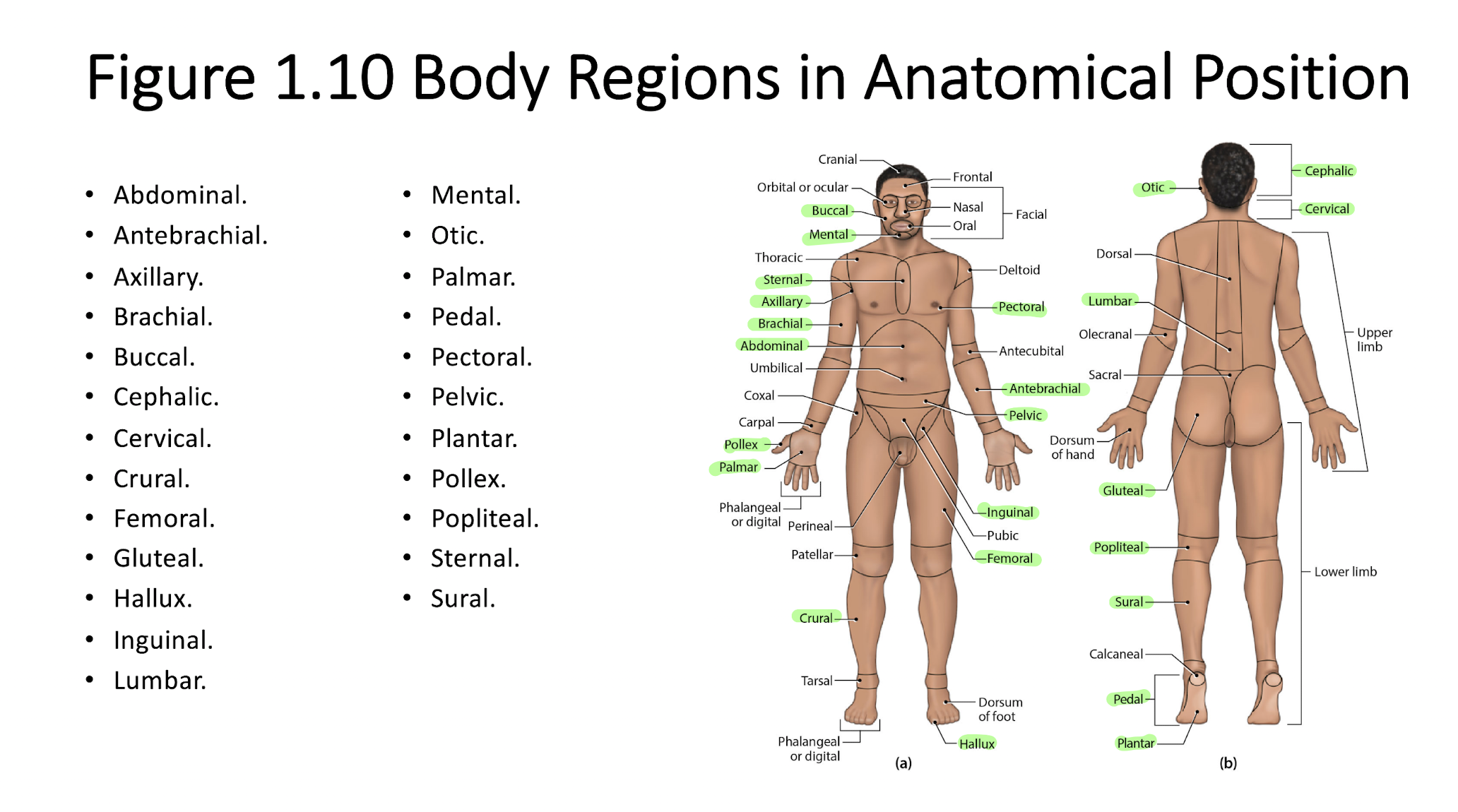
anterior (ventral)
twoards or located on the front surface of the body
posterior/dorsal
towards or located on the back part of the body
medial
closer to the midline
lateral
further away or moving from the midline of the body
superior/cranial/cephalic
closer to or moving towards the head
inferior (caudal)
closer to or moving towards the feet
proximal
located closer to the point of attachment
distal
lcoated further from the point of attachment
superficial
lcoated closer to the surface
deep
located further away from the surface
bilateral
paired, left and right sides
contralateral
located on the opposite side of the body
ipsilateral
located on the same side of the body
unilateral
singular, one side
frontal (coronal) plane
runs parallel to the long axis, divides into anterior and posterior
oblique plane
pass thorugh the body at an angle
sagittal plane
length wise, divides body into left and right
transverse (horizontal)
divides into upper and lower
midsagittal vs parasagittal
midsagittal divides the body into perfectly left and right sections, also known as the midline
what planes are used to make the 4 abdominal quadrants
transumbillical plane (transverse plane)
median or midsagittal plane
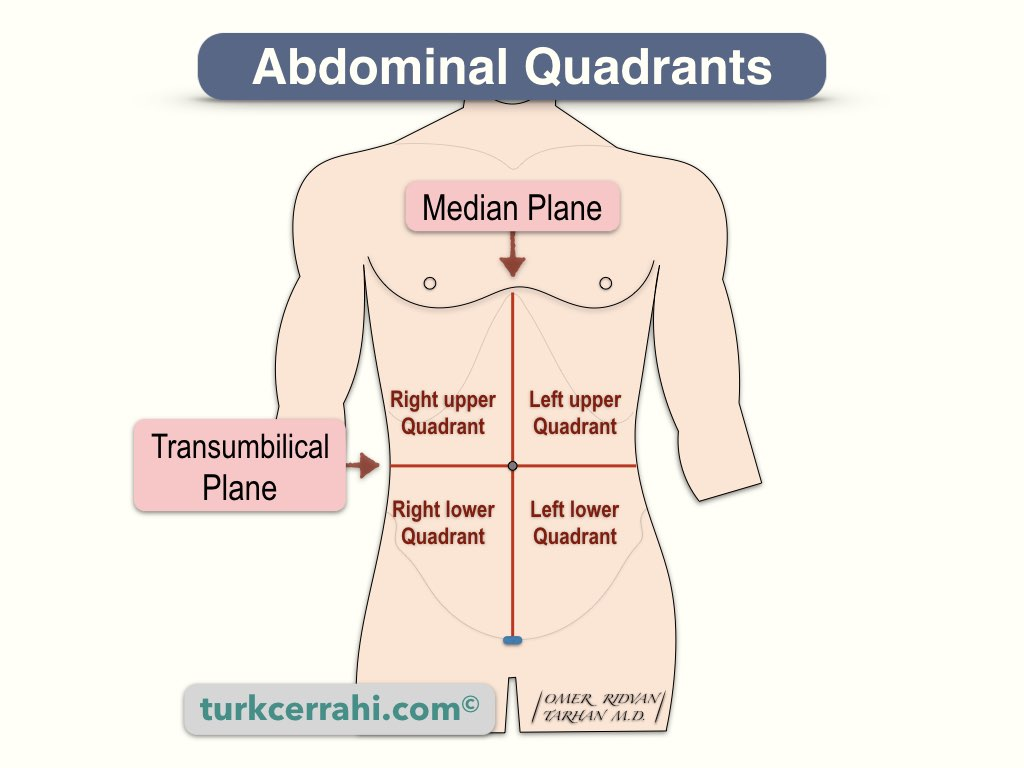
label the 9 abdominal quadrants

what are the planes used for the 9 abdominal quadrants
sagittal planes - right midclavicular, left midclavicular
transverse plans - subcostal plane, transtubecular

identify the following body cavities on this figure
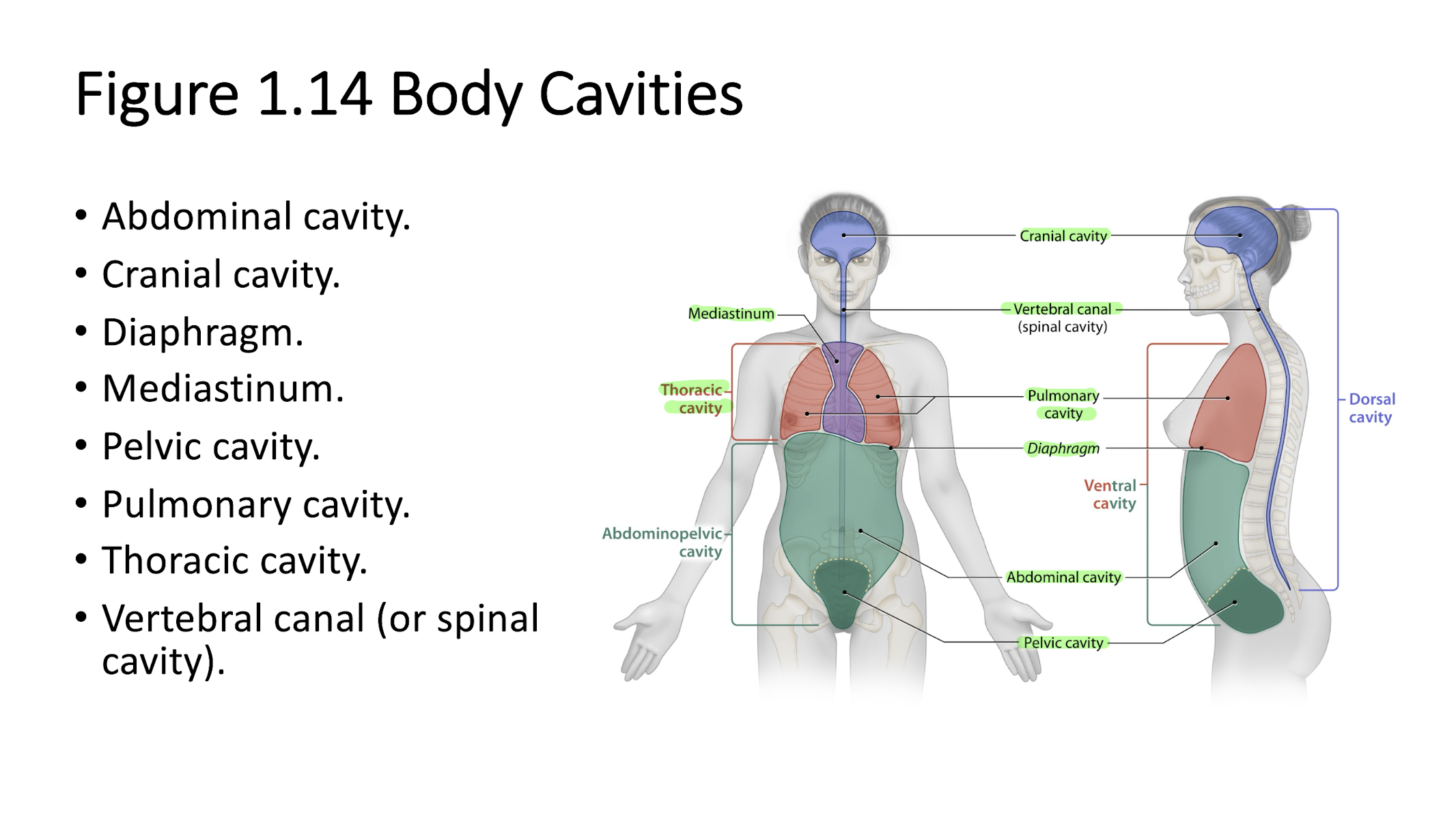
what structure seperates the thoracic and abdominal cavity
diaphragm
what are three sereous membranes and which organs are associated with each
pericardium: serous membrane of the heart
pleura: serous membrane of the lungs
perioteneum: serous membrane of digestive organs
ligament
connect bone to bone
tendon
connect muscle to bones
four functions of skeletal system
encasement and protection of vital organs
support and movement
hemopoiesis (blood cell production)
mineral and energy storage
flat bones
thin, broad, and commonly curved, a lyer of spongy bone called dipole between 2 thin layers of compact
irregular bones
bones taht don’t fit into other shape classfications
sesamoid bones
bones found within tendons
short bones
equally long and wide
long bones
bones longer than they are wide
type of bone - carpals
short bones
type of bone - ethmoid
irregular
type of bone - femur
long
type of bone - humerus
long
type of bone - os coxae
irregular
type of bone - patellla
sesamoid
type of bone - phalanges
long
type of bone - ribs
flat
type of bone - scapula
flat
type of bone - sternum
flat
type of bone - sphenoid
irregular
type of bone - tarsals
short
type of bone - vertebrae
irregular
compact bone
underneath periosteum, strength and resistance against compression, twisting and shearing
diaphysis
the long portion of the bone
endosteum
lining of medullary cavity tha tpromotes growht and healing
epiphysis
end of bone, touch other bones to form articulations
medullary cavity
hollow part of long bones filled with yellow bone marrow (fat storage)
periosteum
dense irregular collagenous tissue
spongy bone (trabhecular bone)
trbeculae forming lattice structure that is filled with red bone marrow
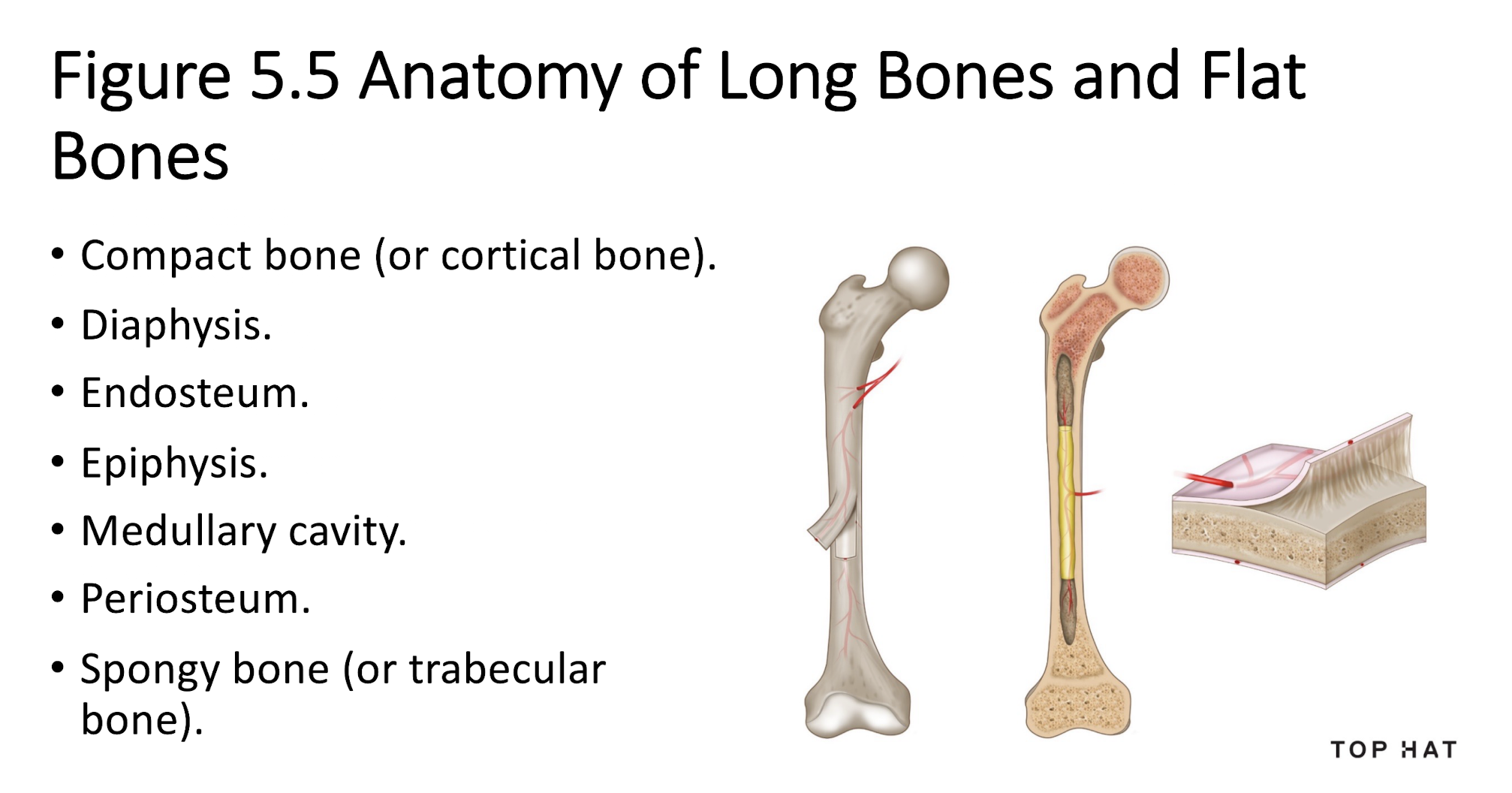
identify the characteristics of long bone

bony depression
clefts whre bones meet another structure
ex: fossa, and groves
allows for neurovasculature to traverse along bone and provides muscle attachment
bony opening
hole in bone allowing for passage of neurovasculature
canal, fissure, foramen
bony projection
extension for muscle, tendon, and ligaments to attach
crest, tubercule, epicondyle, process, spine, line. trochanter
articulating surfaces
areas where bones meet each other to form joints
head, condyle, facet
canal
opening
condyle
aritculating
crest
projection
epicondyle
projection
facet
articulating
fissure
opening
foramen
opening
fossa
depression
groove
depression
head
articulating
line
projection
process
projection
spine
projection
sulcus
depression
trochanter
projection
tubercule
projection
axial or appendicular - clavicle
appendicular
axial or appendicular - hip bones
appendicular
axial or appendicular - limb bones
appendicular
axial or appendicular - ribs
axial
axial or appendicular - scapula
appendicular
axial or appendicular - skull
axial
axial or appendicular - sternum
axial