geol105 - exam 1
 Call Kai
 Learn
Learn Practice Test
 Spaced Repetition
 Match
Match Flashcards
 Knowt Play
1/101

There's no tags or description
Looks like no tags are added yet.
Name | Mastery | Learn | Test | Matching | Spaced | Call with Kai | Chat |
|---|
No analytics yet
Send a link to your students to track their progress
102 Terms
geosphere components
core
mantle
crust
core
inner core = solid
outer core = liquid
mantle
upper mantle = atmosphere
the rocks here are weak and able to slowly flow in response to the uneven distribution of heat deep within Earth.
crust
lithosphere
rigid outer layer that includes the crust and the uppermost mantle
soureces of energy
renewable
nonrenewable
renewable resources
can be replenished over a relatively short time spans
ex) plants and animals food, natural fibers for clothing, forest products for lumber and paper, and energy from flowing water, wind, and the sun
non renewable
these resources cannot be easily replenished
ex) metals such as iron, aluminum, and copper. As do our most important fuels: oil, natural gas, and coa
environmental issues
greenhouse effect
global warming
climate change
greenhouse effect
carbon dioxide as well as other gases trap the heat reflected back from earth’s surface, this retention of heat reflected back
scientific method
the process described, in which researchers gather data through observations and formulate scientific hypotheses and theories
hypothesis
a tentative/untested explanation, meant to be answered through investigation trying to explain how or why things happen
theory
a well-tested and widely accepted view that the scientific community agrees best explains certain observable facts
steps of scientific method
observation
question
hypothesis
results
conclusion
universe theories
big bang
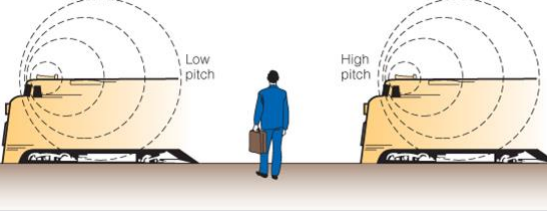
doppler effect
big bang
the universe started in a dense, hot state, followed by expansion, cooling, and a less dense state. Therefore, there is no “before the Big Bang”, only what occurred after it
doppler effect
which is a change in the frequency of a sound, light, or other wave caused by movement of the wave’s source relative to the observer
terrestrial planets
composed of rock and metallic elements that condensed at high temperatures
Mercury, Venus, Earth, Mars
jovian planets
small rock cores compared with their overall size and are composed mostly of hydrogen, helium, ammonia, methane, which condense at lower temperatures
Jupiter, Saturn, Uranus, Neptune
earth components
crust
mantle
liquid outer core
solid inner core
rock cycle
pictorial representation of events leading to the origin, destruction or changes, and reformation of rocks as a consequence of Earth’s internal and surface processes

organic evolution
states that all present-day organisms are related and that they have descended with modification from organisms that lived in the past
geologic time scale
divided into a hierarchy of increasingly shorter time intervals, each of which has a specific name and duration

continential drift
all land masses were originally united in a single supercontinent
alfred wegener
German meteorologist is generally credited with developing the hypothesis of continental drift. He proposed that all land masses were originally united in a single supercontinent that he named Pangaea, from the Greek meaning “all land”
supercontinents
Pangaea – supercontinent proposed by Wegener
Laurasia - northern supercontinent containing North America and Asia (excluding India)
Gondwanaland - southern supercontinent containing South America, Africa, India, Antarctica, and Australia
continental drift evidence
Puzzle-piece fit of coastlines of Africa and South America has long been known, connecting continents allowed plants and animals to roam different lands without crossing oceans
Wegener noted South America, Africa, India, Antarctica, and Australia have almost identical late Paleozoic rocks and fossils in early 1900s
Glossopteris (plant), Lystrosaurus and Cynognathus (animals) fossils found on all five continents.
Mesosaurus (reptile) fossils found in Brazil and South Africa only
continential drift evidence
Fitting of Continents and the matching of rock types: Redefined the edge of each continent as the middle of the continental slope greatly improved the fit.
Rock matches show when the continents were together, paleomagnetic data indicate the direction and rate of movement.
glacial continential drift evidence
During the late Plaeozoic Era, massive glaciers covered large continental areas of the Southern Hemisphere
Evidence for the glaciation include:
Layers of till (sediments deposited by glaciers)
Glacial striations (scratch marks from glaciers sliding downslope)
paleomagnetism
is the remnant magnetism in ancient rocks recording the direction and intensity of Earth’s magnetic poles at the time of the rocks formation
When magma rocks cool, the magnetic ironbearing minerals align themselves with Earth’s magnetic field, recording both direction and strength.
The temperature at which iron-bearing minerals gain their magnetization is called the Curie Point.
Uses mineral magnetic properties to determine direction and distance to the magnetic pole when rocks formed.
plate boundaries
divergent
convergent
transform
divergent boundary
plates move apart
Can occur in the middle of the ocean or within a continent.
Marked by rifting, basaltic volcanism, and eventual ridge uplift.
Eventually creates a new ocean basin.
convergent boundary
plates move together
Ocean-ocean plate convergence – marked by ocean trench, Benioff zone, and volcanic island arc
Ocean-continent plate convergence – marked by ocean trench, Benioff zone, volcanic arc, and mountain belt
Continent-continent plate convergence – marked by mountain belts and thrust faults
Ophiolites- equences of rock on land consisting of deep-sea sediments, oceanic crust, and upper mantle. Ophiolites are one feature used to recognize ancient convergent plate boundaries.
transform boundary
plates slide horizontally past one another
lithosphere is neither created nor destroyed along a transform boundary, the movement between plates results in a zone of intensely shattered rock and numerous shallow-depth earthquakes
ex) San Andreas Fault in California
seafloor spreading
the concept that the seafloor is moving like a conveyor belt away from the crest of the mid-oceanic ridge until it disappears by plunging beneath a continent or island arc. Proposed in 1962 by Harry Hess
deep mantle convection
circulation pattern driven by rising of hot material (hot mantle rock) and/or the sinking of cold material (oceanic crust)
marine magnetic anomalies
alternating positive and negative magnetic anomalies that form a stripe- like pattern parallel to the mid-oceanic ridges, which allows us to measure the rate of movement and to predict the age of the sea floor
intraplate activity
mantle plume - narrow columns of hot mantle rock that rise through the mantle. Stationary with respect to moving plates; large mantle plumes may spread out and tear apart the overlying plate forming a Hot Spot at the Earth’s surface (examples include Hawaii, Yellowstone and Iceland
hot spot volcanism - Mantle plume hot spots in the interior of a plate produce volcanic chains
mineral
building blocks of rocks
is any naturally occurring inorganic solid that possesses an orderly crystalline structure and a definite chemical composition that allows for some variation
defining a mineral
naturally occurring
generally inorganic
solid substance
orderly crystalline structure
definite chemical composition that allows for some variation
mineral?
wood - no
table salt - yes
water - no
ice - yes
ice cube - yes
bone - no
dirt - no
synthetic diamonds - no
gold - yes
atoms
the smallest particles that cannot be chemically split. They do contain even smaller particles: protons, and neutrons located in a central nucleus that is surrounded by electrons.
protons
positive charge
electrons
negative charge
neutrons
neutral charge
valance electrons
can be transferred or shared with other atoms to form chemical bonds
ionic bonds
valence electrons transferred
covalent bonds
valence electrons shared
metallic bonds
electrons free to move; resulting in high electrical conductivity
diagnostic properties
useful in identifying an unknown mineral.
ambiguous properties
properties of certain minerals varying among different specimen of the same mineral
properties of minerals
color
streak
luster
cleavage and fracture
hardness
crystal shape
density
color
the most conspicuous characteristic of any mineral, it is considered a diagnostic property of only a few minerals
streak
color of the mineral in powdered form
luster
appearance or quality of light reflected from the surface of a mineral
Minerals that have an appearance of of metal, regardless of color, are said to have metallic luster.
Minerals with a dull coating or tarnish exhibit a submetallic luster
Most minerals have a nonmetallic luster
○Vitreous/glassy
○Earthy/dull - soil like
○Pearly
Silky/greasy
cleavage
is the tendency of a mineral to break (cleave) along planes of weak bonding
cleavage directions
1 direction (plane)
2 directions (planes) = 90%
2 directions (planes) (different angle) ≠ 90%
3 directions (planes) = 90% intersect
3 directions (planes) ≠ 90% intersect
4 directions (planes)
hardness
measure of the resistance of a mineral to abrasion or scratching
crystal shape
refer to the common or characteristic shape of individual crystals or aggregates of crystals.
density
mass per unit volume
fracture
minerals do not break along planes of cleavage, they fracture
Irregular fracture- produce uneven surfaces
Conchoidal fracture- break into smooth curved surfaces resembling broken glass
Splintery/Fibrous fracture
silicates
Made up of the two most common elements in Earth’s crust, Oxygen and Silicon, combine to form the basic “building block” for the most common group.
silicate-oxygen tetrahedron
consisting of four oxygen ions that are covalently bonded to a comparatively smaller silicon ion, forming a tetrahedron- a pyramidal shape with four identical faces
silicate structures
●Isolated Silicate
●Chain Silicates
○Single
○Double
●Sheet Silicates
●3D Framework Silicates.
non silicates
●Carbonates – contains C O3 in their structures (calcite – C a C O3).
●Halides - contains Cl, F, Br in their structures (halite - NaCl)
●Sulfates – contains S O4 in their structures (gypsum – C a S O4. 2H2O).
●Sulfides – contains S (but no O) in their structures (pyrite – F e S2).
●Oxides – contains O, but not bonded to S i, C or S (hematite – F e2O3).
●Native elements – composed entirely of one element (diamond – C).
igneous rocks
intrusive igneous
extrusive igneous
intrusive igneous
form when magma solidifies underground (plutonic)
formed deep underground and typically cools slowly
extrusive igneous
form when magma solidifies at the Earth’s surface (lava) (volcanic rocks)
formed at or near the Earth’s surface and cools quickly.
classification of igneous rocks
Igneous rock are classified based on their:
chemical composition
texture
chemical composition
mineral content indicates origin and evolution of the magma
texture
rock’s appearance with respect to the size, shape and arrangement of grains or other constituents. Crystal size is determined by the rate of cooling of the magma
chemistry of igneous rocks
felsic
intermediate
mafic
ultramafic
felsic
>65% silica by weight
contain light-colored minerals that are abundant in silica, aluminum, sodium and potassium
more dangerous
Convergent boundary: Magma at convergent plate boundaries/subduction zone is mostly intermediate (53%-65% silica) or felsic (>65% silica). find rocks like Andesites and Granites
intermediate
silica contents between 55% and 65% by weight
Convergent boundary: Magma at convergent plate boundaries/subduction zone is mostly intermediate (53%-65% silica) or felsic (>65% silica). find rocks like Andesites and Granites
mafic
silica content between 45% and 55% by weight
contain dark-colored minerals that are abundant in iron, magnesium and calcium
less dangerous that felsic, effusive
Divergent boundary: Magma formed beneath the spreading ridge in invariably mafic (45%-52% silica), consisting mostly of ferromagnesian silicates. Therefore we find mainly basaltic types rocks on the ocean floors.
ultramafic
<45% silica, by weight
composed almost entirely of darkcolored (black/green) ferromagnesian minerals
textures
aphanitic
phaneritic
pegmatitic
porphyritic
glassy
vesicular
pyroclastic
aphanitic
fine grained
crystals are too small to see easily with the naked eye
Magma cooled quickly at or near the surface
extrusive
phaneritic
coarse grained
crystals are large enough to see with the naked eye
Magma cooled slowly/below the surface
intrusive
pegmatitic
extremely coarse grained
formed when magma cools very slowly at depth
intrusive
porphyritic
2 distinct crystal sizes
phenocrysts - formed first during slow cooling underground
groundmass - forming during more rapid cooling at the Earth’s surface
glassy
contains no crystals at all
formed by extremely rapid cooling of the magma
extrusive
vesicular
contains cavities (vesicles) in extrusive rocks resulting from gas bubbles that were in the lava
ex) pumice
pyroclastic
fragmental
consolidated pyroclastic debris such as ash, pumice or crystalline rock
viscosity
resistance to flow
factors that affect visciosity
heat
main influence = silica content
gases, water vapor, and CO₂
ex) water = low viscosity, honey = high visciosity
bowen’s reaction series
Minerals crystallize in a predictable order, over a large temperature range.
melting
decompression melting
flux melting
decompression melting
occurs when rising mantle rock is subject to lower melting points as the pressure is reduced
releasing pressure
deeper you go = temp and pressure increase
higher you go = temp and pressure decrease
going from high to low = decompressing, starting to melt
melts as it rises
flux melting
adding water
Water becomes increasingly reactive at higher temperatures.
At sufficient pressures and temperatures, highly reactive water vapor can reduce the melting point of rocks by over 200°C.
addition of water = speeding things up
decreases melting point by 200 degrees
evolution of magma
differentation
crystal setting
partial melting
assimilation
mixing
differentation
process by which different ingredients separate from an originally homogenous mixture.
crystal setting
changes the magma composition as the crystals are removed from the melt as they settle downward
partial melting
process by which the magma composition varies as different minerals/rocks melt at different temperatures
assimilation
process whereby a hot magma composition will change as it melts and assimilates adjacent rocks into the magma
xenolith - rock fragment within an intrusive igneous body that is unrelated to the igneous body itself
mixing
magma mixing
composition of a magma body changes as it mixes with another magma body
intrusive bodies
collectively called plutons, exist in bodies or structures that penetrate or cut through pre-existing country rock
dike
sill
laccolith
volcanic neck
volcanic pipe
batholith
stocks
dike
shallow, tabular intrusive structure that cuts across any layering in country rock
sill
shallow, tabular intrusive structure that parallels layering in country rock
laccolith
a sill inflates and causes the overlying rock to bow upward, forming an igneous body
volcanic necks
shallow intrusion formed when magma solidifies in throat of volcano. Then the surrounding volcano material erodes away
volcanic pipe
cylindrical conduit that connects the volcano’s throat to the underlying magma chamber