Ch 2 Chemical Composition of the Body - Lecture cards.
 Call Kai
 Learn
Learn Practice Test
 Spaced Repetition
 Match
Match Flashcards
 Knowt Play
1/165

There's no tags or description
Looks like no tags are added yet.
Name | Mastery | Learn | Test | Matching | Spaced | Call with Kai | Chat |
|---|
No analytics yet
Send a link to your students to track their progress
166 Terms
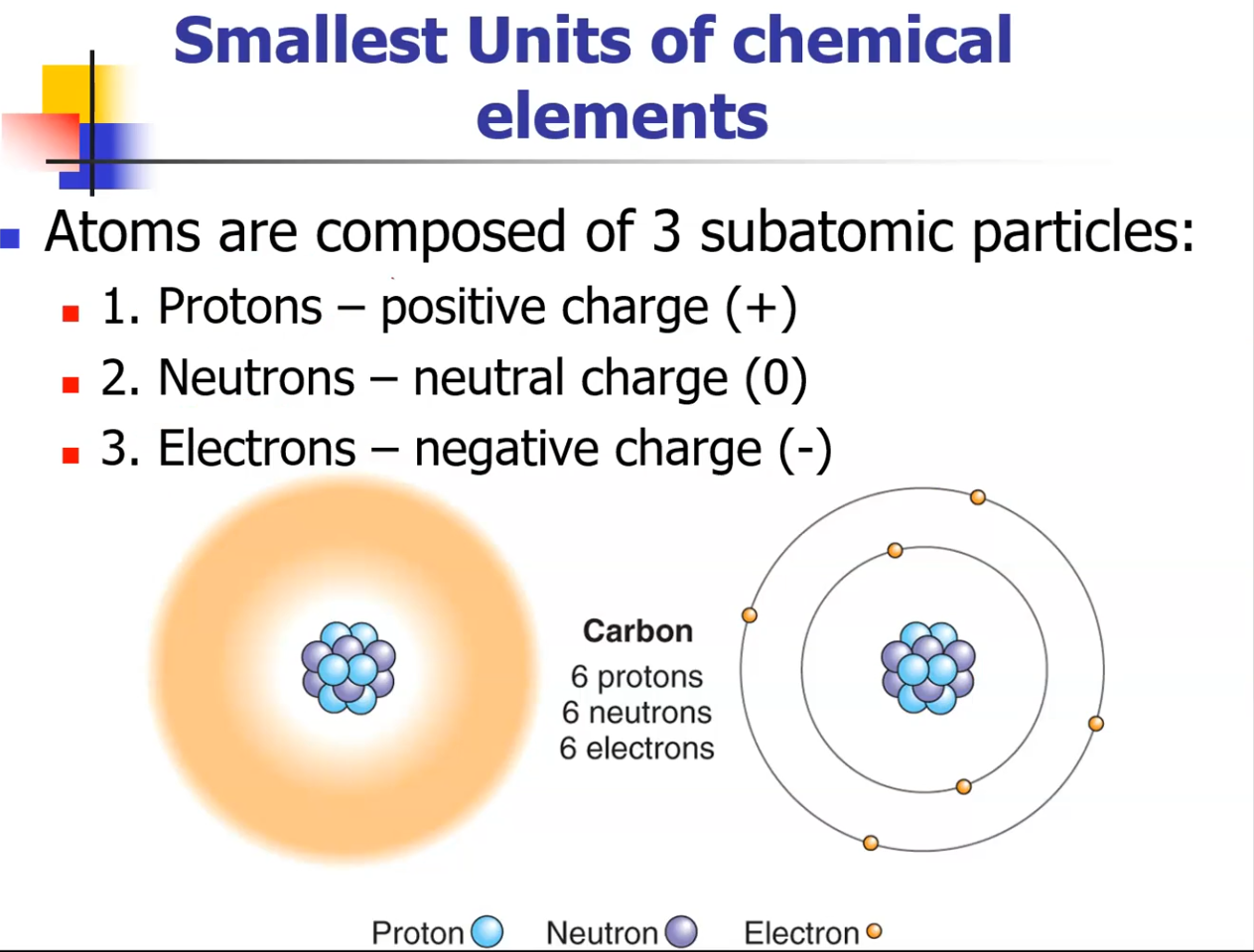
What are the 3 subatomic particles that make up an atom, and what charge does each carry?
Protons – positive charge (+)
Neutrons – neutral charge (0)
Electrons – negative charge (−)
What is the atomic number?
The number of protons in an atom.
What is an element?
A classification of atoms based on their atomic number.
All atoms that have the same number of protons, belong to the same element.
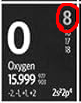
What is the function of protons? (Atomic number)
Atomic identity, the number of protons determines what element an atom is.
Oxygen = 8 so any atom that has 8 protons it’s element is Oxygen.
What is the function of a Neutron?
Nuclear stability, if the nucleus is unstable it leads to radiation.
What is the function of an Electron
Bonding.
What is the mass of each subatomic particle?
Proton = 1
Neutron = 1
Electron = 0
Where is each subatomic particle located?
Proton = Nucleus.
Neutron = Nucleus.
Electron = Orbitals.
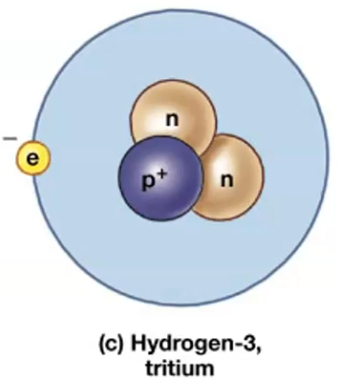
What is an isotope? (family)
Atoms of the same element with a different number of neutrons.
What is the mass number?
Number of protons + number of neutrons.
What stays the same in isotopes, and what changes?
Same = protons (same element)
Changes = neutrons.
What happens when an atom has too many neutrons?
It becomes unstable (radioactive) — neutrons maintain nuclear stability, so an imbalanced ratio disrupts it.
What is atomic weight?
The average mass number of all isotopes of an element.
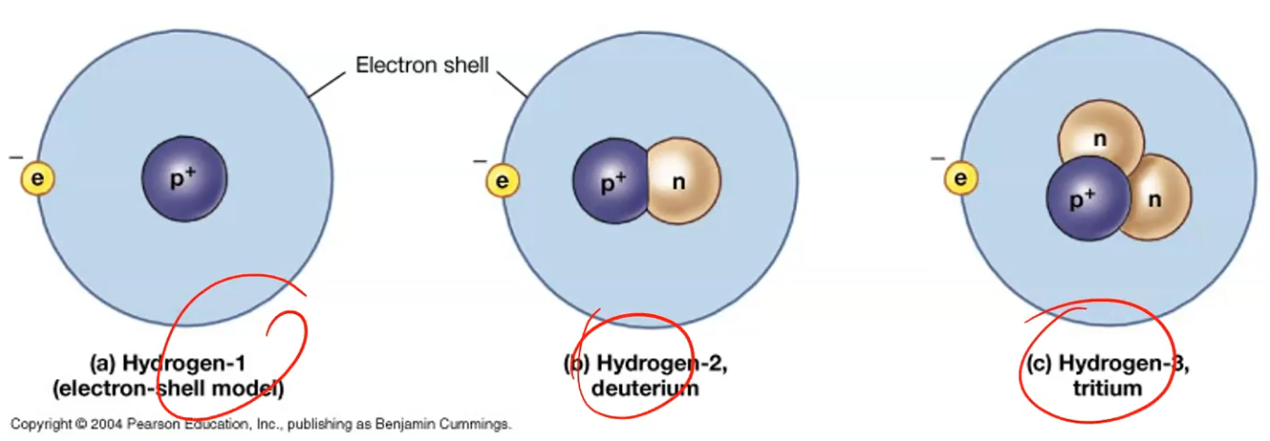
What is an energy level?
The electron's orbit around the atom (also called the electron shell).
What’s a free radical?
An atom/molecule with an unpaired electron in its outer shell, making it highly reactive.
How many electrons can each shell hold?
Shell 1 = 2 electrons.
Shells 2 & 3 = 8 electrons each.
In what order do you add electrons based on shells?
You add electrons to shell 1 first, you can only add to 2 once 1 is full.
If an energy shell / electron shell doesn’t have any electrons does it still exist? Y/N
No, if the shell doesn’t have any electrons it doesn’t exist.
What is a stable atom?
An atom with the maximum number of electrons in its outer shell.
What is an unstable atom?
An atom with unfilled outer energy levels.
Lets say we have 7 electrons:
Shell 1 fills first → holds 2 electrons (2 used, 5 left).
Shell 2 gets the rest → holds up to 8, but only has 5/8.
What are valence electrons?
Outermost energy levels of unstable atoms.
Example:
shell 1 = 2/2.
shell 2 = 5/8 = valence electrons.
What does stability of atom lead to?
Chemical bonds.
Do inert/non-reactive atoms react with stable, unstable, or neither?
Neither — inert atoms ARE stable atoms (full outer shell), so they don't react at all.
Do reactive atoms react with stable or unstable atoms?
They react with other unstable atoms to gain stability.
The goal two unstable atoms interact or shar electrons until both are full.
Why do reactive atoms react with other atoms?
They have unfilled outer shells, so they react with other unstable atoms to gain/share electrons and achieve stability
What are the three ways an atom can achieve stability?
Losing electrons — empties the outer shell entirely.
Sharing electrons — both atoms share to fill each other's shell.
Gaining electrons — takes electrons from another atom to fill its shell.
What is a chemical bond?
When atoms lose, share, or gain electrons to achieve stability.
Sharing = covalent bond.
Gaining/losing = ionic bond.
What are the 3 types of chemical bonds?
Ionic bonds (gaining/losing).
Covalent bond (sharing).
Hydrogen bond (Weakest) - most likely on the test.
What are the two hydrogen bonds? (for physiology)
H - - - O (Hydrogen & Oxygen).
H - - - N (Hydrogen & Nitrogen).
What is an ion?
A molecule with a positive (+) or negative (−) charge.
(Not distinguishing between which type of charge)
What is the difference between a cation and an anion?
(If we wanted to distinguish between + and - charge)
Cation = positive charge (+).
Anion = negative charge (−).
Memory hook: Cation = Charged positively (the "t" looks like a +)
How do atoms become cations or anions?
Lose electrons → more protons than electrons → cation (+)
Gain electrons → more electrons than protons → anion (−)
Which ion is the electron donor and which is the electron acceptor?
Cation (+)
Anion (−)
Cation (+) = electron donor (lost electrons)
Anion (−) = electron acceptor (gained electrons)
atoms start neutral — the charge tells you what happened (+ = donated, − = accepted)
How do you calculate the charge of an atom?
Subtract Protons by electrons
More protons = +
More electrons = -
What is an ionic bond?
When a cation (+) and anion (−) are attracted to each other due to opposite charges (magnets).
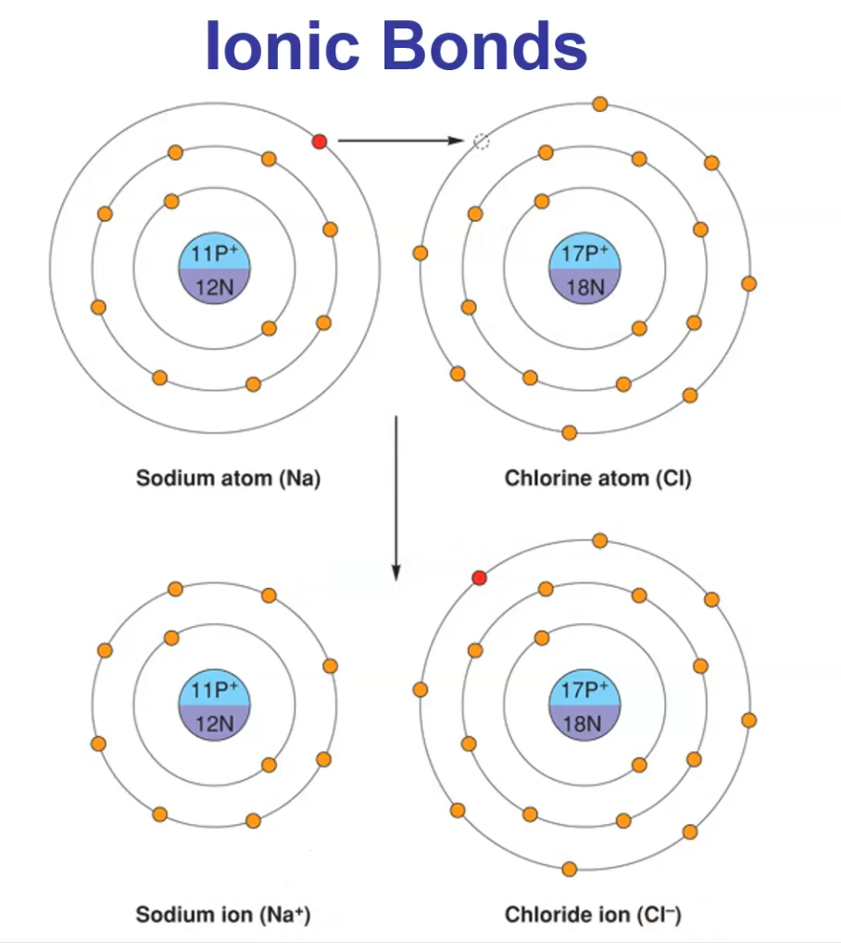
Explain this step by step
Two unstable atoms meet.
One atom donates an electron, one accepts it.
Donor becomes caTion (+), acceptor becomes anion (-).
Opposite charges attract each other = ionic bond.
Example: Na⁺ + Cl⁻ → NaCl (table salt)
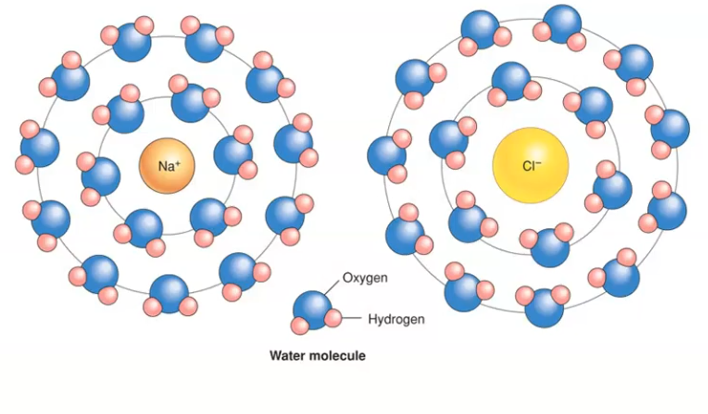
What happens to ionic bonds in water?
Water surrounds each ion and pulls Na⁺ and Cl⁻ in opposite directions until they separate (dissolve).
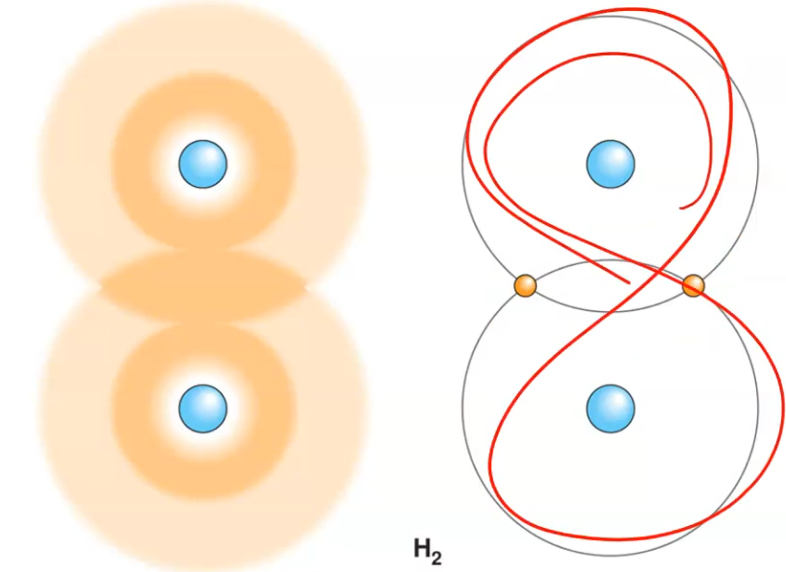
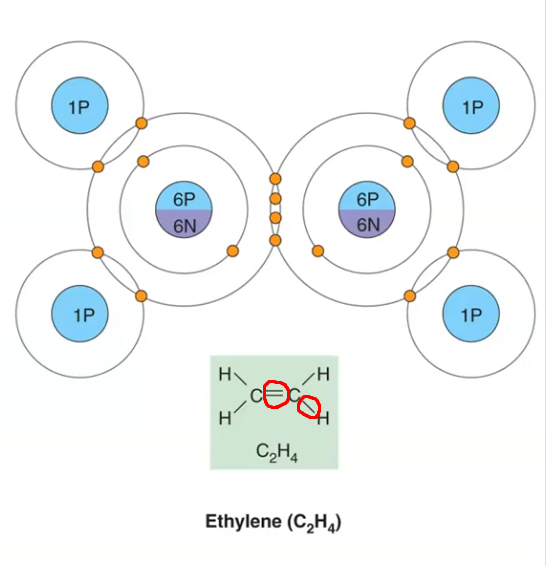
What chemical bond is this? What are they sharing?
This is a covalent bond
When two atoms share valence electrons to fill each other's outer shell
Example: H₂ — two hydrogen atoms share their electrons and the hydrogen believes it’s stable (full outer shell 2/2).
What is a key rule about electron sharing in covalent bonds?
Atoms always share equal numbers of electrons — if one contributes 1, the other contributes 1.
Example: H₂ — each hydrogen contributes 1 electron, 2 shared total
What are the three types of covalent bonds?
Single = 1 electron from each unstable atom (2e- total).
Double = 2 electrons from each unstable atom (4e- total).
Triple = 3 electrons from each unstable atom (6e- total).
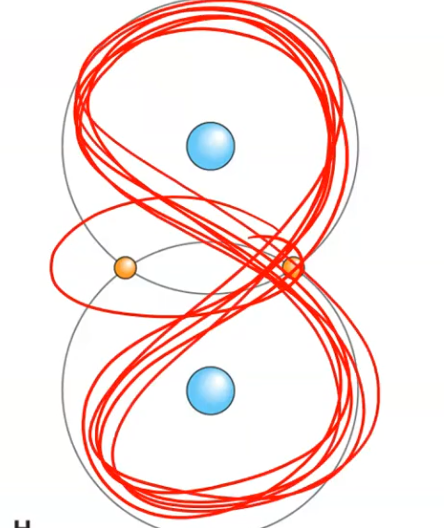
Do electrons spend the same amount of time going around both atoms? Y/N?
Yes, that’s for all covalent bonds.
But it’s not always the case for Polar Covalent Bonds.
What is a polar covalent bond?
When electrons are shared unequally — the atom that holds the electron longer becomes partially negative (−), the other becomes partially positive (+).
Which atoms have a strong pull on electrons? (hog electrons)
Oxygen, Nitrogen, and Phosphorus.
What is a hydrogen bond?
When hydrogen takes on a slight + charge (from a polar bond), it gets attracted to nearby − atoms, that attraction is the hydrogen bond.
What do hydrogen bonds between water molecules create?
Surface tension.
What does pH stand for?
Potential of Hydrogen.
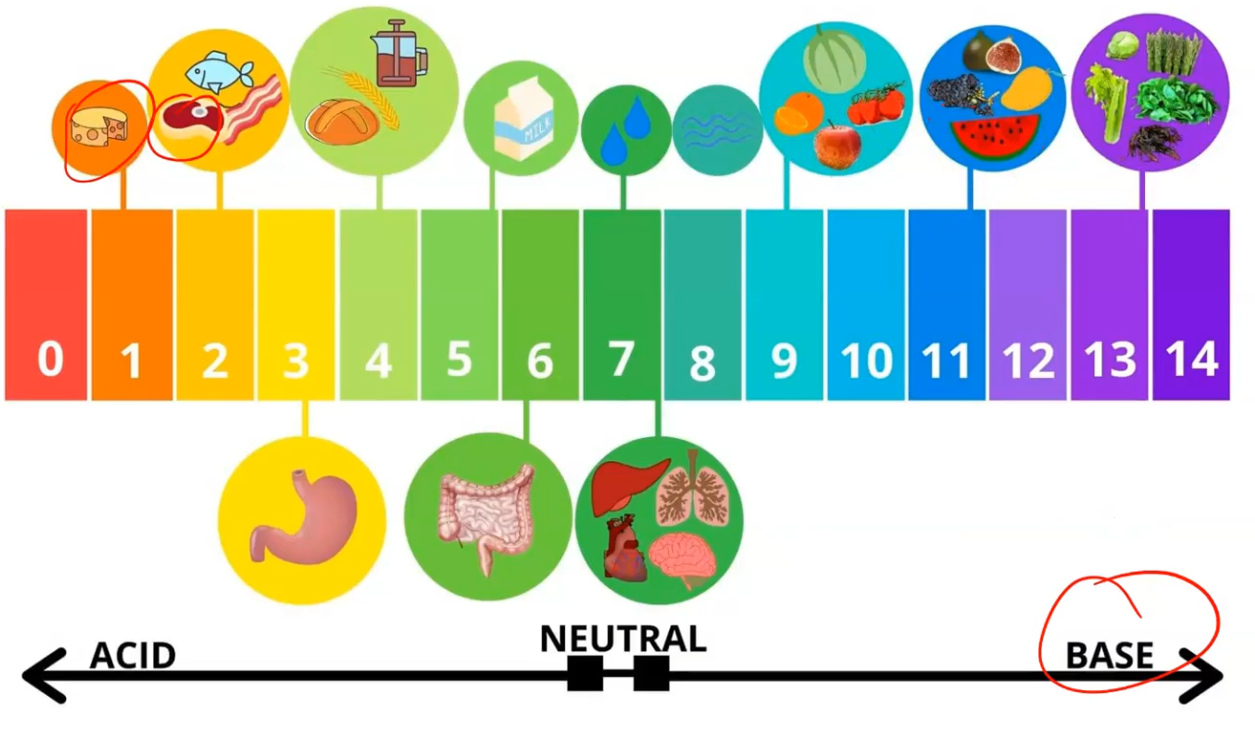
What’s the range of pH scale?
And what’s neutral?
What happens when it falls below neutral?
What happens when it goes above neutral?
Range = 0–14
7 = neutral
Below 7 = acidic
Above 7 = basic/alkaline
What does water (H₂O) split into?
H⁺ (lone hydrogen ion — positive)
OH⁻ (oxygen keeping one hydrogen — negative)
Why: oxygen's strong pull breaks the bond, forcing one H to break off solo
What does pH measure? in H+ and OH-
How much H⁺ vs OH⁻ is in a solution
Neutral = H⁺ = OH⁻
Acidic = more H⁺ than OH⁻
Basic/alkaline = more OH⁻ than H⁺
Why H⁺: it's the ion that drives acidity — the more H⁺, the more acidic the solution
What’s the normal pH in blood?
Normal = 7.35 - 7.45
Below 7.35 = acidosis
Above 7.45 = alkalosis
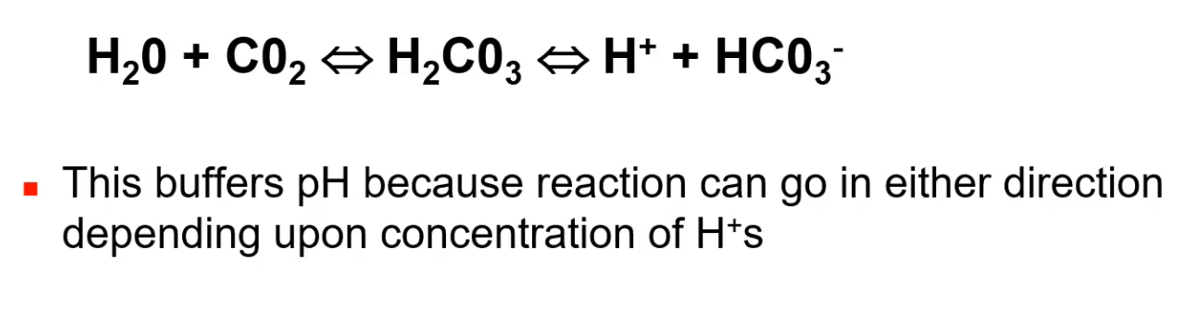
What is a buffer?
A molecule that slows changes in pH by absorbing or releasing H⁺ to keep pH stable.
Example: bicarbonate buffer system in blood — reaction goes in either direction depending on how much H⁺ is present.
What’s the purpose of a buffer?
Prevent dramatic changes in pH when you add acid or base/alkaline to a solution.
Ch 2 Video 2
The remaining cards are from Ch 2 Video lecture 2
What defines an organic molecule?
Contains carbon and hydrogen.
How many electrons does carbon have in its outer shell?
4, it needs 4 more which is why it forms covalent bonds.
How does carbon achieve a stable outer shell? Can it attach to atoms Y/N?
Forms 4 covalent bonds to reach 8 electrons (octet rule).
Yes, carbon can form up to 4 covalent bonds, so it can attach to 4 other atoms or molecules simultaneously.
What are the 4 macromolecules (biomolecules)?
Carbohydrates.
Lipids.
Proteins.
Nucleic acids.
What is a macromolecule?
A large organic molecule built from smaller subunits joined by covalent bonds — includes carbohydrates, lipids, proteins, and nucleic acids.
What is a functional group?
The most reactive part of an organic molecule, where bonds between molecules form.
Where do organic molecules bond with each other?
At their functional groups.
What is the atomic ratio formula for carbohydrates?
Glucose = C₆H₁₂O₆
What is the primary carbohydrate the body uses to make ATP?
Glucose.
What are stereoisomers?
Molecules with the same number and type of atoms but arranged differently.
Give an example of 3 stereoisomers.
Glucose, galactose, and fructose — all C₆H₁₂O₆.
What are the 3 types of carbohydrates by size?
Monosaccharide = 1 sugar (glucose, fructose, galactose)
Disaccharide = 2 monos joined by a covalent bond (sucrose, lactose, maltose)
Polysaccharide = many monos linked together (glycogen in humans, starch in plants)
What is a monosaccharide?
A single simple sugar molecule (e.g. glucose, fructose, galactose).
Mono = one / single
Saccharide = sugar
What does "saccharide" mean?
Sugar.
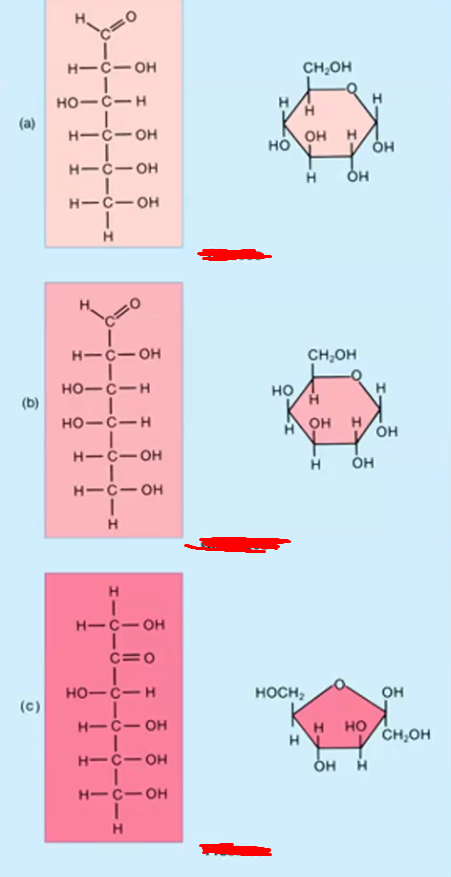
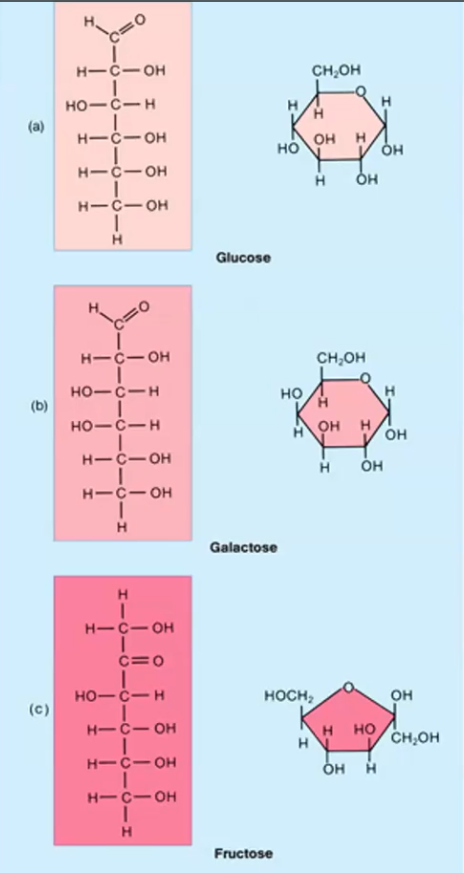
Can you identify these? what is the whole group called?
These are monosaccharides (simple sugars) - carbohydrates.
Formula: C₆H₁₂O₆
Glucose
Galactose
Fructose
These are stereoisomers: same formula, different arrangement.
In chemistry what's a reactant and what's a product?
Reactant — a starting substance in a chemical reaction gets consumed/changed.
Product — a substance formed as a result of the reaction.
E.g. Glucose + Fructose → Sucrose + H₂O
What is a disaccharide?
2 monosaccharides joined together by a covalent bond.
What are the 3 disaccharides and what makes up each?
Sucrose (glucose + fructose), Lactose (glucose + galactose), Maltose (glucose + glucose).
What is a polysaccharide?
Many monosaccharides linked together.
What polysaccharide do plants use to store glucose?
Starch.
What polysaccharide do humans use to store glucose?
Glycogen.
What is a dehydration (condensation) reaction?
A reaction that builds larger molecules from smaller ones by removing water (H₂O) and forming a covalent bond in its place.
What is removed during a dehydration reaction?
H⁺ from one molecule and OH⁻ from the other — together forming H₂O.
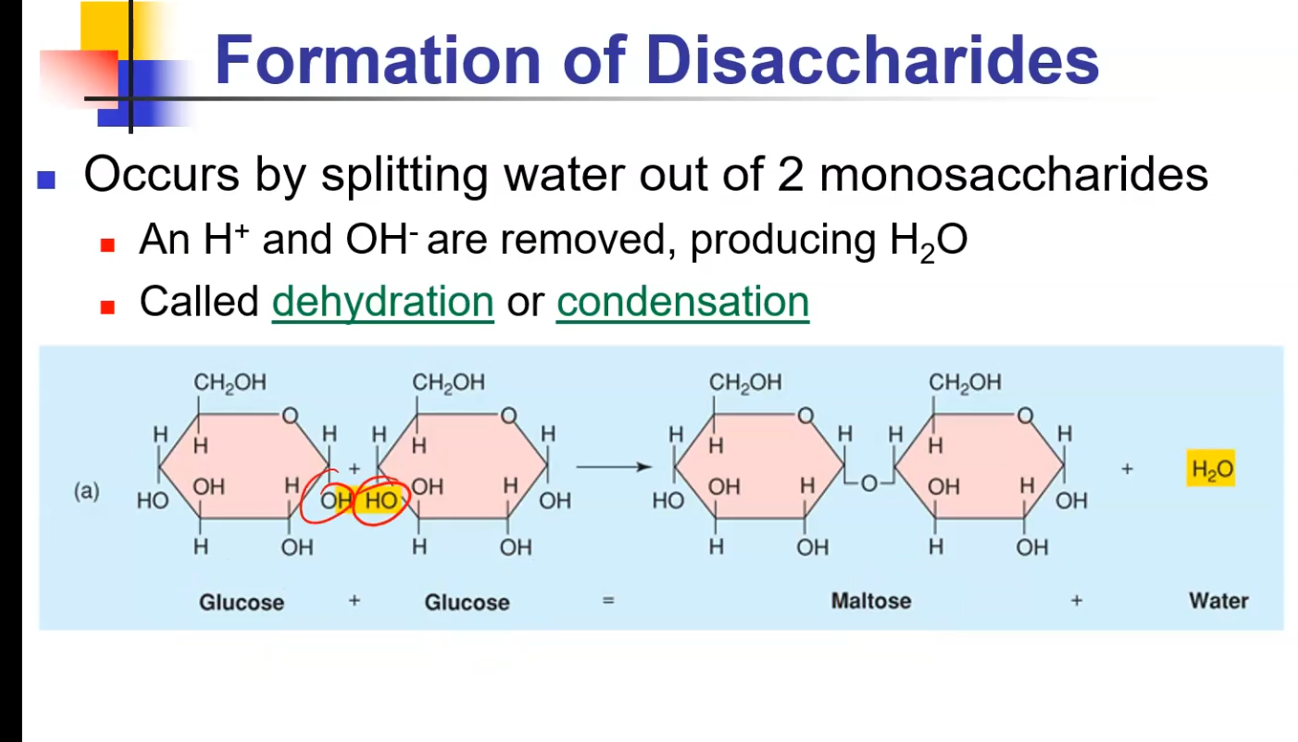
Does dehydration/condensation only apply to carbohydrates?
No — it applies to all 4 biomolecules when building larger molecules from smaller ones.
What is hydrolysis?
Breaking a large molecule into smaller ones by adding water to the bond.
What does "hydro" and "lysis" mean?
Hydro = water, lysis = to break.
Hydrolysis = a chemical process in which water (H2O) is used to break down the bonds of a complex compound.
What is hydrolysis the reverse of?
Dehydration (condensation) synthesis.
What is the order of polysaccharide breakdown during hydrolysis?
Polysaccharide → disaccharides → monosaccharides.
What is a glycolipid?
A lipid with a carbohydrate attached — found on cell surfaces and help with cell recognition.
What are the key properties of lipids?
Made of nonpolar hydrocarbon chains and rings.
Insoluble in water. (doesn’t dissolve)
Hydrophobic (don't mix with water).
What is a triglyceride made of?
1 glycerol + 3 fatty acids joined by dehydration reactions.
How many water molecules are released when a triglyceride forms?
3 (one per fatty acid bond).
What is the typical fat in the body called?
Triglyceride.
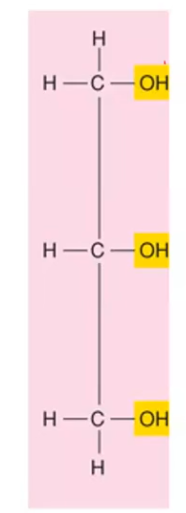
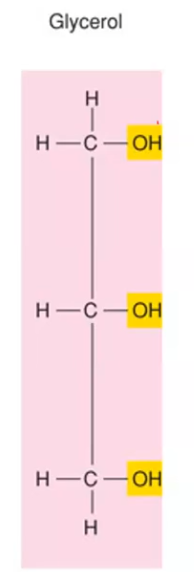
Can you identify this?
As a formula: C₃H₈O₃
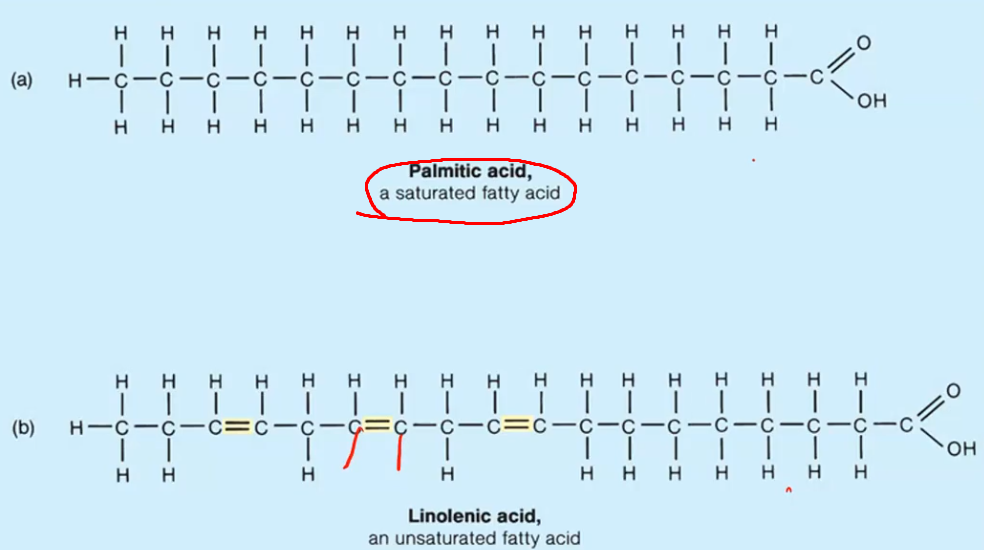
What is a saturated fatty acid?
A fatty acid where every carbon atom holds the maximum number of hydrogens (2) — no double bonds between carbons.
What is an unsaturated fatty acid?
A fatty acid where some carbons lost hydrogens, causing neighboring carbons to form a double bond with each other.
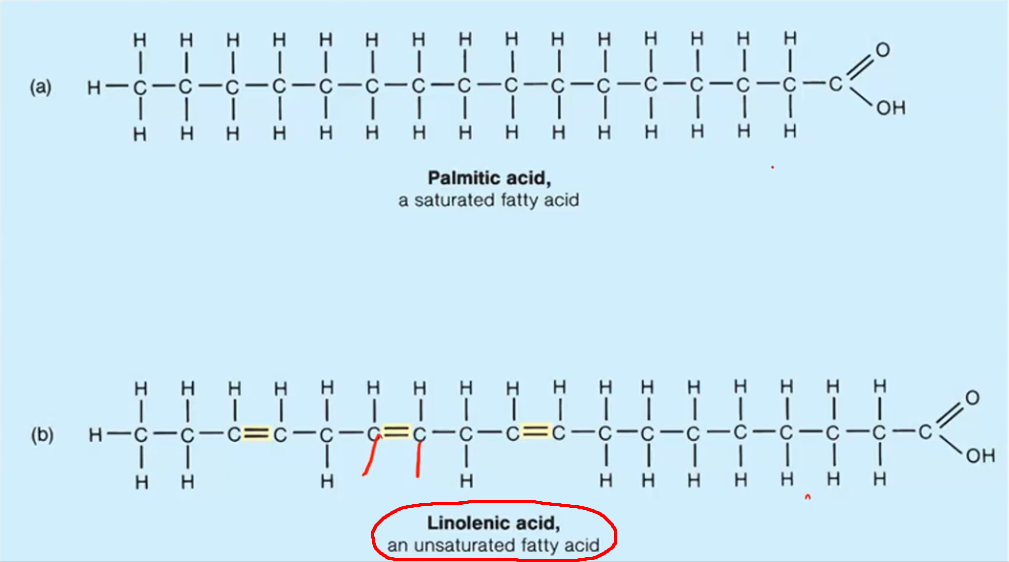
How do you visually identify saturated vs unsaturated fatty acids?
Saturated = no double bonds.
Unsaturated = has double bonds between carbons.
Why is consuming saturated fat worse than unsaturated?
Saturated fats are more solid and can build up in blood vessels causing blockages.
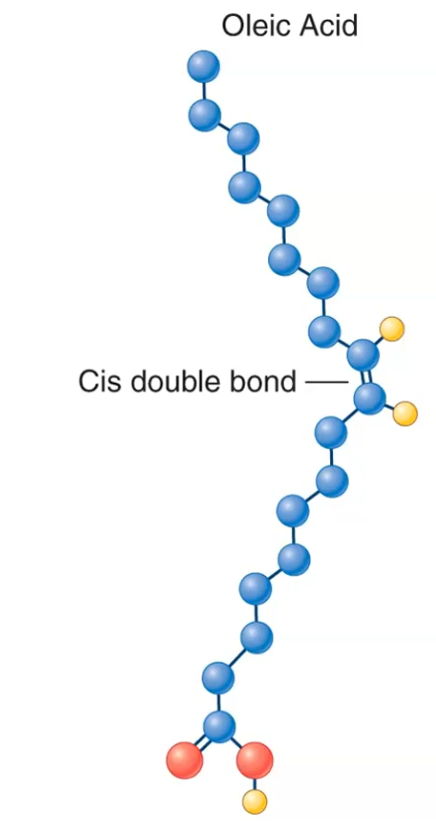
What is a cis double bond?
When the remaining hydrogen atoms are on the same side of the double bond. (unsaturated cis fat)
==
Unsaturated → has one or more double bonds
Cis → same side
Trans → opposite sides
Saturated → no double bonds
So trans fat = an unsaturated fat with a trans double bond.
What is a trans double bond?
When the remaining hydrogen atoms are on opposite sides of the double bond. (this is a trans fat)
==
Unsaturated → has one or more double bonds
Cis → same side
Trans → opposite sides
Saturated → no double bonds
So trans fat = an unsaturated fat with a trans double bond.
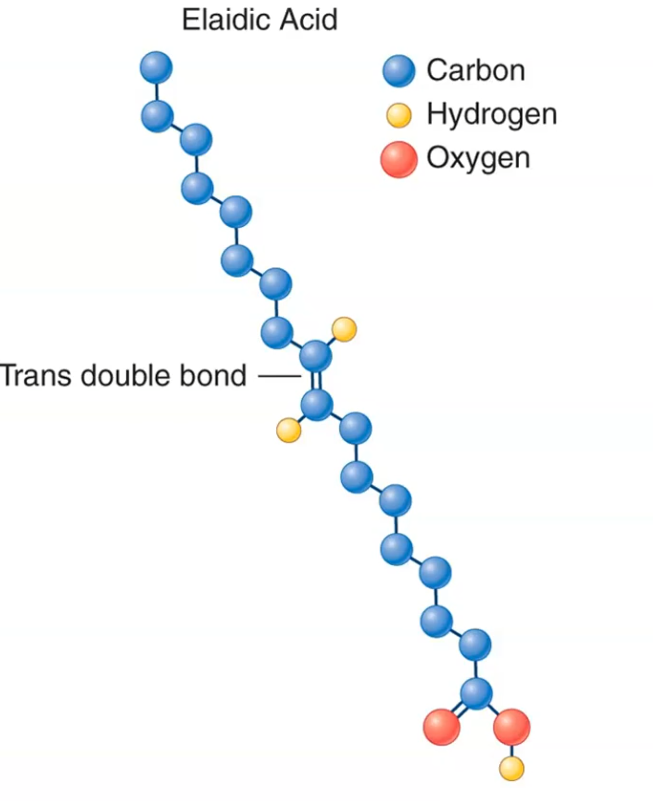
Which is worse to consume — saturated fat or trans fat?
Trans fat is worse than saturated fat.
Why are trans fats dangerous when made in a lab?
When fatty acids are artificially unsaturated, cis and trans configurations form randomly and can't be separated — so you end up consuming trans fat unknowingly.
What are ketone bodies?
Byproducts released when triglycerides are broken down at an elevated rate for ATP. (e.g. during fasting or low-carb diets).
What is ketosis?
An elevated level of ketone bodies in the blood from excessive fat breakdown.
What is ketoacidosis?
When ketone levels get so high they lower blood pH — can lead to coma and death.
What is the progression from fat breakdown to ketoacidosis? (8 steps)
Fasting → triglycerides broken down at a faster rate for ATP → ketone bodies released → ketosis (elevated ketones) → ketones lower blood pH → ketoacidosis → coma → death.
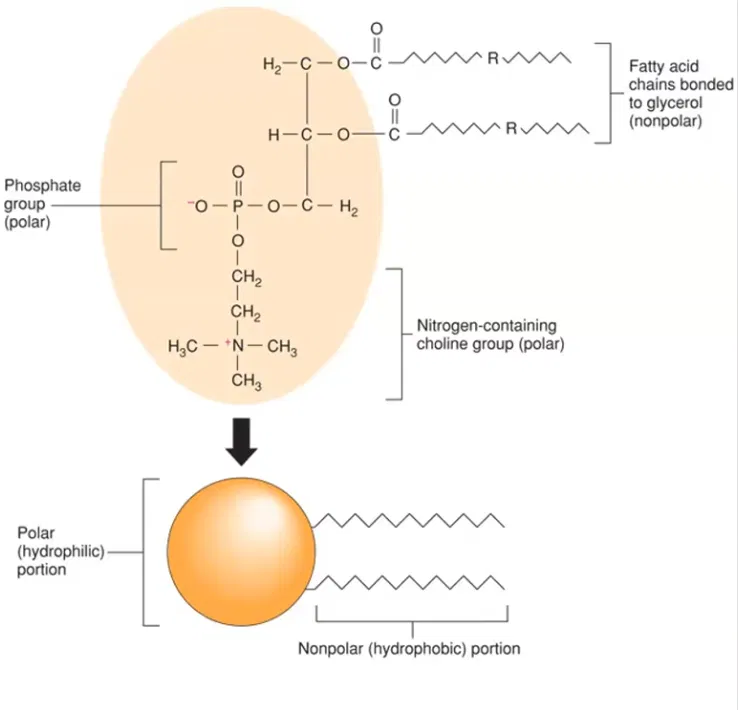
What is a phospholipid?
A phospholipid = glycerol + 2 fatty acid tails + 1 phosphate group (vs. 3 fatty acids in a triglyceride).