A&P Unit 1 (CH 1-4)
 Call Kai
 Learn
Learn Practice Test
 Spaced Repetition
 Match
Match Flashcards
 Knowt Play
1/36

There's no tags or description
Looks like no tags are added yet.
Name | Mastery | Learn | Test | Matching | Spaced | Call with Kai | Chat |
|---|
No analytics yet
Send a link to your students to track their progress
37 Terms
Anatomy
study of the structure and shape of the body and its parts
Physiology
study of how the body and its parts work or function
Atoms
study of how the body and its parts work or function, form molecules
Tissues
groups of similar cells that have a common function
integumentary system
external covering of the body, waterproofs the body, cushions and protects the deeper tissues from injury
skeletal system
consists of bones, cartilages, and joints, supports the body, provides a framework that the skeletal muscles use to cause movement
nervous system
body’s fast-acting control system, consists of the brain, spinal cord, nerves, and sensory receptors
lymphatic system
Lymphatic vessels, lymph nodes, and other lymphoid organs (Spleen and tonsils), lymphatic vessels return fluid to the bloodstream so that there is enough blood to continuously circulate through the body
respiratory system
keep the body supplied with oxygen and to remove carbon dioxide
Responsiveness/irritability
ability to sense changes (stimuli) in the environment
Metabolism
all chemical reactions that occur within the body
Excretion
process of removing wastes
atmospheric pressure
force exerted on the surface of the body by the weight of air
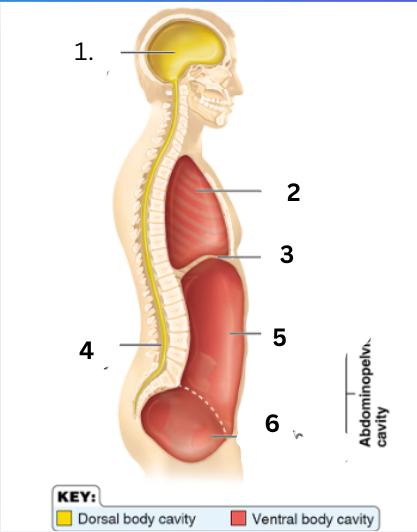
1.
Cranial cavity

2
Thoracic cavity
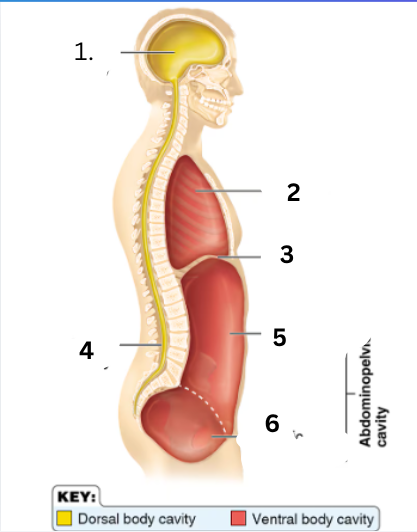
3
Diaphragm

4
Spinal cavity
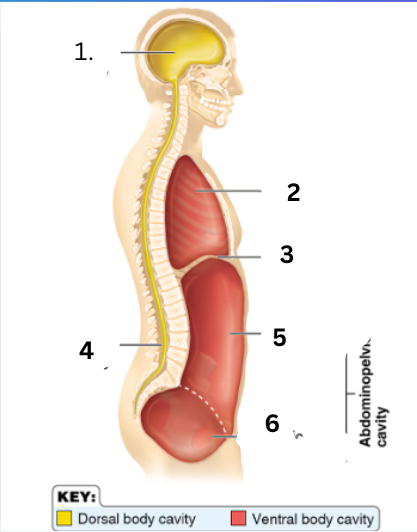
5
Abdominal cavity
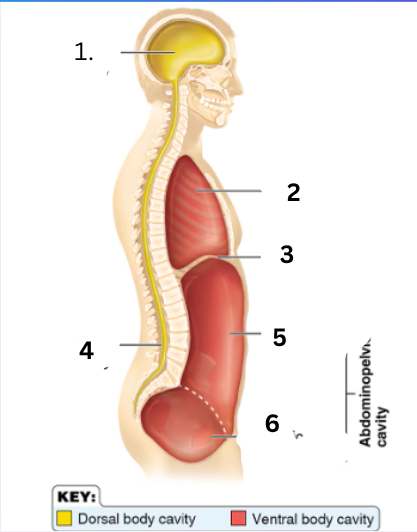
6
Pelvic cavity

what’s 1?
Right hypochondriac region
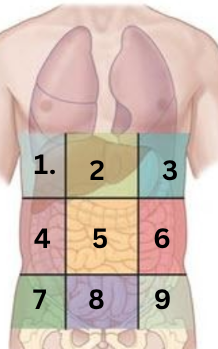
2
Epigastric

3
Left hypochondriac region
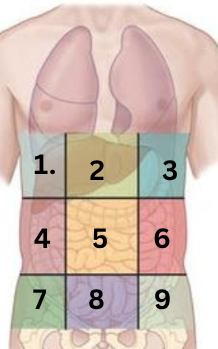
4
Right lumbar region
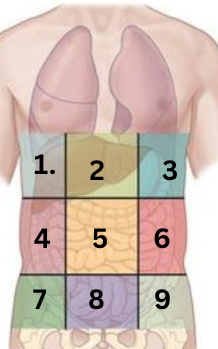
5
umbilical region

6
left lumbar region
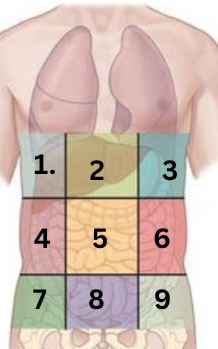
7
Right inguinal region

8
Hypogastric (pubic) region
Oral cavity
contains the teeth and tongue
Orbital cavities
the skull house the eyes