PMB 4321 Leaf Morphology
 Call Kai
 Learn
Learn Practice Test
 Spaced Repetition
 Match
Match Flashcards
 Knowt Play
1/49

There's no tags or description
Looks like no tags are added yet.
Name | Mastery | Learn | Test | Matching | Spaced | Call with Kai | Chat |
|---|
No analytics yet
Send a link to your students to track their progress
50 Terms

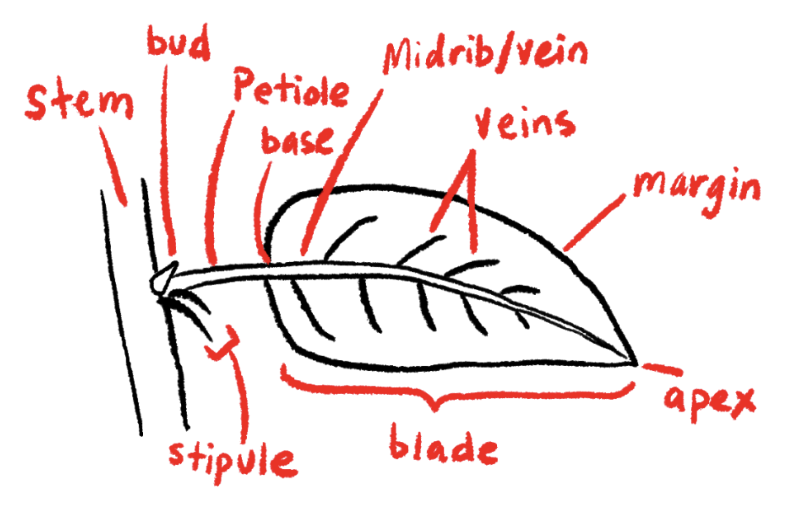
What is 1?
Stem
Main plant axis that supports leaves and buds.
Function: supports above-ground organs and transports water, minerals, and sugars through vascular tissue.
Recognition: upright structure from which leaves and nodes arise.
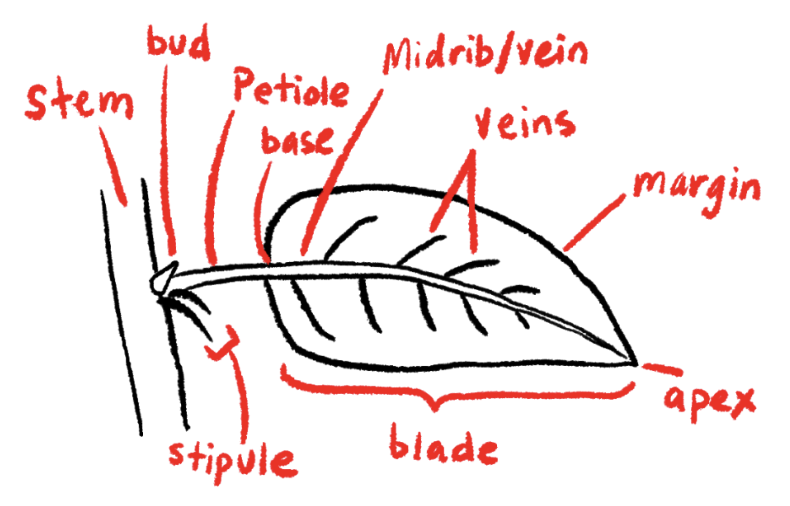
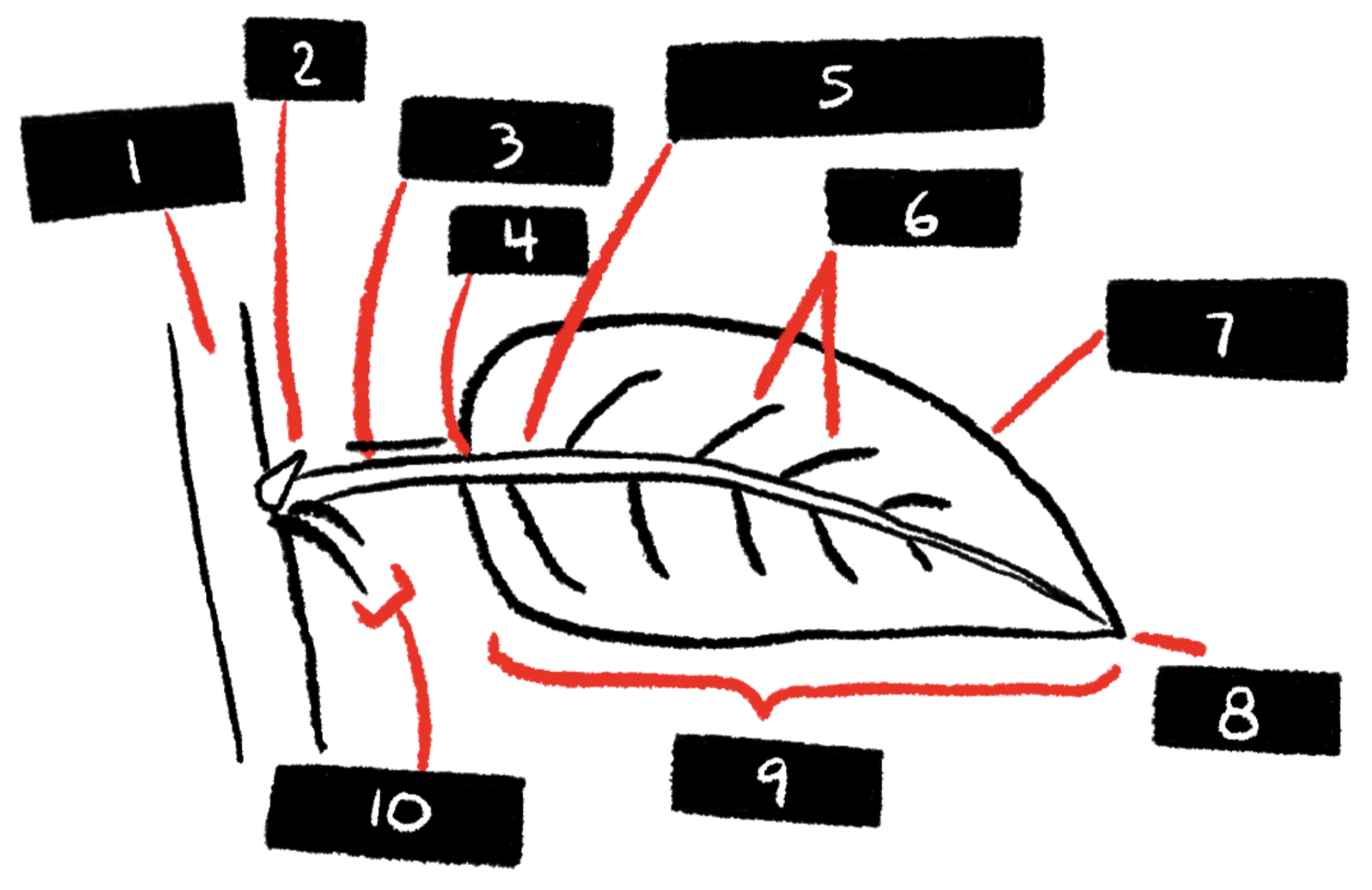
What is 2?
Bud
Undeveloped shoot, leaf, or flower.
Function: allows future growth and development of new plant structures.


What is 3?
Petiole
Stalk connecting the leaf blade to the stem.
Function: positions the leaf for light capture and contains vascular tissue connecting the blade to the stem.


What is 4?
Leaf base
The portion of the leaf where the blade or petiole attaches.
Function: anchors the leaf to the stem and is the transition point between leaf and stem tissues.

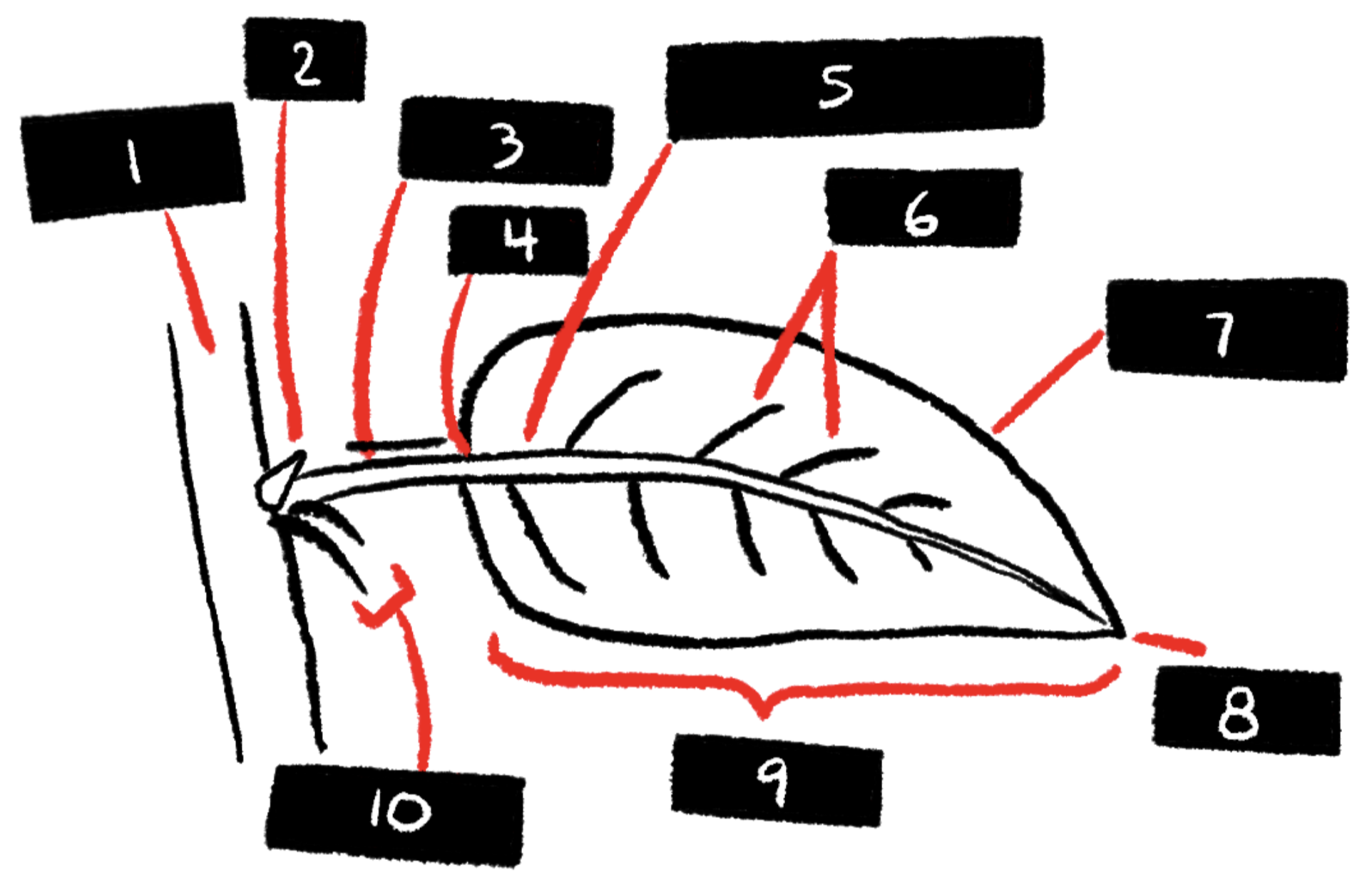
What is 5?
Midvein
Main central vein running through the leaf blade.
Function: transports water and sugars and helps support the blade.

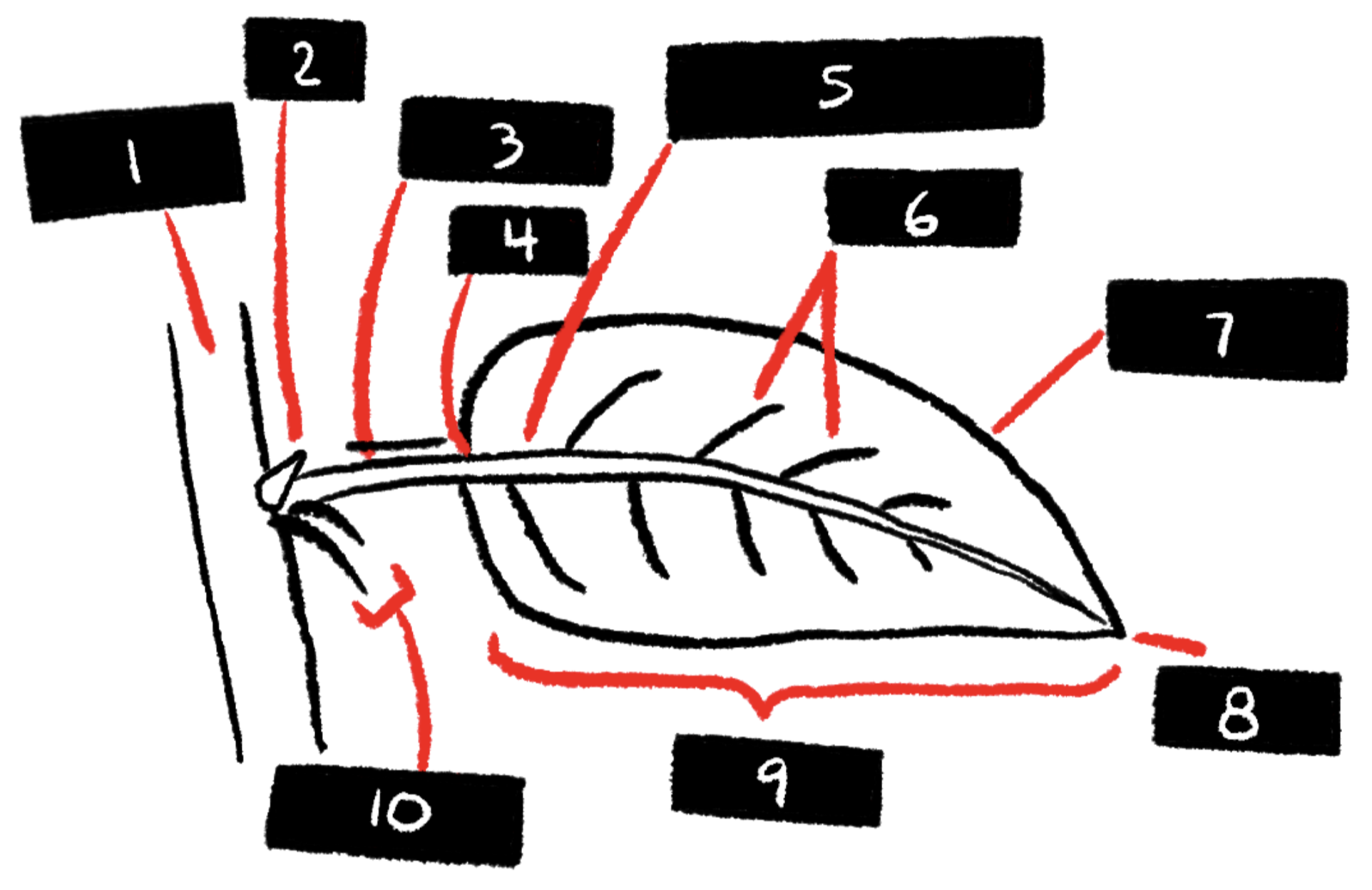
What is 6?
Veins
Vascular structures running through the leaf.
Function: transport water, minerals, and sugars and provide structural support.


What is 7?
Margin
Outer edge of the leaf blade.
Function: part of the photosynthetic surface; margin shape can affect water loss, drainage, and heat exchange.

What is 8?
Apex
Tip or terminal end of the leaf blade.
Function: contributes to leaf shape and may aid water shedding.
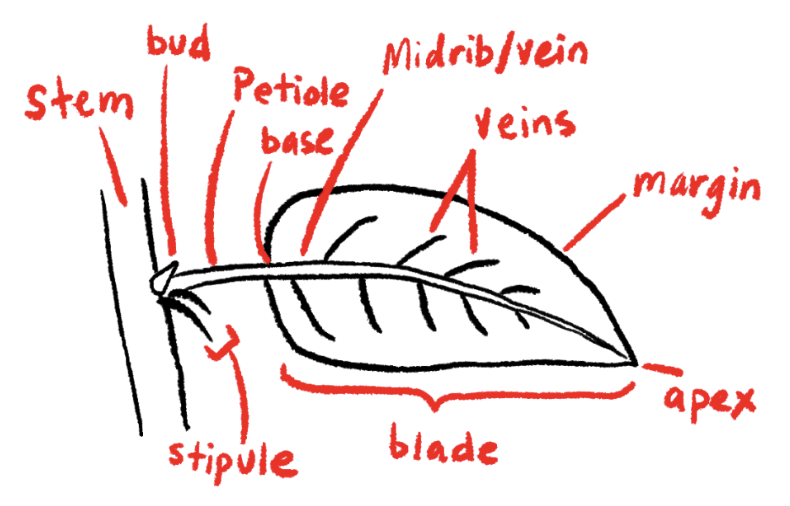

What is 9?
Blade
Broad, flattened portion of a leaf.
Function: primary site of photosynthesis and gas exchange.

What is 10?
Stipules
Paired leaf-like structures near the base of a leaf or petiole.
Function: often protect the developing leaf or bud; in some plants they may also photosynthesize.

What is 11?
Axillary bud
Bud located in the axil between a leaf and stem.
Function: can develop into a lateral branch or flower.


What is 12?
Apical bud
Bud at the growing tip of a stem.
Function: responsible for primary growth and elongation of the shoot.
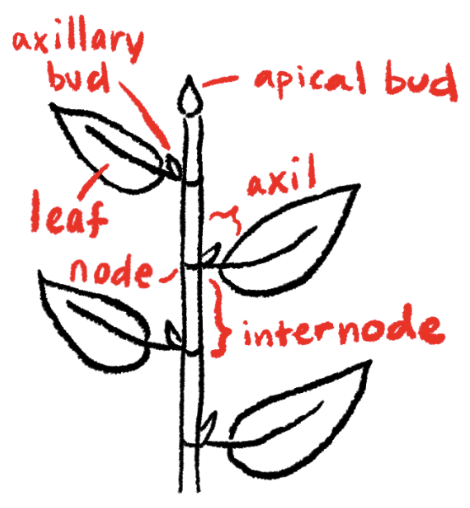

What is 16?
Leaf
Plant organ attached at a node, generally with a blade and sometimes a petiole.
Function: performs photosynthesis, gas exchange, and transpiration.

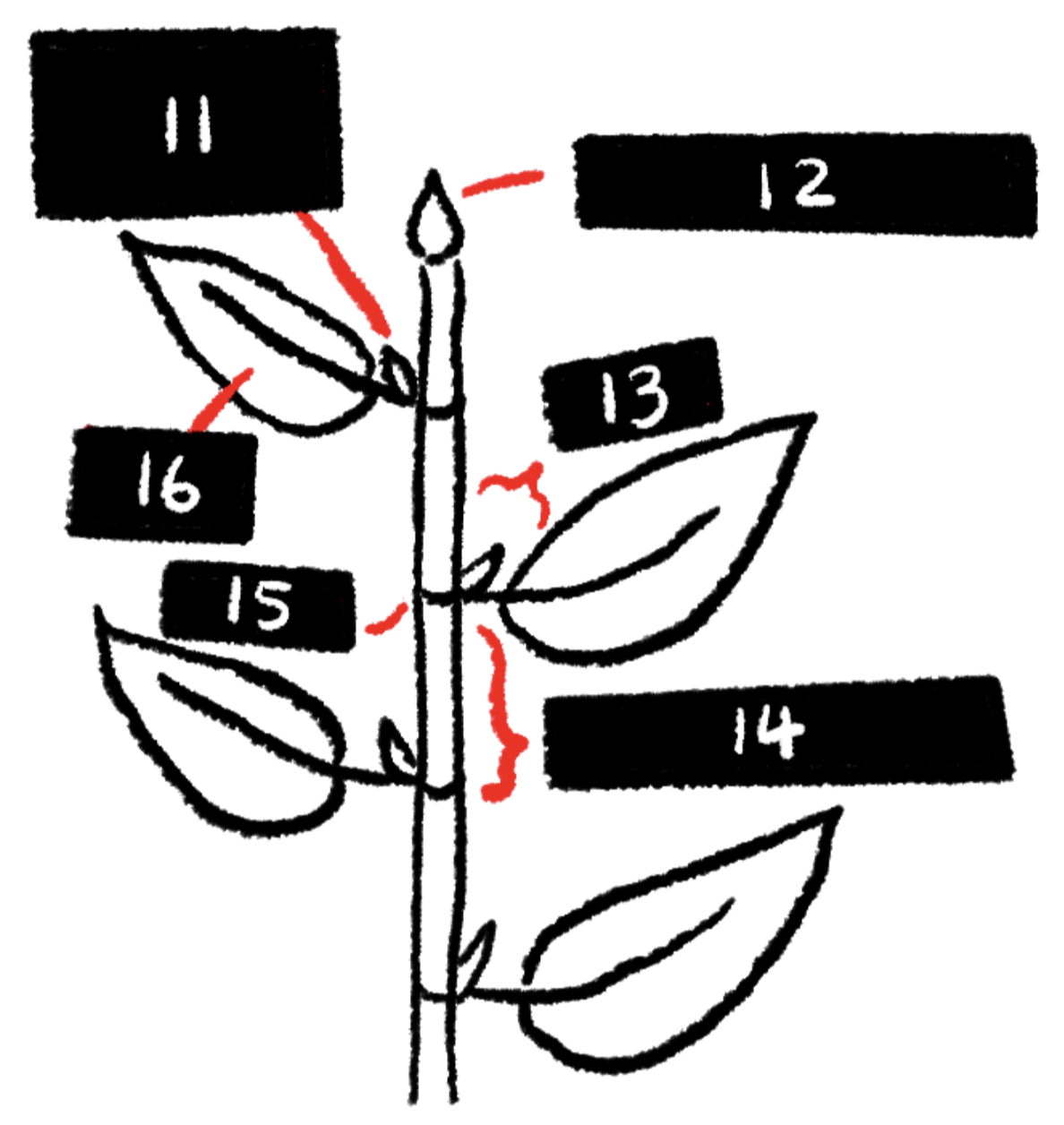
What is 15?
Node
Point on a stem where a leaf or bud attaches.
Function: site from which leaves, buds, and branches can arise.

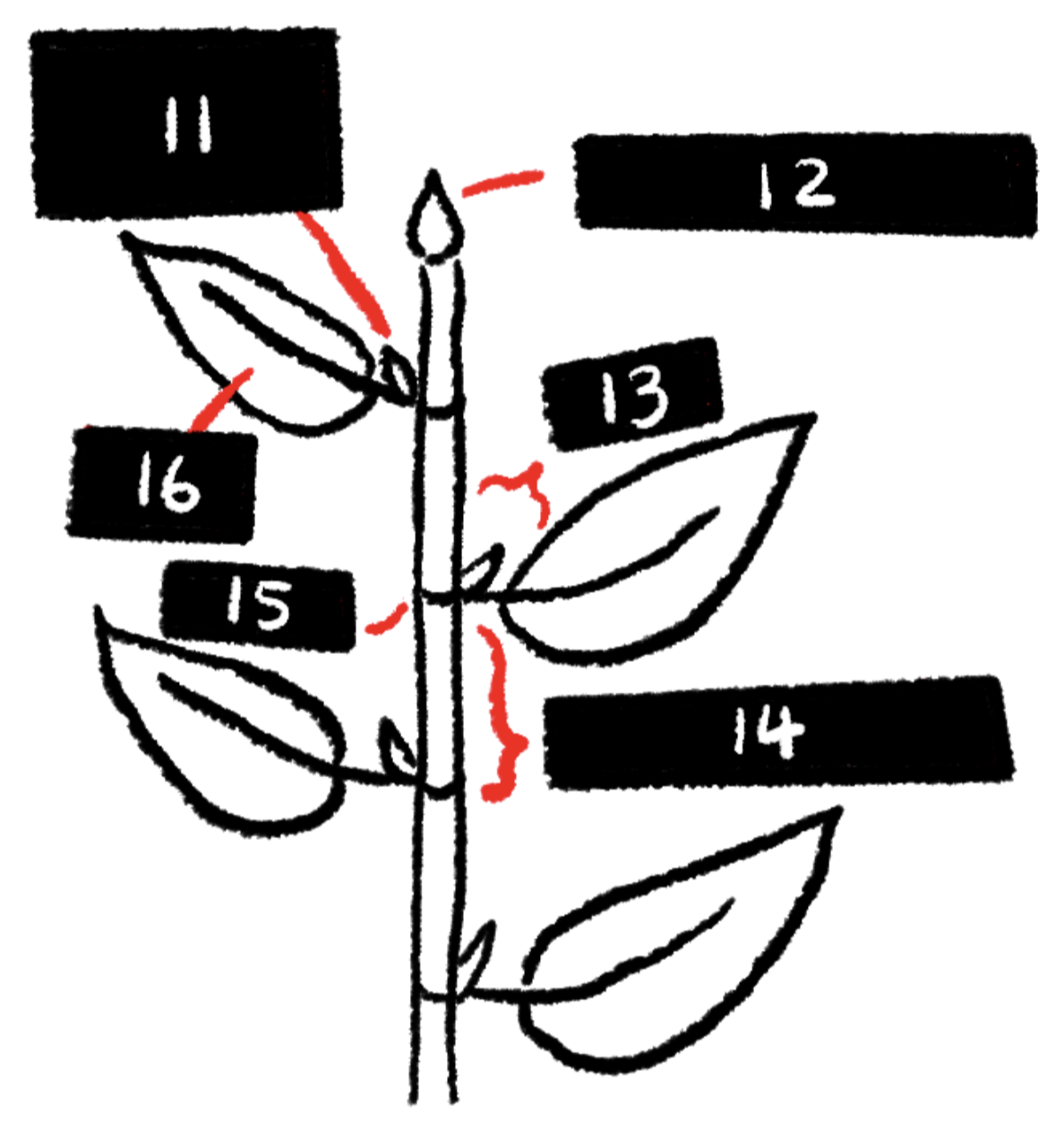
What is 14?
Internode
Portion of stem between two nodes.
Function: spaces leaves and branches apart and contributes to shoot elongation.

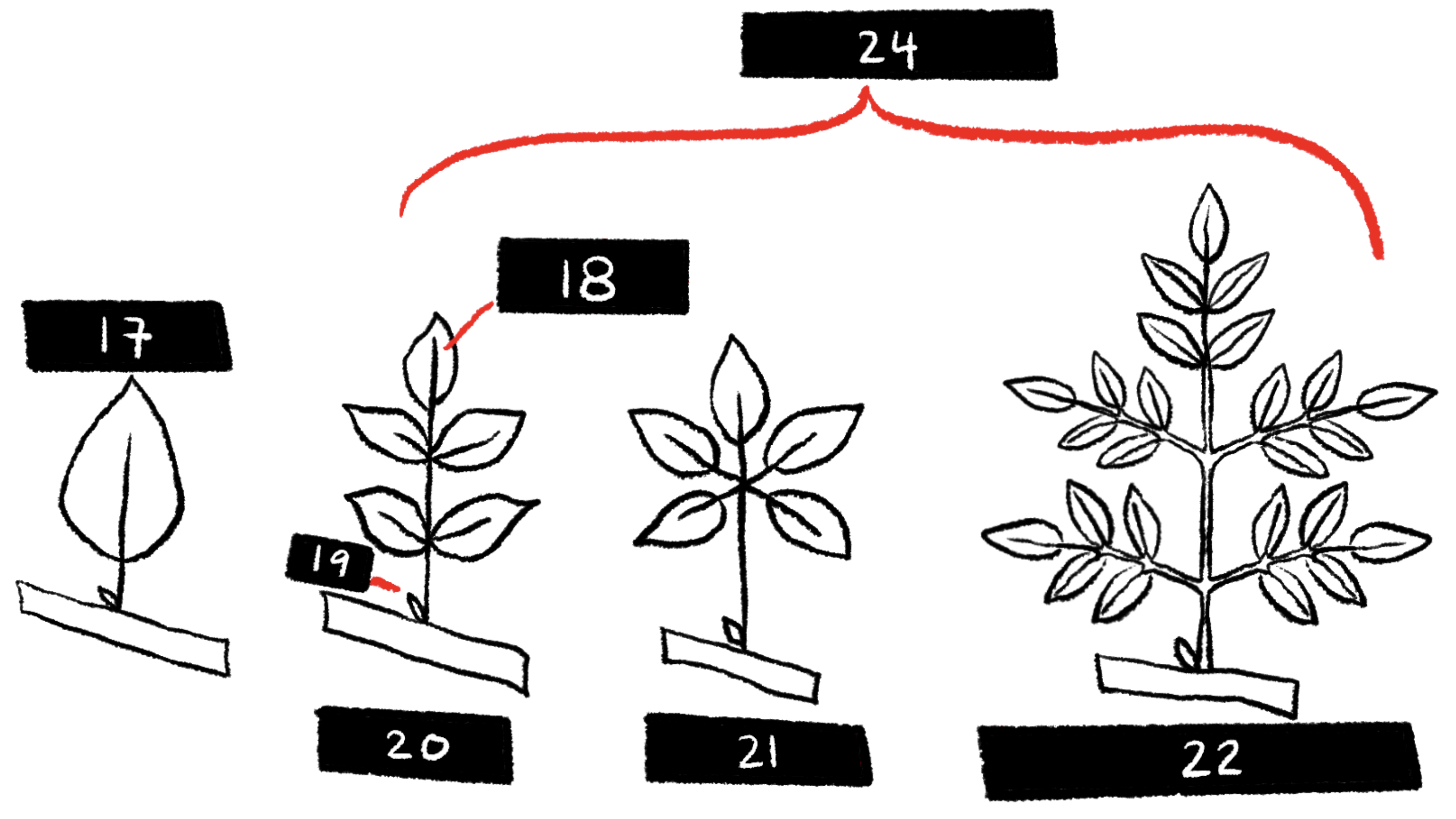
What is 18?
Leaflet
One subdivision of a compound leaf.
Function: carries out photosynthesis as part of the whole compound leaf.


Leaf vs. leaflet
A leaf has an axillary bud at its base; a leaflet does not.
Functionally, both photosynthesize, but only the whole leaf is attached at a true node.
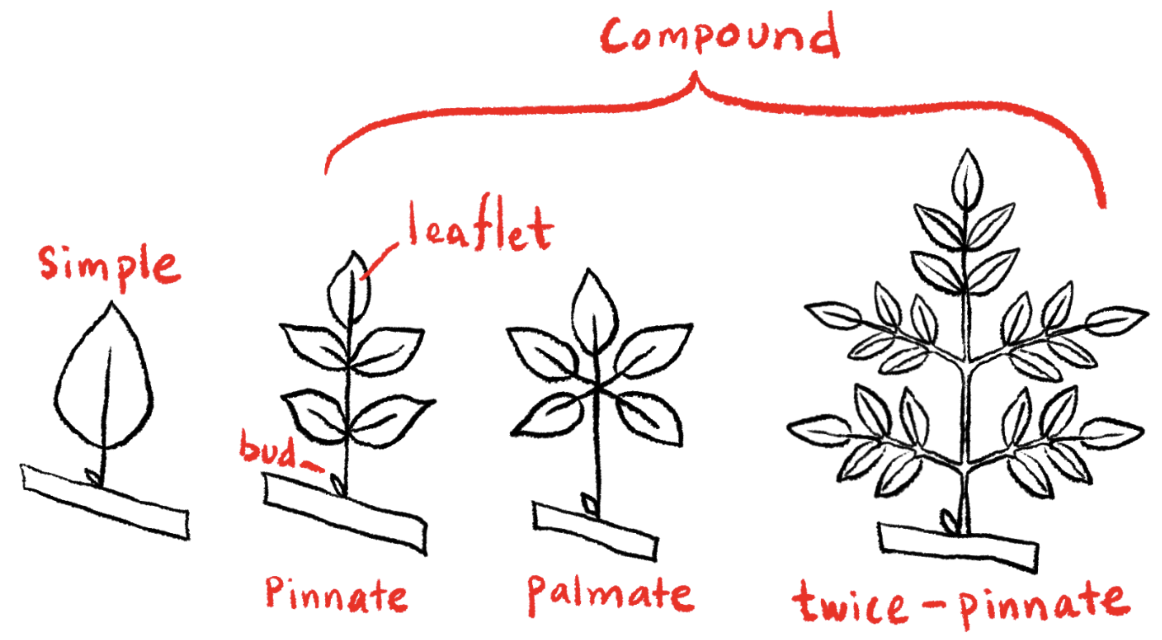

What is 17?
Simple leaf
Leaf with one undivided blade.
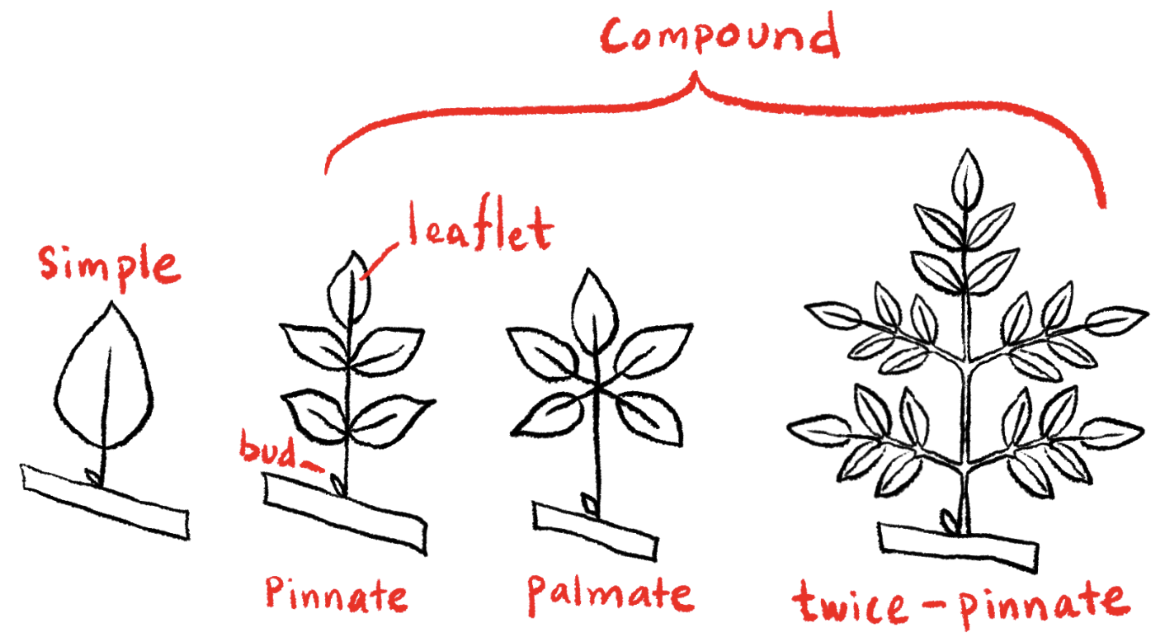
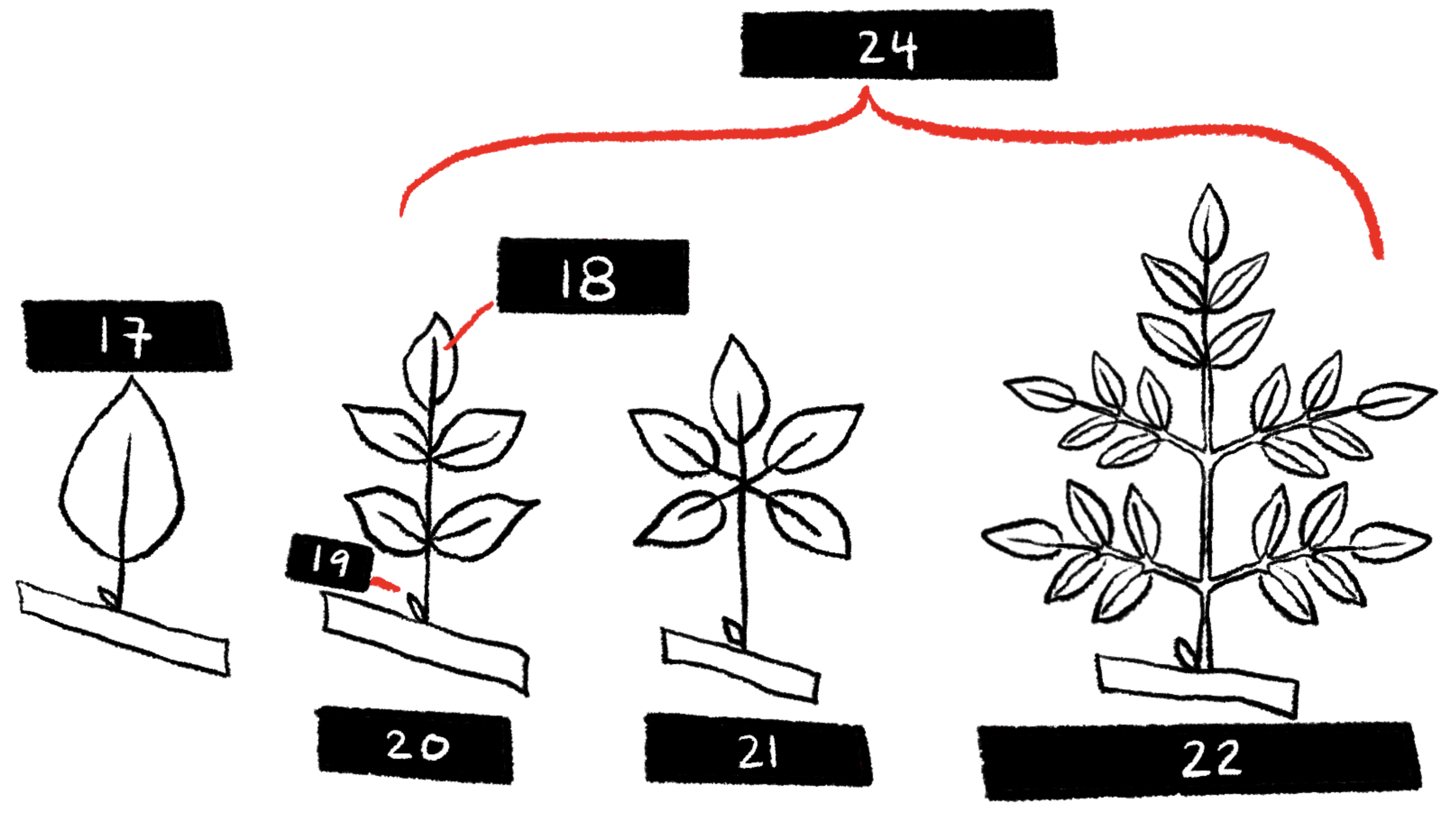
What is 24?
Compound leaf
Leaf whose blade is divided into multiple leaflets.


What is 20?
Pinnate compound
Compound leaf with leaflets arranged along a central axis.

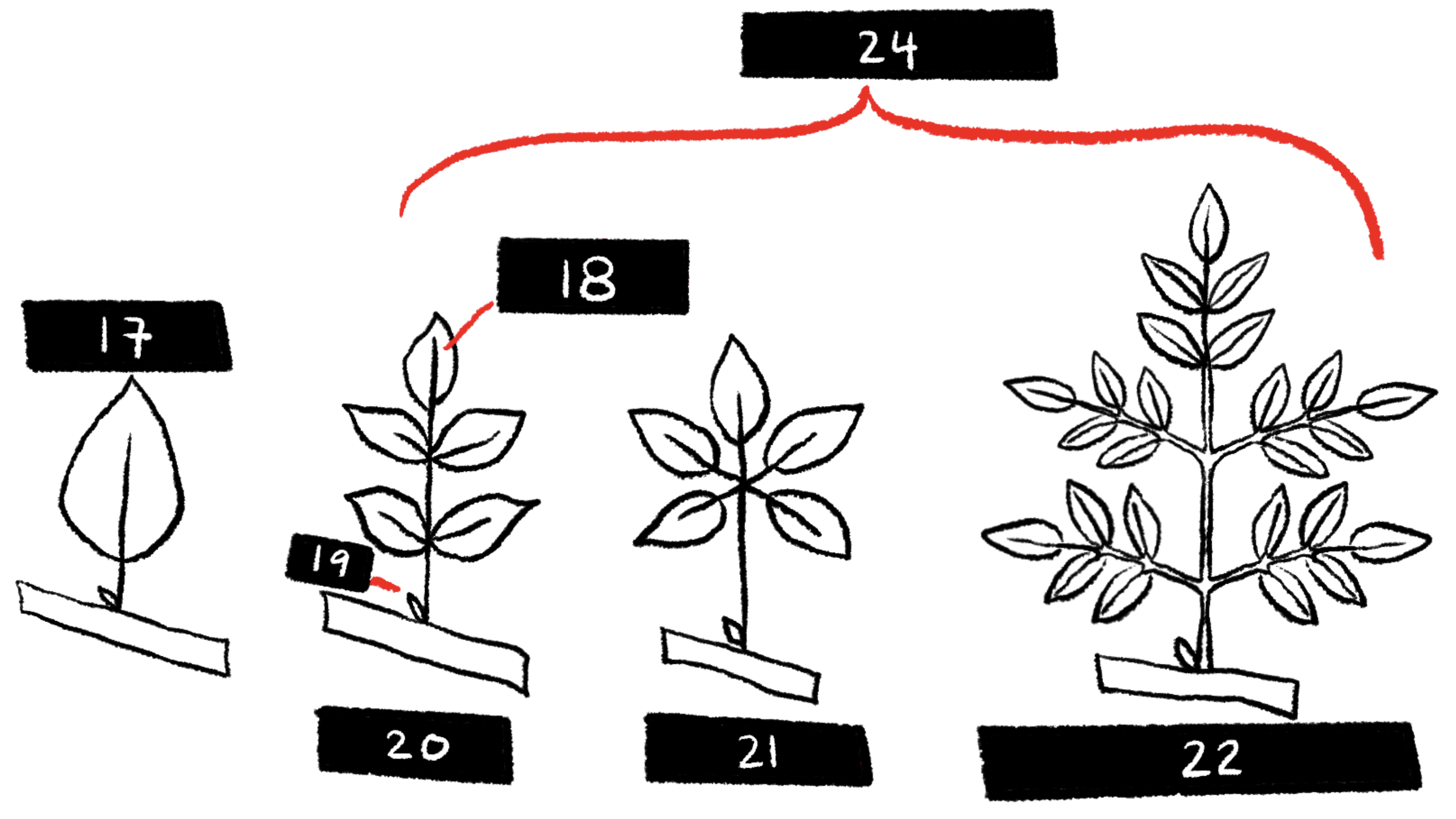
What is 21?
Palmate compound
Compound leaf with leaflets radiating from one point.


What is 22?
Twice-pinnate
Compound leaf in which primary divisions are themselves pinnately divided.

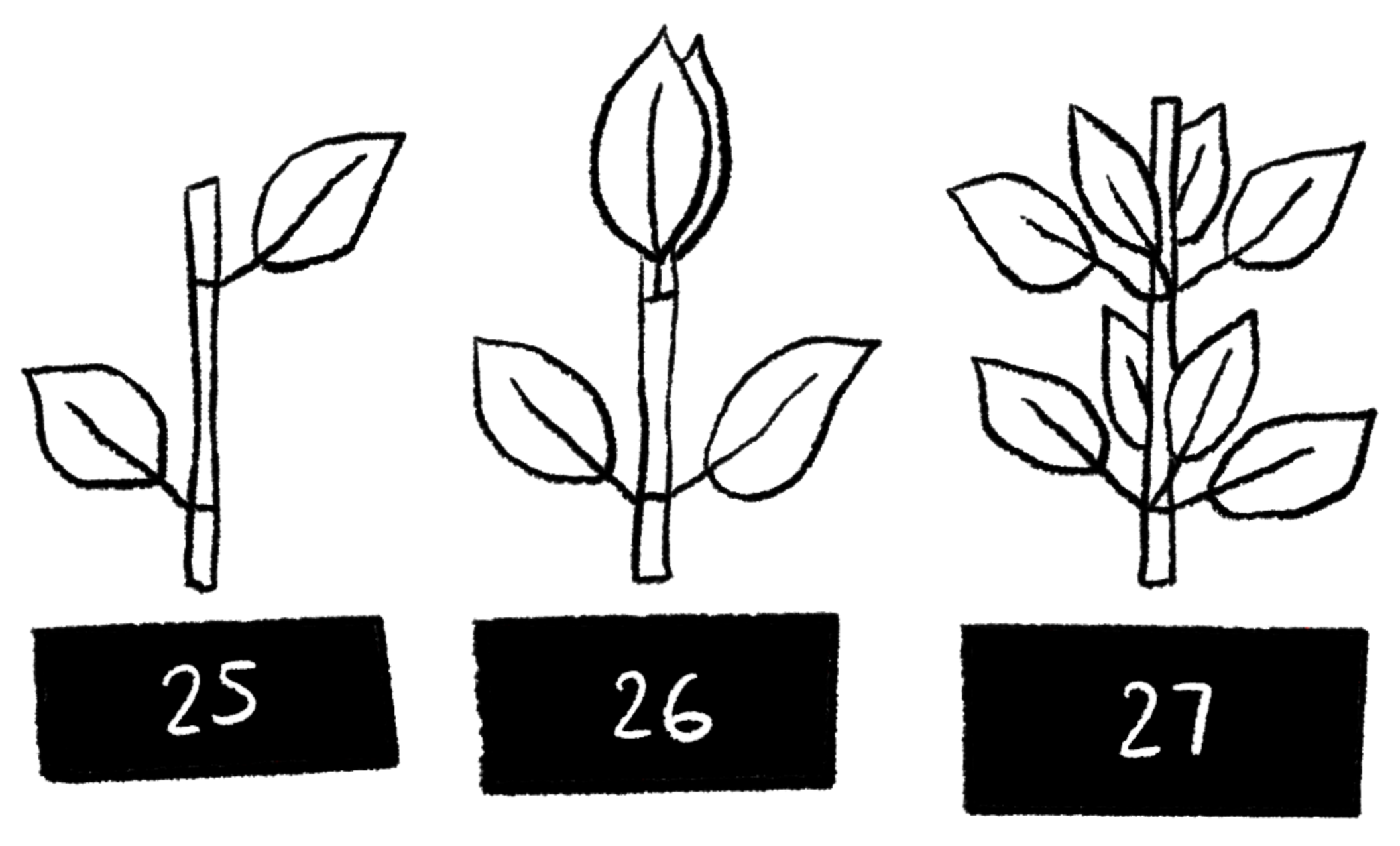
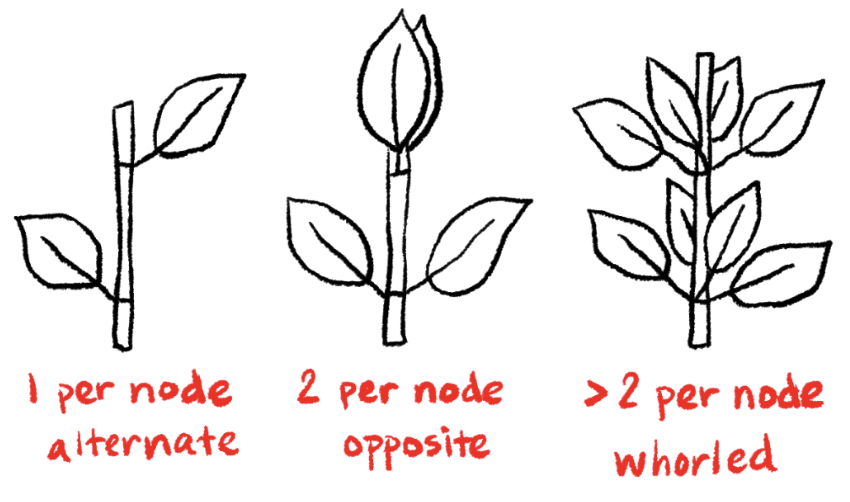
What is 25?
Alternate leaf arrangement
1 leaf per node.


What is 26?
Opposite leaf arrangement
2 leaves per node.


What is 27?
Whorled leaf arrangement
More than 2 leaves per node.

What is 28?
Parallel venation
Major veins run approximately parallel to one another.


What is 29?
Pinnate venation
Secondary veins branch from one main midvein.
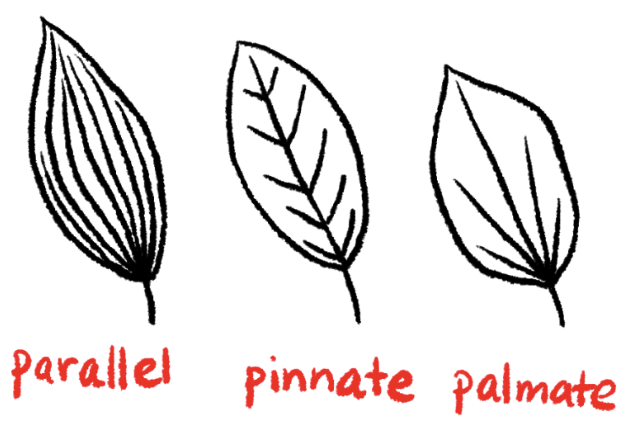

What is 30?
Palmate venation
Several major veins radiate outward from one common point.

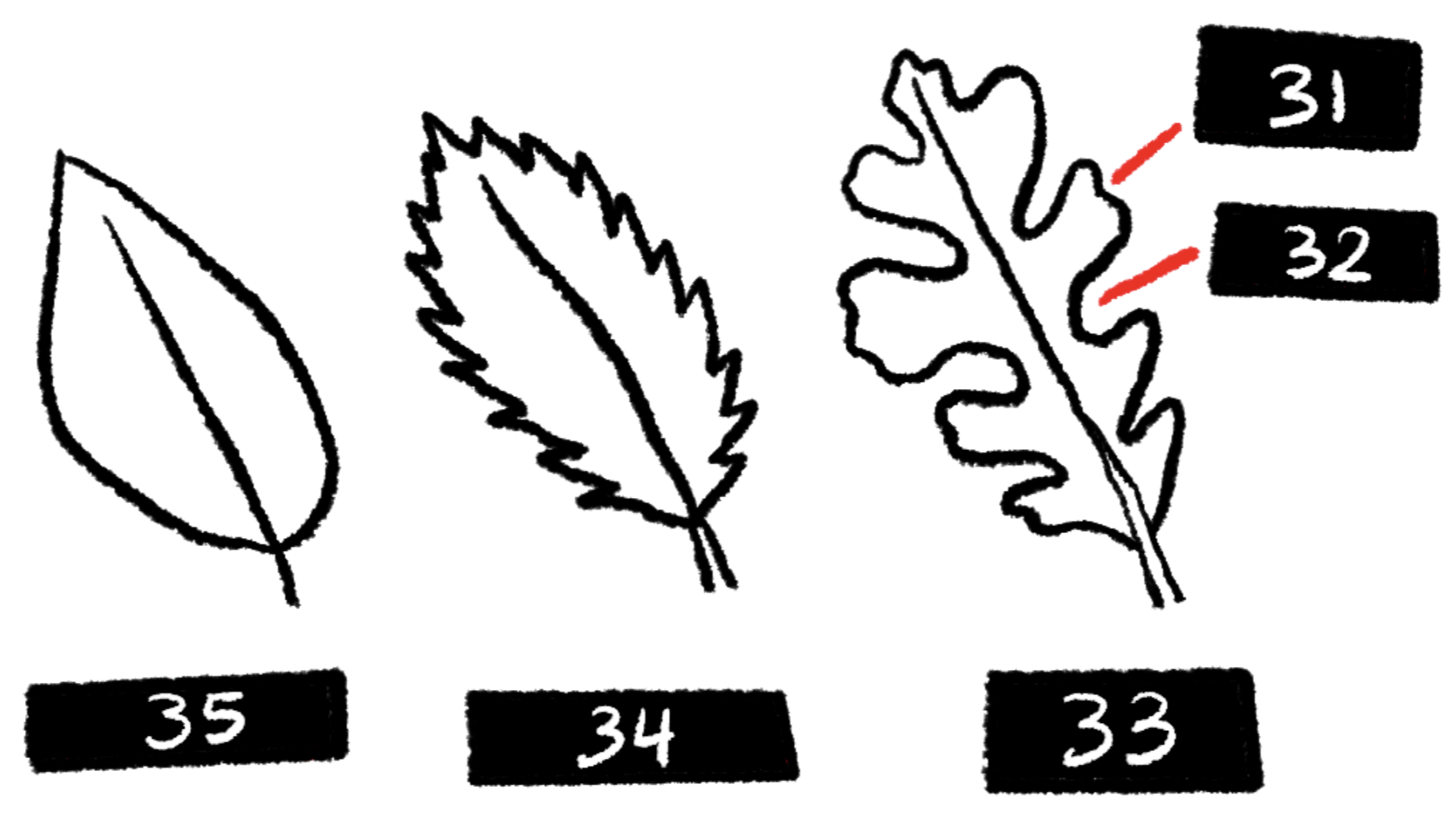
What is 35?
Entire margin
Smooth leaf margin with no teeth or lobes.


What is 34?
Serrate margin
Toothed or saw-like leaf margin.


What is 33?
Lobed margin
Leaf margin divided into projecting lobes with septa between them.
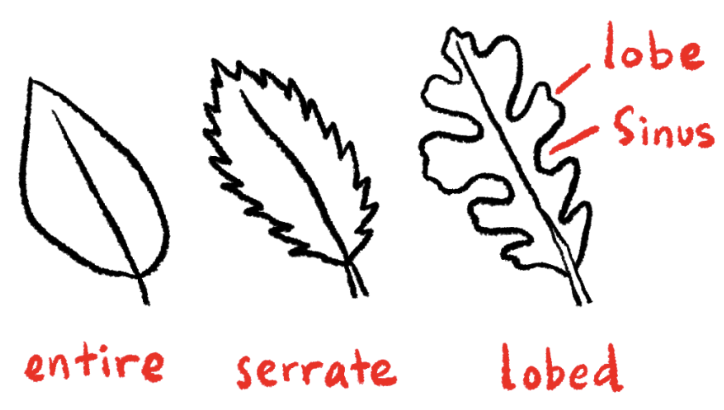

What is 31?
Lobe
Projecting portion of a lobed leaf.
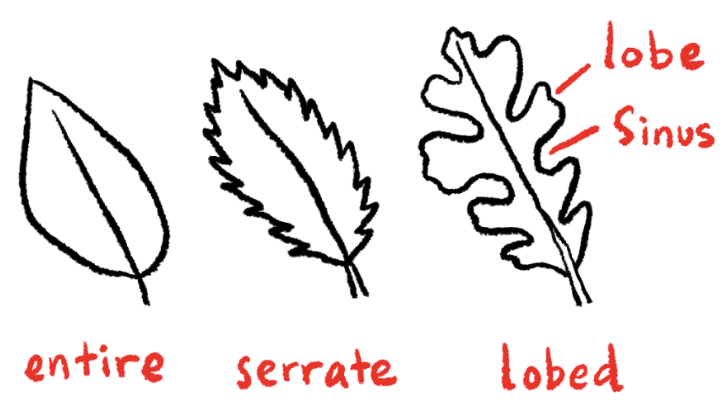

What is 32?
Sinus
Indentation between two lobes.

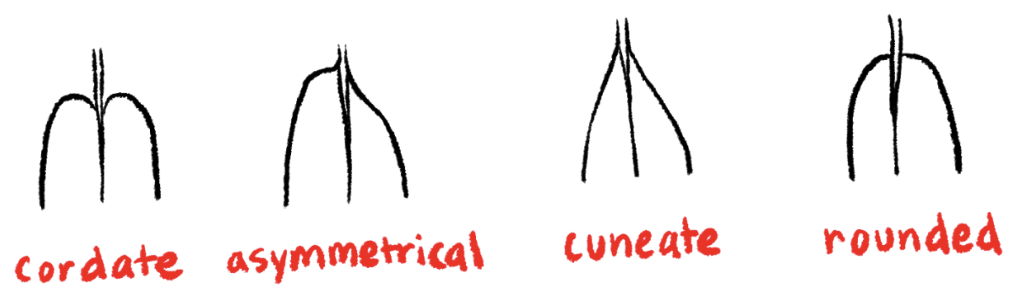
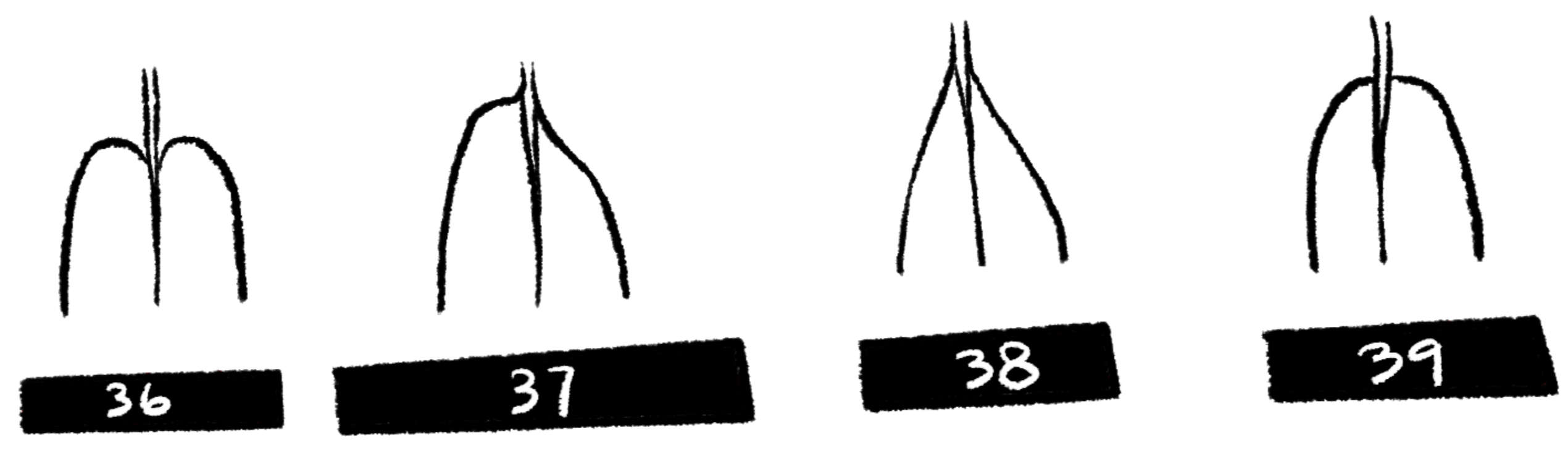
What is 36
Cordate leaf base
Heart-shaped leaf base.


What is 37?
Asymmetrical leaf base
Two sides of the leaf base are unequal.
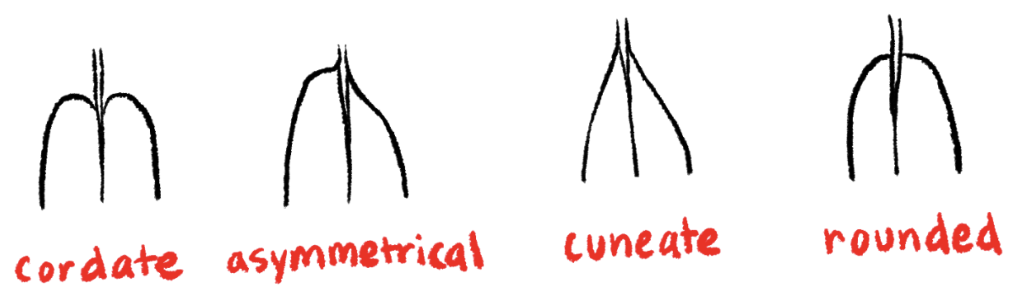
What is 38?
Cuneate leaf base
Wedge-shaped base that narrows toward the attachment point.

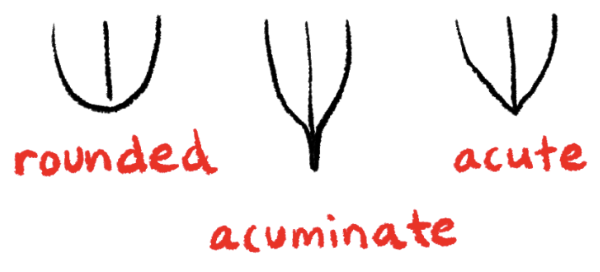
What is 39?
Rounded leaf base
Leaf base forming a smooth rounded curve.


What is 40?
Rounded apex
Leaf tip forms a smooth rounded end.
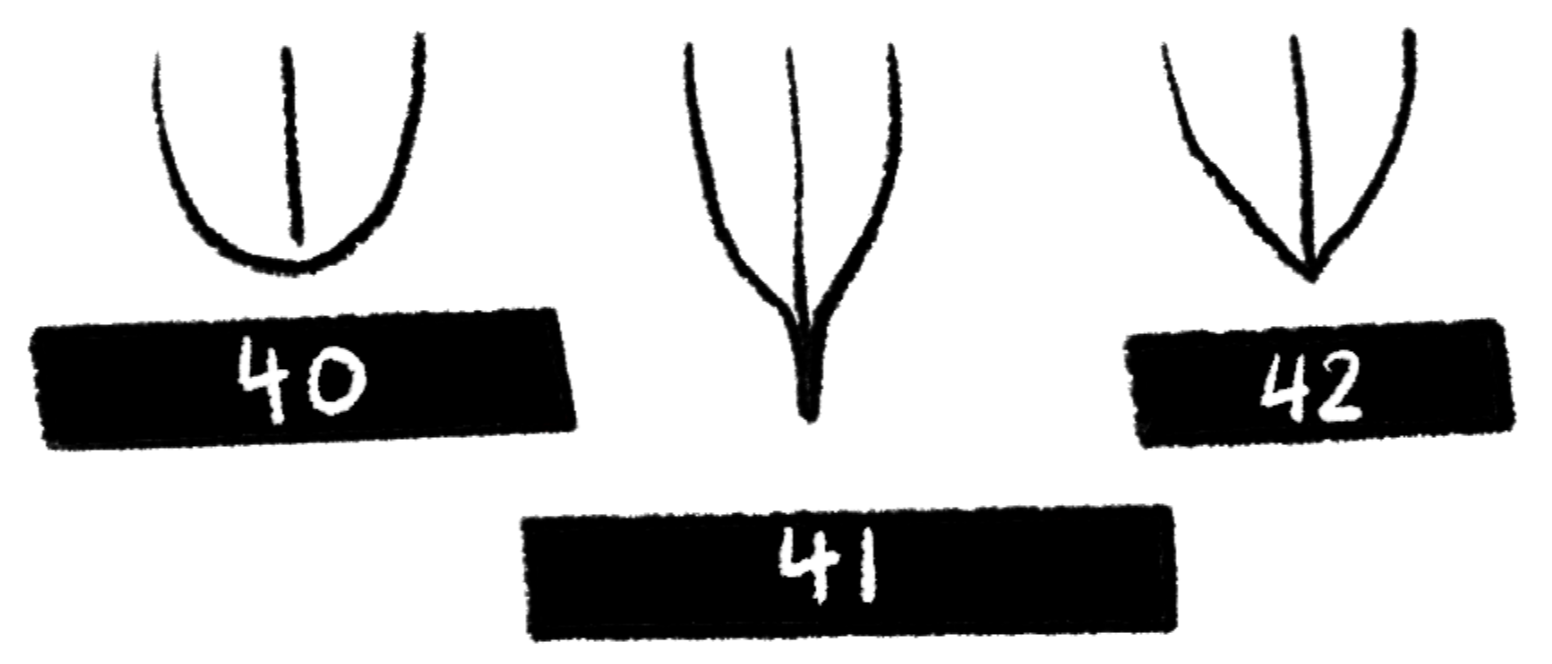
What is 41?
Acuminate apex
Leaf tip gradually tapers into a long narrow point.


What is 42?
Acute apex
Leaf tip comes to a relatively short, sharp point.


What is 43?
Deltoid leaf shape
Triangular leaf shape.


What is 44?
Sagittate leaf shape
Arrowhead-shaped leaf with two backward-pointing basal lobes.

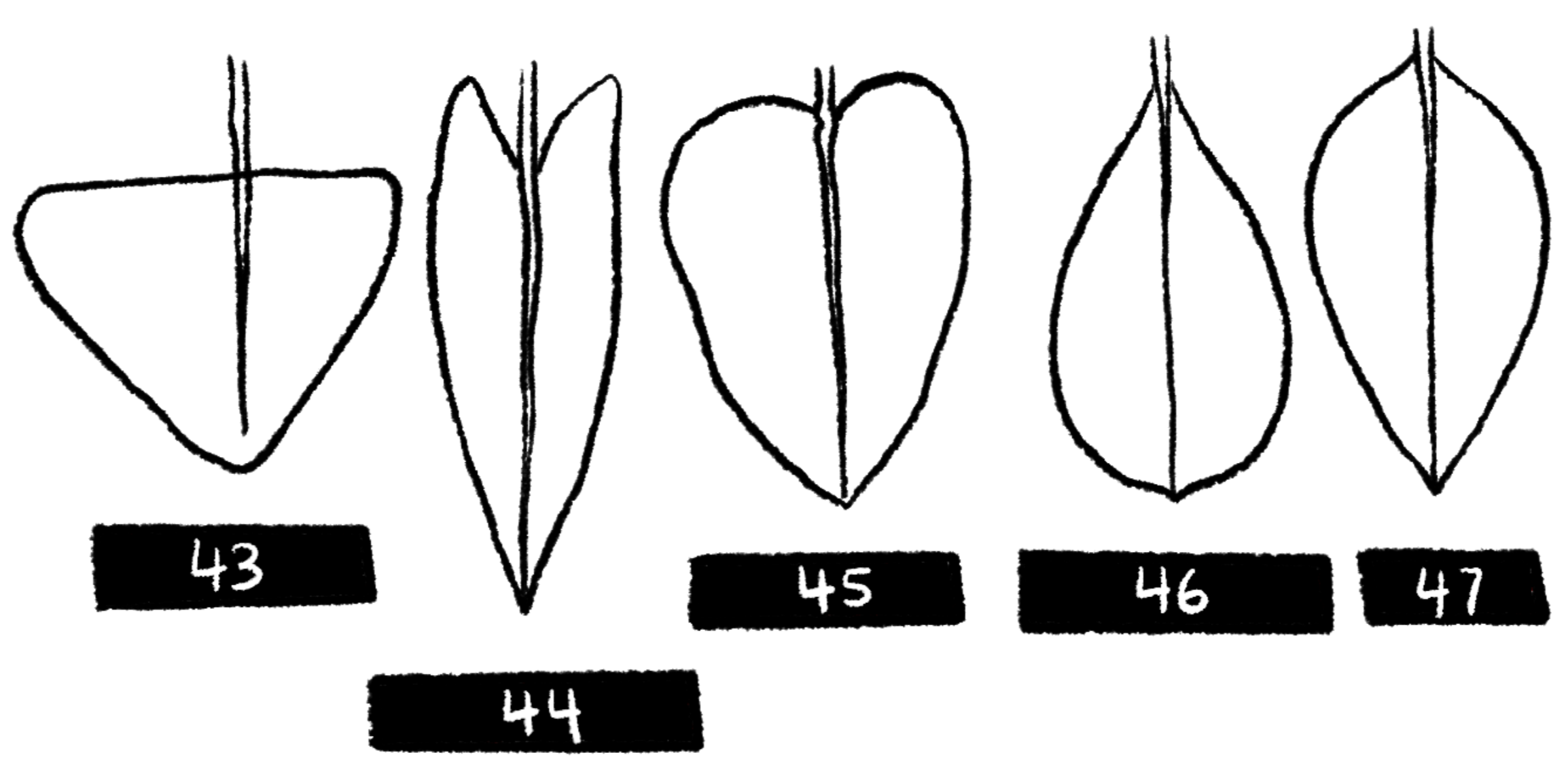
What is 45?
Cordate leaf shape
Heart-shaped leaf.


What is 46?
Spatulate leaf shape
Spoon-shaped; narrow at the base and broader toward the apex.
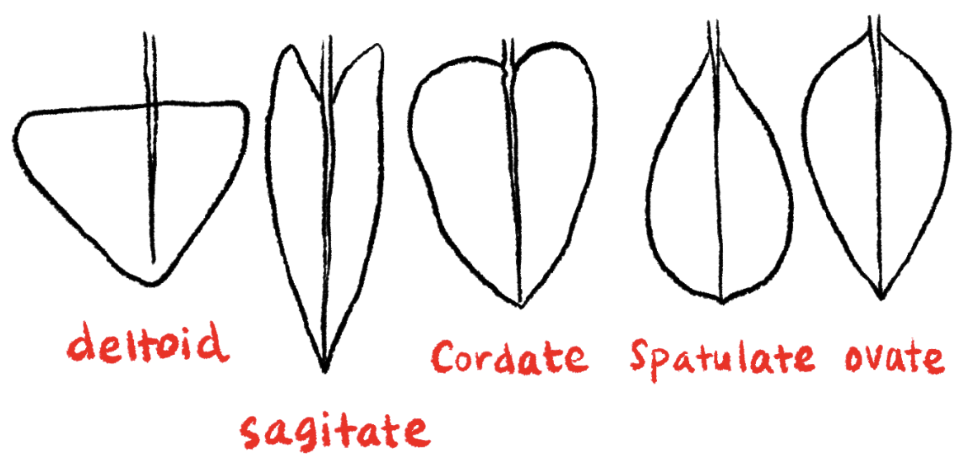
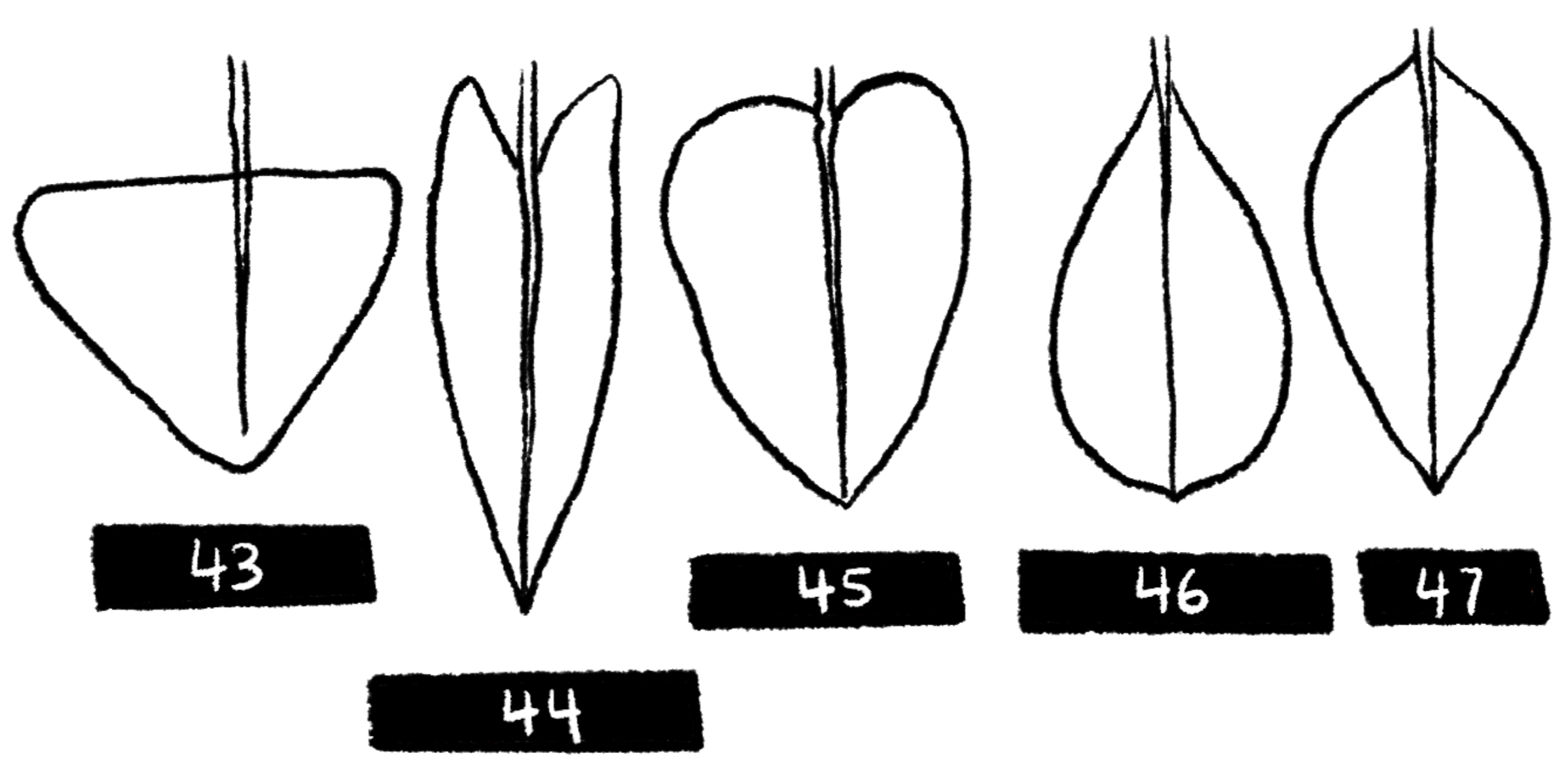
What is 47?
Ovate leaf shape
Egg-shaped; widest below the middle.

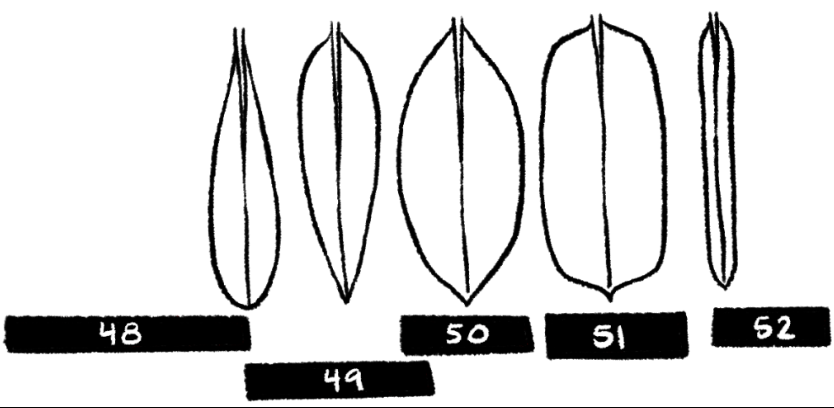
What is 49?
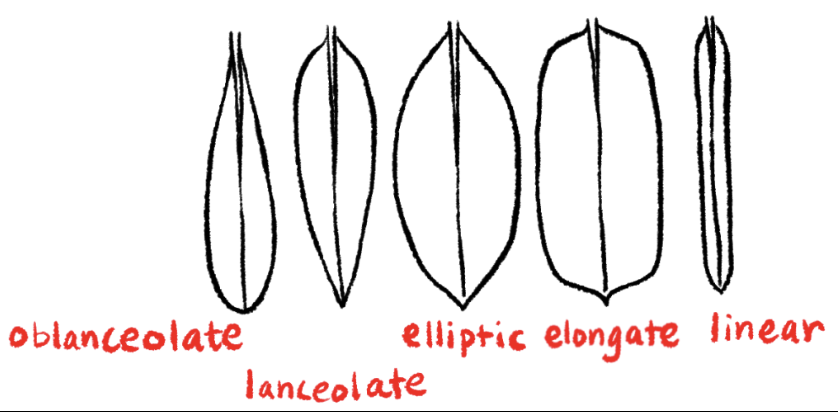
Lanceolate leaf shape
Lance-shaped; long and narrow, tapering toward both ends.


What is 48?
Oblanceolate leaf shape
Reverse lanceolate; widest above the middle and tapering toward the base.

What is 50?
Elliptic leaf shape
Ellipse-shaped; widest near the middle.

What is 51?
Elongate leaf shape
Noticeably longer than wide.


What is 52?
Linear leaf shape
Very long and narrow with approximately parallel sides.