Chem 1LC Safety Section - Practical, Chem 1LC practical: Technique, Chem 1LC practical: safety
 Call Kai
 Learn
Learn Practice Test
 Spaced Repetition
 Match
Match Flashcards
 Knowt Play
1/215

There's no tags or description
Looks like no tags are added yet.
Name | Mastery | Learn | Test | Matching | Spaced | Call with Kai | Chat |
|---|
No analytics yet
Send a link to your students to track their progress
216 Terms
Color Wavelengths Wheel
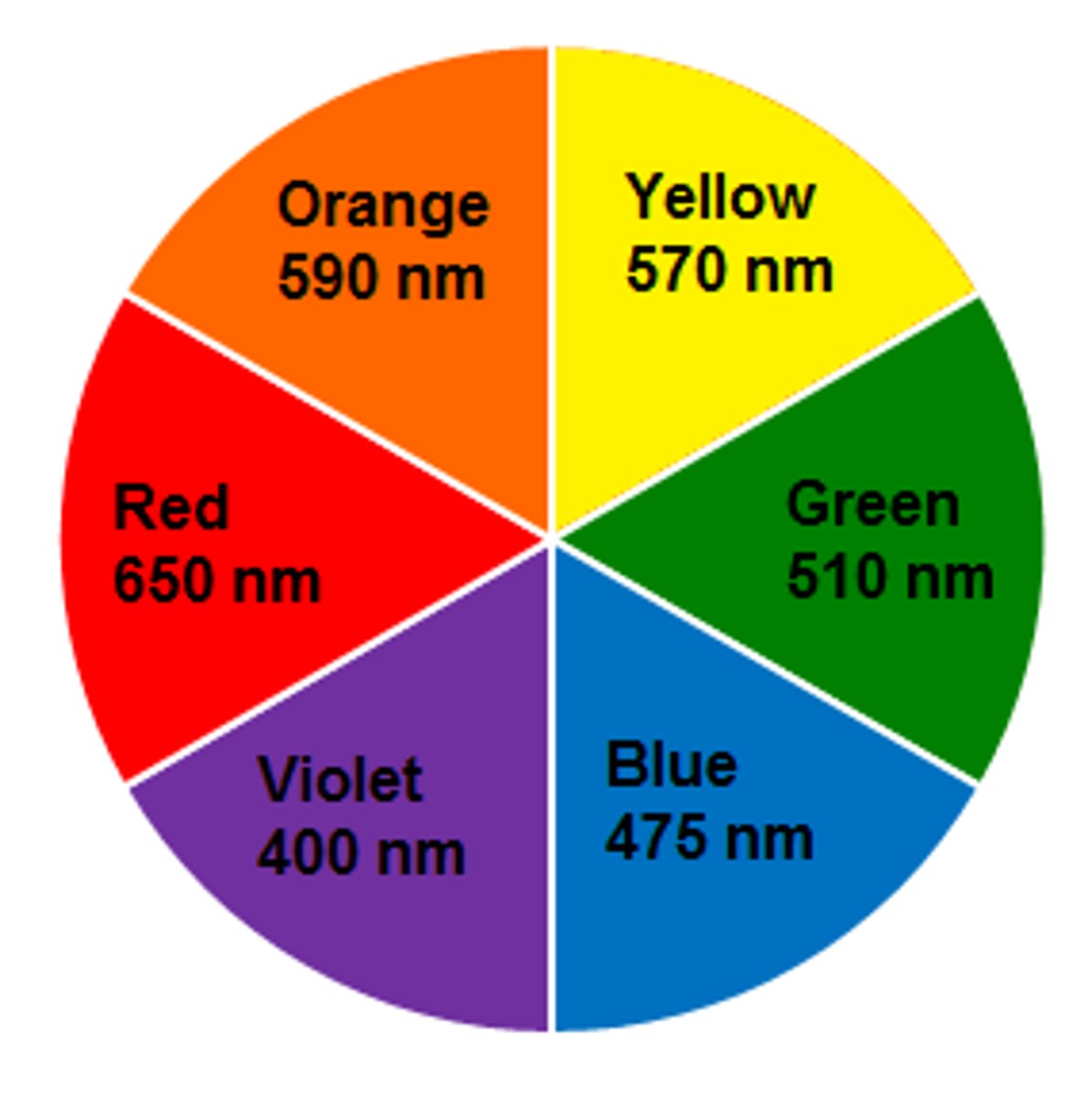
RAMP
R - Recognize
A - Assess
M- Minimize
P - Prepare
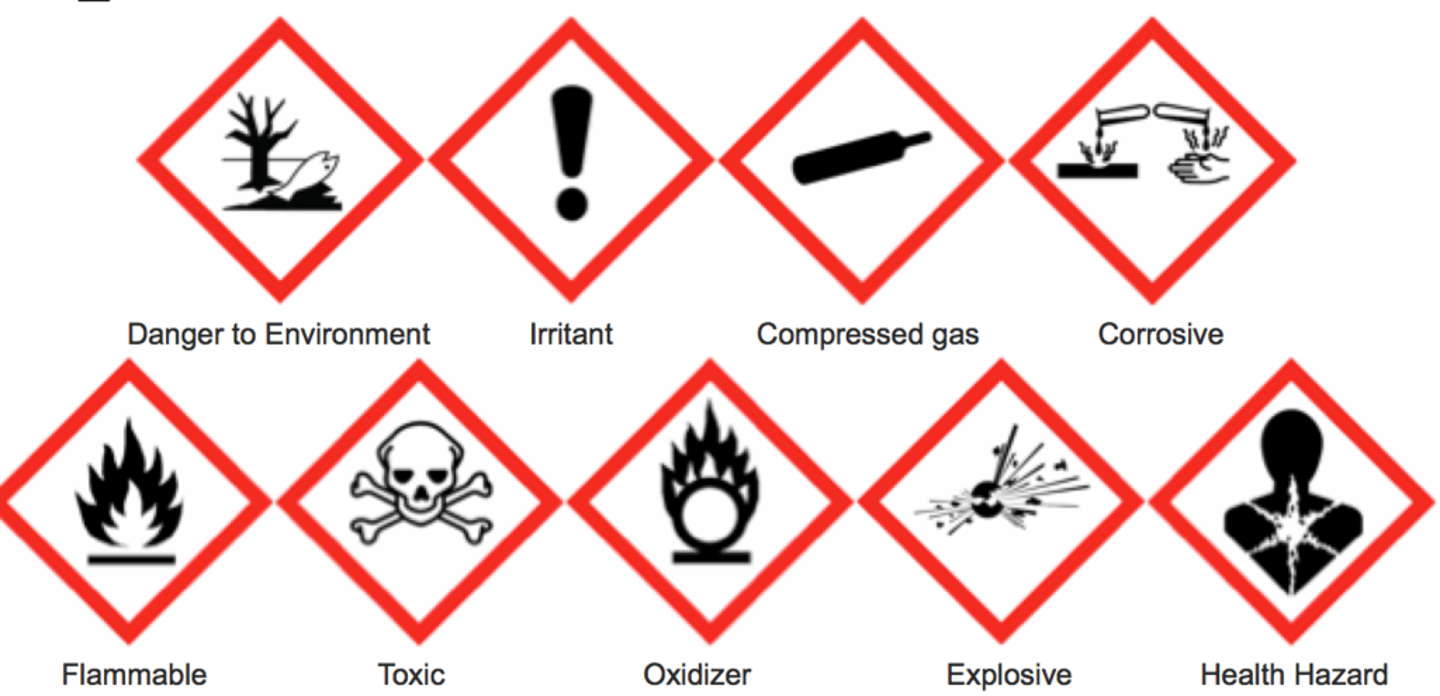
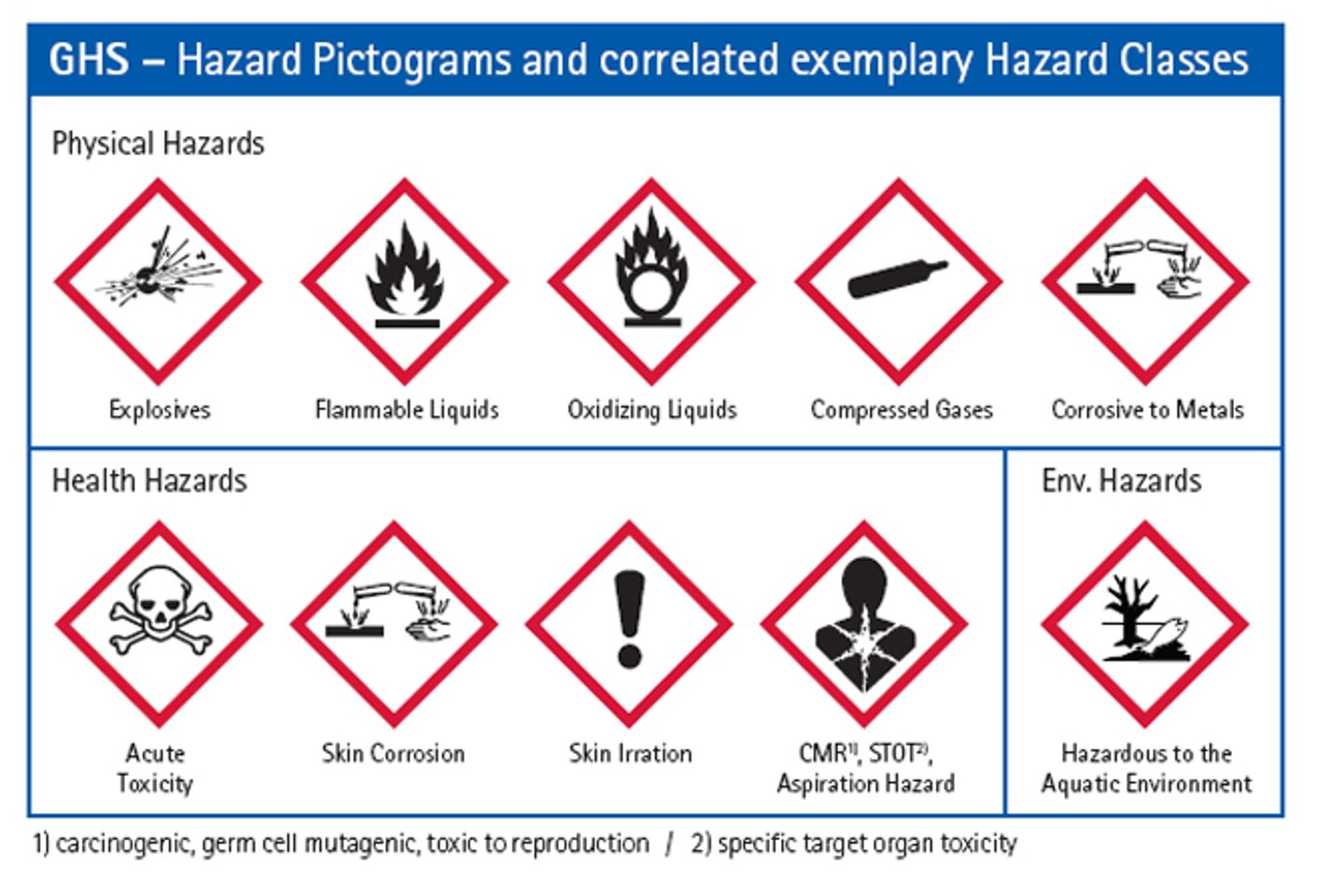
GHS symbols
Explosive, corrosives, flammables, environmental hazards, oxidizers, toxins (acute), irritants, gasses (pressure), specific toxicity
Senitizer
Chemical that causes significant allergic reaction in normal tissue upon repeat exposure
Poison
Fatal to human health
Toxic
Causes adverse human reaction in tissue
Corrosive
Destroys living cells
Flammable
Easily ignites or burns
Volatile
Liquids that vaporize easily
Oxidizer
Rapidly oxidizes, receives/donates electrons during oxidation
Gas
Gas under pressure
Precision
The reproducibility of a measurement; calculated by average deviation or standard deviation
Accuracy
The closeness of a result to the true value; calculated by percent error
GHS Symbols and NFPA Fire Diamond
Fatal - Health
Aquatic toxicity - No NFPA
Oxidizer - Special Hazard
Carcinogen & Toxic - Health
Flammable - Flammability
Irritant - Health
Explosive - Instability
Gas under Pressure - No NFPA
Corrosive - Health
SDS
- 0.1% known chemicals have safety data sheets
- Chemical suppliers creates SDS
- SDS are not required to be accurate, one should examine SDSs from different manufacturers
- SDS are written for an industrial setting, because of this chemicals hazards and personal protective equipment requirements may be overstated
Steps for using SDS
- Compare label info
- Determine the hazard class
- Look at the procedures
In the event of a spill
- If splashed with a large quantity of a chemical, use the shower immediately
- Eyewashes should be used for at least 15 minutes
- Contaminated clothing must be removed and treated as waste
- Use a small brush and dustpan when cleaning up a solid
- Use a spill pillow to absorb liquids with nontoxic vapors
- If solid is spilled on skin wash scrape off, then wash with water
Handling a corrosive
- Wear PPE
- If exposed wash off skin immediately
- Carry bottles in secondary containers
- Wear long sleeved shirts
- Use the fume hood
- Discard gloves
- Know the location of eyewash/shower
Sodium and potassium hydroxide
- White pellets
- Dissolve exothermically in water
Ammonium hydroxide
- Ammonia gas dissolved in water
- Saponify the skin which may not be immediately painful
- Skin do not form protective layers when corroded by bases
Random error
- Reduced by using a best-fit line
- Measured by calculating estimated standard deviation
Instrumental error
- Inaccurate calibration
- Light source on the visible spectrometer dims over time
Methodological error
- Consistently reading
- Using a graduated cylinder instead of volumetric glassware to make standard solutions
Systematic error
- Eliminated by good experimental methods and more than 1 calibration step
Gross error
- Result of equipment failure
- Causes outlier than can be determined by the "Q-test"
Which of the following play significant roles in the extent of injury or harm when exposed to a hazardous chemical?
- How the chemical entered the body
- The amount of chemical one is exposed to
- The amount of time one is exposed to the chemical
Which of the following are parts of the design of laboratory ventilation?
- Hallway air flows into the lab
- Air enters the labs through heating/cooling ducts and hallway air
- Lab air leaves the lab through the fume hoods
Mists
Tiny droplets of liquid suspended in air
Fumes
Colloidal suspension of solid or liquid particles in air
Dusts
Solid particles suspended in air
Smoke
Mixture of dry particles and droplets of liquid
Nanoparticles
Ultrafine homogeneous particles ranging in size from 1 to 100 nm
Why is lambda max significant?
- The value can indicate the observed color of solution
- The value is can be used to identify a particular chemical
- The instrument response is highest at that wavelength
Fire Class
A - Paper, clothing, plastic
B - Gasoline, oil, organic
C - Hot plates, computers
D - Reactive metals
Fire
- Removing heat keeps the fuel from vaporizing
- Water cannot be used to extinguish a Class D fire
- The fuel must be vaporized to burn
Bleach
- If spilled, shower
- Nitrile gloves are have a 480 min breakthrough time for bleach
- Bleach can cause severe skin burns and eye damage
- Bleach forms poisonous chlorine and chloramine gas when combine with ammonia
Graduated (Mohr pipet)
accurately transfer small variable volumes
Volumetric pipet
Accurately transfer small fixed volumes
Buret
Accurately transfer and measure variable volumes
Beaker
Contents must be easily accessed
Erlenmeyer flask
Prevent splashing or evaporation
Volumetric flask
Make and store solutions of known concentration
If you are on fire
- Stop, drop, roll
- Wrap the person in a fire blanket
PASS
- Pull: the safety pin near the handle
- Aim: the extinguisher at the base
- Squeeze: the handle to begin
- Sweep: the discharge back and forth
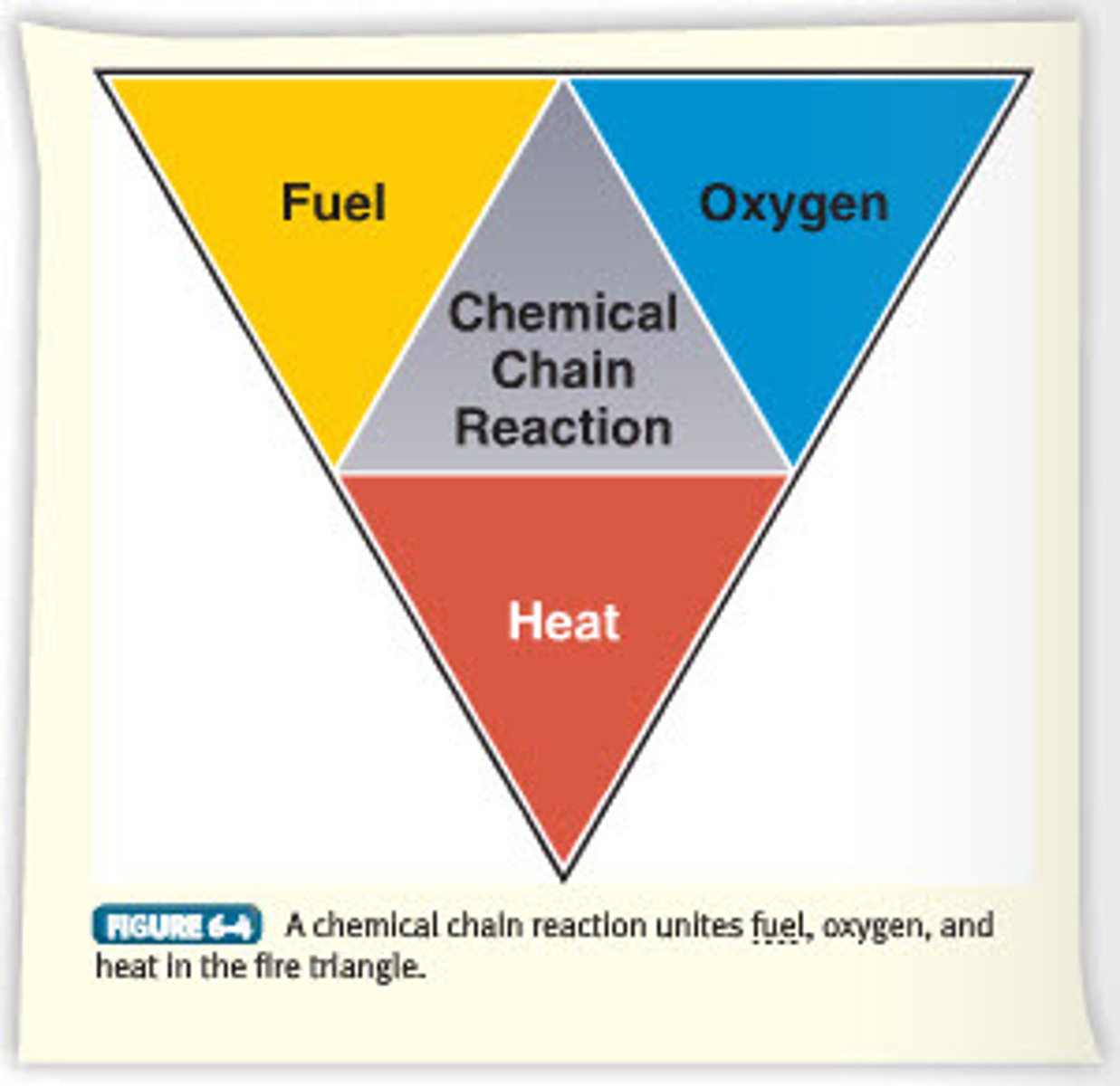
Fire tetrahedron
- Heat: pour water on the fire
- Oxygen: CO2 fire extinguisher
- Chemical chain reaction: use a halon fire extinguisher
- Fuel: keep amounts of flammable material to a minimum
Sig figs for glassware and digital balance
Glassware: all markings and estimate one extra decimal
digital balance: all digits present
dilution formula
M1V1=M2V2
visible spectroscopy
The study of the interaction of radiation from the visible part of the electromagnetic spectrum with a chemical species. Each photon has a specific energy related to a certain frequency or wavelength
visible spectrometer
Uses visible range (400 - 700nm) of electromagnetic radiation spectrum. Shines light of all wavelengths one end through cuvette w/ liquid, detector on other side measures what doesn't get through sample (what's absorbaed) -> absorption spectrum (plot of absorbance vs wavelength)
beer's law
For dilute solutions, the amount of light absorbed at a specific wavelength is directly proportional to the concentration of the solution. This relationship is called Beer's Law:
A = ε C l
A = absorbance (at λmax, no units)
ε = molar absorptivity coefficient (units = L/mol-cm)
C = concentration of absorbing species (units = mol/L)
l = path length (units = cm)
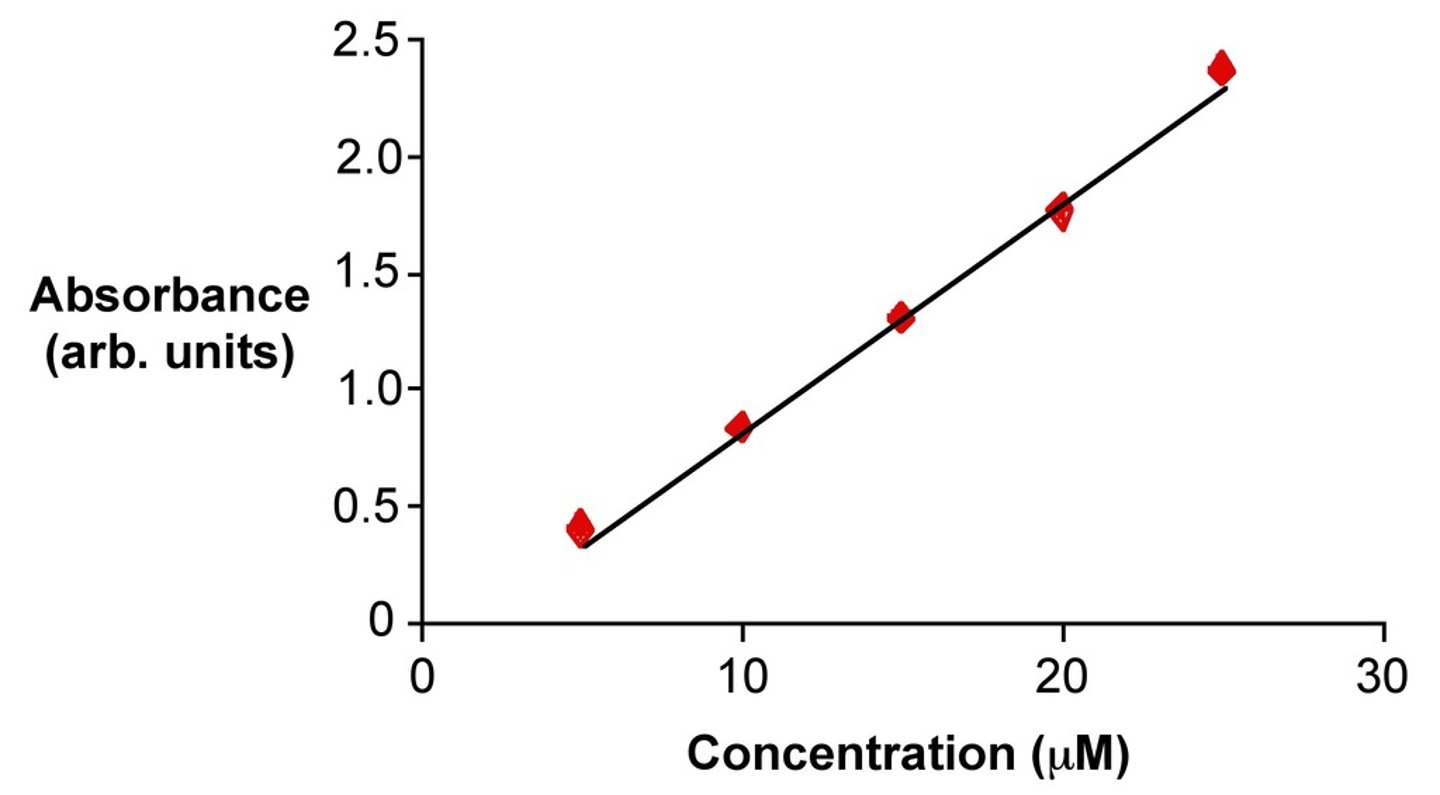
can be used to create a beer's law plot calibration curve of absorbance vs concentration (y vs x)
calibration curve
A graph showing the value of some property versus concentration of analyte. When the corresponding property of an unknown is measured, its concentration can be determined from the graph.
what wavelength is used for creating beer's law plot
lambda max with the highest absorbance since it maximizes the sensitivity of the spectrometer and minimizes errors
also used to determine chemical species
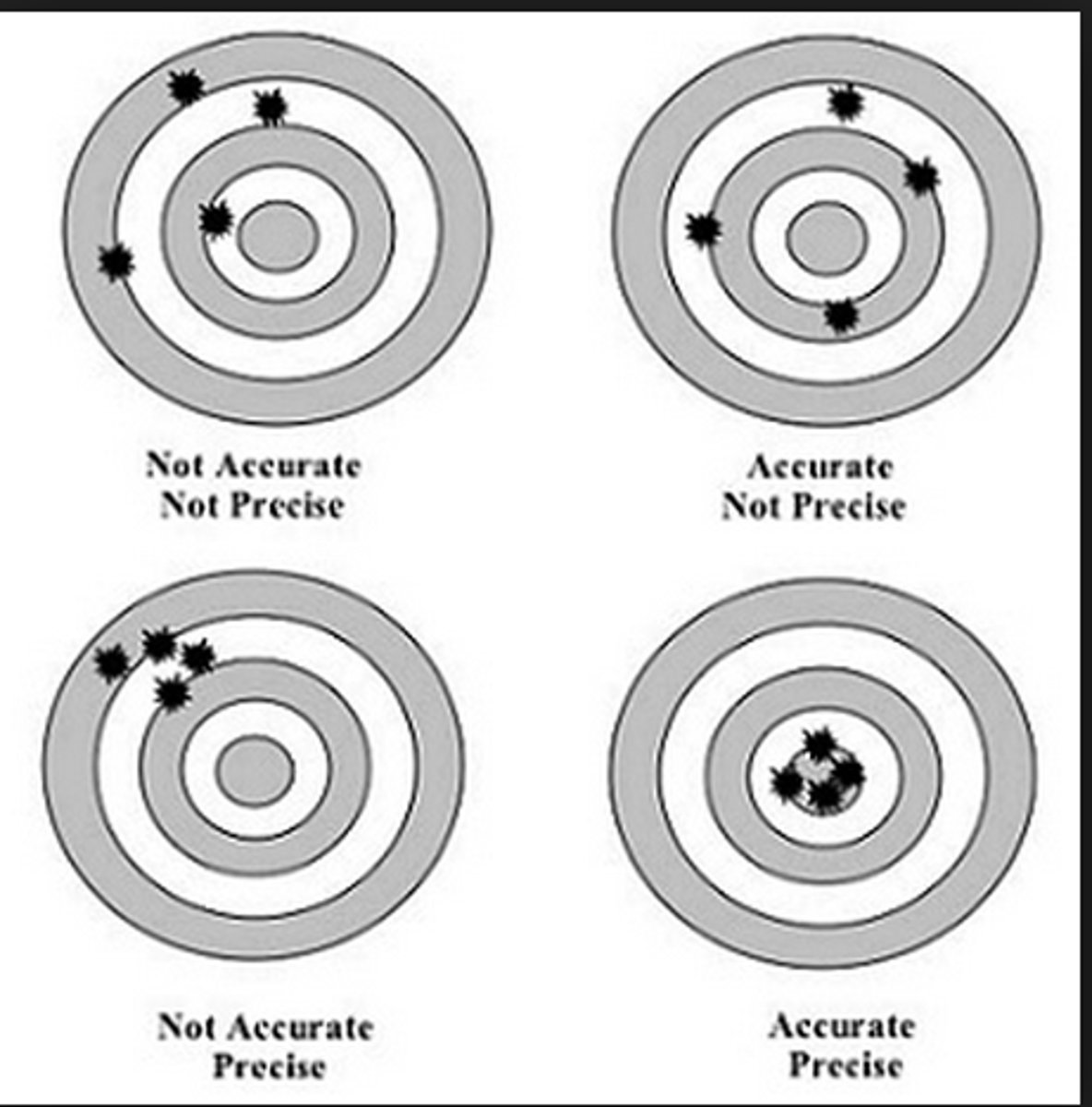
accuracy
the closeness of a measurement to the true value.
as opposed to precision
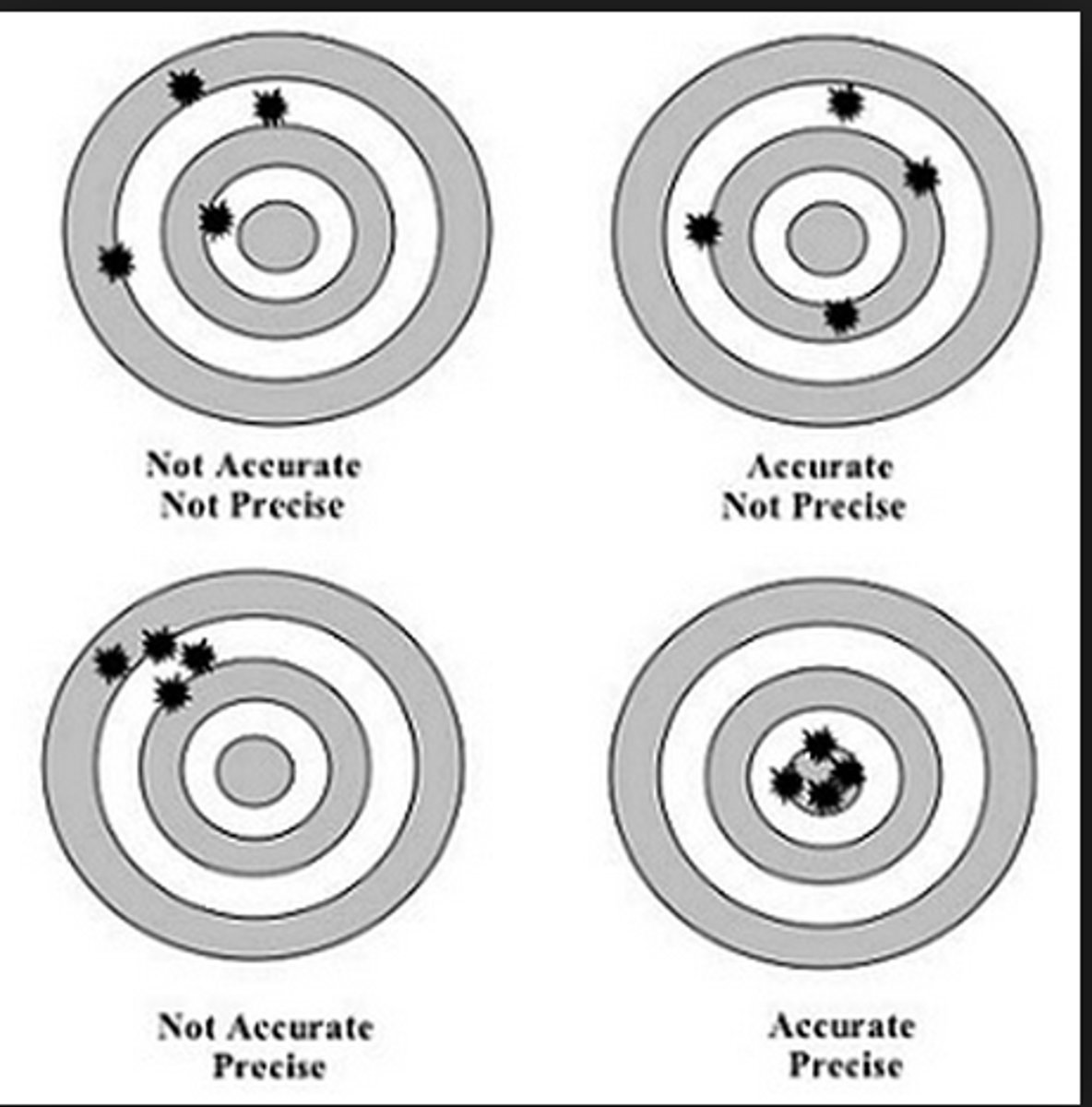
precision
a measure of how close a series of measurements are to one another (how reproducible)
linear precision determined from R^2
as opposed to accuracy
what blank for determining lambda max of dye
The solvent: water
why is blanking necessary
So that the visible spectrometer won't pick up the light absorption of the solvent and cuvette-only that of the solute of interest
What to do before measuring absorbance of cuvette using visible spectrometer. Why?
Blank using solvent: So that the visible spectrometer won't pick up the light absorption of the solvent and cuvette-only that of the solute of interest
wope outside of cuvette using Kimwipe and tap to remove bubbles: removing smudges/contaminants/bubbles is necessary so that nothing interferes with the visible spectrometer as it's measuring the absorbance of the solute.
using a volumetric pipette
pre-rinse using the liquid to be transferred
pipette up above calibration marking using bulb, clamp finger over top
release finger until bottom of liquid's meniscus is in line with calibration marking
release liquid into container, touch off any hanging drops but DON'T BLOW OUT LAST DROPS!

Beer's law plot visible spectrometer settings
little clock screen
sensors > data collection
> Events with Entry:
- name: concentration
- units: µM
SET WAVELENGTH TO LAMBDA MAX! (clock red screen and change wavelength)
beer's law plot graph
a calibration plot to determine concentration using a solution's (with unknown concentration) absorbance at its lambda max
y axis (dependent): absorbance
x axis (independent): concentration (make sure good spread and precise)
R^2 shows precision of linear relationship: how closesly follow line of best fit
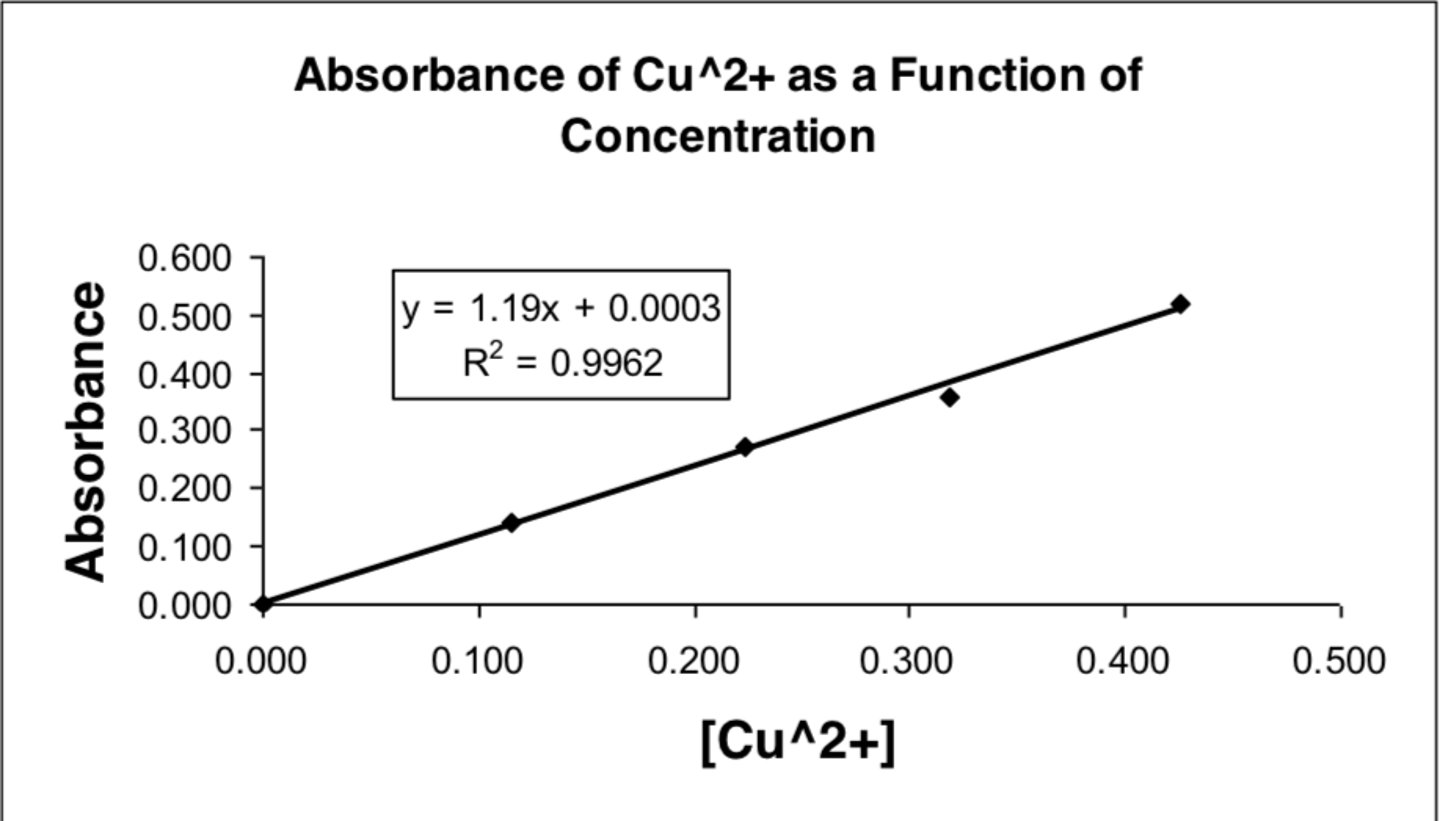
How to determine precision for creating solutions for beer's law plot?
since precision is a measure of how close a series of measurements are to one another, it can be determined from how closely the solutions follow the linear beer's law relationship:R^2 closest to 1
what does y intercept of beer's law plot indicate
The extrapolated absorbance when there's a concentration of zero. Should be zero but due to smudges and stuff, could be positive or negative- negative: not blanked, not zeroed, tech error?- positive: too much absorbance: smudges, blanking/zeroing error
determining absorbance from beer's law plot
y = mx + b
where y is absorbance and x is concentration
given x, find y
either use the graph to estimate x corresponding to a given y or use line of best fit to calculate x given y
kinetics
study of speed/rate of a chem RXN
rate law equation
rate = k [A]^x [B]^y
pseudo rate law
A + B --> C + D
Rate = k [A]^a [B]^b
set initial [A] >> [B], [A] pretty much constant cuz in excess
Rate = k'[B]^b
k' = k[A]^a
Overall order = a + b
used in order to create a rate law with a linear equation form for rate laws involving more than one reactant -> allows you to determine reaction order of one reactant at a time
![<p>A + B --> C + D</p><p>Rate = k [A]^a [B]^b</p><p>set initial [A] >> [B], [A] pretty much constant cuz in excess</p><p>Rate = k'[B]^b</p><p>k' = k[A]^a</p><p>Overall order = a + b</p><p>used in order to create a rate law with a linear equation form for rate laws involving more than one reactant -> allows you to determine reaction order of one reactant at a time</p>](https://assets.knowt.com/user-attachments/e863f132-9eda-4e1c-adf2-160c57d9f43b.jpg)
integrated rate laws for zero, first, and second order
zero: [B] = -kt + [B]₀
First: ln[B] = -kt + ln[B]₀
Second: 1/[B] = kt + 1/[B]₀
plots:
zero: [B] vs t
first: ln[B] vs t
second: 1/[B] vs t
chem RXN, rate law, and pseudo rate law for hydroxylation of crystal violet
add NaOH to CV+
CV⁺ + OH⁻ → CVOH
Rate = k[CV⁺]^x[OH⁻]^y
pseudo rate law: Rate = k1[CV+]^x where k1 = k[OH-]^y
and [OH-]₀ >> [CV+]₀
how to measure concentration of crystal violet during kinetic runs
Beer's law( A = eCl) to relate absorbance to concentration -> measure absorbance over time to indirectly measure change in concentration over time
A ~ [CV+]
azo dyes
named after their central -N=N- linkage
oxidized into two compounds: splitting at azo linkage

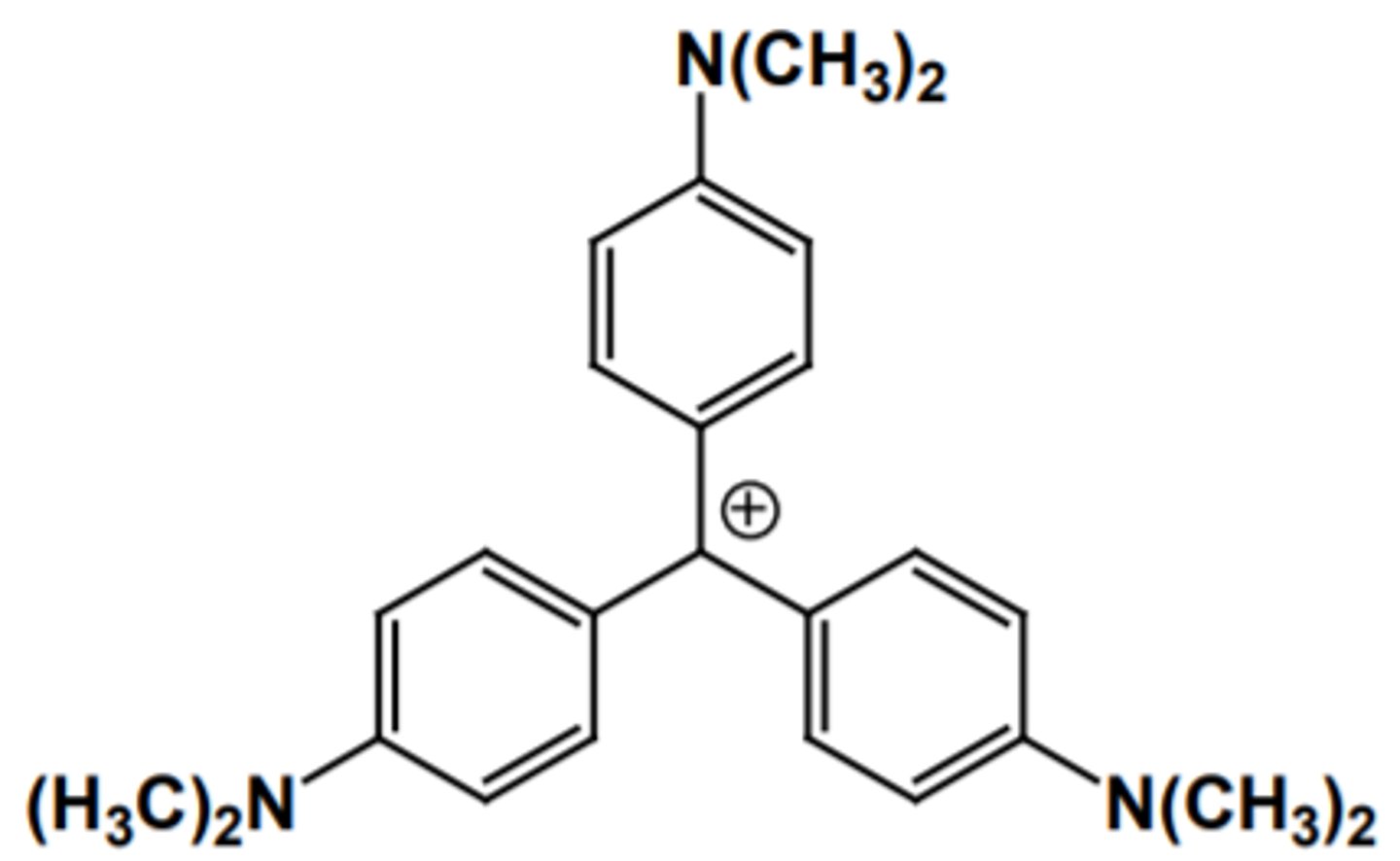
triarylmethane dyes
contain a center carbon ("methane") bound to three benzene rings ("aryl")
oxidize into three compounds: splitting 3 aryl groups/rings
ten-fold and two-fold dilutions
ten-fold: M1V1 = M2V2 where V1 * 10 = V2
two-fold: M1V1 = M2V2 where V1 * 2 = V2
where V2 is the volume of the end solutions, NOT THE VOLUME OF THE WATER
reduces concentration to 1/2 of 1/10 of preceding each time.
lab quest settings for kinetic plot of a dye
absorbance vs time data needed (absorbance ~ concentration according to beer's law plot)
click little clock symbol
> mod > time-based spectrum
duration: 20 mins
interval: 0.25 min/sample
rate: 4 sample/min
SET WAVELENGTH TO LAMBDA MAX OF THE DYE
blanks for determining lambda max of crystal violet
solvent: water
blanks for taking absorbance of crystal violet and NaOH mixture (or Gatorade dye and bleach NaOCl)
CV+ and NaOH: blank using water w/ appropriate NaOH solution (the standard for the given mixture)
Gatorade dye and NaOCl: blank using water w/ appropriate NaOCl solution (the standard for the given mixture)
SINCE YOU DON'T WANT TO MEASURE THE ABSORBANCE OF THE WATER OR THE NaOH OR NaOCl. DON'T BLANK USING JUST WATER
ADD SPILL KIT LAB SAFETY MOMENT 2 TO SAFETY QUIZLET!
steps for using pH probe in titration lab
Always rinse using DI water between use and pat dry gently using kimwipe, newer let dry
- test it using pH 7 buffer: should be within +/- 0.4 pH
- use to get initial pH
- use to get pH of analyte as titrant is added
titrant vs analyte
A titrant is a substance of known concentration which is added in measured amounts from a buret
An analyte is a substance of unknown concentration to which the titrant is added (in beaker)
the two titrants for the Gatorade titration lab and which one is better
NaOH strong base and HCl strong acid are provided
since gatorade is a weak acid buffer, it is a better buffer for a strong base like NaOH
Reaction of buffer in Gatorade when neutralizing added NaOH or HCl
NaOH neutralization: HA + NaOH → H2O + A⁻
HCl neutralization: B + HCl → HB⁺ + Cl⁻
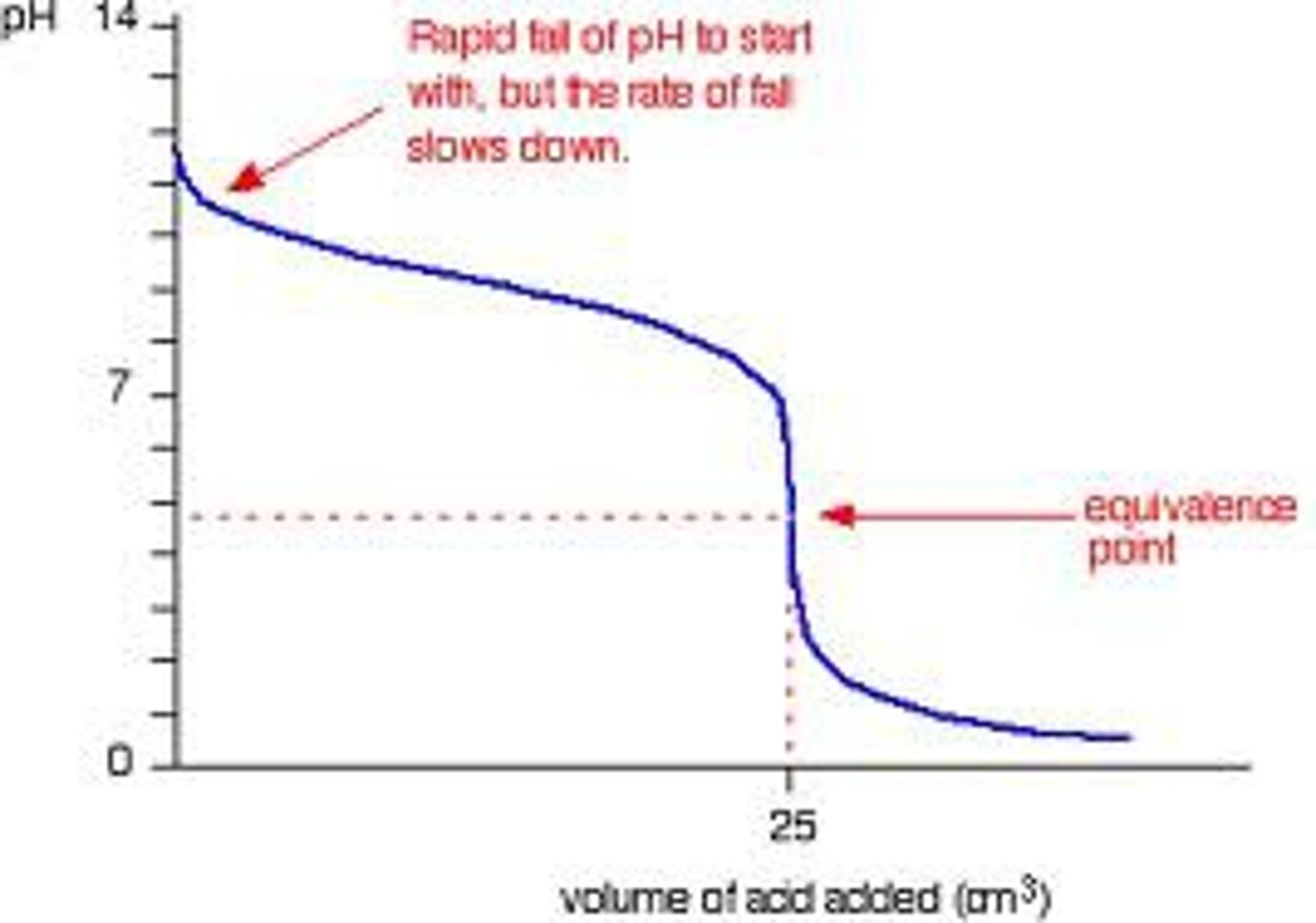
equivalence point
inflection point of the titration curve (nearly vertical)
The point in the titration when exactly enough base has been added to neutralize all the weak acid that was initially present or vice versa
only products of the balanced chemical EQ are present at this point: buffering capacity reached.
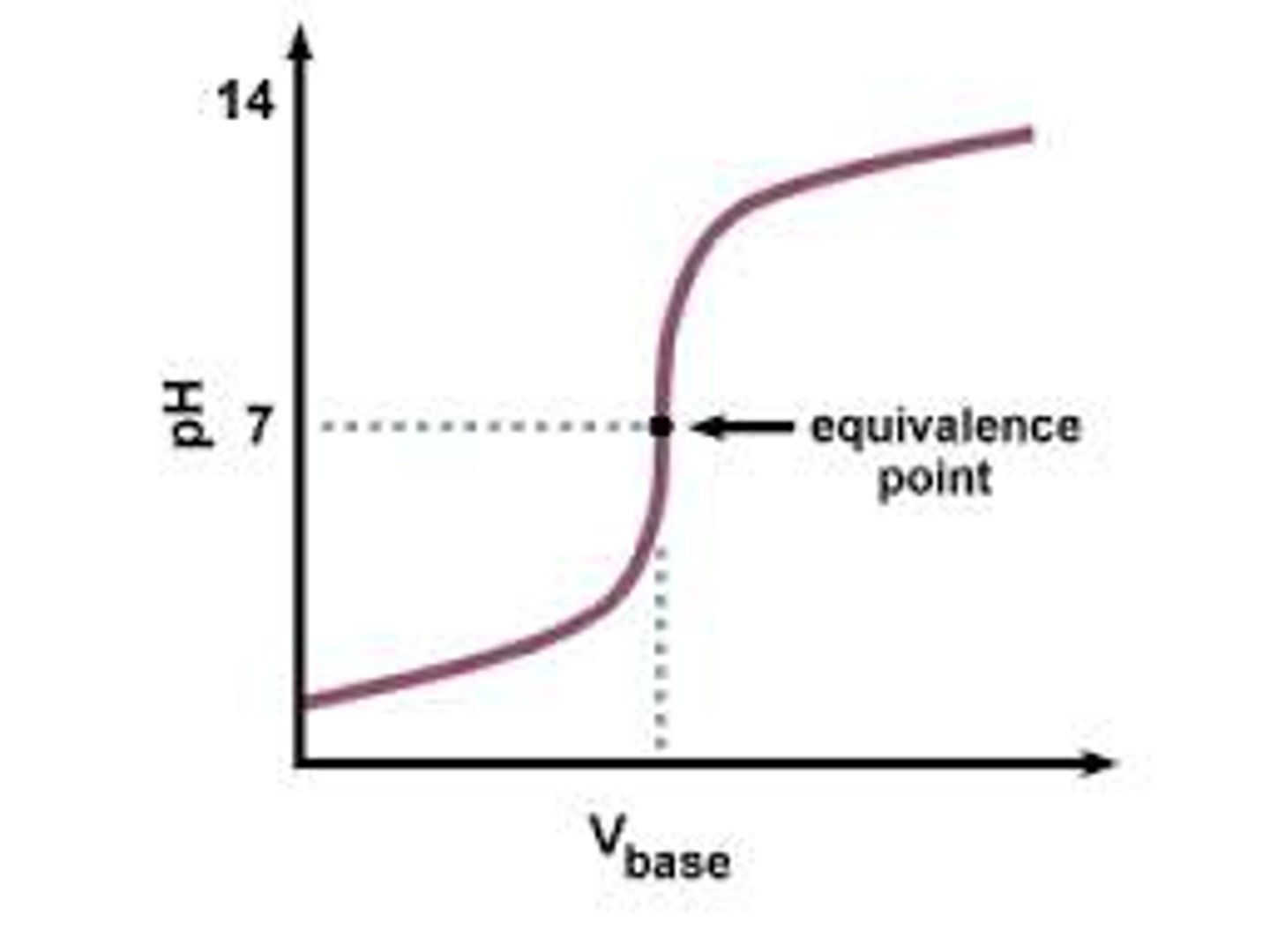
buffering region
The long gradual almost horizontal incline where the pH is being buffered by the weak acid/base buffer system present
before the equivalence point
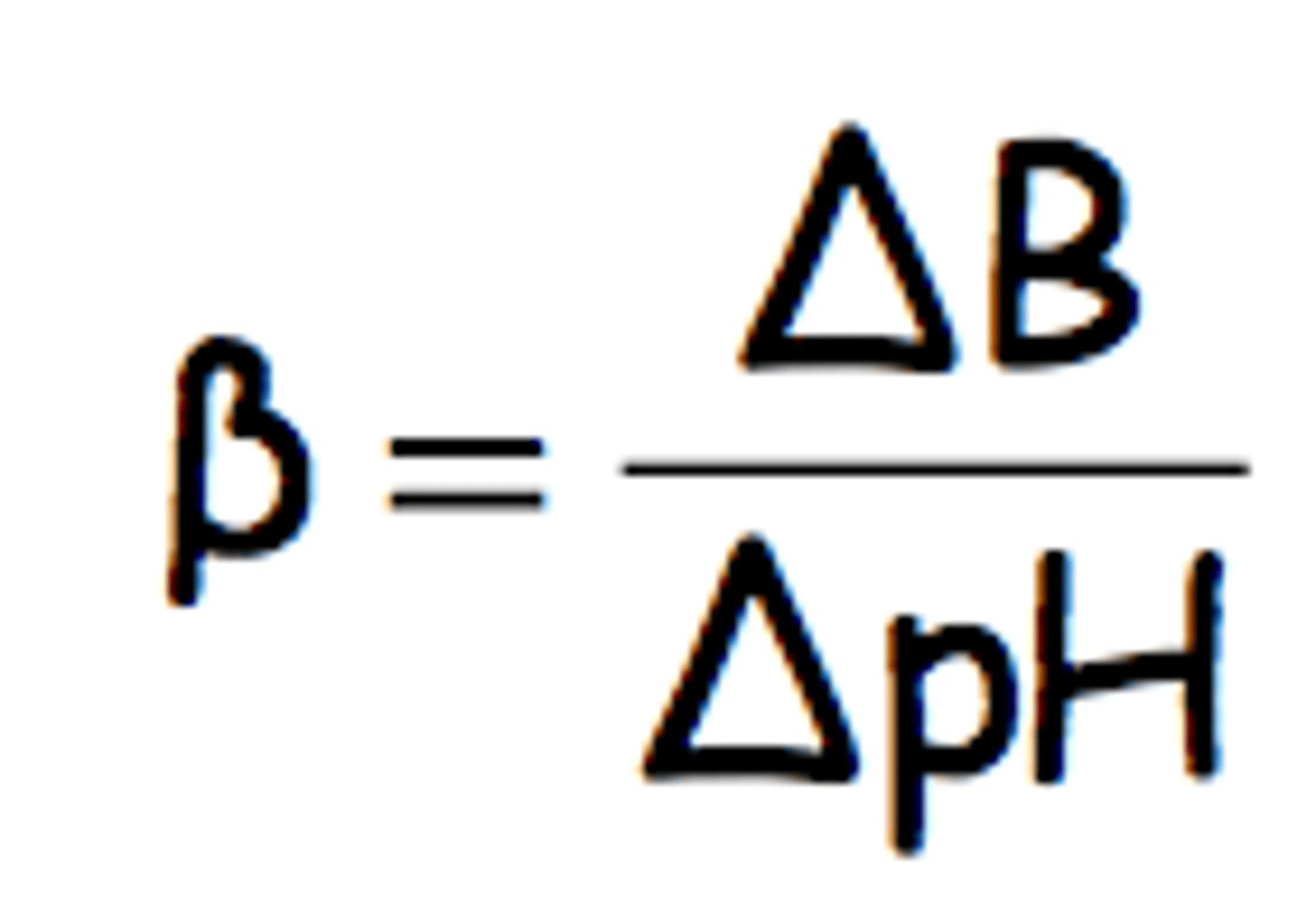
use the endpoints of the buffering region to determine buffering capacity = Δn/ ΔpH
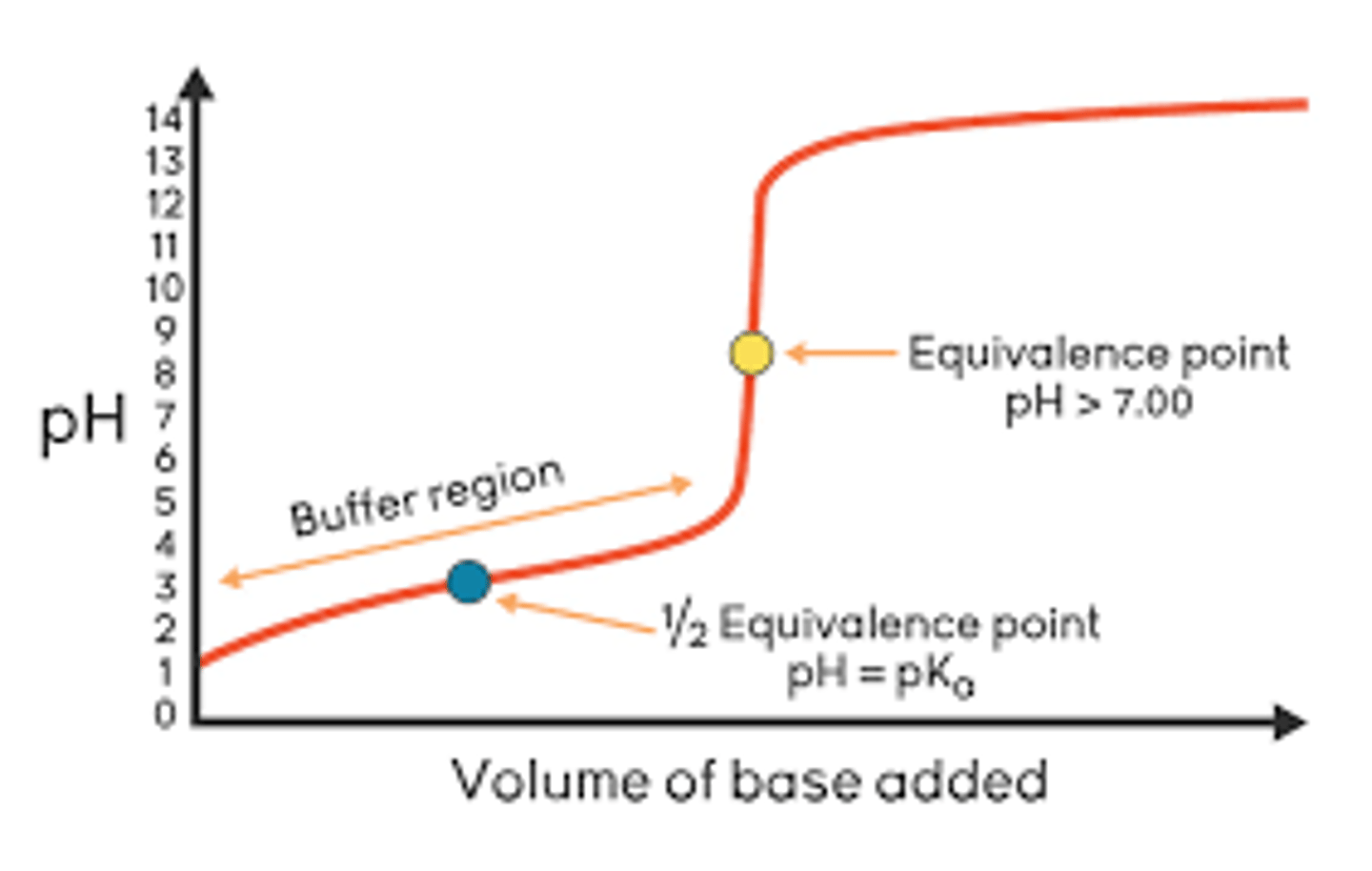
buffering capacity
symbol: β
How well a solution can resist changes in pH when an acid or base is added.
unitless
buffering capacity = Δn / ΔpH
change in moles of titrant over change in pH of the analyte
calculated using endpoints of the buffering capacity
n = M*V
buffer
solution characterized by the ability to withstand changes in pH when limited amounts of acid or base are added to it; usually contains weak acid/base w/ the salt of its conjugate base/acid
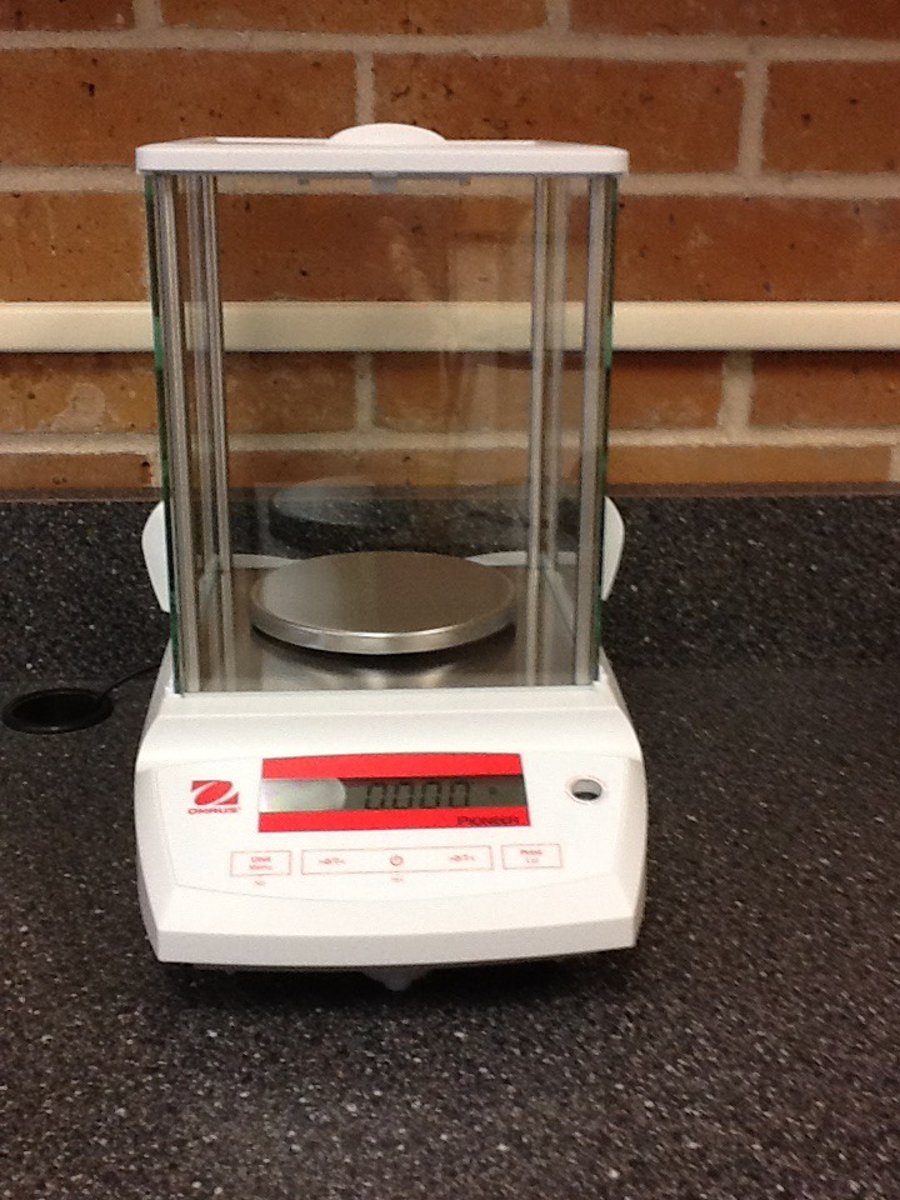
using a digital balance
use same balance throughout experiment and don't move it
tare it using the weigh boat/paper/container that will carry the substance
close draft shields when taking measurements to prevent the outside environment from influencing the reading
Record all sig figs
titrant curve plot
y axid: dependent: pH
x axid: independent: volume of titrant added
buffering region is horizontal region before equivalence point where buffer is resisting change in pH
equivalence point is where the inflection takes place (almost vertical) and only products of the buffing reaction remain, buffering capacity met
intial: pH of the analyte (gatorade)
final: approaches pH of the titrant (strong acid or base)
using a buret
A glass tube with a uniform diameter that is mounted vertically and has a stopcock at its lower end to regulate the liquid flow.
pre-rinse, take volume by doing final - initial, measure volume released from the buret (numbering begins at top)
always let some of the liquid drain out first before adding titrant: removes bubbles trapped in the stopcock
markings to the tenth place, can estimate to the hundredth place
0.00 mL

LabQuest settings for titration
sensors > data collection
> Events with Entry:
- name: acid/base added
- units: mL
record initial, then keep after adding 1.00 mL increments of the acid/base titrant to the analyte (Gatorade)
neutralizing liquid waste
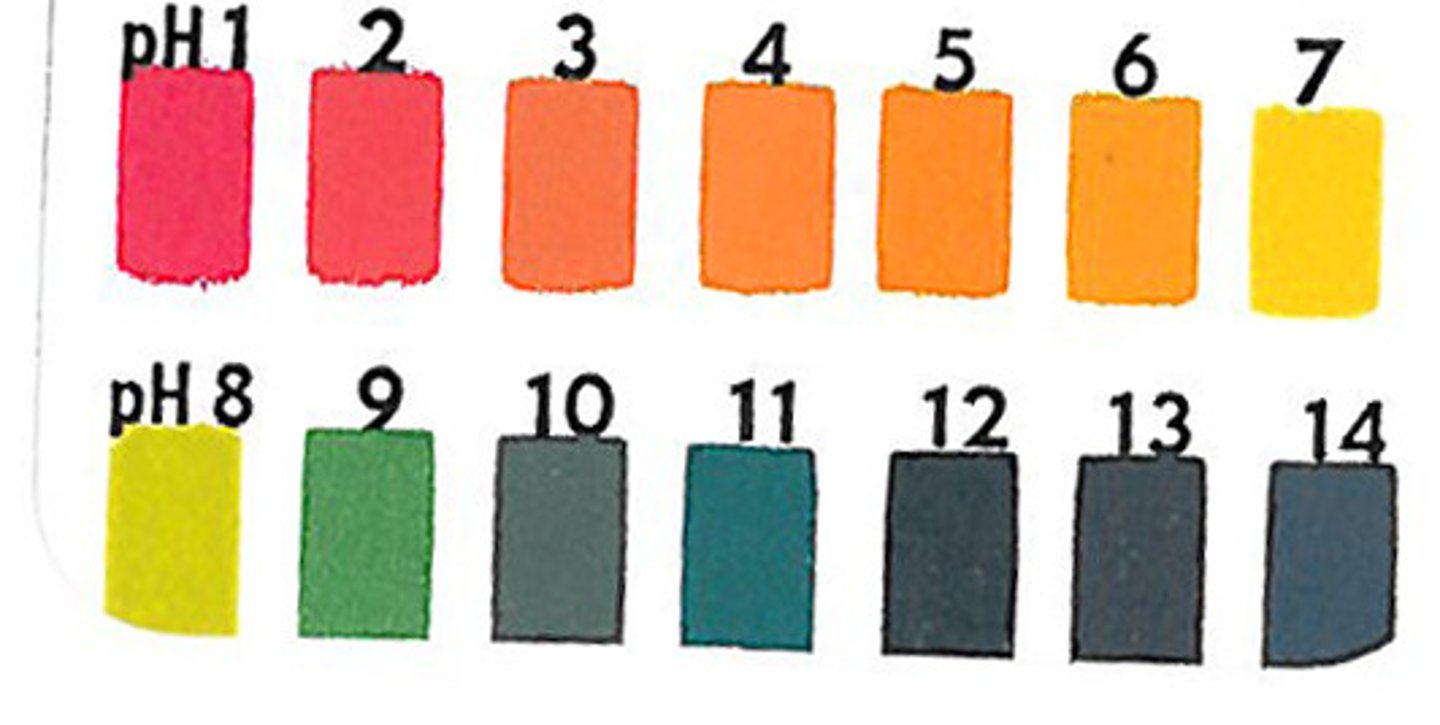
If pH is 6-8, pour the solution down the drain.
If pH is below 6, add a small amount of sodium bicarbonate. To prevent foaming over, slowly pour and stir with sodium bicarbonate addition to prevent foaming over. Recheck with pH paper.
If pH is above 8, add citric acid and recheck with pH paper.
ADD SUMMARY OF EACH PROJECT AND IN-CLASS STEMBLE STUFF!
Hazard
potential source of danger or harm
CAS numbers (Chemical Abstract Service)
Database of chemical substances
Numbers assigned by American Chemical Society
Unique and only one per chemical even if under different chemical names and formulas.
GHS: Globally Harmonized System of Classification and Labeling of Chemicals
A labeling system that uses pictograms to indicate different hazards, a signal word, a hazard statement, and supplier information.
The hazard statement is a summary of the main hazards
GHS signal words
'Danger' or 'Warning' indicating hazard severity.
warning is lower hazard severity than danger
allergen
A chemical that causes an allergic reaction - that is, can evoke an adverse immune response in a person.
Aspiration hazard
health hazard that covers products that may be fatal if they are swallowed and enter the airways
Aspiration toxicity includes severe acute effects, such as chemical pneumonia, varying degrees of pulmonary injury or death following aspiration. Aspiration is the entry of a liquid or solid directly through the oral or nasal cavity, or indirectly from vomiting, into the trachea and lower respiratory system.
Carcinogen
Chemical that causes cancer in animals or humans
Combustible
A chemical that burns under most conditions once ignited. DOES NOT ignite and burn as easily as a flammable chemical
compressed gas
a gas stored under pressure (might be liquid or gas when compressed)
corrosive
a chemical that causes destruction of living tissue at the site of contact