NURS 380: OB Exam #3 - Comprehensive Study Guide 3
 Call Kai
 Learn
Learn Practice Test
 Spaced Repetition
 Match
Match Flashcards
 Knowt Play
1/283

There's no tags or description
Looks like no tags are added yet.
Name | Mastery | Learn | Test | Matching | Spaced | Call with Kai | Chat |
|---|
No analytics yet
Send a link to your students to track their progress
284 Terms
What is reproduction?
The biological process by which a fertilized ovum develops into a fetus and results in the birth of a newborn.
What is gravidity?
The total number of pregnancies a woman has had.
What does parity refer to?
The number of pregnancies carried to a viable gestational age.
What physiological changes occur in the uterus during pregnancy?
The uterus enlarges and the endometrium thickens to accommodate fetal growth.
How does the cardiovascular system change during pregnancy?
There is an increase in blood volume and cardiac output to meet the metabolic demands of the mother and fetus.
What changes occur in the respiratory system during pregnancy?
Increased tidal volume and oxygen consumption to provide sufficient oxygen for both mother and baby.
How does renal function change during pregnancy?
Renal blood flow and glomerular filtration rate rise to excrete maternal and fetal waste products.
What gastrointestinal changes may occur during pregnancy?
Slowed motility, which promotes nutrient absorption but may cause constipation and heartburn.
What hormonal changes support pregnancy?
Increased levels of progesterone, estrogen, and human chorionic gonadotropin.
What are some antepartum complications?
Hypertensive disorders, gestational diabetes, placental problems, hyperemesis gravidarum, preterm labor, and premature rupture of membranes.
What is gestational hypertension?
Blood pressure greater than 140/90 after 20 weeks of pregnancy without proteinuria.
What defines preeclampsia?
Hypertension with proteinuria or organ dysfunction.
What are the signs and symptoms of eclampsia?
Preeclampsia accompanied by seizures.
What is the purpose of nonstress testing?
To assess fetal heart rate patterns in response to fetal movement to determine adequate oxygenation.
What does a biophysical profile assess?
It combines a nonstress test with ultrasound assessment of fetal breathing, movement, tone, and amniotic fluid volume.
What is the role of amniocentesis during pregnancy?
To obtain amniotic fluid for genetic testing or to determine fetal lung maturity.
What infections can affect maternal and fetal health during pregnancy?
Parvovirus B19, rubella, cytomegalovirus, toxoplasmosis, and sexually transmitted infections.
What is the definition of preterm labor?
Contractions and cervical change between 20-36 weeks of gestation.
What are the risk factors for preterm labor?
Infection, multiple gestation, advanced maternal age, substance use, hypertension, and placental issues.
What is the management for gestational diabetes?
Diet, exercise, glucose monitoring, and insulin or metformin if needed.
What are the risks associated with gestational diabetes?
Macrosomia, neonatal hypoglycemia, hyperbilirubinemia, and shoulder dystocia.
What should be included in a prenatal maternal assessment?
Comprehensive health, obstetric, and social history, including medical conditions and previous pregnancies.
What is Naegele's Rule used for?
Calculating the Estimated Date of Delivery (EDD).
What does GTPAL stand for?
Gravida, Term, Preterm, Abortions, Living children.
What is the visit schedule for prenatal care until 28 weeks?
Monthly visits.
What assessments are performed at each prenatal visit?
Weight, BP, urine dipstick, fundal height, fetal heart tones, edema, and symptoms review.
What is the typical method for detecting fetal heart rate early in pregnancy?
Using a Doppler device.
When should fetal movement counting begin?
Around 16 to 20 weeks of gestation.
What tests are performed at 26-28 weeks of pregnancy?
One hour glucose tolerance test, repeat H&H, RhoGAM for Rh-negative mothers.
What does a positive Group B Streptococcus (GBS) culture require?
Intrapartum antibiotics.
What are warning signs to assess during prenatal care?
Vaginal bleeding, headache, vision changes, contractions.
What is the purpose of antepartum care?
To monitor the health of the pregnant person and fetus, promote wellness, and prepare for labor.
What is the recommended prenatal vitamin to prevent neural tube defects?
Prenatal vitamins with folic acid.
What is the definition of PPROM?
Prolonged Premature Rupture of Membranes before 37 weeks.
What are the signs of pre-eclampsia?
Hypertension with proteinuria or organ dysfunction.
What does NST stand for and what does it monitor?
Non-Stress Test; it monitors fetal heart rate in response to movement.
What is the normal range for baseline fetal heart rate?
110 to 160 beats per minute.
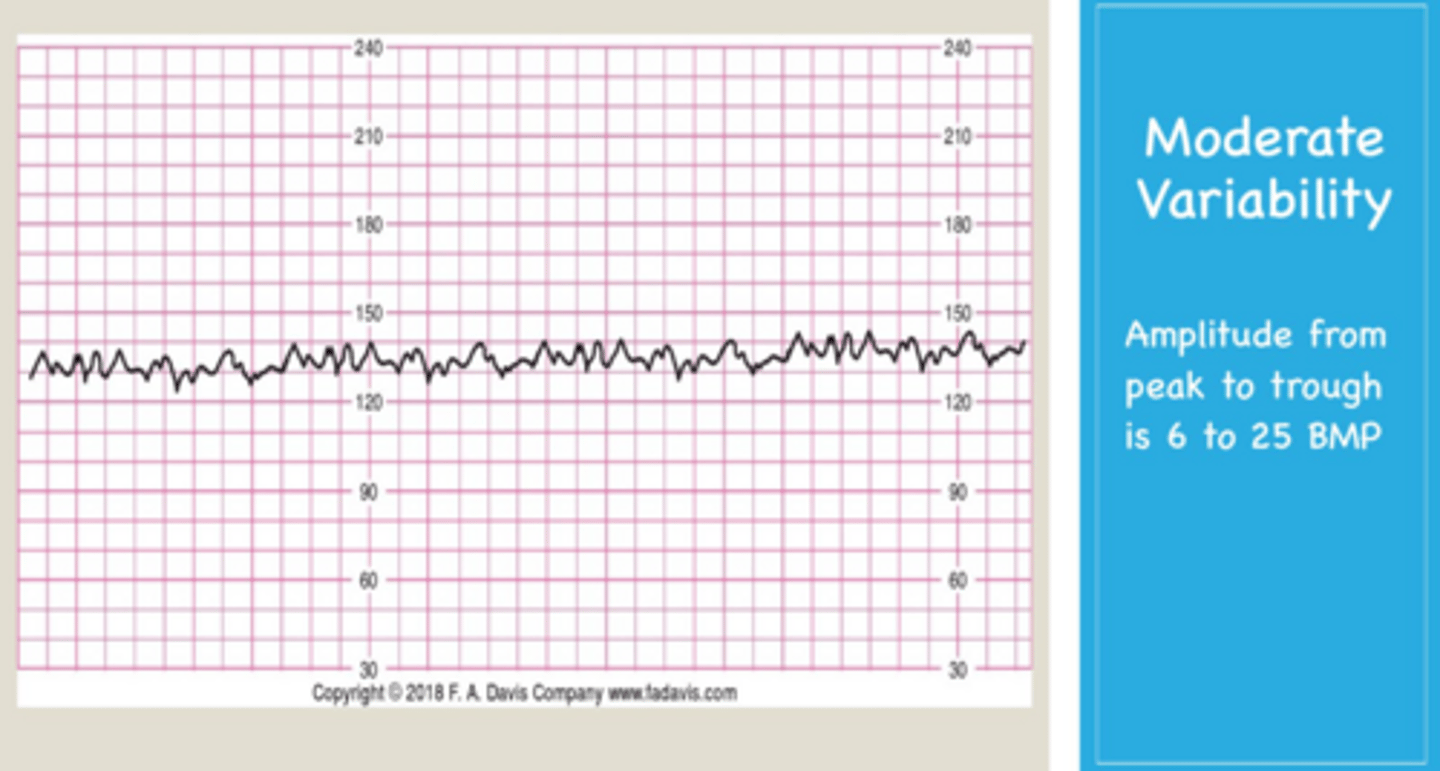
What does moderate variability in fetal heart monitoring indicate?
Reassuring sign of fetal oxygenation.
What are early decelerations in fetal heart rate monitoring associated with?
Fetal head compression, usually benign.
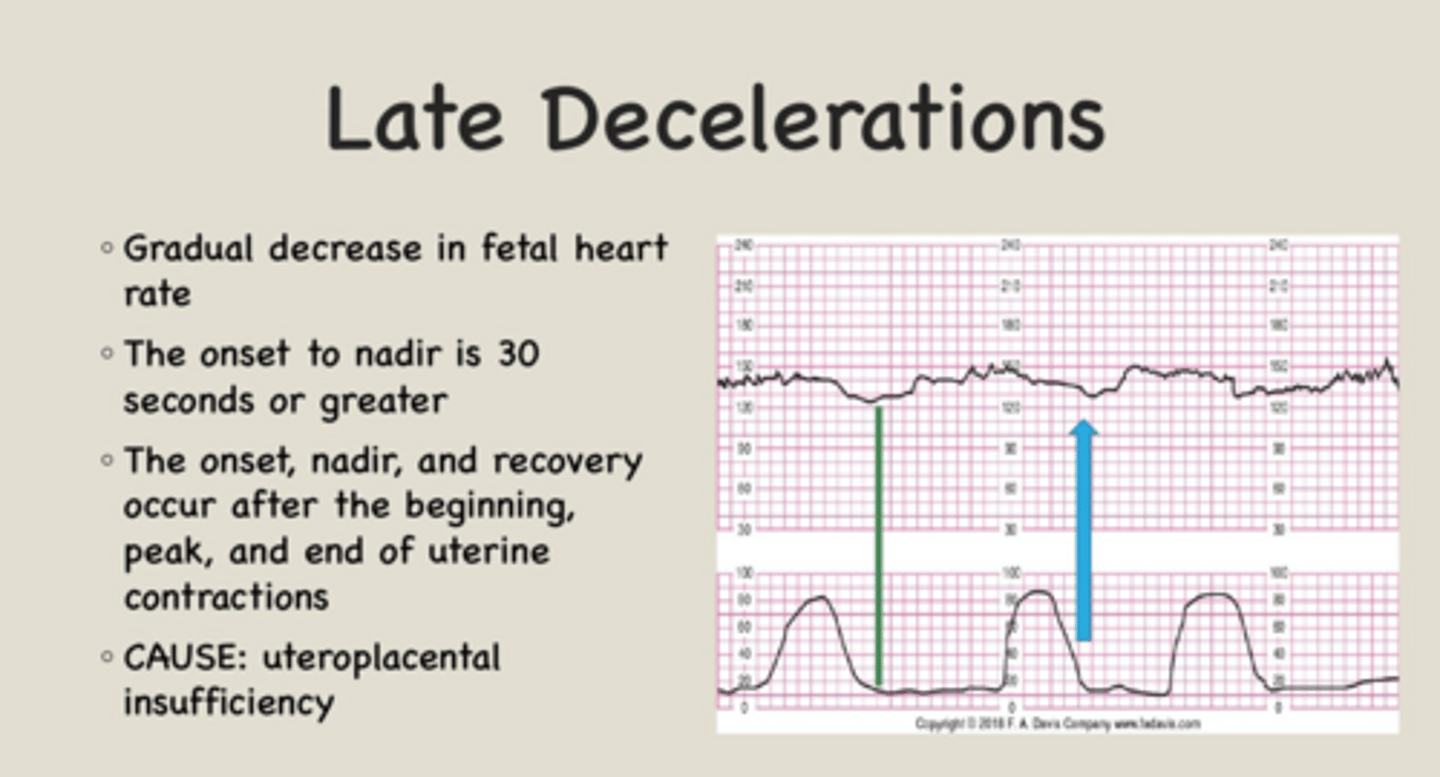
What causes late decelerations in fetal heart rate?
Uteroplacental insufficiency, indicating impaired fetal oxygenation.
What are variable decelerations in fetal heart rate monitoring caused by?
Umbilical cord compression.
What is considered fetal tachycardia?
A baseline heart rate above 160 beats per minute.
What is considered fetal bradycardia?
A baseline heart rate below 110 beats per minute.
What is the purpose of the Biophysical Profile (BPP)?
To assess fetal well-being through ultrasound.
What is the significance of fetal kick counts?
Expect at least 10 movements in 2 hours to ensure fetal well-being.
What should be avoided during pregnancy to ensure fetal health?
Alcohol, tobacco, recreational drugs, and excessive caffeine.
What is the initial prenatal visit focused on?
Establishing baseline health and risk status.
What is the frequency of prenatal visits from 28 to 36 weeks?
Every 2 weeks.
What is the frequency of prenatal visits from 36 weeks until birth?
Weekly.
What are the goals of antepartum care?
Promote health, detect complications early, provide education, and build a trusting relationship.
What are the three categories of fetal heart rate patterns according to NICHD?
Category 1 (normal/reassuring), Category 2 (indeterminate), Category 3 (abnormal)
What does Category 1 fetal heart rate pattern indicate?
Normal/reassuring with moderate variability and no concerning decelerations
What is indicated by Category 3 fetal heart rate pattern?
Absent variability with recurrent decelerations or bradycardia, requiring immediate intervention
What are the four stages of labor?
First Stage (Dilation), Second Stage (Expulsion), Third Stage (Placental Delivery), Fourth Stage (Recovery)
What occurs during the first stage of labor?
Begins with regular uterine contractions and ends with full cervical dilation at 10 cm
What are the phases of the first stage of labor?
Latent Phase (0-3 cm), Active Phase (4-7 cm), Transition Phase (8-10 cm)
What happens during the second stage of labor?
Begins with full dilation and ends with the birth of the newborn, involving active pushing
What is the duration of the third stage of labor?
Typically lasts 5 to 30 minutes after the birth of the infant until the placenta is expelled
What is the focus during the fourth stage of labor?
Maternal stabilization and monitoring of vital signs, bleeding, and uterine tone
What is dystocia?
Difficult or prolonged labor due to issues with contractions, fetus, or pelvis
What is precipitous labor?
Labor and delivery occurring in under 3 hours, increasing risks of maternal lacerations and fetal distress
What is shoulder dystocia?
When the fetal shoulders become lodged behind the maternal symphysis pubis after head delivery
What is umbilical cord prolapse?
When the cord slips ahead of the presenting part, leading to fetal hypoxia and requiring emergency intervention
What is uterine rupture?
A rare but life-threatening event involving tearing of the uterine wall, often in patients with previous cesarean scars
What is an amniotic fluid embolism?
When amniotic fluid enters maternal circulation, causing sudden cardiovascular collapse
What defines uterine tachysystole?
More than 5 contractions in 10 minutes averaged over 30 minutes
What are late decelerations in fetal heart rate?
Indicate uteroplacental insufficiency and require urgent intervention
What are variable decelerations caused by?
Often caused by cord compression
What are the nursing interventions for abnormal fetal heart rate patterns?
Repositioning, oxygen administration, IV bolus, stopping Pitocin, considering amnioinfusion
What is the McRoberts maneuver?
A technique used to relieve shoulder dystocia by hyperflexing the maternal hips
What is the definition of breech presentation?
When the fetal buttocks or feet present first instead of the head
What are the goals of pain management during labor?
Promote comfort, reduce anxiety, support patient control, and facilitate labor progress
What are some nonpharmacologic methods of pain management during labor?
Position changes, breathing techniques, hydrotherapy, touch and massage, support person
What are common systemic analgesics used during active labor?
Opioids such as fentanyl, butorphanol (Stadol), and morphine
What are the risks associated with pharmacologic pain management?
Maternal sedation, nausea, or respiratory depression
What can cross the placenta and affect the newborn?
Certain medications, such as opioids, can cross the placenta and may cause respiratory depression at birth.
What are the nursing responsibilities before administering opioids?
Assess maternal vital signs, pain level, and fetal heart rate (FHR) pattern before and after administration.
Why should naloxone be available during opioid administration?
Naloxone should be available for neonatal reversal in case of respiratory depression.
What is the most common form of pain relief in active labor?
Epidural analgesia.
What are the benefits of epidural analgesia?
Excellent pain relief, the patient remains awake and alert, and can participate in pushing.
What are some risks associated with epidural analgesia?
Hypotension, decreased fetal heart rate from reduced placental perfusion, urinary retention, and headache.
What nursing interventions should be performed prior to epidural placement?
Baseline vital signs and fetal heart rate should be assessed, and a pre-epidural fluid bolus should be administered to reduce hypotension.
What is a local or pudendal block used for?
Pain relief during the second stage of labor, episiotomy, or operative vaginal delivery.
What is the purpose of general anesthesia in labor?
Reserved for emergencies or when regional anesthesia is contraindicated, but it carries higher risks.
What are some nursing considerations for patient education regarding pain relief?
Explain options early, respect the patient's birth plan, reassess pain regularly, and monitor for side effects.
What are the stages of labor?
First Stage: Onset to 10 cm; Second Stage: 10 cm to delivery; Third Stage: Delivery of placenta; Fourth Stage: Immediate postpartum recovery.
What defines the second stage of labor?
Begins at complete cervical dilation (10 cm) and ends with the birth of the baby.
What are nursing responsibilities during the delivery of the newborn?
Support maternal pushing, position the patient to aid descent, monitor fetal heart rate, prepare for delivery, and provide perineal support.
What is the Apgar score and when is it assessed?
The Apgar score evaluates appearance, pulse, grimace, activity, and respiration at 1 and 5 minutes after birth.
What are signs of placental separation during the third stage of labor?
Sudden gush of blood, lengthening of the umbilical cord, fundus rising and becoming firm, and increased cramping.
What medications are typically administered to the newborn after delivery?
Vitamin K IM, erythromycin ointment, and hepatitis B vaccine (with consent).
What is the purpose of delayed cord clamping?
Typically delayed for 30-60 seconds if no contraindications to improve newborn outcomes.
What should be monitored during the fourth stage of labor?
Monitor fundus and bleeding during immediate postpartum recovery.
What is a key nursing responsibility during the delivery of the placenta?
Do not apply fundal pressure.
What is the purpose of gentle controlled cord traction?
To assist in the delivery of the placenta.
What medication is commonly administered to help the uterus contract postpartum?
Uterotonics, such as oxytocin.
What should be assessed to prevent retained fragments after delivery?
The intactness of the placenta (cotyledons).
What is monitored to assess for postpartum hemorrhage?
The firmness of the fundus and the amount of lochia.
What is the expected amount of lochia in the immediate postpartum period?
Small to moderate amount of rubra.
What vital signs should be monitored closely in the first hour postpartum?
Maternal vital signs.