11 Basics of bovine behavior and restraint methods
 Call Kai
 Learn
Learn Practice Test
 Spaced Repetition
 Match
Match Flashcards
 Knowt Play
1/35

Earn XP
Description and Tags
W4 Clark
Name | Mastery | Learn | Test | Matching | Spaced | Call with Kai | Chat |
|---|
No analytics yet
Send a link to your students to track their progress
36 Terms
what is animal behavior?
a pattern of actions observed in animals, composed of innate abilities and learned skills, in response to an animal's environment.
What are some examples of innate behaviors?
- nursing, standing
- body positions (rest, in intense weather and grazing)
- seeking shelter
What are some examples of learned behaviors?
-locations of the water, feed, mineral
-milking procedures
-electric fences
-response to human facilities
what is a cow's flight zone?
the imaginary area around a cow that, if entered by a person or other stimulus, will cause the cow to move away or feel threatened
consider where the cow lives and how often and in what manner they get handled by humans

Describe a cow's eyesight
they have limited vertical vision
depth perception requires binocular vision
have a blind spot behind them

true/false- cows have a better sense of hearing and smell
TRUE- they do not like high-pitched noises and can smell odors from 1 mile away
What are the gaits of the cow?
1. walk = 4 beat gate
2. trot = two beat gate
3. canter = 3 beats gate (rare occasion in older cows and more common in calves)
How do cows get up and down?
Getting up = hind up first with swinging forward of head
Going down = front down first

What are typical behaviors of aggression?
1. lowering the head
2. pawing
3. going "head to head"
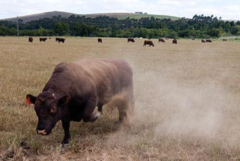
what are some reasons why bovine might be aggressive?
1. new mothers
2. bulls
3. increased competition for resources
4. prey animals with no place for flight
What can a cow's head tell us about their behavior?
low head = submissive
head up = alert
lowering of head = aggression

true/false- cows can kick both laterally and straight back
TRUE
SO, catch their eye and approach from the side if possible
don't go straight for sensitive areas (work way down from the udder from the hip)
where should you stand when working with cows?
as close as possible- shorter distance means less kicking force
how can you move stubborn or "too tame" cows?
tail twist- twist from the base of the tail, NOT near the end (this can break the cow's tail)
used more in dairy than beef

what is the purpose of facilities and restraint techniques?
facilities are a key component of cattle handling and reducing fear/distress
improves safety of human AND animal, improves health of the animal, and improves efficiency
true/false- very few cattle are "halter broken" so preventative medicine is typically done in _____________
GROUPS
when are beef cattle often managed?
seasonally- breeding, calving, weaning therefore seasonally appropriate times to palpate for pregnancy, vaccinate, castrate, etc.
when are dairy cattle managed?
in US, not seasonal- breeding and calving all year round but more efficient to vaccinate, dehorn and palpate groups at a time from a management standpoint
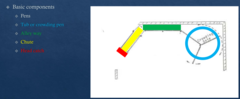
what are the basic components of group restraint?
1. pens
2. tub or crowding pen
3. alley way
4. chute
5. head catch
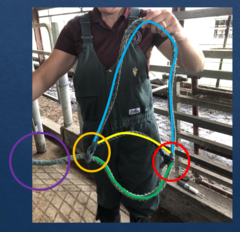
What are the parts of an adjustable halter?
1. headstall (adjustable with slip knot)
2. chin piece (adjustable through eye loop)
3. nose piece (fixed length)
4. lead
5. slip knot (moveable)
6. eye loop (stationary knot)

when are halters used for cattle?
they are placed on cattle in a head catch to control the head for IV injections, looking at eyes/mouth, or other procedures
how are halters put on cattle?
UNLIKE HORSES- the head stall goes around the ears first (keeping hands from getting between the head catch and the head) then chin piece is put under chin

how is control exerted with the halter?
by PULLING up on the chin therefore chin piece to lead should come up under the chin and allow pulling UP with lead
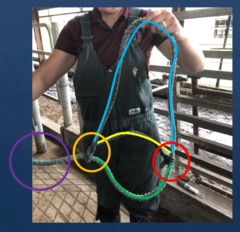
cattle are lead from the _____________
LEFT- therefore, the lead should come off from the left

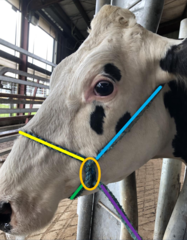
where is the proper placement of the halter?
1. head stall = behind both ears
2. chin piece- coming up under chin through eye loop on left, leading to lead pulling UP on chin
3. nose piece = located 0.5 way between the commissure of the mouth and the medial aspect of the eye
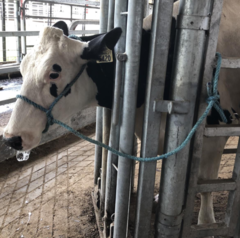
what three criteria must a knot be for it to be considered quick release?
1. pull free end of lead and releases
2. tension on lead towards animal does not release knot
3. can be tied without releasing tension on animal
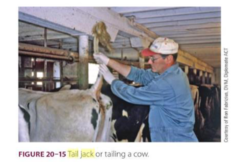
what is a tail jack?
a restraint method to restrain the hind legs that can reduce kicking in hind limbs when doing minor procedures
use two hands to apply at the BASE of the tail. slowly, not jerking, lift straight up over the back
what are hobbles used for?
it can be used therapeutically to assist with weak hind limbs or can be used temporarily during a more invasive procedure in a chute to prevent kicking i.e. LDA surgery

what is another individual restraint technique?
chemical restraint = sedatives, anesthetics, local and systemic; muscle relaxants
what is casting?
laying a bovine down in a controlled manner
why might we need to cast a bovine?
1. work on front foot in field or extensive foot work
2. repair a laceration or injury to a ventral location
3. treat primary issues (twisted stomach, re-position uterine torsion)
4. treat/assist bovine that will not stay standing for a procedure (dystocia, replace uterine prolapse)
what are the casting methods?
- bovine is always haltered and tied low to stationary object
- often used with mild chemical restraint (sedation)
- ropes used in 2 methods to being animal to ground (running W and double Half-hitch)
Why is the running W more advantageous than the double half-hitch?
there are less knots to tie, easier to remove, no tracheal or thorax pressure, no preputial pressure if male

what are some important considerations when casting?
-temperament of animal (will determine if need chemical sedation)
-how stationary is the object you are haltering bovine to?
-what are the desired characteristics of the ground where you intend to cast?
-are you prepared (ropes ready, supplies gathered, people to assist?)
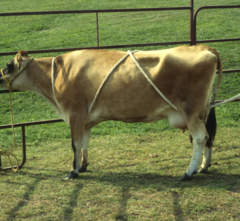
how is the running W method performed?
1. halter bovine with a loose lead and low to stationary object
2. find the middle of the rope
3. place middle of rope on dorsal neck
4. bring both sides medial to radius and under axial region (DO NOT CROSS)
5. bring up to thoraco-lumbar junction on back, CROSS ropes on midline
6. take down to medial to the tibia (But lateral to udder or testis)
7. bring out the back
8. pull straight back
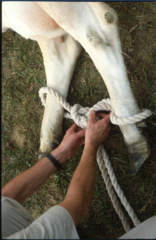
how are bovine feet restrained using the tom fools knot?
1. tie knot on one end of rope, with enough room for overhand knot to secure
2. cast cow
3. approach feet of casted cow from behind or front of cow with outstretched arms
4. place loops of knot over the dewclaws and pull knot tight
5. tie an overhand knot with short end
6. use long end to tie stationary object to keep feet out of way