Genes, alleles and genomes and chromosomes
 Call Kai
 Learn
Learn Practice Test
 Spaced Repetition
 Match
Match Flashcards
 Knowt Play
1/29

There's no tags or description
Looks like no tags are added yet.
Name | Mastery | Learn | Test | Matching | Spaced | Call with Kai | Chat |
|---|
No analytics yet
Send a link to your students to track their progress
30 Terms
What are genes and how are they named?
A section of DNA that codes for a protein
Named according to loci (location) and function
How are genes different in prokaryotes and eukaryotes?
Eukaryotes: A DNA sequence within linear chromosomes in the nucleus
Prokaryotes: A DNA sequence within a single circular chromosome (and sometimes smaller rings called plasmids) located freely in the cytoplasm in a region called the nucleoid
What are some examples of proteins produced by the code of gene?
Enzymes: Speed up chemical reactions
Channel/carrier proteins: Transport across membranes
Antibodies: Assist in immune response
Hormones: Chemical messengers in the bloodstream
What is an allele?
A different version of a gene
Eukaryotes have 2 copies of each gene (one materal and one paternal)
How is the proteome different to the genome?
Genome: All the genetic information (all the base pairs) found in one complete set of an organisms chromosomes
Includes genes in the mitochondria and chloroplasts (which have their own DNA)
Proteome: The complete set of proteins expressed by an organism
Describe prokaryotic chromosomes, how are they structured?
One circular chromosome found in the cytoplasm
Additional genetic material in plasmids (small rings of DNA)
Plasmids can be replicated during the cells' life and shared between cells
This increases genetic diversity (slightly different plasmids in each cell) which increases chances of survival

What is the structure of eukaryotic chromosomes? How are they formed?
Linear chromosomes found in the nucleus (only visible during cell division)
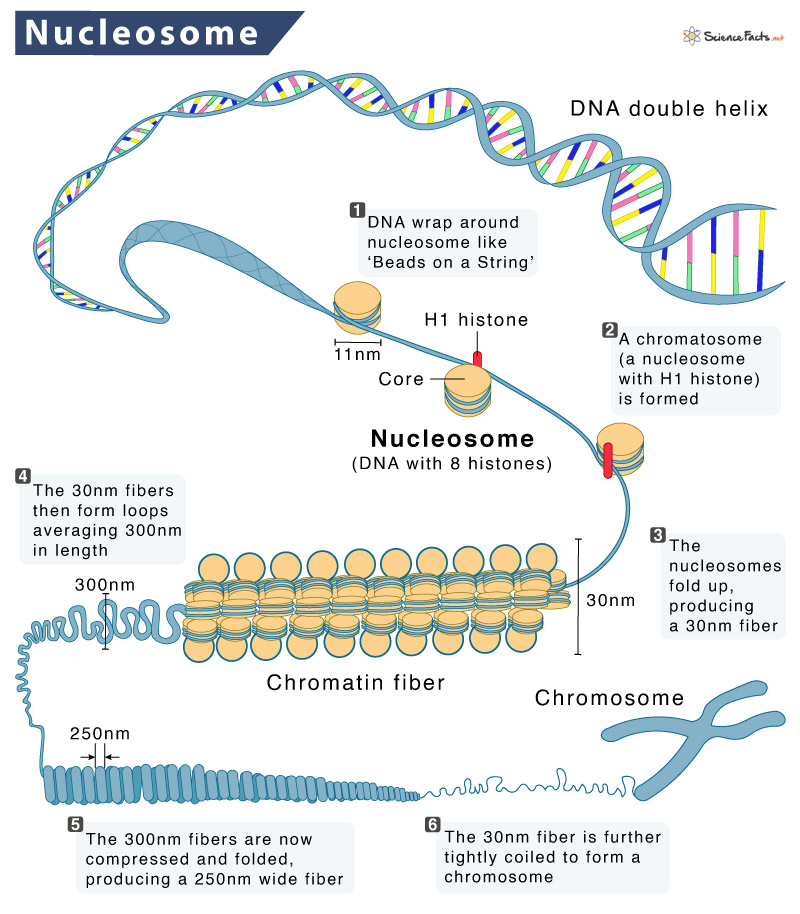
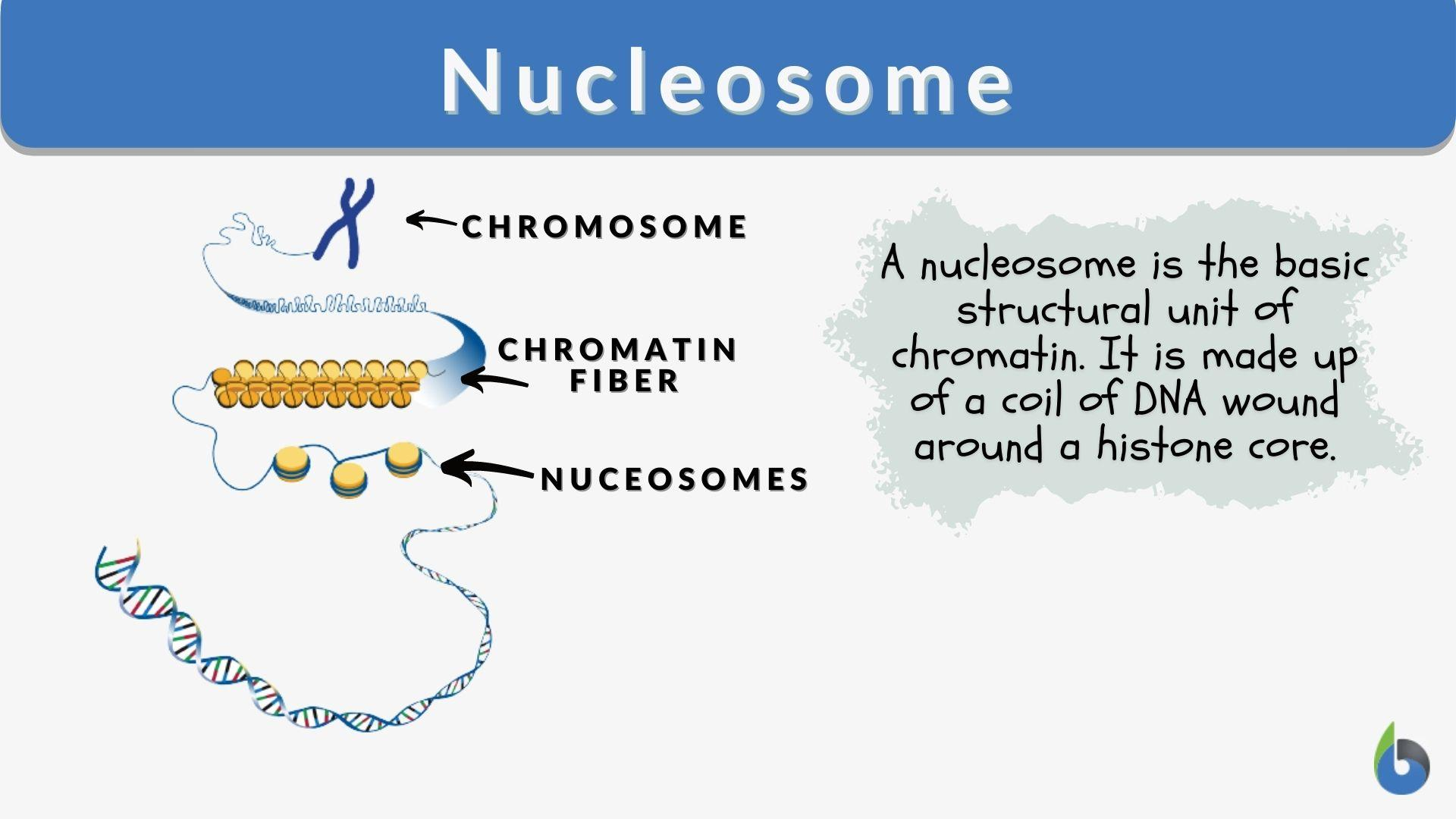
DNA segments are wound around histone proteins to form nucleosomes
Nucleosomes combine with linking DNA and fold to become chromatin fibres
What are nucleosomes?
The basic structural unit of DNA packaging in eukaryotic cells that consists of a segment of DNA wound around a core of histone proteins
How does studying the human genome and understanding gene functon improve detection/diagnosis of human diseases and disorders?
Studying the human genome helps identify genes linked to diseases
Understanding gene function helps to determine how mutations to these genes cause disease
Genetic mutations that cause disease then can be identified
Genetic tests to detect these variants can be made
Leading to earlier and more accurate detection and diagnosis
How is the centromere different to the kinetochore? How does the centromere tell you which arm is which?
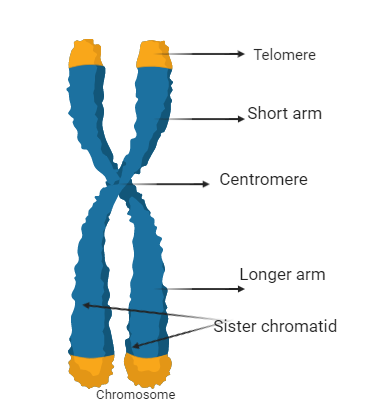
Centromere: The constricted region of a chromosome that seperates it into a short arm (p) and long arm (q)
The kinetochore forms on the centromere duirng cell division, being a protein structure for microtubules to attach to
Why is the telomere important for chromosome stability?
Telomere: The region of non-coding DNA located at the end of chromosomes
Prevent chromosomes from fraying or sticking to each other
Contain non-coding DNA that provides room for error
Becomes shorter with each division, causing risk of errors to increase with age
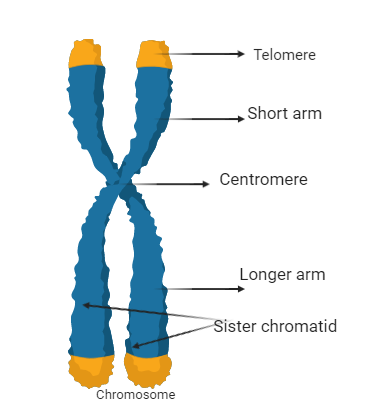
What are the components of a bivalent chromosome?
4 chromatids that form 2 pairs of homologous sister chromatids which are connected to form bivalent chromatids
Bivalent chromosomes: A paired, connected set of homologous chromosomes formed during Meiosis I
Sister chromatids: Two identical copies of a single replicated chromosomes joined by a centromere
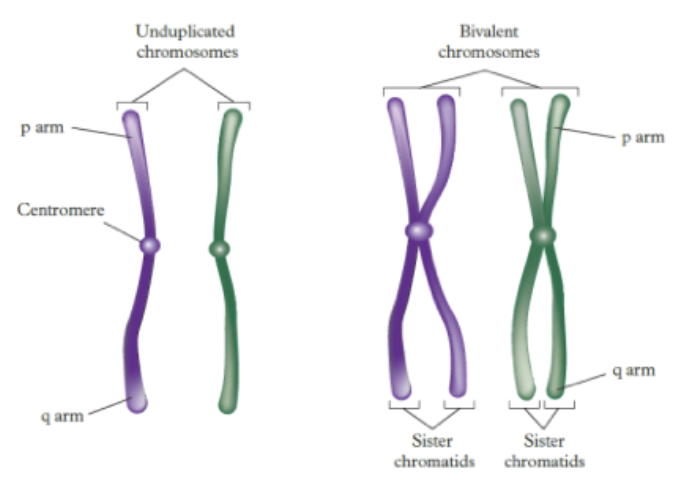
Why is gene loci important?
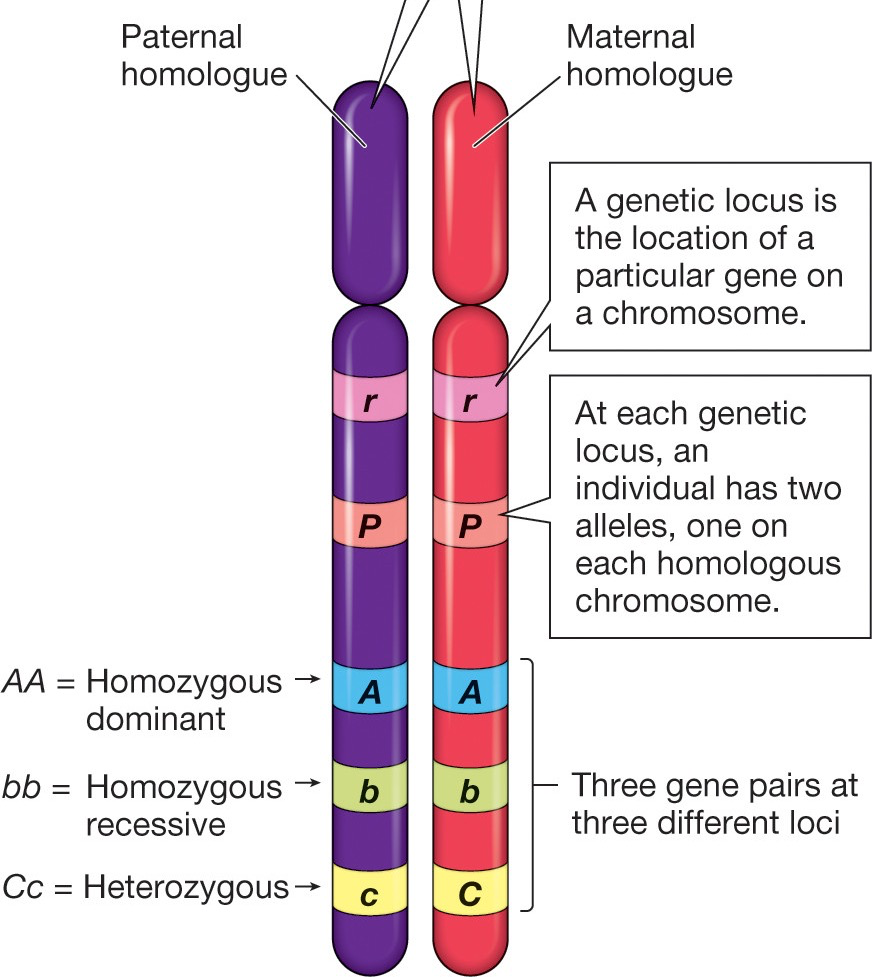
Gene loci: The physical location of a gene or DNA sequence on a chromosome
Knowing gene loci allows scientists to determine the exact gene sequence, gene function and variation
What ultimately causes chromosomal abnormalities?
Chromosomal variability: The differences in the structure or number of chromosomes within individuals, populations, or species
Chromosomal variability results in abnormalities where there are missing, extra, or structurally altered chromosomes
How is a chromatid different to an unduplicated chromosome?
Unduplicated chromosome: A single, linear chromosome consisting of one chromatid that has not yet been replicated
Chromatid: One of the two identical halves of a replicated chromosome
A chromatid is specificially one half of a replicated chromosome
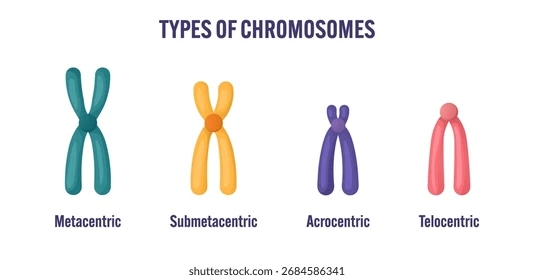
How are the 4 types of chromosomes classified? What are these types?
Based on centromere position and length of short (p) and long (q arms
My Sister Always Talks
Metacentric: Central centromere (p + q roughly equal)
Submetacentric: Centromere slightly off centre (p arm shorter)
Acrocentric: Centromere severely offset (p arm very short)
Telocentric: Terminally located centromere (lacking p arm)
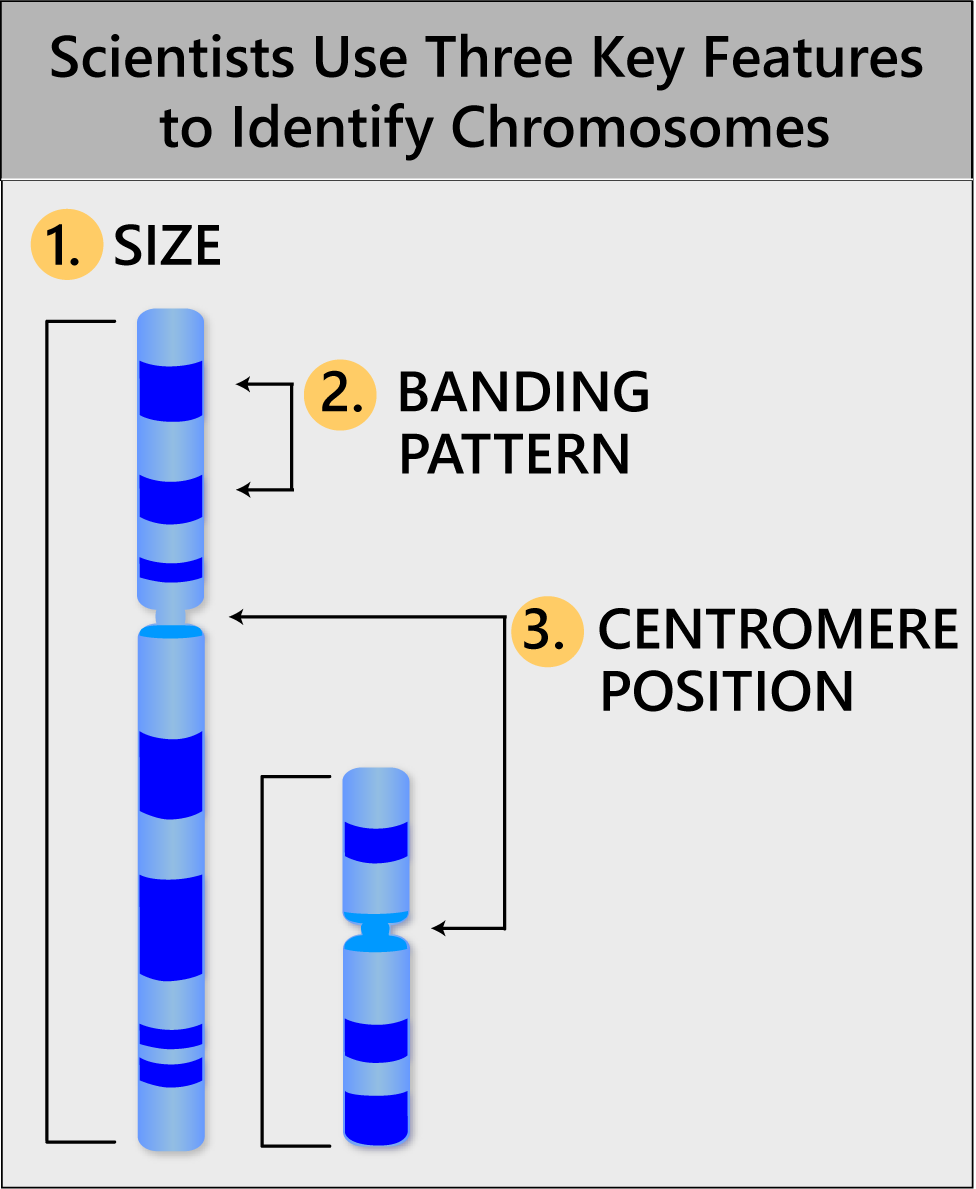
What information helps scientists classify chromsomes?
Size
Banding pattern
Centromere positon (4 types)
How are homologous chromosomes identified?
By a matching pair of chromosomes consisting of one maternal and paternal chromosome which contain the same gene sequence and loci
Centromere positon and length is the same however alleles for each gene can differ
What is the relationship between organism and gene/chromosome number?
No relationship between chromosome and gene number
EG More chromosomes doesn’t = more genes
No relationship between organism complexity and chromosome/gene number
Why are autosomes important for survival?
Autosomes: Chromosomes not involved in sex determination
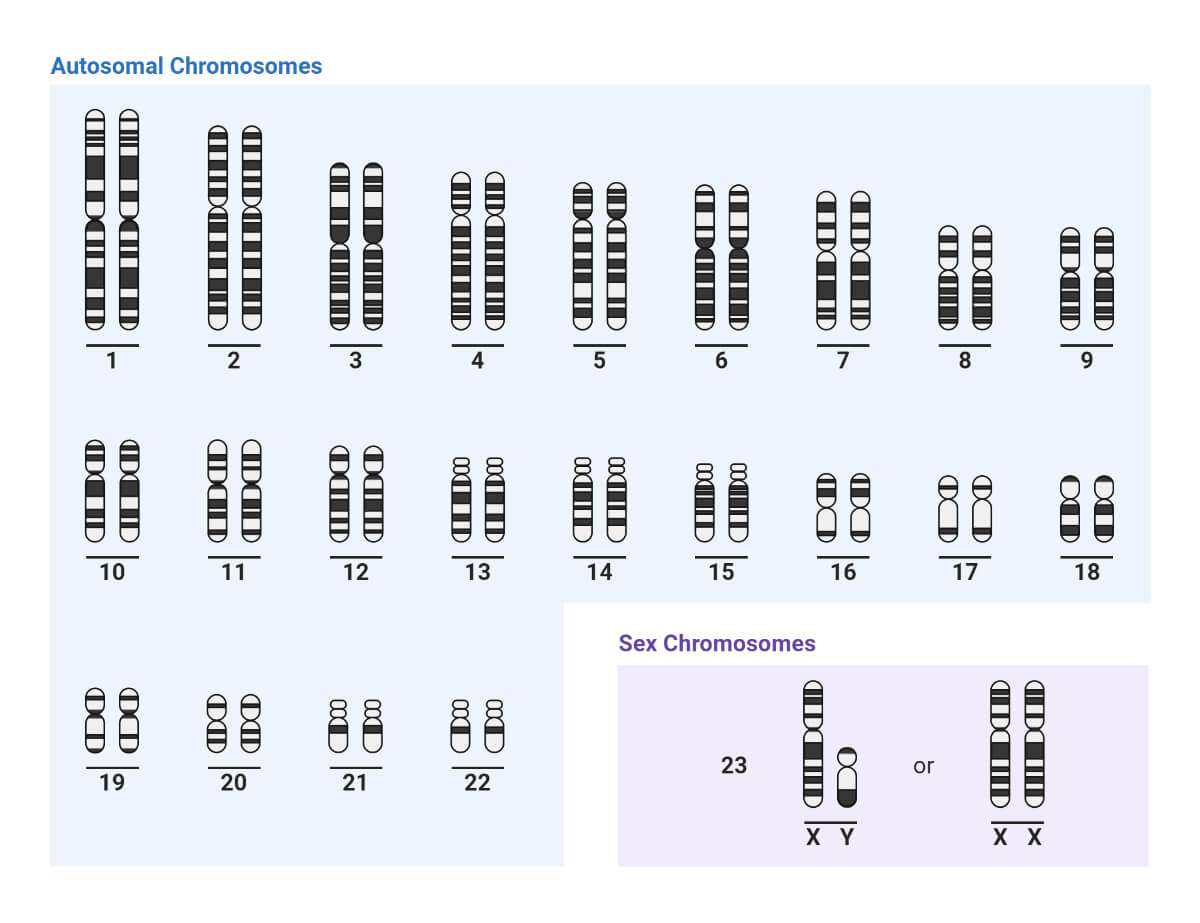
Humans contain 22 pairs of autosomes which have autosomal genes
Function: Carry genes for body development, physical characteristics and cellular functions
Inheritance: One of each autosome from each parent
How do sex chromosomes trigger sexual development?
Sex chromosomes: Chromosomes that determine sex
Humans have 1 pair which contain sex-linked genes however they also have genes for other traits
Function: Contain sex-linked genes that trigger female/male sexual development
How does the X chromosome differ from the Y chromosome? Why does everyone have an X chromosome?
Feature | X chromosome | Y chromosome |
Size & shape | Large | Small |
Gene count | 900 | 55 |
Role | Sex + essential non-sex traits (vision, blood clotting) | Male sex determination + reproductive development |
Genetics | Both genders (XX, XY) | Males only (XY) |
Inheritance | Mothers to all children, fathers to daughters | Father to son only |
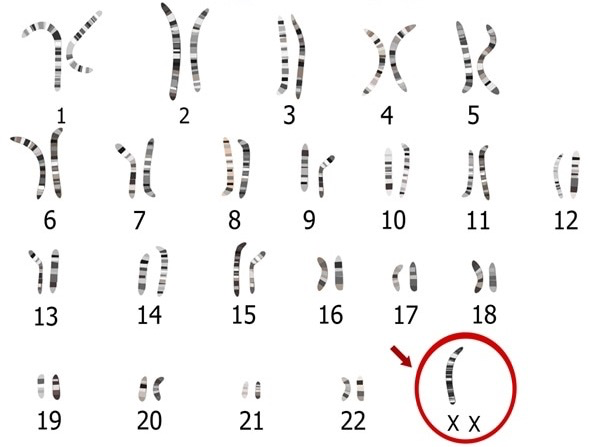
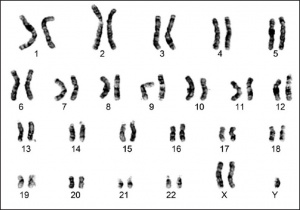
What can be identified from karyotypes?
Individual's sex
Different species by chromosome number
Structural genetic variability such as duplication, inversion or deletion
Numerical genetic variability such as aneuploidy (trisomy, monosomy)
How do karyotypes help detect chromosomal abnormalities?
Karyotype: A visual representation of chromosomes from the cell nuclei of an individual
A person's chromosomes are isolated from their cells and stained before a picture is taken of them through a microscope
Chromosomes are rearranged according to centromere location and size (largest to smallest) to then be compared/identified
How do chromosomal abnormalities occur? What kinds of abnormalities/variation are there?
When there are missing, extra, or structurally altered chromosomes
Numerical: Abnormal number
EG Aneuploidy (extra or missing), trisomy (3 instead of 2), Monosomy (1 instead of pair)
Structural: Altered structure from breakage or incorrect rejoining
EG Deletion, duplication, translocation (portion broken off and attached to another chromosome)
Why do mitochondria and chloroplasts have their own chromosomes? How do these chromosomes comapre to nuclear chromosomes?
As these organelles evolved from free-living bacteria and retained some of their original circular chromosomes
Mitochondrial & Chloroplast Chromosomes | Nuclear Chromosomes |
|---|---|
Circular DNA | Linear DNA |
Located in the organelles | Located in the nucleus |
Contain relatively few genes | Contain many genes |
Replicate independently via binary fission | Replicate during the S phase of the cell cycle |
Code for some organelle proteins | Code for most cell proteins |

What is Trisomy 21 and what is it’s effect on development and health?
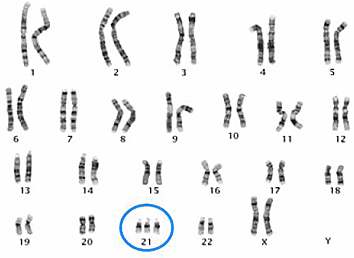
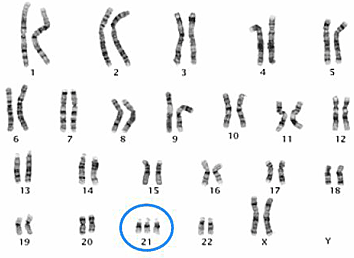
Down Syndrome, a chromosomal disorder due to a partial or complete extra copy of Chromosome 21
Occurs in 3 forms
Health + developmental effects:
Short stature and distinct facial features
Mild to moderate physical and cognitive impairment
Increased risks of heart, respiratory, digestive, hearing, vision and thyroid gland problems
How can Down Syndrome occur?
In 3 forms: Trisomy 21, mosaicism, tanslocation
Trisomy 21 (95% of cases): 3 complete copies in all cells
Mosaicism (1-2% of cases): 3 copies in some but not all cells
Translocation (3-4% of cases): Partial copy of chromosome 21 attached to another chromosome
What does an extra X chromosome result in and what are the characteristics of a person who has this?
Klinefleter syndrome (XXY)
Genetically male as they possess a Y chromosome
Sterile (undeveloped testes), taller than average height
Feminisation of secondary sexual characteristics
EG Breast development, reduced facial and body hair
What chromosomal abnormaltiy results in Turner Syndrome? How does this affect the individual?
A numerical abnormality as they possess only one X chromosome (XO)
Genetically female as they possess an X chromosome
Sterile (undeveloped ovaries)
Symptoms include short stature, wide chest, webbing of neck and heart defects