Neurological Eyelid Disorders Study Set | Medicine Terms & Definitions
 Call Kai
 Learn
Learn Practice Test
 Spaced Repetition
 Match
Match Flashcards
 Knowt Play
1/43

There's no tags or description
Looks like no tags are added yet.
Name | Mastery | Learn | Test | Matching | Spaced | Call with Kai | Chat |
|---|
No analytics yet
Send a link to your students to track their progress
44 Terms
Levator palpebrae
muscle that is innervated by the superior division of CN 3 and functions to maintain the elevated posture of the upper lid. Its movement is synkinetic with related ocular and facial muscles. Both eyes are identically coordinated as they follow Hering's law of equal innervation.
Bell's phenomenon
due to the fact that the levator palpebrae is interconnect with CN 3 and 7 via the central caudal nucleus, the globe moves up and out with lid closure.
Mueller's muscle
muscle of the upper and lower lids that is innervated by the 3rd order neuron oculo-sympathetic pathway and functions to maintain lid posture.
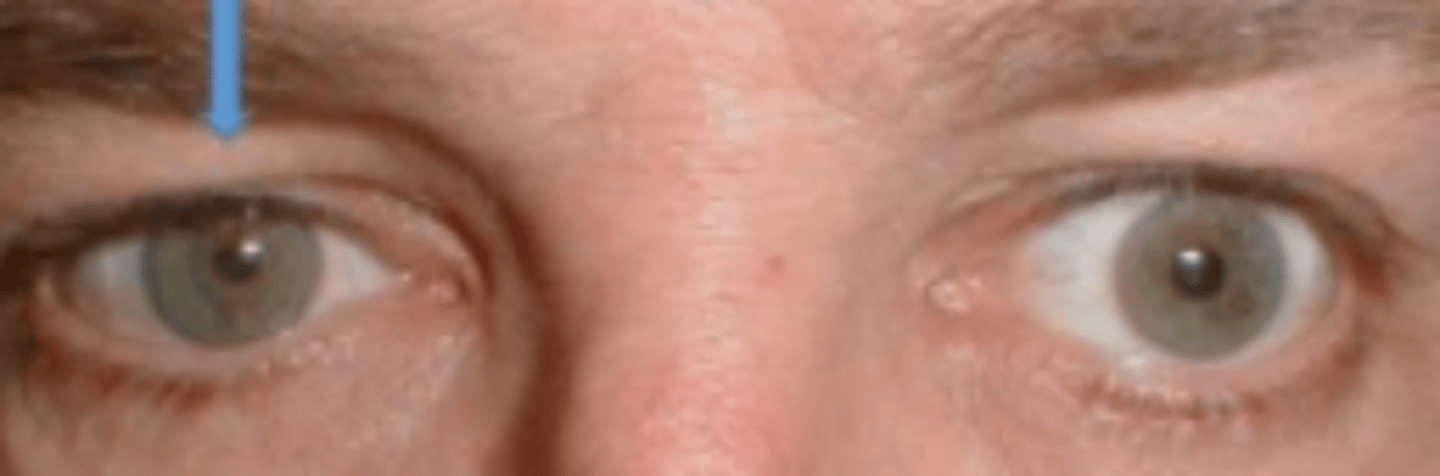
upside down ptosis
Dysfunction of Mueller's muscle secondary to the disruption of the oculo-sympathetic pathway may be responsible for ____ seen in Horner's syndrome
Orbicularis oculi
muscle that is innervated by CN 7 and functions to close the upper and lower lids.
Marcus-Gunn jaw winking
the most common congenital synkinesis linking jaw movement to lid movement.
External pterygoid levator synkinesis
version of Marcus-Gunn jaw winking where the lid elevates upon opening of the mouth
Internal pterygoid levator synkinesis
version of Marcus-Gunn jaw winking where the lid elevated upon closure of the mouth
Supra-nuclear lesions
CN 3 lesions
Lesions of the oculo-sympathetic pathway (I.e. Horner's)
Ophthalmoplegic migraine
4 causes of Acquired Ptosis
Myasthenia gravis
disease involving an antibody mediated destruction of acetylcholine receptors impairing neuro-muscular transmission. Is characterized by skeletal muscle weakness and fatigue with periods of remission and exacerbations triggered by stress (I.e. infection, trauma).
75%
percentage of myasthenia gravis patients that have an initial manifestation of ptosis that worsens with sustained up gaze or fatigue. Pupil and ciliary muscles are unaffected.
90%
percentage of myasthenia gravis patients having ocular involvement.
Dysthyroidism/TED, thymoma, collagen vascular disorders
three systemic conditions that are associated with myasthenia gravis
Cogan's lid twitch sign
overshooting of the upper lid upon returning to primary gaze after 10-15 seconds of downward gaze.
Enhanced ptosis
in a myasthenia gravis patient lifting of the normal appearing eyelid commonly leads to increased ptosis of the already ptotic eyelid.
Peek sign
slight opening of the lids after forced closure tires the orbicularis muscle seen in myasthenia gravis.
Ice pack test
test for myasthenia gravis having high sensitivity and specificity. Is positive when there is a resolution of ptosis after a 2 minute application of an icepack to the ptotic lid.
Tensilon test
test for myasthenia gravis involving the administration of edrophonium chloride. If muscle become stronger after drug administeration, this test is considered positive for myasthenia gravis.
Sleep test
test for myasthenia gravis involving resolution of ptosis with sleep that reappears 30 seconds to 5 minutes after waking.
Anti MuSK test
diagnostic antibody test used in the diagnosis of myasthenia gravis in patients who are negative for acetylcholine receptor antibodies.
Penicillamine
Quinidine
Propranolol
Lithium
Aminioglycosides (I.e. gentamycin)
5 Drugs Exacerbating Myasthenia Gravis
Pyridostigmine (Mestinon)
primary drug prescribed in the treatment of myasthenia gravis
Chronic progressive ophthalmoplegia
group of disorders characterized by progressive symmetric immobility of the eyes due to mitochondrial DNA mutation.
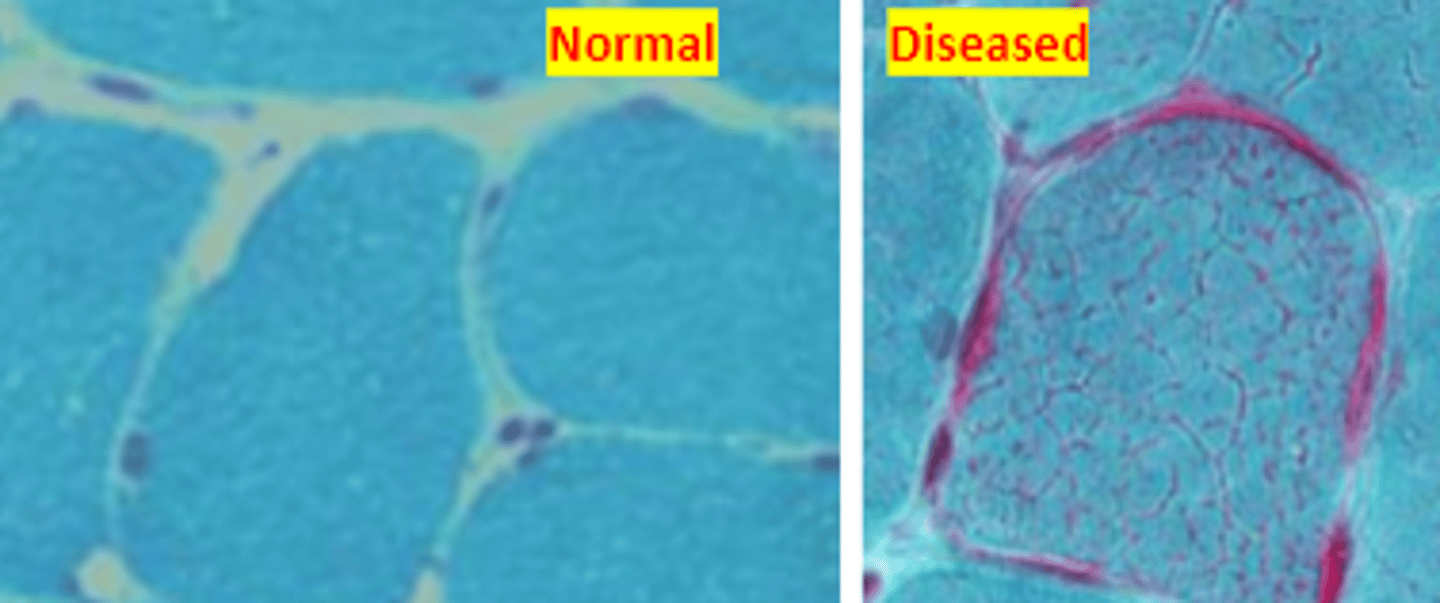
trichrome stain
Muscle biopsy with a ____ can be used to diagnose chronic progressive ophthalmoplegia as it will show "ragged red" fibers between myfibrils
Myotonic dystrophy
an autosomal dominant disorder characterized by dystrophy of muscles, tissues, and organs that causes myotonia (persistent contraction of muscles).
steroids
Long term treatment of uveitis with ____ may induce a localized myopathy and therefore cause ptosis
botulism
infection by an anaerobic organism that blocks acetylcholine and has the ability to cause ptosis
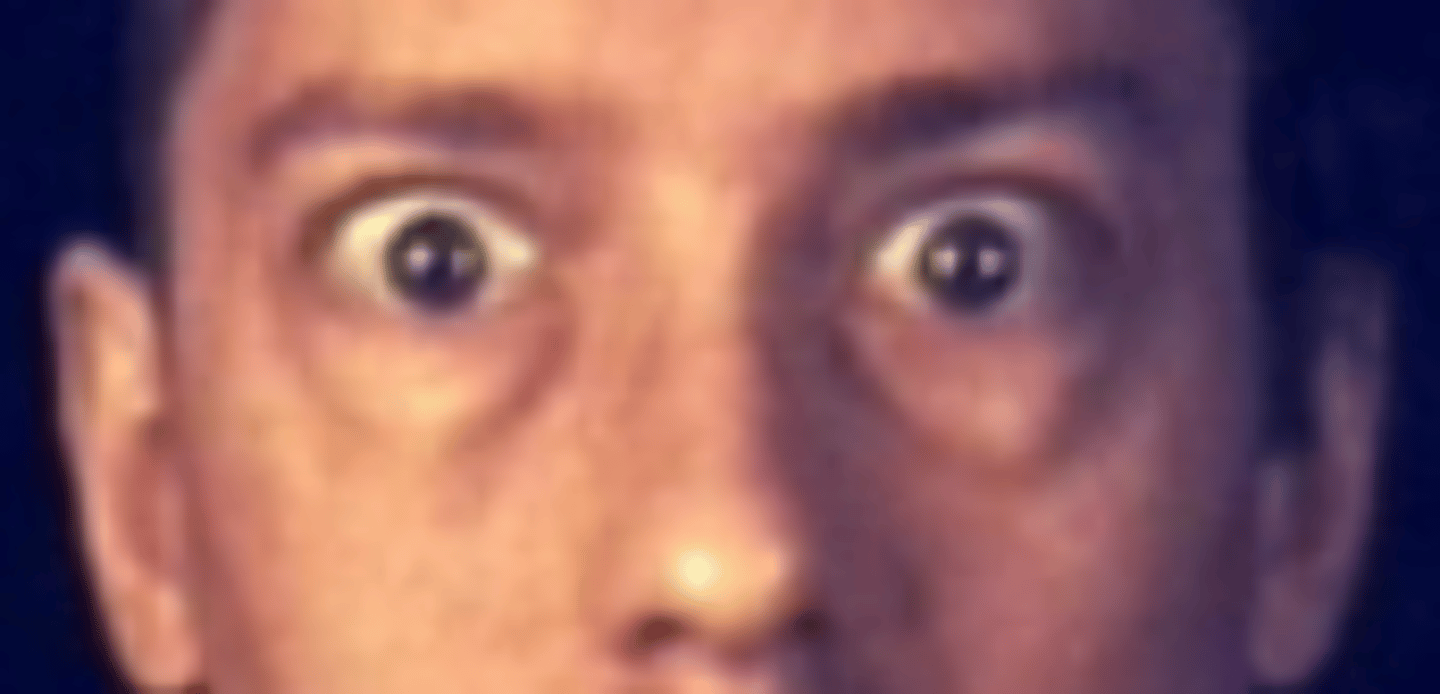
Collier's sign
bilateral lid retraction that is indicative of a lesion of the rostral dorsal midbrain of the posterior commissure.
Setting sun sign
lid retraction in addition to downward displacement of the eyes.
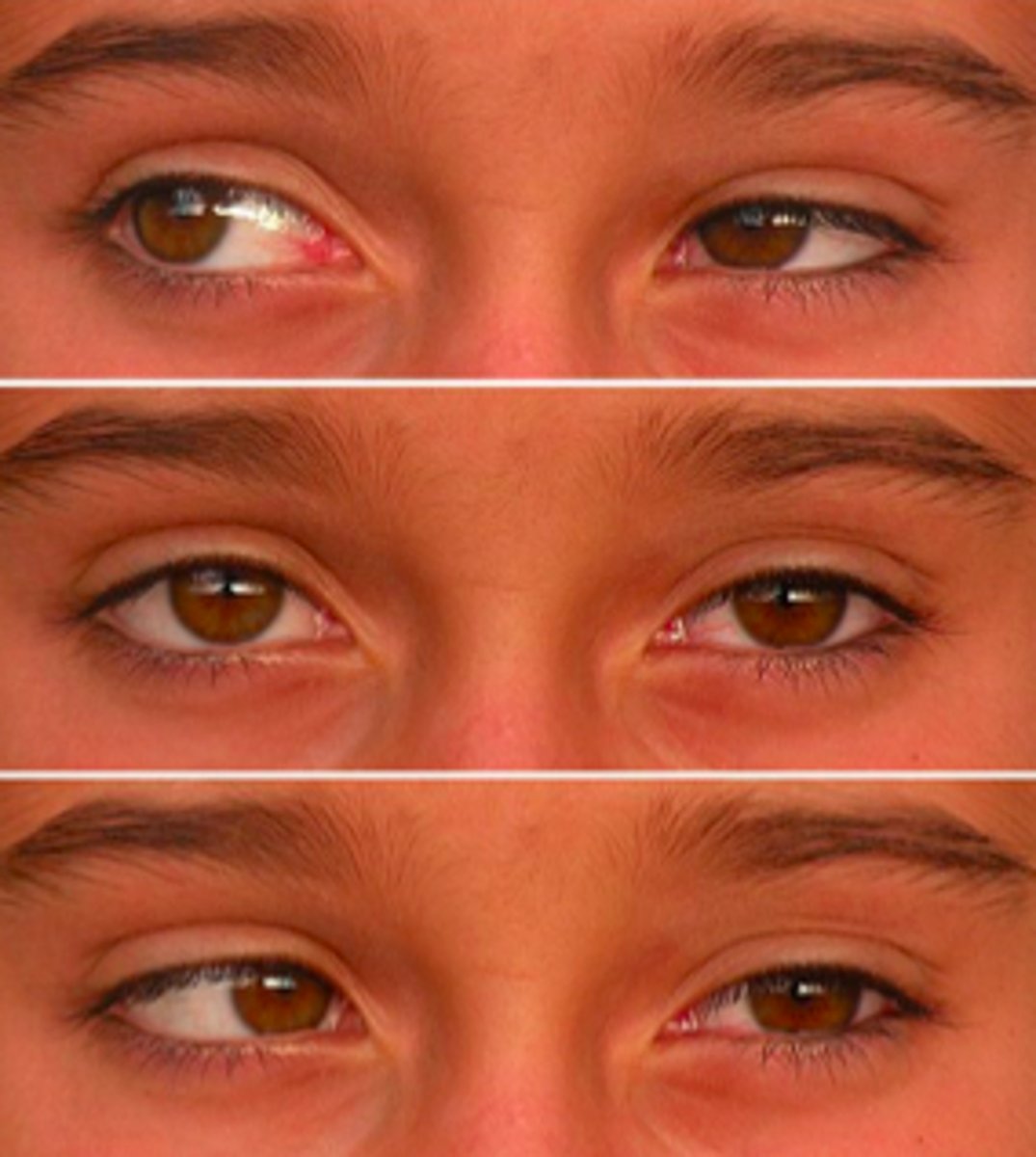
Duane's syndrome
horizontal gaze abnormalities with lid retraction in the restriction field of gaze.
Pseudo von Graefe's sign
retraction of the upper lid in downgaze caused by aberrant regeneration of CN 3.
Claude Bernard Horner's syndrome
lid retraction of one eye with an enlarge pupil with ptosis of the contralateral eye with a Horner's pupil. Is caused by a lesion of the oculo-sympathetic pathway
maternal hyperthyroidism
Myopathic congenital transient lid retraction may result due to...
phenylephrine, Muller's muscle
Neuromuscular lid retraction may result due to the administration of sympathomimetic drops such as ___ that stimulate ___
Thyroid eye disease
Parkinson's disease
Progressive supranuclear palsy
3 Causes of Lid Retraction in Down Gaze
Cortical
Subcortical
Extrapyramidal
Peripheral
4 Controls of Eyelid Closure
12-16, decreased, increased
The normal blink rate is ___ times per minute with ____ rates during concentration and ____ rates with stress or anxiety
saccades, brainstem
Blinks facilitate the generation of ____ to change direction of gaze. ____ diseases require blinking in order to initiate eye movements.
Huntinton's disease, Gaucher's disease, Parkinson's disease
three brainstem disease that require the blink saccade synkinesis to initiate eye movements
vertebral and basilar, CN 7
Hemifacial spasm may occur due to dilation of the ____ (2) arteries compressing the dorsal root of ____
slow, fast
Eyelid nystagmus occurs vertically having a ___ movement downwards and a ____ movement upwards
convergence
Eyelid nystagmus may be seen with _____ in multiple sclerosis
gaze shifts
Eyelid nystagmus may be seen in with ____ in brainstem or cerebellar damage
Meige's syndrome
syndrome causing orofacial dyskinesia and blepharospasm