sinusitis and URI reading
 Call Kai
 Learn
Learn Practice Test
 Spaced Repetition
 Match
Match Flashcards
 Knowt Play
1/29

There's no tags or description
Looks like no tags are added yet.
Name | Mastery | Learn | Test | Matching | Spaced | Call with Kai | Chat |
|---|
No analytics yet
Send a link to your students to track their progress
30 Terms
ostiomeatal complex (OMC)
common drainage site for frontal, maxillary, anterior ethmoid sinuses.
-important pathway in sinusitis
Viral (most common): Rhinovirus, coronavirus, adenovirus, RSV, influenza.
most common causes of URI
group A strep
most common cause of bacterial URI
Streptococcus pneumoniae
Haemophilus influenzae
Moraxella catarrhalis
most common causes of acute bacterial rhinosinusitis
Viral:
differentiating viral vs bacterial sinusitis via history
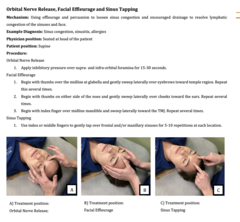
frontal lift, maxillary lift, venous sinus drainage
cranial techniques for sinusitis
sinus effleurage
1. frontal sinuses
- start at frontal sinus with thumbs and move down to peri-auricular nodes, then down SCM over the superficial anterior chain
2. Maxillary sinuses
- start at maxillary → PA nodes → down over SCM and the SAC
3. Submental:
- start at the submental → up to PA nodes → down over SCM and the SAC
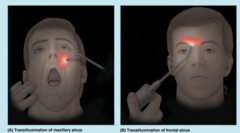
Transillumination of sinuses
absense of a glow on one or both sides suggest a thickened mucosa or secretions in the sinus, but it may also result from develpmentsal absence of one or both sinuses (frontal). See text for description of methods for transillumination of sinuses
postnasal drip, cobblestoning
oropharynx findings associated with sinusitis
Periorbital swelling, diplopia, altered mental status → possible complication.
red flags of sinusitis
Moraxella catarrhalis
cause of bacterial sinusitis especially in kids
Staphylococcus aureus, anaerobes (chronic cases)
less common causes of bacterial sinusitis
Mucor, Aspergillus
fungal causes of sinusitis
Deviated septum
Nasal polyps
Narrow sinus ostia
anatomic risk factors for sinusitis
Smoking, air pollution, occupational exposures
environmental risk factors for sinusitis
Overuse of topical α-adrenergic agonists (e.g., oxymetazoline, phenylephrine, xylometazoline) for >3-5 days
what causes rhinitis medicamentosa?
oxymetazoline, phenylephrine, xylometazoline
agents that can cause rhinitis medicamentosa
rhinitis medicamentosa
Initial vasoconstriction reduces congestion.
With chronic use, rebound vasodilation and mucosal edema occur.
Leads to rebound congestion, dependence, and worsening nasal obstruction
Discontinue spray (difficult, may need gradual wean)
Saline sprays, intranasal corticosteroids to reduce rebound swelling
management of rhinitis medicomentosa
Symptoms persist ≥10 days without improvement
Severe symptoms (fever ≥39°C/102°F, purulent nasal discharge, facial pain) for ≥3-4 consecutive days
Double-worsening: Patient improves initially, then worsens (suggests secondary bacterial infection)
Immunocompromised or high risk of complications
indications for antibiotics to treat sinusitis
Amoxicillin-clavulanate
first line treatment for acute bacterial sinusitis
Adults: 5-7 days
Children: 10-14 days
how long is a course of abx for bacterial sinusitis
doxycycline (adults only), levofloxacin/moxifloxacin
alt abx for sinusitis in PCN allergic
fluticasone, mometasone → reduce inflammation, esp. with allergic rhinitis
intranasal corticosteroids for sinusitis relief
pseudoephedrine, oxymetazoline → short-term only (≤3 days for sprays to avoid rhinitis medicamentosa)
nasal decongestants for sinusitis relief
sometimes add long-term low-dose macrolide or culture-guided antibiotics
treatment for chronic sinusitis
uncontrolled HTN, CAD, arrhythmias.
these decongestants (pseudophedrine, phenylephrine) are contraindicatd in pts with
Orbital cellulitis/abscess, cavernous sinus thrombosis, osteomyelitis of frontal bone
potential local complications of sinus infections
Meningitis, brain abscess, subdural empyema.
intracranial complications of sinus infections
Gallbreath technique (mandibular drainage)
Used to release the eustachian tube