Lvl2: Economics
 Call Kai
 Learn
Learn Practice Test
 Spaced Repetition
 Match
Match Flashcards
 Knowt Play
1/38

There's no tags or description
Looks like no tags are added yet.
Name | Mastery | Learn | Test | Matching | Spaced | Call with Kai | Chat |
|---|
No analytics yet
Send a link to your students to track their progress
39 Terms
covered interest rate parity
Ff/d = Sf/d × [1 + if(actual/360)]/[1 + id(Actual/360)]
The domestic currency will trade at a forward premium (Ff/d > Sf/d) if, and only if, the foreign risk-free interest rate exceeds the domestic risk-free interest rate (if > id).
![<p><span>F<sub>f/d</sub> = S<sub>f/d</sub> × [1 + i<sub>f</sub>(actual/360)]/[1 + i<sub>d</sub>(Actual/360)]</span></p><p>The domestic currency will trade at a forward premium (<em>F<sub>f</sub></em><sub>/</sub><em><sub>d</sub> > S<sub>f</sub></em><sub>/</sub><em><sub>d</sub></em>) if, and only if, the foreign risk-free interest rate exceeds the domestic risk-free interest rate (<em>i<sub>f</sub></em> > <em>i<sub>d</sub></em>).</p>](https://assets.knowt.com/user-attachments/9dafa96a-d481-48e3-92fa-553d4ee45547.png)
uncovered interest rate parity
change in spot rate over the investment horizon should, on average, equal the differential in interest rates between the two countries
country with the higher interest rate or money market yield will see its currency depreciate
evidence that uncovered interest rate parity works better over very long-term horizons
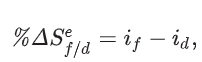
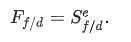
forward rate parity - covered rate parity + uncovered rate parity
forward exchange rate will be an unbiased predictor of the future spot exchange rate
relies on risk neutral speculators
forward exchange rates are typically poor predictors of future spot exchange rates in the short run. Over the longer term, uncovered interest rate parity and forward rate parity have more empirical support.
purchasing power parity (PPP)
law of one price - identical goods should trade at the same price across countries
over shorter horizons nominal exchange rate movements may appear random, over longer time horizons nominal exchange rates tend to gravitate toward their long-run PPP equilibrium values.
absolute PPP
Pf = (Sf/d)(Pd)
equilibrium exchange rate between two countries is determined entirely by the ratio of their national price levels
relative PPP
percentage change in the spot exchange rate (%ΔSf/d) will be completely determined by the difference between the foreign and domestic inflation rates (πf − πd)
currency of the high-inflation country should depreciate relative to the currency of the low-inflation country.
Fisher effect
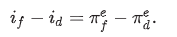
foreign–domestic nominal yield spread is determined solely by the foreign–domestic expected inflation differential
assume that currency risk is the same throughout the world
emerging country’s investors will require a risk premium for holding the currency
real interest rate parity
The real yield spread between the domestic and foreign countries (rf − rd) will be zero, and the level of real interest rates in the domestic country will be identical to the level of real interest rates in the foreign country
carry trade
taking long positions in high-yield currencies and short positions in low-yield currencies
during periods of low volatility, carry trades tend to generate positive returns, but they are prone to significant crash risk in turbulent times
fat tail with negative skew
Assume uncovered interest rate parity does not hold
The Flow Supply/Demand Channel
if a country sold more goods and services than it purchased then the demand for its currency should rise > exert upward pressure on the value of the surplus nation’s currency > currencies appreciate over time
limited pass-through effects of exchange rate changes on traded goods prices
The Portfolio Balance Channel
Countries with trade deficits will finance their trade with increased borrowing > increase their dollar holdings
The Debt Sustainability Channel
If a country runs a large and persistent current account deficit > experience an untenable rise in debt owed to foreign investors > investors expect a major depreciation of the deficit country’s currency
Mundell–Fleming Model
expansionary monetary policy affects growth, in part, by reducing interest rates and thereby increasing investment and consumption spending > induce capital to flow to higher-yielding markets, putting downward pressure on the domestic currency > more responsive capital flows are to interest rate differentials, the greater the depreciation of the currency
Expansionary fiscal policy > upward pressure on interest rates because larger budget deficits must be financed > attract capital from lower-yielding markets, putting upward pressure on the domestic currency > appreciate substantially
Monetary Models of Exchange Rate Determination
Output is fixed and monetary policy affects exchange rates primarily through the price level and the rate of inflation
X percent rise in the domestic money supply will produce an X percent rise in the domestic price level > proportional decrease in the domestic currency’s value - PPP
Portfolio Balance Approach
assumed to hold a diversified portfolio of domestic and foreign assets, including bonds
government budget deficit leads to a steady increase in the supply of domestic bonds outstanding > investors expect to be compensated with (1) higher interest rates (2) immediate depreciation of the currency
in the long run, governments that run large budget deficits on a sustained basis could eventually see their currencies decline in value
currency crisis
capital markets have been liberalized to allow the free flow of capital
large inflows of foreign capital
preceded by (and often coincide with) banking crises
fixed or partially fixed exchange rates are more susceptible
Foreign exchange reserves tend to decline precipitously
currency has risen substantially relative to its historical mean
ratio of exports to imports deteriorates
Inflation tends to be significantly higher
Factors limiting growth
Low rates of saving and investment
Poorly developed financial markets
Weak, or even corrupt, legal systems and failure to enforce laws
Lack of property rights and political instability
Poor public education and health services
Tax and regulatory policies discouraging entrepreneurship
Restrictions on international trade and flows of capital
Return on equity
E(Re) = dividend yield + expected repricing + inflation rate + real economic growth – change in shares outstanding
= dy + Δ(P/E) + i + g – ΔS
Earnings growth per share is the primary channel through which economic growth can impact equity returns.
ΔS dilution effect term
ΔS = nbb + rd
net buy backs + relative dynamism (small- and medium-sized entrepreneurial firms that are not traded publicly on the stock market)
Production Function
Y = AF(K,L),
Y= aggregate output in the economy
A = total factor productivity (TFP) - level of “technology”
K = stock of equipment and structures
L = quantity of labor
Cobb–Douglas production function
F(K,L) = KαL1−α
α determines the shares of output (factor shares) paid by companies to capital and labor
constant returns to scale - if all the inputs into the production process are increased by the same percentage, then output rises by that percentage
diminishing marginal productivity -
growth accounting equation
ΔY/Y = ΔA/A + αΔK/K + (1 − α)ΔL/L
growth in TFP as a residual
quantify the contribution of each factor
to measure potential output
labor productivity growth accounting equation
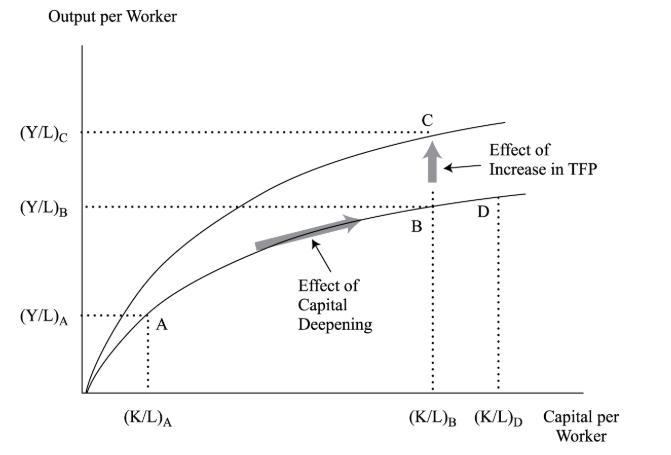
Labor productivity growth = capital deepening + TFP growth

Capital deepening
increase in the capital-to-labor ratio,
at point B, further additions to capital have relatively little impact
labor force participation rate
percentage of the working age population in the labor force
network externalities
The more people in the network, the greater the potential productivity gains
captured in TFP
Classical growth theory
population growth accelerates when the level of per capita income rises above the subsistence income
labor input faces diminishing marginal returns, the additional output produced by the growing workforce eventually declines to zero
population grows so much that labor productivity falls and per capita income returns back to the subsistence level
in the long run, the adoption of new technology results in a larger but not richer population
In reality
growth of per capita income increased, population growth slowed
technological progress more than offset the impact of diminishing marginal returns
Neoclassical Model
determine the long-run growth rate of output per capita and relate it to (a) the savings/investment rate, (b) the rate of technological change, and (c) population growth
steady state growth rate - neoclassical
θ denote the growth rate of TFP
n is the growth rate of the labor force
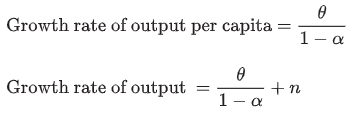
equilibrium output-to-capital ratio

savings/investment equation
plant and equipment wearing out at rate δ,
deepen the physical capital stock at the rate θ/(1 − α)
capital for new workers entering the workforce at rate n,
capital-to-labor ratio (k)
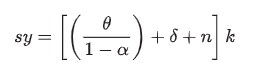
Impact on the Steady State
Labor force growth (n) - increase > increases the slope of the required investment line > shifts the steady-state equilibrium to lower capital-to-labor and output per worker ratios
Depreciation rate (δ) - increases the slope of the required investment line > reduces the equilibrium capital-to-labor and output per worker ratios
Growth in TFP (θ) - same -
Conclusions from neoclasical
Capital Accumulation - level of output but not the LT growth rate - move to steady state
Capital Deepening vs. Technology - Rapid growth that is above the steady-state rate but slows LT - technological change or growth required because of diminishing marginal returns to capital
Convergence - growth rates of developing countries should exceed those of developed countries - convergence over time
Effect of Savings on Growth - initial impact temporarily raise the rate of growth - economy moves to a higher level of per capita output and productivity
endogenous growth theory
explaining technological progress rather than treating it as exogenous
self-sustaining growth - not steady state
no diminishing marginal returns to capital
increasing the saving rate permanently increases the rate of economic growth
no reason why the incomes of developed and developing countries should converge
endogenous growth rate of output per capita
∆ye/ye = ∆ke/ke = sc − δ − n
s = savings rate
Absolute convergence
developing countries, regardless of their particular characteristics, will eventually catch up with the developed countries and match them in per capita output + per capita income growth (not level) - neoclasical
Conditional convergence
conditional on the countries having the same saving rate, population growth rate, and production function
same level of per capita output as well as the same steady-state growth rate
club convergence
only rich and middle-income countries that are members of the club are converging to the income level of the world’s richest countries
appropriate institutional changes - otherwise non-convergence trap
open economies
neoclassical model, convergence should occur more quickly if economies are open and there is free trade
endogenous growth models predict that a more open trade policy will permanently raise the rate of economic growth