Cooking of foods
 Call Kai
 Learn
Learn Practice Test
 Spaced Repetition
 Match
Match Flashcards
 Knowt Play
1/23

There's no tags or description
Looks like no tags are added yet.
Name | Mastery | Learn | Test | Matching | Spaced | Call with Kai | Chat |
|---|
No analytics yet
Send a link to your students to track their progress
24 Terms
why do we cook food: Pathogens
To kill pathogenic bacteria and toxins making food safe to eat
meat fish kidney beans
Why do we cook food texture:
to soften the food and making it easier to chew and swallow
tenderised meat, softened vegetables
Why do we cook foods: digestion
making food more digestible
animal protein foods, starchy foods
Why do we cook food: flavour
It improves and intensifies flavour of the food
roasted vegetables, scrambled egg, ragu sauce
Why do we cook food: appearance
The food looks more attractive and appealing
grilled bacon
Why do we cook food: bulk
reduces bulk of the food.
Leafy vegetables- reduces volume so more can be eaten
why do we cook foods variety
Provides variety to our meals
roasting grilling frying boiling
why do we cook food binding
to enable certain ingredients to work together
starch for thickening sauces
why do we cook foods weather
we eat hot food to keep war in cold weather
caseroles soups and stews
Cooking of food defintion
transfer of heat energy, from one item to another
the heat energy changes the molecular structure of the proteins, fat, starch, sugar and water these alter the texture flavour aroma and appearance of food
What are the three types of cooking
conduction
convection
radiation
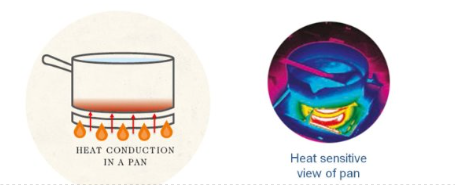
What is conduction
Heat is transferred from one molecule to another through direct contact to another through direct contact with a hot surface
examples of conduction
lab chops
bacon
uses of conduction
dry frying
griddling
searing
uses of convection
hot molecules rise and cooler molecules fall closer to the source of heat
dry heat methods of convection
baking
roasting
deep frying
wet heat methods of convection
boiling
braising
simmering
poaching
steaming
pressure
cooking
infared radiation definition
Heat is passed by heat or electromagnetic waves from one place to another