ochem test 1
 Call Kai
 Learn
Learn Practice Test
 Spaced Repetition
 Match
Match Flashcards
 Knowt Play
1/94

There's no tags or description
Looks like no tags are added yet.
Name | Mastery | Learn | Test | Matching | Spaced | Call with Kai | Chat |
|---|
No analytics yet
Send a link to your students to track their progress
95 Terms

Anhydride

Ether

Aldehyde

Ketone

Sulfide

Amine
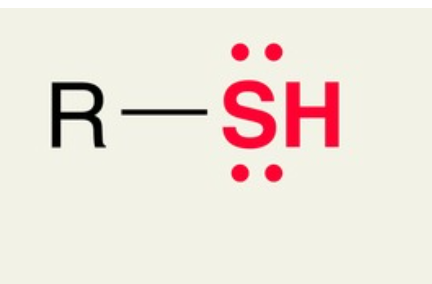
Thiol

Ester

Aromatic/Arene
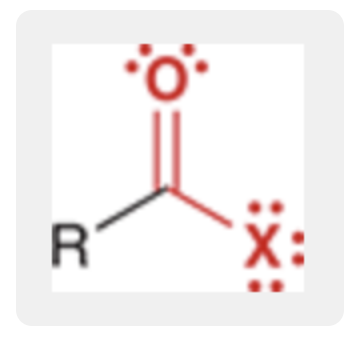
Acyl Halide

Alkyne

Amide

Alkane

Alkyl Halide

Alchohol

Carboxylic Acid

Alkene
Allylic lone pair

Allylic cation

Lone pair e- adjacent to a carbocation

polar pi bond

benzene group
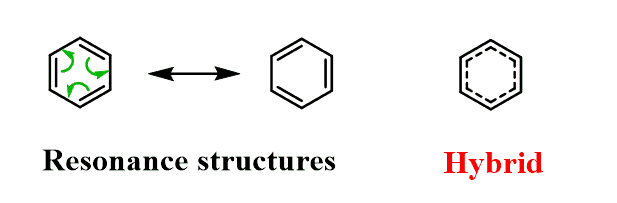
determining the most significant resonance form: 3 things to look for (most important to least important)
greatest number of atoms with complete octet
structure with fewer nonzero formal charges is more stable
if all other things are equal → better to have negative charge on the more electronegative atom
localized lone pairs
not used in resonance
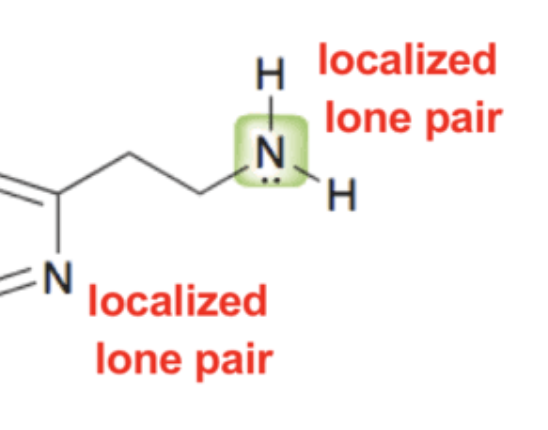
delocalized lone pair
can be used in resonance

constitutional isomers
same chemical formula, different connectivity of atoms
tips for drawing constitutional isomers
start with the carbons and how many ways you can arrange (the skeleton/backbone)
fill in the hydrogens
give each atom a complete octet
ionic bonds
held together by electronegativity
covalent bonds
sharing of electrons
most common bond between 2 nonmetals
exceptions to the octet rule (1)
elements such as B and Al form compounds with fewer than 8 valence electrons
ex: BH3
exceptions to octet rule (2)
elements in the third period can form molecules with more than 8 valence electrons
ex: ICl3
formula for formal charge
number of valence electrons (periodic table) - number of electrons in lone pairs - ½ bonding electrons
formal charge of 4 bonds to carbon
0
formal charge of 3 bonds to carbon and 1 lone pair
-1
formal charge of 3 bonds to carbon and no lone pairs
+1
formal charge of 2 bonds to oxygen and 2 lone pairs
0
formal charge of 1 bond to oxygen and 3 lone pairs
-1
formal charge of 3 bonds to oxygen and one lone pair
+1
formal charge of 3 bonds to nitrogen and one lone pair
0
formal charge of 2 bonds to nitrogen and 2 lone pairs
-1
formal charge of 4 bonds to nitrogen
+1
how does electronegativity change across the periodic table
increases up and to the right
covalent bonds examples
C-C, C-H
small difference in electronegativity
polar covalent bond electronegativity difference
difference of 0.5-1.7
ex: N-H, C-O, Li-C
ionic bond electronegativity difference
greater than 1.7
Hunds rule
each orbital must be occupied by one electron before electrons are paired
node
zero probability of finding an electron
molecular orbital theory
linear combination of atomic orbitals
difference between atomic orbitals and molecular orbitals
atomic- associated with individual atoms
molecular- associated with the entire molecule
sigma bond
direct overlap of orbitals
pi bonds
parallel overlap of orbitals, not as strong as sigma bonds
how to determine highest boiling point
strongest IMFs
IMFs from strongest to weakest
hydrogen
dipole dipole
london dispersion
how to determine the highest boiling point from line structures
the longer the carbon chain → higher boiling point
if same number of carbons, the more branching → lower boiling point
how to predict the direction a reaction will occur
if the reactant acid is stronger (lower pKa)→ favored direction is forwards
if the product conjugate acid is stronger (lower pKa)→ favored direction is reverse
bond angle for linear structure
180
bond angle for trigonal planar and bent geometry
120
bond angle for tetrahedral geometry
109.5
bond angle for trigonal bipyramidal geometry
90, 120, and 190
bond angle for octahedral geometry
90
acids
H donor
bases
H acceptor
amphoteric
can act as either base or acid depending on conditions
ex- H2O and R-OH
KA formula
[A-][H3O+]/[HA]
pKa formula
-log[Ka]
the smaller/more negative pKa is…
the stronger the acid
the larger KA is…
stronger acid
when adding a base to an acidic solution, what will the base always react with first
the most acidic H+ first
if the difference in pKa is ____, reaction essentially goes to completion (equilibrium)
pKa greater than or equal to 4
how does acidity change looking at the periodic table
going to the right on the periodic table, acidity increases
going down on the periodic table, acidity increases
atom bearing charge rule
the more acidic the atom, the better it stabilizes the negative charge
resonance rule for acids and bases
more resonance→ stronger acid/ weaker base
resonance spreads out and shares a negative charge among multiple atoms, which stabilizes the molecule
induction rule for acids and bases
the closer the more electronegative atom is to the H, the stronger the acid
orbital rule acids and bases
sp orbital is closer to the nucleus so it stabilizes the negative charge
strongest to weakest acids: sp>sp2>sp3
what is the strongest acid and its conjugate base
H2SO4
conj base: HSO4-
alkanes pKa value
>50 (very weak acid)
alkenes pKa value
44
amine pKa value
30-40
alkyne pKa value
25
anhydride group pKa
25
alcohol group pKa
16
alkyl halide pKa
50 (very weak acid)
acyl halide pKa
25
aldehyde pKa
17-18
carboxylic acid pKa
4-5
amide pKa
15-17
thiol pKa
10-11
sulfide pKa
40-45
ketone pKa
19-21
aromatic/arene pKa
43
ester pKa
25
ether pKa
45-50
which way does the reaction favor- the formation of the stronger acid or weaker acid
formation of weaker acid
How do you calculate the total number of electrons occupying sigma and pi bonding orbitals once you know the number of bonds
multiply by 2
how to determine how many nonbonding orbitals there are and how many electrons occupying them
look for lone pairs (1 pair= 1 nonbonding orbital)
multiply by 2 to get the number of electrons