16. pancreatic disease
 Call Kai
 Learn
Learn Practice Test
 Spaced Repetition
 Match
Match Flashcards
 Knowt Play
1/43

There's no tags or description
Looks like no tags are added yet.
Name | Mastery | Learn | Test | Matching | Spaced | Call with Kai | Chat |
|---|
No analytics yet
Send a link to your students to track their progress
44 Terms
acute inflammation of the pancreas due to premature activation of pancreatic enzymes
define acute pancreatitis
Per the Revised Atlanta Classification:
Moderately severe acute pancreatitis = transient organ failure (<48 hours) and/or local or systemic complications, WITHOUT persistent organ failure.
Examples of local complications:
Pancreatic/peripancreatic fluid collections
Pancreatic necrosis
Pseudocyst
Walled-off necrosis
Severity classification
Severity | Definition |
|---|---|
Mild | No organ failure and no local/systemic complications |
Moderately severe ⭐ | Transient organ failure <48 hr and/or local/systemic complications |
Severe | Persistent organ failure >48 hr |
48 time marker:
<48 hr = moderate
>48 hr = severe
define moderately severe acute pancreatitis
Persistent organ failure (>48 hrs)
define severe acute pancreatitis
gallstones
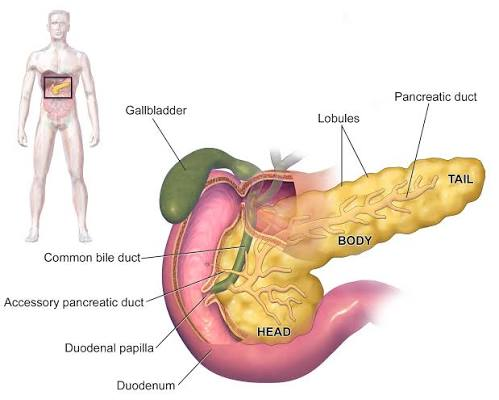
Gallstone travels from gallbladder → common bile duct → gets impacted near the ampulla of Vater → obstructs pancreatic drainage → premature pancreatic enzyme activation → autodigestion/inflammation of the pancreas.
both uses the common bile duct
most common overall cause of acute pancreatitis

ethanol
most common cause of pancreatitis in the US
GET SMASHED
Gallstones
Ethanol
Trauma
Steroids
Mumps (viral)
Autoimmune
Scorpion sting (&brown rec. spider/lizard)
Hypertriglyceridemia (>1000)
ERCP
Drugs (azathioprine, valproate, thiazides)
mnemonic for risk factors for pancreatitis
GET SMASHED
>1000s
TG level causing pancreatitis
azathioprine, valproate, thiazides
drugs associated with pancreatitis
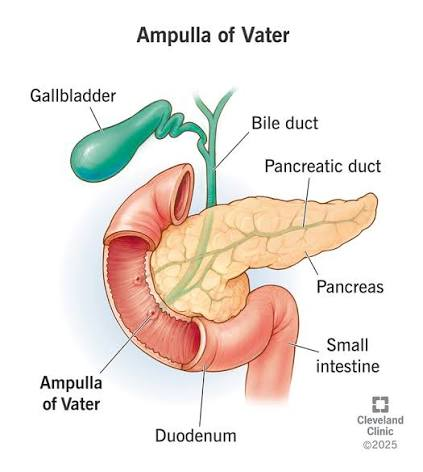
transient obstruction of ampulla of vater
how do gallstones cause pancreatitis
direct acinar injury + ↑ viscosity of secretions
how does alcohol cause pancreatitis
trypsin
premature activation of ________ --> autodigestion of the pancreas
Acinar cell injury or duct obstruction
Trypsinogen → trypsin (inside pancreas)
Activation of other enzymes (lipase, elastase)
Autodigestion + inflammation
Fat necrosis → ↓ calcium (saponification)
Systemic inflammation → SIRS → organ failure
pathophysiology of acute pancreatitis
Severe epigastric pain that radiates to the back
worse after eating
Nausea/vomiting
classic presentation of acute pancreatitis
Epigastric tenderness
Abdominal distension (ileus)
physical exam findings associated with pancreatitis

bruising around umbilicus (pancreatitis or ectopic pregnancy)
nonspecific: intra-abdominal bleeding
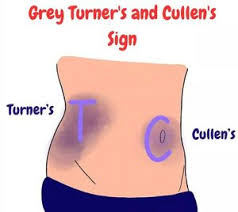
Grey Turner sign
ecchymoses of the flanks associated with fulminant hemorrhagic pancreatitis; very poor prognostic sign
nonspecific: retroperitoneal bleeding
requires 2/3:
epigastric pain
Lipase or amylase ≥3× normal (lipase preferred)
Imaging (CT/MRI) showing pancreatitis
*if first two are positive, you do NOT need a CT to confirm dx
diagnostic criteria for acute pancreatitis
gallstone pancreatitis
ALT >150 U/L strongly suggests a biliary/gallstone etiology
May have ↑ bilirubin/ALP if persistent biliary obstruction
elevated AST/ALT in the setting of pancreatitis, think
Calcium finding | Relationship to pancreatitis |
|---|---|
Hypercalcemia ↑ Ca²⁺ | Can CAUSE acute pancreatitis ⭐ — classically from hyperparathyroidism |
Hypocalcemia ↓ Ca²⁺ | Can RESULT FROM severe acute pancreatitis ⭐ |
Why does calcium DROP in pancreatitis?
Pancreatic enzymes cause fat necrosis → free fatty acids bind calcium → form insoluble calcium soaps. (saponification)
Pancreatitis → fat necrosis → saponification → ↓ serum Ca²⁺
** can also see low Mg with necrosis (fats), but low Ca is a worst prog
calcium labs associated with pancreatitis
(hyper vs hypo)
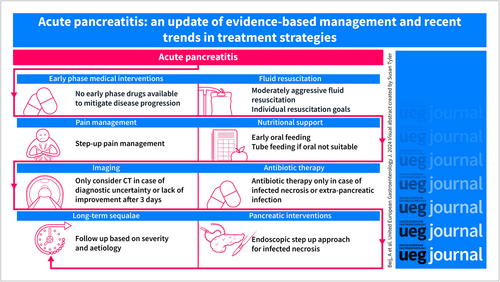
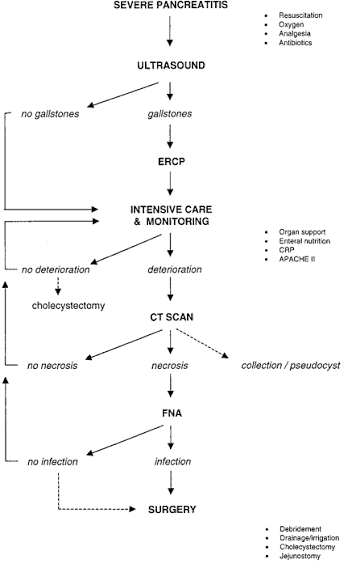
NPO
aggressive IV fluids (lactated ringers). - inflame —> leaks fluids —> fluids saves renal/BP status
pain control (hydromorphone)
MILD IMPROVES WITHIN 2-3DAYS
core management of acute pancreatitis
YES —
Early enteral feeding (within 24–48 hrs if tolerated)
Avoid prolonged NPO
are you NPO with acute pancreatitis?
NOT routine
Only if:
infected necrosis
cholangitis
are abx indicated for acute pancreatitis?
Situation | ERCP? |
|---|---|
Acute cholangitis ⭐ | YES — urgent ERCP |
Persistent common bile duct (CBD) obstruction | YES |
CBD stone seen on imaging | YES |
Persistent jaundice / rising bilirubin suggesting obstruction | YES |
Gallstone pancreatitis without cholangitis or persistent obstruction | ❌ No routine ERCP |
Alcohol-induced pancreatitis | ❌ No |
Gallstone pancreatitis alone ≠ indication for ERCP.
—> for JUST gallstone pancreatitis —> just take out the dang GB
indications for ERCP in acute gallstone pancreatitis
fat necrosis
decreased calcium in pancreatitis signifies
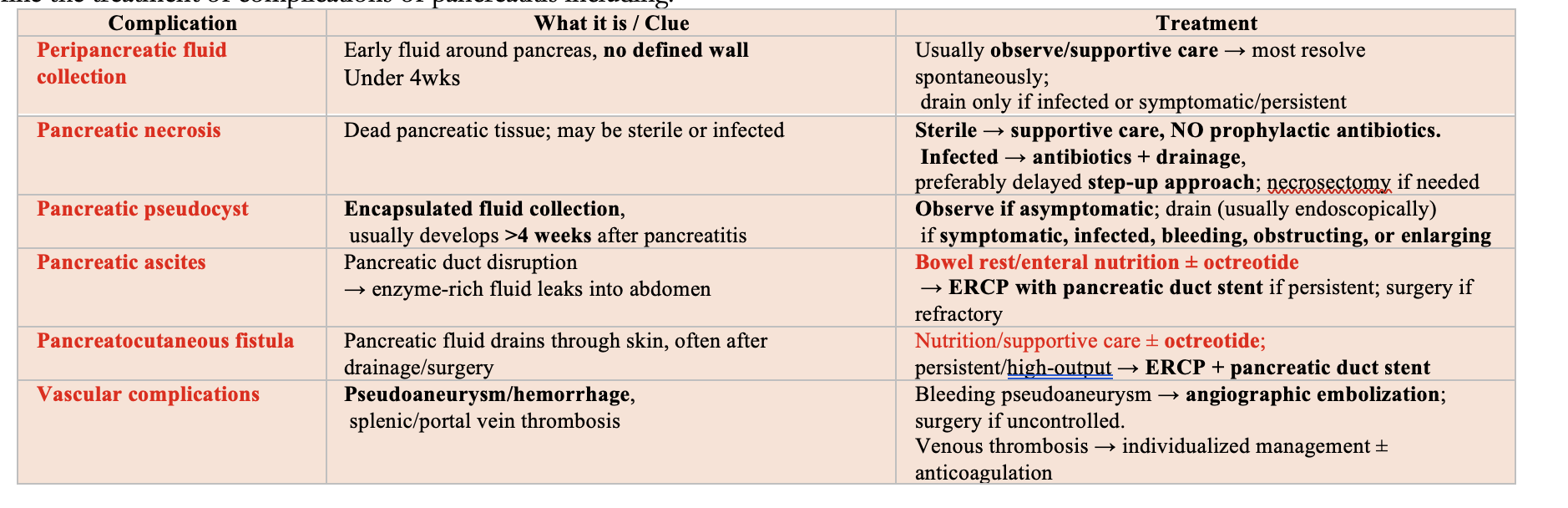
with antibiotics that penetrate necrotic tissue and use a step-up approach:
drainage first,
then debridement only if needed.
Debridement is usually delayed about 4 weeks when possible because early debridement increases morbidity and mortality
treatment of pancreatic necrosis
peripancreatic fluid collections
-complicaiton of pancreatitis: early
Fluid accumulation around the pancreas (no defined wall)
most resolve without intervention, drain if infected
pancreatic pseudocysts
-complicaiton of pancreatitis
a delayed, encapsulated fluid collection without solid necrotic debris
usually after ~4 weeks after pancreatis episode
drain if infected/sympotmatic, otherwise it will reslove
results from duct disruption or pseudocyst leak
causes of pancreatic ascites
(-complicaiton of pancreatitis)
ERCP with transpapillary pancreatic duct stenting
treatment of persistent pancreatic ascites
Many external pancreatic fistulas close with conservative care;
—> persistent or refractory fistulas may benefit from ERCP with sphincterotomy and pancreatic duct stenting
management of pancreatocutaneous fistula
(-complicaiton of pancreatitis)
pseudoaneurysm
most likely vascular complication of pancreatitis
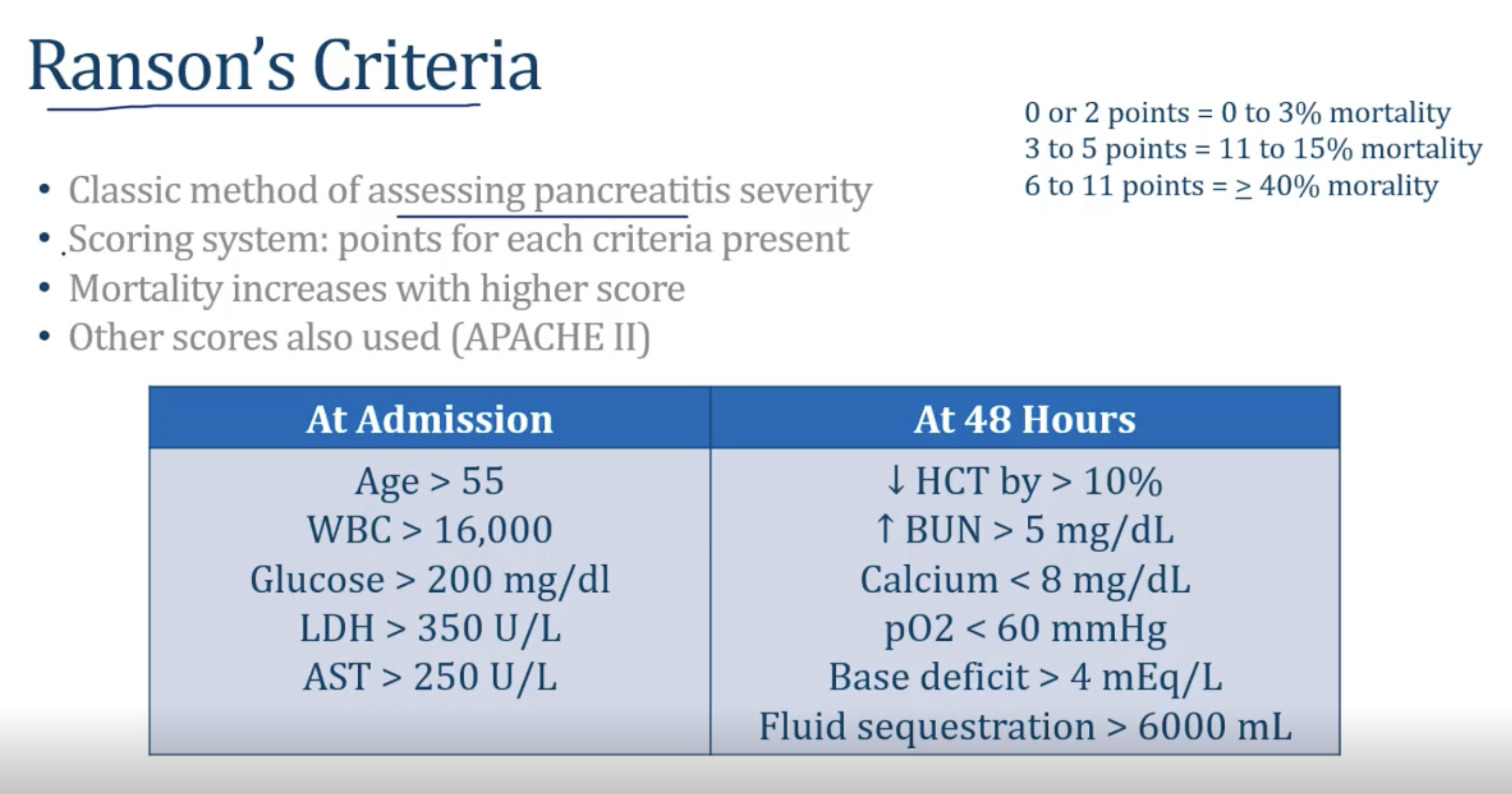
*calcium under 8 is very bad
base def is 24- bicarb (>4 is very low bicarb)
Ranson's admission criteria
(for non-gallstone pancreatitis)
predicts mortality outcomes
Pathology | Repeated inflammation → irreversible fibrosis + destruction of pancreas → loss of exocrine and eventually endocrine function |
Etiology | Chronic alcohol use (common); smoking, recurrent acute pancreatitis, genetic causes (CF, PRSS1), pancreatic duct obstruction, autoimmune pancreatitis |
Presentation | Chronic/recurrent epigastric pain radiating to back, weight loss, steatorrhea, malabsorption (ADEK) → later diabetes |
Diagnosis | CT abdomen → pancreatic calcifications, atrophy, dilated/irregular pancreatic duct; MRCP/EUS if CT unclear |
Labs | Amylase/lipase may be normal because pancreas is fibrotic; fecal elastase ↓ with exocrine insuff. |
General treatment | Stop alcohol + smoking, nutrition, pancreatic enzyme replacement, fat-soluble vitamins as needed; treat diabetes |
Chronic pain management | Stepwise: alcohol/smoking cessation → non-opioid analgesics → pancreatic enzymes in selected patients → endoscopic therapy for duct stones/strictures → surgery for refractory obstructive pain |
Endoscopic treatment | ERCP-based stone removal/stenting for selected pancreatic duct obstruction/strictures |
Surgery | Persistent severe pain/duct obstruction despite medical/endoscopic therapy → drainage or pancreatic resection depending on anatomy |
Board buzzwords: Chronic pancreatitis = pancreatic calcifications + chronic epigastric pain + steatorrhea + diabetes.
define chronic pancreatitis
#1 alcohol,
& smoking, genetic causes, obstructive disease, autoimmune pancreatitis, recurrent acute pancreatitis, and idiopathic disease
major causes of chronic pancreatitis
exocrine
are most pancreatic cancers exocrine or endocrine?
recall:
Exocrine pancreas | Endocrine pancreas | |
|---|---|---|
Main job | Digestion | Blood glucose regulation |
Structure | Acinar + ductal cells | Islets of Langerhans |
Where secreted? | Into pancreatic ducts → duodenum | Directly into bloodstream |
Acinar cells | Digestive enzymes | — |
Ductal cells | HCO₃⁻ (bicarbonate) | — |
α cells | — | Glucagon ↑ glucose |
β cells | — | Insulin ↓ glucose |
δ cells | — | Somatostatin |
PP/F cells | — | Pancreatic polypeptide |
pancreatic ductal adenocarcinoma
Classic board presentation
Older patient + weight loss + painless jaundice + palpable nontender gallbladder
→ Pancreatic adenocarcinoma in the head of the pancreas
Genetics to memorize
KRAS → CDKN2A → TP53 → SMAD4
CA 19-9: useful for following known disease/treatment response, but not a screening or stand-alone diagnostic test.
Feature | High-yield finding |
|---|---|
Most common location | Head of pancreas ⭐ |
Major risk factor | Cigarette smoking; age >50yrs, DM, chronic pancreatitis, obesity, diabetes, family/genetic syndromes |
Common mutations | KRAS ⭐, TP53, CDKN2A (p16), SMAD4 |
Tumor marker | CA 19-9 ⭐ — mainly monitoring, not screening |
Head tumor presentation | Painless obstructive jaundice ⭐, dark urine, pale stools, pruritus |
Body/tail presentation | Often presents later → abdominal/back pain, weight loss |
Gallbladder | Courvoisier sign = palpable, nontender gallbladder + jaundice |
Other clue | Trousseau syndrome = migratory thrombophlebitis |
Diagnosis/staging | (u/s first) Pancreas-protocol contrast CT |
Definitive treatment | Surgical resection if resectable + systemic chemotherapy pallitive: bile stent to remove jaundice |
Head tumor surgery | Whipple procedure (pancreaticoduodenectomy) |
Body/tail surgery | Distal pancreatectomy, often with splenectomy |
associated with BRCA2 (jews)
ASSOCIATED WITH CHRONIC PRANCEATITIS BUT NOOOOTTT ALC DRINKING!!
most common malignant pancreatic cancer
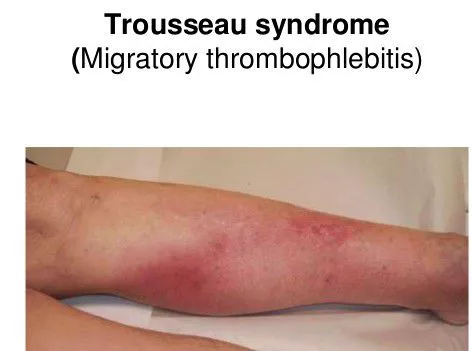
PAINLESS JAUNDICE
dark urine/light stools,
epigastric or back pain,
weight loss, anorexia, and fatigue
courver’s sign (nontender, enlarged GB)
Trousseu’s syndrome
symptoms associated with pancreatic cancer
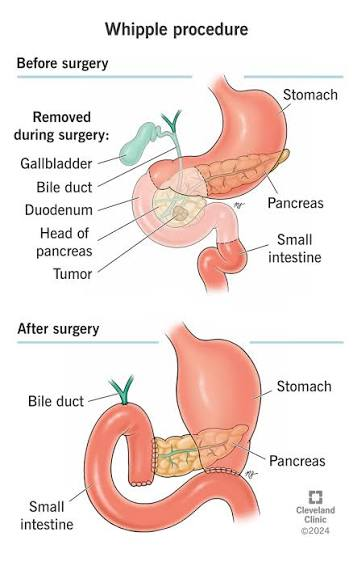
Whipple (pancreaticoduodenectomy)
surgery for pancreatic cancer of the head lesions
a major surgery to remove the:
head of the pancreas,
the first part of the small intestine (duodenum),
the gallbladder, and part of the bile duct
what does the whipple procedure remove?
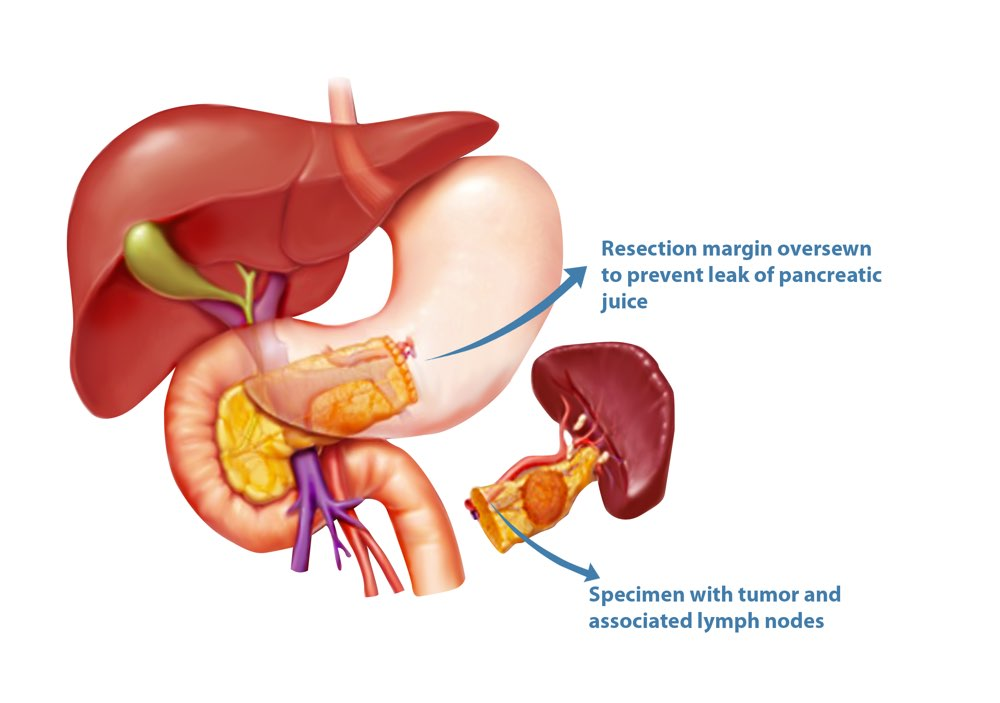
distal pancreatectomy
surgery for body/tail pancreatic cancer
Tumor | High-yield features |
|---|---|
Pancreatic ductal adenocarcinoma (PDAC) ⭐⭐⭐ | Most common pancreatic malignancy; usually head; painless jaundice, weight loss; CA 19-9; KRAS, TP53, SMAD4, CDKN2A |
Pancreatic neuroendocrine tumors (PanNETs) | Arise from islet/endocrine cells; can be functional or nonfunctional |
→ Insulinoma ⭐ | Most common functional PanNET; hypoglycemia → Whipple triad |
→ Gastrinoma | ↑ gastrin → Zollinger-Ellison → refractory/multiple ulcers + diarrhea; associated with MEN1 |
→ Glucagonoma | Diabetes + necrolytic migratory erythema ⭐ |
→ VIPoma | WDHA = watery diarrhea, hypokalemia, achlorhydria |
→ Somatostatinoma | Diabetes + gallstones + steatorrhea |
Solid pseudopapillary neoplasm | Classically young women; large well-circumscribed tumor; generally favorable prognosis |
Serous cystadenoma | Usually benign; microcystic/honeycomb appearance + central scar |
Mucinous cystic neoplasm (MCN) ⭐ | Usually women, body/tail; ovarian-type stroma; malignant potential; does NOT communicate with pancreatic duct |
IPMN ⭐ | Mucin-producing tumor that communicates with pancreatic duct; malignant potential |
1. PDAC → most common overall; head + painless jaundice + CA 19-9
2. Insulinoma → hypoglycemia + Whipple triad
3. Gastrinoma → MEN1 + Zollinger-Ellison
4. MCN → woman + body/tail + no duct communication
5. IPMN → mucin + pancreatic duct communication
6. Serous cystadenoma → benign + central scar/honeycomb
Quick distinction:
PDAC = exocrine cancer
PanNETs = endocrine tumors
MCN/IPMN/serous cystadenoma = cystic pancreatic neoplasms.
pancreatic tumors to be aware of
Early: less than 4 weeks after acute episode
Acute peripancreatic fluid collection
Acute necrotic collection
Late: more than 4 weeks after acute episode
Pancreatic pseudocyst
Walled-off necrosis
Pancreatic Complications
All identified based on contrast-enhanced CT criteria
Early: less than 4 weeks after acute episode
____________________
____________________
Late: more than 4 weeks after acute episode
__________________
___________________
Treatment based on severity/symptoms:
Observation
Drainage
Surgery
… just so you can see it together what complications you might want on your ddx