The Grand Tour and Neoclassicism: Echoes of Antiquity
 Studied by 0 people
 Call with Kai
 Learn
Learn Practice Test
 Spaced Repetition
 Match
Match Flashcards
 Knowt Play
1/37

There's no tags or description
Looks like no tags are added yet.
Name | Mastery | Learn | Test | Matching | Spaced | Call with Kai |
|---|
No study sessions yet.
38 Terms
Enlightenment (first three-quarters of 18th century)
encouraged a new way of thinking critically about the world, independent from religion and tradition, promoting scientific questioning of all assertions; made the knowledge of Ancient Rome imperative for the cultured elite; renewed interest in naturalism and realism in art
The Grand Tour (1660-1840)
travel undertaken by young men for education and pleasure; Italy was the prime destination; typically lasted over a year with multiple visits to cities; art bought as souvenirs; strong influence of classical education seen in the accounts of many tourists
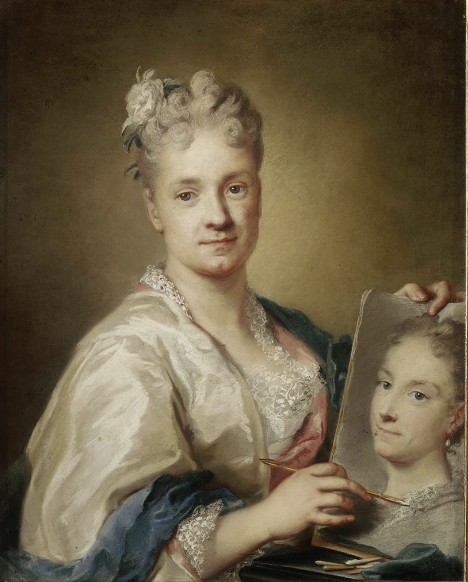
Self-Portrait Holding a Portrait of Her Sister (artist)
Rosalba Carriera
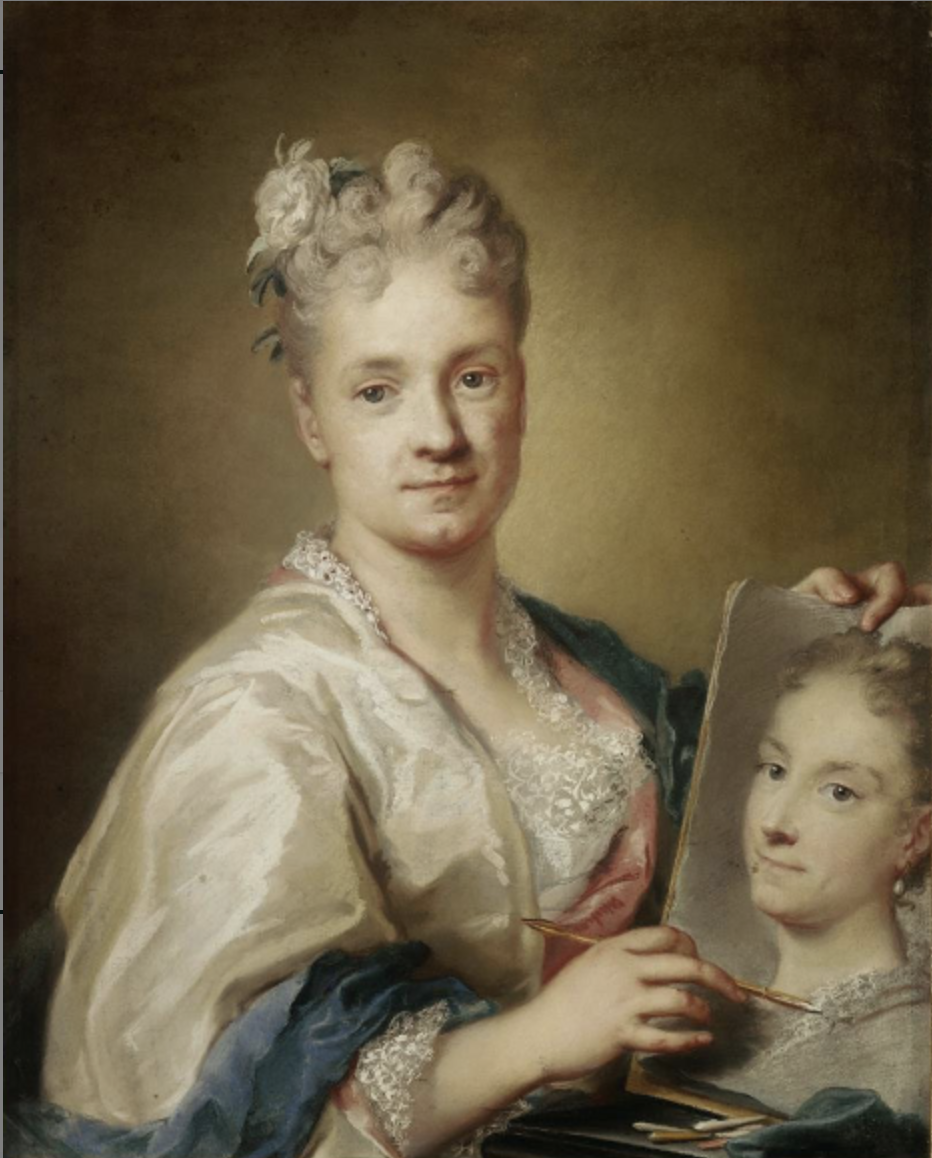
Self-Portrait Holding a Portrait of Her Sister (date)
1708
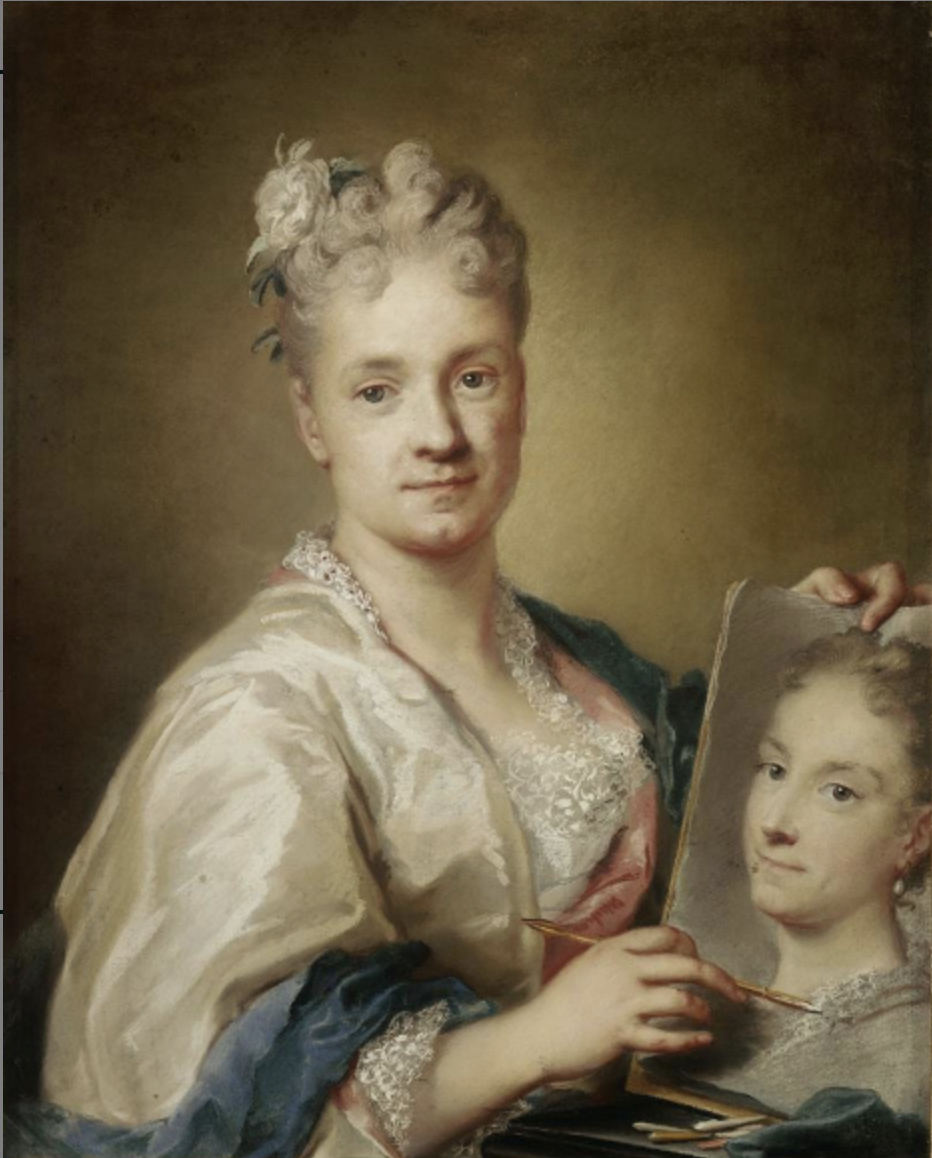
Self-Portrait Holding a Portrait of Her Sister (material)
pastel on paper
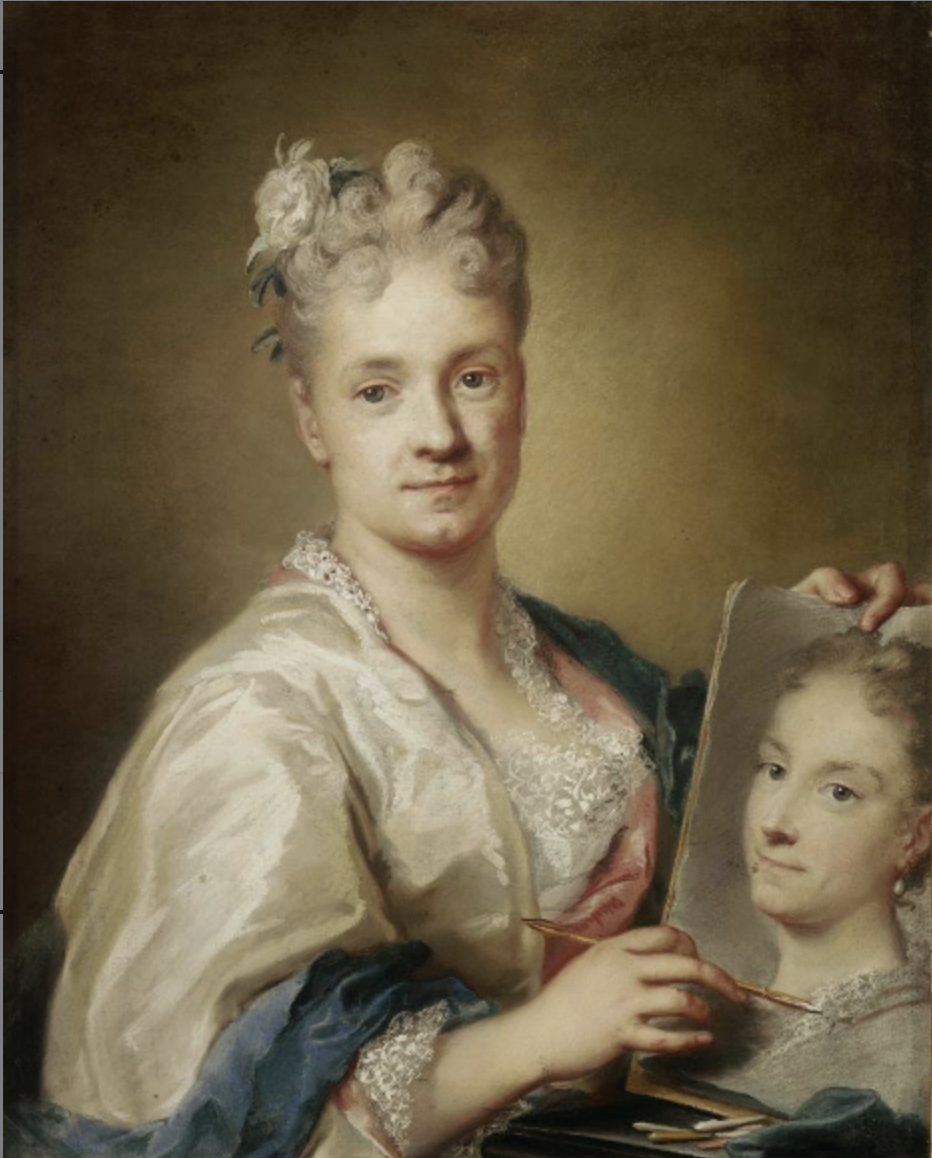
Self-Portrait Holding a Portrait of Her Sister (patron)
Medici House
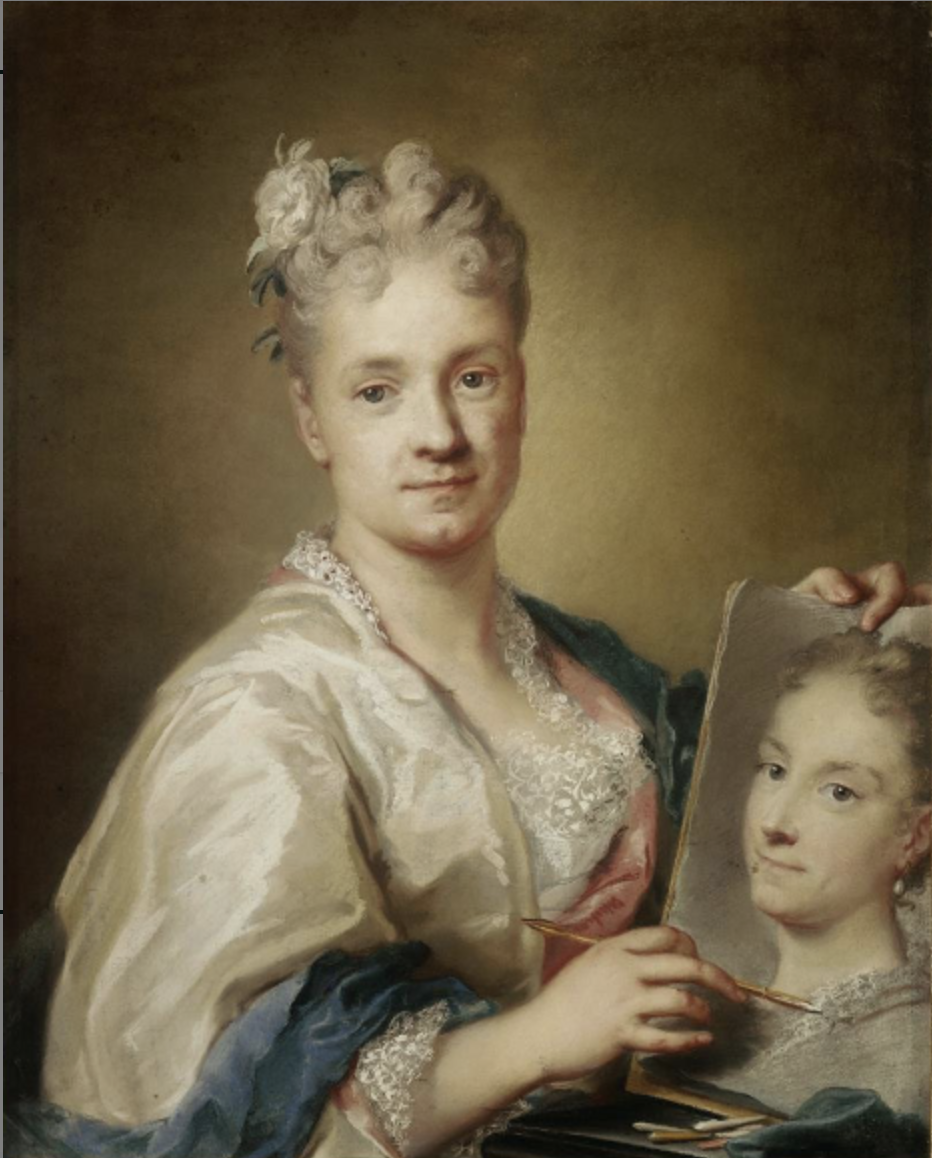
Self-Portrait Holding a Portrait of Her Sister (details)
head looking out at viewer, body angled, slight smile like Mona Lisa
static, centered, relaxed
lighting around face
detailed textures hair and lace
soft and ethereal effect of pastels
pastels
crayons of pulverized pigment bound to a chalk base by weak gum water
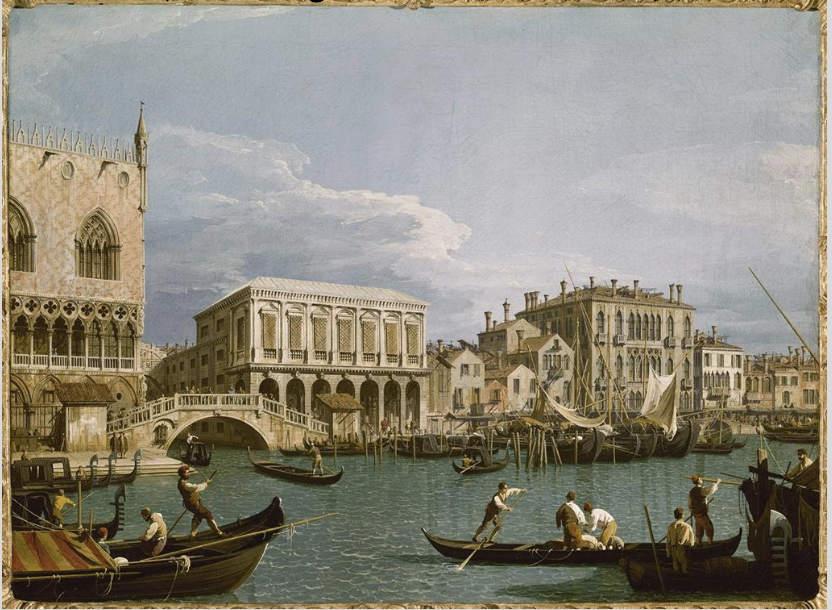
Riva degli Shiavoni, Venice (artist)
Canaletto
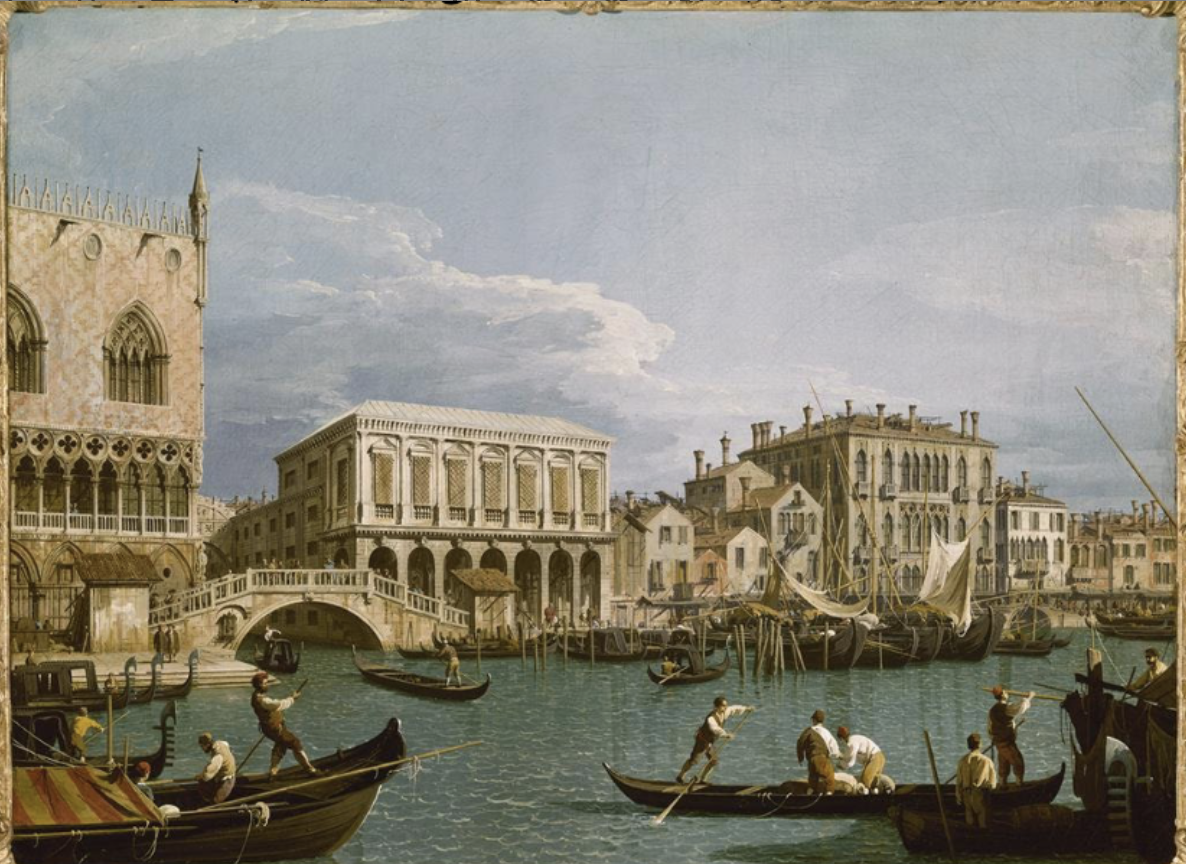
Riva degli Shiavoni, Venice (date)
1735-1740
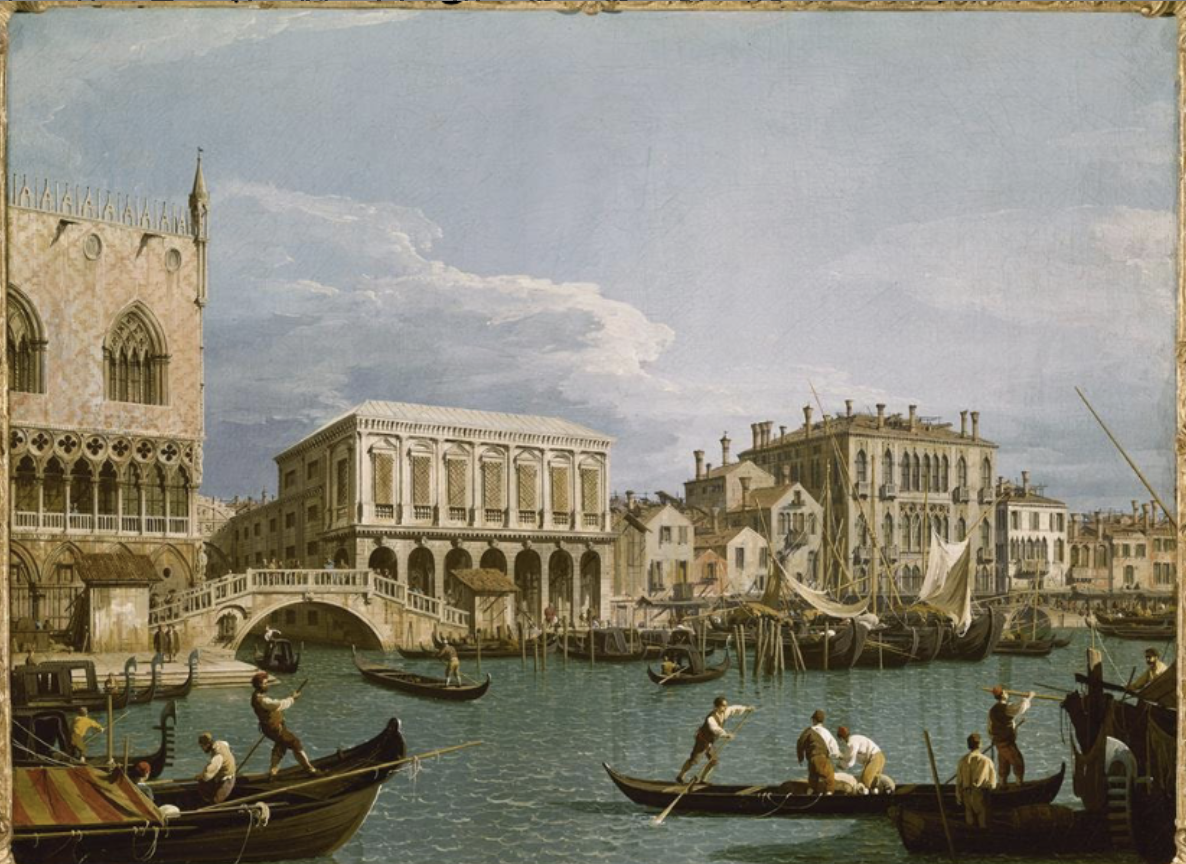
Riva degli Shiavoni, Venice (material)
oil on canvas
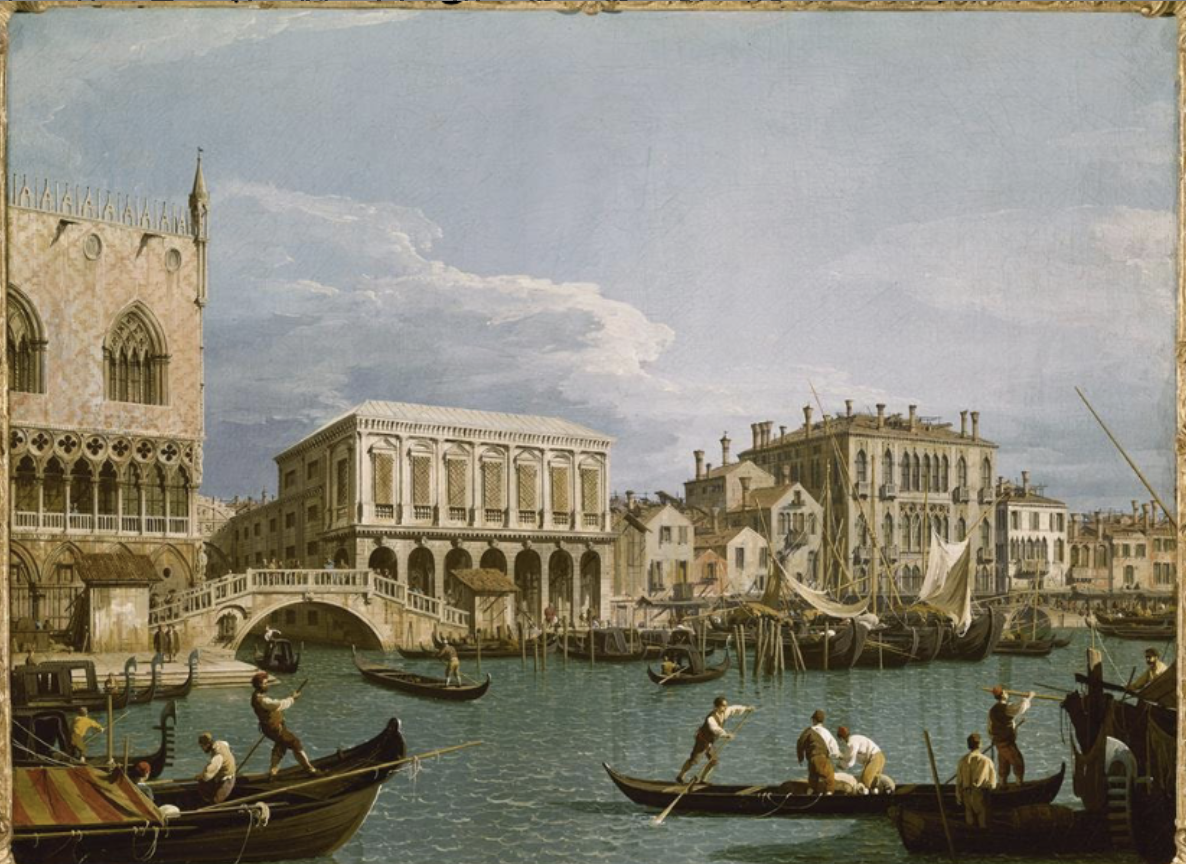
Riva degli Shiavoni, Venice (details)
naturalistic postcard painting
kept as memory from Grand Tour
vedute
capriccio
camera obscura
vedute
literally “scenic views” in Italian; these paintings were collected by the tourists as reminders of their travels
capriccio
a fanciful painting of the vedette type that has rearranged features or elements that did not exist
camera obscura
an ancestor of the modern camera in which a tiny pinhole, acting as a lens, projects an image on a screen, the wall of a room, or the ground glass wall of a box; used as an aid in drawing from nature
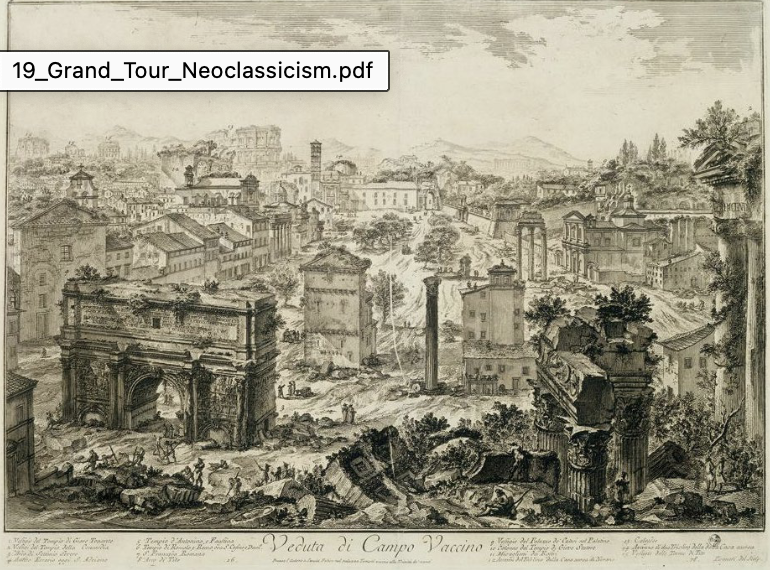
The Forum Romanum or “Campo Vaccino”, from the Capitol (artist)
Piranesi
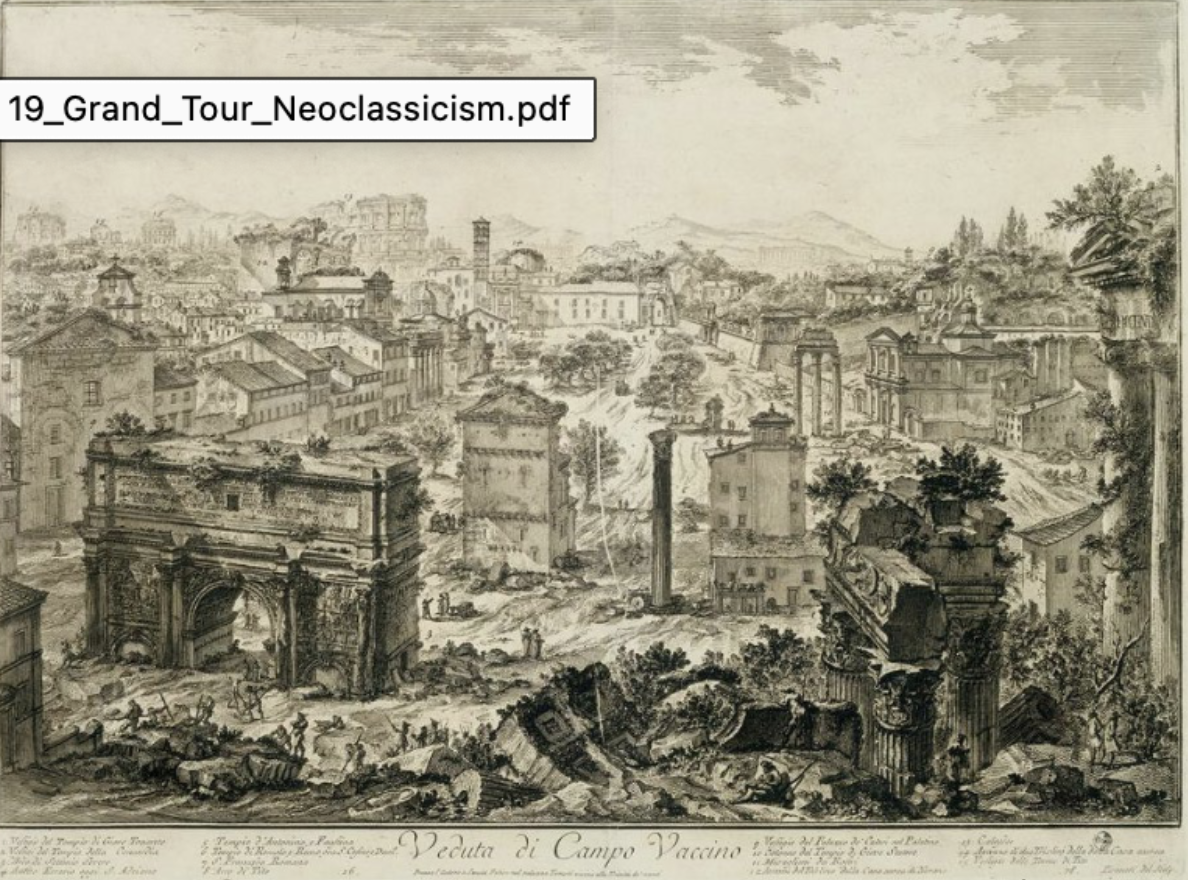
The Forum Romanum or “Campo Vaccino”, from the Capitol (date)
1740s
The Forum Romanum or “Campo Vaccino”, from the Capitol (material)
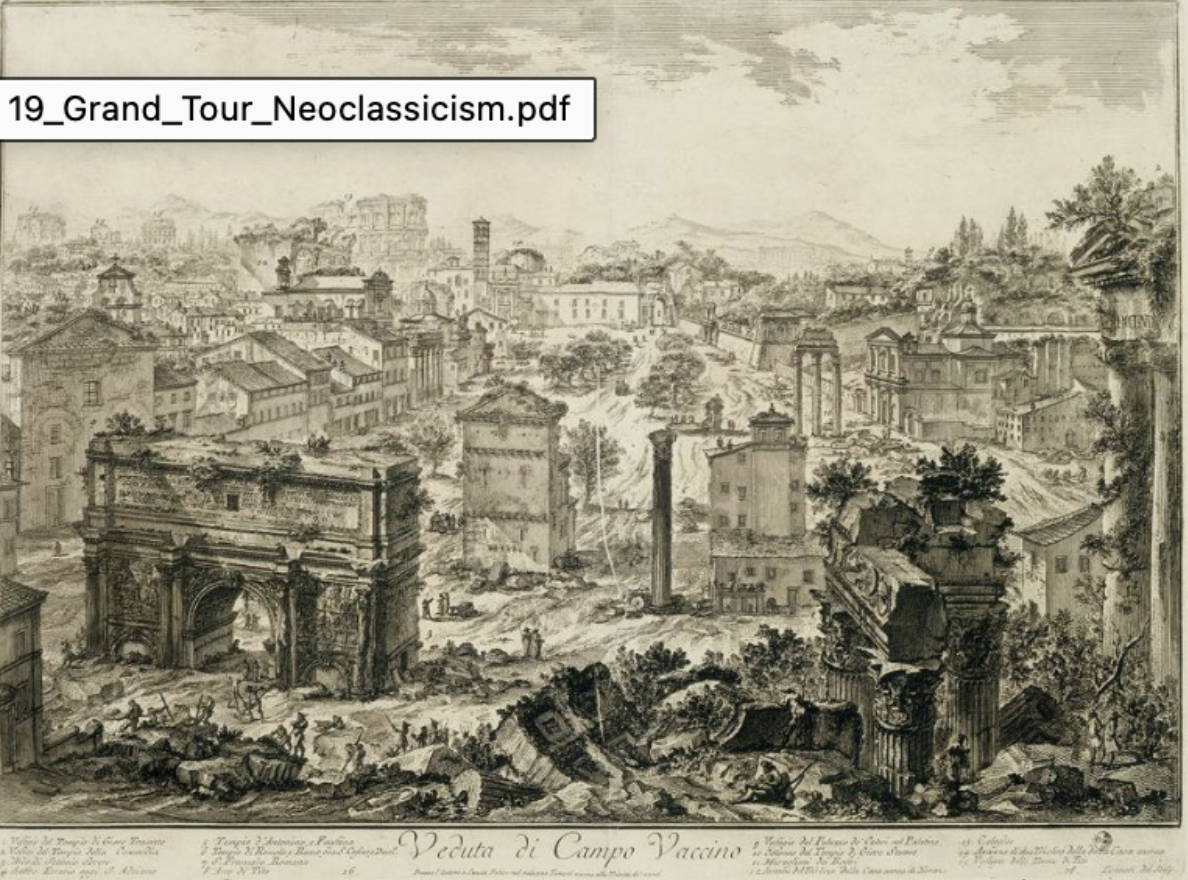
etching
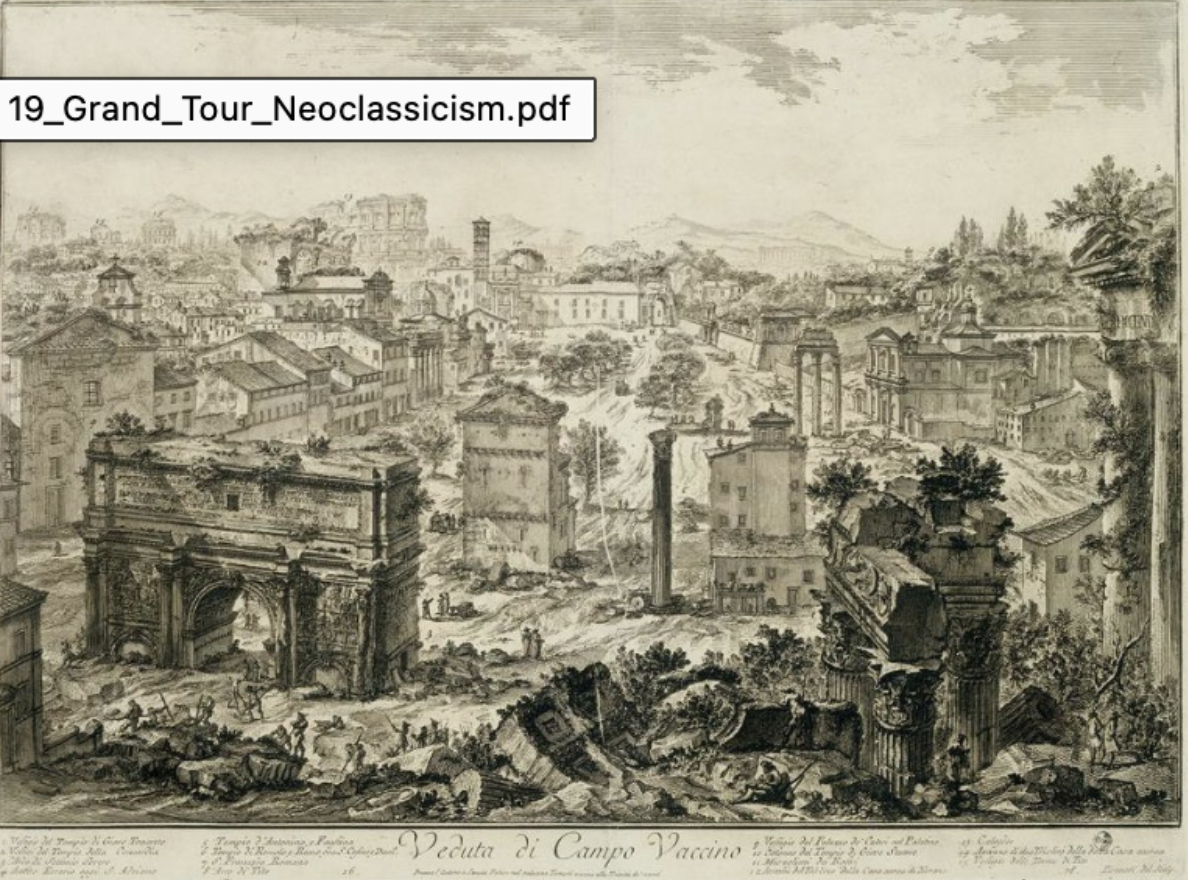
The Forum Romanum or “Campo Vaccino”, from the Capitol (details)
picturesque art
ruins are compelling reminders that even Empires fall into ruin
humans are small
cycle of life and death is inevitable
picturesque
an “unordered” landscape (actual or invented) designed in accord with the Enlightenment taste for the natural
Neoclassicism
style of art and architecture that emerged in the late 18th century as part of the general revival of interest in classical cultures; incorporated subjects and styles of ancient art; highly influential in interior decoration, fashion and architecture
name 3 famous Neoclassicist artists
Angelica Kauffmann
Jacques-Louis David
Antonio Canova
Johan Joachim Winckelmann
famous theoretician of Neoclassicism often called the father of modern art history; espoused kopienkritik; thought that if you weren’t going for Ancient Greek standards of art, it would be pointless
kopienkritik
the use of Roman copies to reconstruct ideal Greek originals
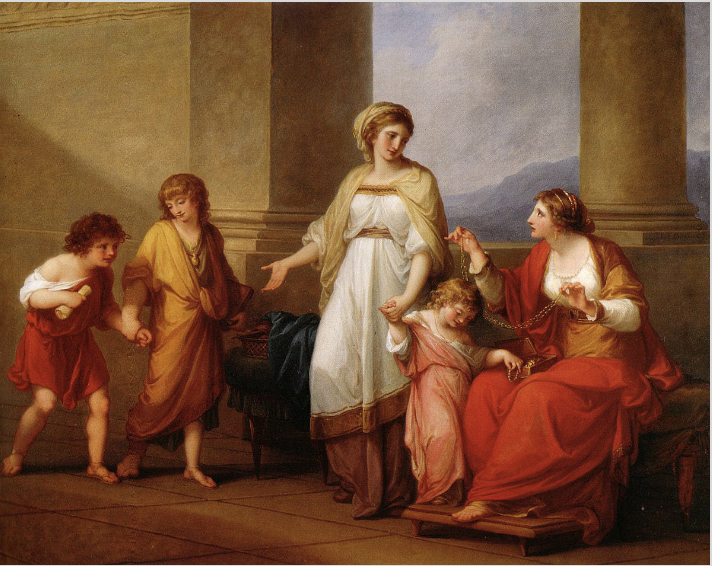
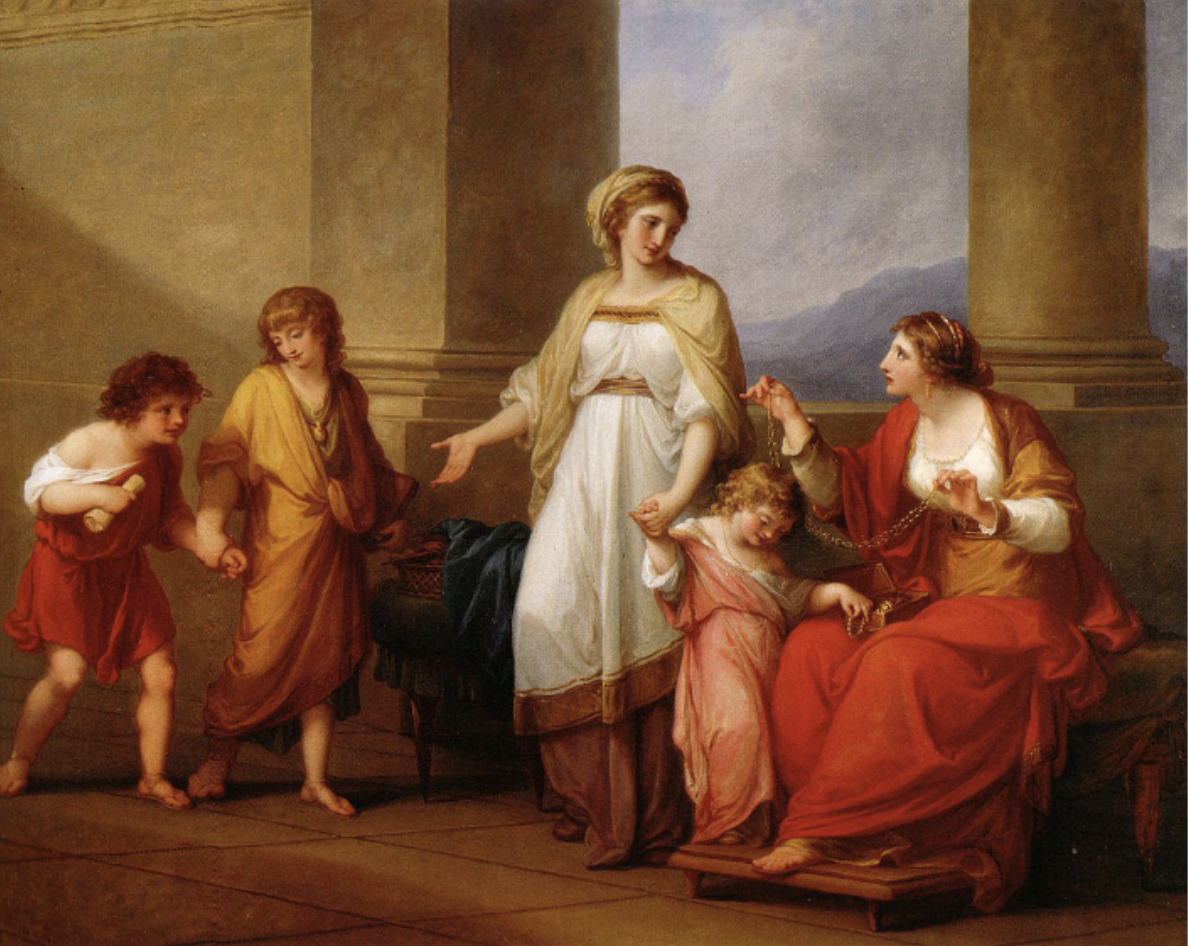
Cornelia Presenting Her Children as Her Treasures (Mother of the Gracchi) (artist)
Angelica Kauffmann

Cornelia Presenting Her Children as Her Treasures (Mother of the Gracchi) (date)
1785
Cornelia Presenting Her Children as Her Treasures (Mother of the Gracchi) (material)
oil on canvas
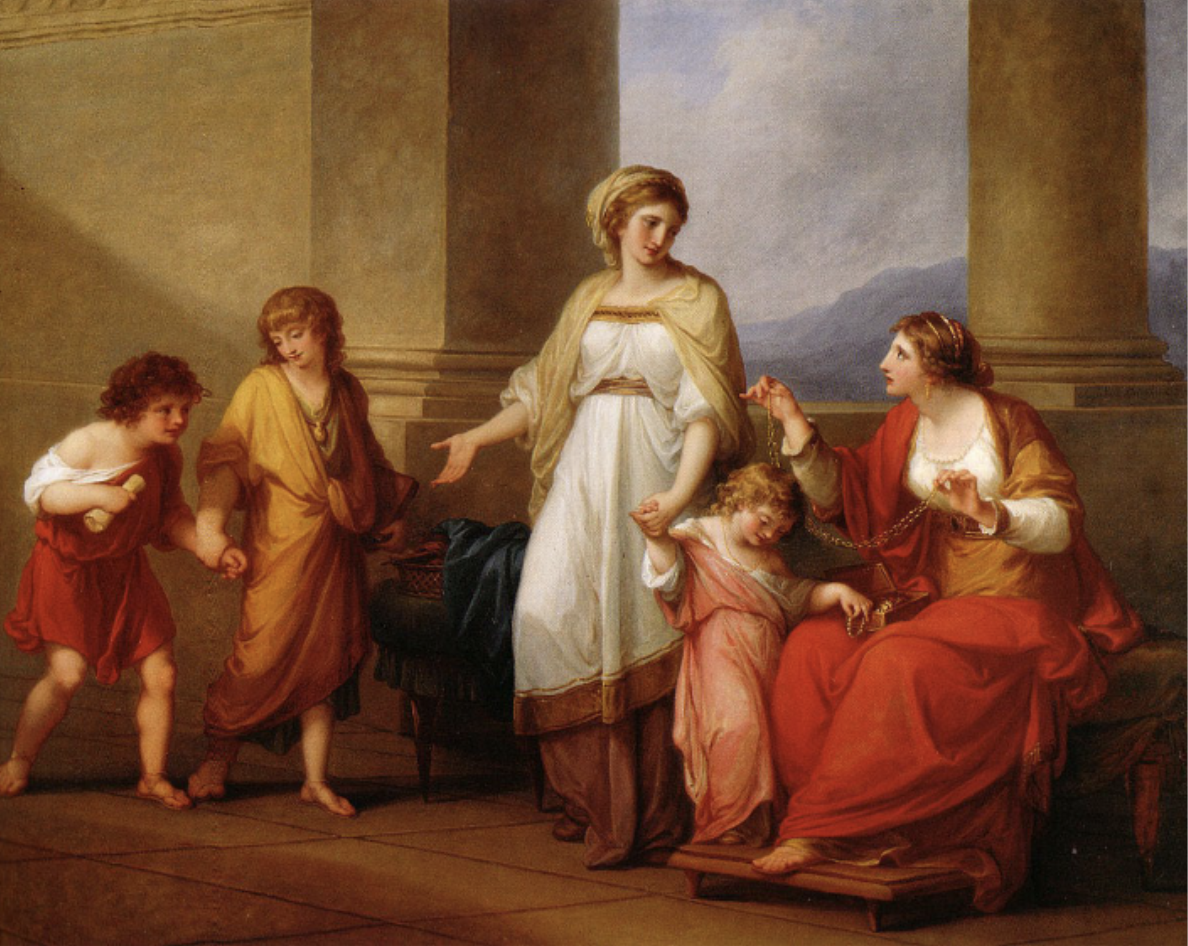
Cornelia Presenting Her Children as Her Treasures (Mother of the Gracchi) (details)
exemplum virtutis
exemplum virtutis
example or model of virtue
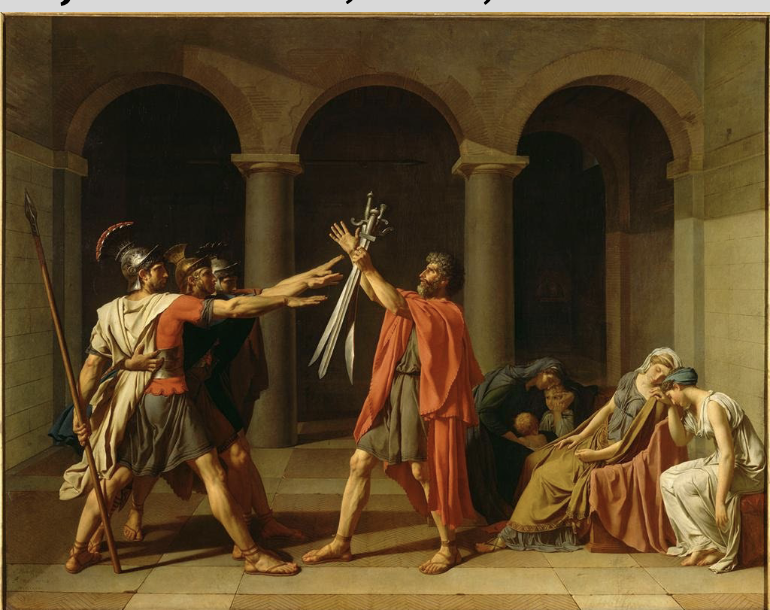
The Oath of the Horatii (artist)
Jacques-Louis David
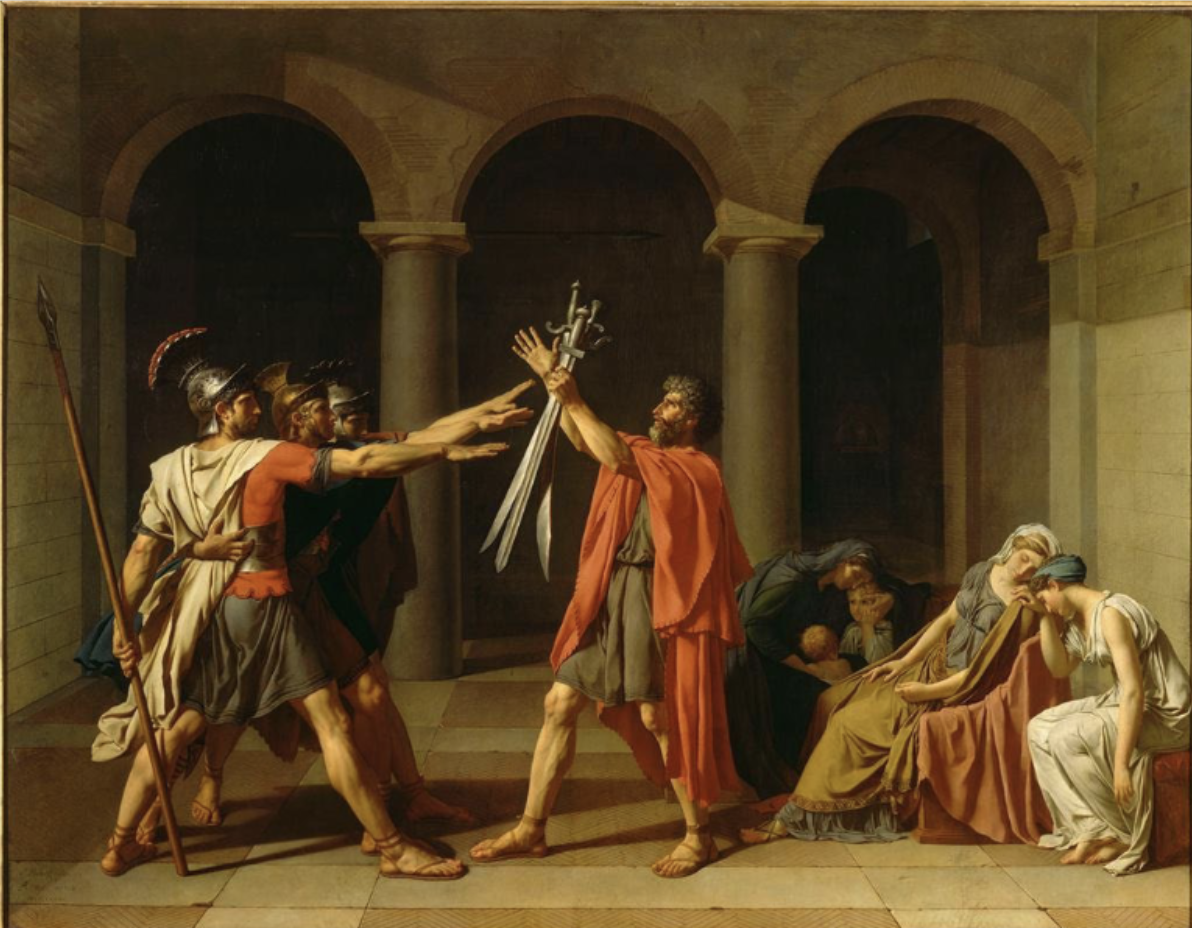
The Oath of the Horatii (date)
1784
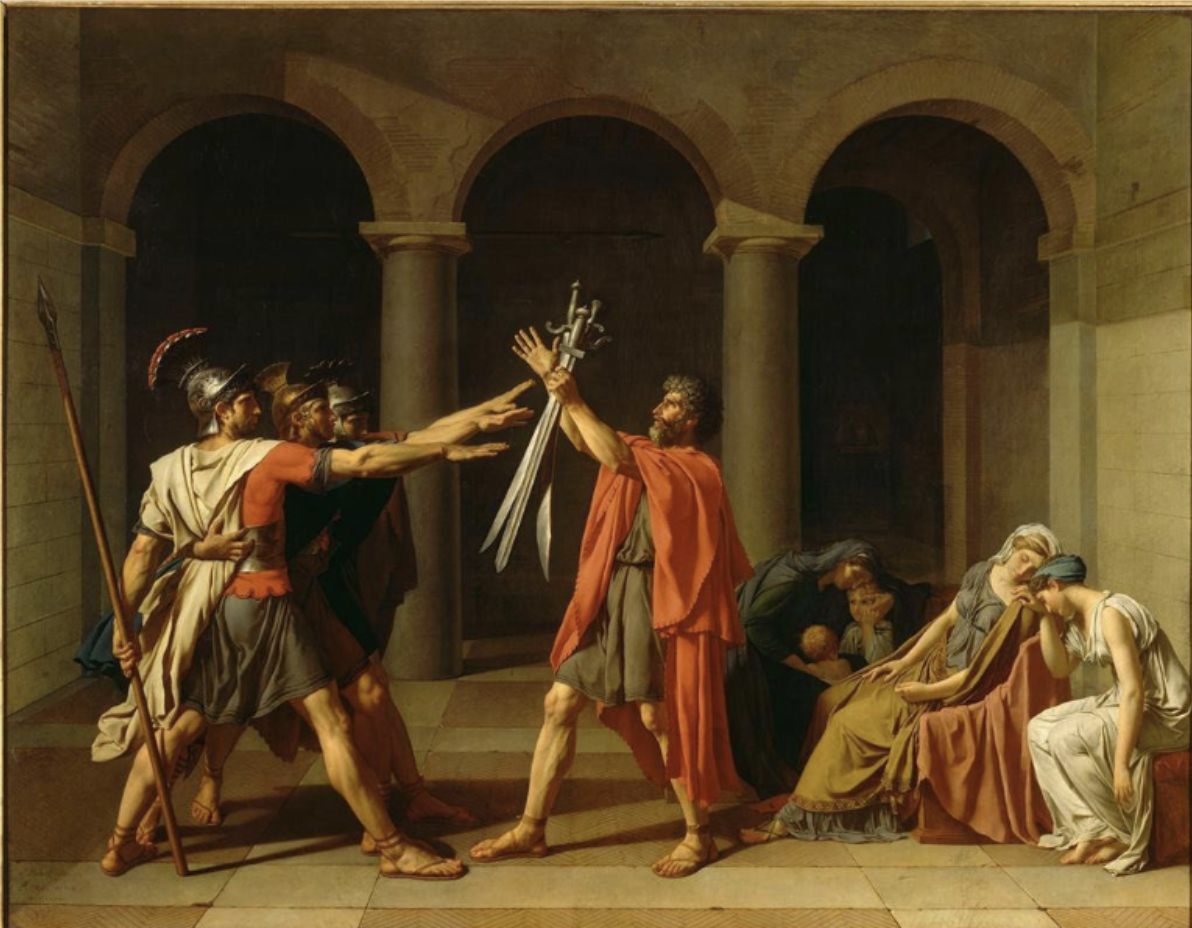
The Oath of the Horatii (material)
oil on canvas
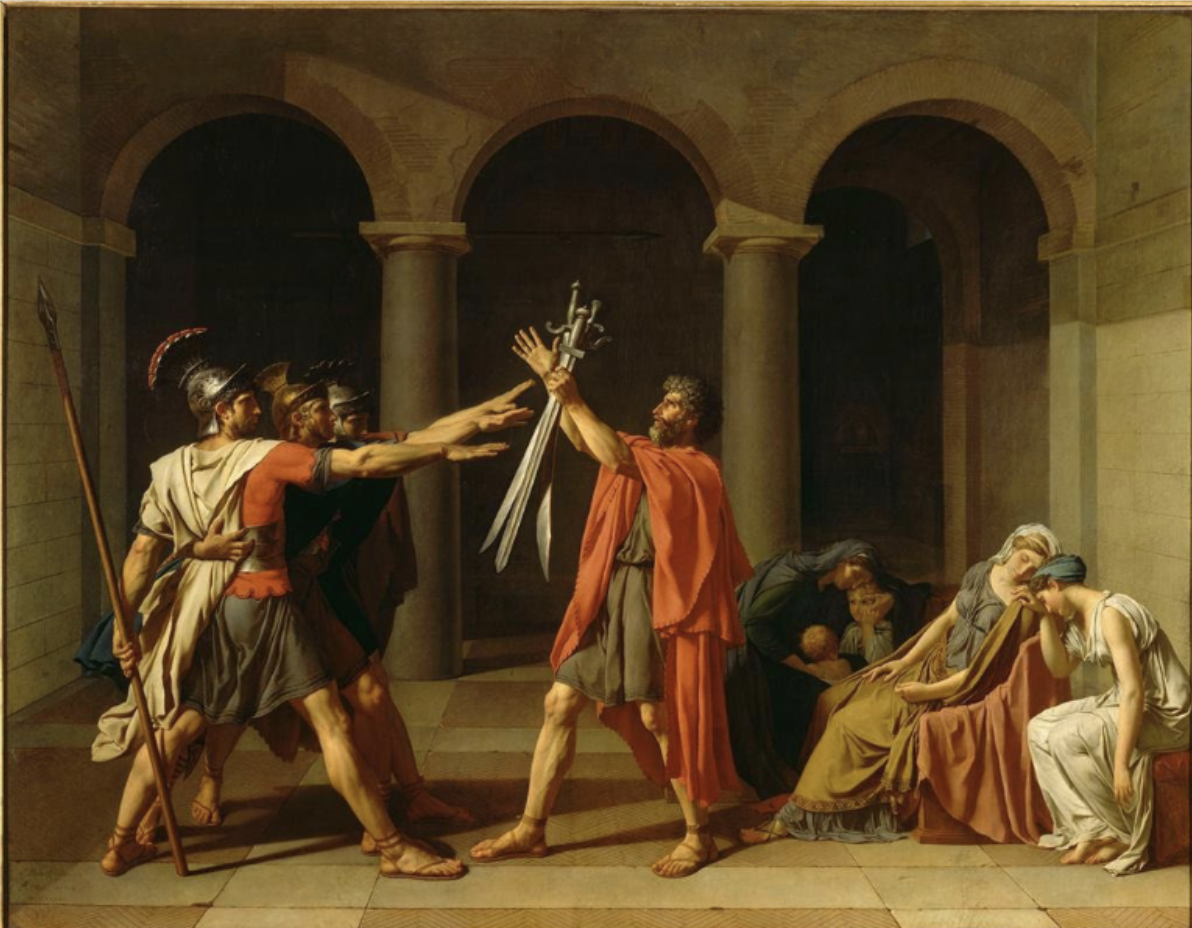
The Oath of the Horatii (location)
Rome
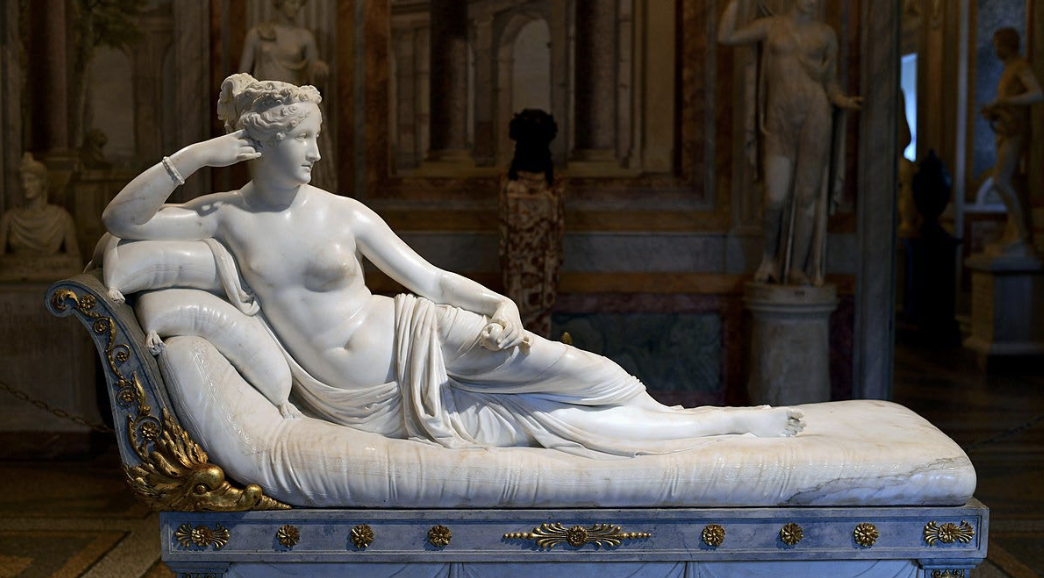
Pauline Borghese as Venus Victorious (sculptor)
Antonio Canova
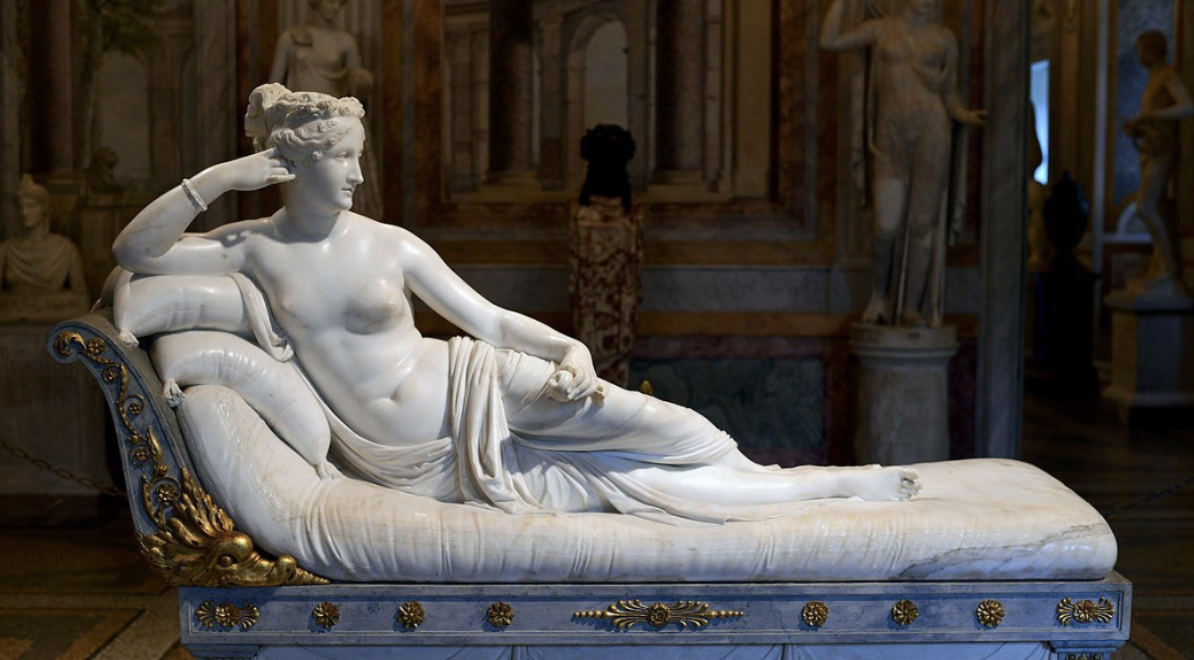
Pauline Borghese as Venus Victorious (date)
1808
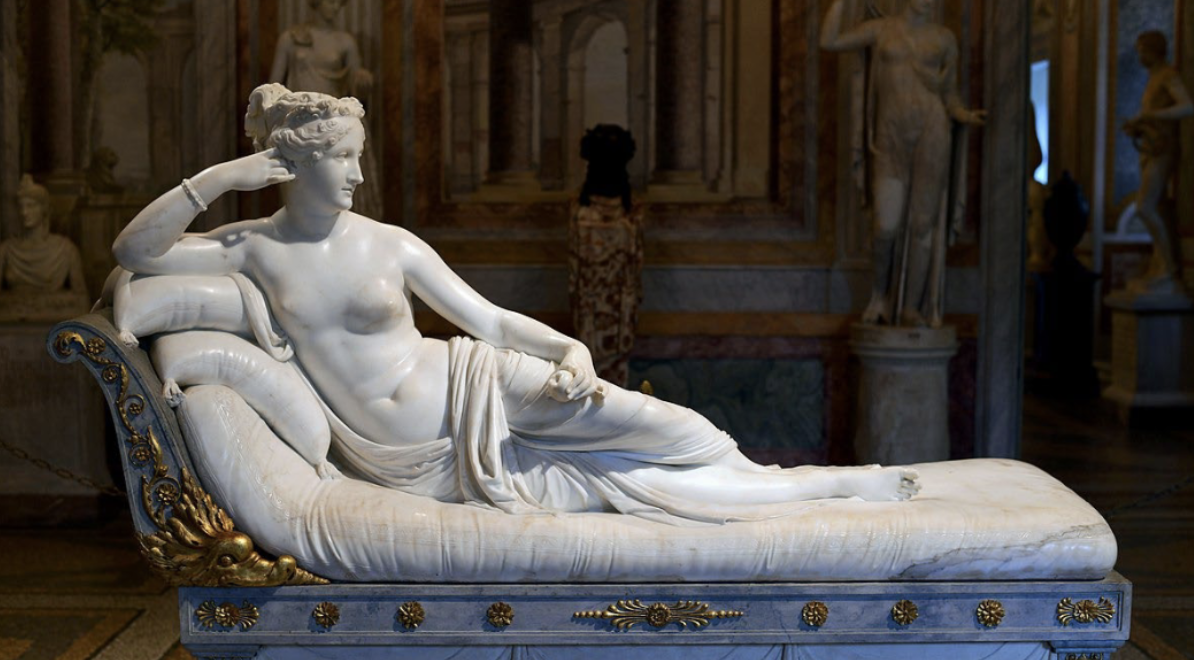
Pauline Borghese as Venus Victorious (material)
marble
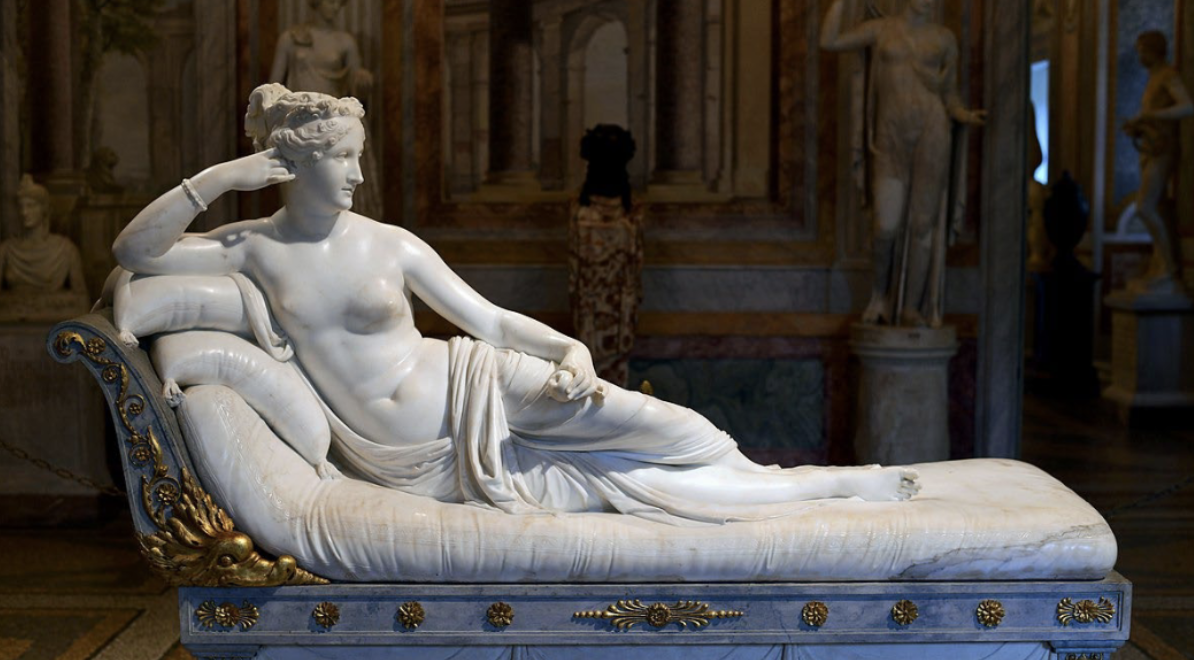
Pauline Borghese as Venus Victorious (patron)
Camilo Borghese
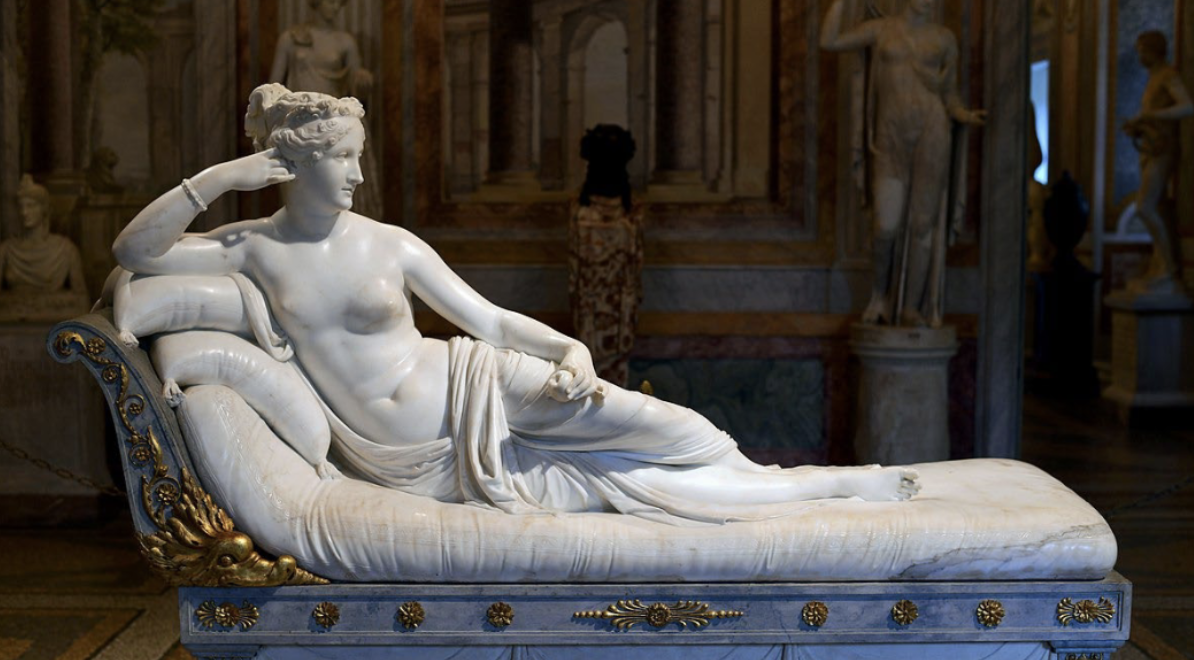
Pauline Borghese as Venus Victorious (details)
golden apple that starts the Trojan War