Anti-Caries Agent
 Call Kai
 Learn
Learn Practice Test
 Spaced Repetition
 Match
Match Flashcards
 Knowt Play
1/82

There's no tags or description
Looks like no tags are added yet.
Name | Mastery | Learn | Test | Matching | Spaced | Call with Kai | Chat |
|---|
No analytics yet
Send a link to your students to track their progress
83 Terms
Mechanisms of Fluoride Cariostatic actions
Anticariogenic effect
-crystal solubility
-Crystal demineralization / remineralization
Antimicrobial effect

2 mechanisms in which Fluoride gets incorporated into hydroxyapatite crystal
1. Replacement of OH group --> FA
2. Formation of hydrogen bond with OH (OH-F)
3. substitute for carbonate groups
How does forming Fluorapatite affect the crystal structure compared to HA?
-contraction of a-axis
-Fluoride is more electronegative and smaller as ions, so the tighter ionic interaction (Ca-F) will lead to more compact crystal structure.
Overall effect of incorporation of Fluoride to HA:
-increased stability of lattice
-reduction in number of imperfections / dislocations within crystals
-Larger crystal presenting SMALLER surface area/volume ratio --> less reactivity
--> low acid solubility
--> decreased rate of demineralization
--> Less susceptible to caries
Fluorapatite has a (smaller/larger) crystal presenting (smaller/larger) surface area/volume ration compared to HA.
Larger ;
smaller
Anti-bacterial effect of fluoride is _______________ -dependent.
concentration & pH
How does concentration and pH determine the antibacterial effect of fluoride?
at pH 7, 12,000 ppm is required to be bactericidal;
at pH 5, only 6-8 ppm is required.
Reducing the pH increases the sensitivity of plaque bacteria to Fluoride.
At neutral pH, _______ ppm of fluoride is required for it to become bactericidal
> 1000 ppm
What occurs on the surface of plaque and tooth surface at high fluoride concentration?
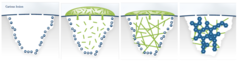
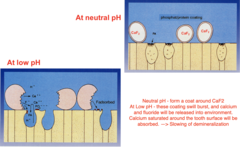
1. Release of Calcium from enamel
2. calcium reacts with fluoride
--> Formation of CaF2 globules
--> These globules are popped and contents released under acidic conditions
Describe systemic vs. Topical Fluoride application
Systemic
-fluoride ingested (prescription, fluids) during developmental stage of tooth
-can cause fluorosis if ingested too much
Topical
-rinses, dentirifices, toothpaste, etc
-does NOT cause fluorosis
Critical age of baby to ingest fluoride (systemically) :
birth to 8 years
(critical 1~2.5 year old)
Can Topical fluoride application cause fluorosis?
NO ; only systemic fluoride will cause it.
List types of Fluorides
-Sodium Monofluorophosphate
-NaF
-Stannous fluoride
-Amine Fluoride
-Titanium (IV) fluoride
-38% silver diamine fluoride
-Zinc fluoride
____________ is a type of fluoride specifically found in toothpaste
Sodium monofluorophosphate
Sodium monofluorophosphate
-found in toothpaste
-1000~1200 ppm of fluoride
-water soluble
e.g. Colgate toothpaste
Sodium fluoride (NaF)
-Attraction to calcium
-small ion - cannot occlude tubules
-water soluble
-Used professionally in dental office.
e.g. Rinses, gels, foams, dentifrices, varnishes
(NaF/ sodium monofluorophosphate) delivers the fluoride ions much more immediately upon applying.
NaF
Stannous fluoride (SnF2)
-Used professionally
-e.g. gels and rinses (dentifrices)
-2 active ions - attracts both calcium and phosphate
-Water-insoluble
-may cause SURFACE DISCOLORATION
-bactericidal/antimicrobial --> used to cure gingivitis
-alters electromagnetic charge of cell wall
-penetrates bacterial cell wall, interrupting formation of plaque
-Capable of BLOCKING dentinal tubules --> good for hypersensitive gum
-prevents lamination of lesion surface (inhibits surface arrest)
_______________ fluoride alters the bacterial cell wall, interrupting the formation of plaque
Stannous fluoride (SnF2)
____________ fluoride is bactericidal, good for treating gingivitis
Stannous fluoride (SnF2)
_____________ fluoride uniquely has 2 active ions, enabling to attract both calcium and phosphates
Stannous fluoride (SnF2)
_______________ fluoride may cause surface discoloration
Stannous fluoride
_______________ fluoride is insoluble, so it will not be washed away like other fluoride ions
Stannous fluoride (SnF2)
______________ fluoride ions are big enough to occlude the dentinal tubules --> good for hypersensitivity
Stannous fluoride (SnF2)
_______________ fluoride inhibits lamination of lesion surface
stannous fluoride
_____________ fluoride helps with slow, gradual, homogenous remineralization, preventing surface arrest.
Stannous fluoride (SnF2)
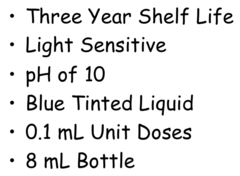
Composition of Silver diamine fluoride
-Water
-silver (25%) - kill bacteria & react w/ dentin proteins to form protective layer
-ammonium - high pH
-fluoride (5%) - remineralization
Properties of Advantage arrest
This is a type of Silver diamine fluoride
____________ fluoride is specifically good for arresting caries
silver diamine fluoride
_____________ arrests caries more effectively than fluoride varnish
Silver diamine fluoride (Advantage arrest)
38% Silver diamine fluoride
-Arrests caries (even cavitated ones)
-relieves sensitivity
-Antimicrobial activity
-silver ions are bactericidal metal cations --> inhibit biofilm formation
e.g. Advantage arrest
What is the function of Silver ions in silver diamine fluoride?
-Antimicrobial
-Bactericidal
-inhibition of biofilm formation
____________ fluoride serves as a cavity liner for deep restoration
38% silver diamine fluoride
Post-Silver diamine fluoride application treatment options
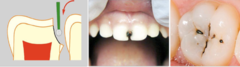
(SDF turns the arrested lesion to black)
-excavate the lesion and restore
-partial removal of arrested lesion and restore
-SMART- Silver modified atruamatic restorative treatment
-leave the SDF reservoir and reapply every 6 months

____________ fluoride is recommended to be used in management of caries in primary dentition
38% silver diamine fluoride

Side effects of application of 39% silver diamine fluoride
-Black staining (ONLY on demineralized area, not on sound enamel)
-discolors the soft tissue as well - temporarily
-mucosal irritation
Fluoride varnish effectiveness on enamel and dentin
-reverses 2/3 of enamel lesions
-No effect on dentin lesions
____________ fluoride lasts up to 3 months
5% NaF Varnish
Advantages vs. Disadvantages of 5% Sodium fluoride varnish (NaF)
Advantages
-caries reduction
-easy to apply
-prolonged fluoride uptake
-small amount ingested
Disadvantages
-taste
-yellow layer
Fluoride varnish applied 2-4 times a year prevent caries in children/adolescents by up to ______%
40%
Fluoride varnish uses are for (low/moderate/high) caries risk group
only LOW (sometimes moderate)
(for moderate and high caries risk group- no point in attempting to arrest caries when they have bad habits already)
Acidulated phosphate fluoride
-NaF with phosphoric acid
-prevents caries
-provides greater fluoride uptake
-pH 3~4
-water soluble
-1 active oin
-professionally available
e.g. gels, foams, rinses, dentifrices

____________ fluoride reduces caries up to about 40%
5% NaF varnish
What is a Dentifrice?
TOOTHPASTE (or powder)
____________ fluoride has pH 3~4 (slightly acidic), helps with whole lesion remineralization instead of just surface arrest
Acidulated phosphate fluoride

____________ fluoride causes etching on the surface, increasing Fluoride diffusion/uptake
Acidulated phosphate fluoride
Advantages vs. Disadvantages of Acidulated phosphate fluoride
Advantages
-caries reduction
-acceptable taste
-stable gel/foam for Tray application
Disadvantages
-possible excessive ingestion causing GI upset
-intolerance to trays
-porcelain/veneer etching
____________ fluoride is the one that can be applied with Tray
Acidulated phosphate fluoride

Protocol of Acidulated phosphate fluoride is _____-minute application
4
(the longer it's left, the more absorbed)
____________ fluoride is to be avoided w/ porcelain crowns and veneers, because they tend to degrade them.
Acidic topical fluoride
esp. Acidulated phosphate fluoride
Which 2 types of fluoride have antimicrobial effects?
SnF2 (stannous fluoride)
Silver diamine fluoride
which 3 types of fluoride are good for controlling sensitivity?
SnF2 (stannous fluoride)
Silver diamine fluoride
Varnish
which 3 types of fluoride are good for controlling inflammation?
SnF2 (stannous fluoride)
Silver diamine fluoride
How does Fluoride help with Remineralization?
-induces precipitation of calcium/phosphate
For the ingredients of Anticaries agent, Fluoride important, but _________ is also important
Calcium
(and phosphates)
(and HAP)
_____________ calcium technology allows high fluoride availability
Tri-calcium phosphate technology
Toothpaste with high content calcium:
MI toothpaste
CPP -ACP (Casein Phosphopeptide-stabilized Amorphous Calcium Phosphate)
Casein phosphopeptide
-cow's milk
-binds Ca and P --> bind to tooth surface and plaque.
Amorphous calcium phosphate
-Free & available to be incorporated into tooth structure

List the 2 Calcium-phosphate delivery system (often used in toothpaste)
-Tri-calcium phosphate technology
-CPP-ACP (Casein phosphopeptide amorphous calcium phosphate)
____________ fluoride works with ACP (amorphous calcium phosphate) to increase fluoride uptake and reduce enamel solubility
SnF2 (stannous fluoride)
SnF2 delivering ACP
-increases fluoride release and uptake
-helps to occlude dentinal tubules
-reduce enamel solubility
For high risk patients, they are recommended to apply ______________ with brush 1/day in evening before bedtime
Enamelon gel
__________ is a bioactive ingredient applied in microcluster or nanocrystalline forms in oral care products
Hydroxyapatite (HAP)
Function of Hydroxyapatite in oral care products:
-strong adherence to tooth tissue
-strongly adsorb on enamel/dentin crystal surfaces
-induce remineralization/demineralization
-relief hypersensitivity
-controls biofilm to reduce gingivitis
How does Hydroxyapatite in oral care products help with demineralization and remineralization?
-enters & directly FILL micropores in demineralized area
-act as crystal nucleus inside the tooth--> promote crystal deposition and growth by attracting Calcium and phosphate ions
-Calcium and phosphate ions reservoir - maintain topical state of supersaturation
Inside the tooth tissue _______________ acts as a crystal nucleus and template, promoting crystal deposition/growth
Hydroxyapatite
HAP oral care products elevate ___________ concentrations in saliva and plaque
calcium + phosphates
________________ act as a calcium and phosphate ions reservoir helping to maintain topical supersaturation of these ions
Hydroxyapatite (in toothpastes)
_____________ bind to phosphate sites on enamel surface, to form a protective layer and limit acid diffusion of ions during caries attack
Phosphate systems
Phosphate system
-strongly binds to phosphate sites on enamel --> formation of protective layer that limits acid diffusion
-ENHANCES remineralization when polyphosphates are added in fluoride toothpaste
Addition of ___________ in conventional fluoride toothpaste enhances remineralization
Polyphosphates
Why are biofilm modifiers important?
-Killing the bacteria gives change for opportunistic oral disease. --> so rather than eliminating the biofilm, it's important to modify/control biofilm bacterial behavior.
Arginine technology
Ammonia production from Deamination of amino acids (in biofilm)
--> ammonia is highly alkaline, causes a rise in pH

______________ technology is used to modify biofilm
Arginine technology

Combining ____________ and fluoride enhances the efficacy of fluoride to promote remineralization compared to fluoride alone
Strontium
____________ is a filler that incorporates strontium w/ fluoride to enhance remineralization, acid resistance, anti-plaque effect during restorative procedures.
Surface pre-reacted glass ionomer filler
___________ is implanted in host's microflora to maintain / restore natural microbiome to interfere w/ other harmful microorganisms
Probiotics
Name 2 species of bacteria used as Probiotics
Bifidobacterium
Lactobacillus
There is an immediate drop of _____________ bacteria in plaque/saliva after bcteriotherapy
S. mutans
name some NATURAL examples of probiotics
Dairy products (yogurt)
probiotic pills
define Bioactive and Biomimetic agent
any material that can actively stimulate or direct specific cellular or tissue responses & can control interactions with microbiological species
Example of Bioactive and Biomimetic agent:
Self-assembling peptides

self-assembling peptides
-Bioactive and biomimetic agent
-diffuse into subsurface of initial caries lesion --> attract calcium phosphate from saliva --> enhance REGENERATION OF ENAMEL /DENTIN