Lower Extremity Physiologic Testing
 Call Kai
 Learn
Learn Practice Test
 Spaced Repetition
 Match
Match Flashcards
 Knowt Play
1/15

There's no tags or description
Looks like no tags are added yet.
Name | Mastery | Learn | Test | Matching | Spaced | Call with Kai | Chat |
|---|
No analytics yet
Send a link to your students to track their progress
16 Terms
Normal CW Doppler Signal in Lower Extremity
Multiphasic - high resistance, two beats in the antegrade direction
Strong late systolic forward flow
Reversal of flow in early diastole (peripheral resistance)
Forward flow in late diastole (compliance)
Dicrotic Notch
Recoil/contraction of distended arterial walls
Size of notch determined by level of arterial compliance
Incisura
Downward pressure contour on waveform
Start of ventricular diastole
Results in velocity decrease in forward flow
Multiphasic With High Resistance
2 phases
2 forward antegrade beats
Normal

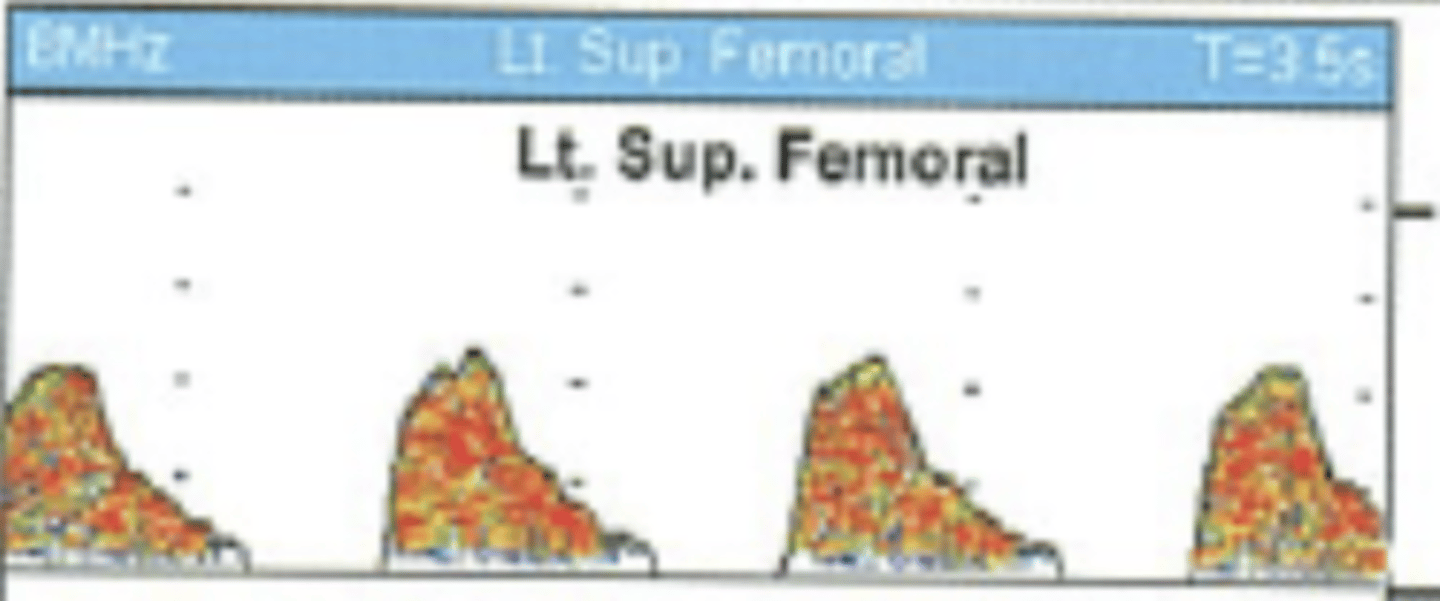
Monophasic with Low Resistance
Mild disease
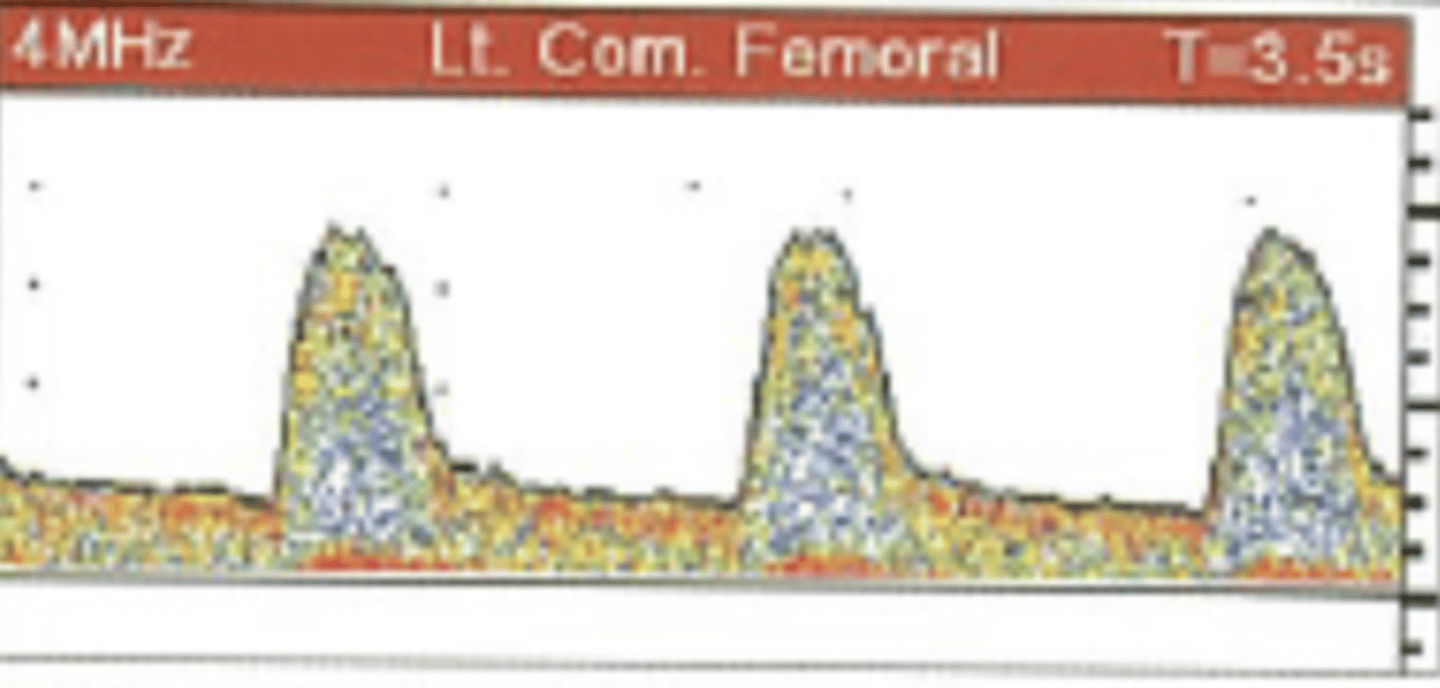
Monophasic without Diastolic Flow
Moderate disease
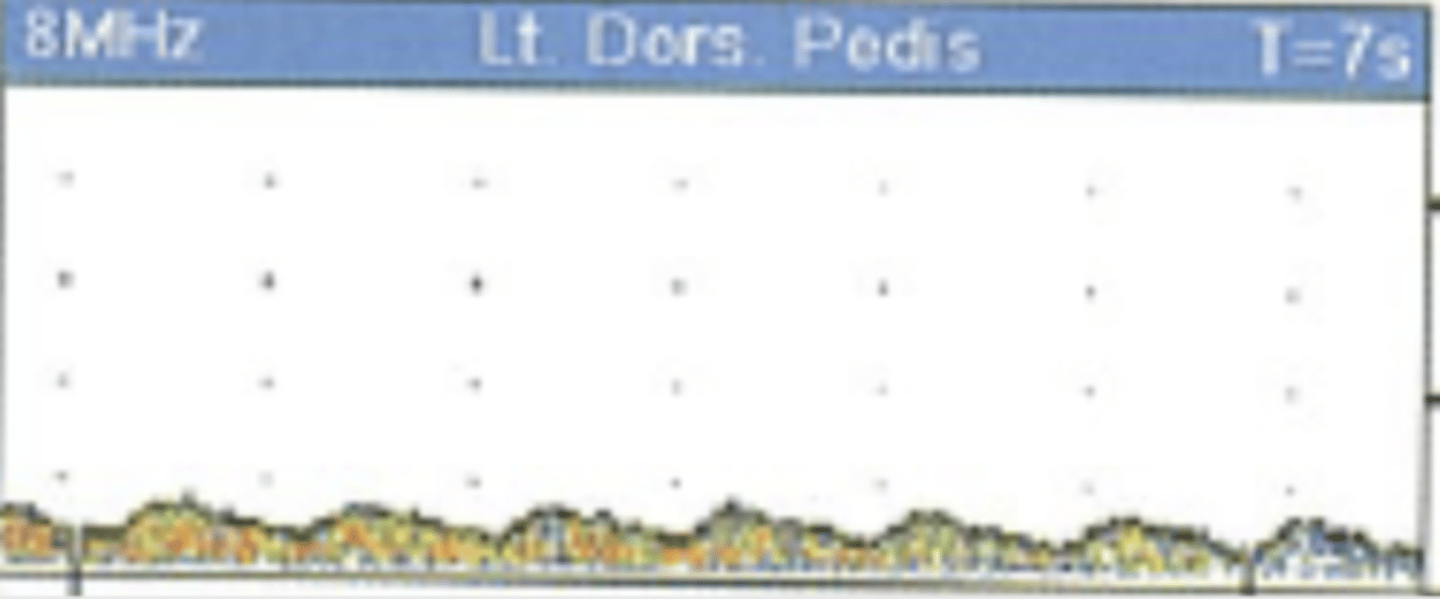
Monophasic with Low Resistance - Tardus Parvus
Severe proximal disease
Pulse Volume Recordings (PVR)
Assesses overall limb perfusion based on pressure changes
Records change in volume of blood in a limb as blood moves through
Used to measure limb volume related to cardiac cycle-pulsing changes in limb volume - girth of limb increases and air in the cuff is displaced
Normal PVR Waveform
Biphasic - always above baseline
Rapid upstroke in systole
Sharp & defined peak
Delayed downstroke
Flat dicrotic notch - on downstroke
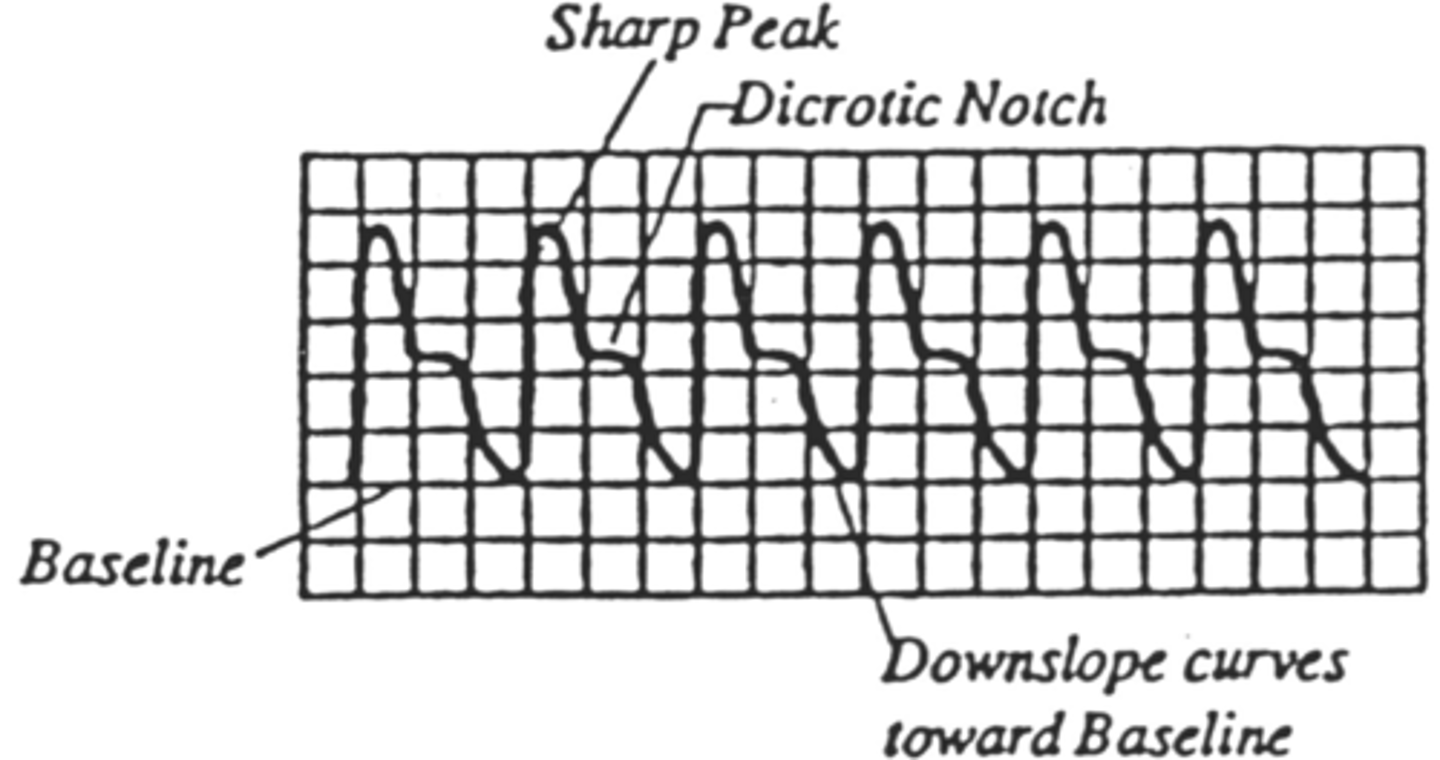
PVR Waveform of Mild Disease
Monophasic flow (looks like tardus parvus)
Loss of dicrotic notch
Slightly delayed upstroke
Downstroke bows away from baseline
Sharp peak
May decrease in amplitude

PVR Waveform of Moderate Disease
Delayed upstroke
Rounded
Decreased amplitude
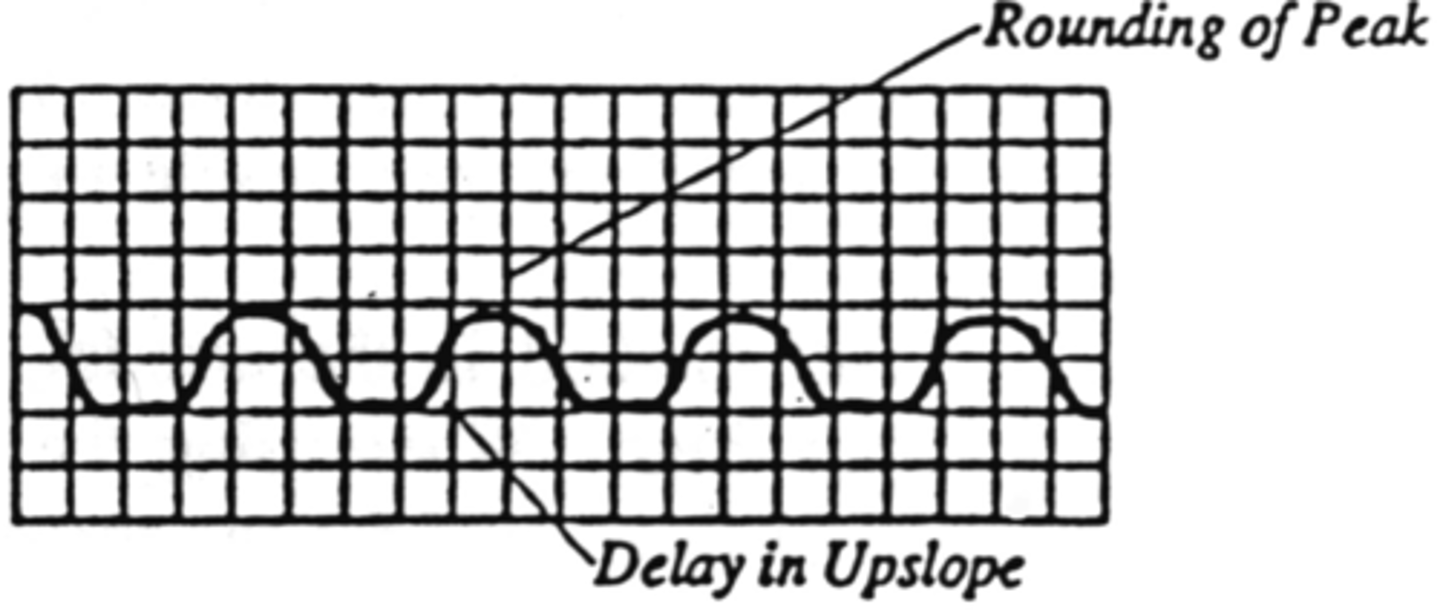
PVR Waveform of Severe Disease
Significant delay in upstroke
Absent or low-amplitude
Equal upslope and down slope time
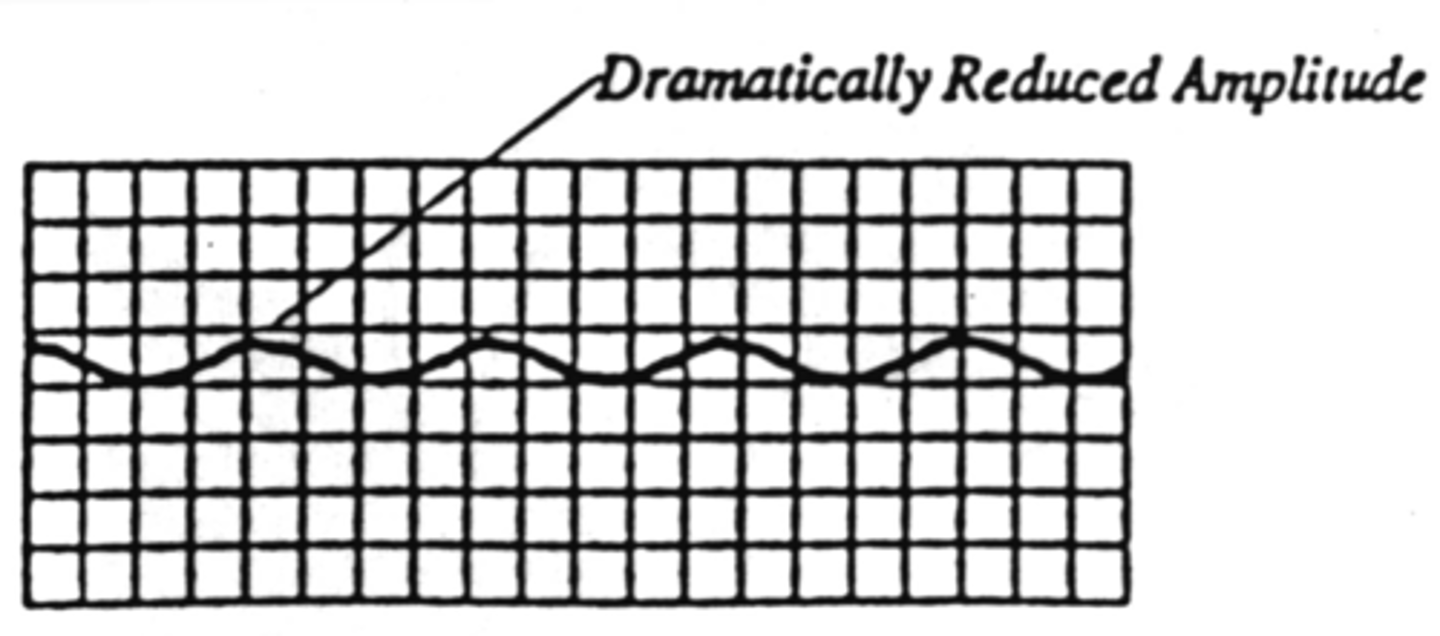
PVR Waveform of Critical Disease
Almost becomes flat line
Seen in severe dz or acute arterial occlusion
Differentiate from increased venous flow
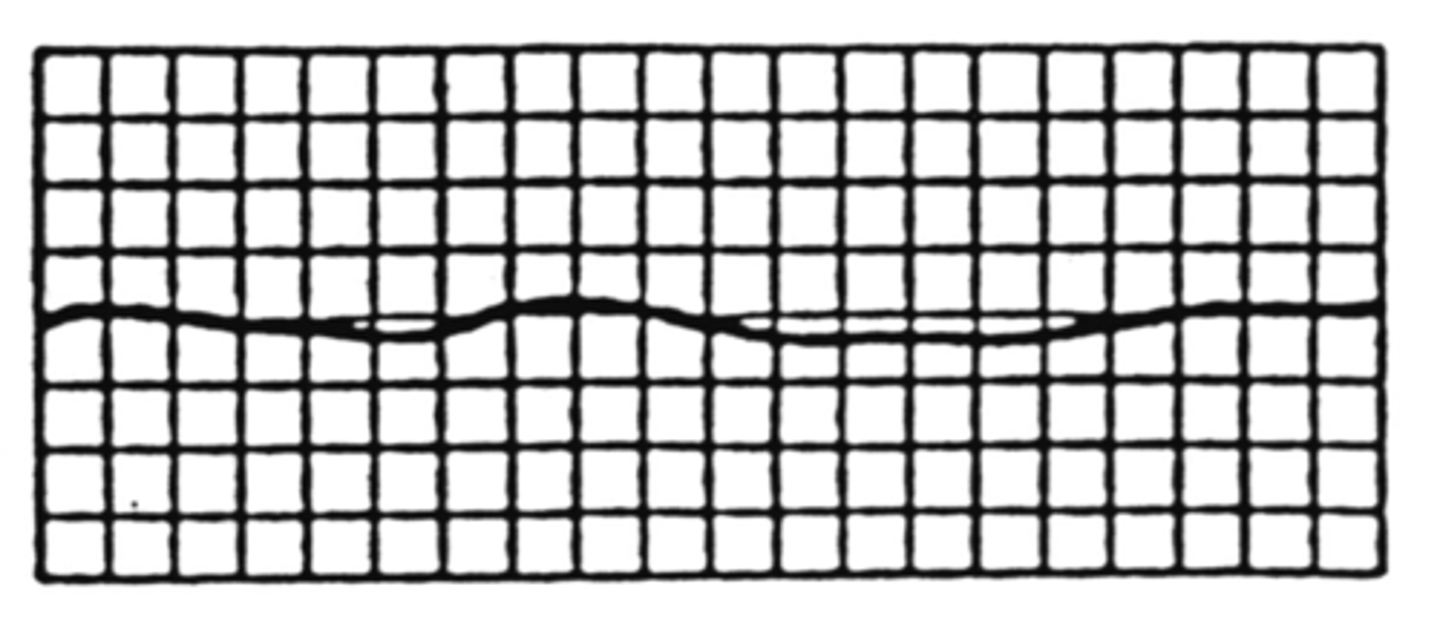
Where is disease on an abnormal PVR waveform?
Above the cuff
PPG Techniques
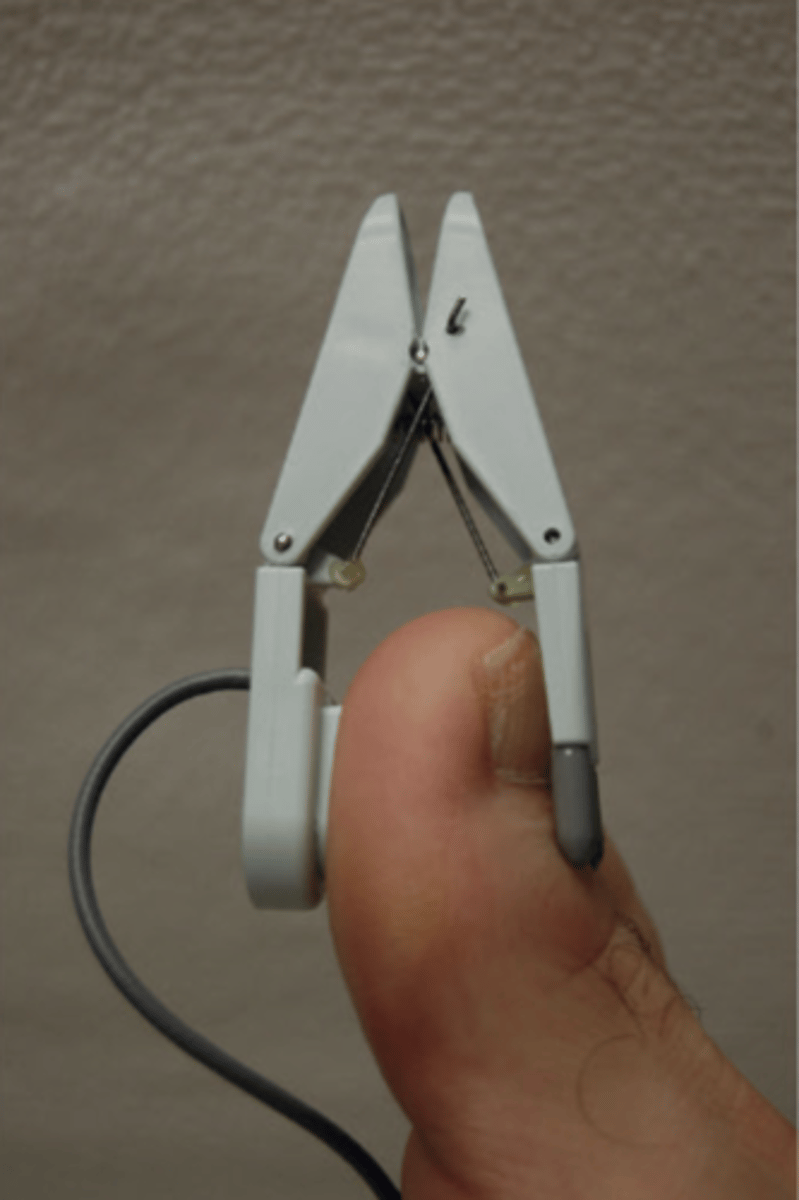
Attached with tape, clip, or pressure cuff
Use same amount of pressure from site to site
LED surface needs to be flat against skin surface
Reseat probe if abnormal signal is seen