AP Art History Semester 1 Final Exam
 Call Kai
 Learn
Learn Practice Test
 Spaced Repetition
 Match
Match Flashcards
 Knowt Play
1/95

There's no tags or description
Looks like no tags are added yet.
Name | Mastery | Learn | Test | Matching | Spaced | Call with Kai | Chat |
|---|
No analytics yet
Send a link to your students to track their progress
96 Terms
Apollo 11 stones; Paleolithic; 25,500 BCE; Namibia, Africa; charcoal on stone

Great Hall of the bulls; Paleolithic; 15,000 BCE; Lascaux, France; rock painting

Camelid Sacrum in the shape of a canine; Paleolithic/Neolithic; 14,000 BCE; Tequixquiae, Mexico; bone

Running Horned Woman; Neolithic; 6,000 BCE; Tassili n'Ajjer, Algeria; pigment on rock

Beaker with ibex motifs; Neolithic; 4200 BCE; Susa, Iran; painted terra cotta

Stonehenge; Neolithic; 2500 BCE; Wiltshire, UK; sandstone

White Temple at Uruk; Ancient Sumerian; 3500 BCE; Warka, Iraq; mud brick

Statues of Votive Figures; Ancient Sumerian; 2700 BCE; gypsum inlaid with shell and limestone

Standard of Ur; Ancient Sumerian; 2600 BCE; wood inlaid with lapis lazuli and limestone

Stele of Hammurabi; Ancient Babylonian; 1700 BCE; basalt

Lamassu from Citadel of Sargon II; Assyrian; 700 BCE; Citadel Hall; limestone
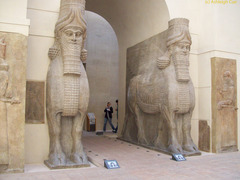
Processional Frieze at Persepolis; Persian; 500 BCE; Perseoplis, Iran; natural rock

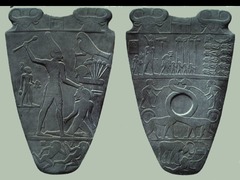
Palette of King Narmer; Predynastic Egypt; 3100 BCE; slate
Seated Scribe; Old Kingdom Egypt; 2400 BCE; painted limestone

Great Pyramids and Sphinx; Old Kingdom Egypt; 2500 BCE; Gizeh, Egypt; sandstone, limestone

King Menkaure and Queen; Old Kingdom Egypt; 2400 BCE; slate

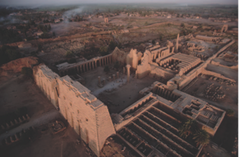
Temple of Amun-Re and Hypostyle Hall; New Kingdom Egypt; 1200 BCE; Karnak, Egypt
Mortuary Temple of Queen Hatshepsut; Senmut (possible architect); New Kingdom Egypt; 1400 BCE; Deir El-Bahiri; cut rock

Akhenaton, Nefertiti and three daughters; New Kingdom Egypt (Amarna period); 1300 BCE; limestone

Last Judgement of Hu-Nefer; New Kingdom Egypt; 1200 BCE; painted papyrus scroll

Tutankhamun's Tomb, innermost coffin; New Kingdom Egypt; 1300 BCE; gold with inlay of enamel

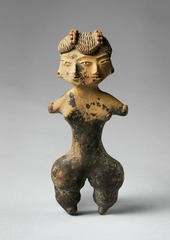
Tlatilco Figurine and Head; Tlatilco; 1200 BCE; Mexico; ceramic with traces of pigment
Anavysos Kouros; Archaic Greek; 500 BCE; marble with remnants of paint

Grave Stele of Hegeso; Kallimachos; Classical Greek; 400 BCE; marble

Acropolis; Iktinos, Kallikrates, Pheidias; Classical Greek; 400 BCE; Athens, Greece; marble

Athenian Agora; Archaic—Hellenistic Greek; 650 BCE; Athens, Greece

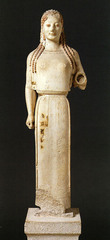
Peplos Kore; Archaic Greek; 500 BCE; marble
Doryphoros; Polykleitos; Classical Greek; 400 BCE; marble copy of bronze original

Niobides Krater; Classical Greek; 400 BCE; ceramic vase

Altar of Zeus and Athena at Pergamon; Hellenistic Greek; 100 BCE; Pergamon, Turkey; marble

Alexander Mosaic; Hellenistic Greek; 100 BCE; mosaic

Nike of Samothrace; (possibly) Pythokritos; Hellenistic Greek; 200 BCE; parian marble

Seated Boxer; Hellenistic Greek; 100 BCE; bronze

Sarcophagus of the Spouses; Etruscan; 500 BCE; terra cotta

Tomb of the Triclinium; Etruscan; 400 BCE; Tarquinia, Italy; true fresco

Head of a Roman patrician; Republican Rome; 75 BCE; painted marble

House of the Vetii; Early Roman; 60 CE; Pompeii, Italy

Temple of Minerva; Etruscan; 500 BCE; Veii, Italy; brick, mud, terra cotta

Pantheon; (possibly) Hadrian; Roman; 100 CE; Rome, Italy; concrete, bronze

Augustus of Primaporta; Early Imperial Roman; 20 BCE; marble copy of bronze original
Colosseum; Imperial Roman; 70 CE; Rome, Italy

Forum and Column of Trajan; Apollodorus of Damascus; High Imperial Roman; 100 CE; Rome, Italy; marble

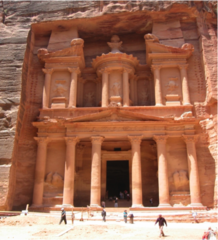
Treasury at Petra; Nabataean, Ptolemaic, Roman; 100 BCE; Petra, Jordan; sandstone
Ludovisi Battle Sarcophagus; Late Imperial Roman; 200 CE; marble

Early Christian Catacomb of Priscilla; Early Christian; 200 CE; Rome, Italy; tufa and fresco

Santa Sabina; Early Christian; 400 CE; Rome, Italy; wood, brick, marble

Vienna Genesis; Early Christian; 500 CE; vellum, purple ink

Hagia Sophia; Athens of Tralles, Isidorius of Miletus; Early Byzantine; 500 CE; Constantinople

San Vitale in Ravenna; Early Byzantine; 500 CE; Ravenna, Italy; brick

Icon of Theotokos and Saints; Early Byzantine; 500 CE; encaustic on wood

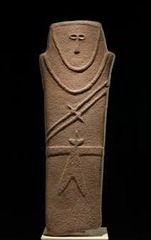
Anthropomorphic Stele; Prehistoric; 4000 BCE; Saudi Arabia; sandstone
Dome of the Rock; Umayyad; 600 CE; Jerusalem

Kaaba at Mecca; Islamic; 600 CE; Mecca, Saudi Arabia

Mosque at Cordoba; Umayyad Spain; 700 CE; Cordoba, Spain

Mosque at Alhambra; Islam Nasrid dynasty; 1300 CE; Granada, Spain

Great Mosque at Isfahan; Persian; 700 CE; Isfahan, Iran

Mosque of Selim II at Edirne; Sinan the Great; Ottoman; 1500 CE; Edirne, Turkey

Pyxis of al-Mughira; Umayyad Spain; 900 CE; ivory

Folio from a Qur'an; Abbasid; 700 CE; ink, color, gold on parchment

Ardabil Carpet; Maqsad of Kashan; Safavid; 1500 CE; silk and wool

Court of the Gayumars; Sultan Muhammad; Safavid Persian; 1500 CE; ink, opaque watercolor, gold on paper

Bahram Gur Fights the Kurg; Il-Khanid of Persia; 1300 CE; ink, opaque watercolor, gold, silver on paper

Basin (Baptistere of St. Louis); Muhammad Ibn al-Zain; Mamluk; 1300 CE; brass inlaid with gold and silver

Book of Lindisfarne; Eadfrith; Hiberno-Saxon; 700 CE; illuminated manuscript, ink, pigments, gold on vellum

Merovingian Looped Fibulae; Early Medieval Europe; 500 CE; silver gilt in filigree

St. Foy at Conques Reliquary Statue; Abbot Odolric; French Romanesque; 1000 CE; Conques, France

Bayeux Tapestry; Romanesque; 1000 CE; Bayeux, France; embroidery on linen

Chartres Cathedral; Gothic; 1200 CE; Chartres, France

Parisian Moralized Bible; French Court Style; 1200 CE; illuminated manuscript, ink, tempera, gold leaf on vellum

Golden Haggadah; Jewish Medieval in Spain; 1300 CE; illuminated manuscript, pigments, gold on vellum

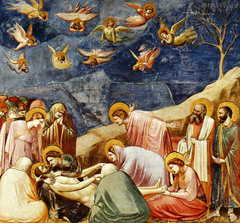
Giotto's Arena Chapel; Giotto; Proto-Renaissance (Late Gothic); 1300 CE; Padua, Italy; fresco
Rottgen Pieta; Late German Gothic; 1300 CE; painted wood

Stupa at Sanchi; Buddhist; 300 BCE-100 CE; Sanchi, India

Temples at Khajuraho; Hindu (Chandella Dynasty); 930-950 CE; Khajuraho, India

Shiva as Nataraja; Hindu (Chola Dynasty); 1000s CE; cast bronze

Borobudur Temple; Buddhist (Sailendra Dynasty); 750-842 CE; Central Java, Indonesia; volcanic stone

Jowo Rinpoche; Tibetan Buddhist; 641 CE; Lhasa, Tibet; gilt metals

Angkor Wat and Angkor Thom; Hindu (Khmer); 800-1400 CE; Angkor, Cambodia; stone

Terracotta Soldiers of Shi Huangdi; Chinese Qin Dynasty; 221-209 BCE; painted terracotta

Funeral Banner of Lady Dai; Chinese Han Dynasty; 180 BCE; painted silk

Neolithic Jade Cong; Chinese Neolithic; 3300-2200 BCE; carved jade

Bamiyan Buddhas; Gandharan Buddhist; 400-800 CE; Bamiyan, Afghanistan; cut rock

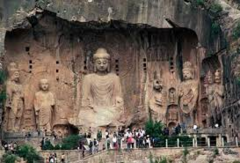
Longmen Caves; Chinese Tang Dynasty; 493-1127 CE; Luoyang, China; carved limestone
Travelers Among Mountains and Streams; Fan Kuan; Chinese Northern Song Dynasty; 1000s CE; hanging scroll

Todaiji Complex; Nara period; 743 CE; Nara, Japan

Ryoan-Ji; Muromachi period; 1480 CE; Kyoto, Japan; stone

Night Attack on the Sanjo Palace; Japanese Kamakura Period; 1250-1300 CE; hand scroll

Yaxchilan; Late Classic Maya; 725 CE; limestone

Chavin de Huantar; Precolumbian; 900 BCE; Andes Mountains

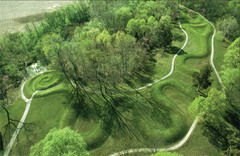
Great Serpent Mound; Precolumbian; 1070 CE; southwestern Ohio; dirt mound
Mesa Verde Cliff Palace; Precolumbian; 450-1300 CE; Colorado; sandstone

Great Mosque of Djenne; Koi Konboro; African; 1200 CE; Mali; Adobe

Great Zimbabwe; Shona peoples; 1000-1400 CE; Southeastern Zimbabwe; granite

Ashanti Golden Stool; Ashanti peoples; 1700 CE; South Central Ghana; gold over wood

Ndop Figure of King Mishe; Kuba peoples; 1760-1780 CE; Democratic Republic of Congo; wood

Wall Plaque from Oba's Palace; Edo peoples; 1500s CE; Nigeria; cast brass
