Topic 6.2 - Aluminum
 Call Kai
 Learn
Learn Practice Test
 Spaced Repetition
 Match
Match Flashcards
 Knowt Play
1/28

There's no tags or description
Looks like no tags are added yet.
Name | Mastery | Learn | Test | Matching | Spaced | Call with Kai | Chat |
|---|
No analytics yet
Send a link to your students to track their progress
29 Terms
Aluminum
third-most abundant element in the earth’s crust
why is Aluminum preferred?
Strong
Lightweight
Durable
Resistant to corrosion
Malleable
Ductile
Odorless
Conductive
Non-combustible
some uses of Aluminum
power lines
electrical equipment
electronics/appliances
vehicle/aircraft/spacecraft components
packaging
appliances
buildings/window frames
Bauxite
primary ore for Aluminum
most common raw material used to produce alumina )for aluminum metal production)
composed of various minerals
how to obtain bauxite
through mining
prepare mining area
bauxite mining
crushing
ore conveyors
rehabilitation
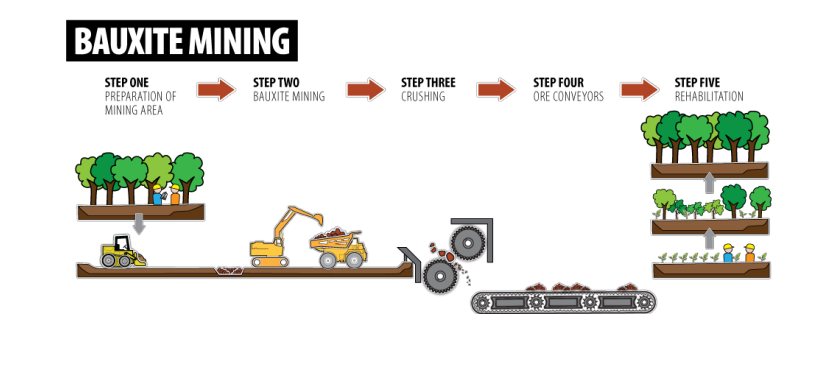
where to find bauxite
mainly tropical and sub-tropical areas
Africa, West Indies, South America, Australia
effects of bauxite mining to environment
air pollution from bauxite dust
aluminum hydroxide
neurological problems
titanium oxide
1-8% reactive silica
Aluminum hydroxide
could be detrimental to health:
as pain
reddening of the nose
coughing
pain and redness of the skin
peeling and itching eyes
Neurological problems
chronic brain syndrome
anxiety for no reason
forgetfulness
Alzheimer's and Parkinson's disease in adults
Titanium Oxide
effect to those who suffer from eczema skin, heart problems and liver problems
Reactive silica
Exposure to high concentrations can cause:
shortness of breath
chest pain
fatigue
fainting
or even death
raw materials in production of Aluminum
Bauxite
Caustic Soda (Sodium Hydroxide)
Cryolite
Carbon electrodes
Aluminum fluoride
content of Bauxite
45-60% aluminum oxide
impurities such as sand, iron, and other metals
Caustic Soda
aka Sodium Hydroxide (NaOH)
dissolves Aluminum compounds in bauxite
to separate aluminum from impurities
Cryolite
aka Sodium Hexafluoroaluminate (Na3AlF6)
used as electrolyte (current conducting medium) for smelting
Carbon Electrodes
transmit electric current through electrolyte
as carbon is consumed, it combines with oxygen to form carbon dioxide
Aluminum Fluoride
AlF3
added to lower melting point of electrolyte solution
two processes in the production of aluminum
The Bayer Process
Hall-Heroult Process
The Bayer Process
refining bauxite ore to obtain Alumina aka Aluminum Oxide (Al2O3)
Hall-Heroult Process
smelting the Aluminum Oxide to release pure aluminum (remove oxygen)
Aluminum Transformation
Extruding
Rolling
Casting
Extruding
shaping Aluminum using ready-made or tailored profiles
Rolling
aluminum is extremely malleable
can be rolled from 60cm to 2mm
further processed into foil as thin as 0.006mm
still completely impermeable to light, aroma, and taste
Casting
changes properties of aluminum
adding strength, brilliance, and/or ductility
Why Recycle Aluminum?
i. Environmental
ii. Economic
iii. Community benefits
How many times the same piece of aluminium can be recycled?
According to ”The Aluminium Association”, aluminum drinks cans are the most sustainable form of drinks packaging.
On average, they contain 73% recycled content, which equates to 20 times more than the recycled content of plastic bottles
How much energy can people save by recycling aluminium?
A 60-watt light bulb can be run for over a day on the amount of energy saved by recycling 1 pound of steel
Recycle Process
The Loading Conveyor
The Shredder
The Magnetic Separator - separate ferrous material from aluminum
De-coating
Furnace holding furnace (Remelting and casting)
Rolling mill
other reasons why Aluminum can/should be recycled
does not lose its properties when recycled; can be recycled indefinitely
if recycled, electrolysis isn’t used, which is high in energy consumption
is easier to remove dyes and other impurities than make new alumina